Tag Archives: movies about seniors and aging

Ottawa International Animation Festival 2016: Louise en hiver

Louise values her peace and quiet so she barely even seems disappointed when she misses the last train of the season from the small seaside town where she likes to spend her summers. Through voiceover, she claims to be more annoyed than afraid to be left alone in this increasingly stormy abandoned town.

As I mentioned yesterday, I’m no good at describing animation but at least here I can tell you that the OIAF website praises Louise en hiver for its “beautiful pastel imagery”. I can also show you some pictures.

Louise may not be a people person but 9 months is a long time to spend by yourself. Plus, there’s the whole “no one seems to be looking for me” thing which can eat at you a bit, especially when left alone with your own thoughts. So, like Tom Hanks in Castaway, she needs someone to talk to. And with no other people or volleyballs around, a talking dog named Pepper will have to do.

Yes, the dog talks. Unlike in Castaway, where Hanks’ conversations with Wilson were largely one-sided, we see everything from Louise’s point of view. It’s not always easy following this story through the eyes of the occasionally confused and forgetful protagonist. Reality, fantasy, memories, and dreams are interwoven so beautifully that it isn’t always easy to tell which are which.

Louise en hiver is worth the trip into a lonely woman’s mind. It’s quite a beautiful film from its simple yet effective animation to its sad yet hopeful meditation on aging, memory, and looking back.

Here’s the trailer.

2016: Year of the Fabulous Ladies

Goodness me, this year is flying by, and looking back at some of my favourite films, I’m seeing a trend. A trend toward women of a certain age. Over 50, let’s say; the women who have often been ignored by Hollywood (more than half of all female characters are well under 40, which is not true of men). And yet here they are, fierce and fabulous. I’m resisting calling them “older women” (perhaps it’s time for a new word?) because they are so much more than merely older. These are terrific women giving voice to characters that are rarely seen, and heard even less (women are given less and less dialogue as they age whereas middle-aged men get more).

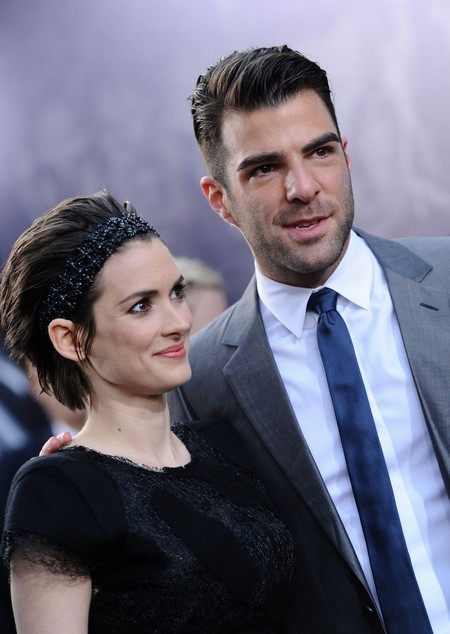
Aging is a sin in Hollywood. You go from playing the ingénue to someone’s mom, and then you drop off the face of the earth unless you’re Betty White. Which you’re not. Hollywood casts young women into older roles – Angelina Jolie once played Colin Farrell’s mother. She is one year older than he is. Amy Poehler played Rachel McAdams’ mother in Mean Girls despite only a 7 year age difference. Sally Field played Tom Hanks’ mother with just a decade between them – and having previously played his love interest! Toni Collette, aged 33, played Paul Dano’s mother when he was 22 (in Little Miss Sunshine). Laura Dern is just 9 years senior to her “daughter” Reese Witherspoon in Wild. Winona Ryder is just 5 years older than her Star Trek on-screen son, Zachary Quinto. That would be like Jonah Hill playing Miles Teller’s dad instead of his high school classmate. WTF?

All too many once-great actresses were abandoned by Hollywood when they hit 40. Where is Angela Bassett? Geena Davis? Joan Allen? Janet McTeer? We can’t save them all, but we vote with our dollars, by making sure that films like these find their audience:

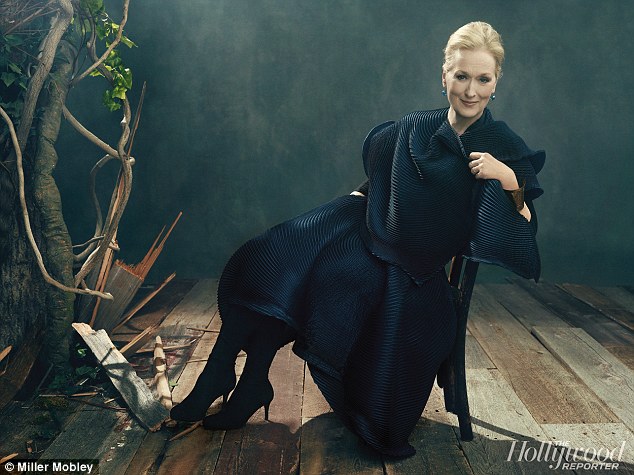
Florence Foster Jenkins – Meryl Streep turns in an endearingly cringe-worthy performance. When she turned 40, she was offered THREE witch parts in the same year. THREE! She turned them all down.  “I just had a political sort of reaction against the concept of old women being 23F3E33000000578-2869426-image-a-28_1418262921292demonized and age being this horrifying, scary thing. I just didn’t like that. I didn’t like it when I was a little girl, I don’t like it now.”

Grandma – Lily Tomlin proves Grandmas come in all sorts of salty sizes. She’s as edgy and witty as ever. “I’ve been offered lots of [roles as] people’s grandmothers that are just the butt of a joke. Doddering with a track suit on. The object of humor, just as women or gay people were the object of humor through ridicule in earlier movies. That was an accepted target, use of someone of that age or that lifestyle.”

Eye in the Sky – Helen Mirren shows nerves of steel as the powerful head of a military operation. Mirren has called Hollywood’s ageist double standard “fucking outrageous.” “Even Shakespeare did that to us. As you get older, even the Shakespeare roles become [less substantial for older women] — that’s why we have to start stealing the men’s roles — doing like I did in “The Tempest,” [by changing the role of Prospero to] Prospera. And it’s great that a lot of women are doing Hamlet, doing “Henry V,” and I’m sure there will be a female Othello soon. And I love that. I think it’s absolutely great because, you know, why not?”

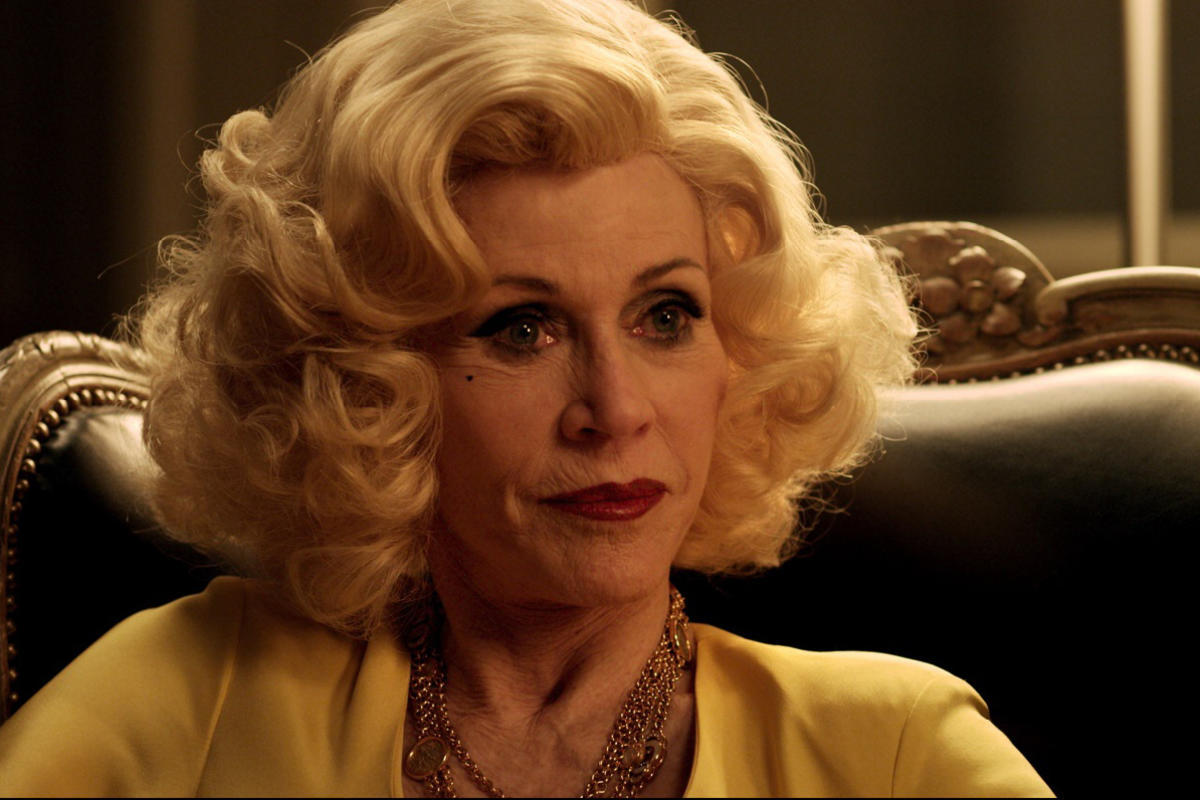
Youth – Jane Fonda has a small but scene-stealing role in this movie about finding meaning in your later years. “Ageism is alive and well. It is okay for men to get older, because men become more desirable by being powerful. With women, it’s all about how we look. Men are very visual, they want young women. So, for us, it’s all about trying to stay young. I need to work, so I had some plastic surgery. It’s not like it’s too much, it’s not like you can’t see my wrinkles, right? But I think it probably bought me a decade of work.”

Lady in the Van – Maggie Smith gives life and dignity to a mysterious woman living in her van. “I’m always older than God in these parts now.” She played Wendy’s 92 year old grandmother in Steven Spielberg’s Hook and “I’ve been that ever since. They don’t need to make me up any more, I’m afraid. I’ve caught up with myself.”

I’ll See You In My Dreams – Blythe Danner tackles widowhood, retirement, and loneliness. “I remember Leslie Caron years ago saying she left Hollywood when she was 30 or 35 because that’s when roles disappear. That’s not the case anymore, there are better, three-dimensional roles for women of all ages. I’m 71 and I’ve been working more now and getting better roles than I did when I was younger.”

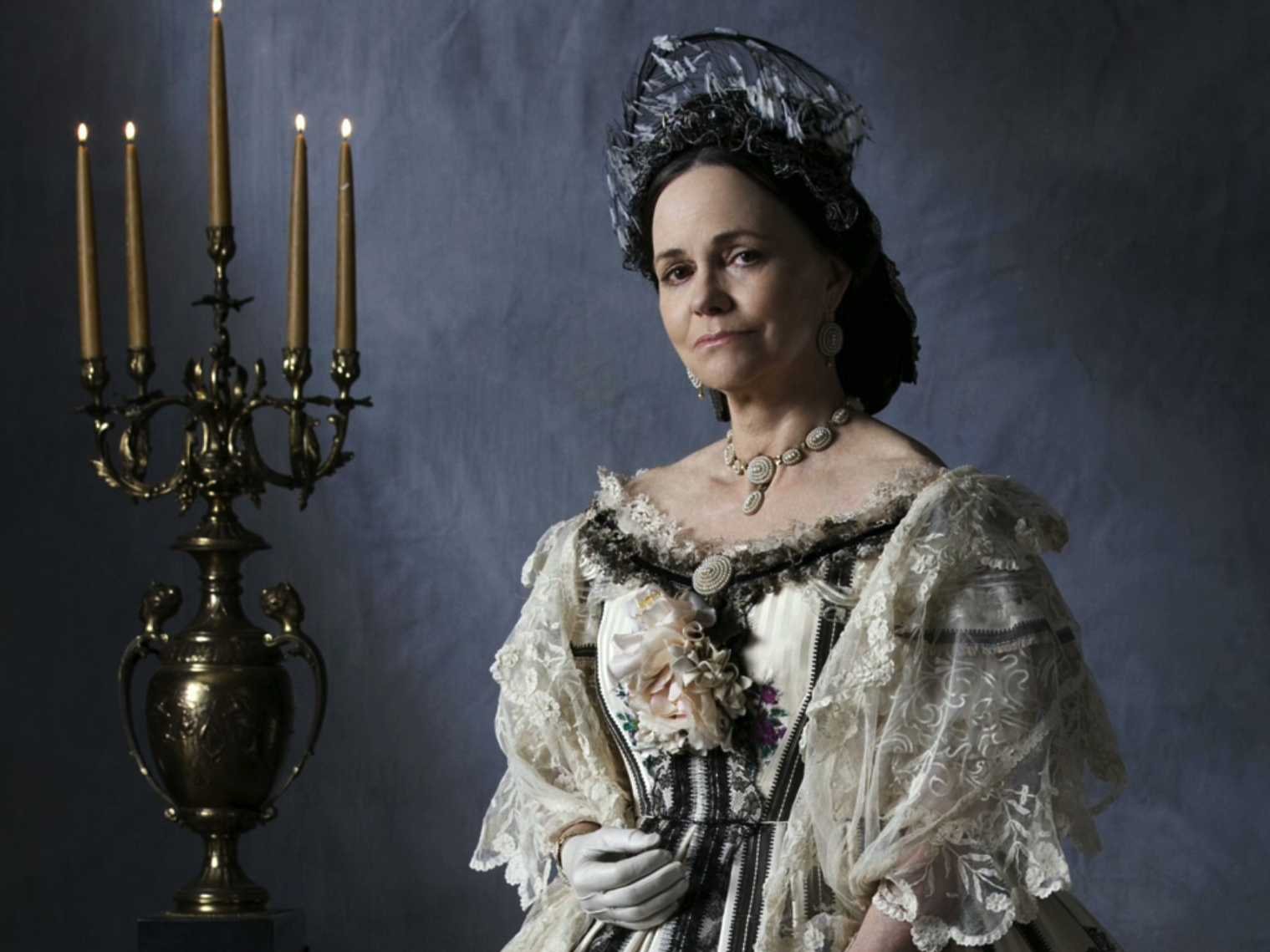
mary-todd-sally-field-lincolnHello My Name Is Doris – a riotous movie starring Sally Field, her first starring role in nearly 20 years. “They don’t write roles for women… and they certainly don’t write roles for women of age and women of color,” said Field. “Since the industry is run by men, men have a tendency to want to make stories about themselves and things they identify with. Then it becomes a self-fulfilling prophecy.”

Familyhood

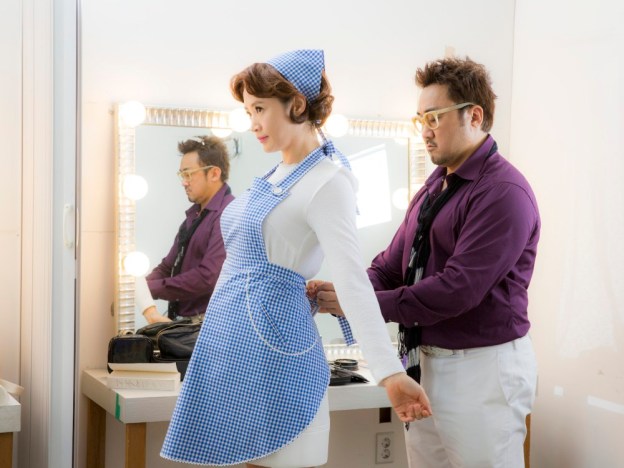
Go Ju-yeon (extremely well-played by Kim Hye-soo) is pushing 40 and running out of ways to feel young. Despite plastic surgery, affairs with younger men, and a faithful and well-meaning entourage that protect her from unflattering headlines, Ju-yeon has finally reached the point where she has to admit that the public just doesn’t adore her anymore.

It’s a tough pill for any actress to swallow but it’s even worse for someone so needy and self-absorbed. Not ready to be forgotten just yet, Ji-yeon makes one last desperate attempt at being loved. She’s going to have a baby. Or, more accurately, buy a random middle-schooler’s baby and try and pass it off as her own.

It’s actually quite terrible and, as her stylist reminds her more than once, illegal. Dan-ji (Kim Hyeon-soo) has nowhere to go except live with her neglectful big sister and sure could use some money for art school, a fact that Ju-yeon is quick to take advantage of. Dar-ji is quickly hidden away in a stranger’s house during the most confusing nine months of her life.

This movie really didn’t work for me. The comedy comes, as you’d expect, mostly from Ju-yeon’s lack of self-awareness and the outrageous misunderstandings that her charade inevitably brings. It just isn’t very funny. I found it very broad and, worse, obvious. Director Kim Tae-gon excuses the implausiibilities and all the selfish behavior as “satire” of celebrity, “the cult of youth and beauty”, and the hypocrisy and double standards surround teen pregnancy. When it comes to Familyhood’s satire of celebrity and youth, its target is too easy and its tone not nearly subtle enough for it to be effective as satire. Tae-gon does, however, have some interesting and worthwhile things to say about the shaming of pregnant teen girls. It was a nice surprise but seems to show up out of nowhere towards the end of a film that seems to have realized that it wasn’t really about anything and just blurted out “teen pregnancy” in a panic.

I just didn’t like it. I’m not sure why. The crowd at the International Premiere at this year’s Fantasia Festival responded with delight to every tired joke. So maybe I was just having an off day and you’d enjoy it as much as they did. But I can’t help thinking that Familyhood seriously missed its mark.

Hello, My Name Is Doris

The body’s not even cold before Doris’s brother is talking about selling their dead mother’s house, which means Doris is about to be homeless, and even worse, divulge an embarrassing secret: it wasn’t Mom who was the hoarder.

And while we’re on the topic of embarrassing subjects: Doris is nursing a secret workplace crush on a younger man. A much, much younger man. And boy do her fantasies get away on her!

hello-my-name-is-doris-cinema-siren-1024x682.jpgShe takes a little dating advice from a millennial and suddenly she’s adopted by a whole crowd of hipsters who fail to recognize that her “retro chic” look isn’t exactly ironic.

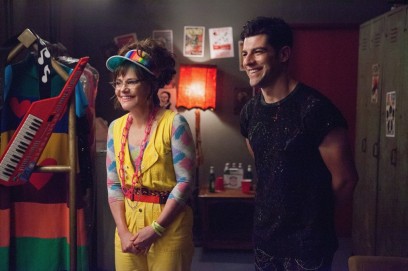
Sally Field plays Doris and it’s a BRILLIANT comedic role. But because it’s Sally Field it’s so much more than that. In any other hands, Doris may have appeared clownish but Field injects the character with kind if flawed humanity. Max Greenfield and Tyne Daly add excellence to the mix, but that’s already 10 words not talking about how utterly wonderful Sally Field is. She embraces and embodies the late-blooming Doris, deftly managing some awkward shifts between drama and comedy, painting the character with shades of tragic hero, coming-of-(old)age, endearing quirk, eccentric wallflower, emboldened risk-taker, sympathetic neurotic: a woman tired of being laughed at who starts laughing along with them and wins. It is a complete joy to watch her on-kissscreen, from the very first minute to the last.
The movie unpacks a lot of issues – ageism, desire, resentment, mental illness – and to its credit, it doesn’t attempt to fit them back neatly into a box. The ending is bravely open-ended. But it also suffers from perhaps taking on more than the writers really understood what to do with (Michael Showalter directs and shares writing credit with Laura Terruso). But any bumps along the way are filled in with Field’s gloss. She makes this movie glow. And watching her do an eletro-pop jitterbug is hands down the best thing I’ve seen at the movies all year. Keep an eye out for this one; it’s in select theatres now.

Clouds of Sils Maria

To be honest, I watched this movie some time ago, it’s just that writing about it in any meaningful way was a little daunting.

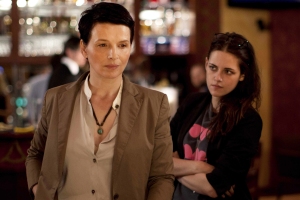
It’s about an actress, Maria (the fabulous Juliette Binoche), who has had a CLOUDS OF SILS MARIAlauded career after being launched in the theatre playing Sigrid, a sizzling ingénue. Now, years later, the playwright and her mentor has died, and there’s interest in re-staging the play, and Maria is approached to star. The catch? This time she’d of course be playing the role of the older woman, Helena, in a complicated May-December lesbian office unrequited romance (whoa, that’s a mouthful).

Should Maria take the role? Initially she declines. She finds the older character to be a bit pathetic, too much of a doormat. But the director is tenacious and Maria is not exactly afraid of a challenging role, so she accepts. She retreats to a remote chalet with her personal assistant (Kristen Stewart) and they begin rehearsing the play, only in the rehearsing, Maria again grapples with her distaste for the weakness of the character, and must face her own feelings about aging.

Chloe Grace Moretz floats in as the scandal-prone Hollywood It Girl who is to play the younger woman. She flatters Maria with fandom but ultimately plays the role much differently than Maria did, which further drives Maria to feel obsolete, and to wonder if this older character is perhaps an uncomfortable reflection of herself.

Clouds-of-Sils-Maria-14I didn’t find the story-telling in this movie to be quite satisfactory, but the performances were top-notch. There’s an intense, almost sexual chemistry between Binoche and Stewart that makes their rehearsals a rare treat to watch. Not often are two such strong female characters allowed to shine on the screen together with such naked feeling.

Binoche loved the idea of this movie so much that she approached director Olivier Assayas with it and convinced him to write the script as well. In a funny meta twist, Assayas co-wrote the script of Rendez-Vous, which was the film that helped make Binoche a star. Binoche claims she strove for such authenticity that she accepted a brief role in Godzilla just so she could o-CLOUDS-OF-SILS-facebookbelievably deliver a line about acting in blockbusters.
Chanel (the fashion house) stepped in not only with wardrobe but with financing so that Assayas could film in 35mm. The movie does in fact look totally gorgeous, not least because it’s filmed on location in Sils Maria, Switzerland. And Binoche reins over this film with stately grace, simmering jealousy, raging insecurity – every bit of it layered and nuanced to perfection. Maria is dealing with a changing industry and a role that requires alarming introspection, but what Binoche and company accomplish is to make us ask ourselves – are we Sigrids, or are we Helenas?

I’ll See You In My Dreams

Carol (Blythe Danner) has been a widow for 20 years and wonders – is this all there is? Her friends encourage her to try something new – speed dating, maybe, or moving into their retirement home – anything to break her stasis. 221899_025.jpgIt’s actually a visit from a despicable old roof rat that seems to prod her toward new experiences, inviting two men into her life (Sam Elliott, Martin Starr) who stir up all kinds of feelings, old and new.

What I liked about this movie: Nearly everything. Blythe Danner is spectacular. This movie is unafraid of aging but even better, it treats its senior citizens with respect and dignity. Carol has 3 very good friends, and instead of giving them the washed out, disheveled look that most movies would have you believe of any woman over 45 is reduced to, the foursome look like a slightly wiser set of the Sex and the City gals. Rhea Pearlman looks cute and fit in her golf apparel, June Squibb is never without a ravishing scarlet lip, and Mary Kay Place is enviably well-coiffed. Blythe imageDanner is the Carrie of her group, inevitably, and is suitably attired, every outfit classy, understated, elegant. In their 60s, 70s, and beyond, these ladies still turn heads.

This movie is a beautiful testament to female friendship. When your kids are grown and your husband is gone (divorced or dead,  you’re alone either way), what you have left are your girlfriends. I especially loved the scenes when the women are together; the camaraderie and chemistry feel genuine. In fact, everything about this movie feels honest: the loneliness, the grief, the comfort found in friends. Danner gives a quietly commanding performance, informed by her own widowhood (in fact, her real-life late husband Bruce Paltrow can be spotted in a gilt frame on her mantelpiece in this movie). This film would be worth your time for Danner alone – this is one of her meatier roles – but you’re in luck; it’s going to satisfy on so many other levels.


Dirty Grandpa

Robert De Niro clearly relishes his role in Dirty Grandpa as, you guessed it, the dirty grandpa. He cusses lots and spikes drinks with Zanex and flirts with Aubrey Plaza and takes his shirt off a lot and clearly is having a ton of fun all the way through.  Zac Efron also takes his shirt off a lot but throughout this movie he looks as uncomfortable as the middle aged, flip-phone owning couple sitting directly in front of us at last night’s screening. Maybe, as Jay observed, Efron is coming to the sobering realization that being shirtless is his thing and the best he can hope for is to be brought back as the shirtless grandpa if this movie is the start of a Rocky-like franchise.

My money’s on there being no sequel. Dirty Grandpa has a lot of laughs and an abundance of dick jokes, but it also seemed unnecessarily long and unnecessarily concerned with plot. I didn’t need to see everyone learn a lesson. I certainly did not need three generations of lessons being taught to De Niro, Efron, and Dermot Mulroney. And we see stereotypes of hippies, lacrosse jocks, and gang members learn something too. The only ones exempt from this rule seem to be the very funny Jason Mantzoukas (a.k.a. Rafi from the League!) as a Daytona Beach drug dealer, and Adam Pally as Efron’s cousin.  At least the writers had the good sense to allow those two to do their crazy guy routines the whole way through Dirty Grandpa.  I wish they had given everyone such free reign.  I was just there to laugh and didn’t need everything to be wrapped up perfectly, or at all.

I thought all the lessons really took away from Dirty Grandpa’s momentum, mainly by taking the focus off dirty De Niro.  That hurt this movie a lot because De Niro as the dirty old guy is by far the best part.  He’s really, really funny, but all too often he’s jolted out of that role when sad Efron calls him the worst grandpa ever (which happens every ten minutes or so).  Take out all the grandpa-grandson make-up sessions and Dirty Grandpa would have been far more enjoyable.

Dirty Grandpa is a decent comedy, much better than I expected, but since the story seriously impedes these characters’ escapades, it seems like an opportunity missed.  I give it a score of seven horny octogenarians out of ten.

Youth

It took me a week to get through Youth, maybe more. Matt kept asking after me, like the movie was a virus I had to endure, to shake. He worried I was suffering, and with good reason: director Paolo Sorrentino’s previous work, The Great Beauty, was in fact a bit of a trial for me. Not that it wasn’t, weyouth-michael-caine-harvey-keitelll, a great beauty. It was. It was just also arduous and uppity.  Sorrentino’s directorial trademarks include “oblique storytelling” and “partially obscure plots.” Is Youth more accessible? Sure. It is. But don’t worry: it isn’t without pretension.

If The Great Beauty was a treatise on the passage of time, what, then, is Youth? A testament to what is past? A longing and desire for vitality? The acknowledgement of our life’s work?

Michael Caine plays a composer\conductor who has hung up his baton, and not even the Queen herself can convince him to pick it up again. Harvey Keitel plays a film maker who is struggling to write his last great script, his magnum opus, his definitive work. The two are on vacation together in the Swiss Alps, comparing ailments, bemoaning their status, ythruminating over mistakes, agonizing over decisions. Rachel Weisz plays daughter to Caine (and daughter-in-law to Keitel) – one who is freshly dumped, causing pain and anger to resurface. This makes for an actor’s showcase of emoting, but not much in the way of plot. Nothing happens: elderly naked people walk by, slowly, as slowly as the memories being recounted, like lazy clouds in a clear sky.

It is beautiful to look at. Caine proves that though his character may be ready to embrace retirement, he, the actor, is not. He’s brilliant, and he’s imagesCA754B8Win good company. The best. But a collection of reminiscing characters does not a movie make. The latent aspect of the film began to feel claustrophobic to me. It’s like visiting your Gran at her retirement home: sure she’s a fascinating woman and you love her and want to pay your respects but OHMYFUCKINGGODGETMEOUTOFHERE.

You know what they say: Youth is wasted on the young.


Iris

Coco Chanel said “Before you leave the house, look in the mirror and remove one accessory.” Nobody needs to hear this more than I do, except I look in the mirror and go “Nah, it’s fabulous!” and maybe throw on a hat or a scarf before I leave.

My mother says I was always a fussy dresser. She abandoned the task to me when I was 2 because I complained about her lack of style. I knew which barrettes went with which dress, and when ruffled socks were appropriate, and when the tights with embroidered hearts would serve better. It was 1984: I was a material girl living in a material world.

Today I have a jewelry collection that’s taking over my house. I refer to it as “my sparkle wall” but only tradition keeps me from rightfully pluralizing it. Sean buys me diamonds and sapphires on birthdays and anniversaries and sometimes just on Tuesdays, but when I treat myself, it’s costume jewelry all the way, the bigger the better. I think Superbowl rings are modest. I think wrestling championship belts are understated. The dress doesn’t matter half as much as the height of the heels and the rhinestones on my cocktail ring. You know you have a problem when you’re at the store and the cashier asks “Are you a stylist?” It’s probably easier just nod yes and pretend these are for 20 models to wear in a magazine spread – maybe I’d even get a discount – but no, honey, these are all for me.

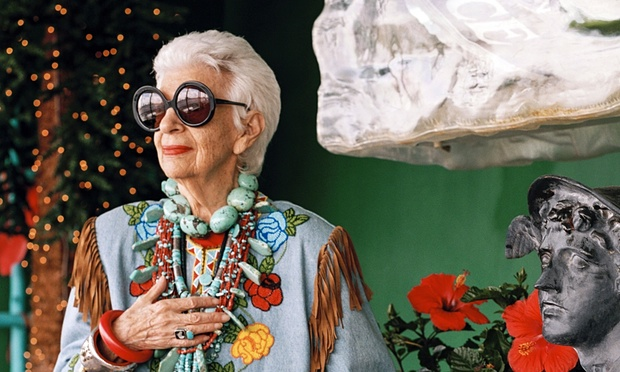
4e37cfaa-3606-11e5-_949112bI met my match – no, my better – recently when I watched a documentary entitled Iris. Iris Apfel is an American businesswoman, interior designer, and fashion icon. She and her husband Carl travelled the world to discover unique items and get inspiration for their textile business, and they did restoration work at the White House for 9 presidents, from Truman to Clinton (Jackie O. preferred the “Frenchie” stuff, disappointingly).

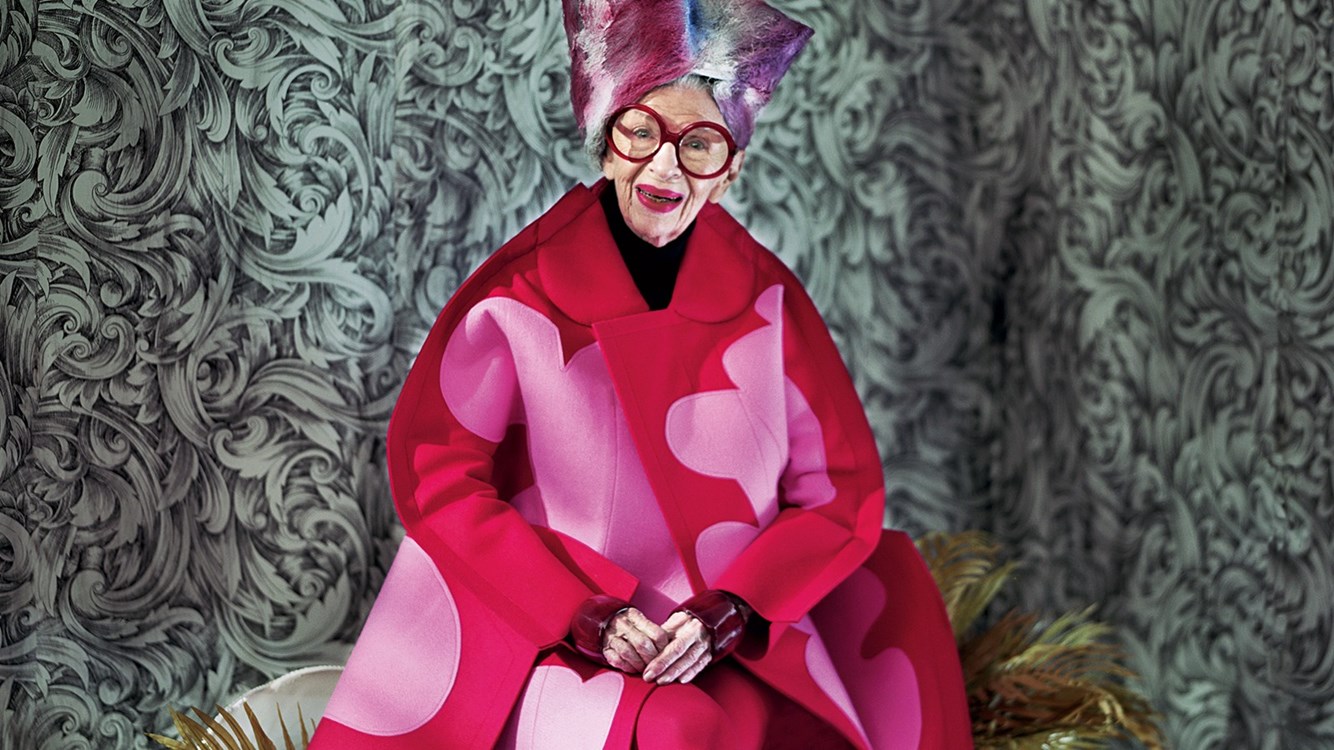
Iris is known on the streets of New York for her distinctive style. Always with a pair of 1068406oversized owlish eyeglasses, she layers on jewelry in a way I can only admire but never emulate. It’s amazing to me that her 90-something year old arms can support the weight of so many chunky bracelets.  The Costume Institute at the Metropolitan Museum of Art is so enamoured with her style, they put together an exhibition entitled Rare Bird: The Irreverent Iris Apfel. It was curated it with selections from her wardrobe and her accessories, and styled, of course, by Iris herself. Because Iris knows best. When the rest of the world is thinking “too much!” Iris is only getting started – and she’s right.

Iris isn’t just a fashion inspiration (or a  “geriatric starlet” as she would say) – she’s an boainspiration inspiration. The woman is 94 and still going strong. The documentary was done by Albert Maysles, who passed away earlier this year, just a month shy of the film’s release. And Carl sadly passed away in August, just three days shy of what would have been his 101st birthday. But these are all people living fully into their golden years, still being fabulous in whatever capacity they’re capable of. That really emboldens me. And I just like that she’s an outside the box thinker. And that her style reflects her upbeat personality. She looks different from everyone around her, and that takes courage.

She reminds me somewhat of Sean’s Granny, who is a fun and salty lady with her own unique style. Granny dresses exclusively in purple. I’m not even sure what store you go to for the purple pants, but she’s got em. How old do you have to be before you can just start doing that, I iriswonder? Granny is nearly 92 and as I’m new to the family, I’ve never known her any other way. She’s a great accessorizer to boot, and I know she sees a kindred spirit in me. Sean’s family is otherwise very traditional, they all look like they’ve stopped out of a Sears catalogue, and I’m just a very square peg to their very round holes. But both of his nonagenerian grandmothers have embraced me in ways no one else could. Granny has asked that I leave my jewelry collection to her in my will. Grandma likes to report back to her caregiver what outrageous hair colour I’m sporting on any given visit. Both will search me top to bottom for fresh ink. They were overjoyed when I sauntered down the aisle in black and fuchsia where there should only have been white. So maybe as you age, you become more yourself. More accepting of yourself, and less influenced by the opinions or judgements of others. And it’s that attitude that I like the best, in my adopted grandmothers, and in Iris Apfel, the star of a fascinating documentary you should look up on Netflix if you haven’t already, because they haven’t made one about Granny (yet).


Who’s the fashion plate in your family?

TIFF 2015: Remember

rememberSo begins Day 4 of my trip to the Toronto International Film Festival. It’s 9:30 in the morning and I’ve already seen 9 films and am worried that TIFF fatigue may be setting in. How much enthusiasm ccan I possibly muster up in four days?

If I didn’t have such high hopes for the latest film from Atom Egoyan (The Sweet Herafter), I probably would have been more tempted to sleep in. Unfortunately, the trailer and write-up on the festival’s website had really caught my attention. I was not disappointed.

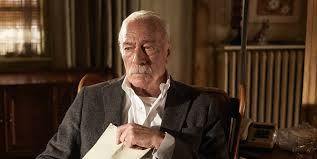
Egoyan specifically asked us to write spoiler-free reviews, which I have to admit made me feel pretty special to be getting a direct appeal from such a respected filmmaker so I want to respect his wishes. I can tell you that Christopher Plummer plays Zev, a Holocaust survivor who is now living in a nursing home. With his memory beginning to incline, he has no choice but to follow the mysterious Max (Martin Landau)’s step-by-step instructions to escape from the home and track down and exact vengence on the former Auschwitz guard who murdered both their families over 70 years ago.

Remember works equally well as a thriller as psychological thriller as it does meditation on memory and trauma. There are elements throughout the film that you may have seen before but the creative casting of the 85 year-old Plummer as the lead keeps the story from ever feeling too derivative.