Tag Archives: movies based on books

The Virgin Suicides

Mid-1970s Detroit: 5 beautiful, blonde sisters are all but cloistered in their home, kept safe and sheltered by their strict, religious parents. A group of neighbourhood boys become obsessed with these rarely-seen girls, and their intensity and curiosity is only heightened when the youngest sister, just 13, commits suicide.

One of those boys, now grown up and middle aged, recounts the story for us – is he a reliable narrator? He can only piece together the story with the rare glimpses they got from the outside. Even among his friends, he admits, they still argue about what exactly happened. But it says something that they still talk about it in such detail all these years later. It’s a morbid fascination that comes to include us.

Writer-director Sofia Coppola (based on Jeffrey Eugenides’ novel) loves to hide what her leading ladies are thinking, but they never remain as mysterious as in The Virgin Suicides, where the sisters are unknowable not by choice, but by the restrictive actions of their parents. In fact, they are desperate to communicate with the world, and in the 1970s, given all the barriers around them, this was in games of telephone, hand-written notes, even a lamp flicked on and off – morse code, perhaps.

The movie is ostensibly about the sisters (the next-youngest, Lux, played by Kirsten Dunst, especially), but the story really belongs to and is told by the people – the boys and the men – on the outside, trying and failing to make sense of it all. This sense of the outside looking in is often visually represented through Coppola’s shots of the house outside. We peek in through the windows, through cracks of the front door. When a little girl is taken away by ambulance, all the neighbours gather on their front lawns to watch. The cinematic voyeurism only magnifies what the characters do on screen. Short scenes in living rooms and beauty salons assure us that gossip is as rampant among adults as the teenagers who can’t stop watching, even through a telescope, if that’s what it takes. And when one boy, on the cusp of manhood really (Josh Hartnett), finally achieves the impossible and sleeps with the unattainable Lux, she wakes up the next morning to find him gone. He’s left her because once he’s pierced the soapy bubble of her elusiveness and mystique, he finds that she is, in fact, an ordinary girl, and is no longer interested. The sisters’ mythos has largely been constructed by others and is ironically fueled by the strictness of their parents.

This is a tragic story, one that manages not to have heroes or villains, simply victims and witnesses. The boys, in their youth and inexperience, are never held accountable, nor even judged. And the girls remain aloof, forever lost, reduced to a mere absence, a wistful grief.

Winter’s Bone

Ree is not your average high school student. With her mother semi-catatonic and her father in prison, she’s the one who cares for her mom and her younger siblings. But resources are scarce and times are hard – Ree (a young Jennifer Lawrence) is used to making do, but there’s very little you can make with nothing, and the doing’s getting thin. So things aren’t great and that’s BEFORE the law comes knocking on her door. Her father’s been released but is MIA and of course he’s put up their house and the little they own as bond. If he doesn’t show up to court, they’re out on the streets. And I don’t even begin to know what that means in the middle of rural, frigid, hostile Ozark Mountain.

So Ree takes it upon herself to go looking for him. The neighbours are vaguely MV5BMjIzNDI4NTc2MF5BMl5BanBnXkFtZTcwODU1MjM0Mw@@._V1_SX1500_CR0,0,1500,999_AL_threatening, heck the landscape is vaguely threatening, but her uncle Teardrop (John Hawkes) is outwardly threatening, and let’s take a moment to remember that it’s his SEVENTEEN year old niece we’re talking about. Everyone’s a little nervous about the specter of her father and nobody’s above slitting the throat of a teenage girl if it means upholding the code of silence that seems to permeate local culture.

Jennifer Lawrence was originally turned down for the role for being “too pretty.” She showed up unbidden to the next audition looking decidedly less so and won the part for her chutzpah. Most of her costars, however, were real locals with no prior acting experience. The costume designer exchanged new clothes for the locals’ own old pieces, and that’s what was worn during production. Shooting on location in Missouri, Lawrence got her hands dirty for the part, learning to skin squirrels and chop wood and shoot a gun. She received an Oscar nomination for her trouble (age 20 at the time, she was then the 2nd youngest to receive one). So did John Hawkes.

Ree seems to have sprung up out of nowhere, espousing values in a moral void. She is not your typical hero. She’s quiet and unassuming an wishes she could afford to disappear. Joining the army is the dream she abandons. It’s a pretty humble way to be a hero, but needs must, and director Debra Granik keeps the movie grounded among its people, never above.


Christmas At Pemberley Manor

Let me get this off my chest right at the top: this movie stars the same woman I accused of being inappropriate for Hallmark girl next door roles in Magical Christmas Ornaments. I still don’t like her, but they seem to have toned down her pornographic look. But aside from a brief stint on the revived 90210, her career seems to consist solely of made for TV Christmas roles, and a short called Silicone in Stereo.

Anyhoo, the leading lady’s plastic parts are the least of our worries when Hallmark is taking a stab at Jane Austen’s Pride and Prejudice. And yes, I did have to shower after writing that.

Anyway, Ms. Fun Bags plays Elizabeth Bennett, a New York event planner who has to organize a holiday event in a small town. The only suitable venue is Pemberley Manor, owned by and soon to be sold by the persnickety billionaire, William Darcy. Elizabeth employs the full force of her charms to land the manor anyhow, and though they had a rude first encounter, their work together has them falling for each other!

For my money, the guy who plays George (Cole Gleason) is MUCH hotter, so you know MV5BMTAwMDIxNzE3ODheQTJeQWpwZ15BbWU4MDU0MDI1OTYz._V1_SX1500_CR0,0,1500,999_AL_that no one at Hallmark was literate enough to get a good read on even the Cole’s notes of Pride and Prejudice. Of course, I would never want hipster George hooking up with bawdy Elizabeth, so I guess I can’t complain too heartily. Now I know that readers of Assholes Watching Movies are, on average, about a kabillion times more astute than what passes for programming executives over at Hallmark, so if you’re at all familiar with Austen’s work, then you know some serious bumps and misunderstandings are coming the way of Miss Bennett and her beau Darcy. Why, the small-town holiday festival itself is at stake!

Michael Rady (Darcy) is no slouch, but he’s acting like he’s in a much better movie. Act for the job you want? Hallmark is pretty loyal to its actors, and I guess it’s a nice steady paycheque, so who am I to judge? Oh, right, an Asshole. It’s kind of my thing. Bitch for the job you want! And not since the shoe addict’s tribute to Charles Dickens have I been so insulted. And maybe I was wrong about George vs. Darcy. They’re both very cute. And they both deserve better than a Bennett. And you know what? So do you!

What Dreams May Come

What a fucking movie, eh?

Chris Nielsen (Robin Williams) dies in a car accident and wakes up in an afterlife of his own making. The world he constructs is based on his wife Annie’s painting; everything is made of gobs of paint that squish beneath his feet as he walks and explode with colour when he grabs them. An old friend, Albert (Cuba Gooding Jr.), appears as his spirit guide, though he looks much younger than Chris remembers. It takes a little getting used to, but it starts to feel like home, especially when he reconnects with his children, who died years previously. The only thing missing is his precious Annie, but Chris finds out that the two will never be reunited. Annie committed suicide – she’s in hell, and there’s no coming back from hell. But Chris tries anyway, because heaven isn’t heaven without her.

What Dreams May Come is preachy even if you believe in this stuff, and if you don’t, well, it’s a hard message to swallow. We never get a glimpse of God yet we’re left wondering what kind of deity would kill all of Annie’s loved ones – her husband and both her children, in two separate accidents – and then judge her when the pain is just too much. It seems monstrous and unfair and is even harder to watch in light of Robin Williams’ own suicide.

PIX-1-WhatDreamsMayCome_1But visually – well, even now, 20 years on, it’s unlike anything you’ve seen. While the heaven-scapes are vivid and sometimes downright magical, it may be the visions of hell that haunt you. Robin Williams tiptoes through a carpet of faces – anguished people buried up to their necks, barely more than the holes necessary for breathing left exposed. The faces are pale and full of yearning. It’s awful – and it’s really awful when there’s nowhere for him to walk but over them.

Colours can be quite dominant – a blue tree a sad link to Chris’s past, the bright yellow of an eternal sunset, the red flames of hell. What Dreams May Come was one of only a few films shot on Fuji Velvia (RVM) film stock. Velvia is a type of film used most frequently for still photography of landscapes and other subjects because of its very high color saturation. It is only rarely employed for cinematography, usually when special effects are required – and boy were they! But these shocks of colour always mean something, whether in the afterlife, of simply through a flashback.

The “painted world” sequence is glorious. By building upon computer software developed by technical advisor Pierre Jasmin, a team devised a method of applying paint strokes to moving images captured on film so portions of the movie look like a three-dimensional moving painting. There are brush strokes that looks like you could reach out and touch them – and your hands would come away wet if you did. Live-action scenes were turned into living paintings with the optical flow technique, by which you track every single pixel in a moving image – in the end, it amounts to a layering of perhaps 10 different depths onto one image. See below for a comparison, before and after the effect is added to a scene:

PIX-7-WhatDreamsMayCome_7a1.jpg

PIX-8-WhatDreamsMayCome_7b.jpg

This film was both breath-taking and ground-breaking; many of the programs used had to be written specifically for the film. One of the most moving images is of a particular tree that almost serves as a connection between the soul mates, though one is living and the other dead.

PIX-4-WhatDreamsMayCome_4.jpg

Rendered using L-System software, a program for defining the algorithmic development of plants and branching structures, the tree was designed with thousands of branches and 500,000 leaves, all of which are blown off and scattered in the wind. It is spectacular and heart breaking to see.


What Dreams May Come won the 1999 Oscar for Best Visual Effects.

We Need To Talk About Kevin

Actually, we need to talk about Lynne Ramsay.

When a twisted movie comes out of the mind of Quentin Tarantino, we look at him and think – yeah, that makes sense. But Lynne Ramsay? You wouldn’t see it coming. But she does make these amazingly dark, fucked up films. And more often than not, she sticks kids into these movies, which makes them feel even bleaker, even blacker. She likes to make a film that is completely hers, and if she’s not happy, she walks (as she did with The Lovely Bones, and Jane Got A Gun) . She’s fantastically outspoken and she’s not afraid to leave a project if she doesn’t feel comfortable signing her name to it.

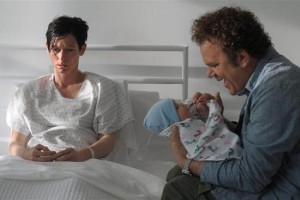
We Need To Talk About Kevin is adapted from the shocking novel by Lionel Shriver. we-need-to-talk-about-kevin-image-2Tilda Swinton plays Kevin’s mom, Eva. Eva always struggled to bond with Kevin, who cried incessantly around her but was rather sweet with others. Can a baby deliberately antagonize his own mother? As a child, Kevin finds ways to blackmail his mother into getting his way. When Eva and husband Franklin (John C. Reilly) have a second child, accidents escalate and Eva becomes fearful of Kevin while his father can always excuse his behaviour. This fundamental disagreement puts a strain on their marriage. As a teenager, Kevin (Ezra Miller) commits a massacre at his high school, murdering many students. Eva transforms her life to support him in prison.

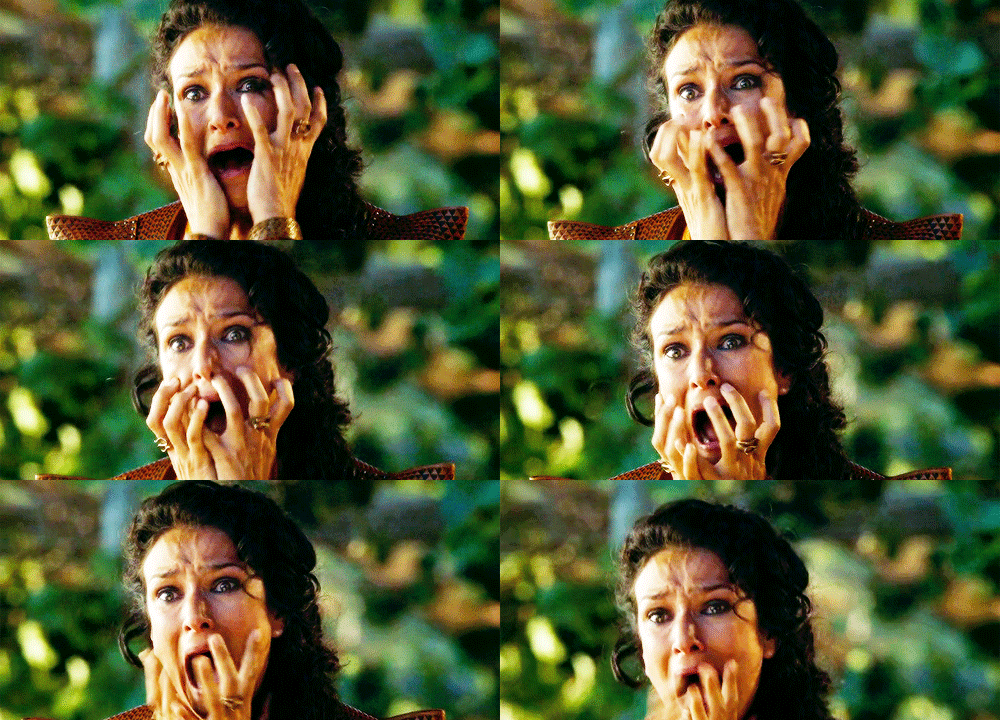
This story is the most fantastic, uncomfortable episode of nature vs nurture that we’ve ever seen. Was Kevin born “bad”? How early can we detect evidence of psychopathy? How early can a baby pick up on his mother’s ambivalence?

As his mother, Tilda Swinton steals the show. Of course, the events are her own recollections, offered in retrospect, so she’s the mother of all unreliable narrators. But is she wrong? Despite its title, this isn’t really about Kevin, it’s about his mother. She’s never been perfect, sometimes openly hostile, and we experience the film through her broken mind. Swinton is volcanic – so much bubbling underneath, perhaps ready to blow. It is criminal that she didn’t get an Oscar nomination. That she didn’t get the win.

But the most interesting and surprising thing about the film is that Ramsay takes our darkest society impulse – a child slaughtering other children, and ultimately marries it with themes of redemption. Just whose redemption is perhaps unclear as nothing is overtly stated. Kevin is failed by the system and possibly by his parents. Eva knew what was coming and failed to do anything about it. The film is so troubling it veers into straight-up horror at times, and Ramsay is always there, confrontational, unblinking. Her close-ups dare you to look away.

101 Dalmatians (1996)

Pongo the highly intelligent dalmatian is not just Roger’s best friend, he’s his alarm clock, personal assistant, and milkman. Roger is a video game developer but no one’s interested in his dalmatian game because it lacks a proper villain, a desire to annihilate.

Meanwhile, at the House of DeVil, Cruella (Glenn Close) runs a fashion empire and her look would makes Miranda Priestley look like a schlub; indeed, the devil wears DeVil. Anita (Joely Richardson), owner of Perdita, and one of Cruella’s top designers, attracts Cruella’s attention and inspires a spotted fur coat that has her boss salivating for the soft fur coats of dalmatian puppies. Unbeknownst to Anita, Cruella will stop at nothing to get her hands on the real thing. And thanks to a mutual swim in a park pond, Anita and Roger meet, and their dogs fall in love. So do they of course, and after a double wedding comes a double pregnancy (perhaps it’s lucky that Cruella only covets the skins of puppies and not babies).

Fifteen puppies come, and Cruella shows up with a cheque and a sac before Perdita’s even licked them clean. Not liking the wild glint in her eye, Anita and Roger refuse to sell them to her in a true moment of no fucking kidding.

Cruella kidnaps them anyway of course and only a strange network of animals can get them back.

Over 200 dalmatian puppies were trained for this film, and 20 adult dogs as well, some of them truly frightened of Glenn Close in full costume, hair, and makeup. I don’t know how costume designers Rosemary Burrows and Anthony Powell failed to score an Oscar nomination for their wondrous, over the top looks.

John Hughes, who wrote and produced, got the biggest paycheque for this film than for any other in his career because he snagged a piece of the merchandising and a staggering 17 000 different items were pumped out for the film’s release. There’s definitely a Hughes flavour to the film, particularly in the second half when the movie starts to feel like a doggie version of Home Alone.

This is perhaps the first of Disney’s live action remakes, and another, a prequel starring Emma Stone as Cruella, will hit theatres this spring.

Christmas Jars

Hope is adopted by the waitress who finds her abandoned in a diner as a baby. She’s working as an intern at a newspaper/aspiring reporter when her mother dies and suddenly Hope, now just 22, is alone in the world. And her apartment is broken into! It’s a crappy time, and right before Christmas, but a stranger brightens her day when she finds a Christmas Jar filled with cash left anonymously on her doorstep. It’s not just a ray of light during a difficult time, but a foot in the door of her budding career in journalism. A little digging uncovers a holiday phenomenon of giving.

The movie (which filmed right here in Ottawa during a cold snap last winter) was inspired by the novel of the same, by Jason F. Wright. The book, which came out in 2005, has since spawned actual Christmas jars being left anonymously across the country. Families fill jars with spare change over the year and leave it to a family in need during the Christmas season. The average jar may contain only $200 or so but it’s a gesture filled with kindness and always appreciated.

As the movie makes clear, a jar filled with not just cash but hope and goodwill, is proof that perhaps Christmas magic exists after all. A good Samaritan? A Christmas angel? A good-hearted neighbour? No matter: kindness is contagious, and whether it started with one person, it seems to have inspired a web of altruism.

Anyway, Hope (Jeni Ross) follows the trail of jars and traces their origins back to the Maxwells, a big-hearted family who basically take her in when she shows up on their doorstop pretending to write an article about their business. Of course then she stabs them in the back by publishing the jar story and breaking their anonymity, dousing them with a cold jar of betrayal. Will Hope offer another jarful of apologies? And will they counter with a jar of forgiveness? You’ll have to watch to find out if this movie ever recovers its Christmas spirit, but if you know the first thing about holiday movies, I think you can be fairly confident.

Chistmas With The Kranks

There was a time, a very weird time, when Tim Allen was the king of Christmas. He played Santa Claus in two VERY big movies and then he tried to keep the ball rolling with this one, I guess, though it hasn’t exactly captured a coveted ‘Christmas classic’ slot.

Christmas With The Kranks is confusing. Let’s start with that. Luther (Allen) and Nora (Jamie Lee Curtis) Krank are opting out of Christmas this year. Their only daughter has gone to South America to join the Peace Corps so they’re unencumbered and just not motivated to go through the whole rigamarole. They’re going on a Caribbean cruise instead. Sound nice? Well you’re an idiot. For some reason, in this film, every single of one of the Kranks’ colleagues, friends, and neighbours shits all over them for daring to make this decision. You might believe that every person has the right to celebrate or not, but you’d be wrong, at least in the Kranks universe.

Here’s where it lost me: the movie itself is disgusted with Luther and Nora for their selfish decision. They’re called the KRANKS – they’re Scrooges and we’re not supposed to approve. And because they’re such Christmas-hating freaks, everyone in the movie feels entitled to bully them. Luther’s secretary shames him for his past gifts. Nora’s pastor judges her bikini body. The town devotes the entire front page of their newspaper to humiliating them (the entire front page! because they’re skipping Christmas!).The neighbours, led by busybody Vic Frohmeyer (Dan Aykroyd), pretty much make war. They wage a campaign on their house as if Christmas is not a choice. They harass poor Nora, they chase down her car, they do things I am 100% sure are chargeable offenses. Nora in particular is terrorized by them.

Which brings up something truly special: Christmas With The Kranks is a comedy. Jamie Lee Curtis plays it like it’s a Christmas-themed horror movie. Every single thing she does is over the top, manic, panic-stricken, terrified.

Someone rang the doorbell?

You suspect the boy scouts are gossiping about you?

The Christmas ham you prefer isn’t available?

But while Jamie Lee Curtis is delighting me with her wacky and unnecessary performance, her character is majorly bumming me out. Nora Krank is one of those characters who I hope only exists in movies: she lives solely to be a mother. Her whole life is her daughter – when the daughter is gone, Christmas is pointless, but when the daughter suddenly announces she’s coming home for Christmas with no notice whatsoever (rude!), Nora drops all previous plans (remember that once in a lifetime trip worth thousands of dollars?) to throw together a Christmas with no food or decorations or gifts or guests or time to prepare. Which is when their neighbours all band together to help them out and the Kranks eat crow, apologizing for their previous bad behaviour and thanking their neighbours for being so wonderful.

But, like: WHAT???? I’m so steamed that the neighbours not only don’t get their comeuppance but their inexcusable, illegal behaviour is for some reason validated??? I mean honestly, if they had behaved this way to a non-white family it would be a hate crime.