
Director Jeff Nichols quietly tackles the subject of racism by holding up one Loving couple. Richard and Mildred Loving (their real last name) went to jail in Virginia in 1958 just for being married. Well, for being married to each other. For being married to a person of a different race than their own.
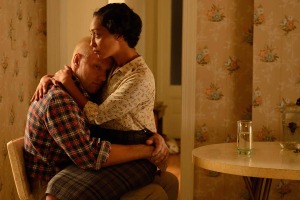 The movie’s success lies in what a small, personal story this is. We never feel like the whole south is against them – but it feels worse that it must be one of their neighbours who keeps ratting them out. The police come, guns drawn, to break down their door in the middle of the night in order to catch them in a crime – that of sleeping next to itch other in marital bliss.
Richard Loving is the world’s quietest man, and Joel Edgerton has quite an uphill battle to portray him and not come off as unemotional. Ruth Negga exudes talent beside him as his wife, Mildred, who is also shy and meek but the talkier of the two out of necessity. Neither wants any trouble. You get the sense they’d be happy not to challenge anything if only they could be left alone. But in order to avoid prison they get exiled from the entire state of Virginia for 25 years. 25 years of raising their babies with no parents, siblings, or friends around to watch. Their love of family is what encourages them to push back, with the help of a nervy lawyer from the ACLU (Nick Kroll). He wants to present the case to the Supreme Court. He’s ready to fight against discrimination and prejudice. Richard and Mildred just want to be married.
Jeff Nichols embraces their humble nature and keeps his movie similarly 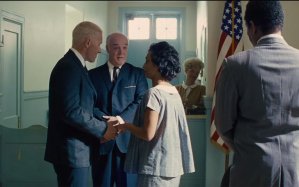 reserved. There’s not a lot of grandstanding. In fact, he turns his back (and his camera) away from the big, sweeping court scene in order to keep it once again in the heart of the family. Easily eliciting a flood of emotions, it’s actually a relief to see them played out so superbly on Negga’s face, and in Edgerton’s shoulders, rather than some melodramatic speech. The restraint here is a credit to Nichols’ directing, but also to this wonderful casting.
The decision in their case, Loving v. Virginia, was not unanimous, but they did declare Virginia’s “Racial Integrity” law to be unconstitutional, which voided similar laws in other states as well. Actually, it’s the Loving v. Virginia case that was cited in the 2015 decision to allow same-sex marriage as well. Richard and Mildred, two humble people who just wanted to be a family, allowed the same for countless others.
It’s the kind of movie you’ll want to applaud.
 The basic premise is: what if your food had feelings? Like, every night when the grocery store closes, the food comes alive in almost exactly the same way the toys do in Toy Story. But in Toy Story, the worst thing we do is neglect our old toys. Worst case play with them too roughly. But we flipping eat food! And before we eat it, we torture it: we cut it, mash it, boil it up, set it on fire. At first the food is blissfully unaware of its weird relationship with us, but when they eventually find out it’s supermarket anarchy.
 sausage fest. And of course I cracked a few laughs. I absolutely did. But mostly I didn’t enjoy myself much. I feel too guilty to laugh at something so obvious and offensive as a bottle of “fire water” with a Native American accent (provided by white guy Bill Hader). And while that might be the most culturally inappropriate, it’s not the hardest to watch. Not with a used condom sloppily lamenting its fate, or toilet paper experiencing PTSD.
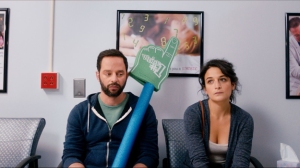 In 2001, Goodhart channeled these feelings into a script for a short film called My Blind Brother, starring Tony Hale, and it’s taken all this time to hustle that short into her first feature length, but here it is, in all its unflinching, unpolitically correct glory.
 And it doesn’t have much of a plot that I can summarize for you; it’s an unambitious slice of life. It’s about a guy (Nick Kroll) who shows up at his sister’s door in suburbia, looking for a place to live. He’s had some major setbacks and he’s feeling way too old to start his whole life over again. She’s (Rose Byrne) not in a much better place, kind of not sure about her job, her marriage, or even where to be or who to be. They’re listless. But the interesting thing about the movie, to me, is that they’re not painted as losers. They’ve just had some bad luck and some hard times, and that’s life.
 thoughtful and mature this movie is – maybe one of the more realistic movies about adult family relationships I’ve seen in a long while. Byrne and her on-screen husband, Bobby Cannavale, are a real-life couple, and they play well together. Throwing funny man Nick Kroll into the mix as a more or less straight-man is a bold and surprisingly effective choice. Everyone is some degree of flawed in this movie but we don’t make monsters out of any of them. They’re very relatable, and there’s a
  quiet generosity in the characterization, a forgiveness I’m not used to see in movies that was really refreshing and kind of a relief.

 ASSHOLES WATCHING MOVIES