Tag Archives: sci-fi

3022

In 2190, four American astronauts are taking their turn peopling a refueling station halfway between Earth and a moon of Jupiter where an outpost is being built. It’s a long shift: 10 whole years. Jackie (Kate Walsh) says goodbye to her daughter and joins captain John (Omar Epps), Richard (Angus Macfadyen), and Lisa (Miranda Cosgrove) aboard their space station, all of them in it for a very long haul.

The first year goes smoothly – the nobility of their calling, the novelty of outer space, yadda yadda yadda. The second one is fine: they dance, they play soccer, they hop beds. By the third year, the veneer has worn off and the mission is sprouting cavities. John in particular is having difficulty, experiencing night terrors that are increasingly violent and problematic. They don’t even make it halfway before the doctor on board, Richard, decides John is unfit for duty and they should pull the plug on the mission and return home. No one is happy with this decision, but in either case it gets taken out of their hands when something even more concerning happens. Experienced on board as a flash, Earth seems to have disappeared, had an extinction-level event, or at least that’s what happened to the best of their knowledge now that communication’s been cut. And if you thought they were going a little nutty before they were the last four humans in existence, guess what’s coming down the comet!

The movie takes places entirely aboard this refuelling station so we don’t get any outside knowledge, outside context, or any backstory on any of these characters. They’re astronauts, that’s all you’re going to get, and the qualification for astronauting seems to have diminished quite a bit somewhere in the next 150 years. I wish we had known them better, known their grief, known their motivation, known how a mother could leave her daughter to be raised by someone else.

Although there are some plot holes (inevitable in sci-fi, probably), director John Suits does a good job of cultivating tension. And you can’t deny the premise is a good one. It’s just a little wasted in this movie. They start rationing food and life support, but for what? There’s no one to save, nowhere to go. At what point is life not worth preserving? To be fair, the film does take a stab or two at fear of death versus fear of dying alone, and that theme is its own black hole. Bobbing around out in space, rational decisions already on short supply, nothing retains the same value. And yet some will always struggle to live on.

This isn’t the worst thing on Netflix. It isn’t great, but it may satisfy a craving for science fiction. Just know that some details will niggle and learn to let go. Or bring a calculator and prepare to double check some math.

Check out our review on Youtube.
Freaks

This is the kind of movie that throws you into a world and a situation we know nothing about, and writer-directors Zach Lipovsky and Adam B. Stein aren’t in a hurry to tell us.

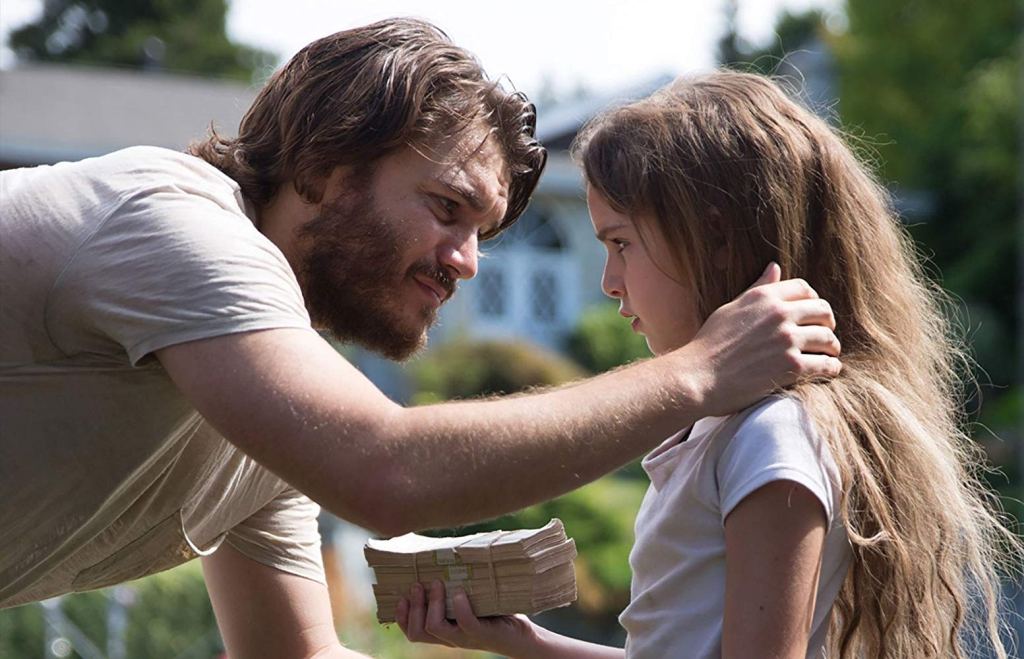
Dad (Emile Hirsch) has sequestered himself and his 7 year old daughter Chloe (Lexy Kolker) in their home. The drapes are duct-taped closed, the door is quadruple-locked, and no one is allowed in or out. They are preparing for or hiding from some ominous event, and the blood dripping from Dad’s eyes make me think it’s not just all in his head, no matter how paranoid and controlling this all seems.

Still, Chloe is a 7 year old girl. She wants to make a friend, to play in the park, to eat an ice cream cone. So when Mr. Snowcone (Bruce Dern) repeatedly parks directly in front of their home, Chloe can’t resist, and all she has to do is wait for Dad to fall into one of his sleeps to make her escape.

But on the outside, it turns out not everything Dad told her is a lie. There ARE bad people – it’s just harder than she thought to identify them. In fact, Freaks is almost the flip side to The Incredibles. I know, I know, that sounds like weird comparison, but you may recall that as we meet the Incredible family, we learn that super heroes have basically been outlawed and this family has been relocated and have to hide their powers to fit in. Chloe’s family also have powers of some kind, and public fear has meant that all the special people are either hiding or relocated or dead, and the government prefers the latter to the former.

The story keeps us firmly within Chloe’s understanding of her own powers and the circumstances in which she lives. She’s understandably frustrated with her confinement and she makes impetuous, chocolate-driven decisions. The directors have crafted a horror-sci-fi hybrid that keeps us guessing, unfolding at Chloe’s pace, not mine or yours or theirs.

Freaks is perhaps a little inconsistent, but it’s boldly directed and surprisingly well-acted. There’s more character development than a dozen other horror films combined and its message is as strong as it is relevant.

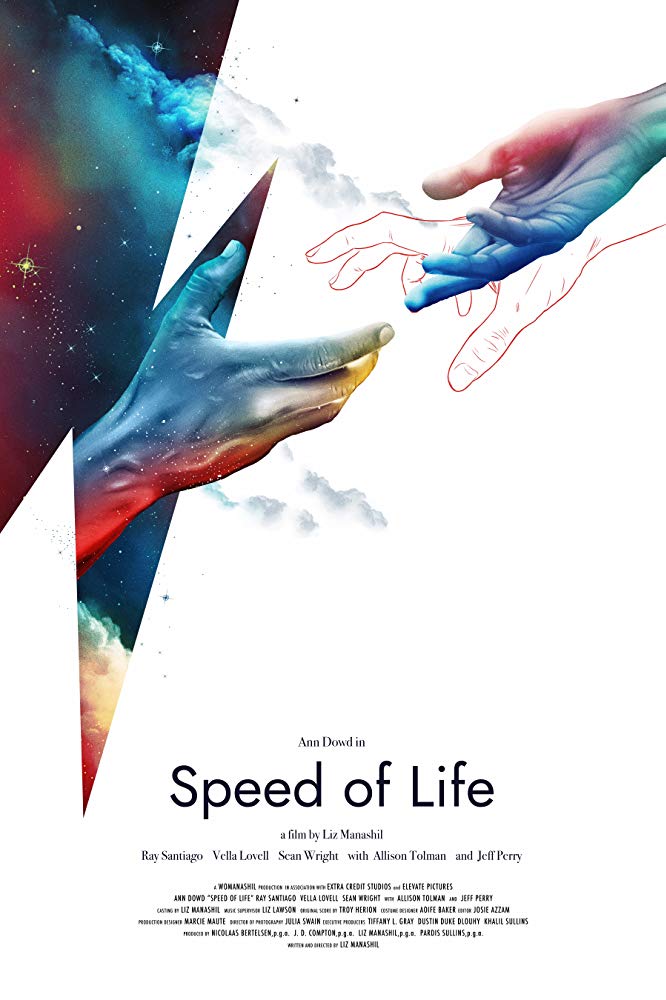
Speed of Life

June (Ann Dowd) is nearly 60 but hasn’t yet filled out the obligatory paperwork for relocation after 60. So says her house. Not in a weird way. The year is 2040 and her house is wired with a bunch of monitors and an Alexa-like voice tells her when her bills are due or the pH in her urine is less than desirable. June rips out all the monitors and buries them in her garden but you can’t really keep Big Brother out.

June has a good reason for not wanting to leave her home. Well, depends who you ask. A good reason to June sounds perfectly crazy to everyone else. You see, back in 2016 she and her boyfriend were having a fight. She’d just found out that David Bowie was dead and Edward, as usual, wanted to crack jokes. His inability to take anything seriously was a pretty big sore point in their relationship and they were on the verge of a blow-out fight about it when Edward disappeared. Like, a rip in the universe opened up and he went through it and was gone. Gone forever. Gone for the past 24 years.

But guess what? One night, Edward (Ray Santiago) reappears. He hasn’t aged a day. He doesn’t know that he was missing, presumed dead, mourned. Doesn’t recognize this older woman as his girlfriend June.

Speed of Life, written and directed by Liz Manashil, is interesting on a few levels:

a) The wormhole: where did he go, where has he been?

b) The relationship: is everything still there 24 years later, when June has changed so much and Edward not at all?

c) What happens in a few days when June turns 60 and “The Program” takes over?

The Program is a very interesting aspect; seniors 60 and over are given mandatory government housing where they no longer go outside, or socialize with other age groups. They are medicated, zombie-like. It’s a little funny because the old people in 2040 are Millennials. Old Millennials. It’ll happen to all of us. And I realize that Baby Boomers are sort of ruining everything just by reaching retirement age in such voluminous numbers. It’s crushing to the generations underneath them. So I get why you would want to deal with the problem. And yet Baby Boomers are also proving that 60 is hardly old at all. It used to be. Now it’s practically the same as 40. I know lots of Baby Boomers who are fit and busy and contributing in many ways, even outside employment (in fact: perhaps particularly outside employment). They are redefining old age even as they seem to reach it. They are living longer, yes, but also, I think, better. There are many more healthy years after retirement than ever before. So think of June (again: Ann Dowd) as somehow so old that she is now irrelevant to society…it’s jarring. It feels very Atwood. God I love sci-fi/ speculative fiction when it’s written by women.

TIFF19: My Zoe

If you love Julie Delpy, as I do, you probably love her talky scripts, her hyper-verbal, over-analytical characters who leave no thought unspoken. She has a knack for combining drama and comedy and elevating both with intelligent commentary. My Zoe is quite a departure. Which isn’t to say that it’s not smart or insightful. But it is very, very different.

Isabelle (Delpy), loving mother to Zoe (Sophia Ally) is going through a divorce from her husband, James (Richard Armitage). Their daughter’s custody is their battleground. They both love and want her desperately, but they might also have the need to hurt and wound each other however they can. It hasn’t been easy. Zoe is a sweet little girl who is too young to understand the animosity. When James notices a bruise on Zoe’s arm, he is not un-accusing of Isabelle. When Isabelle hears Zoe sneeze, she is not un-accusing of James. They are suspicious of each other’s parenting, determined to be the Best and Most Devoted One. I wish I could say that all dissolves when it turns out Zoe is gravely ill.

A mystery illness strikes quickly, and severely, and the waiting room where the two parents wait is a literal tiny glass box where their tension just bounces off the walls and back into their bodies, ratcheting up the hostility with each allegation lobbed. Is it love gone sour that has them at each other’s throats, or just fear and frustration? Truly, to be the parent of a sick child is the most helpless one can feel. It’s no wonder they seek their scapegoats. Up until this point, the movie is riveting: emotional and raw, full of anger and spite. But then it makes a u-turn.

The next half is so materially different that you might wonder if you’d fallen asleep and woken up during an entirely different movie. It’s still Julie Delpy, still playing a devoted mother, obsessed, even. But everything else has changed: the characters, her surroundings, and most of all: the tone. It’s disorienting trying to get your bearings in this new reality.

Delpy is of course quite good – sometimes astonishing, sometimes vehement, often dangerous and despairing. Her performance is a wail heard by mothers everywhere. But it also reaches beyond the normal, natural borders of motherhood and asks: what else? The answers are not necessarily comfortable.

In The Shadow of The Moon

A series of victims, each with the same puncture wounds on the back of their necks. They bleed from their noses, their ears, their eyes. They bleed and they die. The only thing that connects them is a mysterious woman in a blue hoodie, who seems to have visited each before they died. When Locke (Boyd Holbrook) and his partner Maddox (Bokeem Woodbine) investigate, along with their Lieutenant Holt (Michael C. Hall), what they uncover makes little sense.

Turns out, thanks to a glitch in the moon, every 9 years this hoodie woman (Cleopatra Coleman) gets to visit from the future and assassinate a few select people who would eventually contribute to Earth’s destruction. It’s like going back in time to kill Hitler’s grandparents. It’s for the good of humanity, but try telling that to the beat cop on the case. Locke gets a sense of this but no one else believes him, which means that every 9 years he gets crazier, more obsessed, more fixated on a narrative that can’t possibly be true.

The plot’s a little bumbly so it’s better to focus on how isolating it would be to hold a tiny piece of history secret in your heart, to chase a serial killer who reincarnates every 9 years, even after you think you’ve killed her. There’s no scenario in which that makes you a better person. Which the voice-over narration tells you pretty bluntly. And the thing about voice-over narration is that it’s usually used to mask glaring holes in a story that the film isn’t up to showing in a less obtrusive, sermonizing way. It’s rarely a good thing. And as you might guess, as we gain understanding of these slayings, the movie’s tone shifts from detective whodunnit to preachy science fiction – not exactly my favourite.

Jim Mickle’s In The Shadow Of The Moon starts off with promise and then declines steadily from there, perhaps falling to its own ambition, which does not incline me toward forgiveness.

Ad Astra

Space is a lonely place. Cold, dark, and endless, it is described as the final frontier for good reason. Still, for as long as mankind has understood that the stars are bright balls of gas billions and billions of miles away, we have dreamed of exploring the darkness, and solving the many mysteries that must be there, waiting to be found.

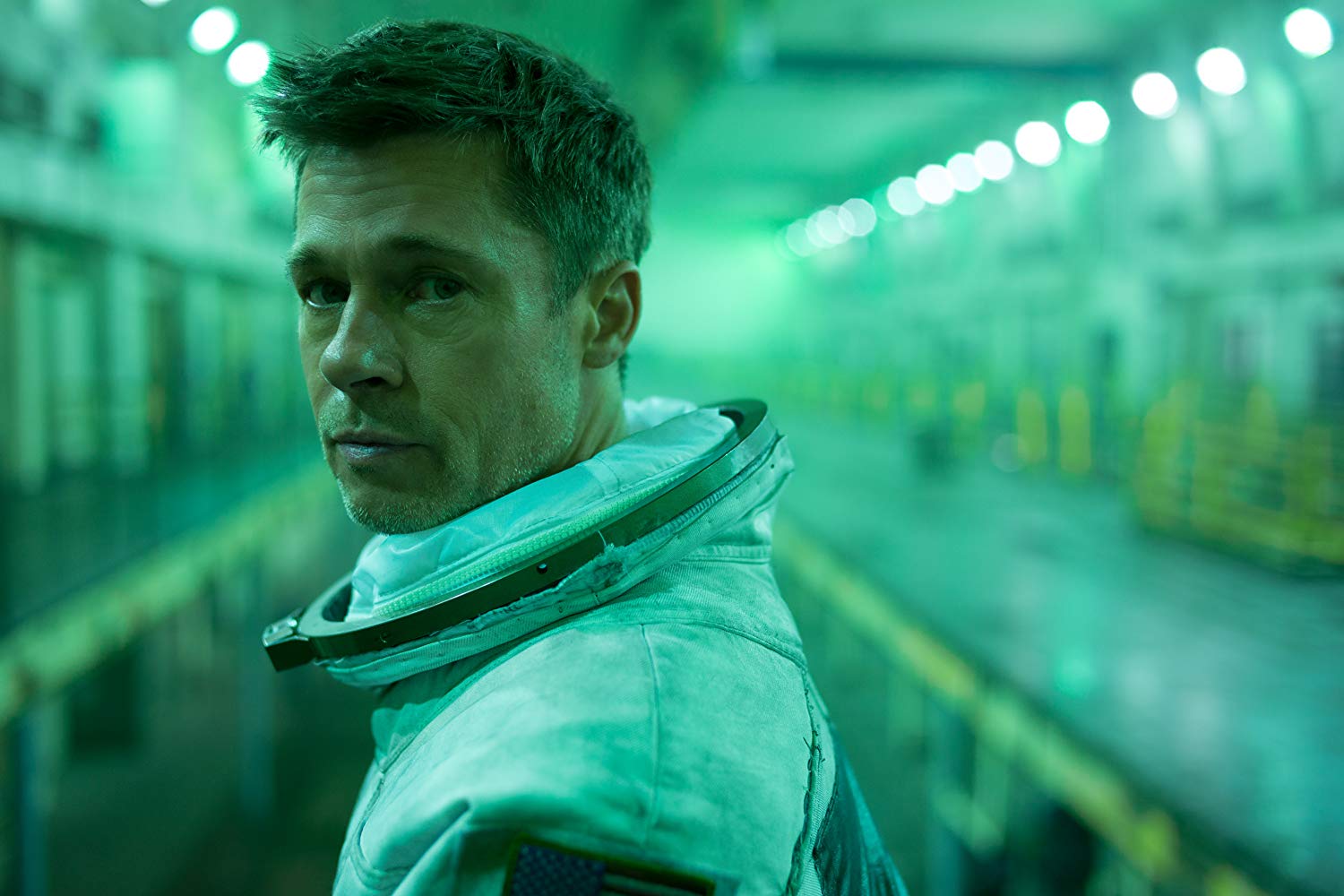
MV5BYmFmMDA1ZTUtMmNlOS00ODc3LTkxYWEtMTA0OWM4MDQxMjEzXkEyXkFqcGdeQXVyNjg2NjQwMDQ@._V1_SY1000_CR0,0,1500,1000_AL_Roy McBride (Brad Pitt) has dedicated his life to space exploration. For better or worse, Roy has also spent his life living in his father’s shadow.  Roy’s dad, H. Clifford McBride (Tommy Lee Jones), was a legendary astronaut best known for disappearing somewhere near Neptune while searching for extraterrestrial life.  Roy never really knew his dad, so when he learns his father may not be as dead as was previously assumed, he’s not exactly jumping for joy.  Though to be fair, Roy has clearly never jumped for joy in his life. He’s detached, completely closed off from everyone around him, dedicated only to the missions he’s given, and his next mission is to try to make contact with his long-absent dad, who is now believed to pose a threat to all life on Earth.

The audience gets to accompany Roy on his journey, but of course we provide no company to him. Roy is alone, and while he mostly seems not to mind (indeed, he is really more comfortable in the solitude), Ad Astra weighed heavily on me. The mystery of space has fascinated me for as long as I can remember, and accordingly I have dragged Jay to more sci-fi films than can be counted. Of those countless films, Ad Astra is the first to ask me to examine my curiosity and ask what, exactly am I looking for? What is it about space that draws our dreams away from our home and into the endless void?

There are no easy answers in Ad Astra, and plenty of time to think about the many big questions raised by writers James Gray (who also directed) and Ethan Gross. Space is very quiet, and Roy’s journey is a satisfingly slow one. The journey feels even all the more important because of the slow pace. It becomes more an emotional, and even spiritual, journey than a spatial one, and an exploration of what really matters to us, both individually and as a species.  And it’s a wonderful trip.

I, Robot

Detective Spooner (Will Smith) hates technology generally and robots specifically. In 2035, he immerses himself in vintage clothes, “antique” furnishings, and “oldies” music (most of which is from the 80s). When a brilliant robotics scientist (James Cromwell) is killed, and a robot is the apparent suspect, Spooner is either the worst man for the job, or the best.

Sonny (Alan Tudyk) is the homicidal robot in question, and this murder investigation is immediately making waves. Lawrence Robertson (Bruce Greenwood) is particularly motivated to cover up the crime. Robots are subject to 3 ironclad laws that should make harming a human impossible. Robertson’s company is about to inundate the market with robots for personal use. If the public gets whiff of this, it would destroy their appetite for keeping robots in their homes (understandably). So Robertson’s trying to put a lid on this thing, Spooner’s trying to blow the lid off it, and the hordes of robots are starting to feel more and more sinister.

I, Robot is inspired by the work of Isaac Asimov, a sci-fi writer with a curious and probing mind. He teases out the possibilities and then follows them to their logical, if uncomfortable conclusion. The movie is full of flashy embellishments that of course already look dated. 2004’s vision of 2035 already looks pretty shitty to us folk in 2019. Its original script (then called Hardwired) was a lot more Asimov, but once Will Smith came on board, it was quickly converted into yet another summer blockbuster in which Smith saves the world – with jokes inserted that even Will Smith found dubious. Anyway, it’s been robbed of the subversive Asimov element and turned into 96% action and 4% sci-fi, which, for the record, is officially the saddest ratio in the world. It’s like director Alex Proyas shoved in so many self-driving cars and futuristic guns that the brain just fell out. No room at the inn for critical thought or Important Questions or lingering doubt. Just expensive destruction and robots with unnerving eyes.

It’s not just the role Will Smith was born to play, it’s the role Will Smith has already played literally half a dozen times. He’s quite good at it – the chip on the shoulder, the slow-motion last minute saves. It’s rote, but it has a nice gloss on it. Nobody’s bothering to dig underneath the surface in this film, but it’s decent entertainment if you’re just looking for an excuse to shovel popcorn into face.

Fun Facts

The motorcycle that Smith rides in the movie is a 2004 MV Agusta F4-SPR, one of only 300 produced worldwide, capable of reaching in excess of 175 mph. He wrecked it during filming.

Will Wheaton and Emilion Estevez both tried out to play Sonny (the robot).

The most expensive CGI shot in the whole movie is when they digitally removed Will Smith’s penis from the shower scenes when producers suddenly got cold feet.

The Hitchhiker’s Guide to the Galaxy

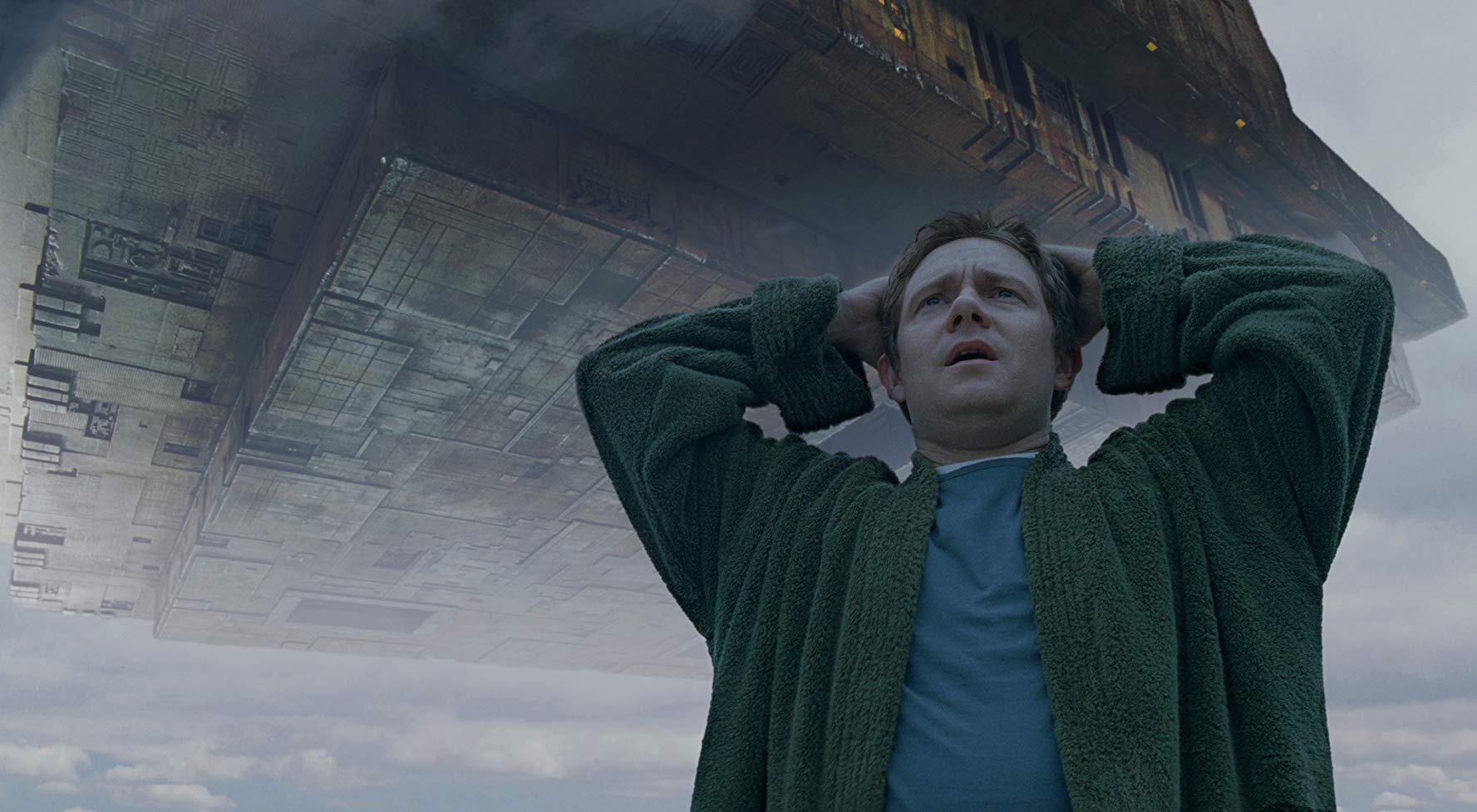
In Canada we have only two seasons: winter, and construction. We are right in the middle of steaming, stinking construction season here in Ottawa, and we’re facing a weekend where the 417, a major highway and our main east-west artery, will shut down entirely. This after a flood season has left our infrastructure crippled and our commutes doubled. Which sort of makes the opening scene of Hitchhiker’s seem a little more likely. In order to make way for an intergalactic superhighway, a little lowly planet called Earth has to be demolished. We meet our hero Arthur Dent (Martin Freeman) just minutes before the Earth’s destruction. He learns that his good pal and towel enthusiast Ford Prefect (Yasiin Bey, then billed as Mos Def) is in fact an alien who can call in a favour to save his friend, but erm, nothing else of human history (don’t worry, the dolphins have already defected – so long, and thanks for all the fish).

They meet up with a clinically depressed robot, Marvin (Alan Rickman), an egomaniacal president, Zaphod Beeblebrox (Sam Rockwell), and most improbably, Arthur’s Earthling crush, Trillian (Zooey Deschanel). Together they’re going to zing around the universe, searching for the Ultimate Question, the meaning of life, a single solitary spot of tea, new chapters for an ambitious encyclopedia, and any remaining shreds of life as they knew it.

Director Garth Jennings bit off more than he could chew trying to adapt Douglas Adams’ influential and beloved work, but you can hardly blame him for trying. Is the movie always coherent? Of course not. If you aren’t familiar with the book, you might find it hard to keep up. If you are familiar with it, there are no doubt bits and bobs that you’ll miss. It is not so much a faithful adaptation as an ode to it, with Adams’ blessing, and mostly by his own invention (such as the sneeze religion helmed by John Malkovich – achoo!). But if it’s a little sloppy, well, what else can you expect from a movie with an improbability drive?

Ivan Reitman and friends actually optioned the film as far back as 1982, thinking it might make an interesting vehicle for Dan Aykroyd and Bill Murray (this is no doubt true). But then Ghostbusters came calling and they were off on a tagent, and Hitchhiker’s languished in development hell, at one point with Hugh Laurie and Jim Carrey slated to appear (I’m less thrilled with that pairing, personally). Douglas Adams wanted Hugh Grant for Dent but I’m so, so glad it went to Freeman instead, who plays the everyman so perfectly he is often overlooked.

In 2005’s finished product, Sam Rockwell steals the show as Zaphod Beeblebrox, basing the character on likely unequal dashes of Bill Clinton, Elvis, and Vince Vaughn. Personally, watching it in 2019, I saw all kinds of his George W. Bush in the role and it gave me a whole new appreciation for a performance I already loved.

Anyway, it’s inevitable that a film adapted from such a great book would fail to live up to it, but I actually give it a lot of credit and find it highly watchable and highly entertaining. So many of the little jokes really do work on the screen, and everyone involved is clearly relishing the opportunity to be involved. It’s hard not to find joy where so much exists.


Alita: Battle Angel

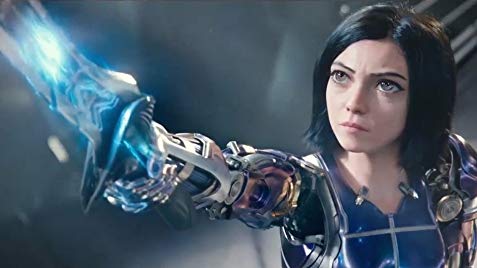
Alita: Battle Angel has robots, cyborgs, martians, floating cities, subterranean caves, hyperviolent arena sports, space battles, and an all-seeing immortal dictator pulling the strings behind the scenes.  And somehow, it manages to make all that stuff boring.  Like a three-handed guitar player (and make no mistake, Alita includes a three handed guitar player), Alita: Battle Angel is far less than the sum of its parts.

MV5BODMzMjlmZTYtOGU2NS00NGM2LWI4ZDItNzQzYTYwNDA2ZmU4XkEyXkFqcGdeQXRzdGFzaWVr._V1_CR21,0,939,528_AL_UY268_CR10,0,477,268_AL_The titular Alita (the Battle Angel, as it were) is found by Dr. Ido (Christoph Waltz) in an Iron City garbage heap. Well, Alita’s head and shoulders are, but the rest of her body is missing. Turns out, Alita is a 300 year old cyborg from before the “Fall” and Dr. Ido really easily brings her back to “life”. Like, it’s no trouble whatsoever for him to reboot her, and you might wonder why no one else has tried for the last 300 years.  But don’t, because if you start asking questions like that about this movie, you will never be able to stop.  Trust me.

We come to learn that in Alita the “Fall”  was a war between martians and Earth’s floating cities, rather than a name for the second worst season (anyone who thinks fall is worse than winter has never lived through a real winter), or an elevator between Australia and post-Brexit London (doesn’t it seem like Boris Johnson’s plan for Brexit might be to build that stupid elevator from the worse Total Recall? But I guess that makes sense when Donald Trump seems to have already ripped off the Mars colony part from the also-not-great original).

The only floating city that didn’t fall happens to be the one directly over Iron City, and oh yeah, Alita was found in the garbage falling from that floating city, and oh yeah, somehow after 300 years she still is in great condition without her body even though if any other cyborgs in this movie lose a finger they instantly die (except where screaming would add dramatic effect). Also, the only way to get to the floating city, obviously the home of the immortal dictator guy (Edward Norton!?! I had no idea he was even in this but of course Jay spotted him right away), is to win the Motorball championship (like a White House visit, I guess), but there is infinitely more political commentary in the previous two paragraphs of this review than in the whole of Alita. That’s probably for the better, considering how brainless this James Cameron script is. This was the best he could do after working on it for TWO DECADES?

There’s more back story and then some Matrix-lite fight scenes with a lot of cyborg spines and blue goo, but at this point I hope you are realizing that it doesn’t matter because it is all really stupid and you should avoid this movie at all costs. Some of the cyborgs might be kind of cool I guess but when Christoph Waltz, Jennifer Connelly, Mahershala Ali and Edward Norton clearly can’t be bothered with this movie, why should you?

Astronaut

Becoming an astronaut was always a dream of mine.  As early as I can remember, I was fascinated by the idea that there were other planets and stars surrounding us, and the idea that I could float around in outer space and jump so much higher and further on the moon than on Earth.  At the time I lived in Kentucky and learned at school that I could write to NASA and they would send back random photos of space shuttles, planets, satellites, and so much more.  So write I did.  I wrote almost as many letters then as Jay does now (she is singlehandedly keeping Canada Post’s lettercarriers employed), and ended up with stacks of photos that I treasured throughout my childhood.

AstronautObviously, I am not the only one who dreamed of becoming an astronaut.  Space travel is clearly on a lot of people’s bucket lists, as shown by the proposed reality show cataloguing a one-way mission to Mars (which went belly-up earlier this year), the numerous space flights available for purchase (Virgin Galactic has collected $80 million in deposits for 90 minute voyages costing $250,000 each), and NSYNC’s Lance Bass attempting to buy his way onto a Russian rocket (he couldn’t afford it after Justin Timberlake left the band), among other examples.

In Astronaut, Angus (Richard Dreyfuss) definitely has space travel on his bucket list.  He’s always looking to the stars and, as a retired civil engineer, possesses the type of scientific knowledge that might grant a seat on a NASA mission.  Unfortunately, he never secured a NASA spot during his career and his dreams of space travel seem more and more distant as his health begins to fail.   But the stars align when a billionaire (Colm Feore) announces a contest that will give the winner a seat on the first commercial flight to space, which otherwise would be too expensive for Angus (and the rest of the 99%) to afford.  You can probably guess who becomes one of the twelve finalists in that lottery, but even with that stroke of luck things don’t come easy to Angus, not only because of the health issues I mentioned, but also because he’s trying to settle his wife’s estate and he’s struggling with an impending move to a retirement home.

Astronaut asks us to suspend our disbelief on more than one occasion, and in exchange rewards us with a sweet and engaging fairy tale.  The pieces fit together so neatly and conveniently that there is never any real tension or possibility of failure, but the movie works even with relatively low stakes because of Dreyfuss’ stellar performance.  Angus is a great combination of gruff and personable, and Astronaut is elevated by Dreyfuss’ wonderful chemistry with Angus’ family and friends, particularly his daughter (Krista Bridges), his son-in-law (Lyriq Bent), and his grandson (Richie Lawrence).

Writer-director Shelagh McLeod wisely focuses on Angus’ personal relationships rather than the space flight itself and Astronaut is better for it, because the fantastical (and potentially unbelievable) elements of the film are just minor details.  What matters is watching Angus reach for the stars, and I happily cheered him on from start to finish.