
As the trade war between the US and China escalates, American Factory arrives on Netflix and shows why this war is one that China is likely to win. The US is at a severe disadvantage in this war that it started, because the American Dream now belongs more to China than to the endangered American middle class, and because idyllic post-war America was built in large part on cheap imports from China and now the pendulum is swinging the other way.
American Factory is the first Netflix film from the Obamas’ production studio, and its release is perfectly timed. China and the US continue to threaten each other higher and higher tariffs, announcing another round of increases to take effect 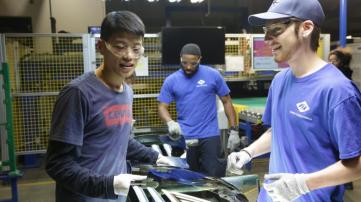 this fall. Of course, these threats are not really to the countries themselves; they are threats to consumers, who will inevitably bear all these increases in the form of higher priced goods.
While American Factory isn’t really about tariffs, the tariffs are still an important part of the story. That’s because the tariffs were instigated by the US in order to bring manufacturing back to the American heartland, which has been decimated by the loss of factory jobs as more and more of those jobs elsewhere to take advantage of cheaper labour and lower safety standards.
One of those shuttered factories is a former GM plant in Dayton, Ohio. Its closure in 2008 put thousands out of work, but in 2015 Fuyao Glass America, a Chinese-backed company, reopened the plant and brought hope back to Dayton. However, we quickly see that the reality is not quite as rosy as the fantasy, because the workers have taken a 30% pay cut, safety standards are not enforced, and management uses every dirty trick in the book to prevent the workers from unionizing.
Chinese workers are brought in to show the Americans how to operate the plant, and managers from the US are trained in China to help them better motivate the workers. American Factory captures the remarkable contrast between the workers’ attitudes in the two nations, and the attitudes of the nations as a whole. The Chinese are willing to work harder for less, sacrificing their bodies and family lives for the benefit of the company. The Americans, on the other hand, feel entitled to earn more money than their Chinese counterparts without making any of the same sacrifices.
Something has to give there. In both the Fuyao factory and in the larger trade war, the Americans can’t possibly get everything they want but are oblivious to that reality. Working-class Americans seem not to have realized that their consumer-centric society only exists because of other countries’ cheap labour, and that unskilled labourers will never again be “middle class”. If these American factory workers want to achieve their desired standard of living, they need to acquire marketable skills. Labour is no longer marketable on its own, and China and the rest of the world are eager to live the American Dream. China and the rest of the world also clearly want to realize that dream so much more than the Americans do, so in any head-to-head battle the Americans are going to lose out. The only question is whether the Americans will realize that before it’s too late.

 Despite the fact that she’s undervalued and underpaid, Lisa clearly cares about her job, and about doing her best. And she definitely cares about her girls. Usually when your employer starts calling you ‘family’ it’s because they’re about to ask you to do something for nothing. But when Lisa says it, she means it. She’s got misplaced optimism coming out the wazoo but on a day like this, even Lisa’s perky sunshine demeanor will be tried.
 Malkin (Oscar Isaac) and company manage to pick up Eichmann (Ben Kingsley) thanks in part to his indiscreet son who still hates Jews all the way from Argentina. They sweat it out in a safe house. For safe travel they require Eichmann’s signature, and Malkin vows to get it. The interrogation is heated; Eichmann is emotionally manipulative and he knows exactly which buttons to push. The agents have agreed to bring him back to Israel for a public trial, but not killing him proves to be a very big challenge for almost every single one of them. Eichmann knows this trial is not likely to rule in his favour, so he delays endlessly, which is also to the benefit of the Nazi rescue party determined to find him.
 keep Norway rapt. Breivik, who orchestrated the attacks to protest immigration and other stupidly racist, extremist right-wing bullshit, claimed insanity in order to avoid prison. But he also desperately wanted to stay in control of the trial, demanding the prime minister be called as a witness, and insisting that he have the opportunity to address the court to spout more of his hate, and so after “playing a role” for court-appointed psychiatrists, he decided to retract and change his plea.
 expecting a ring from her boyfriend of 2 years and instead gets a puppy. Boyfriend accuses her of being “too perfect” so a breakup tailspin ensues, including stops at ‘fuck you hair’ and ‘drunkenly buzzing it all off.’ But can Violet change her attitude and values to reflect her newly bald head?
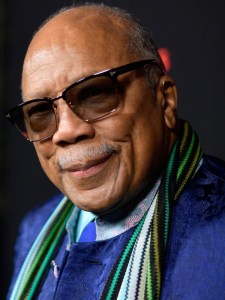 wrote movie scores and TV theme songs. He traveled the world making music, and he’s given back to the community by mentoring young musicians and passing the baton, literally, to new composers. He met Michael Jackson while working on The Wiz, and went on to produce Off The Wall, Thriller, and Bad with him. Oprah credits him for ‘discovering’ her for The Color Purple, which he scored and produced. He also composed the music to Will Smith’s Fresh Prince theme song – he was a show producer, and Will Smith auditioned for and signed a contract at Quincy’s 57th birthday party.
 childhood when his beloved maid’s unexpected pregnancy collided with his parents’ bitter divorce. It marked him for life, and all these years later he’s strung together the haunting images from that period and used his memory to paint in the rest. He’s only a minor character in the film, it’s really an ode to the women who raised him: his mother, the two servants, and Mexico herself.
 ASSHOLES WATCHING MOVIES