I was babysitting my nephews this weekend, and after dinner we got a big bucket of popcorn, drinks in spill-proof containers, and crawled into bed to watch some “scary” Halloween movies together. Brady is newly 8 and Jack is 5 and two thirds so I didn’t want anything that was inappropriately scary, but I wanted to give them a taste of Halloween and who better than Tim Burton to do just that. We watched Frankenweenie, a favourite of mine, and Jack now has some very pervasive ideas about reanimating dead pets with electricity. I suggested to him that this was something that might only work in movies, but no, he assured me, this was not so. Apologies to my sister’s dog, whose corpse may suffer any range of indignities.
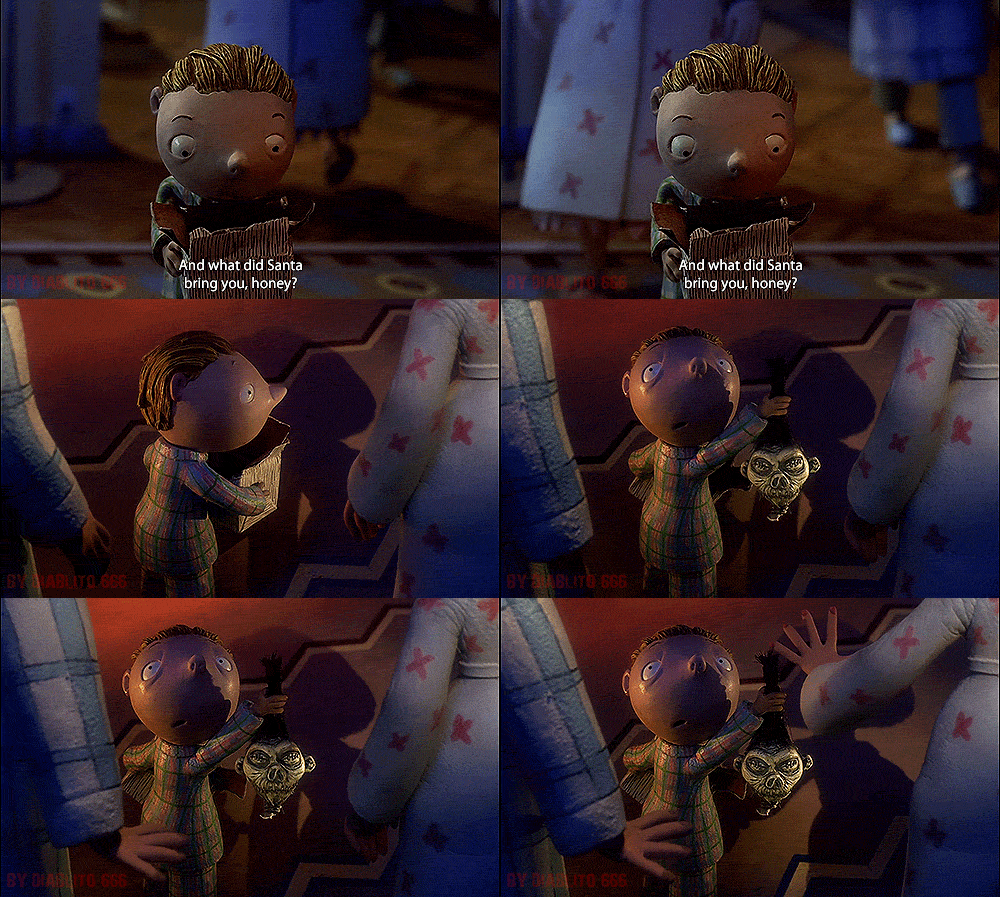
Interestingly, The Nightmare Before Christmas didn’t go over quite as well. It wasn’t too scary for them, but it was perhaps too boring. The fault is perhaps mine: they watched it fairly attentively until Herbie The Wonder Dog came up for a cuddle, and then they discovered some of the tricks he was willing to do in order to earn popcorn treats. So that did pull them away from the movie a bit. They were also taken by surprise by its ending – not the content of it, but the timing. And though I hadn’t remembered it being rather short, it is – only 76 minutes, and that’s counting credits. So we may have to try again next year to really give it a fair shake because this movie is quite beloved and dare I say almost cult-worthy…although, is that just among adults?
Jack Skellington (“Is he made of sticks?” Jack asked, and I didn’t exactly want to say bones, so I called him a skeleton and that seemed to appease him) is the pumpkin king, a resident of Halloween Town, where every year they put on a lavish but repetitive display of ghoulish horror. Jack Skellington is bored. So when he finds a clearing in the forest with portals to other holiday towns (and don’t you wish we’d gotten even a glimpse of some of the others?) you bet he opens up the most alluring and steps into the wonder of Christmas Town.
Now, very likely there are residents of Christmas Town who are every bit as bored of doing the same old thing every year as old Jack Skellington is, but we don’t hear from them. Instead we watch Jack’s eyes go round as he is mesmerized by all the merriment. When he eventually returns home, he conscripts Halloween Town’s citizens to put on their own Christmas…but a bunch of ghosts and monsters don’t quite pull off the winter wonderland of Jack’s vision. And the ways in which they get it wrong are quite endearing. Until they kidnap Santa Claus (Sandy Claws, as they mishear the title) and Jack steps into the role clad in trim red velvet suit. (“I’d punch him right in the nose,” says little Jack, quite perturbed by the Santa imposter).
Tim Burton has said that it was a shopping mall that sparked the idea for the film – watching as the Halloween merch gets taken down the day after the holiday and immediately replaced with Christmas stuff (of course, that was back in the 90s when we still had a modicum of decency…today both holidays exist commercially in tandem, as early as August).
Our kids may not have been big fans of the film, at least not yet, but there’s something about it that appeals to many others. Matt, Sean and I are headed to Disney World in a few weeks and we’ll witness Magic Kingdom go from Mickey’s Not So Spooky Halloween to Mickey’s Very Merry Christmas, literally overnight. And the great thing is: Jack and Sally, rarely seen in the parks otherwise, make special appearances over this holiday time. Disney Land’s Haunted Mansion gets a Nightmare before Christmas makeover, and you can purchase specially themed ears to match, and treats too of course, because Disney is a master at getting you to part with your money.
90% of Hall Pass is me cringing at things that were questionable at best in 2011 but in 2019 are grounds for cancelling. Was there ever a time when I thought Fred (Jason Sudeikis) and Rick (Owen Wilson) were basically “good guys”?
They’re a couple of married, middle-aged guys who still act like hound dogs. Rick can’t stop ogling women and Fred likes to masturbate in his car. They act like their wives are the mean gatekeepers between them and mounds of lust-filled sex. Tired of this gross imbalance, their wives Maggie (Jenna Fischer) and Grace (Christina Applegate) give them each a hall pass: a whole week to live like their single, to do what they want, to fuck whomever they want, no questions asked. Sound like heaven?
The truth is, Fred and Rick are lucky to have landed and locked down their wives when they did. They do not deserve them. But freed of them, it suddenly becomes embarrassingly clear that there isn’t heaps of pussy out there waiting for them. Nobody wants a couple of old farts in golf sweaters and mini-vans. But just as they’re starting to learn their lesson, and they’re men so you know I’m talking day 6 of 7 cause it took a minute, it finally occurs to them to wonder what their wives are up to.
Anyway, Bobby and Peter Farrelly have taken the concept ‘men are pigs’ and leaned in. Did the world need another example of male infantalism? Of course not. And yet here we are, struggling to figure out which is worse – the boys’ desperate need to get laid, or the Farrellys’ desperate search for laughs.
As a young fairy, Maleficent is like any other girl, wings and horns notwithstanding. She likes adventure and good stories, and a little mischievious boy named Stefan with whom she shares a first kiss. But as they grow older, Maleficent (Angelina Jolie) must protect her land from an evil king and Stefan (Sharto Copley) has taken off in pursuit of ambition and power. On his deathbed, the king calls on his trusted inner circle, including Stefan, to kill Maleficent to earn his crown. Stefan seeks her out to warn her,ostensibly, but it plays out a lot more like betrayal. Woe her broken heart.
King Stefan is crowned and soon there is a child: a girl. Maleficent is furious, and her fury is a glorious sight: green light, crumbling walls, the world bends to rage and damn I wish my anger could manifest itself like that. Meanwhile, the kingdom is celebrating the birth of little Aurora but Maleficent crashes the party, putting a curse on the little sleeping babe. Unfortunately, she learns too late that this child, this sleeping beauty if you will, is perhaps the one person who could have united the land that Maleficent holds so dear.
Disney has learned to pay heed to their villains lately, as well they should. They are often more interesting than the so-called heroes, and in Aurora’s case, this is 137000% true. Sleeping Beauty is as passive a princess as they come since she’s doomed to spend her own movie either in hiding, or deep in sleep. Maleficient, on the other hand, is dripping with vengeance, steeped in power. It’s magnificent.
The Disney World parks, however, still default to the princesses. On our upcoming visit to Disney World, we’ll visit Aurora at Queen Elsa’s castle. Last time we met her in Cinderella’s. Lucky for us, we caught her between naps.
Halloween, however, is the one time of the year Disney embraces its dark side. Only around Halloween can villains be spotted at meet and greets in the park. They even get their own merch and treats – check out this Maleficient look-alike ice cream cone, available at StoryBook Treats. Her dragon breathes fire at parade goers. Halloween seems like an exceptional time to visit Disney World for some value-added extra fun and fright, but alas, Disney rips down its Halloween decorations on the night of November 1st and by the 2nd, the park is transformed for Christmas, which means we’ll get an awfully early start on the holiday.
Anyway, the Maleficent film tells the villain’s unknown side of the story, and it shows that she is perhaps not as evil as we’ve been led to believe. Disney is an unreliable narrator, y’all.
Keep your eyes peeled: two of Jolie’s children, Pax and Zahara Jolie-Pitt, have cameos in the film. Daughter Vivienne played the baby Aurora, and was the only child on set who was frightened of her while in costume. Her Maleficent cackle was developed at home, with her children as barometers, voting on which was just right. Jolie confesses she kept a pair of horns for herself, though presumably not the ones so heavy she’d get neck pains even after very short scenes. She had a hand in developing Maleficent’s look – Disney wanted to capitalize on her beauty of course, but Jolie insisted on Maleficent’s more devious look, drawing inspiration from Lady Gaga. Even so, it was Lana Del Rey she hand-picked to sing Once Upon a Dream for the end credits. The movie has the biggest budget for a first-time director, but Robert Stromberg had an excellent pedigree, with two Oscars under his belt for production design on Alice in Wonderland, and Avatar, which understandable earned him substantial credit with the Disney team.
Angelina is wonderful in the film and this first one performed so well that a sequel is expected in theatres October 18th.
Sean and I both saw Joker at TIFF last month, at back to back screenings. We met up for lunch afterward (I believe we had a slight pause before seeing the Harriet Tubman movie) because boy did I have thoughts, comments, and questions, which I tried not to yell too loudly because: spoilers.
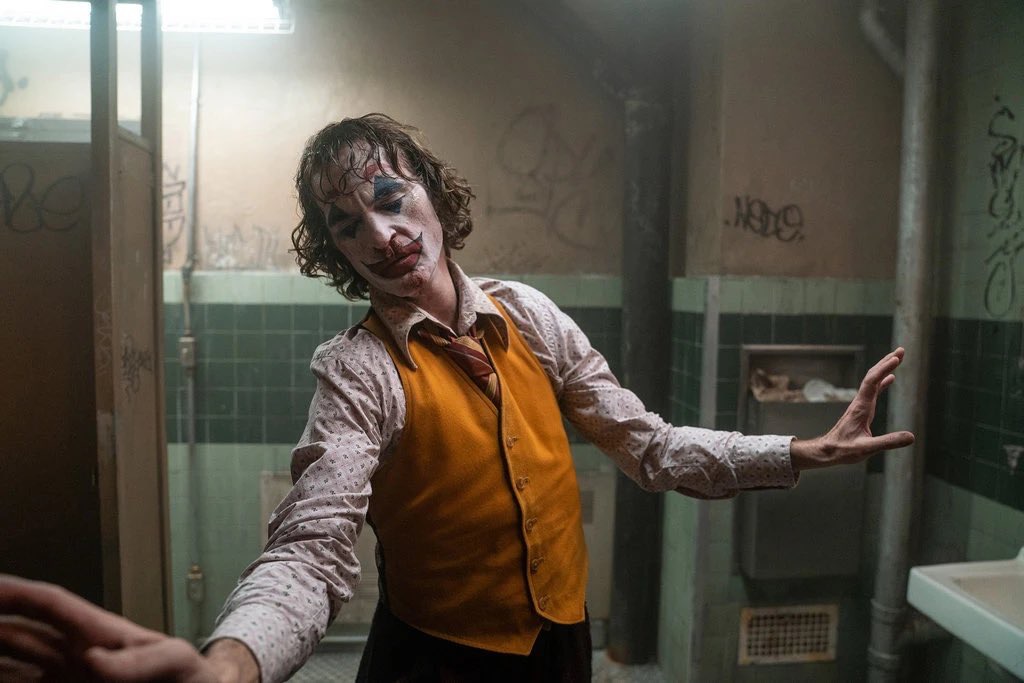
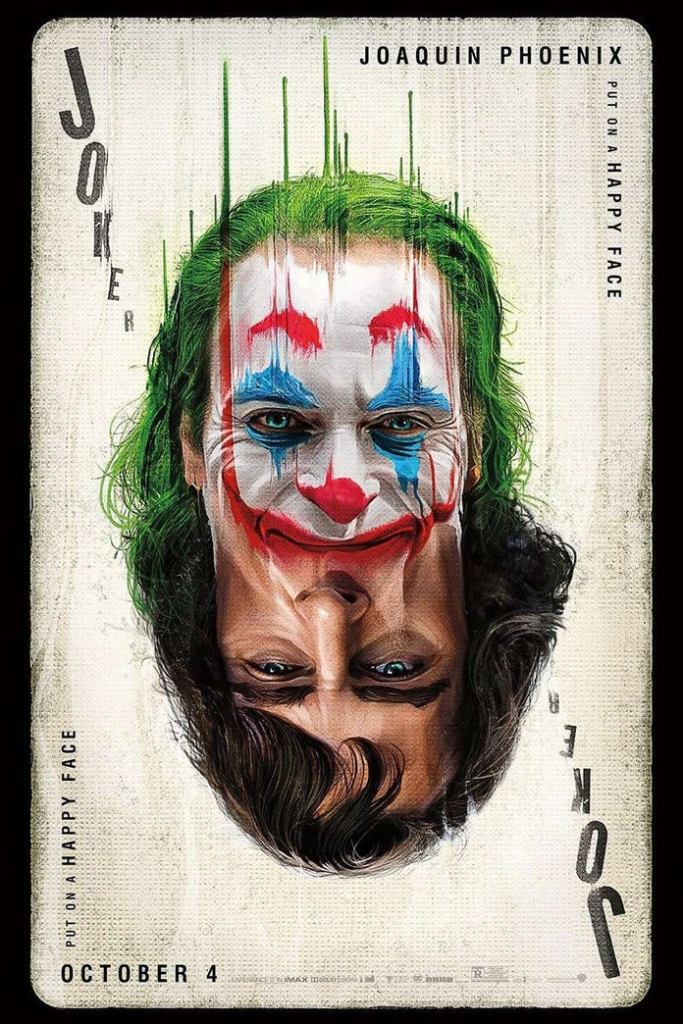
Joaquin Phoenix plays Arthur Fleck in a totally new but not entirely unfamiliar way. He works as a (semi) professional clown but dreams of becoming a stand-up comic. He’s not a great clown; he gets a lot of complaints. Maybe it’s because he breaks clown rules. Real clowns prefer to paint their faces in large circles because pointy-ended makeup gives kids a subliminal fright. As you can see, Arthur paints both eyes and mouth with sharp ends, normally prohibited in the clown community. But there was another rule-breaker, historically. His name was John Wayne Gacy, and Joker’s makeup is likely a subtle nod toward this man, a serial killer who entertained kids on the side as Pogo the clown. He also raped, tortured and murdered at least 33 teenage boys during the 1970s.
Arthur has a complicated relationship with his mother (Frances Conroy), with whom he lives. She’s not well, and depends on his support, meager as it is. She may be somewhat delusional because she writes long-winded letters about her poor living conditions to one-time employer Thomas Wayne, hoping his outrage will be enough to improve their circumstances. Until such a time, mother and son alleviate their suffering by cuddling up every night to watch their favourite late night talk show, Murray Franklin (Robert DeNiro).
Arthur is dangerously thin, but people aren’t just uncomfortable about his physicality. There’s also the laughing. He laughs often, and inappropriately. It’s a neurological condition, and he hands out cards to strangers to ease their discomfort when his laughing goes on just a little too long. Still, it gets him into trouble. Joker’s laugh is iconic, and Phoenix taps into something so deranged, so haunting, it’ll nail your feet to the floor. The laugh alone justifies casting him. It is distinctive, different, perfect. Unforgettable. Scary as hell. It sounds almost painful for Phoenix and it sent shivers down my spine.
Meanwhile, Gotham City is a total shit show. Garbage is piling up everywhere, home to super rats that terrorize the city. It’s never explicitly stated, but I’m guessing it’s 1981. The clothes are very late 70s/early 80s, you can still smoke indoors, and both Blow Out and Zorro The Gay Blade are playing at the movies. People are starting to agitate. The city’s becoming increasingly dangerous. There’s an undercurrent of discontent. It isn’t safe. Arthur gets robbed, jumped, beaten. There’s a certain electricity in the air. We all know Joker to be a villain, but the way things are going, these people may see him as more of a hero. Kill the rich – that’s their slogan. Not a great time to be the Wayne family. But is Joker the symbol this rebellion needs?
Arthur Fleck is nobody’s idea of a hero. He’s a mentally unstable man. He’s been in psych wards. He takes 7 different kinds of meds but still feels bad all the time. He keeps a joke diary filled with suicidal thoughts. “The worst part of having a mental illness,” he writes, “is people expect you to behave as if you don’t.” I’ve lost count of how many Jokers we’ve seen on screen now, but it truly feels like Phoenix doesn’t fuck with any of them. Truly, he and writers Todd Phillips and Scott Silver have created Arthur/Joker from the ground up. He is an amalgam of childhood trauma, torment, debasement. You really get the sense that if anything had gone even just a fraction differently, you’d end up with a different guy. Arthur’s natural reaction to the world isn’t insanity or violence or evil. He genuinely seems to want to bring joy to the world. He wants to make the people laugh. He is searching for a way in. He is searching, I suppose, for identity. For purpose. But for one reason or another, this guy just keeps slipping through the cracks. There’s nobody to help him. If one person had reached out when he needed it, this would be a very different story. And I suppose that’s why this movie is so good. It doesn’t feel like a comic book movie, it feels more like Taxi Driver. It’s a character study. This man feels unpredictable, and yet we know his ending. There is a surprising amount of tension for a movie that can really only end one way. But director Todd Phillips creates this constant sense of swirling stress and anxiety, this emotional tautness by repeatedly having Arthur reach out. He doesn’t want to be a weirdo, or a loner. He wants that same connection that we all do. But society is keeping its distance. He’s isolated. He’s forgotten and ignored. We have countless opportunities to save the world from the Joker but we never do – we fail Arthur Fleck. Does the film show empathy toward him? I suppose it does, in many ways. Or at least to people who fall through the cracks. Personally, I had a hard time feeling empathy toward his first victims. Arthur is a complex man living in some complex times. There is no single reason that tips him over into villainy. There are just an awful lot of cracks in the pavement. A chasm is bound to open up, which is maybe the scariest way to look at it. There is no vat of acid. Joker’s descent into madness, or crime, or evil, or whatever you want to call it – it’s grounded in reality.
Comic books and super hero movies tend to deal in quite general archetypes of good and evil. This makes the characters instantly recognizable as hero or villain, but it also serves to put a distance between audience and character because there is little to relate to. Todd Phillips’ Joker is much more layered, which means at times you’ll root for him, and other times you’ll be disgusted by him. It’s a push-pull that few actors could pull off, and it’s why Joaquin Phoenix, already one of this generation’s biggest and truest talents, deserves an Oscar nomination, and as of right now, I’d say even the win.
Joker, however, is not just a great performance. It’s a wonderful, thoughtful film, a send up to gritty character studies of another era. Todd Phillips has said “The goal was never to introduce Joaquin Phoenix into the comic book movie universe. The goal was to introduce comic book movies into the Joaquin Phoenix universe.” Goddamn I love that quote. I think it shows great appreciation for Phoenix’s body of work. This isn’t just another origin story, this is a deep dive into a man’s psyche. Phoenix tends to gravitate toward the broken and tormented, but they’re not one-dimensional. They are faceted individuals. Different actors have interpreted Joker in many ways: a fiend, a terrorist, a thug, a psychopath. But Joaquin Phoenix goes with something else: human.
Edit:
So I wrote all of that last month, after seeing Joker at TIFF. Since then, certain media outlets have tried to whip up a story about possible violence at Joker screenings and whether this movie sends a terrible message. I have wondered whether I should contribute to that noise at all but find that I do have something to say about it. Feel free to debate.
Does the movie treat the Joker too sympathetically? In a word: no. This is not the Joker from Batman comics. That Joker doesn’t exist yet. Arthur Fleck is a sad man with mental health problems. When he kills, he has a reason. None that justify the violence of course, but it’s not senseless or diabolical or insane.
Is Joker gratuitously violent? Actually, no. There is some violence, of course, but compared to other films, relatively little – in fact, probably relatively little even compared to other Batman movies. This is primarily a character study, so a lot of the interesting stuff is introspective, in his head, as his character transforms.
Is the film inviting violence from incels? Of course not. An incel, if you haven’t heard, is a man who believes himself to be INvoluntarily CELibate – ie, no one will sleep with him, and he blames it on some big female conspiracy. Incels have found each other in chat rooms and encourage each other to be nasty and wrong and gross, and angry toward women generally, and perhaps even violent toward them. They somehow think they are owed sex and even more confusingly, plot revenge for all the sex they aren’t getting. And somehow no one stops to think: this is why. This is why no one wants to date me. I am a creep. Women get a creep vibe from me, and they stay away because they sense I am an angry, dangerous dude. Maybe I should try…being nice? But the situation in the Joker movie doesn’t apply. There’s a woman he fixates on but even a criminally insane Arthur Fleck doesn’t blame her for his failures. He’s not an incel and I don’t think they even tread into that territory, so people trying to associate that with the movie are just being deliberately inflammatory.
Let’s remember that this movie is only the Joker’s birth. He’s a Joker fetus. He isn’t a criminal mastermind. There is no Batman yet; Bruce is still just a boy and Arthur is just a man finding his identity on the dark side. Where society has rejected him, the underbelly accepts him and raises him up. Of course it’s intoxicating. And of course it’s wrong. But if we’re talking body count, he’s responsible for only a fraction compared to Blade, or The Bride, or Rambo, or Walter White. And if we don’t protest every instance of violence, why are we targeting Joker? Especially when we could instead read it as a plea for early intervention, as a workbook for reaching out to the Arthur Flecks instead of merely condemning the Jokers.
If you love Julie Delpy, as I do, you probably love her talky scripts, her hyper-verbal, over-analytical characters who leave no thought unspoken. She has a knack for combining drama and comedy and elevating both with intelligent commentary. My Zoe is quite a departure. Which isn’t to say that it’s not smart or insightful. But it is very, very different.
Isabelle (Delpy), loving mother to Zoe (Sophia Ally) is going through a divorce from her husband, James (Richard Armitage). Their daughter’s custody is their battleground. They both love and want her desperately, but they might also have the need to hurt and wound each other however they can. It hasn’t been easy. Zoe is a sweet little girl who is too young to understand the animosity. When James notices a bruise on Zoe’s arm, he is not un-accusing of Isabelle. When Isabelle hears Zoe sneeze, she is not un-accusing of James. They are suspicious of each other’s parenting, determined to be the Best and Most Devoted One. I wish I could say that all dissolves when it turns out Zoe is gravely ill.
A mystery illness strikes quickly, and severely, and the waiting room where the two parents wait is a literal tiny glass box where their tension just bounces off the walls and back into their bodies, ratcheting up the hostility with each allegation lobbed. Is it love gone sour that has them at each other’s throats, or just fear and frustration? Truly, to be the parent of a sick child is the most helpless one can feel. It’s no wonder they seek their scapegoats. Up until this point, the movie is riveting: emotional and raw, full of anger and spite. But then it makes a u-turn.
The next half is so materially different that you might wonder if you’d fallen asleep and woken up during an entirely different movie. It’s still Julie Delpy, still playing a devoted mother, obsessed, even. But everything else has changed: the characters, her surroundings, and most of all: the tone. It’s disorienting trying to get your bearings in this new reality.
Delpy is of course quite good – sometimes astonishing, sometimes vehement, often dangerous and despairing. Her performance is a wail heard by mothers everywhere. But it also reaches beyond the normal, natural borders of motherhood and asks: what else? The answers are not necessarily comfortable.
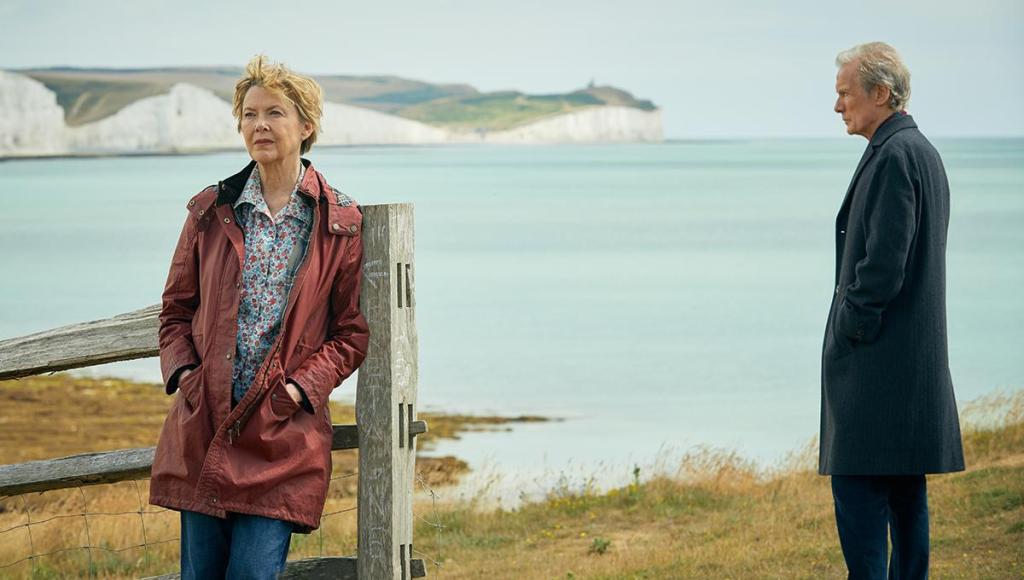
Grace (Annette Bening) and Edward (Bill Nighy) are a many-years married couple. She bickers and snipes at him, he slumps his shoulders and takes it. Over 30 years together, they’ve found lots of things to agree and disagree on, but they’re definitely united on one front: son Jamie (Josh O’Connor) doesn’t visit nearly enough.
When he does visit on this particular weekend, his mother does her usual thing, wasting half the visit dressing him down for not visiting her enough, thus making him less inclined to visit next time. But that’s her way. She speaks her mind. He’s used to it. He also fends off her religious overtures, and ultimately she goes off to church alone, which is when his father surprises him.
After some hemming and hawing he just says it: “I’m leaving your mother.”
Now hopefully we’re all groaning on the same page here: he’s told his son before he’s told his wife. And of course his wife feels blindsided, hurt, and not a little angry. Mostly that there was no warning. She never saw it coming. Now, Edward has some excuses for this: that she’s domineering, that she’d only try to stop him and his mind is fully made up. But to her, this is a 30 year relationship we’re talking about, and it’s worth a little effort, worth an attempt or two to save it. Not that this has stopped her from any of her heated squabbles.
Edward is not a complete idiot. He’s timed this so that he could abandon his wife quite quickly, leaving his son to pick up the pieces. Grace is understandably bitter and Jamie feels trapped. His mother isn’t just sad, she’s depressed, perhaps suicidal. It’s a lot to ask of a son.
This film is based on writer-director William Nicholson’s own experience of his parents’ divorce. It’s a little light on plot or direction, driven mainly by some great performances. Neither Grace nor Edward come off as particularly admirable people but Bening and Nighy give them a little more sympathy than is truly deserved. The collapse of a marriage is always an aching thing. The grown son being pulled between two grieving parents acts as a proxy for the audience, but because neither character comes off as entirely blameless or even likable, we actually feel pulled in neither direction. Instead, we remain unmoved somewhere in the middle, which doesn’t make for a very bracing or rewarding trip to the movies.
Motherless Brooklyn looks a lot cooler than it is. Gosh it pains me to say that. I really wanted Edward Norton’s Motherless Brooklyn to be great, and it isn’t bad, but it doesn’t do a lot to distinguish itself.
Norton plays Lionel Essrog, a private detective who works for friend and boss Frank Minna (Bruce Willis), who’s into something deeper than he should be. Lionel doesn’t know what, but when Frank winds up dead on his watch, you can be sure he’s going to find the fuck out.
Lionel, with his tics and Tourette’s, is not your typical P.I. – it’s hard for him to really stay under the radar when he’s yelling out rude things. But he does good work, and he’s very motivated to do right by his friend. Following the clues leads him to Laura Rose (Gugu Mbatha-Raw) and to exactly where these things always lead: dirty politicians. Is there any other kind?
Anyway, the movie is a send-up to ye olde film noir of yesteryear, when men wore trenchcoats with deep pockets stuffed with revolvers and fedoras worn specifically so they could be doffed each time a dame walked into the office, though you could barely see her through the yellowed fog of cigarette smoke. The detective was haunted by his past, of course, possibly by a dame he didn’t save in time, but he was stoic, never talked about it much. Just fingered his gun and smoked some more. Motherless Brooklyn puts a slight spin on things by introducing a detective who can’t shut up. And gives him a dame who is, and I’ll whisper this part: not white.
The film is so meticulously put together that sometimes it feels more like a history lesson than gumshoe caper; the diorama of NYC is gritty and seedy, so lovingly rendered that it doubtless earns its A+ but also serves as a distraction in an already bloated movie. And the maddening thing about Motherless Brooklyn is the performances are roundly very good, engaging and solid. But when you throw in the period setting and the metaphors and the big moods and Norton’s search for political relevance, something is bound to get lost. And clocking in at 2.5 hours, that’s a long time to devote your attention to each of the film’s moving parts, especially when things don’t quite add up to what they’ve promised. I also, if I may, think this was a missed opportunity to shoot in black and white. I mean, go all in if you’re gonna go all in. The actual result is a bit of a mixed bag. I think the good outweighs the bad, but at 144 minutes, I think there was opportunity to excise some of the bad completely, but no one has the courage to really wield the knife.










 ASSHOLES WATCHING MOVIES