Author Archives: Jay

Bohemian Rhapsody

Is this the real life? Is this just fantasy? Caught in a landslide, no escape from reality.
Open your eyes, look up to the skies and see…

Bohemian Rhapsody is the story of Queen, although if we’re being honest, it favours front man Freddie Mercury quite heavily.

Freddie Mercury was a complicated, effervescent, talented, charismatic man. The film is much more straight-forward than that. He was also sexually flamboyant. While not exactly openly gay, at least not publicly, he did adopt a look that easily identified him as MV5BZjEwODQ3ZDAtYzM4Zi00YWQxLThmZDEtNzhjNGJhMzFkNThjXkEyXkFqcGdeQXVyNjc0NzQzNTM@._V1_such. But he was more than gay or straight; he was fluid. He could wear a unitard on stage so confidently that he made people forget to be so judgmental. He won them over with his energy and stage presence. But after the show, Freddie was his own man. He did not lead a PG-13 life, so the PG-13 movie that attempts to immortalize it is of course sanitized. There is not much in the way of sex or drugs but the rock and roll – oh man.
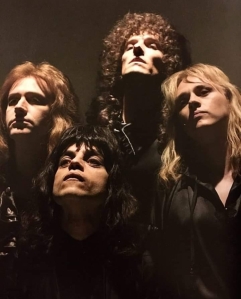
That’s the reason to watch this film. The music is great, and the scenes revolving around the music tend to be its best. The decision to recreate their Live Aid set, widely considered to be the greatest 20 minutes of love music ever, in its entirety is the best thing that ever happened to a music biopic. I felt tears pricking my eyes the minute they stepped onto the stage.

Rami Malek is great. It’ll take a few minutes to see beyond the fake horse teeth he’s wearing of course, those are regrettable, but Malek is a fun casting choice who does indeed bring an intense Freddie energy to the role. The whole cast is great, actually, although I see Mike Myers is determined to make a comeback and I’m really not here for it, though he does have a pretty epic line.

Lucy Boynton has a meaty role as Mary. Mary was Freddie’s lifelong friend; they stayed close until the day he died. In the movie she gets to be Freddie’s significant other, which is great for the actress but less great for an audience who values authenticity. Yes she was a part of his life but she wasn’t his whole life. Mercury would have had many partners of course, but he had a great love, Jim, who lived with him during the last 6 years of his life, and nursed him when he got sick. Freddie died wearing Jim’s wedding ring. But in the film we get only the briefest glimpse of Jim and double eyefuls of Mary. Have they straight-washed a gay icon?

At any rate, if you came for the music, you’ll stay for it, and struggle not to burst out singing. The movie is more of a greatest hits compilation that an intimate evening with Freddie, but when the hits are so good, it’s hard to complain too loudly.

Dad’s Army

‘Dad’s army’ is the home guard and its leader is Captain George Mainwaring. In a very small town in England, a band of merry misfits makes up its corps. Deep into WW2, all the fit, young men are away at war while the rejects and the elderly make up the home guard, charged with parading around and doing exercises and not much else.

Sergeant Arthur Wilson (Bill Nighy) assists Captain Mainwaring (Toby Jones) in their not MV5BNzg5MWMxNmUtNjdjNC00NTJlLTljNzQtNmU0NTFhYzNmY2ViXkEyXkFqcGdeQXVyNTk2NTY1NzA@._V1_SX1777_CR0,0,1777,999_AL_much else; they mostly spend their days blending into the scenery. Literally. So when a beautiful woman (Catherine Zeta-Jones) arrives in town, they and the whole town are ripe for some shaking up. Rose is an intoxicating distraction until it turns out there’s an actual German spy in town and the home guard is too busy thinking dirty thoughts about Rose to notice his intelligence gathering, let alone catch him.
Dad’s Army is made up of the very best in old British guys – Tom Courtenay and Michael Gambon among them. It’s cute and silly in an old, doddering way. The movie is just as inoffensive and harmless as the elderly members of the home guard. Apparently this is the movie version of a beloved TV show that I never knew existed. Old fans wouldn’t recognize this iteration but it’s pleasant enough. Yes, that’s a tempered endorsement. Adjust your expectations and you may find it perfectly enjoyable. It’s not steak and caviar. It’s oatmeal. Good old reliable oatmeal.

The Joneses

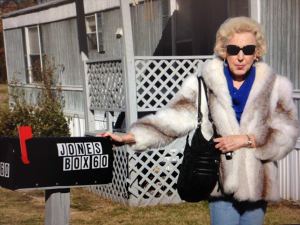
Jerry Jones left his wife and 4 sons to begin his transition to Jheri – this being in the 80s long, long before the average Joe knew very much about transgendered people and what it all meant. Forget average Joes, Jehri couldn’t find a doctor in all of Mississippi who was willing to talk about her particular concerns. Jheri was in her late 30s when she left to build her new life, and though surgery was always a goal, her financial obligations were first and foremost to her kids so it wasn’t until age 60 that she was able to scrape together enough to go to Brussels and finally have the surgery she dreamed of.

Now 74, Jheri lives in a trailer park with two of her grown sons, Brad and Trevor, after MV5BMTUzNDk1OTQ0NV5BMl5BanBnXkFtZTgwODUyMDE2MDI@._V1_SY1000_CR0,0,1333,1000_AL_years of estrangement (her ex-wife didn’t feel Jheri should have any contact with the kids). Jheri helps another son, Wade, run his business, and is grandmother to his two kids, who don’t know Jheri is transgender. After hiding her true identity for so long, this lying in reverse doesn’t sit well with Jheri either, though she wants to spare her grandkids any pain or bullying.

With grown children dependent on her, some of  them disabled, Jheri struggles more than most 74 year olds, but not only does she still pray before every meal (like a good old gal in the Bible Belt), she also sings and dances and struts her stuff in her kitchen when a good song comes on. Her joie de vivre is infectious, admirable. Suppressing her true self for so many years means Jheri loves her hair and makeup and high heels, and she’s living her best life now.

Life is complicated. Families are complicated. Jheri is a remarkable woman, a remarkable matriarch, and so is the documentary that tells her story. It’s not always nice or neat, and I admire the candor, and the courage it takes to be so revealing. Director Moby Longinotto pulls together something truly unique – above all, sending the message that it’s okay to still be figuring things out, it’s okay to not have all the answers. Love solves a lot, and I truly believe that sharing like this will go a long way in destigmatizing which is still a difficult concept for some – but on screen, Jheri is a woman, mother, and grandmother like any other, filled with hopes, dreams, and perhaps some regrets. She is inspiring and real and relatable. These are some Joneses worth keeping up with

Gnome Alone

Chloe and her mother have just moved – again. She’s desperate the fit in with the popular crowd, and she almost (so close!) does it too. There’s just one little problem. The garden gnomes infesting her new house have a purpose. They’re guarding a portal to another dimension. Every night, a few monsters break through, and if left to their own devices, they’d eat humanity out of house and home in a minute and a half. On the other side of the portal, an even bigger monster awaits. Can they keep the monsters at bay while keeping Chloe’s street cred high? And how does the helpful nerd next door fit in?

This is a B-list animated movie with a C-list voice cast: George Lopez is the most MV5BOTdhZThjOTQtYzVhNy00NGZlLWEwZjQtZTI0NDczMGQyNDZjXkEyXkFqcGdeQXVyNzQ3MTA4MDk@._V1_recognizable, following in steeply descending order by Becky G, Josh Peck, and Tara Strong, if those names mean anything to you. The animation is okay, but let’s just point out the elephant in the room: there’s already an animated franchise wherein garden gnomes come to life. Not only does this stink of plagiarism, it’s just annoyingly unoriginal. This is animation, people. You can draw anything. You could have made a retro Tupperware set come to life, or some grubby fridge magnets, or discarded winter parkas.

But, okay, this is a kids movie, for kids, and possibly by kids, judging by the quality. Your 4 year old will probably love it if they don’t find it too scary or notice that there’s very little structure to the story. Nor do we get to know our characters at all. I’m sure there’s a reason why Chloe and her mother move so much, and why her dad’s not around, and why her mother feels comfortable flying to another city, leaving Chloe home utterly alone, not yet knowing a single other soul in the city. What does that matter when the movie is basically a commercial for super soakers, only these Nerf-like guns are filled with green ooze that can banish (never say kill in a kids’ movie!) the monsters on the spot.

And let’s not even crack open the good old trope that tween girls are vapid and self-absorbed. It’s 2018: not every school is filled with mean girls. Not every protagonist has to change herself in order to fit in. And not every nerd needs a pretty girl to popularize him. This may float with kids but it will sink with most parents. And don’t we owe it to the gnomes to strive for better?

The First Patient

I am not very sentimental when it comes to bodies, even my own. A dead body is just an empty vessel for me, easy to disregard before it’s even cool. Because I have a disease, it is unlikely that my organs would be very useful to anyone after my death, and because of that, I’m open to donating my body to science instead, if Sean felt comfortable with that. It’s not for everyone and that’s okay. But I’m curious about this stuff, and not overly squeamish, so one of my favourite books (on the topic, and just generally in the world) is Stiff: The Curious Lives Of Human Cadavers, by Mary Roach. Roach is as fascinated by this stuff as I am, and she’s got a wicked streak of dark humour that’s particularly evident in her footnotes.

The First Patient is a thorough documentary about medical students in their anatomy MV5BZDY0ZjQ0N2ItZGQyNS00NzZiLWI3MzctODFhYzkxNTJjNzU5XkEyXkFqcGdeQXVyMTU0NjUzNw@@._V1_SY1000_CR0,0,666,1000_AL_class, wherein they dissect a human cadaver for the first time. We get to know a handful of students – who they are, how they got here, what inspired them. We get appreciate their differing cultural and religious backgrounds, and how that influences how they view science, medicine, human remains, life beyond death. Curiouser still, we get to know the cadavers in some way. Their human identities remain anonymous but their bodies become a tree of learning, a gift to the thousands of patients each of these future doctors will one day encounter.

Human dissection is no picnic, and years ago there was this sense, a coping mechanism perhaps, that medical students treated their cadavers cavalierly – adorning them with silly costumes, or leaving body parts behind in someone’s locker, as a prank. Today there is a better understanding of the emotional toll that this endeavour will take, even on students training to be doctors. There is dignity, bordering on reverence, for those who have made a donation of their bodies. There is a thoughtfulness that will move you, and gratitude that may influence you to consider your own donation.

For those of us with strong stomachs, The First Patient gives us a front-row seat to the dissection, without the smell. The Mayo Clinic School of Medicine opened its lab’s doors to filmmaker Chip Duncan, and he found the soul of medicine in the budding hearts and minds of first year students.

I don’t believe in heaven or hell but I do believe that this is life after death.

Feminists: What Were They Thinking?

In the mid-70s, photographer Cynthia MacAdams collected pictures of women, determined that feminism made them look different, distinct. Could the difference be observed on film? Her book of photographs immortalized an awakening, a second wave of feminism wherein women were shaking off their cultural expectations, shedding the shackles of their pasts, and stepping forward with new purpose.

MV5BODljMzYzOTQtZGQyYi00ZjhkLTk5NDktY2RlNTdjOTljYjgwXkEyXkFqcGdeQXVyNjcyMzE1MA@@._V1_SY1000_CR0,0,674,1000_AL_40 years later, as MacAdams’ work is being exhibited, film maker Johanna Demetrakas tracks down many of the women featured in the work, including Jane Fonda, Funmilola Fagbamila, Gloria Steinem, Lily Tomlin, Margaret Prescod, Phyllis Chesler, and Judy Chicago and asks them about our continued need for change. Personally, seeing all these knowing eyes staring out at me, I feel galvanized.

Together they discuss employment, motherhood, abortion, choice, and the state of feminism today.

Jane Fonda says “I’ve only known for 10 years that ‘no’ is a complete sentence. That gave me pause. Don’t you love it when a book or movie reaches out, past the page or screen, and just touches you? This film is ripe for that, although it’s crazy that this brand new, just-released film already feels a little dated – in this #metoo, Trumped up era, feminism’s fourth wave is moving necessarily quicker than ever.

One thing I felt just a teensy bit gratified about is that this film devotes a small amount of time to address intersectional feminism and the ways in which historic feminism failed to include women of colour and other minorities. ‘Feminism’ has mostly meant white feminism, and white feminists have asked women of colour to somehow divorce themselves from their other concerns, as if they ever could. Race and gender must go together for WOC, and and we can’t properly call for advancement or equality of women without bringing all women along – queer women, trans women, women of every class and colour. This documentary acknowledges the deficits but doesn’t begin to delve into them – we’ll need many more documentaries to cover the complexities of black feminism.

Most of all, I am struck by so many notable women trying to reclaim the feistiness of their youth – not the righteous anger of their 20s or the organized action of their 30s, but the freedom of being a little girl, before any gender expectations have fully settled. Many seemed to hope age would help them reclaim that feistiness, but I wondered what it might be like if we never lost it to begin with.

RBG

It’s kind of funny and kind of wonderful that such a tiny old lady has become a symbol of hope and power for a young generation of voters, but Ruth Bader Ginsburg is just the icon the world was needing recently. Though she has been working tirelessly for decades, it’s only recently that Millennials have given her their highest praise and greatest stature, turning her into a meme.  Perhaps it is the recent turn in American politics that has created a void that RBG is uniquely qualified to fill. Her thoughtful words and stirring arguments have lifted us up in our time of need. And though her career as a Supreme Court Justice may have started out more moderate, the Court’s present makeup has forced her to become more outspoken, a more liberal voice, a voice of dissent.

No woman is born a legend. Ruth Bader Ginsburg was a baby once, and then a quiet,4a17e33b54fbe1dc4a705486e373860c serious child, and then a teenager with no patience for small talk. She learned some valuable lessons from her mother before losing her at a tender age. She went to Harvard Law, where she had to justify taking a seat away from a man. She met her husband, Marty, who admired her intelligence during a time when men were meant to dominate their spouses. She finished law school as a mother and a caretaker to her husband, who was stricken with cancer. Long before she was known to her country, she was known to friends and family as dedicated, hard-working, and tough.
As a young lawyer she herself faced gender discrimination before taking up the cases that would help change those laws. She saw herself as a kindergarten teacher in front of many judges, trying to get them to see what life was like for the females in the room. A brilliant legal mind, she made a name for herself with historic wins for gender equality, but it wasn’t until 1993 that Bill Clinton saw fit to appoint her to the Supreme Court. Since then she was been a hero for us all.

Directors Betsy West and Julie Cohen make an excellent biography for an important woman. They demystify her with glimpses into her collar closet (where she adorns her robes with various lace), her surprising friendship with Scalia, her chuckles over Kate McKinnon’s portrayal of her on SNL. Without a boastful bone in her body, RBG is nonetheless tickled by all the attention she’s been receiving. At 85 years old, she’s quite a ways past what most of us would consider retirement age. Luckily the documentary supplies us with perhaps the most hopeful images we could have asked for: the Notorious RBG working out in a gym. Strong in mind and body, she is determined not to abandon us anytime soon.


Rodents of Unusual Size

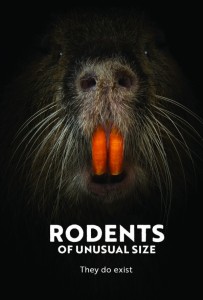
Nutria sounds like a sweetener but is actually a disgusting rodent…of unusual size. It looks like a rat but it’s the size of a beaver. The orange-toothed critter is native to South America but was unfortunately introduced to Louisiana by fur by fur trappers. People made good money hunting them for pelts until the fur trade collapsed in the 80s and nobody wanted to wear rat anymore.

desktop_small_fwah_ROUSpostcard_FRONTv2_3In North America, the nutria’s only predators were humans. Without hunting, the nutria have multiplied terribly. Now this invasive species has overrun the land, its destructive eating and burrowing habits eroding coastline and eating up swamp land valuable for its protection against hurricanes.

Rodents of Unusual Size is about the good people of Louisiana and their initiative to save their land and their livelihoods from the dreaded nutria. The government has put a $5 on their heads – er – their tails, actually. It’s a popular and effective measure, though the buckets of monstrous rat tails left me a little squeamish. Directors Quinn Costello, Chris Metzler, and Jeff Springer assemble a curious cast of characters to tell their story, including off-season shrimpers, students paying their college tuition, and gruff women who do it better. But it’s fisherman Thomas who will win your heart. He’s been battered by all the elements his land could throw at him, and he’s determined to survive this one as well. Man vs. beast: it’s a classic match-up, and it’s playing as part of the Planet In Focus Film Festival.

This is a surprisingly endearing documentary, as easily digested as a nutria kabob. I highly suggest you check it out – for the slice of life, the bit of trivia, the satisfaction of a well-turned documentary.


Terminal

Annie, a beautiful and enigmatic waitress in a grimy, 24-hour, train station diner, greets shady customers and serves out hash with a side of sass.

Bill (Simon Pegg) is a dying English teacher whom she challenges as he tackles a greasy stack of fries. Vince and Alfred are a pair of hitmen who appear and disappear with various mysterious briefcases. Annie (Margot Robbie) sees everything and seems to lead a dangerous double life in the shadows of her underground employment. She and a janitor (Mike Myers) are the only two mainstays in this seedy, forgotten place.

Director Vaughn Stein unleashes all the cliches in his tool belt to evoke a film noir. MV5BMjNhYjllN2QtZTQwNy00ZWRhLWE4MGMtYjA3Mjc1ZTRiMTQxXkEyXkFqcGdeQXVyMjUyNDk2ODc@._V1_Smog obscures the screen as a trench-coated silhouette walks down a path illuminated only by neon light: is this a recycled set from Sin City or are you just happy to see me? There’s really nothing new to see here and the whole thing is just a bit uninspired – or, well, inspired rather obviously by other, familiar things. Luckily for Terminal, I can’t keep my eyes off Margot Robbie. She’s an exceptionally eye-catching woman, but as her past few films have indicated, she’s also quite an actress. So while she’s the only reason to watch this film, it’s also a shame how badly it wastes her. The movie wants to be cleverer than it is. It wants to throw some real curve balls at you, but it has simply cut and pasted the Wikipedia entry for curve balls and put it on the screen. Yes, Robbie is sexy as hell, and sure, many men, and most women, would follow her down the depths of hell without too many questions. But she deserves to be a real character, flesh and blood, with machinations and motivations. Instead, Stein fails to ground this movie in anything solid – what are the rules of this universe? Where have these people come from? Why should we care? It’s all smoke and mirrors, it lives for  the atmosphere but once the smoke clears, there’s just not much there, except Mike Myers being a distraction, acting like he’s in an SNL sketch.

And then the final 15 minutes are fantastically bad. The movie should have ended where those 15 minutes begin, and the movie still would have been empty and pointless. Instead we are punished for having endured the movie thus far and it veers off into such an unearned place that you could decorate the set of your own film noir just with the steam that’ll come out of your ears.

Generation Wealth

In 1971, the American government untied itself from the gold standard. Every dollar printed used to have an equivalent in gold hiding somewhere in the vaults. No longer. The U.S. was printing money without abandon, and with the gold standard went fiscal discipline – right out the window. The government was spending way beyond its means and soon, especially under Reagan’s guidance, so were the American people. The 80s were about wealth building. A nation of production became a nation of consumption. You may  not have had the cash for it, but conspicuous consumption was being a good citizen. When American no longer made products domestically, it stimulated the economy by buying things, lots of things, buying, buying, buying. The American Dream has always been about money.

Director Lauren Greenfield has been one of my favourite documentarians for a long time – especially The Queen of Versailles, another treatise on excess and silly spending. Generation Wealth, however, is less of a story, and more of a scrapbook. In putting together images for a new book, she realizes that much of her work has centered on wealth and the various ways we accrue power – money, fame, sex, youth, beauty.

Greenfield revisits many of her old subjects to see how their lifestyles have treated them: the offspring of famous musicians, porn stars made famous by Charlie Sheen, bankers wanted for wire fraud, Kate Hudson’s classmates. She even examines her own family – her parents, her children in terms of their ambition and legacy.

Generation Wealth is a treasure trove of stirring, thought-provoking images and scenes, but it’s not big on in-depth analysis. The images are perhaps meant to stir you to your own internal inventory. And they’re rather sympathetic, in the end. Greenfield’s lens tends not to judge its subjects, but it’s impossible not to start drawing some unflattering conclusions about the way we live. We used to aspire to keep up with the Joneses, our neighbours, who had just a bit more than we did. Now we don’t even know our neighbours. Most Americans can name more Kardashians than they can the people living to the right, left, or even above them. And TV shows oblige. They’ve literally given us the unsubtle Keeping up with the Kardashians, a family famous for being famous, a mother so power-hungry she was willing to trade her daughter’s bodies for cash since that’s the only commodity they had. But images on TV are quite a bit more posh than your next door neighbour’s slightly less dated patio set. Now we’ve got goals way beyond our means.

But have any of our acquisitions bought us happiness? Is it ever enough? And what happens to our economy, our way of life, if we stopped buying in?

Generation Wealth is a career retrospective for Greenfield. Lacking in contextualization, she shows instead of telling, and it’s up to us to draw our own conclusions, which can hardly be anything but bleak.