Author Archives: Jay

An Evening With Beverly Luff Linn

Lulu is a waitress in a coffee shop when she is unceremoniously fired by her manager, Shane Danger, who is also her husband. Home all day, she notices that their house could use some upgrades, starting with a bigger, better TV, but Shane says this isn’t a good time for spending since they’re down to a single income. Lulu mocks her husband for having so little in the way of savings. Even her brother Adjay has more. Cut to: Shane, an idiot, robbing Adjay of his savings. Only Adjay doesn’t take it too kindly; he hires Colin to retrieve the money and shoot Shane in the kneecaps.
MV5BMTc1ODM2NzMxMl5BMl5BanBnXkFtZTgwMTAxNDgyNDM@._V1_SX1777_CR0,0,1777,998_AL_

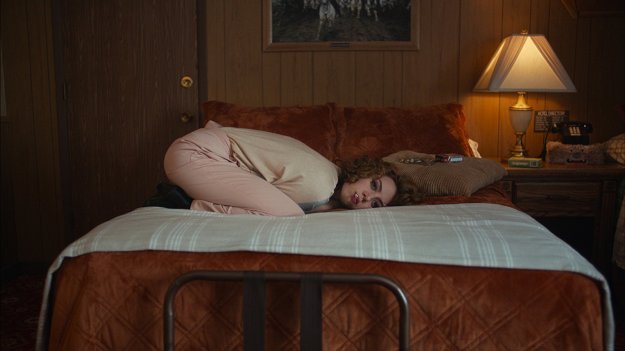
Of course, what actually happens is: Lulu (Aubrey Plaza) absconds with Colin (Jemaine Clement) and the money. They hide out in a nameless hotel that’s been advertising a magical Evening With Beverly Luff Linn. Beverly (Craig Robinson) and his platonic (?) partner Rodney have been cooling their heels in this hotel for days, postponing their show, and Lulu is determined to hook up with Beverly, whom she seems to have known in the past. Lulu is obsessed with Beverly, Colin is obsessed with Lulu, and Shane (Emile Hirsch) isn’t really obsessed with anything, but he’s always in the way.

I watched this movie on the strength of its cast, which was already a mixed bag. It has pretensions. I think maybe it wants to be Wes Anderson-ish or even John Waters-ish; the dialogue is heavily stylized, although it often mistakes style for screaming, and sorrier still, Robinson’s character for some reason only grunts\growls which gets SO old SO fast. The costumes are outlandish but unexplained.

I was ready to turn this movie off so many times and only my cheapness (rental fee: $5.74) kept me in the game. You can tell director Jim Hosking is going for an out-of-the-box experience, but nothing works, and I’m pretty much the prime audience for quirky material. When a movie like this works, we call it absurd, and we giggle delightedly. But An Evening with Beverly Luff Linn isn’t absurd, it’s only stupid, and instead of laughing, I played sudoku on my phone to pass the time. I want to love a movie that takes risks and tells its story in an off-kilter way, but this one didn’t feel fun to me. It was an exercise in patience and it tested my nerves. Regrettably, this is a hard no for me.

Angelique’s Isle

Sault Saint Marie, 1845: a trading post. A beautiful young Ojibway woman named Angelique (Julia Jones) marries a French-Canadian voyageur named Charlie (Charlie Carrick). The newlyweds sign up to work at a camp during the copper rush and set sail for Lake Superior’s Isle Royale in search of a more prosperous future. Fortunately or unfortunately, they’re a little too successful. They find a whole boulder’s worth of copper, only it’s too big to take back on their little barge. The company men leave Angelique and Charlie behind to ‘guard’ their find. Two weeks, they’re told, though Angelique is reluctant – that boulder has sacred carvings on it, and she knows it shouldn’t be removed.

Alone on the island, Angelique is haunted by nightmares of residential school and her life before. She and Charlie tough it out with minimal food and dwindling hope, but as you might have guessed, those Detroit folk were not exactly honourable. Weeks turn into months. The no longer wait for a boat, they wait to die – of starvation or cold is the only question.

As she waits for death to claim her, surrounded by the undeniable beauty but also savagery of the land, she is visited by the spirits of her ancestors and her inner demons. Angelique isn’t the only one to be visited. It’s going to be a long winter for everyone involved.

Directors Marie-Hélène Cousineau and Michelle Derosier obviously have a feel for and a respect for the land. A Canadian winter can take your breath away both literally and figuratively. As this particular winter drags on (and all Canadian winters feel about 16 months too long), Angelique will have to rely on traditional ways to ensure her survival, and her spirituality to guide her. Cousineau and Derosier have chosen well with Jones as their heroine; Angelique is strong and fierce. She is worthy of our attention.

After The Apology

The stolen generations. That’s what they call the many, many Aboriginal children who were taken out of their homes and put into care outside their families and community. Ten years ago, the government issued an apology for its past transgressions and Aboriginal peoples were gratified for the acknowledgement of their pain and suffering but it didn’t take long to recognize the apology as a hollow one. ‘Sorry’ means you don’t do it again.  But they did. In fact, in the following years, the number of Aboriginal kids apprehended by the system nearly doubled. And even though their own policies in the care and protection act supposedly prevent this, Aboriginal children are 10 times more like than non-Aboriginals to be taken away from their parents, and 70% are removed entirely from their communities.

When I read the movie’s synopsis, I assumed this film was Canadian. It is not. It is Australian. But their story is our story. We have these issues here too.

MV5BM2YyY2EwNTgtNjg2YS00NDk1LWFhZDctYmQ5MWVlMTg0MzVhXkEyXkFqcGdeQXVyMTAxNTY0MjI@._V1_SY1000_CR0,0,1509,1000_AL_Aboriginal people have been through a lot, historically, and still. Snatching children from out of their homes is among the most destructive of them. It breaks down their culture, their language, their family ties. It robs them of identity.

In most cases of family and children services, children are removed because of domestic violence, mental illness, and drug/alcohol abuse. It’s hard to argue against those judgments, though individual situations vary. In the case of Aboriginal children, the reason most often cited is ‘neglect’ and that’s a harder one to address. Often this label of neglect is assessed by middle-class white ladies who don’t understand the culture or can’t see beyond the poverty. The cupboards aren’t well stocked but the children are not hungry. There may not be a crib in the house, but the baby is loved and cared for according to the family’s values. The system  is racist. Plain and simple. Its many inadequacies are illustrated (sometimes literally) by the stories in this documentary.

Director Larissa Behrendt focuses on four grandmothers in particular who are taking on the system on behalf of their communities. It’s a brilliant approach that personalizes the cause and leaves us with a bit of hope. It’s a look toward the future, but one informed by the mistakes of the past, which we cannot afford to ignore. This documentary insures we do not.


Pariah

Pariah: 1. A person without status 2. A rejected member of society 3. An outcast

Alike is a Brooklyn teenager coming to terms with her identity. Or rather, she knows herself to be gay, but feels how deeply unacceptable that is to the world around her. Her mother is desperate to shape her in her own image: she buys her clothes that are worlds away from what she’d choose for herself, she chooses friends she deems appropriate and bans the ones that aren’t. Her father calls her a daddy’s girl, and she is, she’s much closer to him, but she still can’t share the side of herself she’s afraid he’ll reject.MV5BMTg1ODg0NTA1NF5BMl5BanBnXkFtZTcwNjY1ODg4Ng@@._V1_SX1777_CR0,0,1777,999_AL_Pariah is one of those unassuming movies that punch you in the gut. It’s written and directed by Dee Rees (Mudbound) and it’s got such a specific and unique angle that it’s unlike anything else in the genre. Alike exists on the periphery of her community; Rees situates her in a familiar black, urban neighbourhood, one that’s rarely if ever been seen in a queer movie. Rees grounds her character in authenticity; Alike is shy and often quiet, but she’s always thinking. She’s an exceptional student and a brilliant poet but she doesn’t need words to communicate her frustration and sorrow. Adepero Oduye may be a fresh face, but she was absolutely the right choice for the role. She is present, commanding, assured.

Rees has an eye for shooting city streets. Their grit seems to reflect the heaviness of Alike’s heart and the conflict she feels between who she is and who she’s expected to be. Rees doesn’t flinch away from the difficulties in coming out. She has us encounter conflict head-on. But even as things get worse at home, Alike finds the strength and courage to be the hero we all need, but most of all a hero to herself, claiming her identity no matter the consequences, honest about who she is and what she’s worth. It’s a tremendous movie, really, one that rises to its heroine’s occasion – when Alike chooses herself, it’s the most beautiful we’ve ever seen the city. Both are breath-taking.

Pariah established Dee Rees as a director of note – she’s got something to say and a visual style to back it up, a real feast for the eyes and a jolt to the heart.


Operation Finale

This movie is a tribute to the unsung heroes of post-WW2 Nazi hunting.

When notorious SS agent (the architect of the final solution, no less) Adolf Eichmann suddenly pops up on the radar, Israel puts a crack team of secret agents on the case. Peter Malkin, in particular, is the loose cannon of the operation, but ten short years after the war, emotions run high for the whole team because everyone who wasn’t in a camp personally lost someone, or several someones, or everyone to Germany’s ethnic cleansing machine.

MV5BNGQ0YmVkMWItOGVlYS00ZWE2LWFhOTgtYzk1ZTAyZGQ5ZjFjXkEyXkFqcGdeQXVyNTc5OTMwOTQ@._V1_Malkin (Oscar Isaac) and company manage to pick up Eichmann (Ben Kingsley) thanks in part to his indiscreet son who still hates Jews all the way from Argentina. They sweat it out in a safe house. For safe travel they require Eichmann’s signature, and Malkin vows to get it. The interrogation is heated; Eichmann is emotionally manipulative and he knows exactly which buttons to push. The agents have agreed to bring him back to Israel for a public trial, but not killing him proves to be a very big challenge for almost every single one of them. Eichmann knows this trial is not likely to rule in his favour, so he delays endlessly, which is also to the benefit of the Nazi rescue party determined to find him.

Oscar Isaac is terrific, of course. Malkin plays it cool, almost sympathetic, but he’s always on the verge of an emotional outburst. Isaac draws a haunted man, bent under the weight of his own grief, and the loss of a whole nation. Ben Kingsley strikes the exact right chord – reprehensible. His hypocrisy rankles. I felt it so personally it was easy to feel for the agents and to admire them for their restraint. But overall, director Chris Weitz’s ability to humanize his characters makes for some very watchable performances.

The scenes between Isaac and Kingsley are the best the film has to offer. Operation Finale is otherwise a little still, a little familiar, a little predictable. It has good intentions but you see them coming from a mile away.  At times it can be surprisingly complacent for a ‘thriller’. It’s an Argo wannabe that doesn’t quite achieve its potential, but it’s nice to hear from this side of history, and it’s fantastic to see Kingsley do what he does best.


Transformer

Janae Marie Kroczaleski was just going about her business in 2015 when she was publicly outed by a Youtuber without her consent. Her parents disowned her, her sponsors dropped her: overnight her life had been decided for her. Born Matt Kroczaleski, she had known for a long time that her true identity was female. Matt joined the Marines to help “push down the feminine stuff.” He married and had 3 children. But Matt never felt right in his skin. If he had to live as a male, he had to be the biggest, strongest guy he could be, and he was. A power-lifter known to his fans simply as ‘Kroc,’ Matt became the strongest man in the world for his size.

Still, he thought constantly about living as a woman, and didn’t feel authentic in his body. Over a period of 10 years, he began transitioning many times. He didn’t quit VWrtDx-gbecause it was difficult, or because he was unsure. He’d quit because he couldn’t reconcile the two halves of himself: the need to be strong AND be a woman. In his male skin, he needed to be the biggest, the most muscular, but as a woman he wanted to be petite. When he cut weight, dieted and stopped lifting, he deprived himself of his friends, his support system, the world he knew and the lifestyle he loved. Muscles were a security blanket of sorts. It’s hard to let those go.

Director Michael Del Monte makes a fascinating documentary because he’s chosen a subject who is open and accessible. Janae is courageous and enlightening. It may not have been her idea to go public, but she embraces it bravely. I loved her willingness to speak candidly about failed transitions. I adored scenes with her family – her sons are terrific people who are not only supportive but engaged in her transition, asking intelligent questions while treating her in the same loving way they’ve always treated their father – they know this is the same person, only happier and more honest. These young men have a lot to teach adults twice their age.

The documentary bracingly follows Janae as she makes this transition her last. She’s going to learn that all women are strong, by necessity, no matter what they look like on the outside. Matt Kroczaleski went through a lot in his life, but Janae understands that her path will be hardest to follow. In this documentary, she loses her job, encounters protesters, has “elective” surgery that for her is life-saving, life-embracing, is a supportive and knowledgeable judge at transfitcon, and evaluates her ass in a pair of skinny jeans. The world is complex. Janae is realistic. Transformer doesn’t speak for all transgendered people, but it speaks wonderfully to one woman’s experience. It’s personal, it’s intimate, and it’s a beautiful portrait of a life in transition and a woman coming in to her own.


Furlough

It’s a bad time for corrections officer Nicole Stevens (Tessa Thompson) to get away. It’s always a bad time. She lives with her mother (Whoopi Goldberg) and cares for her round the clock when she’s not at work. But go away she must. A prisoner’s mother is dying and Joan (Melissa Leo) has a 36 hour death bed visitation furlough coming – supervised by poor, beleaguered Officer Stevens.

C.O. Stevens is distracted, and Joan is a master manipulator, determined to squeeze every MV5BZmJhOGNiZWMtNmVhYi00YmJhLTkzMzEtZDEwNjRjMDg4NjcwXkEyXkFqcGdeQXVyMTMxODk2OTU@._V1_SY1000_SX675_AL_last drop out of this respite. The trains and buses upon which they rely are predictably unpredictable, and Stevens is just a little too trusting, a little too good-hearted. Joan does not have this problem.

You watch this movie with dread, knowing something is going to happen, something bad, and you almost don’t want it to. Despite Joan’s self-centered assholeness, you kind of buy into this ultimate odd-couple road trip. It will be sad to see it end.

Tessa Thompson is all kinds of wonderful. She’s overwhelmed by the assignment but too dutiful to refuse. She’s a caretaker who wants to see the best in everyone. Joan has lived a hard life, the details of which are only hinted at. We don’t know how long she’s been locked up, but she sucks in fresh air like it’s in limited supply, so I believe it has been a while. She’s shifty and nervy and she pushes Stevens’ buttons. She pushes MY buttons. And yet Leo gives her just enough charm that we can’t quite write her off. Whoopi has a smallish role but it’s kind of great to see her on screen.

Director Laurie Collyer knows she’s got us hooked based on the cast alone, and the movie doesn’t quite live up to its promise. It feels slight. It does a gender flip and a race flip but still winds up feeling less than 48 Hrs. Leo isn’t really up for the over-the-top comedy, and the movie fails to shift gears to accommodate dramatic moments. It’s a good try that doesn’t quite pan out. For me, it’s totally worth it to bask in Thompson’s radiance for an hour and a half, and since it’s on Netflix, there’s not much to lose.

Your Highness

Prince Thadeous (Danny McBride), who smells like sheep scrotum, is his brother’s lesser in every way. Prince Fabious (James Franco) is more handsome and more accomplished, kinder and a better brother. He’s even brought home Belladonna (Zoey Deschanel), the most beautiful woman in all the land, to be his bride. But his wedding day is interrupted by a Leezar (Justin Theroux), a powerful warlock upset about his dead cyclops and stolen virgin. He comes to seek revenge and fulfill an ancient prophecy, leaving with Belladonna and thus, Fabious’s heart.

Their father, the king, orders the inept Thadeous to accompany Fabious on his quest, god knows why. And so begins an adventure. Had Fabious gone alone it no doubt MV5BMTUxNzMwODc5MV5BMl5BanBnXkFtZTcwODQ4MTA4NA@@._V1_SY1000_CR0,0,666,1000_AL_would have been a five minute drive up the road, wit both he and his bride making it back in time to cut the cake at their reception. Throw Thadeous into the mix and all you’ve got is a stoner period piece that’s a vehicle for Danny McBride. I mean, Your Highness looks pretty great, truth be told. It’s got a big enough budget to go through the motions. But McBride’s humour is stunted. It’s like he’s always writing for 12 year olds. And, sure, the first time you hear milady say the f-word it makes the tips of your ears blush, but you can’t build a whole movie on just out of place rude humour. Well, okay, point taken – apparently you can, and apparently Universal will pay you 50 million dollars to do it – but there isn’t a mammal on Earth who shouldn’t have seen this flop coming a mile away.

How, then, does such a movie garner such a high-profile cast? Natalie Portman has been adamant about distancing herself from it. She says she only did it because she wasn’t sure Black Swan would be green-lit by a studio and she felt she could use this paycheque to self-finance the film herself, if need be. However (and perhaps, for her, unfortunately), Black Swan got green-lit fairly easily, but the contract was already signed and she had to go through with Your Highness anyway, and stumble over great lines like “burning in my beaver.” James Franco has been less circumspect, saying the film “sucked,” which is still a kinder review than the one I’m writing, but then, if I had earned $2.5M for it, I might be a little more defensive too. As it is, I have zero sympathy for a movie that can’t have even sounded good on paper, not even on RAW, unrefined rolling papers, the kind you light on fire and allow to go up in smoke.


Monogamy

A bored wedding photographer sets up a side business – ‘Gumshoot’, where he’ll surreptitiously photograph his subjects without being seen. Kind of like a private eye (hence the clever name), except he’s actually been hired specifically to do this. One day Theo (Chris Messina) arrives at a park to photograph a woman known only to him as ‘Subgirl’ and what he finds there, at 9am, is a beautiful woman touching herself. He takes her picture from behind his grassy knoll. He takes a whole bunch.

At home, he takes his time perusing them, and his fiancee Nat (Rashida Jones) can’t help but notice the close-up crotch shots. They share an intimate moment together, inspired by the wantonness of the photos. And maybe that would have been nice had Theo left it f0a9f8c6bd1adb17_monogamy-trailerthere. But does he? Oh no. He does not. He becomes obsessed, scrutinizing the photos for every tattoo, every freckle, every…clue?  And then he takes more pictures. Subgirl (Meital Dohan) leads an interesting life that seems to get more and more perverse. Would that excited you? Are you an exhibitionist like Subgirl? Or are you a voyeur like Theo? What would it be like to stalk someone with your camera? To film them in such compromising poses? To know that in a way, they are performing just for you. Sexy? Creepy? Both?
I confess I’ve always had a thing for Chris Messina. He’s dark and brooding and kind of an asshole. Why do we always fall for the assholes? To be clear, I don’t even know Chris Messina. I just lust after his character on The Mindy Project, and then fantasize about breaking all his limbs for all the terrible things he’s done to my precious MindyWhoCanDoNoWrong. My Rashida Jones crush is possibly even stronger. Does she actually emit the light of a thousand suns or have I just soaked for too long in Leslie Knope’s love for best friend extraordinaire, Ann Perkins?

Anyway, I guess you can only photograph cock sucking for so long before your own relationship starts to suffer. So too does his mental health, I think.

But this movie isn’t just about a Brooklyn hipster. It’s about the fraudulent wedding industry, and the stereotypically male knee-jerk reaction to marriage (and its inherent mysogyny), and the sad sac, boo hoo, woe is me, self-pity-party of the man’s end of a breakup. On the head, as my brother-in-law would say (as in, nailed it).

Don’t Worry. He Won’t Get Far On Foot

John Callahan was a dedicated alcoholic when he had a life-changing accident that left him paralyzed.

Post-accident, the path to sobriety isn’t exactly direct. Between the struggle to accept his new limitations, learning to live in a chair, caring for his broken body, and searching for the mother who gave him up at birth, there are a lot of reasons to drink. Of course, there’s always a reason to drink. Only when he truly embraces the value of AA, with the help of group leader Donny (Jonah Hill), does he start to imagine a future for himself. And he finds a healthy way to channel his anger and his energy and his wonderment: cartoons.

MV5BMjMyMTY2MzYxN15BMl5BanBnXkFtZTgwMTEwNDgyNDM@._V1_SX1500_CR0,0,1500,999_AL_Callahan is injured enough that he cannot grasp a pen but he manages somehow to manipulate a felt-tip pen between two mangled hands and he finds inspiration in his life to create funny, and often controversial cartoons. His student paper sees fit to publish him and from there he develops a national following.

Don’t Worry, He Won’t Get Far On Foot is a line ripped from one of his own cartoons; the movie is adapted from Callaghan’s memoir. Director Gus Van Sant wants to say something about the healing power of art but the movie itself reads more like a tribute to support systems and the importance of forgiveness without dipping into the considerable well of inspirational cliches.

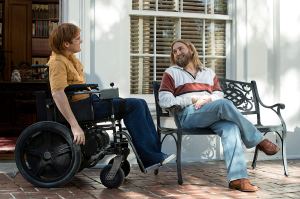
It’s a dark comedy, as you can imagine, but between Jack Black, Jonah Hill, and an orange-haired Joaquin Phoenix wielding his wheel chair like a bat on wheels, there’s some appreciated levity to all the drama. It’s an off-beat comedy about an off-beat guy. Phoenix is irrepressible.

Sean didn’t care for the movie – he felt not much had happened. I liked it well enough – I liked the unexpected performances from the likes of Beth Ditto, Carrie Brownstein, and Kim Gordon. I liked that Callaghan’s dark vein of humour is kept in tact throughout transformation, that he doesn’t become some sort of saint, merely the same caustic guy with a new lease on life. I liked that his past is never treated like an excuse – not that I’m not sympathetic to his victimhood but I like that he finds his salvation elsewhere, that he’s allowed to not solve the puzzle of his childhood before finding peace in his present. The 12 steps are not equally cinematic, but I felt Phoenix’s charismatic performance carried us through. Obviously Sean disagreed, so I guess I’d call this a mixed-bag review. It’s not for everyone.


++