
Last week I reviewed the Netflix concert documentary, Justin Timberlake and the Tennessee Kids, directed by Jonathan Demme. It was all right, but was pretty much just high-quality concert footage with almost no bells or whistles. It put me in a nostalgic kind of mood, reminding me of a time many moons ago when I was an avid consumer of concert videos myself.
When I was a very little girl, the inside cover of my unicorn diary was plastered with NKOTB stickers. That’s New Kids On The Block, for the uninitiated. I loved Joey McIntyre in particular, and practiced writing my future married name over and over as only a 7 year old could (as an old married lady, I have never signed myself as Mrs anything). My mother called me “boy crazy” but 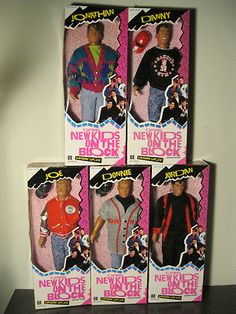 she fueled the fires of my pre-lusty desires with posters and t-shirts and perfume (I have no idea how to distill an entire boy band into one scent, but they did, and I wore it). I also had not 1 but 2 Joey McIntyre Barbie dolls. I still remember the jeans and the red jacket that he wore, and the backwards baseball cap like the baby-faced faux-bad-boy he was. My Barbies loooooved to date him, enjoyed extended closed-mouth kissing with him, and were serenaded on the reg. I never owned anyone besides Joey although the whole Barbie band was available for purchase – until a certain milestone birthday when my youngest sister paid I don’t want to know how much to assemble the boys for a reunion tour in my bedroom: she tracked down every last NKOTB Barbie and sent them to me, mint in their boxes. My childhood toys are now collector’s items. I am old.
When I was still young and fresh and musically ridiculous, I wanted nothing more than to listen to my New Kids tapes on my Walkman. Being quite small at the time, I never got to see them in concert, but I did have the next best thing: their concerts on VHS. I can’t recall how many of those I had, but it was  likely all of them. But they weren’t stingy like Justin Timberlake’s, they were full of priceless nuggets, like the sight of 14 year old Joey “shaving” before a gig, proper rat tail maintenance, and the guys discussing their astrological signs. You know, really important stuff. I ate it up. And I was starved for it because the New Kids cartoon played at noon on Saturdays and I almost always missed it because it clashed with my mother’s Nutri System weigh-ins. True story. I had a rough childhood, you know. I would wait in the Ford Aerostar, playing with my 2 Joes to console myself, waiting to see if my mother was any skinnier, and if missing my favourite show would be worth it (it pretty much wasn’t).
I must sound awfully wistful when I talk about the New Kids glory days, because not only did my sister assemble the whole band in 12 inch, non-anatomically-correct plastic form, my husband bought me tickets to their real, flesh and blood reunion tour (twinned with The Backstreet Boys, who I could live without). We had floor seats so my inner 7 year old really geeked out (how I managed not to bring a glitter poster with me, I’ll never know). It was wonderful.
That had to have been the hey day of concert documentaries, though. I haven’t seen any of the recent ones, though I know that both Beiber and Katy Perry had rather successful ones. But now that I’m thinking about it, The New Kids On The Block aren’t the only concert videos I’ve owned.
At home, somewhere in my DVD collection, is concert footage of Our Lady Peace, a band you probably haven’t heard of outside of Canada, but was the height of the alt-rock scene here in the late 90s, when I was in high school. By then I was old enough to go to concerts and boy did I. I probably saw those guys in concert dozens of times. In fact, I sang with them once. I was in the front row, singing along to every song, when the lead singer (Raine Maida), held my hand and gave me the mic. Jesus Murphy. Have all your dreams ever come true in one ecstatic moment? I remember stumbling in the door so late that night, a week night of course, and shaking my mother awake so she could listen to me recount my story in a still-trembling voice. It was golden. Our Lady Peace has stayed relatively active despite the fact that music these days seems to have shifted decisively toward a poppier sound. I saw Raine just a year or two ago at Osheaga doing some solo stuff. But this autumn they’ve banded together with another Canadian indie-alt band, I Mother Earth, to bring the 90s back. So of course someone bought me tickets. God I’m shameless. I can’t decide if I have the best life ever or … oh who am I kidding? It may be slightly embarrassing, but I’m having a damn good time.
What was YOUR concert doc obsession? I can’t be the only one!
 man extraordinaire, Canadian superstar Gord Downie had recently announced that he had a brain tumour and was terminally ill. Since making music has always been his passion, he and the Hip went on a farewell tour and despite the ravages of cancer, he performed full-throttle at each and every show, somehow finding the energy and the courage to power through. Their final
 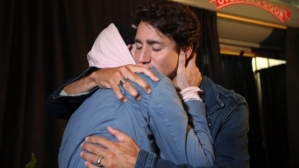 date was in their hometown of Kingston Ontario, just a little ways down the road from Ottawa. Our Prime Minister, Justin Trudeau, was in the front row, and spoke for all of Canada when he thanked Gord and the whole band for their decades of artistic serviced to the country. It was a stirring night. The end is coming for Gord and he knew it, you could see it in his eyes, feel it every time he was overcome by emotion, but instead of making it about him, he chose to use this spotlight (and believe me, about 32 out of our 33 million strong
 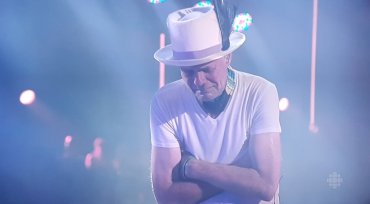 population were tuned in one way or another) to speak on behalf of Canada’s indigenous population.
 Prohibited from speaking their languages, practicing their spirituality, or honouring their cultures, teachers stripped them of their identity. Many children suffered terrible abuse, but all of these kids were deprived of their childhoods, and all of the families suffered terribly as I’m sure you would if your child was removed, perhaps never to be seen again, or if you were lucky enough to be reunited, we can only hope that you can find a common language in which to communicate. Communities were destroyed in what many Aboriginal people refer to as a genocide. It’s a dark part of Canadian history that wasn’t acknowledged until very recently. Today our First Nations peoples often live in poverty and other consequences of this intergenerational tragedy. Healing is not an Aboriginal problem, it’s something we need to address as an entire country. Gord Downie is doing his part.
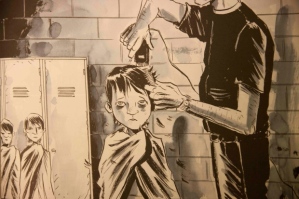 and hundreds and maybe even thousands of Chanies dotting our countryside. Lonely and miserable, many children made an escape an attempt only to lose digits or limbs to frostbite, arms and legs on traintracks, or lives to exposure, or to punishment when recaputured. How many tiny bodies are still unaccounted for? The fact that we don’t even know is proof of how little white Canada cared for Aboriginal people, and this is a guilty fact we struggle to reconcile even today.
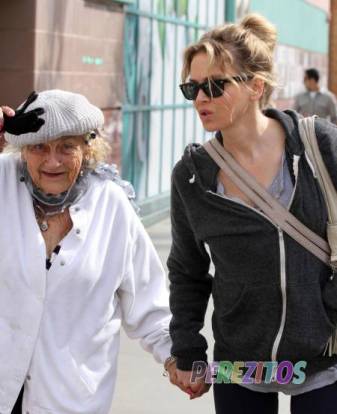 laundromat until one cold night a kind laundromat owner didn’t kick her out at closing time. She’s been living in Fox Laundry ever since – some 25 years now.
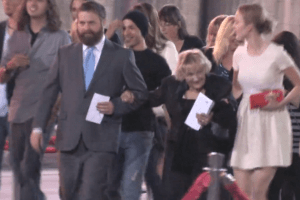 her hard-won wisdom, and an outlook that’s totally unique. She’s cantankerous and whimsical and totally intolerant of homeless people (she doesn’t see the irony). And she has a knack for making famous friends: Zach Galifianakis has taken her to movie premieres (he met her while doing his laundry some 18 years ago), Renee Zellweger takes her shopping, and if you promise to keep a secret, Zach’s about to put her up in an apartment all her own. She hasn’t had a home since 1976.
 passed from one weird owner to another. The film is more like 4 shorts that only have a dog in common. I didn’t even believe that it was the same wiener dog in all 4 vignettes. The first two are clearly linked, the last 2 not so much. The shorts also become increasingly non-entertaining. I thought the first one was the strongest: a father picks up a puppy for his young son, who has recently survived cancer. The dog sparks many serious conversations between mother (Julie Delpy) and son – motherhood, personality, free will, death. But all of the conversations are straight out of a what-not-to-say handbook, with Delpy literally telling her son that her childhood dog Croissant was raped by a dog with AIDS named Mohammed. The satire is delicious. There’s an explosion of joy on the screen as a boy and his dog play together, but this outburst of happiness is quickly punished, and the dog changes hands.
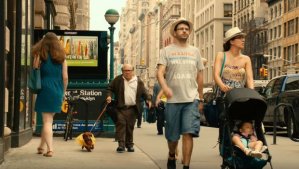 comfort, he’s not here to cushion the blow. And he’s sure as hell not here to give you a happy ending, so keep that in mind. Next up for Wiener Dog, she gets adopted by a character from another Todd Solondz movie, Welcome to the Dollhouse. Dawn is all grown up now, and played with Greta Gerwig. She runs into childhood…acquaintance (?) Brandon (Kieran Culkin) in a 7-11, and suddenly Wiener Dog’s on a road trip through some really heavy issues. She also meets disgruntled professor Danny DeVito and bitter old hag Ellen Burstyn. Through it all, Solondz’s camera is unflinching, perversely lingering over the gross and unbearable.
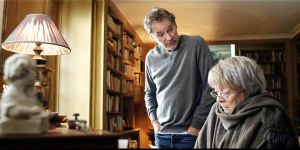 And her daughter Chloe too, as it turns out (Kristin Scott Thomas). His father purchased the apartment some 40 years ago, but bought it en viager, which means he got a pretty good deal on the price, but he had to agree that not only could the current owner keep living in it until she died, he’d have to pay her for the privilege. So for 40 years the father has been paying this old lady to keep living in a home that he technically owns, and now Mathias has inherited a property he can’t sell, and which is actually a debt, with a monthly reverse-rent that must be paid or he forfeits ownership altogether.
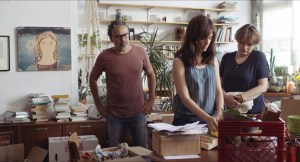 (John Ortiz), an ex lover, is married with a kid, though his relationship isn’t rock solid. He’s excited to have Anna around again, but you wonder if it’s real friendship he’s after, or the attention she can bring to his flagging career. A play wright, he’s got one ace in the whole: a new script he’s developed that revolves around a character that very closely (and unflatteringly) resembles Anna. Kate (Cara Seymour) is more reluctant to see her old friend. Is it because of the betrayal, or something else?
 girlfriend on Sons of Anarchy), which registers a double impact for every blow the film lands. Literally seen swimming amid a sea of scripts containing empty female parts, Siff is every female actress of a certain age searching for meaningful work. Anna’s opposite, Nadia (Dagmara Dominczyk), has given up her own work to be the rock of her family; her husband, Oscar, depends on her to be the stable one at home. But Nadia doesn’t want to be the rock anymore – “the rock is boring” she says, a line many of you will want to high-five because women are more than just someone else’s support (note to Jax!).
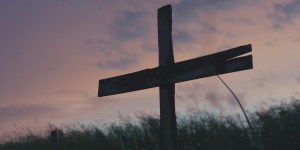 Aboriginal man is paying his respects at a rustic grave. The mud takes hold of his boots, lets go only reluctantly. He plods back to his humble shack, and sets to work counting stores. His traps are empty. Nothing grows. A way of life very likely already threatened is now near extinction with floods inching ever closer.
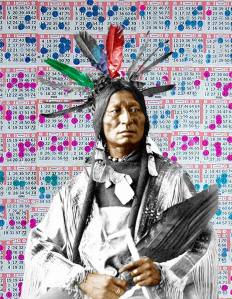 Growing up on a reservation, Judd had limited exposure to outside influences like film and television, and what little he did see never reflected his own image. Today he creates the kind of images that would have comforted his younger self in a style blending pop culture and Native art that’s all his own. Banksy-esque, even Warhol-esque, his art is at once familiar and thought-provoking. His bold, “indigenized” pieces, overtly or covertly political, give people pause. But more than that, they offer his people representation, a chance to see their own culture and identity as a direct influence on the popular culture of today.
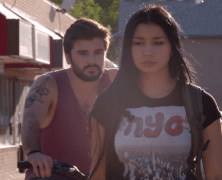 Marie’s experience through a re-enactment narrated using Marie’s own words.
 Mannahatta focuses on one of those Manhattan pizzerias. The film maintains a tight focus in order to convey its message, and that is a wise choice. Mannahatta is a small story of a new employee at the pizzeria who is haunted by a man that no one else sees. At first he is confused and annoyed by this ghost but eventually he listens to and understands him. It’s a cooperative awakening and we see that a joint effort is required to truly bury the horrors of the past.
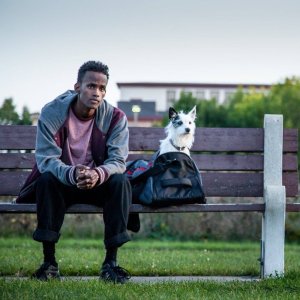 meandering but not as aimless as it first seems. Adan has a lot of room for self-actualization and self-improvement, but Syeed doesn’t insult us with a quick fix. Instead, the dog is a catalyst for Adan’s adopting a gentler perspective to the unknown. The result is a realistic testament to the immigrant experience. Both Adan and the stray dog are unwanted but the film resists a too on-the-nose metaphor. Instead it chooses to see possibility and understanding, which is a beautiful thing to see in theatres, especially at this particular time when the question of refugees is so urgent, and some people’s response so full of hate and ignorance.
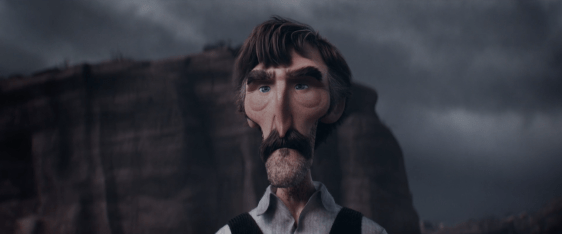 A tired old Sheriff is flooded with disturbing memories at the site of an old accident. Can he bear it? Can you?
