Author Archives: Jay

Black Is King

The Lion King live action remake got one thing right: it remembered that it is primarily an African story. To be fair, it was likely the Broadway show that did this for them, but Jon Favreau had the presence of mind to follow their lead and cast actual black actors in the important speaking parts. The Disney cartoon from 1994 wasn’t motivated by authenticity and we as a culture failed to keep them honest. So when Favreau chose only one returning voice actor to serve as a link between the two films, James Earl Jones was both the obvious and the best choice. His is the voice of wisdom that runs throughout both films, but the 2019 version backs that shit up with a stellar cast that is as talented as they are representative: Chiwetel Ejiofor, John Kani, Alfre Woodard, Keegan-Michael Key, JD McCrary, Chance the Rapper, Shahadi Wright Joseph, Florence Kasumba, Eric André. But none were chosen more carefully or more brilliantly than our Simba and Nala, Donald Glover and Beyoncé; they aren’t just black actors but recent symbols of owning one’s blackness. If the The Lion King remake justifies itself at all, it’s by putting those two front and centre, sending a powerful message of just who should be King and Queen.
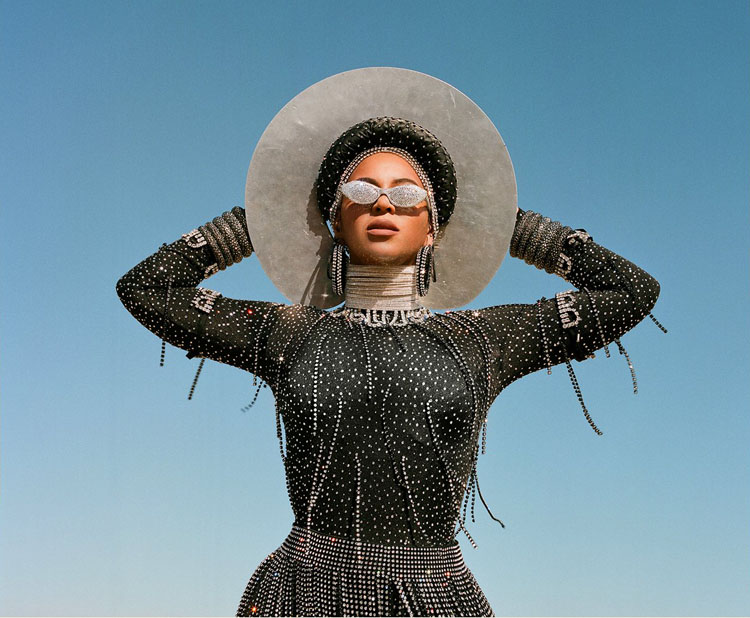
Black Is King is a visual album from genius multi-hyphenate Beyoncé. It reimagines the lessons of The Lion King for today’s young kings and queens in search of their own crowns. It is a love letter to her African roots while celebrating Black families.
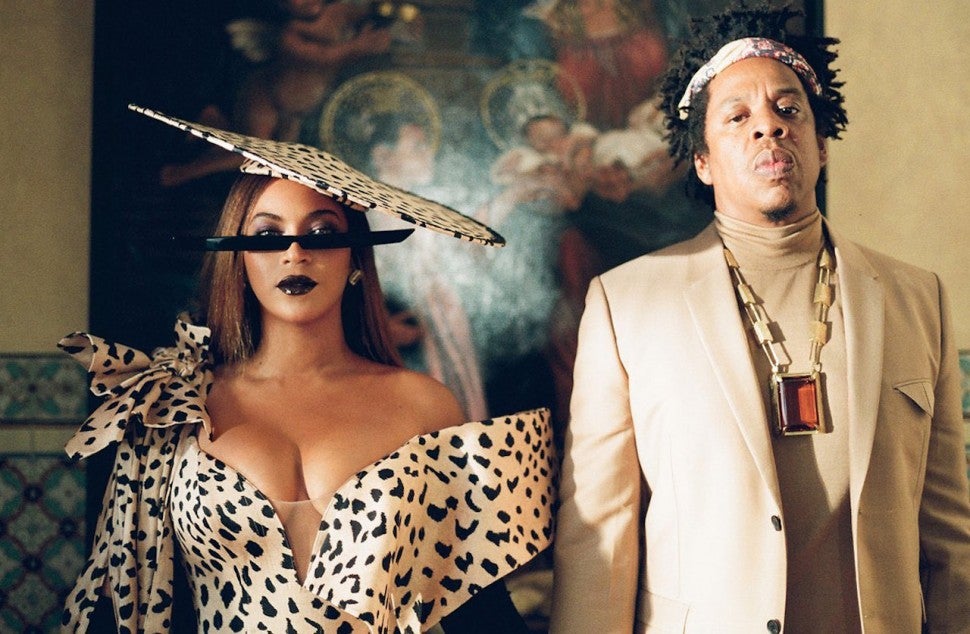
Beyoncé is the undisputed Queen of Pop. Her ascension must have come with a lot of racism, overt and covert, attached – she would have been accused of exploiting her culture while also being asked to suppress it – problems the likes of Pink and Madonna and Lady Gaga never considered let alone experienced. This system seems to have caused or at least contributed to the internalized hatred of his race in her counterpart, King of Pop, Michael Jackson. And yet Beyoncé has not just transcended the challenges to her skin tone and hair texture, she has come out on the other side a powerful and vocal advocate for anti-racism. For many of us, the change in her was undeniable at the 2016 Super Bowl, a performance dubbed “unapologetically black,” incorporating dancers in Black Panther berets performing black power salutes, arranging themselves into the letter “X” for Malcolm, a homemade sign demanding “Justice for Mario Woods”, and Beyoncé’s own costume, said to be a tribute to Michael Jackson. The performance reflected the modern civil rights movement Black Lives Matter and handed us her rallying cry in the song Formation, which references slogans such as “Stop shooting us”, riot police, the shamefully neglectful official response to Hurricane Katrina which demonstrated that poor, predominantly black lives were clearly deemed not to matter. “I like my baby hair and afros. I like my Negro nose with Jackson 5 nostrils, ” she sang, offering an education in the Black American experience.

Beyoncé has always been a proud African-American woman and artist. She pursued movie roles in Dream Girls and Cadillac Records. Her wondrously thick thighs became politicized in her Crazy In Love video. There were criticisms with racial undertones when she headlined Glastonbury in 2011. She sang At Last to the Obamas for their inauguration dance. She and fellow Destiny’s Child Kelly Rowland started a charity to help Katrina survivors. Husband Jay-Z has been critical of the injustice of the profitable bail bond industry, with over 400,000 people who have not been convicted of a crime incarcerated simply because they can’t afford bail, often set at less than 5K. Beyoncé didn’t suddenly discover her blackness in 2016. Whether the political climate pushed her over the edge, or becoming a mother to her own Black daughter did it, or she realized that her success and popularity gave her immunity, Beyoncé started using her voice and her platform quite blatantly, and quite brilliantly. There are few people in the world with her kind of power, and she’s been able to snatch back the Black narrative from the fringes and help spotlight it centre stage. But it was also a risk to have her name synonymously linked with black rights, but as she states rather directly in this film, “Let black be synonymous with glory.” If 2016’s Super Bowl half time show was her coming out party, her 2018 Coachella performance cemented her mythic, iconic status. As the first black woman to headline the festival, her show was explicitly black, triumphantly black. Look no further than her documentary Homecoming to see how deliberately, lovingly, boldly she created every element in her show to be marinated in cultural meaning. She didn’t just pay homage to those who came before her, she used her two hour set to unpack a lesson in black music history. She literally used her platform to honour and recognize black art; the performance was a revelation to the predominantly privileged white audience of Coachella, but it created a real moment in time that reached into the hearts and souls of those who could fully appreciated it. Having already achieved pop royalty status, Beyonce is free to make the strong personal and political statements that have defined her career ever since. Her success is no longer measured by mere radio plays; freed from having to abide by what makes her white audience comfortable, she and Jay-Z are reigning from a throne of their own making. She no longer has to shrink or contain her blackness and it’s clearly been a boon to her creativity and craft. Black Is King follows in the footsteps of Lemonade, defiantly blazing her own path, and returning to the African desert that clearly still calls her name.

This visual album is of course an occular and audible delight. It jumps off from The Lion King, swapping lions for Black men and women. It highlights the extremely varied beauty of the African landscape, and of its people. There are set pieces in here where you can readily imagine the ka-ching of literally millions of dollars spent per second of film.
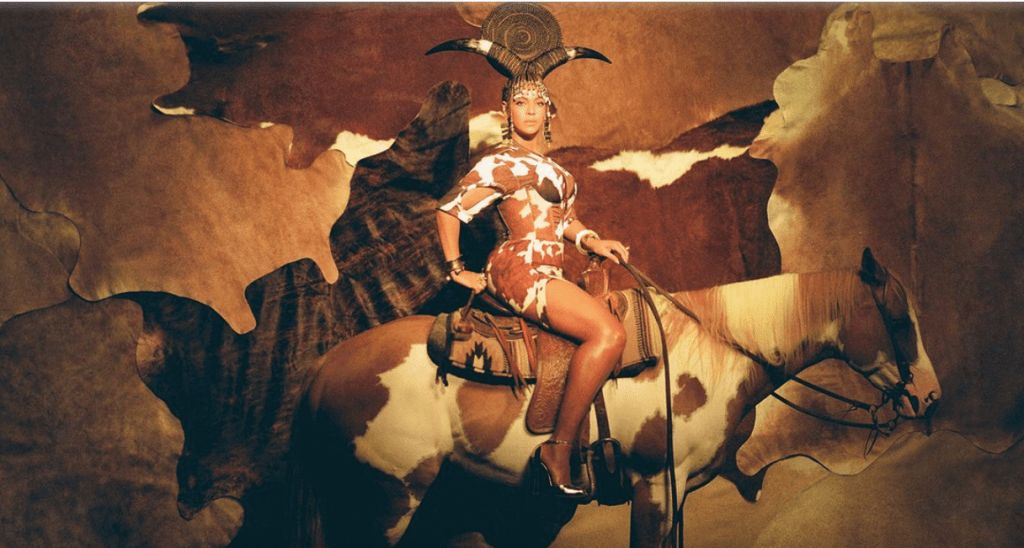
The Gift, Beyoncé’s Lion King-inspired album, takes us beyond Disney’s version of Hollywood’s Africa. Her original contribution to the film’s soundtrack, Spirit, is a gospel-charged anthem, but she didn’t stop there. She found up-and-coming African artists, songwriters, and producers to join her on the album, creating an international vibe with a strong and undeniable heartbeat.
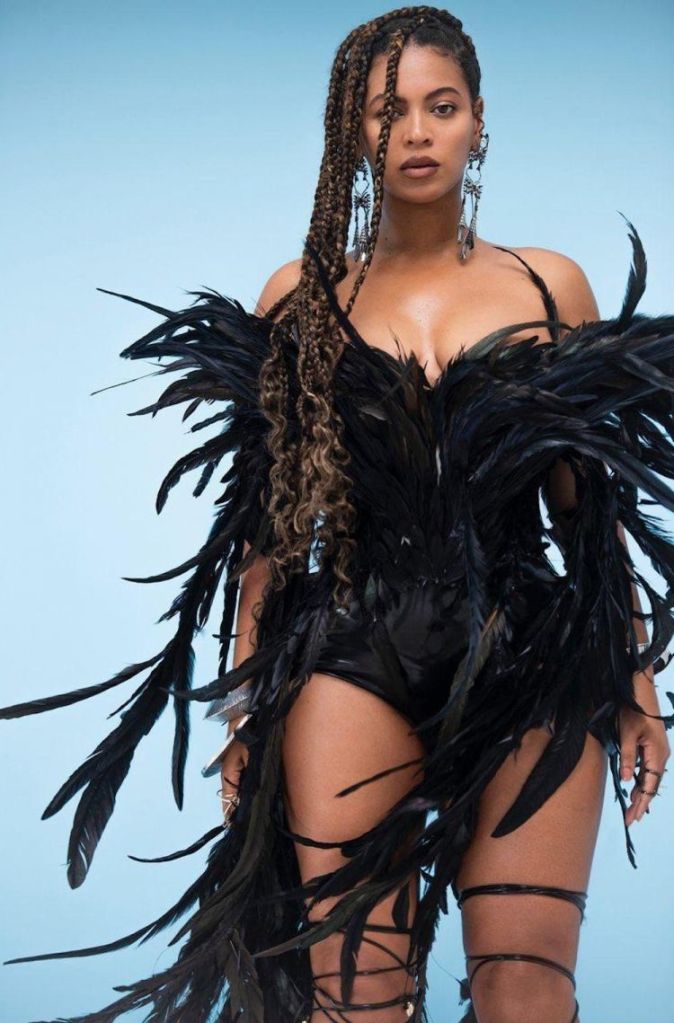
The accompanying film is stuffed with imagery, implication, poetry and practice that feels like such an intimate declaration of love and admiration that I watched on the verge of a constant blush. Even Kelly Rowland felt it, being the recipient of Beyoncé’s sincere serenade, breaking the beaming eye contact with an overwhelmed giggle.
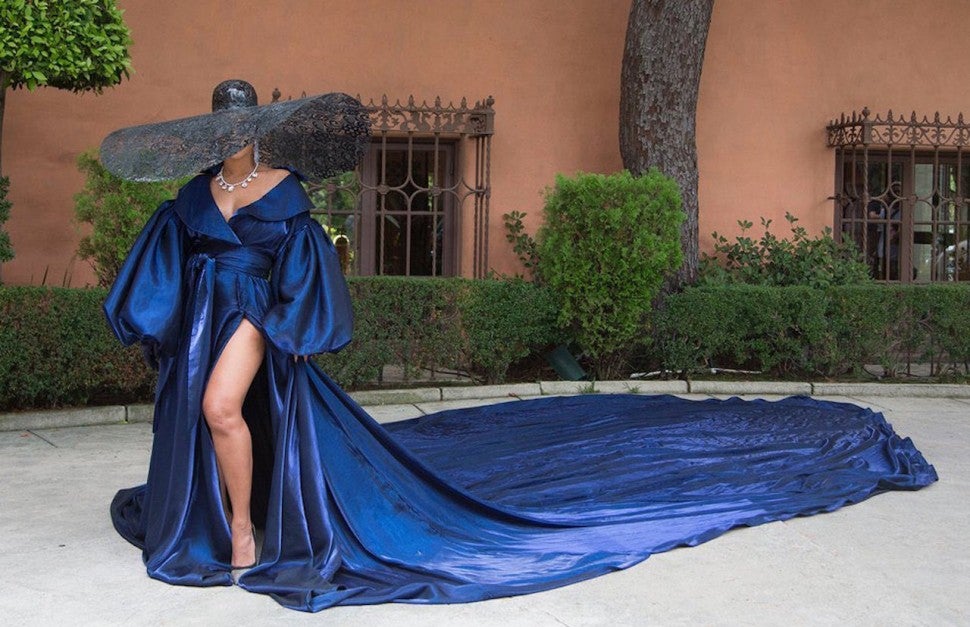
The visual album exists to toast beauty, observe beauty, create beauty, memorialize it. But a visual album from Beyoncé is to define and redefine it, to find beauty in new or forgotten spaces it, to celebrate a spectrum of beauty, to infuse it with ideas of culture and identity, to own it, to actually physically own it. And for that reason, I almost wish I could watch it at half speed. There are so many lavish tableaus set with precision and abundance but only glimpsed for a second or two; I want so badly to just live in that moment, to possess and savour it a minute longer.
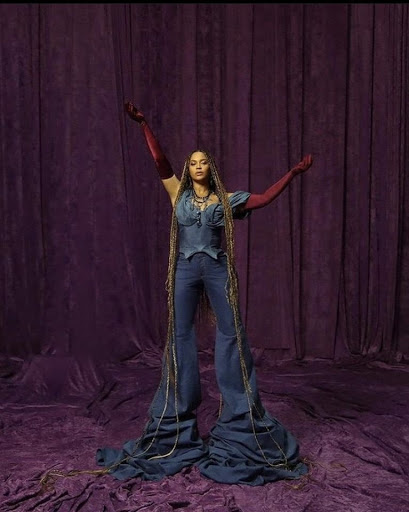
And like a true Queen, she steps aside and allows herself to be upstaged by African collaborators, like Busiswa from South Africa, Salatiel from Cameroon and Yemi Alade and Mr Eazi from Nigeria. This album is a show of solidarity, an act of unity. She places herself among them, among the ancient beats and contemporary sound.

A thousand words in, dare I only broach the subject of fashion now? The sheer quantity of couture from Queen B is nearly numbing, except each look is so bold and unique you do your best to keep up to the dazzling, nonstop parade: Valentino, Burberry, Thierry Mugler, Erdem. But also a barage of Black designers from around the world, curated diligently and I’d guess rather exhaustively by Beyonce’s longtime stylist, Zerina Akers: D.Bleu.Dazzled, Loza Maléombho, Lace by Tanaya, Déviant La Vie, Jerome Lamaar, Duckie Confetti, Melissa Simon-Hartman, Adama Amanda Ndiaye…you get the picture. It’s MAJOR, every one of them re-imagining a wardrobe fit for an African Queen, their number so plentiful that no one garment or gown overpowers the beauty of their canvas: brown skin.

Beyoncé surrounds herself with Black beauties, including Naomi Campbell, Adut Akech, and Lupita Nyong’o, but also her own mother, Tina Knowles Lawson, and daughter Blue Ivy. Her family is often presented as a symbol of her strength, young twins Rumi and Sir making appearances as well, equating “kingship” with engaged fatherhood.

There is so much to unpack in this film, from the frenzied and joyous dancing of black bodies, to their posing as sculpture on pedestals, to the recreation of moments from her own storied career, there is more here than I can enumerate let alone appreciate. Like the star herself, Beyoncé’s concept of blackness is a hybrid of her ancestral lands and the country of her birth. It’s an amalgamation of black art and black history and a vision of black power, of ethnic and cultural splendor. And what a time to have dropped it, in a world where white people are just now opening their eyes to the racial injustice and inequality that has yoked people of colour for centuries, where black bodies are being discriminated against at best, black minds suppressed, black art appropriated, black experiences denied. And here is a woman who could easily coast on her laurels but instead is serving her people by framing the Black experience not only in a positive light, but a powerful and empowering one. Black Is King is not a cure for racism, not even a vaccine, but it may just be the booster shot of pride we all need right now.

Latte & the Magic Waterstone

The animals of the clearing are worried about drought. Collectively they have only 4 pumpkins full of water left, and the sources are drying up, but Latte, a spunky young hedgehog and an outcast from the forest community, has her own small reserve. A young squirrel named Tjum tries to seize her water for the communal coffers but in the ensuing fracas an entire pumpkin is upset, spilling a quarter or more of the clearing’s dwindling water supply. Yikes. The animals are, as always, quick to point the finger at Latte, but this time Tjum recognizes the anti-hedgehog sentiment and takes sole responsibility for the accident.

It’s nice and all but still doesn’t account for the water shortage. Luckily a crow with impeccable timing arrives to tell them all about this mythic waterstone that once rested at the top of bear mountain, allowing water to flow abundantly down to to everyone in the forest and beyond. But then the bear king stole it for himself, leaving all the other animals to go without. Latte resolves then and there to retrieve that stone, and Tjum follows after her. If the bear king doesn’t sound scary enough, they’ll have to cross a perilous forest to get to him, encountering predators like wolves and lynxes who are just as thirsty and even more desperate, not to mention a cockeyed toad whose motivations are mysterious.

Latte & the Magic Waterstone is a German animated film, and German fairy tales aren’t exactly known for their light-hearted joviality. Nobody gets their eyes pecked out (Grimm’s Cinderella) or any kind of blinding (Grimm’s Rapunzel) indeed; eyes are largely safe in this one. But there is some real sadness to contend with: a sweet little hedgehog alone in the world, a community content to shun her. But the movie doesn’t really dwell on such matters. It sticks to its simple and predictable story, an easy little adventure to find or not find a stone that may or may not exist. Dying of thirst or dying of loneliness: what’s the difference?

This movie is occasionally visually stunning and mostly just a forgettable little cartoon about a hedgehog who probably deserves better.

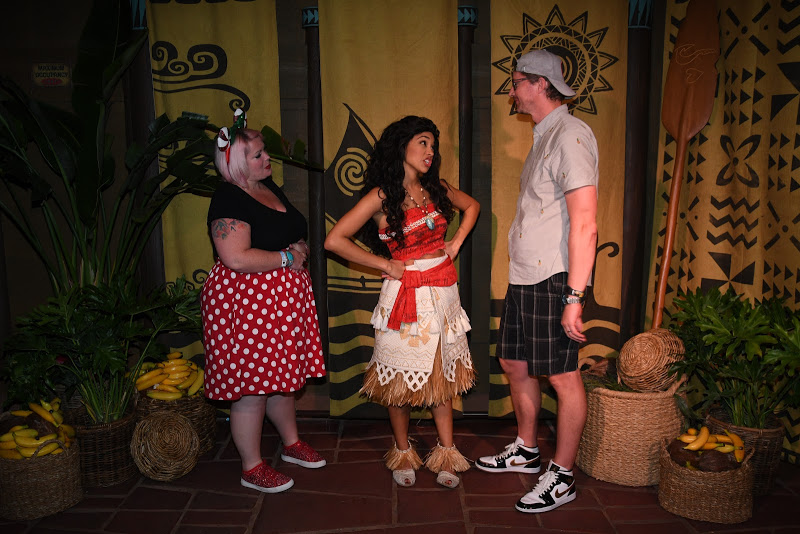
Disney Park Tag

We’ve had to cancel our 2020 Disney World trip due to COVID concerns; yesterday there were more deaths in Florida than there were cases in all of Ontario. Not to mention the Canada-U.S. border has remained closed to keep the virus at bay (Canadians worked hard collectively to shut things down and flatten the curve early on and we don’t want our efforts wasted by an errant American visitor, who’ve played so fast and loose with people’s health).

Disney World closed its gates for many weeks but is now reopened despite an alarming increase in new cases in Florida (and elsewhere of course; Florida is by no means the only American hotspot). For now, our only Disney travel will be in our dreams, and by trips on the nostalgia train with videos like this one.

We truly value each and every one of you who has discovered us on Youtube and lent their support with subscriptions and comments.

p.s. Apologies if I’ve been appearing and disappearing as a Follower on WordPress. I’ve had some recent interruptions and I’m still trying to gain back my list!

Christmas In Mississippi

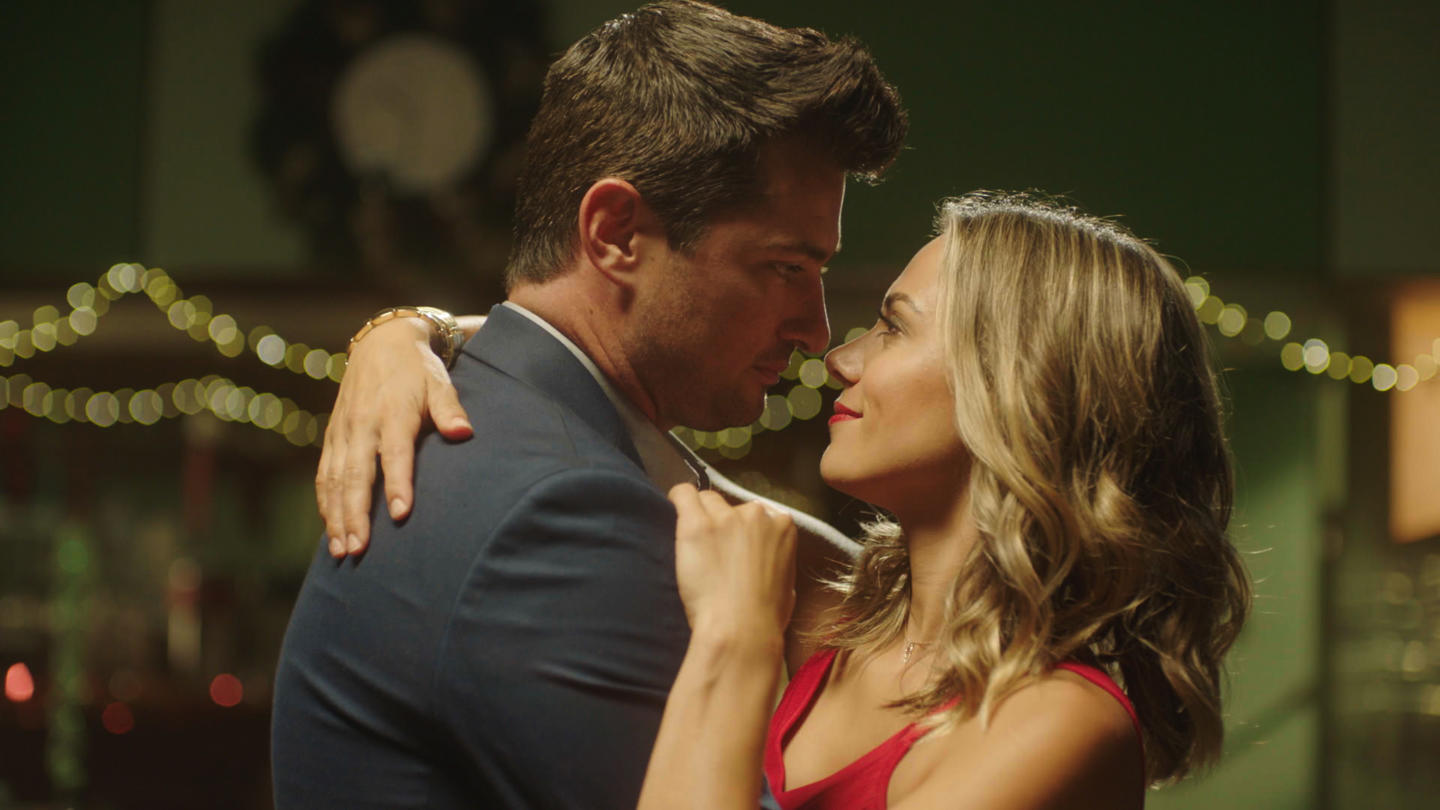
Photographer Holly Logan (Jana Kramer) returns to her hometown of Gulfport, Mississippi for Christmas. The town is still recovering from a devastating hurricane five years ago and is resurrecting their traditional holiday light show for the first time since it struck. It’s going to take quite a production to make up for lost time and boost town morale, so Holly volunteers to pitch in, but soon regrets it when she discovers the festival is run by her high school sweetheart, Mike (Wes Brown). Now Holly must spend the next few days with the man who broke her heart when he didn’t follow her to college as planned.

The past decade has perhaps changed Mike: he’s stable, he’s sweet, he volunteers, and he takes care of his nephew Jack. Does he have a job? Who knows! Between those crinkly blue eyes and his acoustic guitar, who cares? Holly’s widowed mother Caroline (Faith Ford) is certainly on board, pushing the two together at every opportunity, even though she herself continues to rebuff the charms of a certain Mr. Maguire (Richard Karn).

With the magic of Christmas wafting through the air and a few silly misunderstandings quickly out of the way, there’s plenty of room for Mike and Holly to fall in love.

Kramer and Brown have the bland kind of appeal which I suppose allows almost anyone to imagine themselves in their shoes. Faith Ford and Richard Karn add a certain 90s vibe to the whole proceeding (you may remember Ford as Corky on Murphy Brown, and Karn as Al on Home Improvement), and you might wish we could see a fuller secondary love story from these second-timers. (Fun fact: my mother’s husband retired this summer, and his kids paid Richard Karn to send him best wishes over the internet in a pre-recorded video – apparently that’s a thing you can do).

This is a Lifetime movie rather than a Hallmark movie, and I know there are devoted camps to both, so if that’s a difference-maker to you, be forewarned (the only real difference that I can discern is that Hallmark always makes you wait until the very last scene for the couple’s first and only kiss, while Lifetime makes you wait only the first 90 minutes (counting commercials) and then maybe sneaks in another one or two (pecks, closed mouths, no tongues) before the film wraps up in the exact same way a Hallmark one does. These movies don’t literally end on a heart-shaped dissolve, but they don’t have to – you can feel it. It is heavy like a hard cheese, and that, my friends, is no coincidence. Peace out.

Mingle All The Way

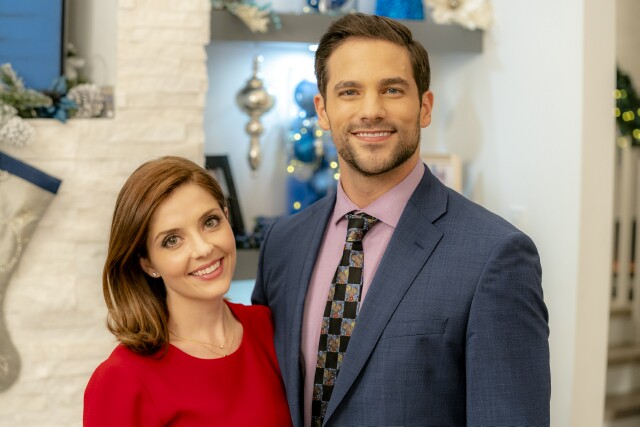
Molly (Jen Lilley) is the genius inventor of the soon to be wildly popular app, Mingle All The Way. In case you can’t tell from the name, it’s a “networking” app intended for professionals to find like-minded plus-ones to attend work-related events. No romance, strictly a platonic partnership of strategic convenience. Of course, Molly is merely the founder of her own “tech company,” she never imagined she’d ever have to stoop so low as to actually use her own app. Gross. But alas, a potential investor is requiring it. You know, if you’re going to pony up a million dollars, you do want the person who stands to profit to provide a single instance of anecdotal evidence. It’s called due diligence. So Molly’s own algorithm matches her with Jeff (Brant Daugherty), who’s either a lawyer or an ad executive (I can’t remember which but it’s definitely one of the two because it’s ALWAYS one of the two), whom she instantly recognizes as the scoundrel who stole the last angel right from under her nose at the extremely Hallmark-esque card and ornament shop that morning. Cad! And now she’s committed to attending several Christmas functions with him!

Well, guys, you won’t have seen this coming, but although they’re keeping things super strictly above-board and hands-to-themselves, they somehow fall in love anyway. Which is basically egg(nog) on Molly’s face because of how very, very seriously her app markets itself as anti-dating, 100% professionalism-only guaranteed. Who would want an app that pairs socially inept weirdos romantically? In fact, more than not tanking her business, Molly’s #1 priority is making her mother proud of her. And truth be told, I don’t think Molly’s mom even knows what an app is, or why her daughter can’t get her own dates.

Anyway. What can I say, it’s a Hallmark movie. The characters are rather shameless and you might be downright embarrassed for them if they weren’t also so guileless. It’s a combination that works well for Hallmark: good old fashioned naivety and a G-rated, friends-first romance. Hey, it works if you work it!

Bob Lazar: Area 51 & Flying Saucers

In 1989, a man named Dennis, his identity shrouded in shadows, his voice distorted, gave an explosive interview claiming he worked on UFOs in a government lab called s-4.

We have since come to know his true identity, Bob Lazar, and to refer to that particular place in northern Las Vegas as Area 51. Bob claims his work there involved the reverse-engineering an alien propulsion system, technology that even 30 years later still cannot be replicated by humans.

Do you believe Bob Lazar? Lazar doesn’t care. He came forward because he felt his fellow Americans deserved to know what the government was hiding from them, but he never wanted to be in the spotlight and he certainly didn’t expect to be the face of UFOlogy for the next three decades. His testimony is both the most controversial and also the most important contribution to the UFO narrative of all time. But life hasn’t exactly rewarded him for his whistleblowing, if you consider what he did to be whistleblowing. He’s either an American hero or a traitor or a nutbar.

The UFO that he claims to have seen supposedly ran on an antimatter reactor fueled by element 115, which generated a gravity wave which allowed for movement but also camouflage by bending light around it. At the time element 115 had not yet been artificially created (it was in 2003 and officially named moscovium, but no stable isotopes of moscovium have ever been synthesized, all of them radioactive and decaying in fractions of a second). Lazar claimed to have seen documents referring to little green aliens as having contacted humans on Earth for the past ten thousand years.

Is Lazar a total kook or just a lousy secret keeper? That’s what this documentary seems intent on establishing: not whether UFOs exist and have visited this planet, but whether Lazar is a nice, honest man. Very little new information is offered and Lazar basically gets the stage to himself. This film by Jeremy Kenyon Lockyer Corbell is unlikely to sway people’s opinion one way or another, but Corbell’s stance is pretty clear since he glosses over Lazar’s 1990 arrest for aiding and abetting a prostitution ring. This was reduced to felony pandering (the procuring of a person to be used for prostitution, including inducing, encouraging, or forcing someone to engage in prostitution), to which he pleaded guilty. He was also charged in 2006 for shipping restricted chemicals across state lines, pleading guilty to three criminal counts of aiding and abetting the introduction into interstate commerce banned hazardous substances. Possibly these charges are a result of the government keeping tabs on his whereabouts, and possibly Lazar’s just not as nice as he likes to pretend. Either way, even Lazar himself admits he has no way of proving that what he says is true. So it all comes down to you.

Do you believe in aliens?

In UFOs?

That the American government is hiding aliens or UFOs or both in Area 51?

That Bob Lazar was only helping hookers move?

The Sunlit Night

You’d have to be desperate to accept a job in Norway’s Arctic Circle painting a barn alongside a gruff, acerbic artist during the months when the sun never sets. But desperate she is; Frances (Jenny Slate) is technically homeless after her own breakup, and her parents’, which dissolves the family home. She’s an artist, but not the kind who’s been first choice for any apprenticeship back home. Hence the sunlight nights.

She spends her days painting a barn yellow under the direction of cantankerous Nils (Fridtjov Såheim), her evenings making friends with goats and brown cheese, and her nights not sleeping as the sun’s rays continuously penetrate the windows of her camper. She meets Haldor (Zach Galifianakis) an American who plays a Viking Chief in a nearby “authentic,” “historic” Viking village settlement meant to attract tourists, though there are few, and Yasha (Alex Sharp), who has traveled here to give his recently deceased father a proper Viking funeral.

There’s nothing like self-exile to establish a sense of grief and apathy. I imagine Martin Ahlgren had a cinematographer’s wet dream up there with those incredible, sparkling landscapes. Jenny Slate is her usual effervescent self. But though the film is often charming, it doesn’t really feel complete. Frances often refers to her time in Norway as “detention,” a punishment for not being successful. With time it becomes the site of her awakening, her renaissance as an artist – but it’s unclear to both the audience and to the film itself whether Frances has undergone a permanent transformation. The film lacks commitment, it all feels rather passive. I found things to admire but was left feeling vaguely unsatisfied.

Double World

This movie is a little hard to describe. It’s definitely fantasy – hard to distinguish if it’s an ancient civilization (with sporadic impressive technology), some post-apocalyptic but rebuilt future, or just an alternate universe, but in any case, picture ancient China but let’s call it two basic nations: north and south. The north and the south are predisposed to war against each other of course, but there’s been 10 years of peace up until this recent kerfuffle. The kerfuffle has necessitated the 10 neighbouring clans to each send a team of 3 to establish the very best warriors, who will be declared the grand marshals for the coming war. The clan where we’re embedded has few people volunteering for the likely deadly positions, so when Dong Yilong (Henry Lau) throws his hat in the ring, he’s immediately approved, even though he’s literally strung up by the ankles during this meeting, having only moments before been caught for stealing and about to be executed. No one in the village would miss him. Known as The Bastard, he’s always been an outsider, and his clan sees him as expendable if not worthy. The next volunteer is known as The Deserter (Peter Ho) because he was the sole survivor in the last war. These two (yes, there’s a third, but let’s not get too attached to him) set out toward what promises to be an extra bloody competition, but the road there is also filled with peril. The Bastard has nothing but a broken comb, the only thing left to him by his mother who died in childbirth, and The Deserter carrying a broken spear that returned from him from the last battle.

If the plot sounds confusing, don’t worry. This movie is all about the action. If you’re here for anything else, you’ve got the wrong film. But as an action adventure fantasy, it’s pretty much everything you could want. First off: nonstop action. They don’t wait until they get to the war games, they encounter lots of danger from lots of sources before they even get to the part that’s supposed to be the challenge. And in fact, we meet Dong Yilong as he’s being pursued for theft. So: An Aladdin-style pursuit, a near-execution, a giant Scorpion thingie that’s definitely learned some tricks from Tremors, and a sandstorm that could stop a horse, but not the intrepid young woman (Chenhan Lin) who’s destined to be their third (the generic, unnamed member of the original trio has no backstory and no special possession, so you know he’s not going to make it to the end, but he barely even makes it through the beginning!).

And that’s just the cost of travelling! The actual warrior competition is going to involve shackles, impalings, a ferocious puppy, and a beast who makes dragons look like mosquitoes. Plus some supernatural shit for good measure.

The fight choreography is gorgeous, the CG is flawless, and the action’s non-stop. We went in with low expectations and were pleasantly surprised by a fun watch that helped curb those summer blockbuster cravings.

Banana Split

When something is billed simply as a “Dylan Sprouse comedy,” you adjust your expectations accordingly. Many people will know Dylan and his twin brother Cole as the stars of Disney channel’s The Suite Life of Zack and Cody. I am not those people. Since I’m old as fuck, I know them as the kids who played opposite Adam Sandler in Big Daddy. They’re grown up now, arguably too grown up (28) to be playing a high school student, but in the great tradition of Hollywood, it is what it is.

A happy surprise though: this is not a Dylan Sprouse comedy. He’s in it, but he’s not exactly the focus.

An even happier surprise: though this is the second movie about high school sweethearts headed for college on opposite coasts released by Netflix this weekend, Banana Split is a lot more palatable than The Kissing Booth 2.

April (Hannah Marks) and Nick (Sprouse) have spent their last two high school years as a couple, half of it desperately in love and in sync, and the latter half bickering and growing apart. Still, it’s a blow when they’re accepted to schools so far apart. They break up, and it seems their last summer at home will be spent in separate corners, licking wounds, mending hearts, and sharing custody of mutual friend Ben (Luke Spencer Roberts).

But Ben throws an unexpected wild card into the mix: Clara (Liana Liberato). Clara and April hit it off immediately. They’re kindred spirits, destined for instant best friendship. Clara is the sunny antidote to April’s funk. There’s just one little wrinkle: April’s not the only one to fall for Clara. So does Nick. Nick and Clara are dating, so to preserve the friendship between the two women, they agree on some rules, mostly consisting of not talking about Nick, and not telling Nick about their relationship.

It works for a while. But more importantly, the story works. It works because the script is good. While The Kissing Booth 2’s characters are the exact same age, their antics are fairly juvenile, the film aimed a much younger target audience. Banana Split, however, is much saucier, and comes with an R rating. I always have a soft spot for teenage girls who talk like salty sailors because I was one, and I get them. I get bonding over rap lyrics and driving tests and the mysteries of corned beef (I have LITERALLY ranted about corned beef my whole life. Corned beef? Exactly how is something corned and why on earth would you want it to be? Diiiiiiisgusting).

Anyhow, this movie caught me off guard. Marks wrote it along with Joey Power and gives it an authentic flavour. This may be a Gen Z comedy, but April and Clara’s friendship is timeless and I love a script bold enough to write toward it and not treat it like it’s the side piece. Bravo.

Romance Doll

Yeah, I know about sex dolls. Sure. They used to be inflatable, although I believe/hope those were mostly novelty items since I’ve sliced my finger on the vinyl seam of a beach ball and don’t think you’d want to risk more favoured appendages to a similar fate. By 2007 things had improved somewhat, if Lars and the Real Girl can be believed. And earlier this year, a Canadian sex doll rental company expanded its locations to better serve the community. For $189 for two hours or $289 for the night, you can peruse their catalog of “girls” (they each have backstories and personalities) and have them discreetly delivered to your door with a guarantee of cleanliness (hopefully the process is a little more rigorous than the whole spray of Lysol into the bowling shoe scenario).The dolls are incredibly life-like, at least to the touch. They have soft skin, chic wigs, and joints that can accommodate any number of positions. They’re so impressive they’re called love dolls now.

Or Romance Dolls, if too many movies have already been titled the former. Tetsuo (Issey Takahashi) never meant to get into the sex doll business, but he was an unemployed art school grad and money talks. As a sculptor, he is tasked with making as realistic a doll as possible, but his first attempt is ridiculed for not being grope worthy enough. He confesses to coworker Kinji (Kitarô) that he hasn’t seen breasts in years, so the two hatch a harebrained scheme to lure a model to sit for a plaster cast by posing as doctors doing research for prosthesis use. Sonoko (Yu Aoi) is a luminous angel, but her session with Tetsuo perfectly sedate. Sonoko is shy and demure, her coyness inspiring “doctor” Tetsuo to catch feelings. It’s a divine miracle that when he runs after her to profess his love, she doesn’t blow her rape whistle. This girl has very poor creep radar.

Like so many love stories, the fairy tale wears off after the wedding. The Sonoko doll proves quite popular, so Tetsuo works overtime, returning home late, so tired from making sex toys for others that his own sex drive is dead. Pressure mounts even more when Tetsuo starts working on Sonoko 2.0. He’s obsessed with the silicone Sonoko but neglects the actual, real life Sonoko sleeping in his bed. Plus there’s the problematic secret between them; Tetsuo never did come clean about his job, so his wife still believes he’s in medicine rather than erotic toys.

Impressively, Yuki Tanada not only adapts from her own novel, but directs the thing too. And it’s got a lot of good pieces: the objectification of the female body, the ultimate rejection of one’s muse, the cancerous nature of secrets…but like a sex doll (I hope/imagine), you can have all the right parts and they still not add up to a satisfying thing. The husband gets a pass because he’s an artist, his wife makes all the sacrifices, and female sexuality is handled in a rather depressing way. Plus there’s the whole “husband preferring the version of his wife who is undemanding and never talks back.” It’s enough to make a feminist ejaculate anger out of her eyes.

And just a quick head’s up to our Dutch readers: in the making of this review, I learned that sex dolls are often referred to in Japan as “Dutch wives.” You, erm, might want to look into that.