Author Archives: Sean

Unknown's avatar

About Sean

I'm an asshole! assholeswatchingmovies.com

Thor: Ragnarok

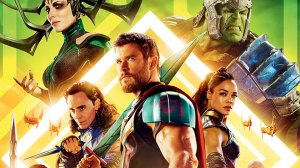
post_master-thor-960x540The Marvel Cinematic Universe is so bloated by this point that it’s a full-time job to keep up with what’s going on.  Thankfully, Thor: Ragnarok doesn’t get bogged down in what’s come before.  Instead, the third installment in the Thor franchise tells a self-contained story and shifts Thor’s segment of the universe from dreary fantasy mode to action-comedy mode.  From a cameo by Matt Damon that I totally missed, to a Taika-Waititi-voiced blue rock monster, to Hulk and Thor arguing over everything and anything, Ragnarok is the funniest apocalypse movie you will likely ever see (sorry, Zombieland!).

My only complaint, really, is that the plot got in the way of the fun.  Every time the scene shifted to the problems Cate Blanchett’s Hela was creating in Asgard, all I wanted was to get back to the wacky trash world where Thor and Hulk had crash-landed.  I guess this movie had to justify its existence by advancing the plot and having big stakes but I would have gladly spent the whole run time hanging out with my new favourite Avengers (who I am happy to report have now started their own spin-off team).

Anyone who has enjoyed Taika Waititi’s past work will not be disappointed by Thor: Ragnarok.  If you haven’t enjoyed Waititi’s work, you’re probably on the wrong site, and if you haven’t seen his other stuff, then do!!!  Start with Thor: Ragnarok and go from there.

As he always does, Waititi will introduce you to madcap supporting characters whose main purpose is to make you laugh, and even better, he will show us that Thor and Hulk have actual personalities.  Purists may take issue as those two characters are notoriously dull, but I thought it was a fantastic improvement that should be carried forward into the next 40 or 50 Marvel movies that apparently are still to come.  Comic book movies should be bright, colourful and fun, and Thor: Ragnarok is all of those things from start to finish.  Go see it!


Twilight Dancers (2017)

Far too often, an indigenous community makes the news because it’s dealing with a suicide epidemic. Cross Lake, Manitoba is one such community. In 2016 there were 140 suicide attempts in Cross Lake within a two week period. Six people were successful. Those staggering numbers are even more devastating when you consider that the population of Cross Lake is about 5,000 people total. Afterwards, the community was left to try to pick up the pieces.

One way through the pain was dance. The Twilight Dancers are a dance troupe from Cross Lake, and this documentary short follows its members as they compete in the 2017 Cross Lake Trappers Festival. The closeness of the community is obvious from the start. Every one of these young people has been affected by last year’s suicides, in one way or another. Bullying and social media are frequently cited as the causes, to which I am sure we can all relate.

Dancing is not an obvious solution to this type of crisis on reserve, particularly square dancing (which, as several of the kids point out, came from white people). But it clearly works. These dancers are survivors, they are talented, they are dedicated, and they are spreading joy to their audience as they chase a championship. Their positivity through tragedy is inspiring.

The Twilight Dancers show us what it means to never give up, and I am glad to have heard their story.

Kayak to Klemtu

Teenagers. They think they know it all, don’t they? They have this unbearable self-righteousness. They can take a motorboat to testify about the dangers posed by oil tankers and not feel a little hypocritical, not even a bit.  The big picture is missed. Kayak to Klemtu, Zoe Hopkins’ first feature, finds itself in the same quandary.  Various problems arise, the characters deal with them as they come, and then the scene shifts to the next problem, without ever engaging with anything of significance.

I wished throughout that I got to know the characters. Too often, characters would appear solely to serve the plot or provide a moral question of some sort, and then disappear once they had set up that segment of the film.  Discussions that would seem to be important often didn’t end up happening, whether it was the reason why the teenagers’ parents left Klemtu in favour of Vancouver, or why a mother and son never asked each other how they felt during their husband/father’s battle with cancer.

Those missing details pile quite high by the end of the film. By focusing so heavily on a crusade for environmental protection, Kayak to Klemtu misses the bigger picture. Paradoxically, the “bigger picture” here was one small family in mourning, looking for ways to cope with the loss of a loved one. Their journey takes a back seat to the film’s anti-pipeline, pro-conservation message, and it should have been the other way around.

With so many beautiful shots of the northern British Columbia coastline to be found in Kayak to Klemtu, the conservation message would not have been lost if the characters had been driving the film instead.   If anything, the message would have been more impactful, as the onscreen journey through B.C.’s coastal waters argues more effectively in favour of conservation than a monologue ever could.

The Square

Sometimes, I walk out of a movie and wonder why a director decided to insert a scene that didn’t seem to add anything to the film.  With The Square, I walked out wondering why the majority of the scenes had been included.  Even the film’s poster gets in on the act, blatantly photoshopping Elisabeth Moss into a scene in which she doesn’t appear.  That is a fitting allegory for her role in the film as well as for a lot of the movie’s scenes.  Moss didn’t need to be there in the poster picture but someone went to the effort of adding her anyway, for no obvious reason.  The same thing seems to have happened with many scenThe-Square-movie-posteres in this film, the latest from Ruben Ostlund, who previously directed Force Majeure.

The Square centres around an obnoxious, entitled museum curator (Christian, played by Claes Bang) who makes more than a few mistakes in promoting his museum’s new exhibition and, on the side, searching for his stolen phone, wallet, and cufflinks.  The fact he sees himself as a pretty good guy only makes things worse for him and everyone he comes into contact with.  In between his missteps, we are treated to some truly bizarre scenes involving a human pretending to be an ape at a dinner party, a real ape acting as a third wheel at Moss’ character’s apartment, and a cheerleading performance by one of Christian’s kids, none of which advance the plot in any way, despite a lot of effort being put into staging and filming these scenes.  But to what end?  The Square repeatedly left me feeling like I had missed the point, but it happened so many times I had to conclude there was no point.

That is The Square: an overlong mess of ideas patched together into a two and a half hour long feature.  The movie starts well enough but doesn’t know where to go once it gets started, and certainly doesn’t know how to wrap up what it’s laid out.

The frustrating part is that many of the ideas in the film have the potential to make for good satire, but the movie can’t figure out how to unlock their potential or say anything meaningful, aside from pointing out how much idiocy and chaos can be created by a self-entitled boor, which we are all way too familiar with in our real lives right now.

All in all, The Square never amounts to much.  Just like its protagonist, it is aimless, clueless, and we’d be better off if it went away quietly.

Transformers: The Last Knight

I wrote a whole other review of this horrible, awful, infuriating movie and then accidentally deleted it.  Honestly, my review was unremarkable for the most part so it’s not a huge loss.  This movie makes no sense, it’s the fifth movie in a tired franchise that was only ever enjoyable if you, like me, liked seeing robots decapitate other robots in slow motion (and which stopped being awesome four movies ago), and it’s got Mark Wahlberg doing his usual “acting” by which I mean that he talks really fast in a whiny voice when he is under pressure and otherwise just stands around flexing his biceps and looking confused.  In short, it is the why-critics-say-transformers-the-last-knight-is-2017s-most-toxic-movie (1)worst Transformers movie yet, and the next one will probably be even worse.

But there was one part of my review worth saving, and it’s this: Mark Wahlberg was clearly born to be in Michael Bay movies.  It is the perfect match of all perfect matches.  These two eventually found each other, but there are so many Wahlberg-less Michael Bay movies, and isn’t that a shame?

So…what if Michael Bay made special editions of his back catalogue, George Lucas style, and digitally inserted Wahlberg into all his “classics” as a way to link all his movies together?

Think about it!  It would be the greatest shared universe of all time.  We could have Bad Boys fighting bad robots under the supervision of Wahlberg and his good friend Joe Pantoliano, the space shuttle in Armageddon could be a robot who owes a favour to Wahlberg and who figures out a way to save Bruce Willis as payback, and Wahlberg could help bring Sean Connery and his estranged daughter Claire Forlani together while at the same time helping Nicholas Cage foil Ed Harris’ plot to steal that face-meltingly-deadly VX gas, this time without losing Michael Biehn’s whole SEAL team.  And then Wahlberg could assemble a team of one million Ewan MacGregor clones along with the time travelling pilot duo of Ben Affleck and Josh Hartnett to destroy the Transformers once and for all, saving us all from ever having to see Transformers 6: Shia’s Revenge.

This needs to happen.


Blade Runner 2049

blade4Has there ever been a more beautiful vision of a dystopian society than what Denis Villeneuve and Roger Deakins serve up in Blade Runner 2049?  Even a photo of a dead tree will be captivating to those around you.  Nuclear wastelands, city-sized garbage dumps, and coastal dams will all amaze.  Visually, this is exactly the sequel that Blade Runner deserved.
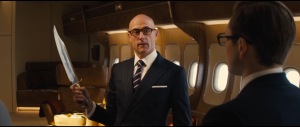
Story-wise, Blade Runner 2049 is probably the sequel that Blade Runner deserved as well, though that’s not necessarily a compliment.  The story is muddled right from the hard-to-read title cards that try to bring us up to date on what’s happened in that world’s last 30 years.

The facts in the title cards turn out to be quite important to keep up in Blade Runner 2049’s world as we follow an LAPD officer (Ryan Gosling) trying to solve a 30-year-old mystery involving our old friend Deckard (Harrison Ford).  Though it is unfortunate that the title cards are as dense as they are, I would not have wanted the movie to try to retell its background story, as the 163 minute run time is plenty long enough already!

Refreshingly, Blade Runner’s world is not our world.  It is an alternative future, so there is no attempt to revise the original’s timeline (as you may recall, Blade Runner is set in 2019 in a world where robot slaves are fighting space battles and colonizing other planets for humans, so things did not exactly turn out in our world as the first film predicted).  Interestingly, those differences make it easier for the view to focus on the similarities between their world and ours.  Villeneuve has delivered another very thoughtful, deliberate and satisfying sci-fi film, and it’s easy to analogize to our world every time a replicant is treated as disposable property (which happens a lot).  The film also offers a lot to chew on regarding memory and the nature of reality.  Honestly, I’m still digesting it all as a I write, while also trying to sort out a few of the story’s finer points, and this film is one that I’m going to have to watch again to get everything sorted.

It’s remarkable how closely this sequel resembles the first movie,  in style and substance, despite being released 35 years later.  More remarkably, at the same time it is paying tribute to the original, Blade Runner 2049 is telling a fresh story set in this familiar world, and manages to leave the original movie’s largest question unanswered in a surprisingly satisfying way.  So while Blade Runner 2049 is not the best movie of 2017, it is a good movie made great by its technical excellence, which naturally makes it the perfect sequel to Blade Runner.

The Drop In

I enjoy short films because they are their own genre with their own rules.  Unlike feature-length film, there’s no standard runtime, only an upper limit of 40 minutes (including credits) in order to qualify for Oscar consideration.   The fact that shorts usually jump right into the action makes the genre feel freer and less predictable than feature films.  I also like that shorts tend not to use a standard three-act narrative structure (exposition-rising action-climax), forsaking it for the sake of moving right to the heart of the story.

The Drop In is only 12 minutes long, but in that time the film manages to delivers two big twists that took me by surprise (which I won’t reveal here).  The film starts with a seemingly innocuous encounter that soon turns into a tense, high-stakes confrontation.  Even before anything significant is revealed, that tension is apparent between the film’s only two characters. We may not understand why these two are in conflict but we know, whatever the reason, that this face-off means big trouble for Joelle, a Toronto hairstylist who agreed to stay late to help out a new client.

This short feels like the start of a TV series and the abrupt and inconclusive ending left me curious to see more. That’s often the best place to be, with interest piqued, trying to guess both what came before and what comes next.  But sometimes both past and future are better left unknown, and I think The Drop In makes the right choice by telling this story in short film form, rather than to try to make it feature length.  After all, the first rule of show business is to always leave them wanting more, and The Drop In does exactly that.

Kingsman: The Golden Circle

kingsman2You know when a movie has a really cool part that blows your mind and then you know the sequel will try to recreate that part a hundred times over? Then, when you see the sequel do exactly that, it’s still pretty good even if it’s not quite as good as the first time? Remember when I said almost exactly the same thing about the latest addition to the Fast and the Furious franchise, earlier this year? Well, call this the sequel to that review. For a moment I thought about reusing that same review but I didn’t, because clearly I have more respect for my audience than do those Hollywood big shots who keep green-lighting all these sequels.
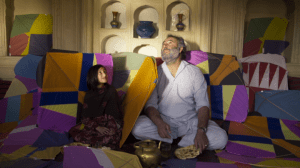
Getting back to the subject that I’m supposed to be writing something original about, it is somewhat alarming that the level of ridiculousness that took the Furious series eight movies to reach only took the Kingsman franchise two films to equal.  Kingsman gained so much ground so quickly because it is over the top every chance it gets, right from the start, with one slow motion action sequence after another, all set to some purposely eclectic song choice.

But in all its efforts the Kingsman sequel never comes close to the fever dream that was the church sequence in Kingsman the first, which was the part that totally blew my mind. I realize it would have been cleverer if I had found a way to tie the head explosions at the end to the mind blowing language, but honestly nothing beats the church scene for me.

Even though it doesn’t achieve the same peak level as the first film, Kingsman: The Golden Circle is an enjoyable movie that comes out a little ahead of Furious 8 in the stupid yet enjoyable unnecessary sequel category (which I am quite sure will be an Oscar category starting this February).  Kingsman gains the edge over Furious in this important head-to-head showdown by being consistently funny between action scenes, a result of both its gleeful over-the-topness and the wacky tone it carries over from its predecessor.

Be warned that the film occasionally veers into sheer creepiness (um, a mucus membrane tracking device???). Also, be warned that you will be creeped out much more often than once if you are in any way adverse to people being ground into hamburger (literally) or chopped in half by electric lassos (which is also a thing that actually happens in this film for what I am guessing is the first time ever).

The occasional incident(s) of creepiness are easily forgiven, by me at least, because Kingsman: The Golden Circle is frenetic, confident, and surprisingly touching at times.  The highlights for me were Mark Strong covering John Denver and Elton John finally letting loose on stage after years of self-inflicted repression. Those scenes were more than well worth the price of admission by themselves.

I give Kingsman: The Golden Circle seven country roads (taking you home) out of ten.


TIFF: Black Kite

blackkite_tiff2017Afghanistan is the last place I’d expect to find a kid flying a kite. After watching Black Kite and seeing kites be such a prominent part of life, bringing a tiny bit of joy to those who are trapped in this war-torn land, it seems strange that I ever had a presumption on kites one way or the other.  The smallest of assumptions, something taken for granted without basis, led me to think I knew more about another’s circumstances than I do.  Being wrong about kites reminded me that actually, I know absolutely nothing about what it’s like to live in Afghanistan!  I have Black Kite’s writer/director Tarique Qayumi, a Canadian who came from Afghanistan as an eight-year old refugee, for brilliantly and effortlessly challenging my preconceptions.
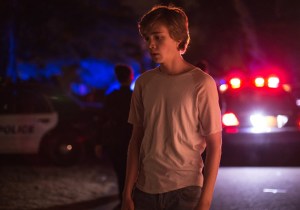
Black Kite follows Arian, an Afghan man who has been captured by the Taliban and convicted of the highest crime.  Through a series of flashbacks, we learn how Arian came to be imprisoned and sentenced to death.  Kites feature prominently in his story, from childhood, through adolescence, to adulthood.  There’s a remarkable contrast between the bright coloured kites and Arian’s drab, washed out existence, not only in the prison but throughout most of his life as Afghanistan is oppressed by one ruling body after another.

There are some absolutely beautiful shots of the desert and sky, and some very poignant animation that conveys a lot about what these kites represent: freedom, a means of expression and communication, and a marker of milestones in a man’s life, both good and bad.

Another assumption that Black Kite dispels is that freedom is free.  Freedom is a foreign concept for Arian, not the inherent right that I treat it as.  Arian and his family constantly live in fear, under the boot of one regime or another, with seemingly arbitrary rules that have the sole purpose of keeping them down. The rulers may change but the rules remain more or less the same, so Arian and his compatriots are denied even the simplest pleasures.  It hurts to experience these denials second hand, making the first hand experience all the more difficult for my privileged mind to imagine.

Black Kite is a wonderful film and a timely one.  It showed me how much can be stripped away from individuals, and reminded me that the little freedoms are as important as the big ones.  If those little freedoms were preserved for all, this small world would be a much better place.  There is no easy solution but we should spend our energy searching for ways to help people less fortunate than us.  Instead, we spend our time arguing over how many refugees we should accept from war-torn countries like Afghanistan, places where every day could be your last and little freedoms, like flying a kite, cannot ever be taken for granted.

By the way, the answer to how many refugees we should accept is: as many as we can fit.  And we’ve got plenty of room.

Lean On Pete

1477639665404_0570x0400_1477639692033

“It was just so unrelentingly bleak,” Jay sighed as we divvied up our review assignments after a busy day of films in Venice. That’s exactly right. Lean On Pete is misery from start to finish. Parents are thrown through glass doors and wind up in hospital. Teenagers have to take shitty jobs instead of fuflilling their athletic potential. As part of those jobs, teens see slow horses being sent to Mexico for slaughter. Nice aunts who may be able to help those teens have disappeared from phone books after fighting with teens’ parents. Will teens have to live on the street while they search for those nice aunts?

Having just mentioned horses being slaughtered in Mexico, is it in bad taste to say that Charlie Plummer is the glue that holds this film together? Well, either way, that’s the word I’m going to use, because Plummer is amazing as the teenager, Charley, who would have no luck if not for bad luck. Plummer more than holds his own against screen veterans like Steve Buscemi, Chloe Sevigny and Steve Zahn (none of whom stick around for too long). His strong performance and natural charisma will make you root for him.

I am not exaggerating when I say that every conceivable thing goes wrong for Charley in this movie. It’s horrible. Even as I warn you, I know you cannot be prepared for what is about to happen. Charley seems smart, and he’s clearly a hard worker, but he keeps getting dealt the worst possible hands, against all conceivable odds.

Plummer’s strong performance makes it so devastating to see what happens to this poor kid, especially because you know there are real kids out there with similar luck to Charley’s, stuck in a bad situation without any path out. Life isn’t fair, and Charley’s journey is evidence of that, because Charley doesn’t do anything to deserve the lifetime’s worth of misery he experiences during Lean On Pete’s two hour runtime.

There is something uplifting to be found in Charley’s resilience. In the face of all the misery he’s subjected to, he does not stop. He gets to where he wants to go, and maybe even gets a happy ending. Hopefully. After suffering with Charley, I need to tell myself he did, and the film is kind enough to let me believe it happened. I’m not sure the lift at the end was enough of a boost to put me back to level, but a cinematic reminder of how charmed a life I lead is never a bad thing when it’s this well put together, even if it’s this unrelentingly bleak.