Author Archives: Sean

Unknown's avatar

About Sean

I'm an asshole! assholeswatchingmovies.com

Mother!

Some stories do not need to be told. Mother! falls squarely within that category. I walked out of the theatre at the end of the movie asking, what was the point? Why did I suffer through two hours of claustrophobic misery to get back where I started?  And actually, further behind than where I started because at least then I tmp_oLHXPW_d785c743c5338b61_Momwas curious about Darren Aronofsky’s latest project. Afterward, I was just tired and dreading this review.

Mother! is not an awful film, I don’t think. It has a stellar cast and is visually captivating (though it’s too harsh and dour to ever be beautiful). Maybe some will even appreciate the crazy downward spiral that is this film, as it goes to soul-devouring depths that most wouldn’t dare to approach. Me? Not one bit. Not even a little. It made me uncomfortable right from the start, and not in a challenging way, and not in a way that offered me anything.

This film is the same as Javier Bardem’s nameless poet: selfish, desiring my affection, and oblivious to anything else. It is art that takes from the audience rather than giving, which also echoes the plot of the movie itself. Is that intentional? If so, that would make Aronofsky our version of the poet, and I would suggest that you not give him your energy in service of his creation. I already gave enough for both of us.


Victoria & Abdul

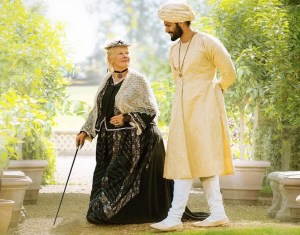
31victoriaandabdulIs there anything more awkward than finding out the guy you recruited as a token Hindu is actually Muslim? There is, actually – it’s far more awkward when the guy you literally shipped from India as a parlour trick starts getting special attention from the Queen, more attention than you and all your fellow white sycophants combined. The worst part? He doesn’t even seem to be trying to play your game, yet he’s still beating all of you at it.

Victoria & Abdul tells the (mostly) true tale of the unlikely friendship between Queen Victoria and Abdul Karim, the former being the head of the Empire that oppressed India for nearly 100 years, and the latter being the guy who was sent on a two month boat ride to present a ceremonial coin to the Queen.

Director Stephen Frears and writer Lee Hall do their best to find humour both in Victoria’s self-involvement and in the shockingly blatant racism that Abdul is subjected to at every turn. That approach works very well, mainly because of the strong performances by Judi Dench and Ali Fazal in the titular roles. Dench’s Victoria is smart and self-aware even in her self-indulgence and stubbornness, and Fazal’s Abdul is such a capable, charismatic individual that at every turn he exposes the ridiculousness of the hate directed toward him. Perhaps in another hundred years our great-grandchildren will find today’s racial turmoil similarly humourous, ideally without seeing similarities to their time’s headlines. One can only hope.

One shortcoming, though, is that we are left to guess at Abdul’s motivations. Presumably, he would rather put up with cold, prejudiced England than live in impoverished, subjugated India, but we don’t ever see his home life so never really know why he puts up with being treated like dirt by every white character other than the Queen. Even so, Abdul is still a character I invested in despite knowing so little about him.

Beyond the stellar core performances, Victoria & Abdul is fairly by-the-numbers, playing out exactly as it must. There are no narrative surprises here but despite its predictability, this film kept me invested from start to finish, and that’s not an easy task for a 9 a.m. screening five days into a film festival!

Victoria & Abdul likely won’t end up in my top tier of films from Venice but I’m glad I saw it, especially for Oscar pool purposes – Dench should be a strong contender for Best Actress. And while the rest of the film doesn’t match the high standard that Dench sets, it’s an entertaining film that you won’t regret watching.

Nico, 1988

nico-1988-trine-dyrholmYou may not know Nico by name, but I bet you have heard of some of her friends, people like Andy Warhol and Lou Reed. Nico, born Christa Päffgen, was part of the Velvet Underground for their first album (getting co-billing in fact) and, as a musician, that would seem to overshadow anything else one might do from then on. Nico, 1988 joins Christa in 1986 as she tours in support of her latest solo album. Understandably, Christa would prefer to keep the focus on her new music, but the press keeps asking about her past.

Nico, 1988 makes the viewer feel the weight of that past. This film gives a revealing and honest look at Christa’s life, stitched together from memories of those who knew her, including her son. It feels like a documentary, in large part due to a great performance by Trine Durholm in the lead role. Durholm shines both offstage as well as onstage, handling vocal duties herself.

The music is the beating heart of Nico, 1988, which is entirely appropriate for a biopic about an avant garde innovator whose music Rolling Stone called “a really worthwhile venture into musical infinity”, music that others have described as desolate, terrifying and unlistenable.

Judging from the soundtrack in Nico, 1988, all those descriptions are accurate. Sometimes, Christa sounds horrible, but once in a while, it’s magic. One ill-fated concert in Prague shows the heights that Christa can hit. Her energy and the crowd’s mesh perfectly and draw the viewer into the front row. Not coincidentally, that’s the only performance in the film that Christa delivers drug-free. Christa’s struggles with addiction are part of her story, and they feature in this film just as they did in her life.

For music lovers in particular, Nico, 1988 is essential viewing. It provides a behind the scenes look at the life of a true artist, a musician’s musician who cast a shadow too large for herself to escape from. Catch it if you can!

The Emoji Movie

I am way too old to use emojis. I use words to express my thoughts and feelings. Also, I like to use however many characters are needed to express myself. Emojis are a crutch and aren’t meaningful. For example, this movie in an emoji is 💩. But that doesn’t even come close to saying how bad it is.

I’ve just hinted that I think emojis are stupid. Not surprisingly, The Emoji Movie does not take that stance (though that would have made for a more intethe-emoji-movie-gets-character-postersresting film). Instead, the main human in The Emoji Movie loves emojis, uses them at every chance, and seeks the perfect emoji to send to his crush so she will go to the dance with him.  He doesn’t bother to talk to her or just ask her out with words because that’s so 90s.

SPOILER ALERT: the kid finds the perfect emoji because just before the phone store employee deletes everything on his phone, the sentient emojis in the phone text him a new emoji that is like a gif of five very similar looking faces, AND HER RESPONSE IS TO REALIZE HE IS A REALLY DEEP GUY WHO IS GOOD AT EXPRESSING HIS FEELINGS. SERIOUSLY? LIKE, SERIOUSLY? I mean, sending the “perfect emoji” was a slightly better idea than sending Rihanna lyrics (which was the best the main human could come up with on his own) but both ideas really, really suck (at least the kid deleted the Rihanna email, which of course closed with a high five emoji…).

OTHER SPOILERS THAT AREN’T REALLY SPOILERS BUT PROVE THAT THE WRITERS ARE OLDER THAN ME AND HAVE NEVER USED A SMARTPHONE:

1. When the kid’s phone makes noise at inopportune times (because the emojis are moving through his apps, duh), he doesn’t shut off the volume. HE CALLS THE PHONE STORE TO MAKE AN APPOINTMENT TO HAVE THE DATA DELETED. I mean (a) you don’t need an appointment at “the phone store”; (b) you can click one thing to delete all data on your phone whenever you want; and (c) deleting the data isn’t even going to solve the kid’s problem according to the movie’s rules because the cause of the noise is the sentient emojis, who would just return to his phone when a replacement “Textopolis” was installed.

2. In the movie, it takes 24 hours for trash to be deleted from the phone – which is not a phone thing and not really even a computer thing. It also takes several dramatic minutes to do a factory reset, and if you change your mind right at the very end you just have to unplug the USB cable from the phone store’s computer and all your data will undelete itself automatically – which is not a thing at all and even my grandmothers know that.

3. The apps visited by the emojis are real (-ish) but they make no sense in execution. Jay correctly called The Emoji Movie a lame ripoff of Inside Out, and the apps are this film’s attempt to build a world inside something both familiar and mysterious (Inside Out used brains, The Emoji Movie uses phones). Inside Out succeeds and makes it look easy. The Emoji Movie fails at every turn because it has no coherent logic. At all. It is all just a bunch of 💩.

DO NOT SEE THIS MOVIE. It is truly terrible in all the worst ways – a real stinker. Avoid it at all costs.

Dunkirk

We shall fight on the beaches, we shall fight on the landing grounds, we shall fight in the fields and in the streets, we shall fight in the hills; we shall never surrender, and even if, which I do not for a moment believe, this island or a large part of it were subjugated and starving, then our Empire beyond the seas, armed and guarded by the British fleet, would carry on the struggle, until, in God’s good time, the New World, with all its power and might, steps forth to the rescue and the liberation of the old.

-Winston Churchill, June 1940

Has anyone ever been better than Winston Churchill at giving motivational speeches?  He had a way of rising to the occasion and here, the stakes had never been higher.   This speech was given immediately after the British and their Allies had been run out of France by the invading Germans.  Victory over the Nazis was not on the horizokinopoisk.run and must have seemed impossible at the time.  That’s more or less what Churchill said, after all: he is not describing a plan to win.  He is describing a last-ditch effort to survive when the Nazis try to conquer Britain after they finish in France, and a cry for help to the New World to save the day in that bleak scenario (Canada was, of course, already part of the Allied forces at the time, but the U.S. would not be until Pearl Harbor).
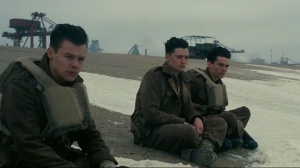
The devastating outcome of the Battle of Dunkirk gave good reason for Churchill’s pessimism.  It is a fascinating historical event because it was a loss that could well have broken the Allies, but instead, it galvanized them, particularly in the way that the British survived: hundreds of civilian vessels sailed from Britain to France to help rescue over 300,000 Allied soldiers from the Nazis.

Time and time again, Christopher Nolan has proven himself to be as adept a director as Churchill was a speaker.  Tonally, Nolan’s Dunkirk captures what must have been the prevailing mood on the ground, at sea, and in the air as the Battle of Dunkirk was fought.  Nolan makes an inspired structural choice by intertwining three different stories over three different time periods, and as only Nolan can do, effectively explains a complex structure using only three small titlecards at the very beginning.  Dunkirk is reminiscent of The Prestige in that way – in both, Nolan always provides enough cues so the viewer knows exactly where a particular scene fits into the overall timeline and story, even as he tells the story in a complex, non-linear fashion.

With Dunkirk, Nolan has outdone himself.   Given how consistently great he has been throughout his career, it is incredible to think that he has gotten better, but that is clearly the case.  Dunkirk is absolutely masterful filmmaking from start to finish.  Above all else, Nolan’s film captures the essence of Dunkirk and gives us a true sense of the anguish of war, the desire to survive, and the fear of the unknown that soldiers must deal with constantly.  In particular, I am reminded of the scenes featuring Tom Hardy’s RAF pilot, all of which inserted me into the battle and truly made me feel how claustrophobic a Spitfire’s cramped cockpit would be, and how difficult it would be to spot, identify, and track an enemy fighter, let alone shoot it down.

For the viewer, this is a vital, visceral, and draining experience.  Dunkirk is a 106 minute movie that feels like it’s four hours long (which Nolan would take as a high praise, I think, if he ever read this review).  From start to finish, it is tense, it is devastating, it is awful and it is brilliant.  Dunkirk is filmmaking at its finest and a fitting tribute to one of the defining events of the 20th century.


A Ghost Story

ghost-storyFilm as a medium is almost infinitely flexible, universal and personal at the same time. Film is capable of so much emotion and yet it’s also capable of conveying the complete absence of it. Beauty or lack of it.  Terror or peace. And, as A Ghost Story proves beyond any doubt, film can make you feel so fucking uncomfortable and voyeuristic that you would give anything for the director to just yell “cut” already!
Put another way: how long do you think you could bear watching someone eat pie? Think carefully before you answer. For the full A Ghost Story experience, write your response down on a little scrap of paper and hide it in your house (or underneath a rock if your house is just a couple of pegs in the ground).

Whatever you think you can bear now, the inescapable truth is that no amount of tolerance for pie voyeurism will be enough to survive A Ghost Story unscathed. In one strange, haunting scene, A Ghost Story makes its mark, and there are lifetimes of other achingly lonely scenes for you to digest (but only if you can stomach it).

A Ghost Story plods, skips, stops, philosophizes, winks, and does whatever it wants, conventions be damned. It is a wonderfully strange, unique and brilliant experience that I cannot recommend enough.

By the way, see A Ghost Story in a theatre if you can, because there is a magical dichotomy in the mixture of loneliness and comradery that should result from experiencing this film with others. That contrast is yet another example of film’s versatility, and doubles as a valuable touchstone if you ever happen to become a ghost. It will all make sense in the end, and that is a comforting thought, isn’t it?


Spider-Man: Homecoming

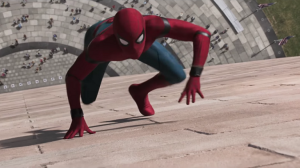
spidey11Spider-Man: Homecoming may not be the best movie in the franchise (since my favourite Spidey villain is Doc Ock, I have a soft spot for Spider-Man 2) and may not even be the best superhero movie of the summer (Wonder Woman is undeniably great).  But the fact that those were the conversations the assholes were having after we saw Spider-Man: Homecoming last night shows that Homecoming is a great movie in its own right.
Most importantly, Homecoming GETS Spider-Man.  This is a movie that is fan service from start to finish.  The Marvel Cinematic Universe features prominently in the story as the events in the Avengers and Civil War are built on (and Iron Man plays a pretty big role).  There are also a ton of familiar names for fans to find, from Ned Leeds to Flash Thompson to Mac Gargan, and one or two more that I’ll let you discover for yourself.

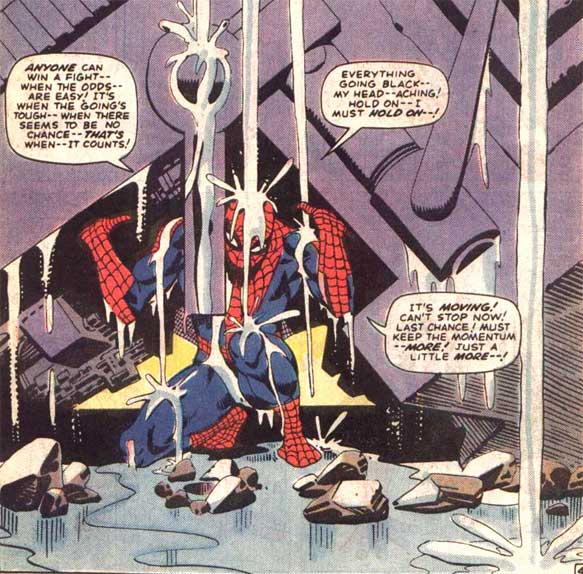
Even better, the story calls back to several classic comic moments, including this one from Amazing Spider-Man #33 (1966), which is a defining moment for Spidey:

ditko3.jpg

I don’t think it’s a spoiler to say that Spider-Man finds a way to succeed even when it seems there’s no chance, and the final battle in Homecoming is a great display of what I love about Spidey, from start to finish.  The conclusion of that battle especially reminded me of the first Spidey comic I ever read, and really, every Spidey comic since.  Spider-Man’s desire to do the right thing is what makes him my favourite and I was extremely happy to see that made a focus of the film (“with great power comes great responsibility” is never actually said, but it’s the movie’s underlying theme and that’s a far better approach than giving us another depiction of Uncle Ben’s death).

Fittingly for Spider-Man, the hero who can’t stop saying corny one-liners as he fights the bad guys, this may also be the funniest superhero movie ever made.  It captures the light-hearted, good-natured awkwardness of Peter Parker and the awkwardness of high school in general.  There are a lot of laughs from start to finish, and like Ant-Man and Guardians of the Galaxy before it, Homecoming always finds a way to entertain the audience in between the action (often at our hero’s expense, as it should be with Spidey).

(SPOILER: sometimes the humour even comes at the audience’s expense, as you will find out if you stick around to the very end.)

Spider-Man: Homecoming met my high expectations, and then some.  This is how you make a great superhero movie, by staying true to the character, and when that character is your friendly neighbourhood Spider-Man, you’re in for a treat.

Spider-Man: Homecoming Hype

I am counting the hours until we see Spider-Man: Homecoming tonight.  This movie has been circled on my calendar since Captain America: Civil War, and when I heard there’s no origin story I became even more excited!

Spider-Man: Homecoming is a big deal.  Spidey’s on the outfield wall at Yankee Stadium, we watched Peter Parker take in the Warriors’ victory from Tony Stark’s penthouse, and I even got to BE Spidey when the spider-man-homecoming-vr-experience-1.pngSpider-Man: Homecoming Virtual Reality Experience released last weekend on PS4 (it’s also available on PC).

The Spider-Man: Homecoming Virtual Reality Experience is a freebie/tech demo that someone absolutely has to turn into a full game.  I loved putting on the suit and shooting webs – I’ve played through the thing like ten times (it’s about five minutes long).  But that five minutes is such a tease.  I hone my skills, webbing bottles and drones and knocking down debris, but then can’t do anything to the Vulture when he starts blowing things up.  Maybe I’m just a bad shot?  If you’ve hit the Vulture, please let me know!

Holo featuring Spider-Man5 (1).png

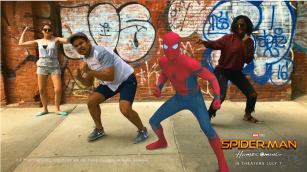
If that’s not enough Spidey for you, there’s also an app called Holo that lets you take selfies and videos with Spider-Man.  I can’t think of a better way to impress my nephews than a selfie with Spidey (mainly because I’ve already got a picture with Lightning McQueen)!

Spider-Man is truly everywhere right now as his latest movie/reboot opens this weekend.  I’m trying to manage my expectations for tonight but of course they’re sky-high because Spider-Man is my favourite superhero, hands down!  I’ll let you know whether the movie lives up to the massive hype and my even bigger hopes.

Oh, Hello on Broadway

oh hello

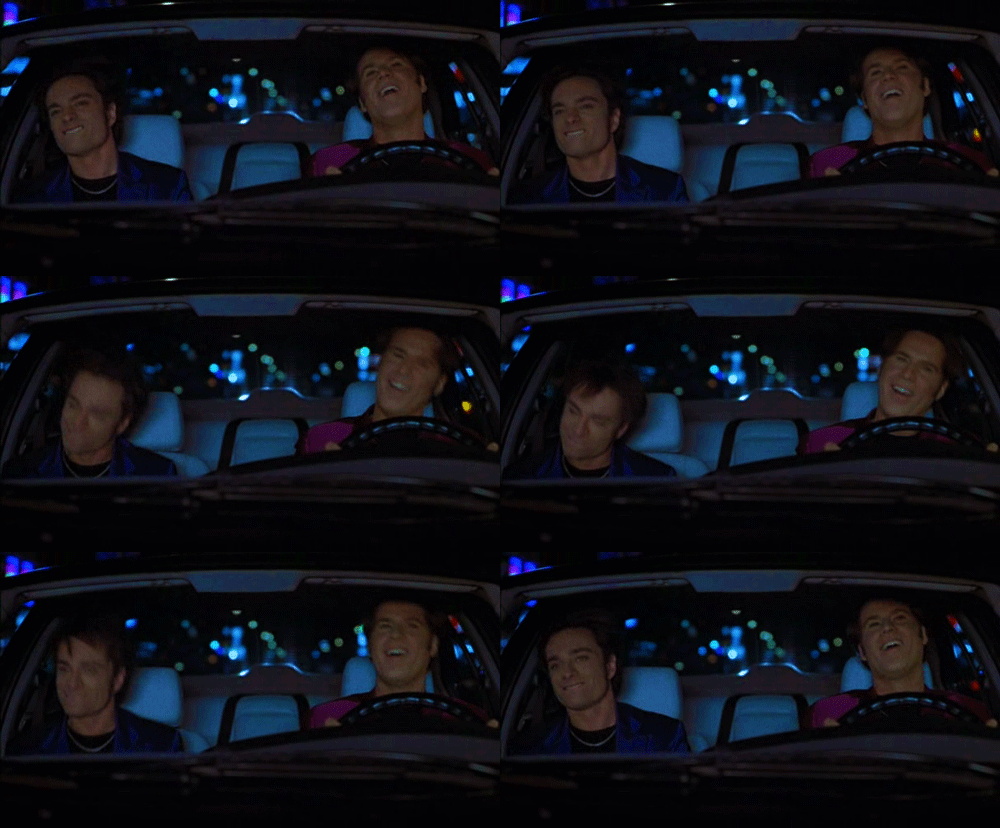
Remember when they used to make movies based on Saturday Night Live sketches?  Isn’t it weird how that used to be a thing?  And that one of the best of the bunch was the movie about these two guys:

night at the roxbury.gif

Even though I grew up during the peak of the SNL movie craze, I was still blown away to see Oh, Hello on Broadway pop up on Netflix, in a “How is this even possible?” kind of way.  But I’m so glad it did and it’s better than I could have hoped.

For the uninitiated, Oh, Hello is one of a boatload of great skits from the Kroll Show, featuring two old men who, in a way, are not that different than the Butabi Brothers.  As the unimaginative name of the Netflix special implies, Oh, Hello then became a Broadway play, because why not?  And now, Oh, Hello on Broadway is a Netflix special that is basically a full-length movie about these two guys.  A flat-out hilarious hour and 42 minutes in the company of these wacky geezers.

tuna.jpgLike Night at the Roxbury, Oh, Hello on Broadway takes a one-note premise and uses it as a gateway to a fully-fledged story that looks behind the premise to the characters themselves.  Absurd as they are, Gil Faison (Nick Kroll) and George St. Geegland (John Mulaney) are surprisingly relatable and human, as we are shown through an insane play-within-a-play structure that works far better than it should.  The background story also is far better than it needed to be, because I would have been satisfied with a few, ‘Oh, Hello’s, and ‘Too Much Tuna’s.   Which of course I got.  Kroll and Mulaney knew why I was watching, but they also showed me how much they love these characters by giving them a proper home.

Because the special is so different from the skit, I don’t think any knowledge of the skits is needed.  Feel free to jump right in, but still, you should watch the skits at some point because they’re funny as hell.

I’m so glad to see stuff like this on Netflix and I hope we get more.  Jay and I had hoped to see this on Broadway but the scheduling didn’t work out, and while seeing it on Netflix is not the same as seeing it live, it’s better than not seeing it at all.  You should definitely add this one to your list.


Mindhorn

mindhorn_finalCanadians are consistently the funniest people in the world as far as I’m concerned, which is hard to reconcile with the stereotype that we’re boring and forgettable.  So I don’t try, I just think of us as funny and the stereotype as another example of how Americans are just not as good as we are.  Above all else, Canadians specialize in satire.  I have to think that is inherited from our former colonizers, as the British may love satire more than we do.

But just as Canada is not Britain (because in 1867 we asked politely if we could be our own country from then on, and the Brits were like, didn’t you already leave when the Americans did?), British satire is a whole other thing from ours.  I have always been fascinated by how there really is no middle ground in North America – either you devour British satire or you think it’s unbearable.  Personally, I find Steve Coogan a good test for one’s tolerance for British satire.   If he cracks you up then you are going to enjoy Mindhorn, whereas if you’re thinking, “Who the hell is Steve Coogan?” then you should probably give Mindhorn a pass.

I think Coogan is hilarious so of course Mindhorn made me laugh.  As a bonus, Coogan is not just a random reference I decided to use.  He’s also a bit player in Mindhorn along with a ton of familiar Brits (including a great cameo by a guy nicknamed “Kenny B.”).   But Mindhorn is co-writer Julian Barratt’s vehicle, and he is terrific as Richard Thorncroft/Mindhorn, a washed-up actor/TV detective.  Mindhorn’s gimmick is his bionic eye that is a lie detector, allowing him to literally see the truth.  Mindhorn made Thorncroft a huge star in the 70s and early 80s but he hasn’t exactly been tearing it up since then.  In fact, he’s just lost his last endorsement contract (for orthopedic socks).  So when a call comes in from the police department requesting Thorncroft’s help (as Mindhorn) in solving a murder case, he jumps right in, seeing it as a great way to kickstart his career.

In the finest British tradition, we quickly learn that Thorncroft is a grade-A idiot (maybe even grade-AAA if you use the meat grading system).  Still, as tends to happen, Thorncroft manages to bumble his way to (moderate) success despite not having a clue at any time.  And while Mindhorn’s way forward isn’t particularly innovative or clever, Barratt is clearly having great fun bringing Mindhorn to life and that fun is infectious.  The satire is spot on, as Mindhorn takes every opportunity to poke fun at the real TV shows from Mindhorn’s day, like Knight Rider and the Six Million Dollar Man, and there are some good shots at the cheesiness of those shows as well as the spin off products from them (such as Mindhorn’s best-selling rock album).

You’ve seen this all before but it’s good fun and I don’t think satirizing David Hasselhoff will ever get old.  So if you have 90 minutes to spare and think Coogan is a funny guy then you should check out Mindhorn on Netflix.