Category Archives: Kick-ass!

The Crimson Wing

The Crimson Wing: Mystery of the Flamingos sounds like it might be a classy film noir detective story from the 1940s where everyone smokes and matchbooks are almost always a clue. It’s not. It’s an early (2008) Disneynature documentary, before they developed the simple titling system that created such gems as “Bears” and “Penguins.” Today’s Disneynature docs are slick affairs, incredible photography paired with an anthropomorphic narrative that makes it fun to follow, and the big-name celebrity lending their voice sure doesn’t hurt.

But while The Crimson Wing is still working out this recipe for success, it’s still a pretty good watch.
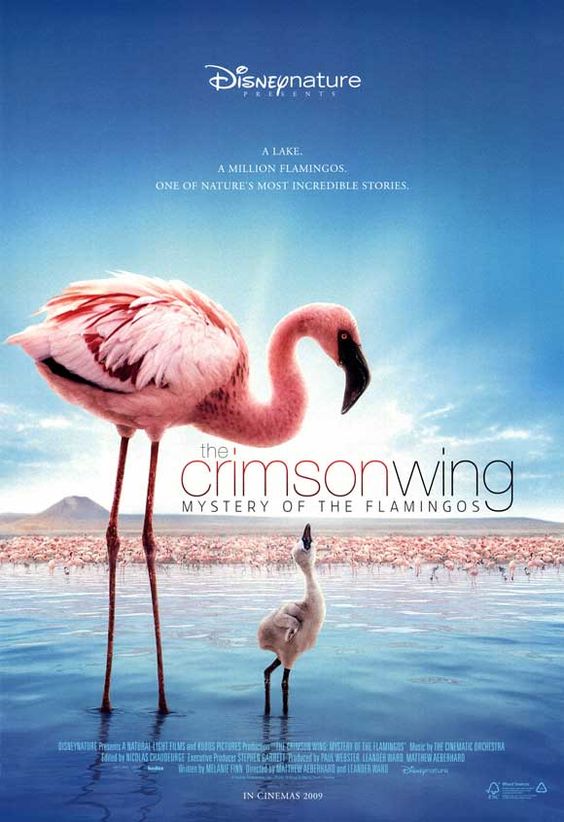
Lake Natron in northern Tanzania is quite unique. Its water can often reach the same alkaline levels of pure ammonia. Thanks to a nearby volcano, a sodium crust forms on its surface. This is where a million crimson-winged flamingos are born (or lesser flamingos, if you will), live, and die, and have done so for nearly 20 million years. It’s a dramatic and unforgiving landscape. The salt builds up around little baby ankles, like shackles, that perilously slow them down, or shuts them down altogether (yeah, dead baby birds, it’s rough).

But the drive to stay alive and thrive is innate in all of us, and these flamingos aren’t chicken. They’ve kept the species going this long, hardship is in their blood, and the presence of a few cameras isn’t going stop them from living life. This is a rarely-photographed slice of Africa, a vast area of little besides drying salt that often gets left off even maps. But Disney gives us a bird’s eye view (ew, pun), and if you’re willing to tolerate the agonizing stamping out of the fuzziest, downiest life you’ve ever seen, young, hopeful little creatures who keep persevering long after being left behind, defying the odds, the predators, the searing heat – all just to succumb to salt accumulation around their dainty little ankles. If nature is the mob, then salt is the cement shoes, and soon their fluffy little bodies become just another bump in the road.

All right, enough moaning. I understand that death is part of life (sound like bullshit to anyone else?) and blah blah blah, why be upset about this one headstrong, floofy little chick when heavy rains literally washed out every egg in the nesting grounds so that the crew had to sit around on their own butts waiting for the flamingos to breed again.

People who live out in these crazy conditions for years at a time just to get one perfect shot of an innocent baby’s last breath must be a special kind of nut. We call them documentary film makers, but that’s definitely a euphemism for nut. And it’s not just because they used both snowshoes and hovercrafts to get around (although: nutty), it’s more that when the nearby volcano erupted during filming, they described it as “fortunate” when literally everyone else on the planet would have gone the other way on that one.

Anyway, the flamingos remain dignified even while being scrutinized by nuts, proving that whoever called them lesser got it wrong.
The Old Guard

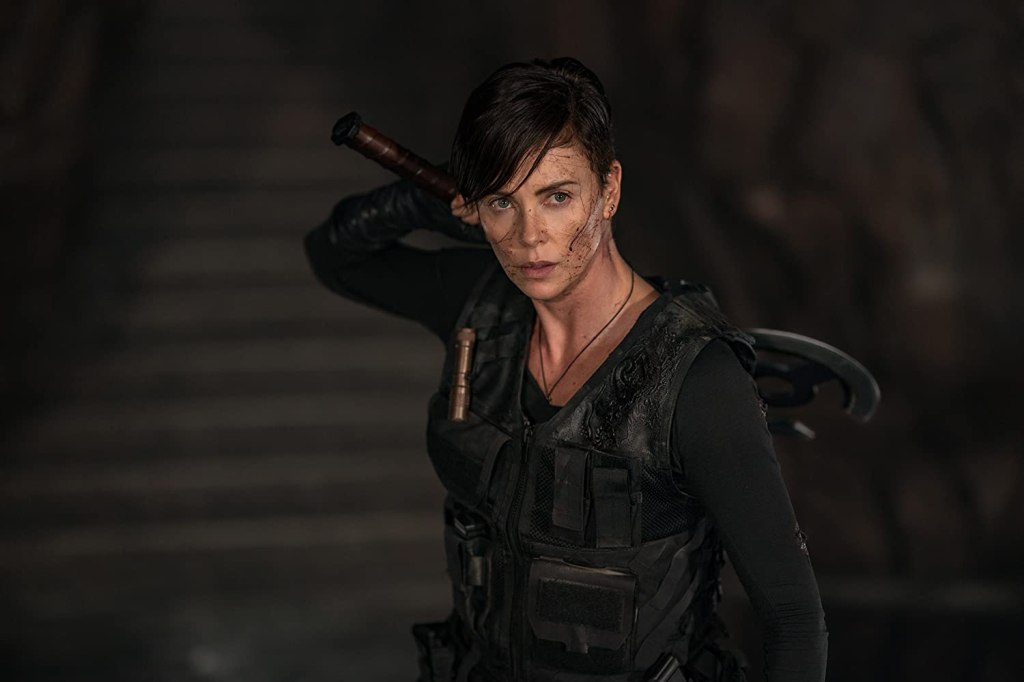
Andy (Charlize Theron) is one weary warrior. She leads an elite team of mercenaries but when they’re called for a new job, she hesitates. She once believed they were doing ‘good’ but as she scans the news channels and her friends’ faces, she can no longer find any proof. The world isn’t getting any better. Is it even worth it? But client Copley (Chiwetel Ejiofor) is insistent: a bunch of young girls are being trafficked and only the very best team – her team – can save them. So Andy swallows her cynicism and leads Booker (Matthias Schoenaerts), Nicky (Luca Marinelli), and Joe (Marwan Kenzari) once more into battle. Except Andy’s instincts were right: it’s a trap.

Copley’s been secretly tracking her team all along, on behalf of “the youngest pharma CEO ever” (Harry Melling). Eager to make a splash, not to mention a billion dollars, he wants to study Andy and her team to see what make them so special – and to replicate it, of course. Because humans are both greedy and vain and we never, ever learn a lesson.

This could have been a fairly by the numbers action movie, even if the action is pretty impressive. Of course, it kind of has to be these days; John Wick went and raised the bar on that, and now even a fairly trash movie like Extraction needs some intensely choreographed and inventive sequences. And of course, somewhere along the way, Charlize Theron has become a bonafide action star. But what makes The Old Guard stand out from the rest is its philosophy, director Gina Prince-Bythewood’s instinct to slow things down and instead of asking ‘what’s next?’ asks ‘why?’

It’s hard to know whether to categorize The Old Guard as a sci-fi movie or a super hero movie or a straight up action adventure. But like Wonder Woman, a film easily among the best in any of those genres, this movie doesn’t just explore the extent of their so-called super powers, it wonders when to use them, why to use them, and if they should be used at all. If Andy’s Guard isn’t quite human, the people they fight, and the people the save, are. The cost is high and the price is grief; Andy’s body may be strong but so is the emotional toll. And when new Guard member Nile (Kiki Layne) is discovered, the whole group has to decide whether it’s all been worth it.

The Old Guard isn’t a perfect movie but it dares to depict heroics occurring somewhere between survival and sorrow. It shows us not just its true cost, but both the weighing of it, and its weight.

Official Secrets

“Just because you’re the prime minister doesn’t mean you get to make up your own facts.” It’s almost delicious how naive this sounds as Katharine Gun (Keira Knightley) utters the words unironically near the top of the film. This was in 2003. We, of course, that politicians were shady. That they lied routinely and weren’t even ashamed of it. But in 2003, things began to shift, in part because thanks to the internet, we had ready access facts and figures. So when a politician looked into our eyes (through television, but still) and said the words “weapons of mass destruction,” we called bullshit. With time we’ve been able to say that the war on Iraq was never about 9-11, or Sadam, or nuclear capabilities. It was about oil. It was always about oil. That was the beginning of the end; it’s been all downhill from there, rolling ever more swiftly from 2016 on when America’s T-bag president has us living in a post-truth, fake news apocalypse.

But let’s go back to 2003. After the tragic September 11 2001 terrorist attack, America mourned their 3000 lost, but then skipped through the other stages of grief and went straight to vengeance. The al-Qaeda terrorists were not from Iraq (they were from Saudi Arabia, primarily) but linking the invasion of Iraq to the tragedy provided convenient cover for America’s true intentions:  control over oil and preservation of the dollar as the world’s reserve currency. UK prime minister Tony Blair decided to cast his lot with George W., though he found it difficult to justify in the House of Commons where a record-high number of MPs rebelled against the vote and 3 resigned in protest. Still, they joined what was already an unpopular war with suspicious rationales. Katharine Gun (Knightley) was but one of many people glued to their televisions, skeptical of the reasoning they were being sold.

Gun worked as a translator for a British intelligence agency. She’d seen memos concerning a request from the U.S. for any kind of compromising information on diplomats from the UN Security Council who were due to vote on the prospective invasion, and for help in bugging their offices.

Outraged at their under-handedness, Katharine leaked the document which ultimately led to her arrest and being charged with breaking of Official Secrets Act. The movie is nothing new, and if anything it lacks punch since with hindsight we know that not only was Hussein not affiliated with al-Qaeda, no WMDs were ever found in Iraq. The war was a sham. The reason to watch is for Knightley, who reminds us that ordinary people can be promoted to hero or demoted to villain when they turn whistleblower. Director Gavin Hood’s success is that he doesn’t make Gun a martyr, he doesn’t make her soap-boxy or righteous. She’s just a citizen like you or I, frustrated by her government’s dishonesty, and when she has the ability to do something, she does it. She’s not brave or courageous. It reminds me of a quote from Spider-man: Into The Spider-Verse (random much?) (bear with me): “Anyone can wear the mask.” In early 2003, Katharine wore the mask.

Why watch the movie when we’re already familiar with the events? For me it was the court scene. Gun plead “not guilty”, saying in her defense that she acted to prevent imminent loss of life in a war she considered illegal. What happens next is eyebrow-arching stuff, almost too good, too perfect to be true (but it is).

Hamilton (!!!!!!!!) (exclamations my own)

However much you thought I was looking forward to seeing Hamilton on Disney+, double it. Then cube it. Then add 10 000 more. Then halve it. Then times it by 13.24 million billion. Then you’d at least be within a three planet range of my excitement supernova.

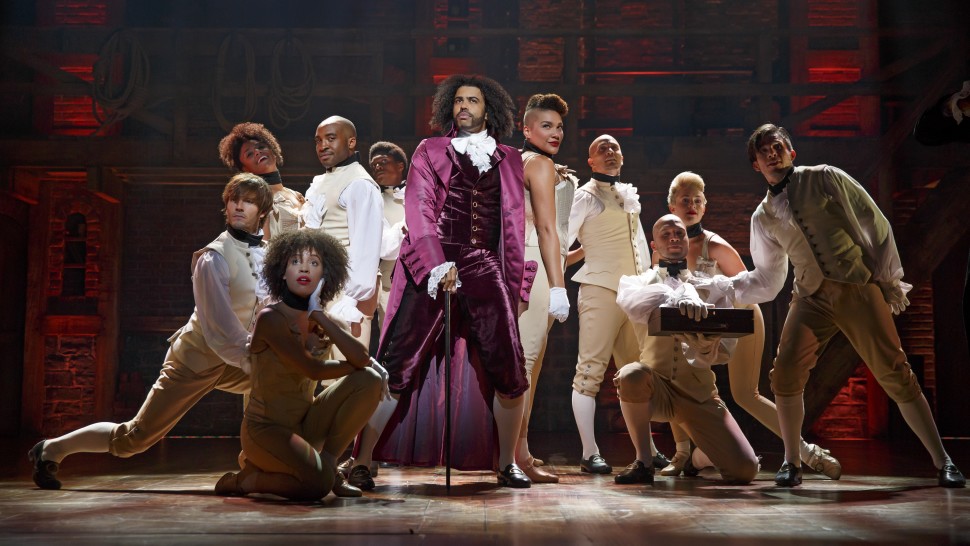
Hamilton: the hit Broadway play that no one could ever get tickets to, and now you don’t have to! I mean, still do, if you haven’t already. There’s an electric current to a live performance that streaming can’t quite replicate – but this one sure comes the closest. This is not a film adaptation of a play, it is the stage performance itself, taped in front of a live audience, with so many cameras and angles and microphones even Lin-Manuel Miranda’s own mother can’t get seats this good.

Miranda disrupted Broadway with his follow-up to the very well-received In The Heights. Hamilton is a very old story told in a very fresh way. American founding father Alexander Hamilton is perhaps not the most enthusiastically remembered by history, but Miranda gives just cause for his placement among the greats, and pays tribute to him with his own unique blend of culture, politics, and song. The actors portraying contemporaries such as George Washington and Thomas Jefferson are from diverse backgrounds, representative of today’s American population, and reflective of the period’s influx of immigrants. The costumes are relatively period-appropriate, with just a kiss of the modern to still feel true to the hip-hop-heavy numbers.

The original Broadway cast appears on stage, performing together one last time before many of them dispersed to other projects (the musical itself of course lives on, or it did before COVID darkened Broadway’s lights). This show was so electrifying that it blew up every single person in the cast – making the likes of Daveed Diggs, Anthony Ramos, Leslie Odom Jr., Jasmine Cephas Jones, and Renée Elise Goldsberry household names, or pretty near. Certainly they were the toast of Manhattan and all have continued to find fame and fortune beyond the shadow cast by Hamilton. Lin-Manuel Miranda is chief among them of course, tapped by the folks at Disney to write songs for Moana, and to co-star in Mary Poppins Returns.

Disney was so exuberant about Hamilton that it paid a record-setting $75 million for its distribution rights, and set it for a fall 2021 release. However, COVID-19 reared its contagious head, shutting down stage and cinema alike. So Disney made the decision to bring Hamilton to the people, and Miranda made family viewing possible by sacrificing two of his 3 f-bombs (only half of one remains, the f word started and implied but not completed).

Hamilton is such a startling and tasty treat it simply must be seen. Director Thomas Kail makes sure this film feels just as vital and urgent as any live performance. The actors, having rehearsed their roles on Broadway for an entire year before filming in 2016, are at the very tops of their game; besides Miranda, Leslie Odom Jr., Phillipa Soo, Jonathan Groff, Daveed Diggs, Christopher Jackson, and Renee Elise Goldsberry all earned Tony nominations. Of its unprecedented 16 nominations, Hamilton won 11, including, of course, Best Musical. And it really is.

Disclosure

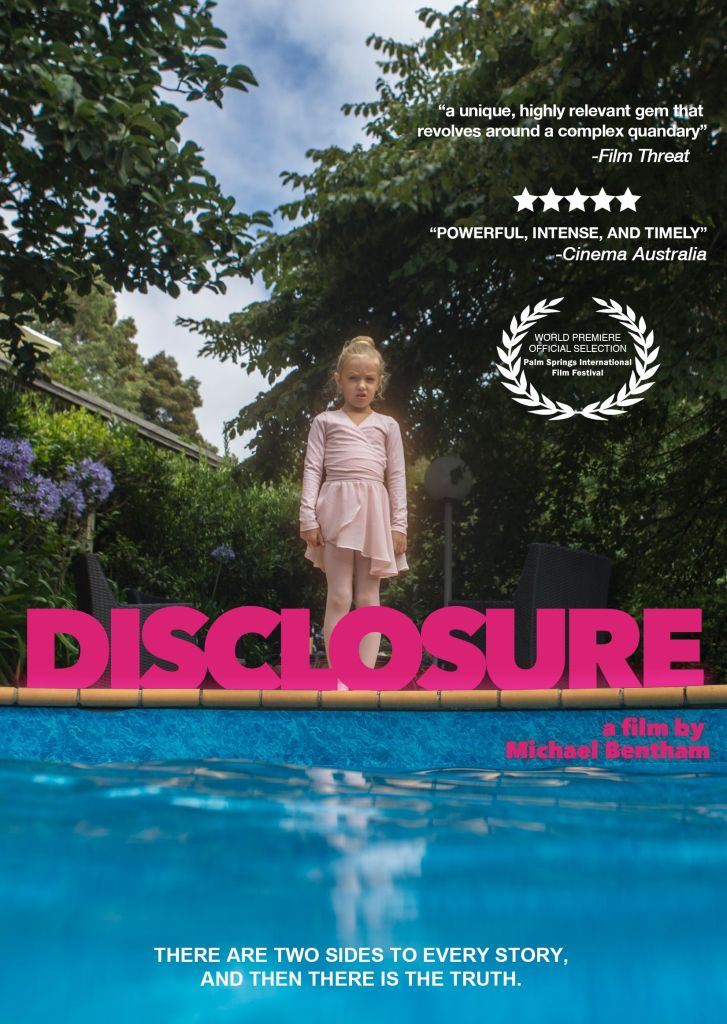
Emily and Danny Bowman have a 4 year old daughter. Family friends Bek and Joel Chalmers have a couple of sons. The kids play together, the parents drink together, it’s an easy if not intimate friendship that all have enjoyed…until the Bowmans’ daughter claimed that the Chalmers’ son has touched her inappropriately. The little girl has been in therapy this past month, and today she’s out with her grandmother. Emily (Matilda Ridgway) and Danny (Mark Leonard Winter) are at home, relaxing poolside when Bek (Geraldine Hakewill) and Joel (Tom Wren) drop by unexpectedly, catching them unawares.

Bek and and Joel were horrified, of course, to hear what their son had done. But after a month’s consideration, they’ve decided their initial reaction was rash. They now believe their son to be innocent, and are here to persuade the Bowmans to leave his name off the report. Joel is in government and suspects there would be repercussion to his career. As you might expect, Emily and Danny aren’t too fond of this abdication of responsibility, and aren’t at all comfortable with the Chalmers’ motivations.

Disclosure is not about the event itself; in fact, we hardly meet the children and we never see the incident. Instead, we deal with its fallout. We see two sets of parents each wanting to do right by their child, and each bringing their own personal histories and beliefs into the fray. The poolside confrontation turns rather vicious and we see how quickly a friendship can go from cordial to sour. Of course, even the couples themselves are not in perfect agreement – Danny feels more lenient toward this “good family” while Emily worries about the next victim. The entire situation is wired with explosives and everyone’s holding a trigger.

Writer-director Michael Bentham keeps the truth in his own pocket. The rest of us merely get two versions of the same story, and it’s up to us to decide whether we will take a little girl at her word. This absence of certainty only helps Bentham’s minimalist style feel taut and tense the whole way through. The talented cast make their broad characters feel real, and exposed. Every puckered mouth, every arched brow gives us an additional layer tipping the viewer’s scale of justice in one direction or the other.

And of course there’s the big picture here, the collective response to trauma and how the undermining not to mention denial of pain can quickly tear a community asunder, and that veneer of politeness cracks wide open. We are all hanging on by mere threads.

Michael Bentham’s Disclosure is available on VOD today.

The Handmaiden

During the 1930s Japanese occupation of Korea, Lady Hideko (Min-hee Kim) lives on a large countryside estate with her abusive uncle. A new handmaid, Sook-Hee (Tae-ri Kim) arrives in the house to assist her, only the two bond in unexpected ways.

But what Hideko doesn’t know is that Sook-Hee was raised in a den of thieves – and pickpockets, forgers, human traffickers, and so on. A fellow criminal, playing the long con and posing as Japanese gentleman Count Fujiwara (Jung-woo Ha), came to her with a proposal. Lady Hideko stands to inherit a vast fortune. If Sook-Hee agrees to help Hideko fall in love with him, they’ll rob her of her money and have her locked up in a madhouse. Sook-Hee accepts. But as she encourages Hideko’s seduction, she herself is falling for the lady, but her poverty and pride won’t let feelings get in the way of fortune.

The Handmaiden is an exceedingly beautifully-shot film with a score that sounds an awful lot like Downton Abbey. It’s loosely based on Sarah Waters’ crime novel, Fingersmith, but director Chan-wook Park (yes, the very same who gave us Oldboy) has his fingerprints all over this adaptation. His interpretation is visually luscious, of course, and the story more complex than it seems. This one too cleverly hints at the various power dynamics at play – between sexes, classes, and even colonized and colonizer.

While the erotic scenes are somewhat familiar and cliched, one bathtub scene involving a thimble will go down in the history books as a delightfully powerful lesbian maneuver. The Handmaiden is lush and decadent and often disturbing.

Athlete A

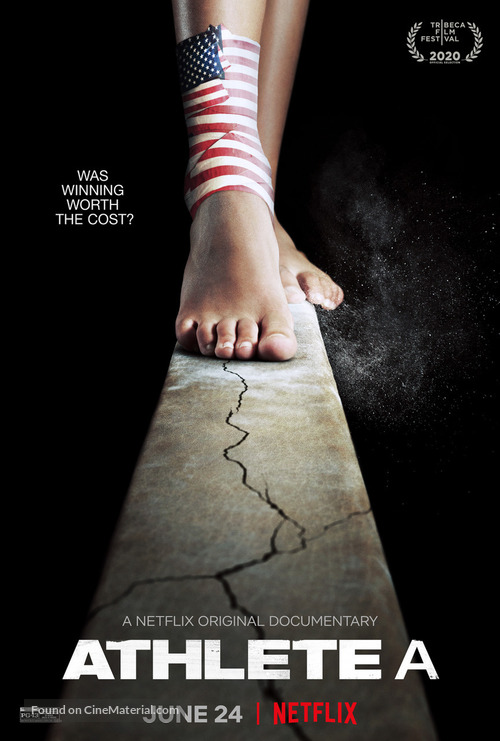
USA Gymnastics knew that Dr. Larry Nassar was routinely and repeatedly sexually assaulting the many young girls in his care. They knew and they did nothing. They knew and the covered it up. They knew and they kept him in the position, kept sending child gymnasts to him, kept inviting him into their midst. They had a duty to protect their young charges. They had a duty, morally and legally, not only to remove him, but to report him to the police. Rather than doing so, they continued to feed victims into the hands of a known pedophile.

In Jon Stewart’s recent political satire Irresistible, he talks a bit about about the pundit economy, how the news has largely been replaced by talking head opinion. These aren’t journalists, not by a long shot, but they sit behind anchor desks as if they are, injecting issues with their own agendas. It’s a dangerous trend, especially when you consider it took reporters from the Indianapolis Star to expose these crimes and trigger a police investigation. Once the newspaper made the allegations public, women started coming forward. In droves. Hundreds. Newspapers are nearly extinct, but can we afford to lose the last few people dedicated digging for truth and informing the people?

Because USA Gymnastics was never going to do the right thing. In fact, they’d fostered a culture of abuse with coaches like Bela Karolyi who believed dominating and terrorizing young gymnasts was the key to success. USA Gymnastics wasn’t just looking the other way, it was enabling abusers and suppressing evidence because that’s how they kept the sponsorship dollars rolling in.

This is a difficult film to watch, obviously. But directors Bonni Cohen and Jon Shenk deliver on a sense of hope, too. And hope? She’s female. Called Athlete A in the documents, in court, woman after woman stood up, identified themselves, and spoke to the man who’d abused them, and to the judge who would sentence him. And also to all of us. They showed us there is power and dignity in being able to name the crime, and the perpetrator. It takes real courage to do that, but it made me want that same thing for every woman. Many, many, many sexual assault victims don’t get justice. They don’t speak up because they don’t feel they can. Or they are not believed. It took years for these gymnasts to see their day in court, but isn’t justice the very least we can do for these victims?

Straight Up

Netflix just dropped a bizarre comedy this weekend starring Will Ferrell and Rachel McAdams. Netflix will green-light just about everything, which was music to Ferrell’s ears – literally. Finally, his semi-chub for Eurovision would pay off! If it’s not already the #1 viewed film on the streaming platform, I’m sure it will be soon. And it does have its funny moments, even I can admit that.

But Straight Up is also a new release on Netflix, and this one’s a movie you actually should see.

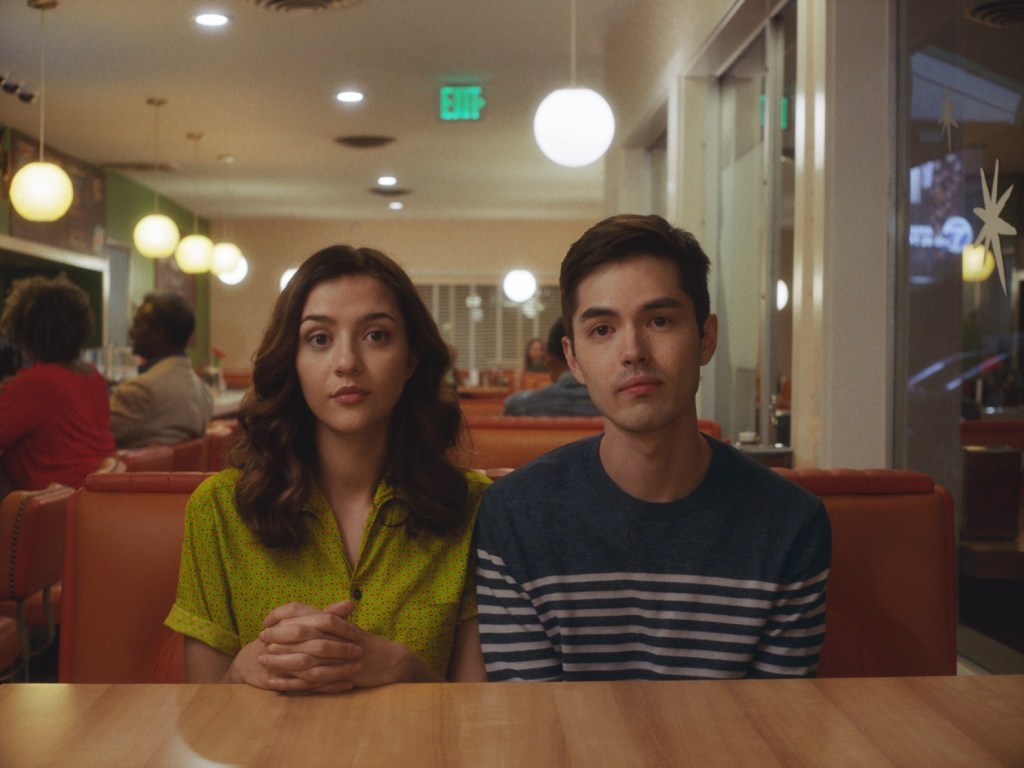
Todd (James Sweeney) is a confused young man. He’s neurotic, he’s OCD, he’s phobic, he’s addicted to therapy, which tends to stir up more questions than answers. One recent question is: am I actually gay?

Sexuality may be quite obvious to most, but Todd is wondering if maybe he just internalized the label from having been bullied as a child. He hasn’t really had any relationships, nor has he had sex thanks to an aversion to bodily fluids. He tests out this new theory on two long-time (/only) friends, who are less than enthusiastic for this line of thinking. Of course he’s gay, they assure him. Of course. But Todd is petrified of dying alone, and since adding females to the mix more than doubles the dating pool, the math is on his side. More or less. It may be a tad difficult to attract women with his distinct “I’m gay” vibe.

But not, it turns out, impossible. He meets Rory (Katie Findlay) and they immediately bond of Gilmore Girls, which is apt because they too are hyper-verbal. The dialogue zings between them rapid-fire and yet feels natural. Sweeney and Findlay have an incredible chemistry that belies an instant connection and intimacy. They are intellectual soulmates. But can they sustain a romance?

This film is all kinds of incredible. First, we get to explore a young and fluid concept of sexual identity. These kids are not afraid to redefine society’s so-called institutions to suit their own needs. They don’t ask whether they can be romantic partners but not sexual ones – they just get to it. Nothing’s off the table and everything can be negotiated.

It’s still pride month, and you may have noticed that among all of the letters of the rainbow (LGBTQia2+), the Q stands for both queer, and for questioning, which doesn’t necessarily mean that someone’s sexuality is in limbo. It can simply be an admission that sexuality is a spectrum, and one’s place on it may be in flux (a sort of agnosticism for sexual orientation, if you will). Generation Z much more readily embraces these gradations. And I don’t mean that it’s easy or it’s perfect, just that our understanding continues to expand, and there’s a lot more nuance than just the binary female/male, hetero/homosexual.

Five years ago, James Sweeney was a lowly assistant to Duke Johnson, who himself is not a household name, but he was co-director on that wonderful stop-motion animated film by Charlie Kaufman, Anomalisa. Flash forward only a few years, and he’s already writing and directing his own films, and even more incredibly, they’re actually first rate. He’s not just putting sexuality on trial, he’s questioning our basic definition of romantic love. As he should. The truth is, no relationship strictly conforms to a dictionary’s ideal. Maybe love can only be defined by the people who are feeling it. And maybe we should just chuck out these meaningless labels anyway.

I feel energized by these challenges to the status quo, but most of all I was just falling a little in love with Rory and Todd myself. Their wit and effervescence perfectly captures that consuming and in fact addicting aspect of new love. Recognition of this higher connection is intoxicating and exhilarating and you just want more, more, more. While I would categorize Sean as “distressingly straight” and myself as “pansexual,” still we recognize a bit of ourselves in this young couple, because those first heady days of romance are unmistakable. Sweeney and Findlay give generous performances and make easy work of what I can only imagine was a pretty hefty script. And an impressive one at that.

Look for Straight Up on Netflix.

A Lego Brickumentary

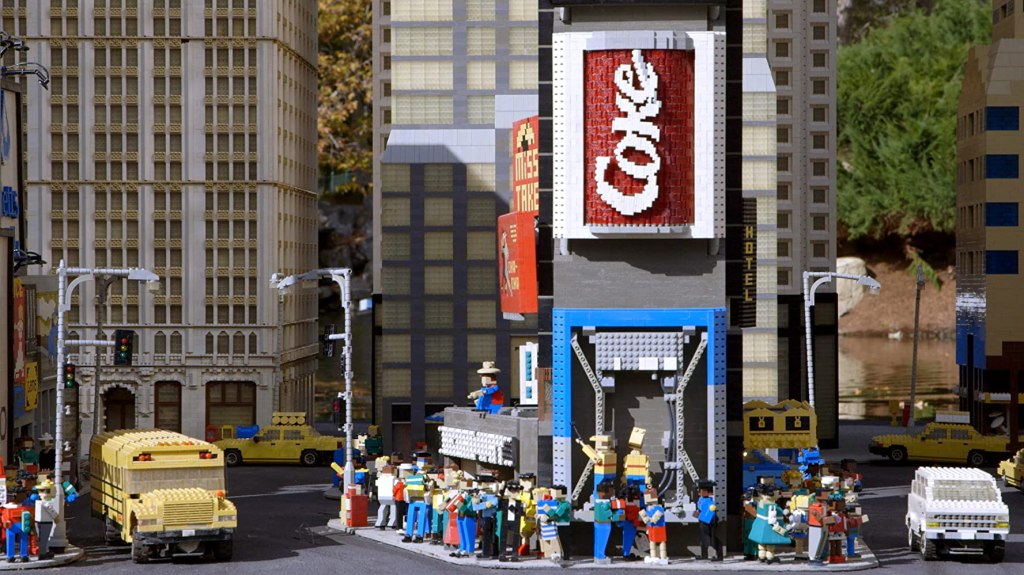
Jason Bateman gets the mini fig treatment, and as the documentary’s narrator, he helps us discover aspects of the Lego culture we’ve perhaps not before considered.

I mean, someone has. Definitely not me. But someone. I grew up in a house of women; we were four sisters, close enough in age to swap clothes, braid each other’s hair, and influence each other’s tastes in movies and music and books. Eventually we got it into our pony-tailed heads to put Legos on our Christmas lists, not much caring who received the list as our entire basement was a communal playroom. But instead we got more Barbies. We had, literally, hundreds of Barbies. We had so many Barbies that we’d often get repeats of the same ones – we’d call them “the twins” or “the triplets” and carry on as usual. We loved Barbies. But we never got any Legos.

I didn’t really discover Legos until my oldest nephew was old enough to play with them. And by old enough, I mean old enough to last about four seconds before wandering away, leaving his dad to complete the project, who was the one who really wanted them in the first place. Sean would linger for an hour in the Lego aisle, sizing up each kit, weighing the options. I remembered Legos as a massive pile of plastic bricks to dump over your living room floor, from which to build the blueprints in your mind. But the Lego aisle of the past decade tells a different story: boxes with exactly the parts necessary to build the project illustrated on the cover, many of them heavily licensed to appeal to children. And many of them not. Lego has discovered a second crucial customer base: adults! My nephew’s dad, and Sean – they’re not outliers. Adults make up such a large portion of Lego’s customers they even have their own acronym: AFOL, adult fan of Lego. These are the people splashing out serious cash: $350 for 3898 pieces of Manchester United’s Old Trafford stadium; $400 for an authentic replica on a 1:8 scale of a Bugatti Chiron; $900 for a massive 7541 piece Millennium Falcon. People love the zen aspect of following precise instructions, but lots of AFOLs are building outside the box too, exhibiting their impressive creations at Lego conventions or submitting them to Lego to win the chance to see their design reproduced and sold in stores.

Whether you played with them as a kid or as an adult, or merely browsed them endlessly as an aunt who cares, Lego has maintained their hold as a top toy for decades. But they’ve transcended toy stores, they’ve been used in art and architecture, we’ve seen them in movies and museums. And now we can celebrate them in this Amazon Prime documentary too.

Tell us about your own Lego projects: do you like Technic, Creator sets, or licensed stuff? Have you built the Death Star, the Taj Mahal, the Simpsons living room?

The Show Must Go On: The Queen + Adam Lambert Story

By the early 1980s, Queen was one of the biggest stadium rock bands in the world. Their set at the 1985 Live Aid concert is basically the most significant live performance of all time. Queen meaning Roger Taylor on drums, Brian May on guitar, John Deacon on bass, and Freddie Mercury on piano and vocals. Mercury was a flamboyant showman on the stage, an inimitable presence with an incredible voice. When he died in 1991, the band more or less died with him; his bandmates were his friends, and they needed to mourn him away from the music.

I can’t remember when I was first aware of Queen because I was born into a world already obsessed with them. I remember being in my mom’s van and hearing the telltale bassline of Under Pressure and being mad, SO mad, when it turned out to be “that old song” by Queen, and not Ice Ice Baby by Vanilla Ice, a flash in the pan hip-hop monstrosity that sampled from Queen/David Bowie without crediting them. Imagine being disappointed by Under Pressure. Imagine. I have been atoning for that musical folly ever since.

I have probably never been to a hockey game that didn’t play We Will Rock You at least 5 times. As a kid I probably thought it was specifically written for hockey. But in 1992 the band got an even bigger boost from a different Canadian export, Mike Myers. Wayne’s World was released just a few months after Mercury’s (AIDS-related) death, and the studio begged Myers to go with a Guns N Roses instead, but Myers was insistent. The film propelled Bohemian Rhapsody to #2 on the charts 17 years after its first release. Mercury saw the head banging scene before his death, found it hilarious, and approved the song for the film’s use. It was a nice way for new fans and old fans to appreciate Queen once again. Just two months later, in April 1992, the remaining Queen members put on a benefit, The Freddie Mercury Tribute Concert, to which 1.2 billion viewers tuned in (they made the Guinness Book of Records!). Performers including Robert Plant, Elton John, Annie Lennox, George Michael, and David Bowie performed alongside the original members, and they raised over £20M for AIDS charities.

This would prove a wise and prophetic move: Queen never tried to replace the irreplaceable Freddie Mercury. When they were ready to perform again, they performed as Queen + ________. John Deacon retired in 1997, but a new Greatest Hits (III) album was released in 1999, Queen + Wyclef Jean on Another One Bites the Dust, George Michael on Somebody to Love, and Elton John on The Show Must Go On (among others). And beginning in 2005, they toured + Paul Rodgers. Fans could enjoy the music they loved without feeling their Mercury had been replaced. May and Taylor could play again, in tribute to their friend of course, but also because this was their music too, their passion.

In 2011, Queen began playing with American Idol loser, Adam Lambert (that year’s winner, Kris Allen, has long since been forgotten – the show has a pretty crummy record: out of 17 seasons, only 2 early winners ever had any lasting success, Kelly Clarkson and Carrie Underwood). But Queen knew a winner when it saw one.

This documentary covers a lot of ground. A LOT. But it’s Queen, so let’s gobble it up. And it’s kind of cool that this iconic band, now consisting of two aging rock stars, can see in Lambert a little bit of their old friend. Adam Lambert is himself a flamboyant showman, but he doesn’t invite comparison to Mercury, which is what makes this union work. He is a confident performer in his own right, and May and Taylor seem re-energized in rediscovering their old hits with him, old hits that, like me, Lambert has grown up just knowing. And though he’s also passionate about his solo work, Lambert knows what a huge opportunity this is, how lucky he is to perform to arenas filled with people. But most of all, it’s just cool to see how things have changed, from Freddie Mercury’s deathbed confession of AIDS, to Lambert being able to perform as an openly gay man. Many great bands continue to tour long past their prime, eventually becoming a sort of cover band of themselves. Queen, however, has lasted because it’s been open to change, it has evolved. They never wallpapered over their past. They knew they had a once in a lifetime thing with Freddie, but they also admit they’ve somehow found it again with Lambert.

Can’t get enough? Join the conversation on Youtube!