Category Archives: Jay

To The Wonder

Oh, they’re in love. Terribly, terribly in love. They’re that gross couple you roll your eyes at because they think they’re the first ones to be so over the moon with each other. Ugh.

To-the-WonderThe movie opens with obligatory montage of just how very happy Marina (Olga Kurylenko) and Neil (Ben Affleck) are. It reminds me a bit of a french, pretentious (redundant?) version of how Eternal Sunshine of a Spotless Mind begins, which immediately makes me feel like this won’t end well. Marina and her daughter move from Paris to Oklahoma and for some reason nobody suspects that this will be a jarring downgrade. I visited both within 2 months ago and yeah, not comparable no matter how much Affleck peen you’re getting. The only thing worse than her syrupy narration is his whispery one. Careful you don’t strain your eyes from rolling them deep backward into the dark recesses of your brain.

And then she burns the dinner! Oh, should I have said: spoiler aleart! Spoiler alert, the reality of every day life together starts to cool their ardour a bit. And the further apart they drift, the more she turns toward fellow exile and Catholic priest (Javier Bardem) and he gravitates toward an old flame (Rachel McAdams).

Is now a good time to mention that this is a Terrence Malick film? It was released just a year after Tree of Life (only his 6th feature in 40 years) and is also semi-autobiographical, the first of his films to be set entirely in modern day. There was no script, just pages and pages of thoughts. The actors were simply told to play the emotions without speaking and while there’s plenty of voice over, there is hardly any dialogue.

What can I say about Terrence Malick other than he’s a polarizing film maker. He’s certainly a visionary but critics can’t seem to agree if he’s  a genius or a bit of a dullard. When it played at the Venice Film Festival, it was met with both boos and cheers.

Malick must commit tonnes of footage to film. In post-production he creates and hacks in equal measure, sometimes losing entire characters (Kurylenko made him promise that Marina would remail in the film, but supporting roles featuring Rachel Weisz, Jessica Chastain, Michael Sheen, Amanda Peet, Barry Pepper and Michael Shannon all ended up on the editing room floor). His imagery is beautiful, and this particular cake is frosted with generous dollops of religion. He’s exploring love in different ways and settings. This isn’t a narrative, it isn’t a story, it’s more a philosophical treatise on love. If you know Malick, then you’re used to the stylistic montages, though this one feels more fragmentary than most.

tothewonder22Just between you and me, I think Malick’s movies are getting increasingly masturbatory as we go along. He loves his long, meandering shots, and who cares whether they’re actually pertinent to the “plot”? Plot? Hahaha. Plot. Is this meditation or pretension? There’s a lot here that can be only experienced intuitively, which makes it quite demanding of its viewer.

This was the very last movie review that Roger Ebert submitted before his death; it was published posthumously 2 days later. Ebert was in his last days and must have known it (have you seen Life Itself?). His reading of the film is a rather spiritual one:

“A more conventional film would have assigned a plot to these characters and made their motivations more clear. Malick, who is surely one of the most romantic and spiritual of filmmakers, appears almost naked here before his audience, a man not able to conceal the depth of his vision.

“Well,” I asked myself, “why not?” Why must a film explain everything? Why must every motivation be spelled out? Aren’t many films fundamentally the same film, with only the specifics changed? Aren’t many of them telling the same story? Seeking perfection, we see what our dreams and hopes might look like. We realize they come as a gift through no power of our own, and if we lose them, isn’t that almost worse than never having had them in the first place?

There will be many who find “To the Wonder” elusive and too effervescent. They’ll be dissatisfied by a film that would rather evoke than supply. I understand that, and I think Terrence Malick does, too. But here he has attempted to reach more deeply than that: to reach beneath the surface, and find the soul in need.”


A little light incest

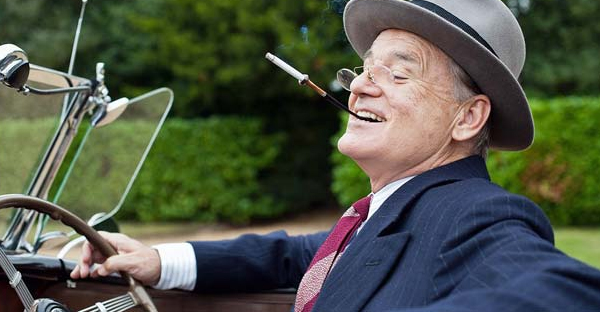
hyde-park-on-hudson-MOVIE-reviewI just watched Hyde Park on Hudson, in which the fabulous Bill Murray plays president Franklin Roosevelt, who engaged in an affair with his cousin Daisy (Laura Linney), among many others (women, not cousins. as far as I know).

FDR was a powerful man and president and Bill Murray manages to show his loneliness and sadness without giving up his strength. Linney and Murray embrace the occasional absurdity of their situation, Daisy realizing, while giving ole FDR a handie in the car, that they are not just 5th cousins “but also really good friends.” Ahem.

During this time period, FDR is visited at his vacation estate not just by the many women he’s hyde-park-on-hudson-movie-clip-screenshot-king-eats-hotdog_largefucking, but also by King George and his wife. A “social” rather than official visit, the royals hope the USA will commit to helping them in the war against Germany. In turn, the Roosevelts feed them hotdogs, and created a scandal with bigger headlines than Hitler was currently enjoying.

Although rooted in fact, this isn’t Lincoln. It’s a comedy. Murray shows a lot of range and gives us a very interesting portrait of a man who is historically significant but also just a man. The performances are good but I’m not sure the movie really conveys anything fair or enlightening about the events. But who cares, it’s Bill Murray!

daa46d65a1e5004f284bf0681b3a7e57What’s your absolute favourite Bill Murray movie?


Escapism (Or Why I’m Not At Work Right Now)

There’s a heat wave in Ottawa, folks. The humidex says 40 bloody degrees. Is it hot where you are too? Our local art house theatre, the estimable Bytowne on Rideau street, helpfully suggests that their cinema is in fact air-conditioned, and even better, they sell ice cream at their concession stand. So there’s always that.

But today Sean and I are playing heat wave hookie. There’s a water park down the road so we’re slathering on the sunscreen (Sean says: smells like vacation sex!) and hitting the (fake) waves.

Now, one thing to consider when you’re off to the local water park is all those news stories you’ve read about it recently, and in particular, its “dismal safety record.” The good news is: it was only found guilty on 6 of 11 charges, and the 9 others were withdrawn. So that’s not bad, right? I feel like I can beat the 50\50 odds at least half the time.

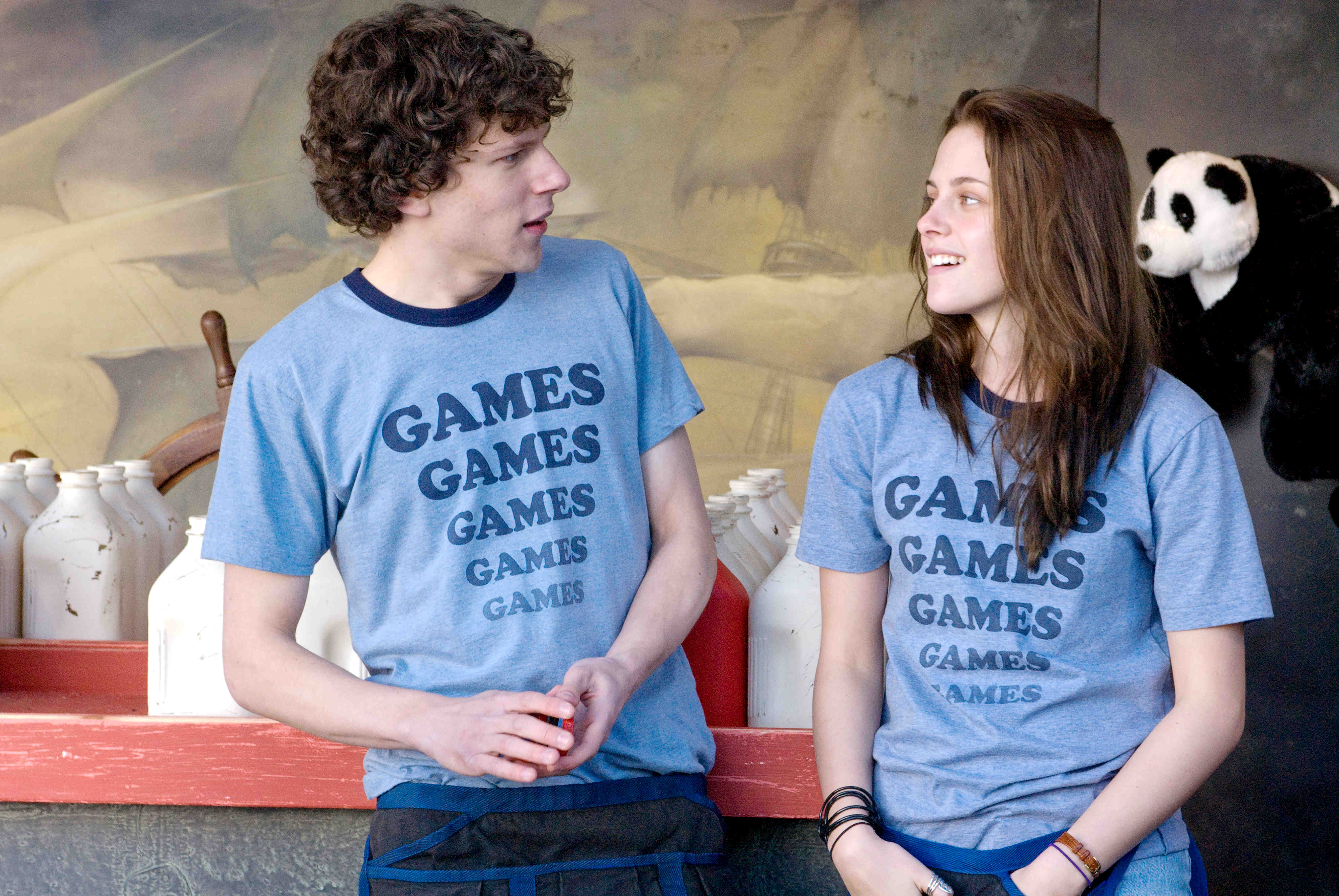
The truth is, you have to remember that these parks are staffed by the same kids in adventurelandAdventureland. I mean, would you literally trust Jesse Eisenberg or Kristen Stewart with your life? Those two asshats, plus a gang of their ne’ever do well friends, run the games section of a run down amusement park while dreaming of being ANYWHERE ELSE IN THE WHOLE FUCKING WORLD and having these deep and meaningful conversations while completely ignoring their customers. Have you seen this movie? Did it remind you of any of your own after school jobs? It’s pretty scary when teenagers run the world,

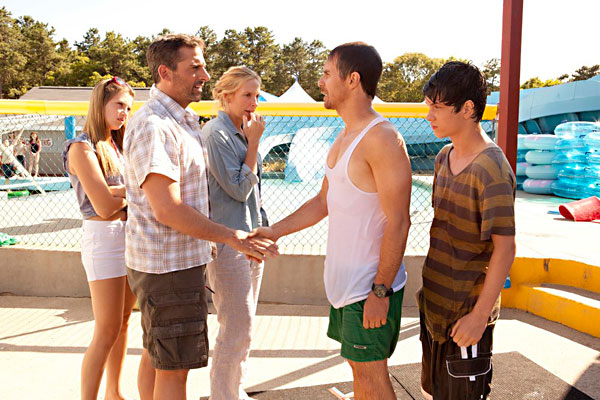
In The Way, Way Back, a kid named Duncan gets hired to work at a water park called Water Wizz, which is an awful name for a park. It reminds you too much of what you’re floating in. I mean, realistically, we know it’s 40% urine. Those kids over there haven’t gone to the washroom WayWayBackONCE since arriving but they’re throwing back juice boxes like it’s happy hour. Water parks probably don’t even HAVE bathroom facilities for kids. Why waste the space? (This reminds of a scene in Grown Ups where Adam Sandler, Kevin James, Chris Rock, David Spade, and Rob Schneider are all floating around at a water park, not coincidentally also called Water Wizz since it was filmed in the same park, and suddenly the water around them all 20100614_poolpee_190x190turns dark blue – apparently there’s a chemical that can notify us that someone has peed, and I can’t decide if that’s brilliant or just tmi. The point being: I guess grown ups (if you can really call David Spade a grown up) do it too.) Anyway, back to the movie I meant to be talking about. Duncan seeks refuge at this pissy water park because his mom (Toni Colette) is neglecting him on their summer vacation, and her boyfriend (Steve Carrell) is emotionally abusive toward him. So a pool full of pee starts to seem not so bad.

Me? I happen to like my Mom’s boyfriend, despite his constant cracking of sex jokes, which – hello – are about my Mom. So I’m not fleeing step-parent abuse. But I am avoiding work. And the weird thing about work is, I (and likely lots of you too) have this weird thing about skipping work just to laze around watching Netflix. I mean, that’s what Sundays are for. If you miss work, you need a Reason. See what I did there? Capital R Reason. A good one. Like going out-of-town with my hunny to get an irresponsible sunburn and possibly also athlete’s foot.

Anyway, this was a good movie review, wasn’t it? To recap:

Adventureland: high on nostalgia; has some great supporting characters.

Grown Ups: funny to people who like pee jokes.

The Way, Way Back: quietly charming and sweet and funny.

What’s your favourite summer movie? How are you staying cool? What do you skip work to do?


A Canadian Duet, and no, I don’t mean Celine Dion and Ann Murray

I watched these two movies recently, and they’re only appearing in the same post because of their Canadian content.

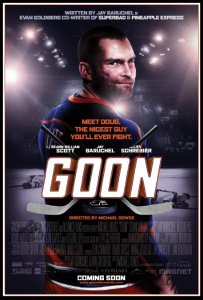
Goon – I avoided this movie because it reminded me of Slap Shot, which came out before I was born and I’ve never seen but hate all the same because of my Mom’s ex-boyfriend. His name was Keith and he was a loser. He was a decade too young for her, two decades too immature, unemployed goonof course, lived with his parents, didn’t have friends but loved to hang out at the local hockey rink trying to get the kids to call him “Ogie”. No one ever did. He was probably borderline mentally challenged, now that I think about it. Anyway, he was a creep, and anything he touched, I’d be turned off of for years. So a lack of comedies about hockey didn’t strike me as a national tragedy, but it did to Jay Baruchel, so he and Evan Goldberg set about to adapting this book into a film treatment.  I have mad love for Baruchel but it still wasn’t until a fellow blogger suggested that this movie wasn’t awful that I finally gave it a chance. Sean William Scott stars as a guy who isn’t good at anything except taking 6-Goon-BaruchelPatHollihan1a-e1330461849638punches, and giving them. A scrap gets him noticed by a local hockey coach, who drafts him onto the team as an enforcer, and once he learns to skate, he joins Kim Coates’ (Tig, from Sons of Anarchy, if you’re bad with names like me) team in the minor hockey league where Liev Schreiber’s thug character has just been demoted from the NHL for remorselessly hitting one too many people. Baruchel also appears as a cable access TV personality and salty-tongued cheer leader, and Eugene Levy plays Scott’s disapproving father. The movie doesn’t exactly break new ground, but it’s a little smart and a little sweet, and it kind of works. A sequel is in the works, with Baruchel set to make his directorial debut.

Stories We Tell – This “documentary” is by Sarah Polley. Does her name mean anything outside of Canada? I grew up watching her as Ramona (we didn’t have proper cable, but my Aunt Joan would send me VHS cassettes in the mail, having taped the episodes diligently from TV. She also starred in Road to Avonlea, a Canadian classic though not exactly my style. And I was also lucky enough to catch her on the stage in Stratford, performing the lead role in Alice Through The Looking Glass. More recently she’s known for having directed Away From Her (which got her an Oscar nom for adapted screenplay) and Take This Waltz. Stories We Tell is her first full-length documentary, though I hesitate to call in that because she really experiments with the form, incorporating re-enactments meant to look like home video, and she cleverly pieces together narrative from several different sources, highlighting the discrepancies in our memories and perceptions. It basically investigates a family rumour that Sarah’s dad is not her biological father. Her mother, who could easily put this argument to rest, died when Sarah was 11. You’d have to see it for yourself, because I’m still not sure if she so carefully protects her family out of compassion or narcissism, but either way it’s compelling.

Sarah Polley apparently turned down the role of Penny Lane in Almost Famous, but you know who did appear in that movie? Jay Baruchel! There you go. Full ciricle. Have you seen either of these? Who is your favourite Canadian actor?

Filed Under M

The Man From U.N.C.L.E. – Guy Ritchie wanted to make a spy movie that was “sexy, fun, and the-man-from-uncle-alicia-vikander-armie-hammer-henry-cavillfrivolous”, harkening back to the Roger Moore era of James Bond. He got the frivolous part right. This movie doesn’t mean much. It’s got some very charismatic stars, none of whom are served well by the material, and none of whom can pull off an accent as well as they think they can (Alicia Vikander sounds Irish more than German). It tends toward flippant rather than funny. It is very stylish (and stylized), I’ll give it that, but that’s a lot of money to put on a retro fashion show. However, if you’re one of those people who love a vacuous spy movie with no action or suspense, then boy has your time come.

Max – We never would have seen this movie on purpose but it was the second movie in a double-bill at the drive-in, so that explains why we were there, though not why we stayed. We stayed mostly for the people-watching, as it turned out, since the couple in the car beside us were topless, the better for him to expunge the blackheads from her back, while their interior lights are on, for all the world to see. It really made me reflect on how I might multi-task while at the drive-in. Suggestions? My only suggestion to you is to skip this movie. Lauren Graham and Thomas max-coverHaden Church play a good old flag-waving, down home American couple who make the ultimate sacrifice for their country. Their eldest son dies in Iraq, and his service dog gets decommissioned from the army (sorry, marines) and comes to stay with them, to be loved and trained (and healed!) by the angry younger son. The army honours its strong tradition of turning its back on veterans with PTSD, even when that vet is a dog who just wants to serve his country and retire in peace and kibble. Convoluted plot devices ensue to really bring this family together in their grief, with heavy doses of patriotic piety that I found hard to swallow. Makes you proud to be Murican I guess. A country song plays over a memorial to dead wartime dogs at the end.

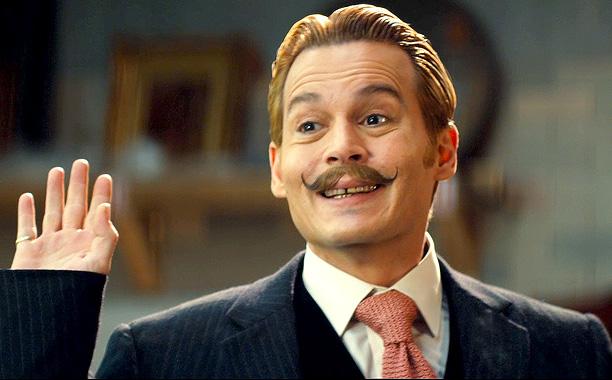
mortdecai_612x380_0Mortdecai – I think this movie was a bet. I think someone just decided to see how much weird they could cram into a movie, as long as that weird was uninteresting and unremarkable. I was embarrassed for the simpering Johnny Depp, and for his mustache.

What About Bob

5b1d9c22c932a39e5ba226ef24166eadBob (Bill Murray), a needy neurotic and narcissist, is thrown for a loop when his therapist (Richard Dreyfuss) goes on vacation. Unable and unwilling to take no for an answer, Bob tracks Dr. Leo to his lakeside cottage and imposes himself the family.

Sean and I are off to the cottage this weekend and we intend to have a lot more relaxation and a lot less surprise guests. Of course, if a client of mine did show up unexpectedly, it wouldn’t go quite like it does in the movie. Bob is not charismatic, he’s obnoxious and self-centered. And sure Dr. Leo’s a dick, but Bob could be dangerous and has already proven himself to be a liar and a stalker. Not only is it inappropriate for Bob to show up, it’s also strictly against the rules. I would be calling the cops. Sean would not be bonding with him under any circumstance. This movie really riles me up in between bouts of cracking me up.

While I find this movie professionally disturbing, I also find it hilarious, because: Bill Murray. I love Bill Murray. He’s kind of an ass, and impenetrable, and yet somehow I adore him. He has weird methods on-set, rewriting lines and improv-ing, which tends to get the goats of a lot of his co-stars (Richard Dreyfuss famously included, plus Chevy Case, Richard Donner, Lucy Liu, and McG, who claims Murray head-butted him; Dan Aykroyd would nickname him The Murricane for such behaviour). He took a circuitous path to comedy, attending college for pre-med but then billmurraydropping out after being arrested for marijuana possession. He then ended up doing National Lampoon Radio Hour with Dan Aykroyd, Gilda Radner, and John Belushi, and eventually met back up with them on SNL as well. He was a bankable comedy star throughout the 80s and 90s, and then reinvented his career more recently as a dramatic actor, taking on roles where he’s often cynical or depressed (or both!) rather than the flat-out nuts of What About Bob.

Bill Murray is a Hollywood Luddite – he has no agent, and no business manager. Pete Docter wanted him for the voice of Sulley in Monsters, Inc. but had no way of contacting him and had to move on. Murray went on to voice Garfield instead because he was anxious to work with the Coen brothers. Sound fishy? You’re right. The script is co-written by a Joel Cohen, but not that Joel Coen. A business manager may have sussed that out. He’s also missed out on roles in Who Framed Roger Rabbit?, The Squid and the Whale, Charlie and the Chocolate Factory, and Little Miss Sunshine – the latter being the only one he regrets.

mrmurrayBill Murray is an icon with legendary status among his many fans. An entire website is dedicated to telling the best Bill Murray stories. He’s elusive but if you catch him on the right day, he can be surprisingly engaging. He has inspired all kinds of tributes, from the Bill Murray colouring book my sister sent me for Christmas, to Cook Your Own Food – A Bill Murray Scratch And Sniff  , which depicts the sights and smells of various Murray movies.

So while I’d freak out of Bob showed up at the cottage, Bill I’d welcome with a glass of scotch and open arms. Wouldn’t you?


The Wolfpack

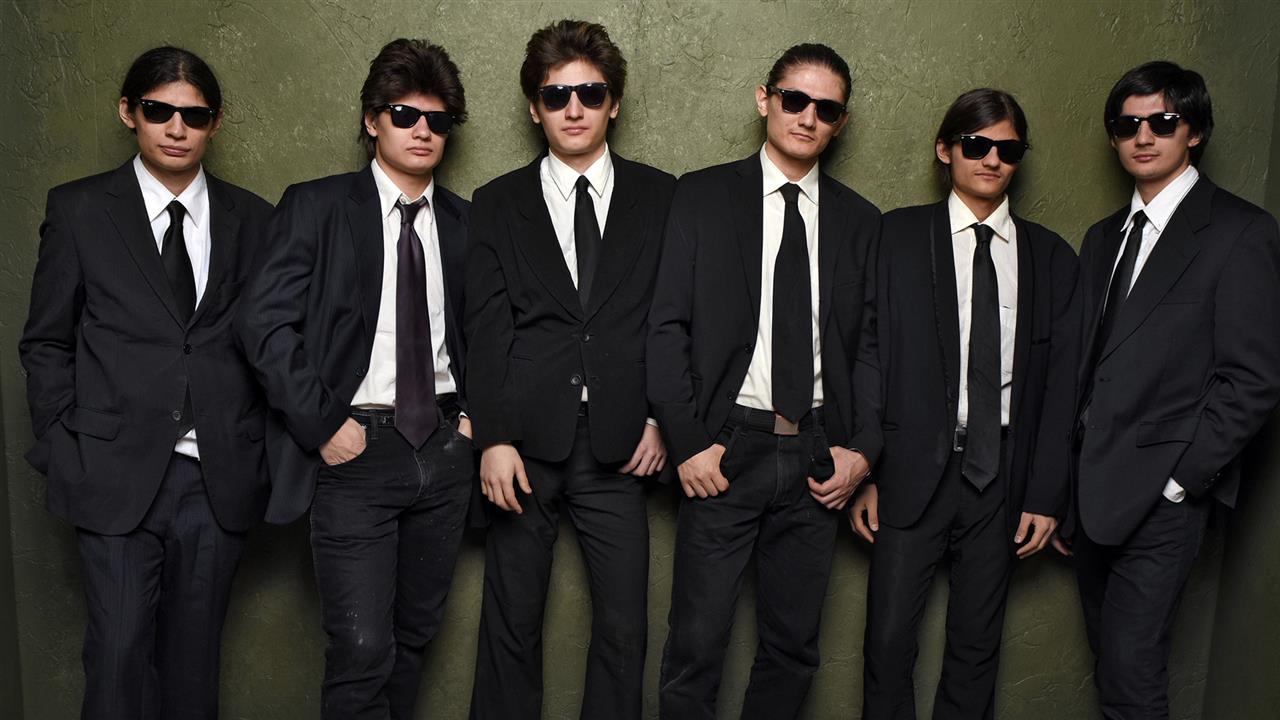
This is a documentary featuring a crackpot couple of parents and the 7 children they’ve home school and raised in near-complete isolation. The family lives in a 4-bedroom apartment in 060815wolfpack_1280x720Manhattan and have rarely left it. The kids are totally ignorant of the world outside their windows, but spend their time looking at another screen – their television. Enamoured with movies, they seem to have saved themselves from the nuthouse by finding a creative outlet in faithfully recreating their favourite movies.

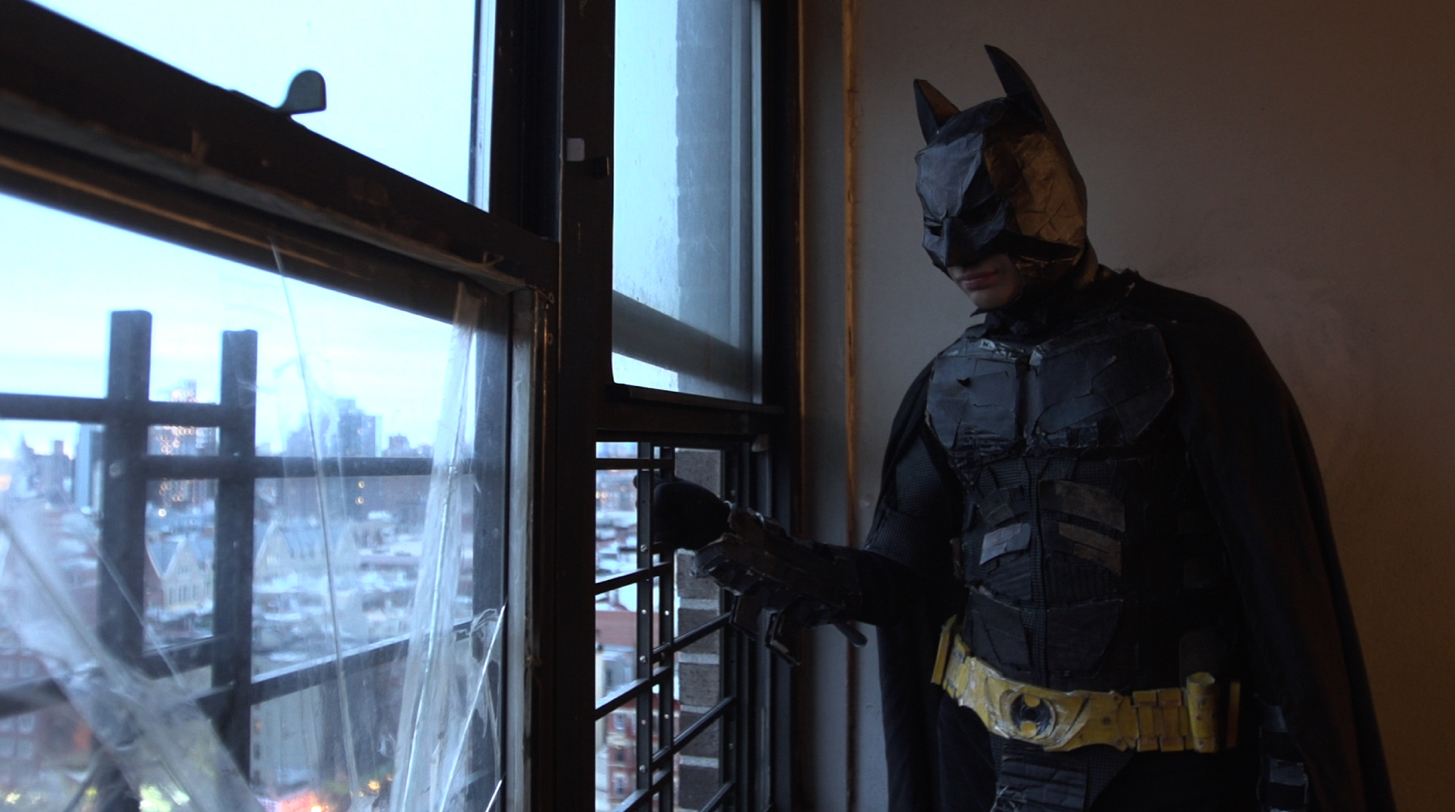
They write scripts literally by taking long-hand dictation from the movie, one line at a time, and then typing it up with an ancient typewriter. They make astounding costumes and props using notebook paper and cardboard but end up with a product so realistic the police raided them on a gun charge.

It’s hard to watch this movie because this crazy way of life was imposed by a father who apparently hates the country that is feeding and housing him (he “shows his rebellion” by not working, although he would make an exception for a recording contract, (so obviously his beliefs are quite sincere) and has infected his family with such a pervasive feeling of paranoia that neither his wife nor children met with the outside world for 14 years.

When the 6 boys are finally old enough to venture out, everything is new and strange and bright; maybe too bright. Everything appears to be suddenly “3D” to them, and when they see trees up close and glorious, they can only compare them to a forest they’ve seen in Lord of the Rings.

The kids are well-spoken and capable – despite, not because of their upbringing. They are the-wolfpack-im-batmanfiercely protective of their mother who has fostered their creativity and seems to have been abused and subjugated by her husband right alongside her children.

The father remains a blurry presence in the life of his family, and within the documentary. He appears occasionally but seems to know he’s this movie’s villain. Worse still, the 7th child, a sister, is nearly completely ignored.

The boys met film maker Crystal Moselle by chance on one of their first outings as a group. A film student, the 6-pack of brothers with waist-long hair, dark suits and Raybans caught her eye, and she’s followed them ever since. Their world is definitely fascinating, and at times frustrating (like it or not, they’ve caught their father’s paranoia) but unfortunately, this documentary doesn’t have much to say. Yes, this was a crazy upbringing, a crazy life – but so what? Moselle doesn’t seem to have a point to make. And while I found this to be an eminently interesting watch, it wasn’t an enlightening one.


Southpaw

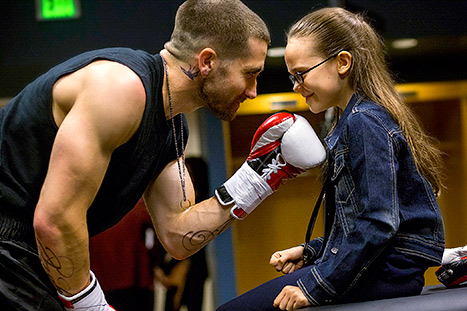
3044397-poster-p-1-the-southpaw-trailer-hits-you-with-a-ridiculously-cut-jake-gyllenhaal-and-new-eminem-musicJake Gyllenhaal plays a boxer who hits a very hard bottom. He’s at the top of the game when the film begins, but when his head and his heart aren’t in it, he very quickly loses everything he has. He barely notices losing the cars, blinks lazily as the contents of his home are removed for auction, tries to be philosophical about the foreclosure of his multi-million dollar home, and contributes in the banishment of friends, and it’s only when they take his daughter that he breaks. His daughter is removed by child services from his custody and is sent to live in the very same system that he grew up in, and suddenly he realizes that he has to mobilize to win her back.

He turns to grizzled, reluctant trainer Tick Wills (Forest Whitaker) for help. As a boxer, Billy Hope has spent his life defending punches with is face, but that’s not enough to face down the current competition (who may also be the instrument of his undoing). Tick teaches him a more patient and thoughtful way to fight, which – lo and behold – turns out to be a great metaphor for life too.

I thought Gyllenhaal was fantastic. His performance was all meat and muscle. But the script was limp. Matt and I punched lots of holes into the story while sitting in the parking lot while Sean SOUTHPAWbought dog food, but it wasn’t just that the writing was too loose, it was also riddled with sports cliché. And we’ve already seen that movie, the boxing match as redemption. Kurt Sutter (of Sons of Anarchy fame) has nothing new to add, and director Antoine Fuqua seems to have a pretty light touch, unless they were literally going for Most Tragedies Inexplicably Overcome.

So while I believed Gyllenhaal, I wasn’t convinced by the script. It keeps pounding us relentlessly with heaps of depressing shit and it’s hard to earn any modicum of triumph after such an onslaught. It’s gritty as fuck but then it chickens out. And just looking at Gyllenhaal, how 1437571988_southpaw-articlecommitted he is to this role, how hard he’s trying, you feel bad that everyone’s let him down and this just never gets to be the movie it maybe could have been. Sean felt that the boxing bits were pretty extraordinary, and it showed how Jake had worked his little buns off to get into such tough fighting shape (although noticeably fought right-handed save for one notable left-handed uppercut, says Sean, who was really irked by that the movie would be called Southpaw, which literally means a left-handed boxer, and then not pay attention to which hand is the dominant fighting hand. I myself did not notice such a thing because I’m sports-deficient).

I think it’s worth a rental just to watch Gyllenhaal, who is definitely on fire and making bold, interesting choices in his career. But the truth is I’d rather watch him any day in creepy Nightcrawler than watch this movie, with its bevy of eye injuries (and you may remember I’m a strict eye-phobe, which means I only watched about 40% of this movie since every time his eye bleeds, my vision goes blurry) and the physical and emotional blunt force trauma that’s just so goddamned brutal to watch.

Love & Mercy

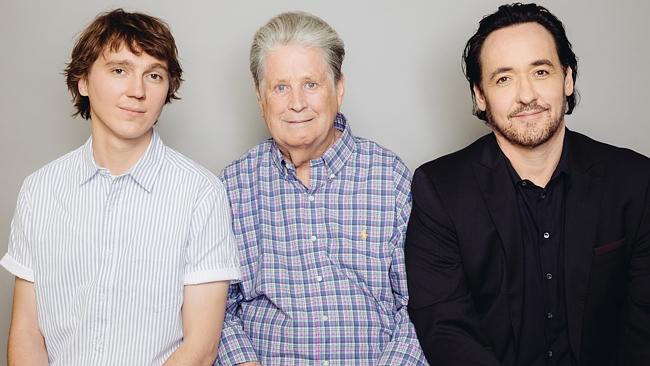
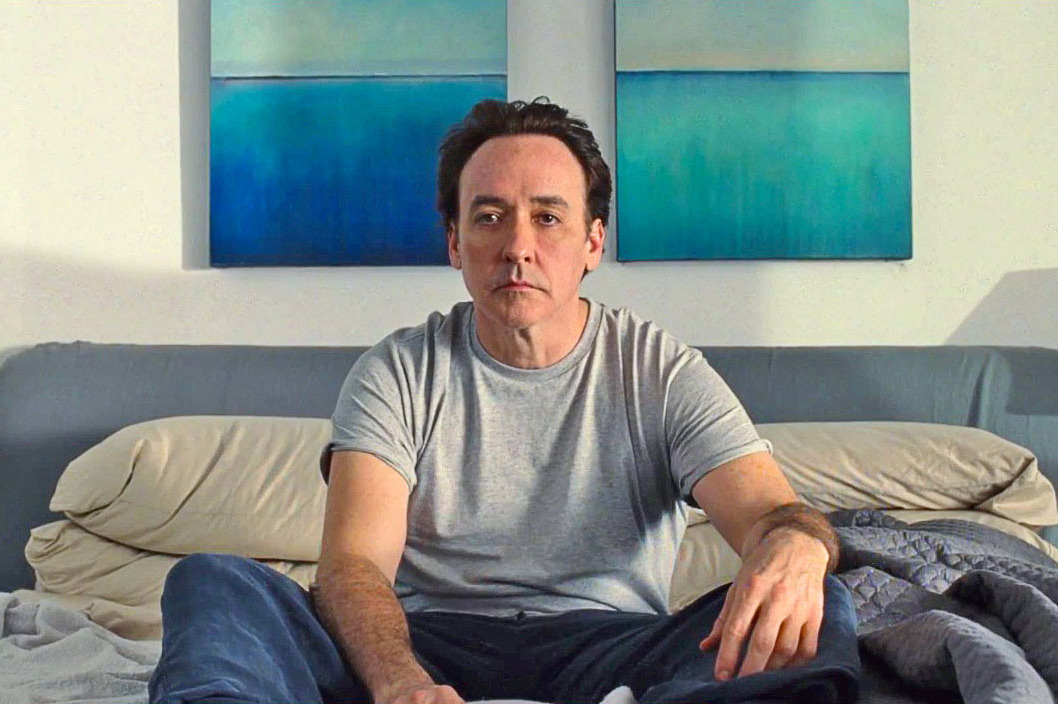
beachboysLove & Mercy tells the story of two Brian Wilsons (the heart and soul of the Beach Boys): 1960s Brian, portrayed by Paul Dano, at the height of his creative genius, working doggedly on a game-changing album that no one else believes in while fighting the ugly spectre of an abusive father, and 1980s Brian, portrayed by John Cusack, a broken shell of a man under the care of and heavily medicated by a shady, domineering psychiatrist.

Both Brians are sad to watch on-screen. No matter how much or how little you know about Brian Wilson’s life going in, you do know the Beach Boys, and you understand pretty quickly that the Beach Boys were nothing without him. The man was so talented that he took a harmonizing boy band in matching shirts and pushed them toward musical complexity to rival (and inspire) The Beatles. And he did it all while in the throes of a nervous breakdown.

The recording sessions in the film were some of my favourite. Sean has a nice little vinyl collection and of course Pet Sounds has always been part of it – Rolling Stone’s definitive list of the top 500 albums OF ALL TIME rates Pet Sounds at #2, only being eclipsed by Sgt. Pepper’s Lonely Hearts Club Band, the album The Beatles made in response to their hearing and adoring Pet Sounds. So it was really neat to see and hear the hard work and the many layers and the sheer creativity that went into producing a sound that had never been heard before. And even if you don’t know the album, I guarantee you’ve known some of these songs for nearly your whole life. They’re part of our cultural lexicon. And now you get to peek behind the curtain thanks to scenes that were mostly improvised with real studio musicians and shot in a documentary style with 16mm handheld cameras.

This is not a traditional biopic. It depicts two very specific times in Brian Wilson’s life, and this parallel narrative is very effective, contrasting the height of his career with his crashing mental 01-love-and-mercy.w529.h352.2xand emotional downfall. We see him change from vitality to despondency, and to heighten that disparity, director Bill Pohlad kept actors Cusack and Dano separate so that they would each develop their own organic understanding of Wilson in their respective time periods. In the second portion, the John Cusack years, Paul Giamatti plays Dr. Landy, the evil psychiatrist while Elizabeth Banks appears as a love interest. These two are of course at odds with each other and the battle over Brian Wilson, when Wilson is too traumatized and petrified to fight for himself, or to even recognize the need for it.

Tonnes of original Beach Boys recordings are featured throughout the movie, lots flawlessly mixed in with Paul Dano’s own voice. And I’m giving props to composer Atticus Ross who had a mountain of a task to compose a score that would flow in and out of all of these iconic songs, and yet he didn’t just do a competent job, he elevated things, drawing inspiration from such varied sources as The Beatles’ Revolution 9 to Jay-Z’s The Grey Album and it sounds exciting and alive and masterful.

boysThere are significant gaps in this film, which is narrow in its scope, but it is an otherwise mournfully accurate account. Lots of the characters and events feel larger than life but if anything, Wilson felt that perhaps some were treated “too fairly” and after all he’s been through, you can understand where that’s coming from. I thoroughly enjoyed this movie, from the recreation of several Beach Boys album covers to Elizabeth Banks’ impressive 80s garb, and as much as I can tell you so, you really just have to see it yourself.

Listen Up, Philip

I recently watched Listen Up, Philip because for some odd reason I find Jason Schwartzman irresistible. Not that I like him. Upon reflection, I often find him quite intolerable, but still irresistible. It’s probably some positive reinforcement from his nearly ubiquitous presence in Wes Anderson movies, which I tend to love, as a rule. But outside of the Anderson oeuvre, I find Schwartzman to be a lot less easy to swallow. Anderson allows us to laugh at the pompous ass. In everything else, he’s just a pompous ass. And if an actor plays a pompous ass in 37 film and television credits to date (roughly), then maybe he’s not playing one, maybe he just is one.

And yet, I hardly ever miss a Jason Schwartzman film. Just in case, I guess. In case it’s secretly a Wes Anderson film? In case Bill Murray will suddenly pop out of his breast pocket, waving a polka-dotted pocket square? In case he loses his hipster facial hair and there’s no one else there to notice it? I really don’t know why, but I’ve observed this weird tendency in myself, so there it is.

Hence, Listen Up, Philip, which I managed to like despite itself. Because it feels like the kind of movie that defies you to not like it. It wants you to turn your nose up at it. It’s too cool for approval. There’s a great review of it over at Epileptic Moondancer if you care to check it out. As for myself, I’m going to discuss some particular traits that I found to be of note from director Alex Ross Perry

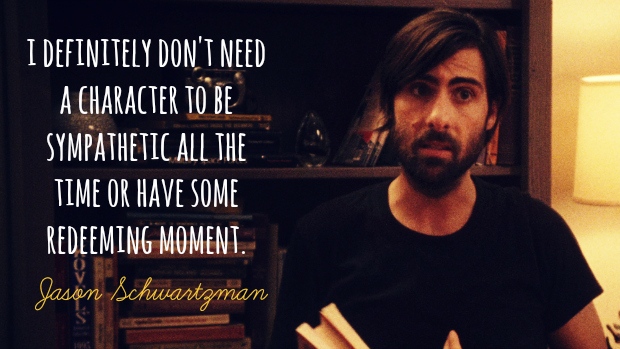
  1. Unlikable characters. Holy unlikable in this case. It’s a huge risk to present a story with a protagonist the audience won’t like, because that’s how we’re supposed to connect with the jason-schwartzman-quote-620story. We’re supposed to identify a bit of ourselves in the hero and experience the film through his or her eyes. If it becomes personal for us, then we care about the outcome, and we are engaged. But a main character who is thoroughly unlikable is a bit of a problem. Philip is neurotic and selfish and ungenerous and conceited: not the kind of guy you’d want to be stuck next to at a dinner party, so why willingly listen to him whine throughout a two hour movie? There’d better be a compelling reason. I’m thinking of movies like A Clockwork Orange, and Wolf of Wallstreet, and Mommy, where I loathed the main characters but still felt the stories were worth telling. But some people are totally turned off by characters they despise. Despicable as he is, Philip does teach us a thing or two about ‘success’ and ‘achievement’ and ‘asshats wallowing in their own shite’.
  2. Heavy handed narration. I didn’t enjoy the narration in this movie. I tried to give it a chance because Philip is a writer and I felt that perhaps this was clever and meta if only I could get over myself. I never did. And it reminded me of other times I felt the narration got in the way. The Age of Adaline is probably freshest in my mind. And The Assassination of Jesse James By the Coward Robert Ford, if you can think that far back (2007 – ew). Both times I’d say that the narration lent nothing to our understanding and only took us out of magic of the movie. And we’re supposed to get lost in the story, aren’t we? With such abrupt narration we can be jerked right out of our reverie, and that’s a harsh reminder. But now that I’m thinking of it, there are times when I do like me some narration. Without mentioning Wes Anderson again, I’ll go with Ron Howard’s brilliant narration of Arrested Development. His little asides feel like fun thought bubbles or hilarious foot notes, and I always enjoy them. They feel organic, and enhance my enjoyment. And if you remember the opening sequence of Amelie – also some brilliant narration that sets a breathy tone for the movie. So that’s the difference. If a movie is relying on narration because the director needs to tell me what he has failed to show me, then narration bad. If the narration is like an elbow in the ribs to say, if you liked that, then get a load of this, then count me in.
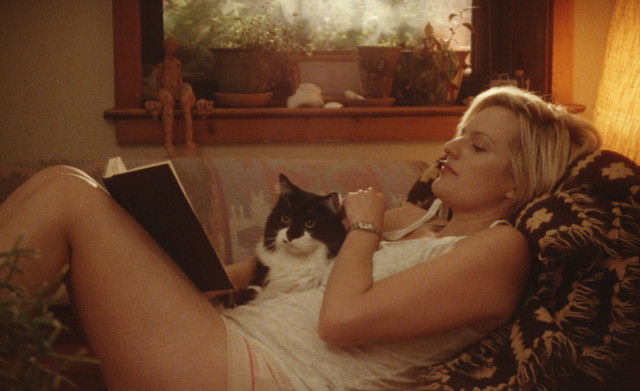
  3. Rotating protagonists. Philip is the main character in the first portion of the movie, but then we shift, abruptly, to the girlfriend he’s left behind, Ashley, played rather discreetly by Elisabeth Moss. Up until the switch, Ashley feels like a pretty negligible piece of the story. AtListen-Up-Philip the end of the film, she still feels this way. Her portion of the story is not very revealing, and almost completely severs us from the narrative that Philip’s been following. Perhaps it was just to give us a little space to breathe between all of Philip’s self-loathing and caterwauling, but I found it jarring. Lots of movies move deftly between characters, sometimes even between settings or between eras, but still manage to make you feel like it’s all part of a whole. This one just felt a bit broken to me. Philip must not be a very good writer if he can’t even maintain the point of view in his own story. But it does recast him as a pitiable character, so maybe this shift in focus serves to connect with him in some small way. The other interesting thing is that the narration is done by the same guy in both sequences. So who’s narration is this? The narrator does seem to side with Philip at one point, even though Philip is clearly the arse, and that can’t be coincidence. But what kind of device is this narration being filtered through? We never know, but are left to decide for ourselves.

So there you have it. I can’t tell you if this movie is good or bad, because it’s interesting and complex and probably that most awful of things – post-modern. You can decide for yourselves if this movies make you want to tear your hair out, or grab a bottle of pinot to discuss, or is to be avoided altogether. I must say that I do like a movie that takes chances, and that makes me think and evaluate why I’m having the feelings that I’m having. Is not liking a character, or a narrative tone, or a story arc, the same as not liking the movie? And is not liking the movie the same as it being bad?

Holy fuck.

The Avengers are playing somewhere, right?