Category Archives: Kick-ass!

The highest honour we can bestow on a film. Anyrhing in this category is a must-see.

The Killing of Kenneth Chamberlain

The Killing of Kenneth Chamberlain should truthfully be titled The MURDER of Kenneth Chamberlain, and I’m pretty sure everyone involved in this film hears the correct word shouted over the one that’s used every time it’s pronounced. The film does the shouting for them, of course, leaving little (no) doubt in anyone’s mind who watches it. Kenneth Chamberlain, a Black man, was murdered by the police. It is such a familiar refrain by now that it may seem redundant to make yet another film – but that’s exactly the point. These stories need to be told, heard, and shared until actual changed is effected. Kenneth Chamberlain was an old man in his bed when the police came knocking on his door. This is his story.
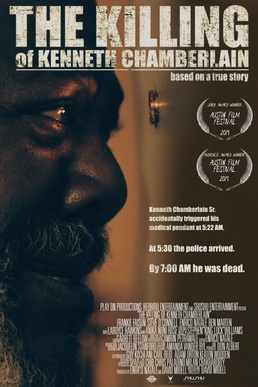
On a November night in 2011, Kenneth Chamberlain rolled over in his sleep and accidentally triggered his life alert button. The police showed up to his apartment in White Plains NY’s public housing do a wellness check around 5:30am. Rousing him from his bed, Kenneth was confused as he fumbled for his hearing aids. He was a retired Marine struggling with bipolar disorder; he was listed as ’emotionally disturbed’ by the police dispatch but in fact he wore the life alert for a heart condition. He refused to let the cops in but verbally assured them that he was fine and the button was pressed accidentally. The cops would not leave. Having assessed his neighbourhood as predominantly poor and Black, they were furious to not be let in, and wanting to teach him a lesson, they mused he might be hiding a meth lab, or a dead prostitute. Kenneth held his ground, growing increasingly agitated by the insistent banging and attempts to push their way in. Keeping the door firmly locked, Kenneth placed panicked calls to the life alert agency, pleading for his safety. Overhearing the police intrusion, the woman on the other end does everything in her power to call off the cops, but no matter what she or Kenneth, or Kenneth’s family do, the cops will not back down.

How do things go from a wellness check to gunning an old man down in just 90 minutes? Frankie Faison as Kenneth paints the troubling picture of yet another innocent Black man murdered by the police. The lengths the police will go to in order to murder him are astounding. While not a documentary, it almost watches like one, determined not to stray from the truth, which was recorded in its entirety by Kenneth’s staying on an open line with his life alert company. For some this will be old news, and for others eye-opening, but either way, this is must-watch viewing.

Silent Night

Is TIFF the most wonderful time of the year? For a movie reviewer, it’s pretty close. Every year when the schedule gets locked down, I peruse the titles, research each film, and work up a short list of films I’d optimistically like to watch, if time was unlimited and schedules never conflicted and sleep was optional. In my trusty notebook, I write down titles, directors, actors, and a small blurb to job my memory as to what on earth I might be watching. I had “girl with ice cubes for teeth” and “quirky martial arts romance” and “Afro-sonic sci-fi musical”; for this one, I’d merely written “Keira Knightley Christmas movie.” I don’t normally love watching Christmas movies outside of December, but the chronology of film festivals is mystifying and not to be questioned.

What did I actually get?

A lovely Christmas party, actually, in which hostess Nell (Knightley) greets her friends and family for a fantastic meal, friendly reminiscence, merry making, followed by mass suicide.

It’s the end of the world, you see. That thing we keep predicting but doing nothing about. The environment collapses, sending a cloud of poison, more or less, into the world, where it is spreading death, horrible, horrible death, wherever it goes. Blood leaking out all your orifices kind of death. Not a great death. So the UK, generous to a fault, have provided their citizens with a suicide pill. Everyone’s enjoying one last Christmas with their families, and as the cloud approaches, the pill will ensure a peaceful death in the arms of loved ones instead of painful and bloody convulsions.

The movie broke my damn heart. The adults did their best to act jolly, or stoic when jolly couldn’t be produced, but the kids were confused and vulnerable. Nell and Simon (Matthew Goode) have three kids; the oldest, Art (Roman Griffin Davis) is old enough to be angry at what’s happening to him. He’s angry the adults neglected the environment until it came to this. He’s angry that his parents plan to murder him. He’s angry that he’s so helpless. I was angry too.

But mostly I was sad. Sad that we’d failed these kids, yes, but also sad that any parents had to make this choice, no choice at all really. Sad that there’s so little comfort to be had at the end of the world.

And I was a little impressed, impressed that writer-director Camille Griffin could use Christmas apocalypse to talk about privilege. Nell has the perfect old house to host her closest friends, their kids, and even semi-unwelcome plus ones (that would be Sophie, played by Lily-Rose Depp). But she’s also a citizen of a prosperous nation with efficient (enough) infrastructure. They’ve delivered a peaceful way out to its citizens – but not to everyone living within its borders. If you aren’t there legally, you’re not worth the pill that will save you needless agony. Even kids understand this inherent inequity, and if you think you can look a kid in the eye and attempt to justify it, you’ve got another thing coming. Come armed with kleenex; Silent Night sounds harmless but beneath its shiny gift wrap is scathing indictment and a death sentence for all.

The Eyes of Tammy Faye

I was too young to know Jim and Tammy Bakker in their heyday. They were a perky husband and wife youth pastor team who used songs and puppets to reach out to Christian children in the hopes that their parents would soon follow. They espoused some new Christian values, mainly that you need not be poor to be pious. And the best and fastest way to get Christians to part with their cash was to beam into millions of homes at once: television!

At one point, they were popular, beloved, and rich, rich, rich, using “church” donations to fund a family compound, a Jesus in Jerusalem water and theme park, and furs for everyone. Everyone! And then the scandal hit: Jim Bakker wasn’t just skimming profits, he was shoveling them right into his own pockets. Plus, he’d been having a string of homosexual affairs – and one woman with whom things did not go well, and he paid off to keep it to herself that he couldn’t get off. Or up. By the time I knew about the Bakkers, the pastoring was behind them. Jim was in jail. Tammy Faye was a punchline. You may remember her as the woman who wore an entire tube of mascara every single day.

This movie is Tammy Faye’s biopic, the chance to finally get to know the woman behind the man, trying very hard to get in front of him.

I’ve enjoyed director Michael Showalter’s work (The Lovebirds, The Big Sick, Hello My Name Is Doris) in the past so I was excited to check this one out at TIFF.

Jessica Chastain plays Tammy Faye and let me assure you: enough said. She is phenomenal. She sings, she sobs, she stands up to the sexist pigs running the ministry. She’s a total firecracker, and incredibly infectious. Jim Bakker is played by Andrew Garfield, who isn’t bad, but inevitably pales in comparison. The film is a straight biopic, starting with Tammy’s childhood obsession with religion and hitting all the major hallmarks of her life. The film paints Tammy as a pure and nearly innocent soul, just a nice girl who loves God, and all His people, and Diet Coke, in that order.

I was completely entertained by this movie, but I did find Tammy’s depiction to be suspiciously and relentlessly positive. Even more of a problem was the film’s refusal to really dig into the story – into Tammy’s true role and culpability in defrauding her ‘people’ and into what this whole fiasco means to the church generally and televangelism especially. It feels like Showalter is so dedicated to reshaping her legacy that he isn’t willing to be critical of the actual facts. Still, Showalter’s brilliant casting saves him. Chastain is so charming and charismatic that it’s easy to overlook any superficiality. I’d watching this again, 10/10.

The Eyes of Tammy Faye is an official TIFF selection.

Hold Your Fire

In 1973, four young Black Muslim men went into a sporting goods store to steal some guns. It didn’t go as planned, as these things rarely do. The cops got there too soon, pinning the would-be thieves inside, with a loaded gun counter, and a bunch of hostages. This would be the longest hostage siege in NYPD history.

With the four men holding captives inside, and the police outside preparing to meet them with deadly force, the media reported round-the-block updates while crowds gathered around the police perimeter. The fear and anxiety was high. The crowd took sides, and became aggressive. The journalists reported misinformation. When the police department showed up with tanks and ultimatums, the hostage-takers grew angry, and uncooperative. Communication was very poor. Looking back at the bungles on both sides, it almost feels like a funny game of cops and robbers, but the guns were real, and so were the stakes. The young Black men knew they stood little chance against the cops, not exactly known for being kind to people of colour at the time. A Black hostage refused to be released because she was afraid of the cops; she’d rather take her chances with the men holding her captive, of whom she was also quite afraid.

Enter Harvey Schlossberg, a traffic cop with a PhD. Since Attica, he’d been struggling to be taken seriously as a psychologist who could train the police force with new negotiation tactics, potentially saving lives and making the officers more community-minded. He believed that words were more powerful than bullets, and that time should be taken to speak and to listen to the captors, to find peaceful resolution rather than force violent altercations.

Director Stefan Forbes interviews surviving hostages, cops, and robbers, and everyone’s got a conflicting story about what went down in the sporting goods store. When emotions and tensions are high, it’s way too easy for violence to be a first response, but Schlossberg’s methods focused on finding common ground and understand motives.

All these years later, this hostage siege is not well-remembered, but you can see how Schlossberg’s work basically founded crisis negotiation and influenced the concept of restorative justice as we know it today. His name may not be known, but his work has saved untold lives. This documentary is his origin story.

Hold Your Fire is an official selection of the 2021 Toronto International Film Festival.

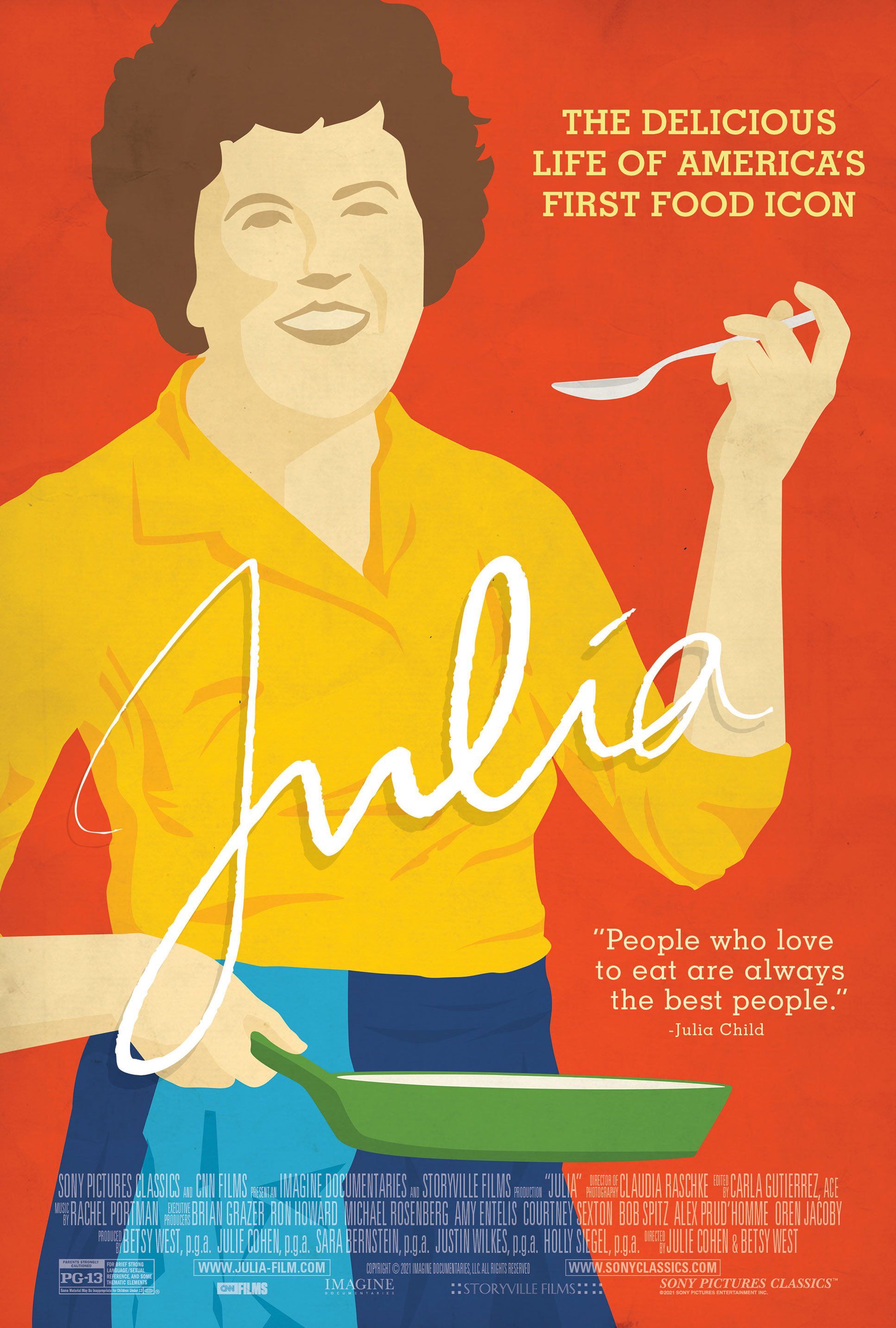
Julia

Julia Child is part of the American holy trinity of beloved personalities, right up there with Bob Ross and Mr. Rogers.

When she and her husband moved to France for (his) work, she fell in love with the country, and especially with its food (and who could blame her?). Inspired, she resolved to learn to cook it properly, attending the famous Cordon Bleu culinary school, the only female in the class – and likely the oldest, not to mention the largest. She loved French cooking so much she wanted to make it accessible back home, to American housewives who were, at the time, swept up by food of convenience, presenting TV dinners to their families as the height of technology and efficiency. Her cookbooks, however, made delicious French food seem possible. Even more impressively, she pretty much invented the modern cooking show along the way. They didn’t have a lot of editing tools, so early shows were long single takes of her cooking a recipe all the way through. But people didn’t just watch for her recipes, they watched for her. Even non-cooks watched, enjoying her stream-of-consciousness patter, her love of butter, her appetite, her willingness to embrace mistakes and use them as teaching opportunities.

She came into this surprising and successful career late in life. Her loving husband supported her. She learned to be a businesswoman, not just a chef, learned who to trust, who to leave behind, and how to hold a grudge. Her enthusiasm for food was contagious, creating future foodies all across the country. Her legacy has influenced
American cuisine, and every cookbook author/TV chef today owes a debt to her.

You already know Julia Child is an interesting woman; let directors Julie Cohen and Betsy West remind you why she deserves to be remembered. Their documentary Julia is a tribute to her, clearly made with love and admiration. We hear from cooking greats like Ina Garten and José Andrés, but most wonderfully, we hear a lot from Julia herself, via vintage footage the directors have shrewdly crafted together to tell her story from her own point of view. As a legend and an icon, there’s no one better to tell her story, and I think she more than most would appreciate having the last word.

Julia is an official selection of the 2021 Toronto International Film Festival.

It is scheduled to be released on November 5, 2021.

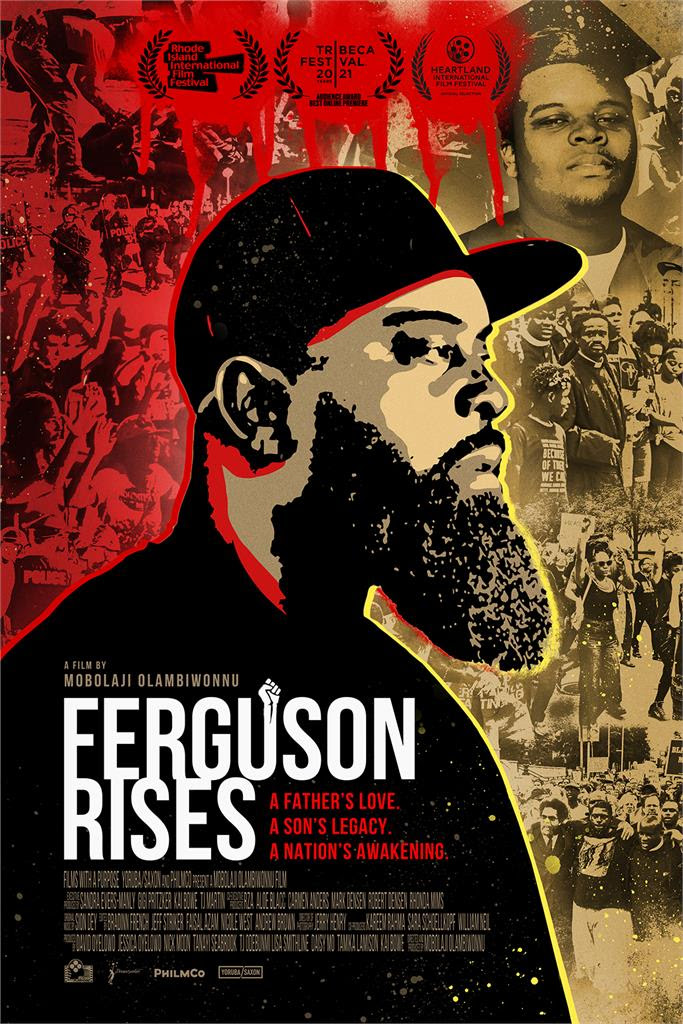
Ferguson Rises

Say his name: Michael Brown.

Michael Brown had graduated high school just 8 days before the police shot him dead. He was planning to study heating and air conditioning repair at a technical college just two days later. Instead, an altercation with officer Darren Wilson, just 90 seconds from start to finish, led to Wilson discharging 12 bullets, 6 of which hit Brown, the last of which resulted in his death. Eye witnesses share conflicting accounts of what happened, but some are certain that Brown took the shots to his front while raising his hands in surrender and saying “Hands up, don’t shoot”. Michael Brown, completely unarmed, lay dead in the street, where his body remained for over four hours.

In the wake of Brown’s murder, protests, both peaceful and violent, continued for more than a week in Ferguson, and the police department’s response was botched, criticized for the tactless insensitivity of their highly militarized response. A grand jury failed to indict Wilson, adding injury to injury and reinforcing a divide in Ferguson based on the shade of one’s skin.

This documentary, by director Mobolaji Olambiwonnu, revisits the residents of Ferguson, a suburb of St. Louis, 7 years later. Michael Brown’s death – the murder of a Black body by a white and racist police officer – was sadly one of many, but his was a rallying point, igniting protests against police racism and brutality in Protests erupted in 170 cities across the U.S., including Seattle, New York City, Los Angeles, and Chicago. But for Ferguson, it was different. It was personal. Missouri was the last state to abolish slavery, and the aftereffects of that oppression are still felt today. While white residents of Ferguson watched protests turn to riots, they expressed disbelief, and disapproval. But Brown’s death and subsequent treatment wasn’t a surprise to Ferguson’s Black community. Darren Wilson wasn’t one bad apple; the entire Ferguson PD was institutionally racist, routinely violating the rights of Black citizens.

Though the Black Lives Matter movement that has sprung up as a result of all these protests does have some white support in Ferguson, there are a number of white people still firmly on the wrong side of right. Brown’s mother and father will tell you what it feels like to live in a community divided over your son’s death. His friends will tell you what it’s like to drive by the spot where he was gunned down. Protesters will tell you what it was like to get on a plane and fly back in time, coming home to a town in Missouri where a white police force was brutalizing Black weeping mothers, shooting tear gas at people filled with righteous anger, using rubber bullets against people trying to express their horror, their abhorrence, their shock, their sorrow.

Many voices contribute to Ferguson Rises, and themes of strength and resilience seem to create a pattern. Black Americans may have suffering and oppression in their DNA, but they’ve got determination in their souls.

I knew this documentary would be an emotional watch, but it feels essential to return to the scene of the crime with a clear head in the pursuit of truth, and perhaps more importantly, real change. We have so little to offer Brown in exchange for his life – this feels like the least we can do.

Montana Story

Estranged siblings Cal and Erin return to the ranch where they grew up. Their father is dying; he wasn’t a good man so neither needs a tearful bedside goodbye, they’re more keen to bid farewell to the land they once loved, the horse they used to ride, the housekeeper who’s kept in touch.

Cal (Owen Teague) and Erin (Haley Lu Richardson), once close, no longer speak, their troubled childhoods breeding resentment rather than unification. But this death watch provides the opportunity to finally come to terms with what they’ve lost, and who they’ve blamed. Their father is a footnote, beyond redemption, but the relationship between the siblings, each the other’s only remaining family, could be saved if only they can overcome their regrets, sadness, disappointment, and the space that has grown between them for the past seven years. Joining their vigil are Ace (Gilbert Owuor), a philosophical nurse from Nairobi, and beloved housekeeper Valentina (Kimberly Guerrero), a Native American whose family has worked the land longer than the dying man has owned it. Originally a lawyer, the slimy kind who helps corporations pillage the land, he bought the ranch and subsequently ran it into the ground; the bank only awaits his death to repossess it.

This is a quiet movie done right. Directors Scott McGehee and David Siegel understand intuitively that silence can be meaningful, can express things that too hard to say. Quiet moments can be healing as well, when done subtly, suggesting peace, or comfort. The directors let the dreamy Montana landscape become its own character, letting it fill not just the outdoor scenes, but every window and open door inside as well. Unlike The Power of the Dog, which is also set in Montana, this film actually filmed there, and they use the land to teach us about the characters – who respects it, who’s in awe of it, who’s afraid of it, who will use it up for profit.

Cinematographer Giles Nuttgens captures the natural beauty, but also helps to show that even wide open spaces can feel oppressive. In the end, when the body has been bagged, the nurse moved on to his next patient, the siblings packed up and gone their separate ways, only two things remain: the mountains, and Valentina. She and her family have cared for and protected the land for generations, and will continue to provide it stewardship through the comings and goings of many white families who treat the land as something they can own, and ranching as merely a hobby. American Indians have seven tribal reservations in Montana, home to a dozen tribes, including Blackfeet, Sioux, and Chippewa, on tiny slivers of land mere fractions of the land they once occupied. They are the real Montana story, the enduring one. This white family, with all its history and heartbreak, are but a blip.

Montana Story is an official selection of the Toronto International Film Festival 2021.

The Starling

Lilly and Jack Maynard are going through hell. Their baby girl died about a year ago, and Jack (Chris O’Dowd) has suffered a break down, attempted suicide, and has been hanging out in a psychiatric hospital ever since, unable to shake his depression. His wife Lilly (Melissa McCarthy) gardens. She works too, and commutes to visit her husband, and takes care of the house, and generally does her best to get on with a life that imploded around her.

The Starling is about finding that little spark, that one reason to keep going when everything feels impossible, even if it means leaving everything else, or someone else, behind.

Melissa McCarthy does wonderful work as a childless mother, an almost widow, a woman who is dangerously untethered but deprived of the usual expressions of grief. With her husband casting himself as primary mourner, Lilly’s left to grasp at the leftovers, never one to ask for much. Yet she, too, is in pain. And that pain always manifests itself one way or another. Nothing stays buried forever. But with the help of an aggressive bird and a sagacious veterinarian (Kevin Kline), Lilly is reminded that all we need is a little hope. Hope is everywhere, it can be so small, tiny even, found sometimes in the strangest and most unexpected of places, but the trick is: you have to be open to it.

Director Theodore Melfi takes on the greatest loss that we know as humans: that of a child. We can intuitively understand that such a loss opens up a sink hole of sadness, but unless we’ve been sucked down ourselves, it’s impossible to truly understand its depths. What’s more, we don’t have any practical advice for pulling someone out. It must be terrifying to be down there, and even scarier when a couple falls down separate holes. But despite this heaviest of topics, The Starling has an uplifting momentum, thanks in part to a wonderful cast, and of course the indominable spirit of woman.

The Starling is an official TIFF 2021 selection.

It is scheduled to be released in a limited theatre run on September 17, 2021, prior to streaming on Netflix on September 24, 2021.

The Guilty

Well damn.

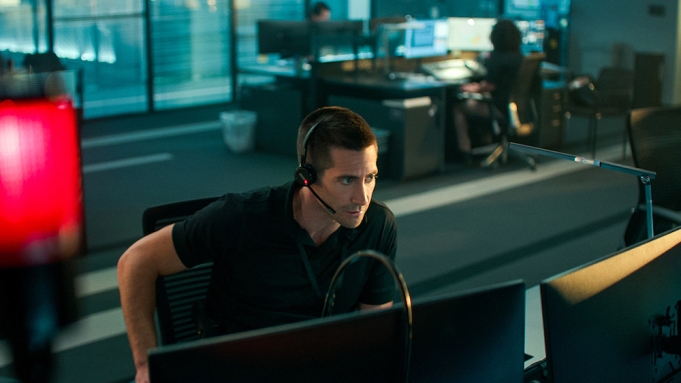
Jake Gyllenhaal plays Joe, a disgraced cop who’s been busted down to dispatch duty, manning the 911 desk until he can clear his name. On his last shift before he’ll get his day in court, he takes a call that will change his life.

On the other end of the phone, Emily whispers platitudes in a wavery voice, as if to a child. Joe nearly hangs up on her before sensing something fishy. Staying on the line with her, he establishes that she’s been abducted and her captor believes she’s on the phone with her daughter. Careful to ask only yes or no questions, Joe teases out her general location (albeit in a moving white van), her status, and a working theory of what’s going on. He notifies California Highway Patrol, but they’re busy handling wildfire calls. Emily is choking with fear, begging to be saved, and some part of Joe responds. He’ll break protocol to go above and beyond for her, risking his job and his hearing tomorrow to bring Emily home safely, where 6 year old daughter Abby and baby Oliver wait – alone.

You might argue about what movie made Tom Hardy a star, but the movie that confirmed his talent as an actor was undoubtedly Locke, a film that only stars him, just a man driving a car alone at night, talking through a crisis on the phone. Jake Gyllenhaal does the same here. It’s just him and his headset, obsessed with solving this case without even working it, perhaps unconsciously looking for redemption, definitely influenced by longing for his own young daughter and estranged wife. Every call that a 911 operator picks up has the potential to be this call. It’s high-stakes, high-stress, high drama. Joe decides to involve himself, to over-involve himself, to save this woman without leaving his desk.

The Guilty is Gyllenhaal’s best role since Nightcrawler, and it has to be in order to work. It’s just him: the sweat on his brow, his nervous fiddling with an inhaler, his increasing frustration with everything and everyone unrelated to this case.

We’re experiencing this call nearly in real time alongside him; the tension is very real, but Joe’s got to handle this with one hand tied behind his back. He’s technically done his shift. He’s definitely out of bounds. He’s calling in favours he can’t afford. And though he maintains an outward calm, his anxiety is manifested in shallow breaths and a refusal to retreat. We stay with him, often right up in his face, chasing bad guys and demons. My heart was in my throat. I don’t think I let out a single breath until the end of this tidy 90 minute movie.

We were about 20 minutes into the film when I suddenly realized that I’d seen it before, an admission that surprised Sean considering we were watching its world premiere. In fact, it’s a remake of a Danish movie also called The Guilty, a movie I quite enjoyed, according to my review. I enjoyed the remake just as much, if not more. Director Antoine Fuqua knows how to how to build tension, how to hold tension, how to release it for just a blink before taking it up again, only harder, longer, more intense. As you can imagine, it doesn’t relent during the film’s entire runtime, and both we the audience, and Joe the weary dispatcher, begin to come undone. Joe, at first overconfident and a little arrogant, begins to fray as this case goes through its twists and turns, confronting him with his own flawed ego.

Sean was less enamored with the film, frustrated by its limitations, by action never seen. Your appreciation of this film will vary according to your tolerance for incredible acting and taut, tense story-telling. Sean would have preferred car chases and explosions. Maybe boobs. Well, definitely boobs. Always boobs. I, however, was totally hypnotized by Gyllenhaal’s performance, dizzied by Fuqua’s directing, which makes clear how personal Joe has come to take this case. Fuqua’s material is normally much more action-oriented, but for The Guilty he keeps it intimate, while still finding the suspense, the edge-of-your-seat stuff that keeps us riveted, sick with anticipation, imaginations fueled by adrenaline. Gyllenhaal’s performance is informed by terrific voicework by Ethan Hawke, Riley Keough, Peter Sarsgaard, Bill Burr, Paul Dano, and little Vivien Lyra Blair, who is formidable. But on set, Gyllenhaal was alone, tethered by his headset, giving essentially an 11-day monologue. On screen it translates to an instant connection, an immediacy fostered by savvy editing, a film that drags you in and won’t spit you out until all the cards are on the table.

The Guilty is an official selection of the Toronto International Film Festival.

It will have a limited theatrical run on September 24, 2021, prior to streaming on Netflix on October 1.

Scarborough

A rural farming township since 1850, Scarborough became the easternmost borough of Metropolitan Toronto in 1953 but grew to be such a busy suburb it became its own city in 1983 – only to amalgamate once again in 1998 into the present City of Toronto, though it remains a distinct, fully urbanized and diverse cultural community. A popular destination for immigrants, it is home to many religious groups and places of worship. It is still the greenest place in Toronto, but it is also the poorest. More than half of residents are foreign-born, and nearly three-quarters are visible minorities. It is a neglected neighbourhood, with fewer of the city’s resources being diverted toward its infrastructure, education, etc, purposely forgotten because of race and class. This is the space in which the film Scarborough and its characters exist.

Three kids meet in a Family Literacy program in their school. Free breakfast is the biggest draw for these kids and their parents, but while there, the program’s teachers emphasize good parenting techniques and reading as a family activity. The program’s directors arrogantly presume that these children have fallen behind because of poor parenting rather than housing instability, unemployment, the demands of special-needs children, English as a second language, inadequate nutrition, racial inequalities in the education system, and other important risk factors. Social factors are outside their purview, so they are roundly ignored even when clearly an obstacle to a child’s development.

Luckily for these three friends – Bing (Liam Diaz), Sylvie (Essence Fox), and Laura (Anna Claire Beitel) – they see each other more clearly than any government agency, social worker, or teacher ever well. They’re just kids, learning to read, yes, but also learning to cope, to fit in, to survive. Bing and his mother fled abuse in the middle of the night. Laura gets shuttled between an addict mother and an angry father, and Sylvie tries not to be forgotten between her autistic brother and disabled father.

Scarborough moved me. These kids go through so much, grow up so fast, and yet all they desire is a friend and a piece of candy. Their wants are so modest that it breaks the heart to see them disappointed time and again, to see them failed by the very people meant to protect them. The film isn’t accusatory, though. That would be futile. Instead, it invests in a generation tasked with saving itself, with somehow escaping the cycle of poverty while being forced to run its gamut.

The filmmakers have done a wonderful job generating authenticity and empathy for its characters while showing them with nothing but the dignity they deserve. The casting is particularly commendable as most are non-actors and yet the kids are natural and charming despite some really tough topics.

Scarborough will sit in my heart for a while. It’s a beautiful film, both visually and spiritually, and brave for making its world premiere in the heart of Toronto itself, at the Toronto International Film Festival.