
Content moderators are the world’s defacto censors.
Facebook, Twitter, Youtube, and Instagram have bigger populations than any country or state. Their editorial rules and standards moderate how the world communicates.
But who scrubs the Internet of all the dirt that shouldn’t be there?
The answer lies mostly in the Philippines, where tens of thousands of content moderators flip through 25k images per shift,deciding which to allow, and which to delete. Algorithms can’t scan a picture for what’s appropriate; that’s still a human judgement call. They stop child exploitation, cyber bullying, and terrorism. And, depending on the platform, they may stop a breastfeeding mother from sharing a picture of her son eating or an artist from sharing her painting of Donald Trump and his teeny tiny penis. Though this big business employs many, the content operators must do their work anonymously, for fear of corruption and reprisals. This work goes unseen, unrecognized, and for many of us, unconsidered. When you post an image, do you picture the person tasked with sorting through them? Someone on the other side of the world, unfamiliar with our politics and context – unfamiliar, until their training, with butt plugs and ISIS.
This documentary was fascinating to me because though it directly affects me, and how I navigate and experience the internet, I’ve never spared more than a thought toward these hard working people. It inspired me to imagine what kinds of images and videos they’re forced to watch: none of the flagged images are good, but which are acceptable and which are not, which are morally wrong, which are illegal, which will scar you for life? Because these people have SEEN SOME SHIT. 25 thousand images per day. Think about that. Think about how many beheading videos they’ve witnessed, how many torture videos. Or how much child pornography. For lots of us, even one image is too many. What does it do to your brain – your soul – to see image after image, and to be in charge of keeping the rest of them safe from them?
This documentary asks so little of us – only that we acknowledge that these people exist, and they’ve made our lives easier. But perhaps a thought or two should be spared for these new giants of social media who are deciding our values and attitudes for us; not merely hosting what we share, but shaping it and curating it. It’s dangerous work.
 Long story short, Kate (Darby Camp) and Teddy (Judah Lewis) end up as stowaways on Santa’s sleigh, which causes a derailment (I don’t know the technical term for throwing a sleigh off its course while flying through the air), and a crash, and the loss of Santa’s magic sack of toys, and the temporary misplacement of the reindeer. Catastrophe! Santa (Kurt Russell, in absolute bearded glory) isn’t too happy on a whole lot of fronts, but he recognizes in Kate a true believer, so together they concoct a plan to save Christmas.
 other ideas. Let’s respect their friendship! Plus, the antique advent calendar from Gramps (Ron Cephas Jones, the dead dad from This Is Us – no, not that one, the other one!) may or may not be predicting the future with the little trinkets it presents to her each day. They’re adding up to a romance with Ty (Ethan Peck), the handsome single dad doctor who plans great dates and works with the homeless. That plus the magic of the holiday season makes for a pretty compelling case.
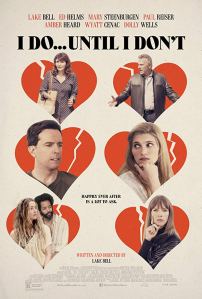 Fanny (Amber Heard) and Zander (Wyatt Cenac) are a non-traditional couple with an open relationship.
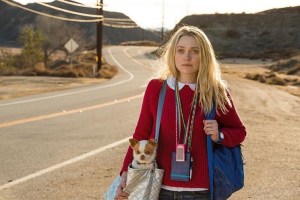 has again not brought baby Ruby, and hints that she may be selling the family home and moving away. A meltdown seems imminent, but Wendy is fixated on her script, and getting it to Paramount Pictures on time for a contest. When she’s mysteriously not in her bed the next morning – well, let’s just say it’s not much of a mystery.
 and poops out snowballs for the trail of excited children behind it. The animators have outdone themselves drenching everything in lights and tinsel and Christmas cheer. The Grinch himself looks better than ever, his green fluffiness rendered hair by hair. And Max, half companion, half servant, all wonder dog, has fantastic and recognizable doggy traits.
 pressure and made attempt #2 the next night. I rewound to the beginning and what I found was: yes, the switch between the first and second chapter is brusque, and because for me unexpected, I had lost interest when I failed to keep up. In this second portion, James Franco is a bank robber who gets the ultimate sentence for his crime. Our first extended look at his face is perhaps one of the most striking portraits of a man I’ve ever seen on film. The editing is astonishingly economical: the story is told not so much quickly as efficiently. But during my second watch, with all guns firing, not only was I less confused, I was incredibly impressed.
 It’s 1953 and the awful dictator Stalin has just died unexpectedly, and left quite a stain on a very nice rug. All of his cronies spring into action, each filled with fantasies of how he might benefit from the situation. Most bypass grief or even basic respect and go straight to power mongering.
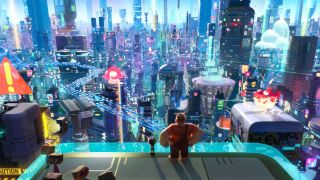 p cleaning the kitchen and start playing Red Dead Redemption 2, but still. Making me feel even older is that I just learned it has been six full years since Wreck-It Ralph was released and I never would have guessed it had been so long.
 ttempts to help Vanellope get her new steering wheel.
 Spencer, and the always hilarious Tig Notaro, playing her straight(ish) woman) let their students know that they’re in for some VERY hard work. Ellie and Pete end up fostering (with the hope to adopt) not one but three siblings, the oldest of whom is a dreaded teenager. And it turns out that ‘hard work’ is putting it almost hysterically mildly. Parenting is hard. Foster parenting is the stuff movies are made of.
