
In the mid-70s, photographer Cynthia MacAdams collected pictures of women, determined that feminism made them look different, distinct. Could the difference be observed on film? Her book of photographs immortalized an awakening, a second wave of feminism wherein women were shaking off their cultural expectations, shedding the shackles of their pasts, and stepping forward with new purpose.
 40 years later, as MacAdams’ work is being exhibited, film maker Johanna Demetrakas tracks down many of the women featured in the work, including Jane Fonda, Funmilola Fagbamila, Gloria Steinem, Lily Tomlin, Margaret Prescod, Phyllis Chesler, and Judy Chicago and asks them about our continued need for change. Personally, seeing all these knowing eyes staring out at me, I feel galvanized.
Together they discuss employment, motherhood, abortion, choice, and the state of feminism today.
Jane Fonda says “I’ve only known for 10 years that ‘no’ is a complete sentence. That gave me pause. Don’t you love it when a book or movie reaches out, past the page or screen, and just touches you? This film is ripe for that, although it’s crazy that this brand new, just-released film already feels a little dated – in this #metoo, Trumped up era, feminism’s fourth wave is moving necessarily quicker than ever.
One thing I felt just a teensy bit gratified about is that this film devotes a small amount of time to address intersectional feminism and the ways in which historic feminism failed to include women of colour and other minorities. ‘Feminism’ has mostly meant white feminism, and white feminists have asked women of colour to somehow divorce themselves from their other concerns, as if they ever could. Race and gender must go together for WOC, and and we can’t properly call for advancement or equality of women without bringing all women along – queer women, trans women, women of every class and colour. This documentary acknowledges the deficits but doesn’t begin to delve into them – we’ll need many more documentaries to cover the complexities of black feminism.
Most of all, I am struck by so many notable women trying to reclaim the feistiness of their youth – not the righteous anger of their 20s or the organized action of their 30s, but the freedom of being a little girl, before any gender expectations have fully settled. Many seemed to hope age would help them reclaim that feistiness, but I wondered what it might be like if we never lost it to begin with.
 serious child, and then a teenager with no patience for small talk. She learned some valuable lessons from her mother before losing her at a tender age. She went to Harvard Law, where she had to justify taking a seat away from a man. She met her husband, Marty, who admired her intelligence during a time when men were meant to dominate their spouses. She finished law school as a mother and a caretaker to her husband, who was stricken with cancer. Long before she was known to her country, she was known to friends and family as dedicated, hard-working, and tough.
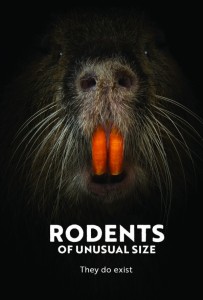 In North America, the nutria’s only predators were humans. Without hunting, the nutria have multiplied terribly. Now this invasive species has overrun the land, its destructive eating and burrowing habits eroding coastline and eating up swamp land valuable for its protection against hurricanes.
 Smog obscures the screen as a trench-coated silhouette walks down a path illuminated only by neon light: is this a recycled set from Sin City or are you just happy to see me? There’s really nothing new to see here and the whole thing is just a bit uninspired – or, well, inspired rather obviously by other, familiar things. Luckily for Terminal, I can’t keep my eyes off Margot Robbie. She’s an exceptionally eye-catching woman, but as her past few films have indicated, she’s also quite an actress. So while she’s the only reason to watch this film, it’s also a shame how badly it wastes her. The movie wants to be cleverer than it is. It wants to throw some real curve balls at you, but it has simply cut and pasted the Wikipedia entry for curve balls and put it on the screen. Yes, Robbie is sexy as hell, and sure, many men, and most women, would follow her down the depths of hell without too many questions. But she deserves to be a real character, flesh and blood, with machinations and motivations. Instead, Stein fails to ground this movie in anything solid – what are the rules of this universe? Where have these people come from? Why should we care? It’s all smoke and mirrors, it lives for the atmosphere but once the smoke clears, there’s just not much there, except Mike Myers being a distraction, acting like he’s in an SNL sketch.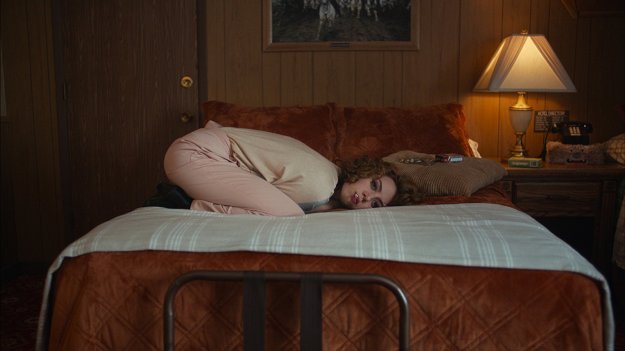
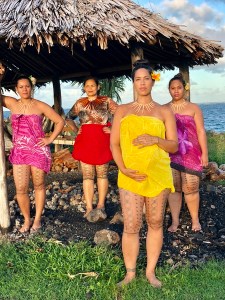
 Aboriginal people have been through a lot, historically, and still. Snatching children from out of their homes is among the most destructive of them. It breaks down their culture, their language, their family ties. It robs them of identity.
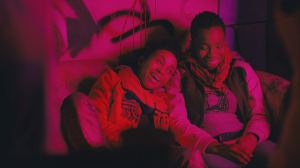 Pariah is one of those unassuming movies that punch you in the gut. It’s written and directed by Dee Rees (
