Category Archives: Movie Reviews

Our reviews and thoughts on the latest releases, classics, and nostalgic favourites. Things we loved, things we hated, and worst of all, things we were ambivalent about.

Mamma Mia! Here We Go Again

Well it’s 5 years later and these jerks are ready to go again. I mean, it’s been 10 years since the last movie was released, but it’s been 5 movie years, and the gang’s all here, except not.

Sophie (Amanda Seyfried) has refurbished her mother’s Greek hotel, finally. Too bad her husband Sky (no I cannot believe that’s his actual name) (Dominic Cooper) isn’t around to see it. Is there trouble in paradise?

No matter. She’s planning a huge party to unveil the new space. Everyone’s invited: the MV5BNzU2N2NkMDEtN2IxZS00NjQ3LWI5MGUtOTVmOGIzMjEwN2Y5XkEyXkFqcGdeQXVyNzk5MTY4MTU@._V1_three dads (Colin Firth, Pierce Brosnan, Stellan Skarsgard), Mom’s best friends (Christine Baranski, Julie Walters) – even Grandma (Cher)! But because one party full of old people is pretty lame (could someone tell Sophie that?), the movie is 80% flashback. Meryl Streep’s character is now played by the lush and nubile Lily James, and we get to watch her have all the unprotected, close together sex with three different men (at least!) alluded to in the first movie, which resulted in all the daddy confusion.
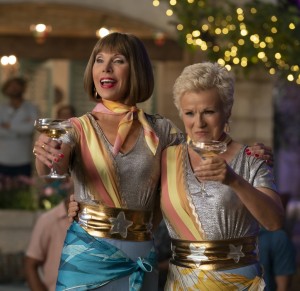
If you liked the first movie, you’ll probably find it in your heart to like this one. If you like ABBA but not their overplayed radio hits, which all sound the same, you’re going to love this sequel, which contains all the songs that were too shitty to make the first cut, plus a couple of weak recreations of the title song, which they just can’t get enough of. Plus, who doesn’t love the spangly, bell-bottomed costumes that go along with it? This second movie is even more contrived than the first, amounting to a less satisfying story.  Basically, you’ve got a handful of unknown ABBA songs from deep in the back catalogue, and you’ve got to contort the script to make them fit (see ‘Waterloo’ for an excellent example of this).

Everyone else in the world has been swept away by the sheer joy of a second ABBA musical while I’m still not over the first. Call me grumpy cat – I don’t get the appeal.
Bent

Bobby Moresco is trying to make “bent” happen. “Bent” is the new word for crooked cops, apparently, and writer-director Morsesco cannot bear the thought that any of you don’t know about this super cool slang, so he half-assed a whole movie around the concept and put it on Netflix so that you can ultra hip and not embarrass yourself in front of potentially crooked cops.

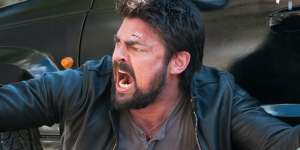
Anyway, Danny (Karl Urban) is a cop who watches his buddy cop get shot during a deal gone wrong. Or something like that. The first 10 minutes of this film are needlessly confusing. But that’s still preferable to the last 86 minutes, which are just bad. And that covers the entire 96 minutes!

Danny, disgraced and off the force, decides to lead his own private investigation into MV5BM2NlMjdjMmYtNDYzMi00NDU0LWI3NGItZTlhMTg1ZTQ0NzFmXkEyXkFqcGdeQXVyMzEzMjg5NjA@._V1_what went wrong. So he does that thing where he circles the date on the calendar and his heart is filled with revenge lust and he has a beard so you know he’s morose and broody. His mentor (Andy Garcia) is more concerned for his love life and maybe his personal safety, and both of those might be threatened by a mysterious government agent (Sofia Vergara).
Karl Urban is a good actor and Sofia Vergara is a bad actor (she doesn’t even fall convincingly!) but none of that matters because the script is so terrible it forms an opaque force field over the movie that feels pretty darn impenetrable.

The thing is, it does honestly at times feel like the whole script is built around just saying the word ‘bent’ a lot. A lot. Some stuff does happen but it’s pretty worthless. Can you hear my disappointment oozing through the screen? It’s so generic it offends me. It’s immediately indistinguashable among the offal of its genre. The twists and turns are painful.The love interest is painfuller. The dialogue is painfullest.

Bohemian Rhapsody

Is this the real life? Is this just fantasy? Caught in a landslide, no escape from reality.
Open your eyes, look up to the skies and see…

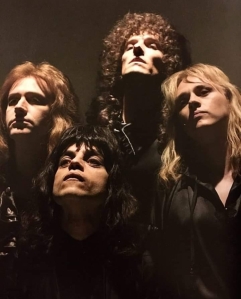
Bohemian Rhapsody is the story of Queen, although if we’re being honest, it favours front man Freddie Mercury quite heavily.

Freddie Mercury was a complicated, effervescent, talented, charismatic man. The film is much more straight-forward than that. He was also sexually flamboyant. While not exactly openly gay, at least not publicly, he did adopt a look that easily identified him as MV5BZjEwODQ3ZDAtYzM4Zi00YWQxLThmZDEtNzhjNGJhMzFkNThjXkEyXkFqcGdeQXVyNjc0NzQzNTM@._V1_such. But he was more than gay or straight; he was fluid. He could wear a unitard on stage so confidently that he made people forget to be so judgmental. He won them over with his energy and stage presence. But after the show, Freddie was his own man. He did not lead a PG-13 life, so the PG-13 movie that attempts to immortalize it is of course sanitized. There is not much in the way of sex or drugs but the rock and roll – oh man.

That’s the reason to watch this film. The music is great, and the scenes revolving around the music tend to be its best. The decision to recreate their Live Aid set, widely considered to be the greatest 20 minutes of love music ever, in its entirety is the best thing that ever happened to a music biopic. I felt tears pricking my eyes the minute they stepped onto the stage.

Rami Malek is great. It’ll take a few minutes to see beyond the fake horse teeth he’s wearing of course, those are regrettable, but Malek is a fun casting choice who does indeed bring an intense Freddie energy to the role. The whole cast is great, actually, although I see Mike Myers is determined to make a comeback and I’m really not here for it, though he does have a pretty epic line.

Lucy Boynton has a meaty role as Mary. Mary was Freddie’s lifelong friend; they stayed close until the day he died. In the movie she gets to be Freddie’s significant other, which is great for the actress but less great for an audience who values authenticity. Yes she was a part of his life but she wasn’t his whole life. Mercury would have had many partners of course, but he had a great love, Jim, who lived with him during the last 6 years of his life, and nursed him when he got sick. Freddie died wearing Jim’s wedding ring. But in the film we get only the briefest glimpse of Jim and double eyefuls of Mary. Have they straight-washed a gay icon?

At any rate, if you came for the music, you’ll stay for it, and struggle not to burst out singing. The movie is more of a greatest hits compilation that an intimate evening with Freddie, but when the hits are so good, it’s hard to complain too loudly.

Dad’s Army

‘Dad’s army’ is the home guard and its leader is Captain George Mainwaring. In a very small town in England, a band of merry misfits makes up its corps. Deep into WW2, all the fit, young men are away at war while the rejects and the elderly make up the home guard, charged with parading around and doing exercises and not much else.

Sergeant Arthur Wilson (Bill Nighy) assists Captain Mainwaring (Toby Jones) in their not MV5BNzg5MWMxNmUtNjdjNC00NTJlLTljNzQtNmU0NTFhYzNmY2ViXkEyXkFqcGdeQXVyNTk2NTY1NzA@._V1_SX1777_CR0,0,1777,999_AL_much else; they mostly spend their days blending into the scenery. Literally. So when a beautiful woman (Catherine Zeta-Jones) arrives in town, they and the whole town are ripe for some shaking up. Rose is an intoxicating distraction until it turns out there’s an actual German spy in town and the home guard is too busy thinking dirty thoughts about Rose to notice his intelligence gathering, let alone catch him.
Dad’s Army is made up of the very best in old British guys – Tom Courtenay and Michael Gambon among them. It’s cute and silly in an old, doddering way. The movie is just as inoffensive and harmless as the elderly members of the home guard. Apparently this is the movie version of a beloved TV show that I never knew existed. Old fans wouldn’t recognize this iteration but it’s pleasant enough. Yes, that’s a tempered endorsement. Adjust your expectations and you may find it perfectly enjoyable. It’s not steak and caviar. It’s oatmeal. Good old reliable oatmeal.

The Joneses

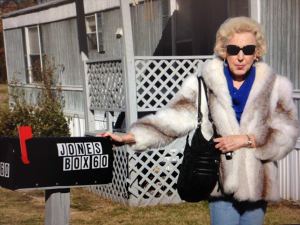
Jerry Jones left his wife and 4 sons to begin his transition to Jheri – this being in the 80s long, long before the average Joe knew very much about transgendered people and what it all meant. Forget average Joes, Jehri couldn’t find a doctor in all of Mississippi who was willing to talk about her particular concerns. Jheri was in her late 30s when she left to build her new life, and though surgery was always a goal, her financial obligations were first and foremost to her kids so it wasn’t until age 60 that she was able to scrape together enough to go to Brussels and finally have the surgery she dreamed of.

Now 74, Jheri lives in a trailer park with two of her grown sons, Brad and Trevor, after MV5BMTUzNDk1OTQ0NV5BMl5BanBnXkFtZTgwODUyMDE2MDI@._V1_SY1000_CR0,0,1333,1000_AL_years of estrangement (her ex-wife didn’t feel Jheri should have any contact with the kids). Jheri helps another son, Wade, run his business, and is grandmother to his two kids, who don’t know Jheri is transgender. After hiding her true identity for so long, this lying in reverse doesn’t sit well with Jheri either, though she wants to spare her grandkids any pain or bullying.
With grown children dependent on her, some of  them disabled, Jheri struggles more than most 74 year olds, but not only does she still pray before every meal (like a good old gal in the Bible Belt), she also sings and dances and struts her stuff in her kitchen when a good song comes on. Her joie de vivre is infectious, admirable. Suppressing her true self for so many years means Jheri loves her hair and makeup and high heels, and she’s living her best life now.

Life is complicated. Families are complicated. Jheri is a remarkable woman, a remarkable matriarch, and so is the documentary that tells her story. It’s not always nice or neat, and I admire the candor, and the courage it takes to be so revealing. Director Moby Longinotto pulls together something truly unique – above all, sending the message that it’s okay to still be figuring things out, it’s okay to not have all the answers. Love solves a lot, and I truly believe that sharing like this will go a long way in destigmatizing which is still a difficult concept for some – but on screen, Jheri is a woman, mother, and grandmother like any other, filled with hopes, dreams, and perhaps some regrets. She is inspiring and real and relatable. These are some Joneses worth keeping up with

Bad Times at the El Royale

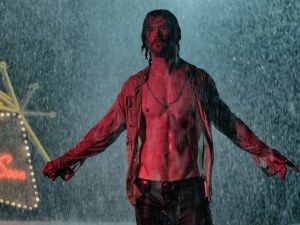
The title promises “bad times” and that’s exactly what this film delivers.  In saying that I am not criticizing Bad Times at the El Royale.  It’s a well-made variation on the multiple perspective crime genre (think Pulp Fiction) and it will keep you guessing until the end as each character is introduced and additional information is gained from each new perspective.  But while Quentin Tarantino mixed a fair bit of humour into Pulp Ficton’s dark brew, writer-director Drew Goddard’s El Royale is a long row of tequila shots without a chaser.  It starts slowly but even then, right from the start, the tense atmosphere tells you that a lot of bad shit is coming.

__5b18c1af51a71The main events in Bad Times at the El Royale unfold over the course of one rainy night on the Nevada-California border.  The El Royale is literally split in half by the state line, so the first challenge for each guest is to decide in which state they’d like to stay.  Unfortunately, things have gone downhill at the El Royale ever since it lost its Nevada gaming licence, so the hotel is essentially deserted.  Ringing the bell doesn’t summon the desk clerk; it takes several seconds of beating on the “staff only” door to wake him.  Once he’s up, the guests are able to check in – there are four at first, and two more will show up before the night is done.  Hardly any of the guests are what they seem, and only a couple of them will live long enough to check out in the morning.

While the movie doesn’t quite reach “classic” status, the solid premise and excellent cast still make this film worth watching.  It’s absolutely packed with talent, as demonstrated by the always-excellent Nick Offerman being relegated to a blink-and-you’ll-miss it role (though he does get to do some woodworking, of sorts, so that was probably reason enough for him to sign on).  Bad Times at the El Royale gave me a tense, suspenseful night chock full of hardboiled twists and turns, and that’s all I could have asked for before the sunrise.

Gnome Alone

Chloe and her mother have just moved – again. She’s desperate the fit in with the popular crowd, and she almost (so close!) does it too. There’s just one little problem. The garden gnomes infesting her new house have a purpose. They’re guarding a portal to another dimension. Every night, a few monsters break through, and if left to their own devices, they’d eat humanity out of house and home in a minute and a half. On the other side of the portal, an even bigger monster awaits. Can they keep the monsters at bay while keeping Chloe’s street cred high? And how does the helpful nerd next door fit in?

This is a B-list animated movie with a C-list voice cast: George Lopez is the most MV5BOTdhZThjOTQtYzVhNy00NGZlLWEwZjQtZTI0NDczMGQyNDZjXkEyXkFqcGdeQXVyNzQ3MTA4MDk@._V1_recognizable, following in steeply descending order by Becky G, Josh Peck, and Tara Strong, if those names mean anything to you. The animation is okay, but let’s just point out the elephant in the room: there’s already an animated franchise wherein garden gnomes come to life. Not only does this stink of plagiarism, it’s just annoyingly unoriginal. This is animation, people. You can draw anything. You could have made a retro Tupperware set come to life, or some grubby fridge magnets, or discarded winter parkas.

But, okay, this is a kids movie, for kids, and possibly by kids, judging by the quality. Your 4 year old will probably love it if they don’t find it too scary or notice that there’s very little structure to the story. Nor do we get to know our characters at all. I’m sure there’s a reason why Chloe and her mother move so much, and why her dad’s not around, and why her mother feels comfortable flying to another city, leaving Chloe home utterly alone, not yet knowing a single other soul in the city. What does that matter when the movie is basically a commercial for super soakers, only these Nerf-like guns are filled with green ooze that can banish (never say kill in a kids’ movie!) the monsters on the spot.

And let’s not even crack open the good old trope that tween girls are vapid and self-absorbed. It’s 2018: not every school is filled with mean girls. Not every protagonist has to change herself in order to fit in. And not every nerd needs a pretty girl to popularize him. This may float with kids but it will sink with most parents. And don’t we owe it to the gnomes to strive for better?

The First Patient

I am not very sentimental when it comes to bodies, even my own. A dead body is just an empty vessel for me, easy to disregard before it’s even cool. Because I have a disease, it is unlikely that my organs would be very useful to anyone after my death, and because of that, I’m open to donating my body to science instead, if Sean felt comfortable with that. It’s not for everyone and that’s okay. But I’m curious about this stuff, and not overly squeamish, so one of my favourite books (on the topic, and just generally in the world) is Stiff: The Curious Lives Of Human Cadavers, by Mary Roach. Roach is as fascinated by this stuff as I am, and she’s got a wicked streak of dark humour that’s particularly evident in her footnotes.

The First Patient is a thorough documentary about medical students in their anatomy MV5BZDY0ZjQ0N2ItZGQyNS00NzZiLWI3MzctODFhYzkxNTJjNzU5XkEyXkFqcGdeQXVyMTU0NjUzNw@@._V1_SY1000_CR0,0,666,1000_AL_class, wherein they dissect a human cadaver for the first time. We get to know a handful of students – who they are, how they got here, what inspired them. We get appreciate their differing cultural and religious backgrounds, and how that influences how they view science, medicine, human remains, life beyond death. Curiouser still, we get to know the cadavers in some way. Their human identities remain anonymous but their bodies become a tree of learning, a gift to the thousands of patients each of these future doctors will one day encounter.
Human dissection is no picnic, and years ago there was this sense, a coping mechanism perhaps, that medical students treated their cadavers cavalierly – adorning them with silly costumes, or leaving body parts behind in someone’s locker, as a prank. Today there is a better understanding of the emotional toll that this endeavour will take, even on students training to be doctors. There is dignity, bordering on reverence, for those who have made a donation of their bodies. There is a thoughtfulness that will move you, and gratitude that may influence you to consider your own donation.

For those of us with strong stomachs, The First Patient gives us a front-row seat to the dissection, without the smell. The Mayo Clinic School of Medicine opened its lab’s doors to filmmaker Chip Duncan, and he found the soul of medicine in the budding hearts and minds of first year students.

I don’t believe in heaven or hell but I do believe that this is life after death.

When Lambs Become Lions

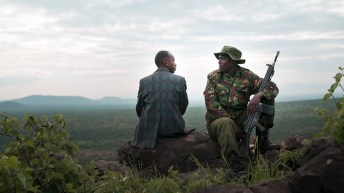
Northern Kenya is a very dangerous place for elephants.  Hell, maybe there’s no safe place on Earth for an animal whose front teeth are worth more on the black market than my whole body, but Northern Kenya is particularly deadly ground.  Every day, the elephants are stalked by poachers, who in turn are pursued by park rangers.  But it’s hardly a fair fight when the park rangers haven’t been paid by the government for months, while the poachers stand to make more from one elephant than the rangers have made in the past year.When+Lambs+Become+Lions

When Lambs Become Lions documents the ongoing battle between poachers and rangers from a very interesting perspective: it follows two family members on opposite sides of the fight and shoots the heart of the action, as poachers pursue elephants and as rangers pursue poachers.   Because of its dual focus, When Lambs Become Lions manages not to take sides or judge these relatives as they try to provide for their families.  That is a useful perspective because really, the poachers aren’t the true reason for elephants’ status as an endangered species.  The poachers are the tool of the ivory dealers, and both exist because many of the world’s rich people want to pay lots of money for tusks.  Those people are the villains here.  The poachers are simply trying to get ahead rather than living day-by-day doing whatever odd jobs can be found.

As a result of the film’s judgment-free, up-close approach, When Lambs Become Lions feels more like a narrative feature than you’d expect.  I was curious to see how the story would end and enjoyed the twists and turns along the way.  As it turns out, poachers and rangers are not like oil and water.   They mix, they intermingle, and they can at time seven switch from one side to the other.  Even though rangers are authorized (and expected) to shoot poachers on sight, there’s a respect for their opponents’ circumstances and humanity that feels so very foreign, quaint, and refreshing in contrast to the western ultra-partisan, hyper-adversarial approach to conflict.

What’s the cause of those differing attitudes to one’s ideological opponents? Is it that we’ve had it too good for too long to remember what it’s like to make hard choices to survive?  Are we afraid to engage with those who have different opinions than ours?  Why can’t we see past those differences that are so minor in comparison to the divide between than these two relatives, one of whom is expected to feed the other to crocodiles when both are on duty?  I’m not sure but it’s something for us to figure out because, like rangers say about poachers, that story is unlikely to have a happy ending.


Planet in Focus: Genesis 2.0

“After what happened in Jurassic Park, is it good science to play God with the dead?” This is the question posed by the Planet in Focus page for Genesis 2.0. For a documentary to pose such a question feels surreal. Well, we’re living in a surreal world and, after watching this new documentary from directors Christian Frei and Maxim Arbugaevit, you may very well find yourself praying that we’ve learnt the lesson s of a 25 year-old science fiction movie.

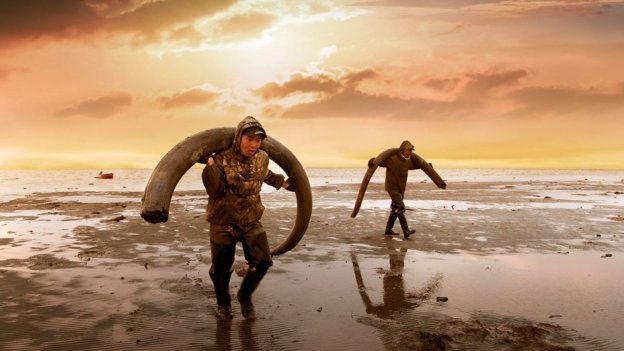
Genesis 2.0 address some ethical dilemmas in the field of molecular engineering using the ambitious quest to bring back the woolly mammoth. It’s an idea that’s so crazy that I honestly don’t know how I feel about it. I find it both exciting and scary. If the geneticists at Harvard and an elite lab in China share my apprehension, they are doing an excellent job of hiding it. Even the less privileged Siberians who take the treacherous trip to the Siberian arctic every summer in search of  mammoth tusks don’t seem too worried.

The film divides its time pretty equally between scientists and tusk hunters. The stuff in the arctic is gorgeously shot and Frei, who spent a summer up there, clearly bonded with the Siberian hunters. Their job is dangerous and offers no guarantees. Every year 1 or 2 people don’t make it back and many will not find enough “white gold” to make the trip worth the time and risk.

The scientists in the US, China, and South Korea (where they’re cloning dogs for grieving pet owners) that we follow live in a completely different world. They work with state of the art technology and don’t risk their lives the way the arctic hunters do. The filmmakers respect the geneticists just as they do the hunters, watching them work and letting them make their case for the importance of their work. Only one question on the ethics of molecular engineering is asked of them throughout the entire movie and it’s answered only with an awkward silence.

Genesis 2.0 mostly saves it’s editorializing for the final minutes of the film and when it comes it feels a little awkward and out of place. All in all though, it’s a fantastic documentary. It’s thought-provoking and beautiful to watch and has an interesting point of view that seems to tie the whole thing together. The future of genetic research is like the treacherous Siberian arctic. It’s not easy and is full of risk. But pushing forward into the unknown and taking great risks is just human nature. Will the future look olike the first act of Jurassic Park? Or will it look like the scary part after all the dinosaurs get loose? Only time will tell.