Category Archives: Movie Reviews

Our reviews and thoughts on the latest releases, classics, and nostalgic favourites. Things we loved, things we hated, and worst of all, things we were ambivalent about.

The Last Vermeer

WW2 was ending, but for some, the work was just beginning. Captain Joseph Piller (Claes Bang) will spend the war’s aftermath investigating art – art stolen from the Jews as they fled or were removed from their homes. The few lucky enough to return found their homes stripped of valuables, and many of those pieces are still being searched for today. Piller is tasked with investigating renowned Dutch artist Han van Meegeren (Guy Pearce), who is accused of selling Vermeer’s Christ and the Adulteress to the Nazis.

People were still rebuilding and recovering from the war so there was little mercy for suspected Nazi collaborators/conspirators/sympathizers. But something strange happens to Piller as he looks into van Meegeren’s background: he begins to suspect that he’s innocent. With the help of Minna (Vickey Krieps) and Dekker (Roland Moller), Piller will have to dig awfully deep to prove van Meegeren’s assertion that he is not a Nazi-loving traitor but a patriot who swindled the Nazis by selling them fake Vermeers painted by none other than himself.

Is van Meegeren’s story simply too good to be true? Does he have any credibility? Is he playing Piller, with his life on the line? Is there any post-war courtroom that would find him anything other than worthy of hanging? Is van Meegeren a master forger or a master of deception?

The best thing about this movie is Pearce’s performance; van Meegeren is funny, flagrant, and flamboyant, eminently entertaining even while on trial for his life. The rest of the cast is perfectly fine, but rarely rise above the perfunctory material. The Last Vermeer is a fascinating true story not particularly done justice by this paint-by-numbers film. Director Dan Friedkin lacks the inspiration to make this something special. It is a good but not great historical drama that gets the job done but fails to capture the imagination.

Bigfoot Family

New on Netflix this weekend, Bigfoot Family is the sequel to 2017’s Son of Bigfoot (but don’t worry, if you missed the first one, I’m confident you’ll still be able to navigate the plot of the second).

In the first film, teenage Adam went on a quest to find his long-lost father and found him hiding out in the woods. After a science experiment gone wrong mutated his DNA and turned him into Bigfoot, a pharmaceutical company got wind of things and Adam’s dad felt the only way to protect himself and his family was to go into hiding.

In the sequel, Adam’s father is technically back home but rarely there because his Bigfoot status has accorded him some fame. Adam has learned that he, too, is a Bigfoot – aside from the really big feet, he can heal himself and talk to animals, which is a good thing because several of his father’s four-legged forest friends have since moved in with them, including Wilbur the bear and Trapper the raccoon. Adam’s dad has decided to use his fame in a positive way, lending his celebrity to a village in Alaska concerned that a power company claiming to be 100% clean is actually damaging their ecosystem in secret. But when Adam’s dad goes out there to help out, he quickly disappears. Adam, his mom, plus Wilbur and Trapper, pile into a camper and drive up to Alaska to save their dad, and hopefully also stop the Big Bad Oil Company from doing their thing.

While there’s nothing really wrong about this movie, there’s also nothing very right, or very memorable. There are no big names lending their voices, there are no energetic pop songs, and the plot’s details are going to be a little frustrating to anyone above the age of 5. If you have kids under the age of 5, this might be an okay watch for them, as long as you don’t have to be in the same room. Otherwise this is an unfortunate skip, even knowing how much we need family-friendly fare right now.

The Mauritanian

This is the true story of Mohamedou Salahi, a man from Mauritania who was kidnapped from his home and detained and (it goes without saying) tortured in Guantanamo Bay by the U.S. government in the wake of 9/11 for years without being charged with a single crime.

Salahi (Tahar Rahim) has been languishing in a cell in Cuba for years by the time we meet him; he’s just added a sympathetic lawyer to his cause. Nancy Hollander (Jodie Foster) takes a lot of flak for defending a terrorist but everyone’s supposed to have the same rights, bad guy or good guy, innocent or guilty. Right? Yeah, right. The US government believes it can switch its own laws, conditions, and human rights on and off at will, and hide their worst transgressions offshore (ahem, Cuba). Nancy adds Teri Duncan (Shailene Woodley) to her team, and off they trot to good old Guantanamo where they learn they’re in for an extremely uphill battle. Meanwhile, the other side is covered by Stuart Couch (Benedict Cumberbatch) who isn’t having the easiest time either. Meanwhile, fair to say Mohamedou is having the absolute worst time of all because as you may have heard, Guantanamo is more or less synonymous with horrible abuse.

Tahar Rahim’s performance is magnetic, finding the sweet spot between hero and villain that is every shade of human, and his nomination is well deserved. In fact, Foster, Cumberbatch, and to a lesser extent Woodley, are in top form as well (but look out for Benedict’s Southern accent and report back on your opinion immediately!). The story is fascinating even if you’ve read extensively about it before. Kevin Macdonald’s direction, however, is simplistic and straight-forward. The Mauritanian isn’t so much a good movie as a compelling story. It’s solidly well-made in a no-frills way but won’t impress anyone beyond basic competence. Should you watch it? I think it’s interesting and informative and covers a pretty important topic that most Americans seem to have largely ignored. The answer is yes: check out The Mauritanian. It is necessary and infuriating.

Minari

This perfect little movie made my heart sing today. It’s humble and understated but flawlessly distills everything that is right about life and love and family and hope into a simple yet effective cinematic microcosm.

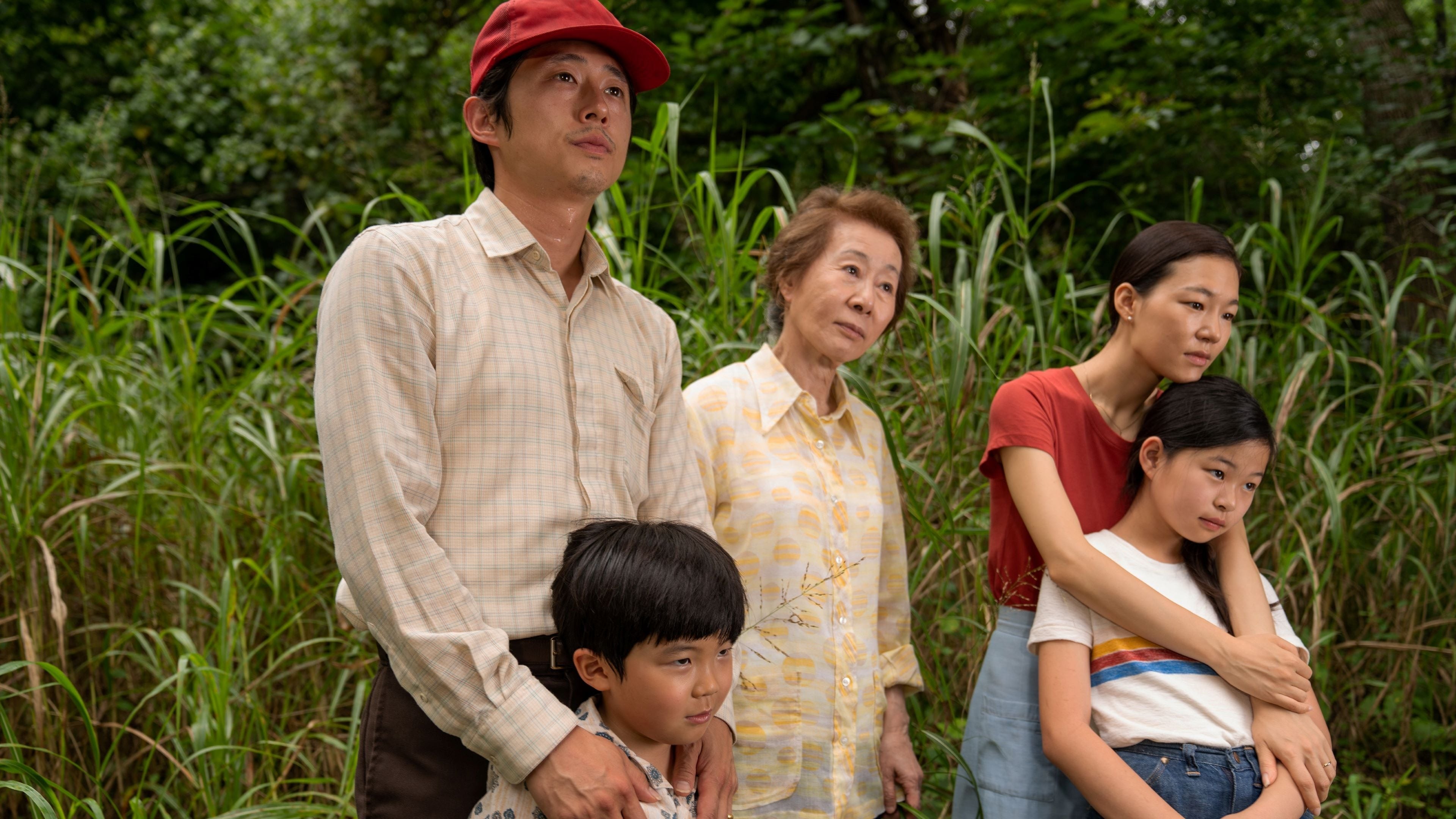
Jacob (Steven Yeun) moves his family from their small apartment in California to a farm in Arkansas. Well, a potential farm, at least. It has promise. At the moment it’s a small plot of land, a trailer, and a dream. Jacob’s wife Monica (Yeri Han) isn’t as enthusiastic about this dream, or about the trailer, or about leaving California, but she’s going along with it because finally her mother Soonja (Yuh-jung Youn) will be able to join them. Little David (Alan Kim) isn’t so keen on Grandma Soonja – she smells like Korea and swears like a sailor and prefers to gamble at cards than bake cookies like other grandmothers do. This Grandma’s a dud and she sleeps in his room!

Jacob and Monica work at a local hatchery sexing chickens. David and sister Anne (Noel Cho) go to church to save on babysitting. Jacob and a religious zealot named Paul (Will Patton) plant seeds and irrigate the land. Soonja gets addicted to Mountain Dew. Minari is the story of an immigrant family in search of the American Dream in 1980s Arkansas. It may not be the typical experience, but it does manage to feel universal. At its heart, Minari is about family – about where we plant roots, how we cultivate intimacy, why a home is not the building that houses us but the people who live inside.

Writer-director Lee Isaac Chung allows the story to unfold naturally, never pushing us into emotions but quietly earning them nonetheless. The film is semi-autobiographical and benefits from Chung’s store of intimate details that really make his story come alive. They help establish a sense of time and place, an important backdrop to this family’s origin story. The Yi family is at a critical juncture; these hardships will either pull them apart or cement them together. Their instability puts a lot of stress on them, and what starts as a fight between mom and dad trickles down to insecurity in the children. Only Grandma, who has certainly seen much worse, is a constant source of strength and love. Little David doesn’t always love her back, in fact sometimes he’s downright cruel, but Grandma has nothing but love for him – just not the kind he’s become accustomed to from American sitcoms. It takes him a while to warm up to her, but their relationship is the best part of the movie.

Minari is named after a Korean plant, a resilient little bigger that has the strength and tenacity to grow even in rough soil. The movie, likewise, is deceptively simple, but once you crack the nut, its insides are warm and nourishing. The film is disarming, the cast is uniformly excellent, and Chung finds a perfect balance between the bitter and the sweet.
 

Minari is releasing on all digital and on-demand platforms across Canada on February 26th.

Test Pattern

Renesha’s just had a good first day at a new job and is looking forward to having a good second day, so she’s a little hesitant to go out and join her friend at their favourite place for a drink, but she vows to her boyfriend that it’ll just be a quick one, and she’ll be back home at a decent hour. Renesha (Brittany S. Hall) invites Evan (Will Brill) along of course, but drinks with the girls isn’t his thing, so he stays home and she goes out, and doesn’t return home that night at all. When she turns up the next morning, she’s been raped. Plied with free alcohol the night before, a man takes her back to his place, not just against her will, but when she’s so inebriated she no longer has any will at all.

The next day, Renesha and Evan will negotiate the difficult intersection of race and gender at the heart of the justice system and health care. But we’re not just talking institutional injustice and inequality; her private life is also unraveling. Director Shatara Michelle Ford examines this topic from every angle and none of them are flattering. The film doesn’t fall into the easy trap of victimhood, it’s much more complicated, intimate, and heartbreaking than that. Ranesha’s trauma is relived at every turn, and Hall’s performance is so nuanced we can see her being crushed in slow-motion.

You might mistake this for a small film but it packs a hell of a punch. Ford’s observations are as meticulous as they are tragic. Renesha suffers through so much: guilt, shame, embarrassment, resentment, self-recrimination, anger, even doubt, and that’s before uncaring institutions start revictimizing her. Sexual assault is obviously a sensitive topic but also a necessary one. Ford treats it with respect and specificity, but the film’s greatest achievement is also its most devastating: naked realism.

Test Pattern is available through virtual cinemas, including Toronto’s Revue Cinema and Vancouver’s The Cinematheque.

Sundance 2021: Homeroom

Say hello to the Oakland High School senior class of 2020. They’re a representative sample of kids going to school in Oakland’s public schools, where rising crime rates, cuts to education, and inadequate health care mean the students here aren’t exactly being well prepared for their transition to adulthood.

Peter Nicks’ documentary clearly means to show us how difficult it is to be growing up in this rapidly changing climate – especially for this class of 2020 who of course were cut short by COVID-19. But it also really inspired me. These kids are different. They’re passionate. They’re awake. They mean to change the world. At least some of them do – like Denilson Garibo, for example – if the world is in his hands, I’m super comfortable giving him the reigns. This growing up stuff is tough but these kids are tuned in and ready to take to the streets for what they believe in. Yes the world is changing but so are the young people who’ll be left in charge of it.

The 2020 school year was of course unprecedented in many unforeseen ways and only time will tell how this blip will ultimately affect the young generation who put their lives on hold to wait it out, but this documentary will serve as a very interesting little time capsule that, as interesting as it is to watch today, will be even juicier to look back on when we have a little perspective. So many documentaries turn out to be quite different than what was originally intended, but Peter Nicks lets things roll as they may – and what choice does he have?

Nicks’ camera is a silent observer that can only show us small snippets of a few kids’ lives, but together they draw a very interesting portrait of what it’s like for the youth of today. You will feel heartened to get to know them.

Sundance 2021 Amy Tan: Unintended Memoir

Amy Tan is the wildly successful author of The Joy Luck Club and more. Her books, and the movies inspired by them, have had a huge cultural impact. The Joy Luck Club is largely credited with being the first mainstream American film with an all-Asian cast – a feat sadly not repeated until Crazy Rich Asians. Tan’s stories reach well beyond the Chinese community, hers are universal tales of immigration, and mothers and daughters.

In Unintended Memoir, we get to understand her work in new depth thanks to a close examination of her own childhood, and her relationship with her mother, even as she begins to lose her to dementia. It’s a dynamic that many of us may find familiar.

Also illuminating is the insight into Tan’s process as a writer, and her struggle with writer’s block. But most of all, Tan is a superlative story-teller, and her true family history is stranger, richer, and more interesting than fiction. James Redford has put together a compelling, straight-forward documentary that has storytelling in its heart, which makes it hard not to love.

Flora & Ulysses

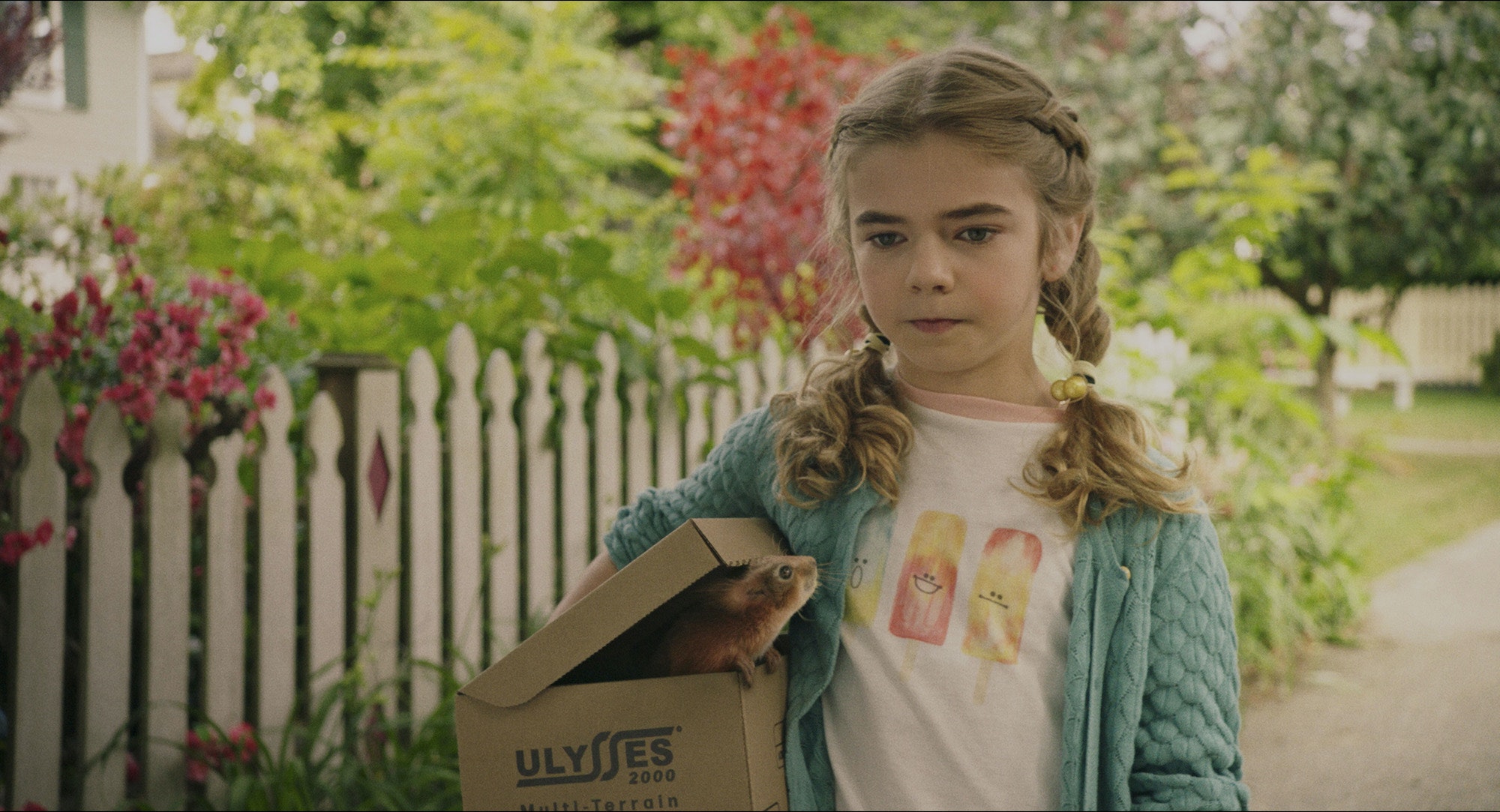
Flora (Matilda Lawler) is a little girl who wants to believe the world is filled with wonder and magic, but experience has taught her to embrace cynicism instead. She may hope for the best but she prepares for the worst, reading disaster preparedness books alongside the comic books written by her father. Incandesto and his super hero friends are so familiar to her she can practically see them but her father George (Ben Schwartz) has had no luck selling them, and has recently left the family, bereft. Mom Phyllis (Alyson Hannigan) isn’t doing so hot either. A romance writer, Phyllis has been in a bit of a slump lately, and her new project isn’t very inspired either.

But don’t worry, folks, this isn’t some sad sack story, this is a super hero origin story, and the super hero is a squirrel named Ulysses. Ulysses gets sucked into a robot vacuum and once resuscitated, he’s got super powers! He’s super strong, and super fast, and super troublesome when Flora brings him into the house. He also writes poetry, but it’s unclear whether that’s actually a super power. Anyway, any squirrel in the house is likely to wreak havoc, but Ulysses is capable of so much destruction! All accidental, of course, but ask mom if she cares. She does not! But in the course of things, mean Miller (Danny Pudi) at animal control gets whiff of a potentially rabid squirrel and he’s on the case, pursuing the Buckman family, the boy next door, William (Benjamin Evan Ainsworth) who is temporarily hysterically blind, and their super squirrel Ulysses, stopping at nothing to euthanize super Ulysses, willing even to tranquilize humans in his quest to cage a furry little super hero.

Matilda Lawler is an insanely cute kid and a very capable actor. Much of the film’s charm emanates directly from her. Ben Schwartz harnesses a lot of his oddity and delivers straight up goofball as the affable, supportive dad. Their family adventure makes for excellent family viewing, and there’s no denying the soft, endearing fuzziness of Ulysses the poetry writing super squirrel. Director Lena Khan does an excellent job of translating the hijinks onto the big screen but keeping it grounded first and foremost in family values. The characters may be offbeat but the message is hopeful, the story is bright, and the squirrel is hard to resist. Flora & Ulysses has the makings of an excellent family movie night.

Visit us on Youtube, and don’t forget to Like & Subscribe!

I Care A Lot

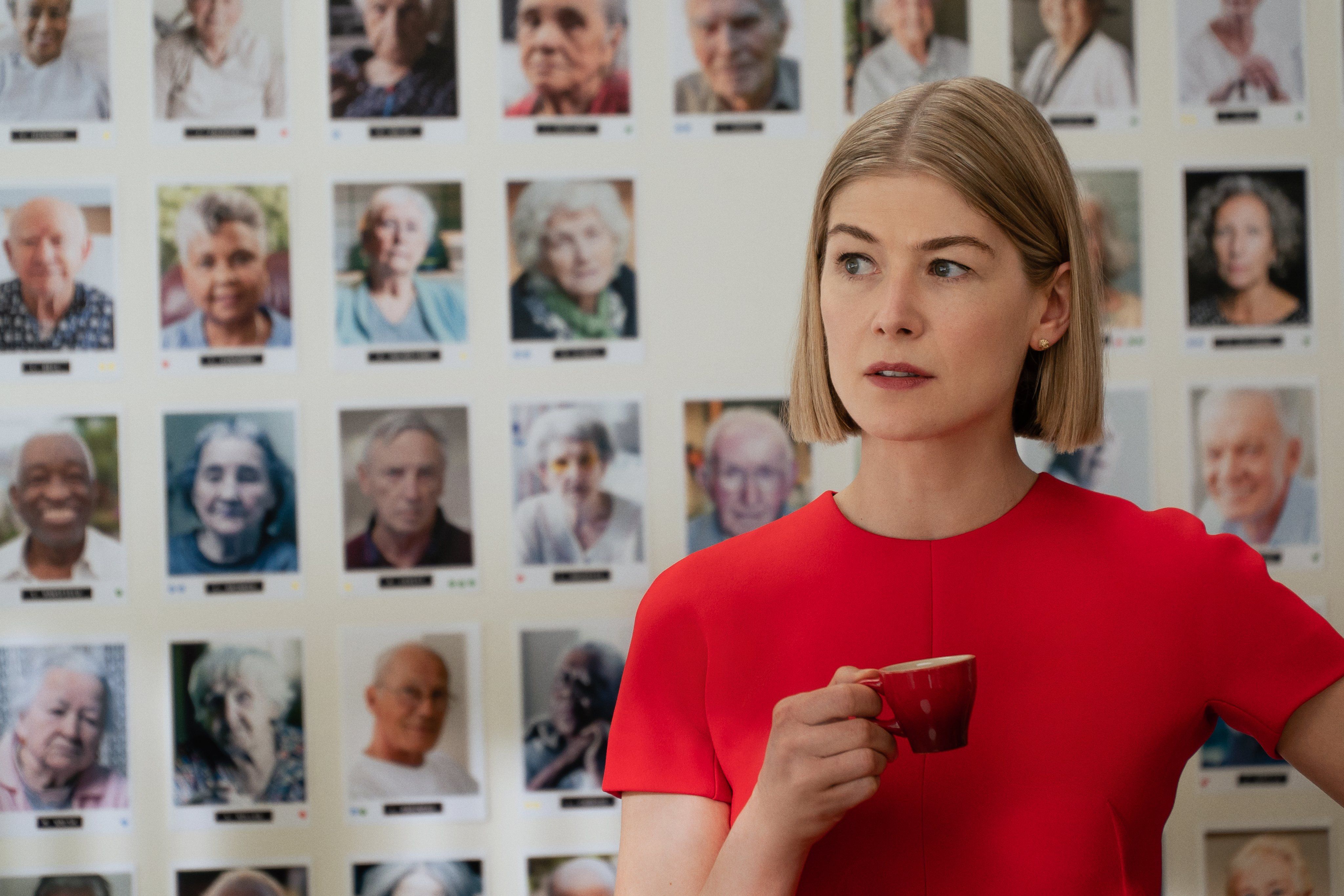
Marla cares a lot. SO much, or anyway that’s what she tells the judge. This poor little old lady can’t care for herself and her son’s unfit, so Marla (Rosamund Pike) will step in and be her court-appointed guardian, for a fair fee of course. This is how she makes her lavish living, by “caring” for old people she’s cherry-picked for being old but not too old, in relative good health so she can bilk them for a good, long time, with a sizable nest egg and not too many prying family members around to question her judgment. She colludes with doctors to identify these victims, and with care home directors where she’ll stash them while she sells their houses and all their worldly possessions. Many of these older people are of sound mind and body before Marla gets to them, but not for long. Kept restrained, drugged, isolated, and barely fed, Marla’s aged victims will soon appear to be as far gone as she’s claimed. Marla’s about to meet her match.

Jennifer (Dianne Wiest) seems like a perfect target – a retiree with bountiful assets and no known family. But Jennifer isn’t who she seems, as you may have guessed, and Marla’s in for a whole world of trouble. But Marla isn’t just a crook, she’s a tenacious crook, an entitled crook, and she won’t go down without a fight. And oh what a fight!

This movie starts off shocking you with the ugliness and abuse in the system, the vulnerability of the aged, the potential for corruption, but then good old fashioned greed inspires this story to spin wildly off the rails. It’s an entertaining if not particularly realistic watch. Rosamund Pike gives a committed performance, though it may remind you of her turn in Gone Girl where she also played a harmless looking blonde woman whose innocent smile hid her true nature. Marla is a ruthless conwoman. Director J Blakeson does villainy well, he makes it slick, he makes it glossy, and he makes us complicit.  

I liked but didn’t love I Care A Lot; the script could have used a little more of that care, and the second half doesn’t quite live up to the promise of the first. The set-up is amazing but Blakeson doesn’t quite excel at this whole dark-comedy-satire-cum-wacky-violent-thriller thing. It’s a delicate balance, something the Coens have perfected but few others can truly pull off. Blakeson doesn’t quite have the courage to maintain his carefully crafted cynicism right up to the last scene. He flinches. I Care A Lot is still worthy of your attention, but I bet you’ll be able to spot both its flaws and its fun.

Sundance 2021: Misha and the Wolves

Is the world ready for a post-modern holocaust movie?

Too late. Ready or not, here it is! Don’t blame director Sam Hobkinson, he’s just the guy delivering the bad news, but he’s delivering it because it’s interesting, it’s juicy, and you’re going to be thinking about it for a long, long time.

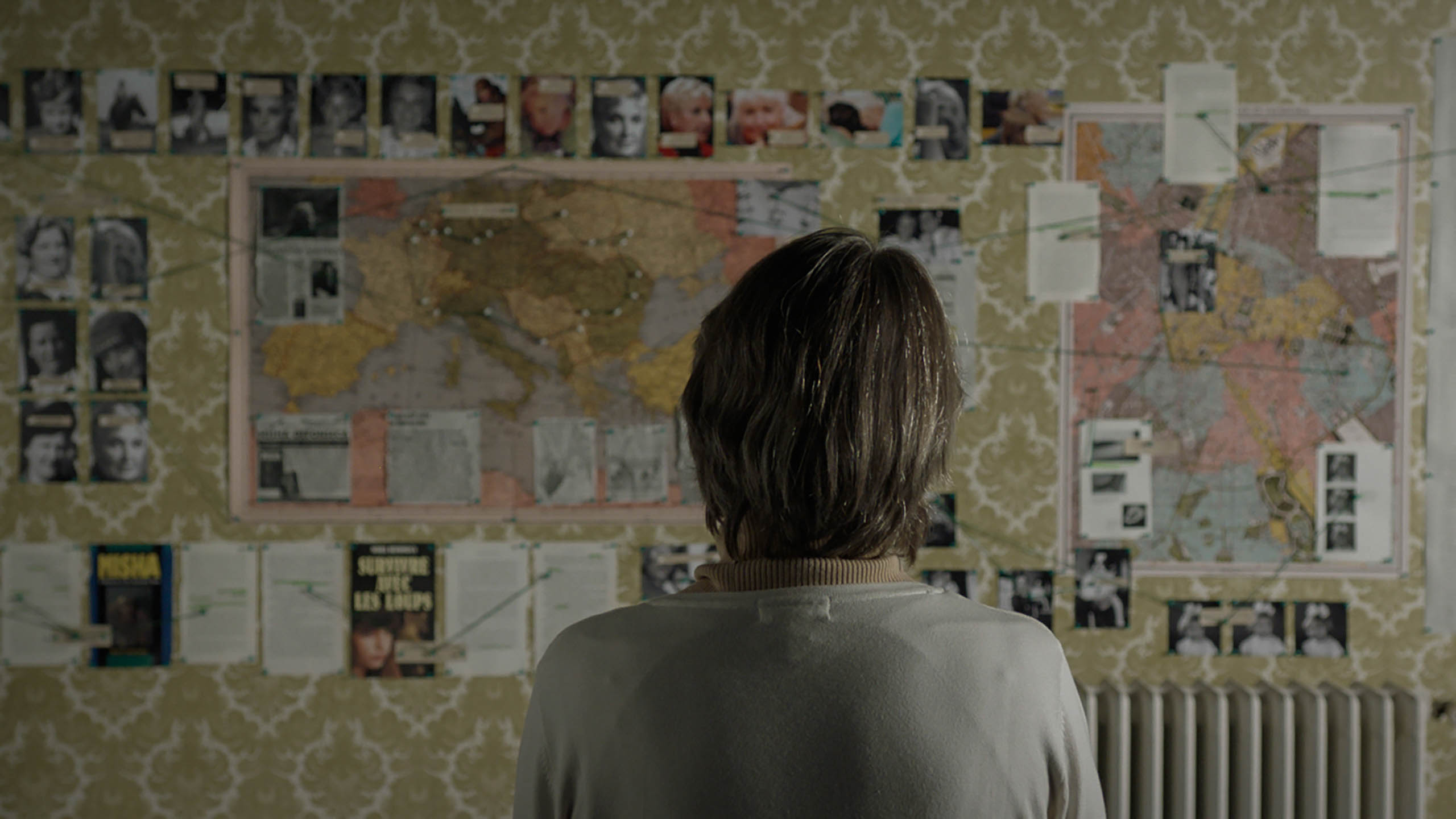
Misha Defonseca had been living in America for years, hazy about her past until one day she started opening up. As a little girl, her parents were murdered by Nazis and into the forest she fled, surviving thanks to the kindness of the wolves who adopted her. You read that right: wolves adopted her. Which is why she’s practically the Carole Baskin of wolves today (if you live under a rock and didn’t watch Tiger King on Netflix last year, you missed out, but long story short, Carole Baskin is the Tiger Queen). It’s a pretty amazing story, so amazing that a publisher comes calling, eager to make millions off the story, and soon Misha’s story is blowing up. Misha gladly travels all over Europe, accepting accolades, repeating her inspiring story, and seeing her book translated into many languages. Back home, she’s a little more reticent. Oprah comes calling and Misha doesn’t call back. Imagine the temerity! Misha’s publisher is pretty miffed at the missed opportunities, but then again, Misha’s pretty miffed at the publisher, who’s hiding money. So Misha sues the publisher and ruins her name and gets a huge judgement because she’s a sympathetic holocaust survivor and the publisher’s just a bitch who bilked her. But actually, the publisher’s beginning to poke holes in Misha’s story, and a researcher well versed in holocaust investigations agrees that Misha’s story isn’t quite holding up. But to accuse a survivor of lying is pretty delicate work and holocaust denial is pretty unpopular.

Hobkinson’s documentary is more twisty and turny than any detective story, and every time you think you’ve figured it out, you’re probably about due for another hairpin curve. You absolutely need to check this one out and be prepared to do your best sleuthing. It’s not often that a documentary can cultivate this much suspense and sustain it during most of its run. It’s a wild, well-told story that’s an engrossing watch and will pay dividends at dinner parties (or zoom dates) for years to come.