Category Archives: Movie Reviews

Our reviews and thoughts on the latest releases, classics, and nostalgic favourites. Things we loved, things we hated, and worst of all, things we were ambivalent about.

Love On Ice

Spencer (Andrew Walker) came to town to coach skating prodigy Nikki to gold at regionals and beyond, but it’s her former skating teacher Emily (Julie Berman) who catches his eye. Emily is cute, single, and age appropriate, but she’s also a former pro skater herself. She gave it up 8 years ago to care for her dying mother, but Spencer thinks there’s still greatness in her, and when Emily finally allows herself to look deep within, she finds she’s still got the heart of a competitor.

Of course, there are a few obstacles, not even counting her (relatively advanced) age, or the many years she’s spent off the competitive circuit and not in competitive shape. There’s her relationship with Nikki, for starters, a very nice young girl who didn’t really deserve to have her coaching time split though it would seem she was still paying full price. And Nikki’s super alpha competitive mom, Mia, who doesn’t appreciate the interference or a less than militaristic style of coaching . And Nikki’s new coach slash Emily’s old coach, Lindsay, who is ruthless and plays dirty. And a local reporter who puts skating rink gossip on live TV as if people would actually care. And money, always money. And there’s the fact that Emily’s maybe falling in love with Spencer, and Spencer’s maybe falling in love with her. Just a few obstacles to an ideal comeback, but who’s counting?

Between training montages, diner fundraisers, obligatory skate sharpening cuts, and a very odd “kids these days,” “old ladies don’t like rap” scene (wherein the old lady was a 27 year old), there was very little time for romance. Which was just as well because I don’t think Andrew Walker is particularly good at acting in love, an unfortunately flaw when Hallmark is your bread and butter. As much as I rolled my eyes at the title, Take A Shot At Love was a much better skating-themed Hallmark romance, if that’s your jam.

Herself

Sandra’s husband Gary apparently has such a history and pattern of abuse that she has an emergency protocol in place with her young daughters; the eldest (who is maybe 8), takes off for the nearest corner store with a tool box. Inside is a card instructing the shopkeeper to call the cops as her life is in danger. Meanwhile, the youngest daughter cowers in the backyard, watching her mother get stomped on.

This, apparently, is the last straw. She leaves, but working several jobs still leaves her short at the end of the month, and the three of them are living in a hotel because Dublin is apparently short on public housing. Fed up with welfare’s shortcomings, and with Gary still lurking around, asking for another chance, Sandra (Clare Dunne) takes things into her own hands. With a generous land donation, she prints off DIY instructions from the internet and prepares to build a small home for herself. It’s an unsubtle metaphor for the kind of rebuilding her life needs and deserves generally, and the more she opens up and asks for help, the easier it becomes and the fuller her life is. Abused women are often isolated, which is part of what makes it so hard to leave. Building a life is about more than just pouring concrete and laying floors; it’s about trusting people again and creating your own safe space.

Unfortunately, the abuse doesn’t always stop just because the woman leaves, especially when there are kids involved. She has two adorable little souls tying her to a man she’d rather never see again, and even the court will keep forcing them together.

Phyllida Lloyd’s Herself is perhaps trite, but sensitively told, allowing the power of the performances to take centre stage, and Clare Dunne proves herself worthy of the confidence, never over-reaching the emotional beats. Herself may be a difficult watch at times, but it’s also gratifying; Sandra has a voice, and Lloyd gives her a beautiful cinematic platform from which to use it. She aims a few choice words at an uncaring bureaucracy that deserve cheers from a jaded audience. There are no easy breaks in Sandra’s life, but Dunne allows her empathy and grace, which are more important anyway.

Summerland

Alice (Gemma Arterton) is a reclusive, curmudgeonly writer, whom the locals refer to as “the witch.” Her writings often pointedly refer to the various ways women have been unfairly portrayed, but what are you going to do?

One day, a young boy named Frank (Lucas Bond) shows up at her door, an evacuee from London to be kept safe during the WW2 blitz. Alice doesn’t like kids. To be fair, it seems to be her general regard toward all humans, but Alice doesn’t want a kid in her house. It’s nothing personal against Frank, she just has work to do and no fucks to give. She reluctantly agrees to house him temporarily, until another family can be found. But pretty much everyone in her small village has already taken in children and she does have a big ole house all to herself.

As Frank begins to worm his way into her heart, we learn that Alice’s self-imposed isolation is the result of a broken heart, a forbidden romance with another woman, Vera (Gugu Mbatha-Raw), who is now just a figment of her past, though one that still haunts her. Clearly Alice has lived with only her memories for a long time, but with a real boy as her roommate, she’s brought down to the human realm where there is a war going on and people, such as Frank’s parents, are in real peril.

This film nearly lost me, being just a little too easy, a little too neatly contrived. However, it’s anchored by a performance from Arterton that just floored me. Alice’s naked longing and repressed self-expression are controlled with such precision by Arterton, it’s a remarkable role for her, but she’s actually got some very able costars from a surprising place – the kids. Both Bond and Dixie Egerickz, who plays Frank’s playmate, are wonderful, offering grounded and thoughtful performances considering these kids are growing up in a time where childhood is pretty much non-existent

I remember reading about young war evacuees when I was a kid myself, and I’ve always been fascinated by this ultimate act of mutual aid, adopting a stranger’s child, sheltering them during a difficult time, providing a safe home for kids at risk of dying in air raids in the city. Mothers had to place such trust in the kindness of strangers, and strangers had to step up with very little the way of thanks or even acknowledgment, and kids had to grow up without their parents. There would have been little communication and tonnes to worry about and it seems like such an act of grace in the middle of a literal war. So despite the film’s shortcomings, I still appreciated a window on this particular view, and what a lovely view it was, with lots of sights to behold.

Winter In Vail

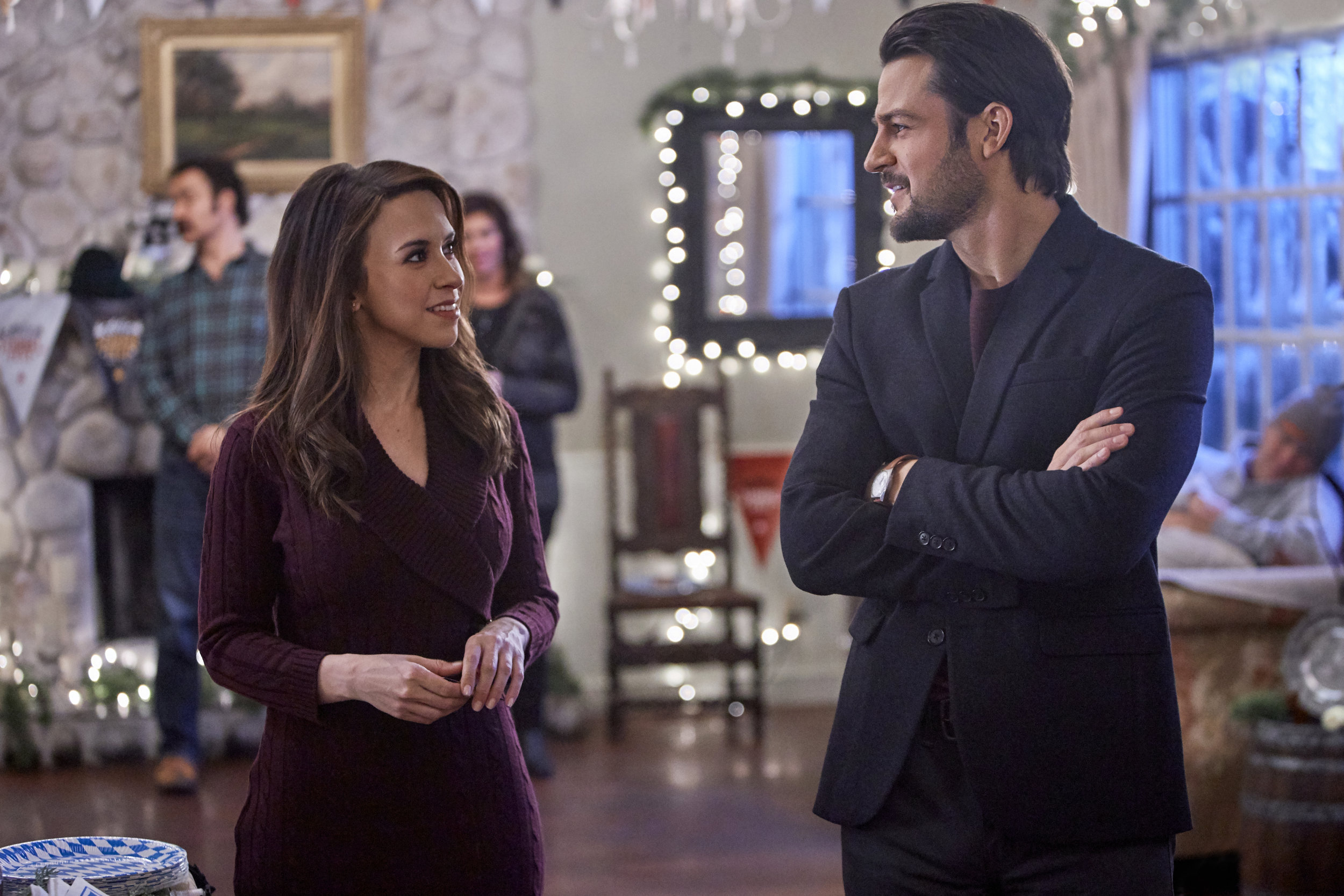
Please for the love of retinol in my skincare and all that is holy, will you please let me know in the comments whether you’ve ever inherited something from a long-lost uncle? And I don’t mean the ones you hear from in your spam folder. Those uncles don’t count. I’m talking cold, hard inheritance, in your hands, at whatever rate of taxation your country pretends is fair.

Clearly all of my uncles are duds. My which of course I mean poor. Or, you know, “middle class” (same difference). But in the movies, uncles are wonderful. They make zero demands on you. You may have even forgotten they exist. You let them die alone in their big old houses and then one day you get that jackpot call from a lawyer who’s almost as incredulous as you are. That’s how it happens Chelsea (Lacey Chabert), only her dead uncle’s lawyer spares her even the awkward phone call. One no-nonsense letter later, she’s the proud owner of a property in Vail. Up until this point she’s been a hard-working party planner in Los Angeles but she suffers – well, not exactly a set back, but a disappointment based on a rumour from Larry in the mailroom she only heard about 20 minutes ago. So I’m not sure how close to her heart this sudden hope could really have been, but between that and her new landfall, she quits her job and high-tails it to Vail, a picturesque ski resort town in Colorado.

In Vail she immediately makes friends with all sorts of Vail legends, who all knew her dead uncle of course, but makes an enemy out of the one man she’ll need to rely on, out of a parking dispute of all things. Owen (Tyler Hynes) is a former architect turned handyman, and he’s the only one who can help her restore her uncle’s house into a livable home (turns out he was mid-renovation, and that phone call might have come in handy after all). Though she no longer has an income, Chelsea somehow finds the money to restore plumbing, heating, flooring and more, all the while kitting herself out in more than one new ski ensemble.

Turns out, handyman Owen is actually in town to help his dad stabilize his struggling restaurant, which used to be co-owned by Chelsea’s uncle. Old Vail is being left behind by tourists for newer, fancier more high-end options, and many businesses are failing. Chelsea decides to put her event planning skills and her dead uncle’s recipe to use, co-founding StrudelFest along with Owen to highlight the charm Old Vail still has to offer.

Romantic strudel making ensues. Strudel wooing follows. But when Chelsea’s old boss comes begging for her to come back, what happens to Vail, to her uncle’s house, and to her new something-something with handyman Owen? Guess you’ll have to watch to find out 😉

Bridgerton

It’s hot, it’s steamy, you know you want to (and chances are, you already have: this series has been ULTRA popular on Netflix). It’s deliciously anachronistic, unapologetically salacious, and totally bingeable. The costumes are sumptuous, the dialogue sparkles, the sets are incredible, and the romance is as soapy as it is sexy. Plus, the ensemble cast has incredible depth and talent, led by a luminous Phoebe Dyvenor and the brooding sex-beast Regé-Jean Page as The Duke.

We don’t normally review series here, but we’re unconstrained and unstoppable on Youtube.

Drop in and leave us a Like and a Subscribe – this out of work movie critic would sure appreciate it.

Taking A Shot At Love

Ryan (Luke Macfarlane) is a professional hockey player who’s trying to come back after a complex ankle injury. None of the usual rehab protocols have gotten him to where he needs to be, so his agent proposes something radical: ballet. The agent’s cousin Jenna (Alexa PenaVega) is a former professional dancer who was able to make a comeback after the same injury, using some fundamental ballet exercises. Since her dance studio is struggling, she agrees to take on Ryan as a rehab patient (although, to be clear: she is completely unqualified to do so) and since he’s desperate to get back to the NHL and has no other options, he’s in too.

This Hallmark movie has a ring of The Cutting Edge to it, certainly enough for a toe pick loving girl such as myself to get a little excited just by the premise. Almost all of Hallmark’s winter-but-not-Christmas themed movies are about skiing, so hockey was a nice change of pace. Of course, it wasn’t really about hockey, it was about ballet and ankle injuries. And it wasn’t so much about ballet and ankle injuries as it was about falling in love on the dance floor.

I am rehabbing from my own ankle injury and have been since…2012. Yeah. It’s a crapfest. I was in actual literal rehab for it right before the pandemic hit, and not so much since, unfortunately. I wore nitro patches on my wonky tendon for the past year and have had several cortisone injections in the joint which has now gone arthritic. I just heard back from my doctor after my second (ankle) MRI, which has now been sent off to an orthopedic surgeon who, mark my words, won’t be able to do anything either. I am doomed to limp in pain forever. Although, to be honest…I haven’t tried ballet. At least not since the ankle injury. I did do ballet as a little girl (and despite my expression in the photo, I was generally pretty thrilled about it) but I don’t remember it being very ankle-forward at the time.

To my surprise, Taking A Shot At Love, despite the horrible title, is an unhorrible Hallmark movie. Jenna’s all about that hygge life, Ryan’s not afraid to be unmanned by a woman, and when the power goes out, they keep each other warm. PenaVega and Macfarlane are in Hallmark’s top tier of talent and their charm and chemistry are not just watchable but delightful. If you’re looking for a cozy Hallmark romance to take the edge off, this new addition to their lineup is a straight up goal.

The Convenient Groom

Dr. Kate Lawrence, PhD. (Vanessa Marcil) is a small-town celebrity for giving no-nonsense dating advice. She’s about to announce her surprise engagement to boyfriend Brian, the elusive “no red flags” guy, proving to her fans that she can walk the walk. Kate thinks this incontrovertible proof that her relationship advice is the real deal will push her career in the right direction, so she allows her agent to nudge her engagement announcement into a very big, very public thing, which is pretty inconvenient when Brian unceremoniously dumps her in the middle of a live feed. Luckily (or shall I say conveniently), his identity has remained unknown to fans, so at the last minute, Kate’s old high school bud Lucas (David Sutcliffe) subs in, pretending to be her future groom.

With a book deal, not to mention her reputation, on the line, they agree to carry on this ruse for the foreseeable future. I don’t think anything could go wrong, do you? Her agent of course insists they go through the motions of planning their pretend wedding, even setting a date just three months hence. If you’re wondering what’s in it for Lucas, he’s harbouring a secret crush on her and has been since they were kids. Naturally. Very convenient indeed. Anyway, for lots of couples, planning a wedding can be quite stressful, but it turns out if you’re a fake couple planning a fake wedding, it can almost be kind of romantic. Especially when you’re doing it in front of cameras. Apparently.

You know what? Don’t worry about Kate and Lucas. They’re going to be okay. Plus they’re going to get to taste-test some raspberry-filled chocolate cake that they don’t ever plan on needing, so don’t feel too badly for them. perhaps feel a little badly for David Sutcliffe who once upon a time played Lorelai Gilmore’s baby daddy and is now reduced to this. Which is almost slightly better than average because he’s in it, and he’s a better than aver Hallmark actor. However, Vanessa Marcil is a worse than average addition to the cast, and her confusion between acting and hair tousling makes for a frustrating viewing experience. So the two cancel each other out, leaving just the story to make or break your experience, and it’s a pretty weird and contrived premise, even for Hallmark. These two are clear soul mates, only because between them they don’t have an ounce of dignity, and that’s makes us an awkward third wheel.

The Man Who Walked Around The World

Anthony Wonke has a wonky way of starting movies. It can never be any director’s intention to confuse the viewer into turning the movie off just to double check they’ve clicked on the right one, and yet that’s exactly the effect he creates when he introduces the topic in the most roundabout way possible.

For those of you who think you might like to tackle this documentary, know that the film will make you believe, for the first 5 minutes or so, that this is about some very bad men in Iraq, but when Mr. Iraq eventually gets to his point, which isn’t very interesting, it’s that whisky saved Iraq. Won Iraq? Whatever the hell they were doing there, whisky helped. And not just any whisky. Johnnie Walker whisky.

Note: I very much want to spell it whiskey, as I always have, and always will, but since Johnnie Walker spelled it whisky, I’ll honour his wishes this one and only time since we are indeed talking about the 200 year history of his well known and well loved brand.

Johnnie Walker was indeed a man, the son of a farmer who poured his inheritance into a grocery store where he blended and sold his own whisky, which his ancestors shrewdly turned into a global brand that may or may not help Americans end wars. Don’t worry, the hyperbole won’t stop there: Johnnie Walker was also the hero of prohibition, and the brave solver of racism. According to this documentary, which I’m beginning to suspect may be a little biased. It is not, however, contributing in any positive way to sexism, because the brand aims to be synonymous with masculinity, so if you’re a woman who drinks whisky, go fuck yourself.

But at least it’s not contradictory. For example, Johnnie Walker is a respected and recognized brand that is its own best advocate and is so sophisticated it would be demeaning to pay for product placement or celebrity endorsement, and don’t just take our word for it, let’s hear from brand ambassador Sophia Bush, or the guy in charge of pointing out it’s the preferred brand of Superman (in Superman 3) and Rick Deckard (Harrison Ford, Blade Runner).

The Man Who Walked Around the World is either a very bad documentary or a very good commercial. If you hit the red label hard enough, it probably doesn’t matter which. If you’re sober, however, you might want to…well, keep walking.

Love on the Slopes

Alex (Katrina Bowden) wants to be a travel writer but her boss at the travel mag tells her that travel writers are courageous and impetuous, things that she is not. But Alex really wants this new job and is determined to show her boss he’s wrong, so she decides to go on an extreme sports vacation even though using a paperclip where a staple would normally be required is usually as extreme as she gets – and even that scenario makes her sweat a little.

Anyway: does she have a panic attack causing a human pileup on the chair lift? Possibly. Did Sean invent the word “helichopter” because helicopter just wasn’t extreme enough? Undoubtedly. Was that a Hannah Montana reference I just heard? No idea. But hang on to the seat of your snow pants, folks, you’re in for a pretty wild ride – ziplining, suspension bridges, extreme tobogganing (well, it was pretty regular tobogganing, to be honest, but down a larger than average hill). Nothing so extreme it smudges Alex’s lip gloss, but extreme for the Hallmark channel, thanks to her “guide,” adventure photographer Cole Taylor (Thomas Beaudoin). Now, it is difficult to sift the bad dialogue from Beaudoin’s awkward delivery, nay, impossible, but there’s more than enough blame to go around.

Well guys, what do you think? Will Alex uncover a roaring desire for extreme sports? I mean, it’s Hallmark. They’ve got to channel their horniness into something productive, amirite? Those hormones have to go somewhere – might as well be off the side of a very high cliff.

Mangrove

On Amazon Prime, there is a series of films by Steve McQueen under the title Small Axe; they are related in that they are based on the real-life experiences of London’s West Indian community in the recent past. Mangrove is the first film in the series. The Oscars and the Emmys are perhaps more invested in hashing out whether they are technically films or episodes or something else entirely, but at 2 hours and 7 minutes of first-rate film-making, I’m just going to go ahead and review it.

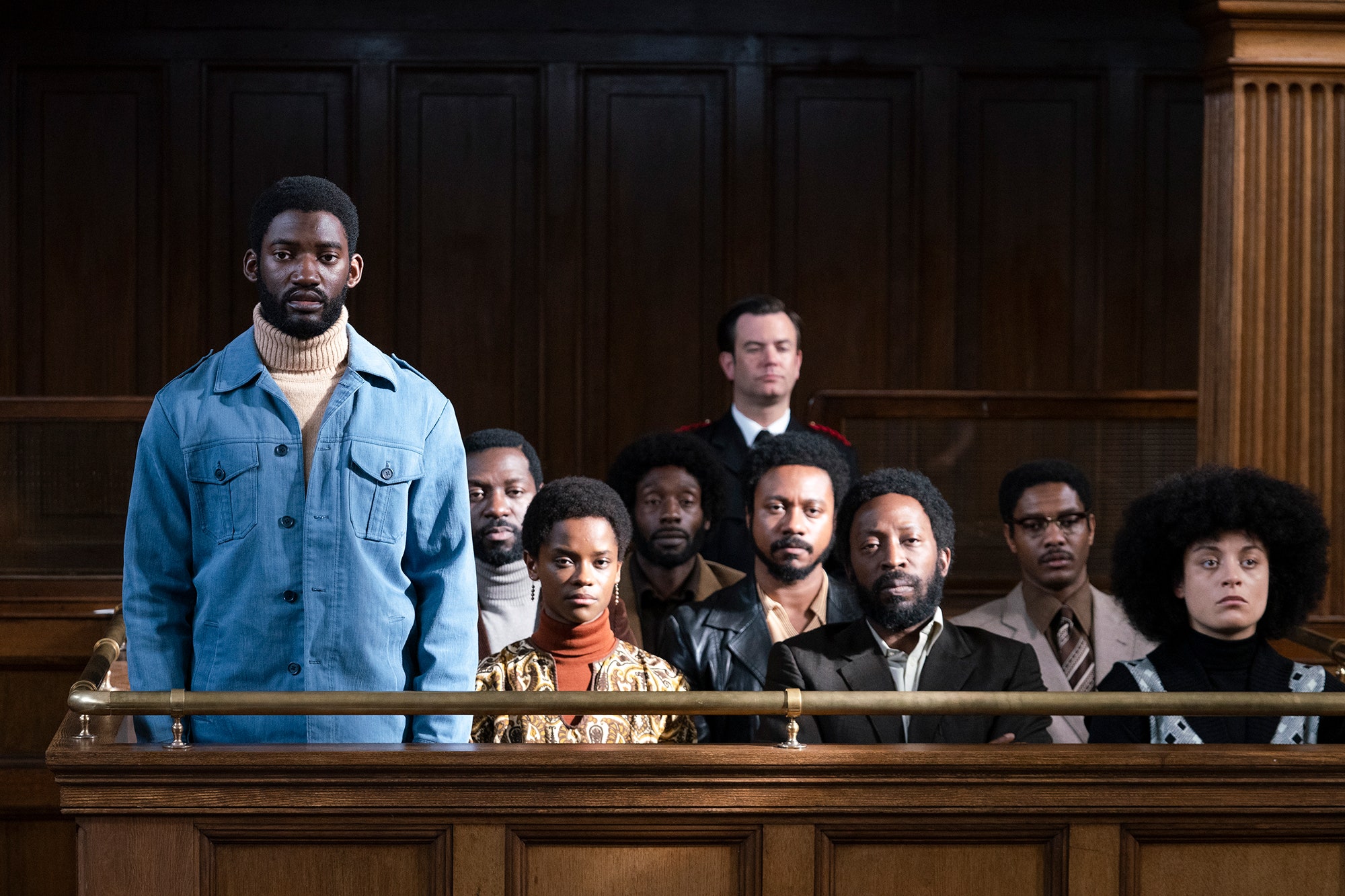
Frank Crichlow (Shaun Parkes) is the proud (Black) owner of Notting Hill’s Caribbean restaurant, Mangrove, a lively community base for locals, intellectuals and activists, not to mention the best joint for anyone looking for spicy foods in the 1970s. But it’s also beleaguered by constant police raids in what can only be described as a reign of racist terror (the cops are pretty upfront about it actually). Frank and the local community fight back the only way they can, by taking to the streets in peaceful protest. The cops, of course, strike back in what is by now such a familiar pattern that we can only despair. When nine men and women, including Frank and the leader of the British Black Panther Movement, Altheia Jones-LeCointe (Letitia Wright), and activist Darcus Howe (Malachi Kirby), are arrested and charged with incitement to riot, our blood boils with injustice but not particularly with surprise. A highly publicized trial ensues, and the pattern of discrimination and abuse by police emerges – but will that even be enough?

As I mentioned earlier, Mangrove along with the other films in the Small Axe series are based on true events, but director McQueen manages such vigour in his story-telling that it almost feels more like a documentary. The authenticity seems to lend itself so naturally to the film and the performances that it’s almost an embarrassment of riches, but it’s the passion and the commitment with which it is delivered that really seals the deal. Aaron Sorkin’s The Trial of the Chicago 7 really reinvigorated the courtroom drama for me earlier this year, so it seems improbable that this one would come along so shortly after and do so again, yet I’m amazed to be so fully invested once again in a genre that’s been tired and limp for so long. Sean and I kept up such a constant hubbub that I worried mean Judge Clarke (Alex Jennings)would find us in contempt and throw us out of his court. Mangrove, however, has its own internal engine, churning with emotional heft outside the courtroom. The movie may take a few beats to really get going, but once it finds its momentum, it is downright riveting.