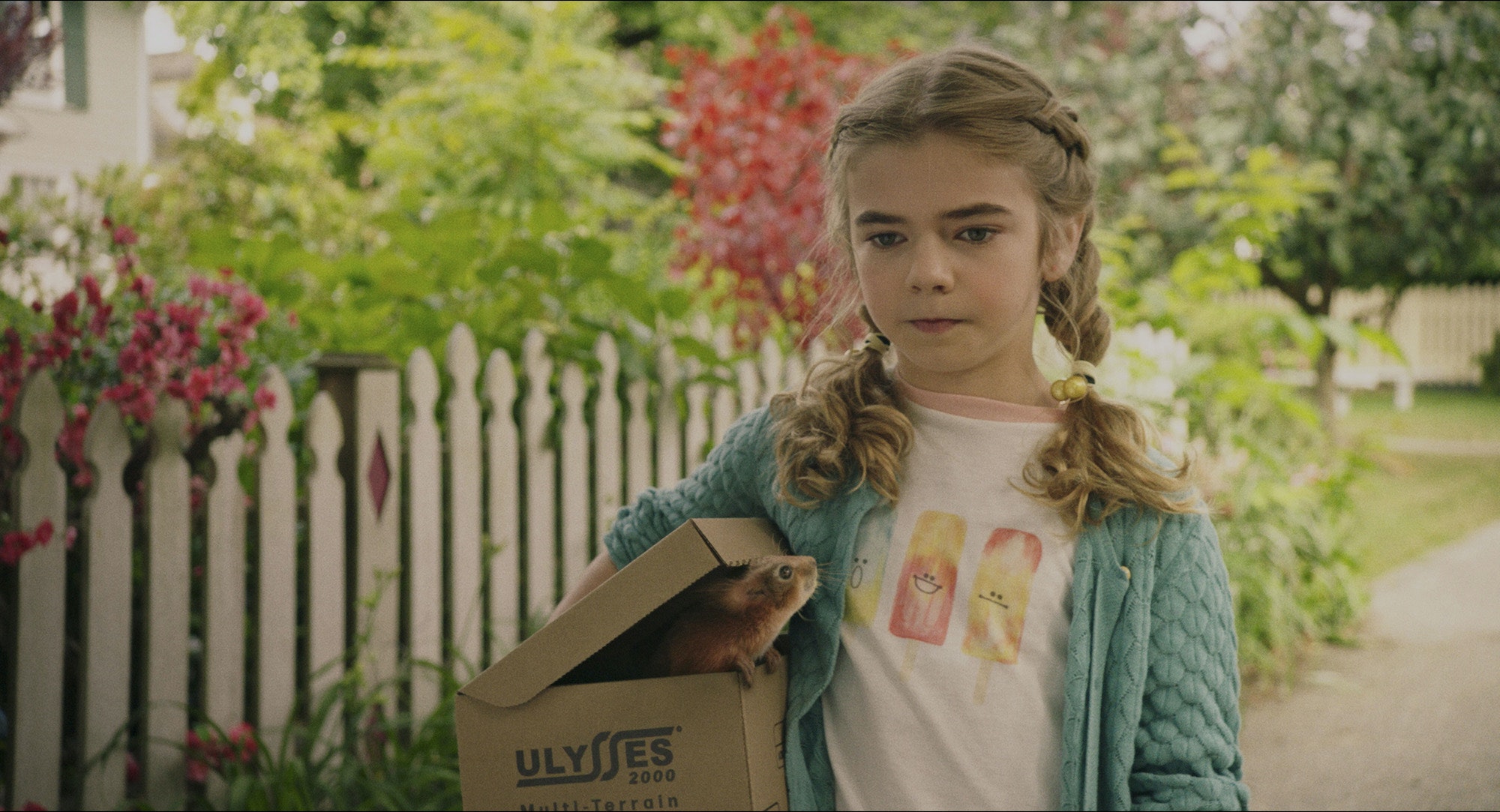
Flora (Matilda Lawler) is a little girl who wants to believe the world is filled with wonder and magic, but experience has taught her to embrace cynicism instead. She may hope for the best but she prepares for the worst, reading disaster preparedness books alongside the comic books written by her father. Incandesto and his super hero friends are so familiar to her she can practically see them but her father George (Ben Schwartz) has had no luck selling them, and has recently left the family, bereft. Mom Phyllis (Alyson Hannigan) isn’t doing so hot either. A romance writer, Phyllis has been in a bit of a slump lately, and her new project isn’t very inspired either.
But don’t worry, folks, this isn’t some sad sack story, this is a super hero origin story, and the super hero is a squirrel named Ulysses. Ulysses gets sucked into a robot vacuum and once resuscitated, he’s got super powers! He’s super strong, and super fast, and super troublesome when Flora brings him into the house. He also writes poetry, but it’s unclear whether that’s actually a super power. Anyway, any squirrel in the house is likely to wreak havoc, but Ulysses is capable of so much destruction! All accidental, of course, but ask mom if she cares. She does not! But in the course of things, mean Miller (Danny Pudi) at animal control gets whiff of a potentially rabid squirrel and he’s on the case, pursuing the Buckman family, the boy next door, William (Benjamin Evan Ainsworth) who is temporarily hysterically blind, and their super squirrel Ulysses, stopping at nothing to euthanize super Ulysses, willing even to tranquilize humans in his quest to cage a furry little super hero.
Matilda Lawler is an insanely cute kid and a very capable actor. Much of the film’s charm emanates directly from her. Ben Schwartz harnesses a lot of his oddity and delivers straight up goofball as the affable, supportive dad. Their family adventure makes for excellent family viewing, and there’s no denying the soft, endearing fuzziness of Ulysses the poetry writing super squirrel. Director Lena Khan does an excellent job of translating the hijinks onto the big screen but keeping it grounded first and foremost in family values. The characters may be offbeat but the message is hopeful, the story is bright, and the squirrel is hard to resist. Flora & Ulysses has the makings of an excellent family movie night.
Visit us on Youtube, and don’t forget to Like & Subscribe!
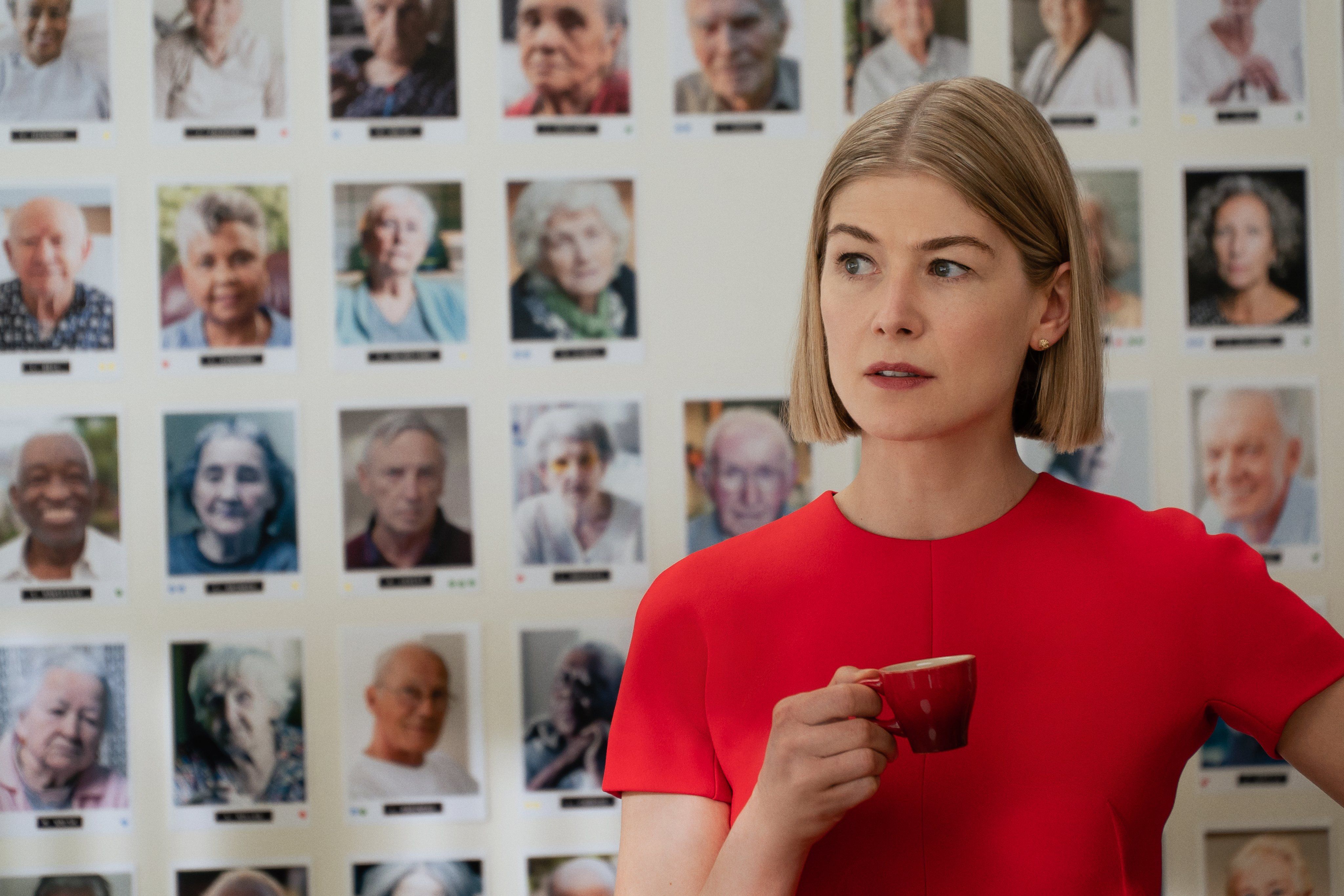
Marla cares a lot. SO much, or anyway that’s what she tells the judge. This poor little old lady can’t care for herself and her son’s unfit, so Marla (Rosamund Pike) will step in and be her court-appointed guardian, for a fair fee of course. This is how she makes her lavish living, by “caring” for old people she’s cherry-picked for being old but not too old, in relative good health so she can bilk them for a good, long time, with a sizable nest egg and not too many prying family members around to question her judgment. She colludes with doctors to identify these victims, and with care home directors where she’ll stash them while she sells their houses and all their worldly possessions. Many of these older people are of sound mind and body before Marla gets to them, but not for long. Kept restrained, drugged, isolated, and barely fed, Marla’s aged victims will soon appear to be as far gone as she’s claimed. Marla’s about to meet her match.
Jennifer (Dianne Wiest) seems like a perfect target – a retiree with bountiful assets and no known family. But Jennifer isn’t who she seems, as you may have guessed, and Marla’s in for a whole world of trouble. But Marla isn’t just a crook, she’s a tenacious crook, an entitled crook, and she won’t go down without a fight. And oh what a fight!
This movie starts off shocking you with the ugliness and abuse in the system, the vulnerability of the aged, the potential for corruption, but then good old fashioned greed inspires this story to spin wildly off the rails. It’s an entertaining if not particularly realistic watch. Rosamund Pike gives a committed performance, though it may remind you of her turn in Gone Girl where she also played a harmless looking blonde woman whose innocent smile hid her true nature. Marla is a ruthless conwoman. Director J Blakeson does villainy well, he makes it slick, he makes it glossy, and he makes us complicit.
I liked but didn’t love I Care A Lot; the script could have used a little more of that care, and the second half doesn’t quite live up to the promise of the first. The set-up is amazing but Blakeson doesn’t quite excel at this whole dark-comedy-satire-cum-wacky-violent-thriller thing. It’s a delicate balance, something the Coens have perfected but few others can truly pull off. Blakeson doesn’t quite have the courage to maintain his carefully crafted cynicism right up to the last scene. He flinches. I Care A Lot is still worthy of your attention, but I bet you’ll be able to spot both its flaws and its fun.
Is the world ready for a post-modern holocaust movie?
Too late. Ready or not, here it is! Don’t blame director Sam Hobkinson, he’s just the guy delivering the bad news, but he’s delivering it because it’s interesting, it’s juicy, and you’re going to be thinking about it for a long, long time.
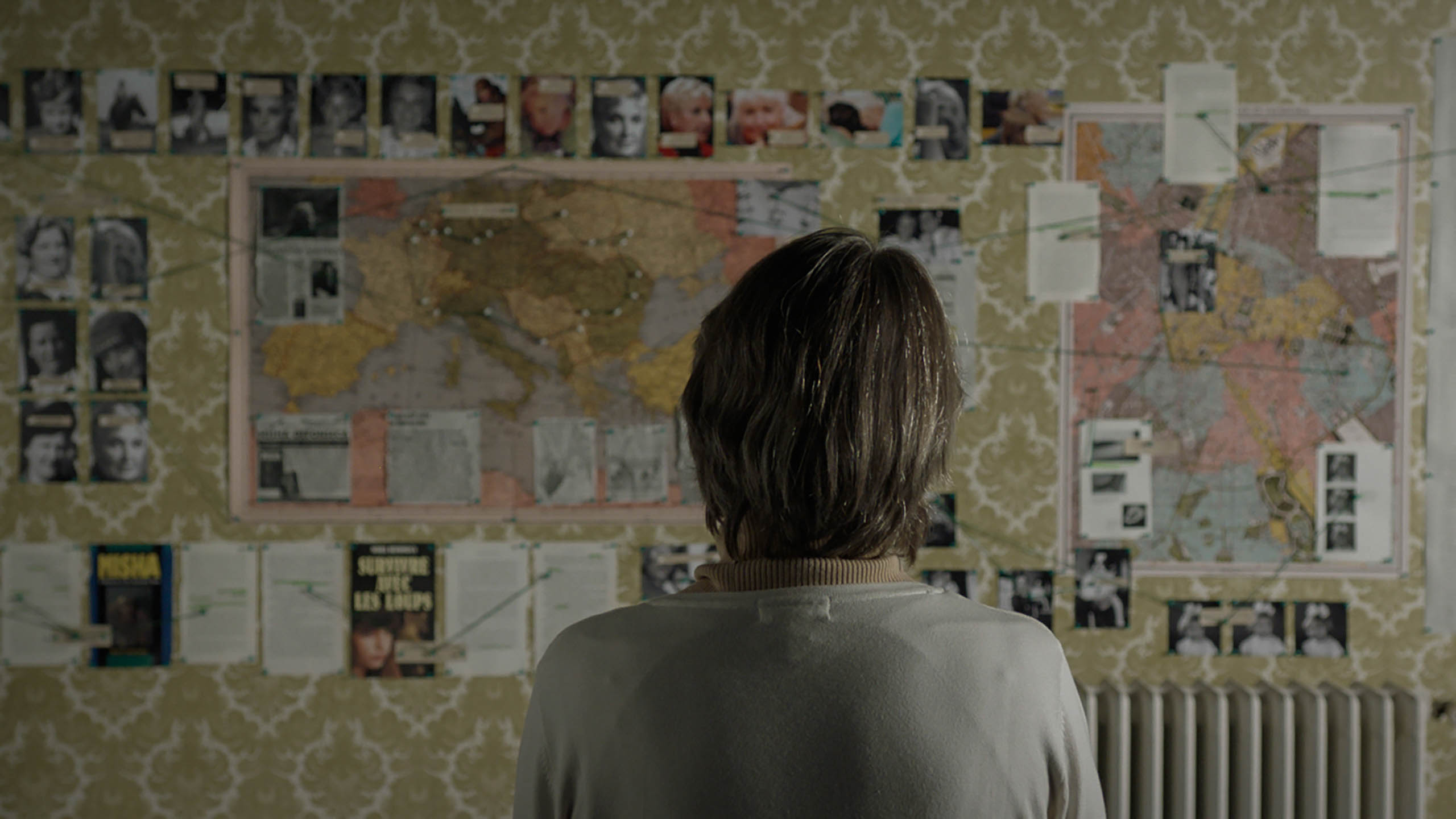
Misha Defonseca had been living in America for years, hazy about her past until one day she started opening up. As a little girl, her parents were murdered by Nazis and into the forest she fled, surviving thanks to the kindness of the wolves who adopted her. You read that right: wolves adopted her. Which is why she’s practically the Carole Baskin of wolves today (if you live under a rock and didn’t watch Tiger King on Netflix last year, you missed out, but long story short, Carole Baskin is the Tiger Queen). It’s a pretty amazing story, so amazing that a publisher comes calling, eager to make millions off the story, and soon Misha’s story is blowing up. Misha gladly travels all over Europe, accepting accolades, repeating her inspiring story, and seeing her book translated into many languages. Back home, she’s a little more reticent. Oprah comes calling and Misha doesn’t call back. Imagine the temerity! Misha’s publisher is pretty miffed at the missed opportunities, but then again, Misha’s pretty miffed at the publisher, who’s hiding money. So Misha sues the publisher and ruins her name and gets a huge judgement because she’s a sympathetic holocaust survivor and the publisher’s just a bitch who bilked her. But actually, the publisher’s beginning to poke holes in Misha’s story, and a researcher well versed in holocaust investigations agrees that Misha’s story isn’t quite holding up. But to accuse a survivor of lying is pretty delicate work and holocaust denial is pretty unpopular.
Hobkinson’s documentary is more twisty and turny than any detective story, and every time you think you’ve figured it out, you’re probably about due for another hairpin curve. You absolutely need to check this one out and be prepared to do your best sleuthing. It’s not often that a documentary can cultivate this much suspense and sustain it during most of its run. It’s a wild, well-told story that’s an engrossing watch and will pay dividends at dinner parties (or zoom dates) for years to come.
You know when you’re on a deep dive into Netflix’s back catalogue and you come across a movie that’s packed full of A-listers that you’ve somehow never heard of before? There’s always a reason.
Bachelorette is a deeply offensive and rarely funny movie that probably meant to be Deep Impact to Bridesmaids’ Armageddon, but wasn’t. It stars Rebel Wilson as bride-to-be Becky and Kirsten Dunst, Lizzy Caplan, and Isla Fisher as her horrible best friends. This trio are quite cruel to Becky, to her face and behind her back. They discuss amongst themselves how impossible it is that their fat friend is the first to be married, and to a good catch at that – rich, handsome, and totally in love with her. They’re jealous, they’re mean, and they’re determined to fuck up her wedding.
On the eve of the wedding, Becky heads to bed while her “friends” get drunk and do coke and fail to find a single ounce of happiness for the bride. In a fit of particular cruelty, Regan (Dunst) and Katie (Fisher) decide to try on Becky’s dress, without permission, and at the same time. The dress does as most would do when taxed with two wearers: it rips down the middle. The rest of the evening is spent in a “hilarious” race to somehow fix the dress before the morning wedding. They’ll get more drunk and do more drugs, and cross paths with the bachelor party on more than one occasion. The dress will be dragged along the sidewalk, get tossed in the trash, and be besmirched by several bodily fluids. And through it all, none of these women ever feels bad or learns a lesson. They’re disgusting human beings but they never face a consequence and they never get called out. I’m half afraid the script doesn’t even realize that they’re pathetic, ugly people.
Bridesmaids was crude and edgy, serving up women behaving badly with style though not always class. It got away with it because underpinning the gross gags and lewd humour was an essential sweetness and an elemental bond that made its hot mess relatable, and grounded. This movie is anarchic but tonally confused, and its characters hideously irredeemable. Even ringing its theme for all it was worth, the film failed to squeeze out even a drop of entertainment. There’s a reason I’d never heard of this movie – I just wish that had stayed the case.
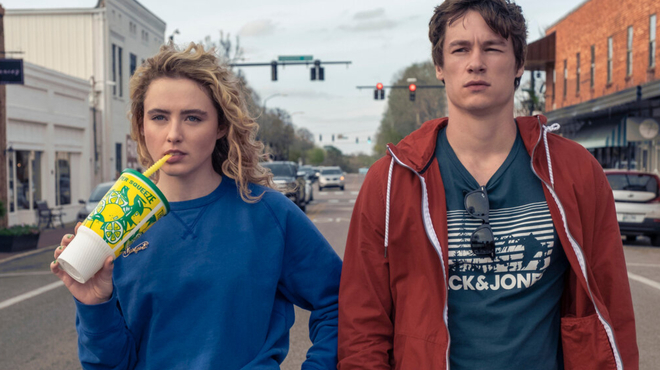
Mark (Kyle Allen) is either the most intuitive human being I’ve ever seen, or he’s done this before. In fact, he’s done this many times before. He’s trapped in a day that won’t stop repeating.
I know, I know. Enough with the Groundhog Day remakes. Almost none of them are good. I do have to give this one a chance, though, because last year Palm Springs made me put in the ‘almost’ before ‘none of them are good.’ Palm Springs was good. It was great. Now that we know it can be done, we have to at least go through the motions of pretending it can be done again.
No one’s more surprised than me that it has indeed been done again. It’s not as good as Groundhog Day of course, or even Palm Springs, but it does justify its existence, which is more than I was expecting.
You see, at some point as Mark is living and reliving his day, showing up with precision timing to making tiny, necessary improvements so that person A doesn’t get pooped on by a bird and person B doesn’t get smacked in the face by a beach ball, he meets a girl, Margaret (Kathryn Newton). And Margaret is the kind of girl who inspires him to use the pick up line ‘Are you by any chance experiencing a temporal anomaly?’ Which is to say that Margaret is also reliving this same exact day over and over, and now they’ve found each other. That’s not what makes this movie worthwhile, though Newton and Allen do have interesting chemistry together. No, what makes this movie worth your time is that they’ve put a new and interesting kink into the genre. Mark has of course been going through the day, obsessively trying to find the key that allows him to escape from this time loop. His current project involves a map of the eponymous tiny, perfect things – those small moments of utter perfection. But Margaret isn’t so keen on helping him. Margaret is actually invested in maintaining the time loop.
Cinematic history has taught me there are two kinds of people stuck in a temporal anomaly: those desperately trying to find a way out, and those who are hopelessly resigned to never escaping. Never have I encountered, nor indeed imagined, what kind of person would actually prefer to remain inside. This unique point of view brings a vitality to the genre that is most welcome. And The Map of Tiny Perfect Things is of course also operating under the ‘young adult romance’ subgenre, using a time loop to really emphasize that adolescent angst. The movie works because it uses these familiar trappings as a backdrop against some charming leads and a sweet story. It’s not essential viewing but if you’re looking for a small delight, Amazon Prime is serving this one up right now.
It’s the end of the world as we know it and Gerard Butler isn’t going to take it lying down. A planet killing comet is head for Earth and John’s family has been selected for relocation to a safe haven in Greenland. Unfortunately, it’s a little rough going and things don’t happen the easy way. On to the hard way! In a 24 hour road trip from hell, John (Gerard), wife Allison (Morena Baccarin) and son Nathan (Roger Dale Floyd) are going to battle literally the very worst of humanity just to hopefully get stuck living in an underground bunker with a lot of other pale, stinky losers, eating tinned peas and condemning their kids to incest and bad eyesight. Haven’t they seen any post-apocalyptic movies? The post apocalypse is awful! Stay home and die with dignity.
But they do not. Greenland is a rote, by the book disaster flick, and that’s not a bad thing. If you’re in the market for an action thriller, this one ticks all the boxes, fast-paced and bursting with adrenaline. It will not surprise you in the least but it takes no breaks and no prisoners as it literally races an extinction level event to the ends of the earth. This is Gerard Butler’s niche and he serves up Action Guy as good as he ever did but the script also remembers to make him a human being whose challenges and flaws don’t disappear just because the world is ending. In fact, director Ric Roman Waugh takes the time to show a more human side to the traditional disaster thriller.
I’ve gone on record before – I am not a survivor. I would rather die a thousand deaths than live without clean fingernails, hot soup, pillow-top mattresses, a good light to read by, air conditioning, online shopping…well, the list is nearly endless. I am what they call “high maintenance” and I am not embarrassed. My happiness is not accidental, it is the result of favourable conditions and many comfort items. It’s basic math. More is more. Plus, I think running for your life is undignified. I won’t even walk briskly for a bus. But Waugh does a decent job establishing this family’s dynamic relationship so we buy the bid to keep them together against all odds, to survive even in the face of deplorable hardship. Greenland isn’t great, but it is a great popcorn flick, a precious commodity this day in age, and she’s available to enjoy on Amazon Prime.
You may already know about this movie even if you haven’t seen it. Sia, the popular singer-songwriter with the oversized wigs, is its director and co-writer, but more importantly, is the woman who made a movie about a young woman on the autism spectrum without casting or seemingly consulting anyone on the spectrum. And when she was called out about it, she got kind of defensive. Understandable, maybe, but not a great look. She has since half-apologized, the very definition of too little, too late.
While I definitely believe that inclusion is good and right, and representation important, I decided to see if I could set the controversy aside and enjoy the movie anyway. The short answer is NO. The long answer is:
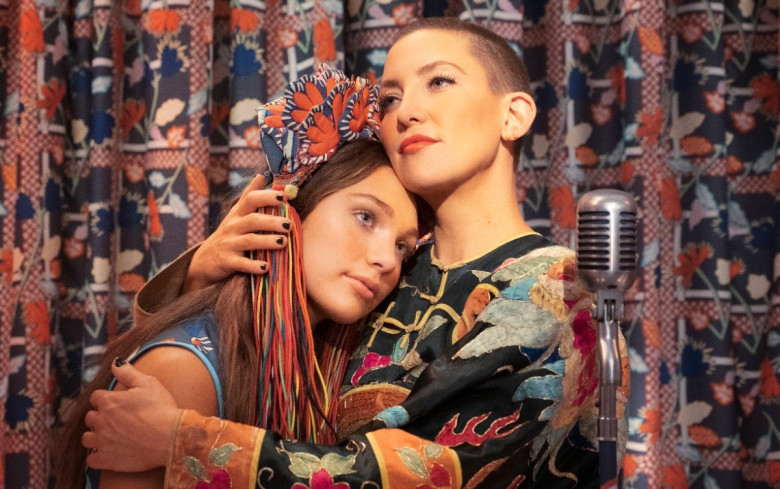
Music is not about a young woman on the spectrum named Music. Music (Maddie Ziegler) lives with grandma Millie (Mary Kay Place), who has carefully constructed a safe space in which Music can exist. Music is barely verbal, but she likes to go for walks and visit the library, and she’s never without her headphones. But then Millie suffers a deadly stroke and Music’s sister Zu (Kate Hudson) has to step up and take custody, which is a real head scratcher since Zu is an addict and a drug dealer recently released from prison and currently on parole. How she gets custody is beyond me. She can barely care for herself, she’s 40 but hardly an adult. Caring for a special needs sister seems wildly beyond her, which is probably why things get so wildly out of control. Anyway, this movie is not about Music, it’s about Zu. Music is merely used as a prop to help Zu achieve her goals. She’s a plot device on Zu’s road to redemption.
While this is hardly Hollywood’s first ‘marginalized person as a plot device’ narrative, it is a particularly offensive portrayal by Maddie Ziegler, who, by her own admission only prepared for the role by watching Youtube videos of kids on the spectrum having meltdowns. Ziegler’s performance is without depth or nuance. It’s one-dimensional, insensitive, and doesn’t begin to describe a person as a whole. But director Sia doesn’t understand this, and the script, co-written by Sia and children’s author Dallas Clayton, isn’t interested in fully-realized characters anyway. Music remains opaque and unknowable, Zu is hardly treated to anything resembling an arc or development, and other characters aren’t just basic but sometimes downright offensively stereotypical. It’s surprising that Sia was able to get the likes of Hector Elizondo, Mary Kay Place, Ben Schwartz, and Leslie Odom Jr. to sign on, but then again, none of them would have seen Ziegler’s patronizing performance until everyone was already on set and the ink on contracts was good and dry. But the whole notion that Zu can achieve some sort of absolution merely by learning to love her “challenging” sister is gross. Music doesn’t exist to make Zu look good. She shouldn’t be used as a way to illustrate someone else’s good vibes and positive intentions. She’s not an instrument or a stop along her big sister’s victory tour; her depiction as such is cruel and irresponsible. Why does a movie named after her fail to see Music as a person?
This patronizing and poorly judged filmed is frequently interrupted by an entire album’s worth of Sia songs – performed by Ziegler, Hudson, and Odom Jr. – and their accompanying music videos, which masquerade as insight into Music’s interior life but are really just an excuse to trade on the director’s only real talent. If only she had merely put out 10 videos instead. The musical interludes are of course pastel pieces of choreography heaven, but they not only have little if anything to do with the film itself, they also get really old really fast. Sia lacks the skill to connect these interjections to the larger story and the videos feel shoe-horned into a film that doesn’t want them. And though Maddie Ziegler’s other Sia collaborations (on her videos for Chandelier, Elastic Heart, and Big Girls Cry) are borderline genius, these are of course tainted by Ziegler’s self-evidently problematic aping of disability.
The film’s ignorant and infantilizing portrayal of autism is disastrous, so it might be a good time to yet again point out that actually involving people on the spectrum in this film’s conception, casting, development, and shooting would have resulted in something more authentic and representative. I know it’s tempting, in today’s cancel-prone culture, to dismiss or boycott this film, but I think that we can still learn valuable lessons from bad art. And Music is very, very bad. It’s so bad that it should serve as a new benchmark for productions going forward. It’ll be harder for mistakes like this to be made in the future. That’s not so much a silver lining as a tin foil lining, paltry perhaps, meager consolation, but it’s important to remember that a movie like this doesn’t just do a disservice to a marginalized community, it sets us all back, our understanding and our empathy and our ability to build a more inclusive society. Music isn’t a disease, it’s a symptom, and the only way we can be part of the cure is to talk about the way forward.
Kristen Wiig and Annie Mumolo, the duo who wrote the runaway hit Bridesmaids, are back at it again, cracking us up with a less raunchy but no less funny comedy about women in the prime of their life.
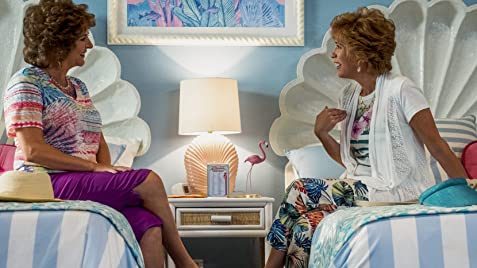
Okay, maybe not quite prime, but if they’re no longer bridesmaids, they’re not quite old maids. They’re single (divorced/widowed) and ready to mingle. Barb (Mumolo) and Star (Wiig) do everything together these days: they live together, work together, and go to Talking Club together. Rather awkwardly, Talking Club’s topic of the day is ‘jobs’ and Barb and Star have just been fired. Not even their famous hot dog soup can soothe these wounds. Listless, they take a cue from an acquaintance who’s just returned from a vacation she describes as a “douche for the soul.” Inspired, Barb and Star pack a whole range of culottes and some other essential items and head for that special section of Florida where luxury meets coconuts.
Barb and Star are about to have the vacation of their lives, and not just because it’s the first time they’ve ever left Nebraska. An evil villain named Sharon (also Wiig), an evil paperboy named Yoyo (Reyn Doi), and evil minion Edgar (Jamie Dornan) are plotting, well, evil, and its epicentre is Vista Del Mar! Luckily or unluckily, henchman Edgar just happens to be hunky, and Barb and Star have been starved for some luvin. Boy does this complicate their vacation! Barb’s lying to Star, Star’s sucking face with Edgar, they’re all dancing to a Celine Dion Titanic remix, and a soul douche is about to become a very wild ride!
The plot manages to make some sense despite being wildly absurd, but mostly you’re watching because Barb and Star are just so darn charming. Mumolo and Wiig still got it going on. I worried that these characters might seem like something better suited to an SNL sketch, but I didn’t need the trappings of the film, I would have been happy just spending time with the Talking Club. Although Barb and Star are caricatures, they’re made up of so many clever little details you won’t fail to find something familiar about them. They’re over the top but never annoying and never too much.
Production design, art direction, and costumes all come together in a wacky, tacky riot of pastel kitsch – and did I mention the random musical numbers? Barb and Star Go To Vista Del Mar is unapologetically and exuberantly silly, fully committed to the twin performances by hilarious comediennes Mumolo and Wiig, and pretty much the perfect comedy and it has been a long while since I said that about anything. We’re all in need of a little escapism right now and this movie is a glossy brochure for a middle aged vacationer’s delight – it smells like Red Lobster and looks like a Metamucil-yogurt commercial. What more could you possibly want?
After a terrible encounter with her boss inspires her to put her head in an oven, Ana finds herself on a mysterious island of girls – but this is no Themyscira.
On this island, Ana (Grace Van Patten) joins Marsha’s (Mia Goth) army of girls where war is constantly being waged against men. Along with Bea (Havana Rose Liu), Gert (Soko), and June (Juliette Lewis), they lure what appear to be WWII-era planes of soldiers with mayday calls of distress. Planes that answer the call and steer toward the island are mysteriously wrecked, and any men who survive and wash ashore are taken out by the girls, who’ve been training as snipers.
If the island is meant to be some sort of limbo for suicides, it’s populated by women who’ve been done wrong by men and are out for revenge. There is strength in numbers and strength in taking one’s power back, but while the island’s unique mission is exhilarating at first, Ana comes to realize she’s not entirely the killer Marsha wants her to be. Leaving won’t be so easy, though. Even if there’s a way to leave, Marsha isn’t keen to lose her newest recruit.
I love the vision and I love the attempt but I didn’t love the movie. The island is a great premise for exploring feminism and suicide but it doesn’t know how to create tension or sufficient reason to keep watching. Director Karen Cinorre is clearly very talented at putting together snappy, stylish visuals and has a knack for emotional dexterity, but Mayday needs a better grounding, better world building, better character development. Without those things, the film lacks dramatic propulsion and a good idea just never really becomes a good movie, but Grace Van Patten makes a strong case for future roles and Cinorre is a director to look out for.
Work sucks. Home sucks. Life sucks. Val (Jerrod Carmichael) springs his best friend Kevin (Christopher Abbott) from the psychiatric facility where he’s being held so they can commit suicide together. Kevin attempts it regularly, which is why he’s currently being held, and Val has recently begun to think that this is the only logical solution. Two best buds, two guns, one parking lot, and one suicide pact. But at the last minute, Kevin doesn’t shoot his best friend in the head, which admittedly is a little hypocritical since he’s usually pretty cavalier about suicide. But Kevin’s recent brush with death and even more recent suicide pact has him thinking that one last day might be in order before they go.
Val’s idea of ‘one last day’ involves things like riding dirt bikes and drinking beers, while Kevin’s is a little more revenge-based, so the actual trajectory is a mix of both, with stops to see Val’s pregnant girlfriend (Tiffany Haddish), Val’s deadbeat dad (J.B. Smoove), and the doctor who messed up Kevin as a kid (Henry Winkler). Kevin thinks this is an opportune time to commit some murder – he can save future kids from the sick doctor, and avoid paying any consequences. Val isn’t exactly on board, so there’s some negotiating to do here, but that’s the unique and oddly wonderful thing about this film. In between all this tragedy and trauma is a very strong friendship between these two men. They’ve been there for each other and continue to be on their last day, and will each pull the trigger on the other when the day is over. Their bond is surprisingly sweet and at times even intimate. It’s not exactly what you might expect from a couple of guys plotting suicide in a parking lot.
Jerrod Carmichael is a first time director yet seems to have a natural inclination for strutting the thin curvature of such a dark comedy. On The Count of Three is edgy just by virtue of its premise but at its heart are some pretty universal themes of despair and hopelessness. The film doesn’t have a lot of bells and whistles but it does have the balls to take on this heaviest of topics and Carmichael’s skill is sharp enough to pull it off in a way that is completely disarming. How can this little film fill you with heartbreak but leave you with hope? It isn’t as bleak as it sounds, for one – the camaraderie here is infectious, and the pairing of Abbott and Carmichael is inspired. The characters are wounded and neurotic but they balance each other out and have some moments of truly beautiful connection that make you root for them even as they plan for their own demise.







 ASSHOLES WATCHING MOVIES