The Banker

Bernard Garrett (Anthony Mackie) grew up overhearing white people’s business schemes as he shined their shoes, so he knows he’s just as smart and just as capable. In Texas in the 1960s, however, the world is designed to limit his ambition and rob him of power. But still, he dreams, and he follows those dreams to Los Angeles, where he meets Joe Morris (Samuel L. Jackson), a potential partner with as much audacity as he.

Joe is already a successful businessman; he owns several properties. Bernard, however, wants to get in on the real profit. He wants to own buildings in white neighbourhoods. Even in L.A. there are many barriers to this happening, so they convince their handyman Matt (Nicholas Hoult) to become the white face of the company. They teach him algebra and golf, the white man’s business necessities, and he basically becomes their puppet, the representative who shakes all the hands and signs all the contracts while his mysterious business partners remain names on a ledger, though both remain hidden in plain sight – as a chauffeur, and a janitor. This strategy is incredibly fruitful for them, but Bernard won’t really feel successful until he can do the same in Texas, so eventually they go back, and they buy a bank. A bank! A bank that will be the first in its area to give loans to Black clients, business owners and first time home owners. They have to do this work incredibly surreptitiously of course, because it’s still Texas, but this endeavour really has the power to transform the entire community, which of course has never had this kind of opportunity for upward mobility, which is to say, the same kind that white folks take for granted. Which is why some 1960s Karen feels the need to intervene. In 1960s Texas, Black audacity is just about the biggest crime there is, so they don’t just get a police response, but the FBI as well. Of the three men involved, can you guess which two are arrested and charged? Yes, go ahead and assume this will be based solely on the colour of their skin.

The Banker is a safe movie that leaves all the risks to its bold lead characters. Director George Nolfi is content with a pretty standard biopic, which in this case is fine, as the revolutionary entrepreneurs depicted are so vivaciously brought to life by both Mackie and Jackson. Proper credit goes to Nia Long also, who portrays Garrett’s wife, Eunice. Happily Long is given actual work to do, the wife not just content to stay in the home, but very much involved in the family business. Eunice was always the first to recognize her husband’s genius and her support must have meant the world, but that would have been a very big deal, to risk her family’s stability in order to indulge his ambition. Eunice was a trailblazer herself, and Nia Long makes the most of it.

Based on a true story, the pursuit not just of the American dream, but of equal access to said American dream, is a story worth telling every time. The magnetic banter between Mackie and Jackson is just surplus on the ledger.
Asphalt Burning

About 20 minutes into this movie, Jay decided it would be worth throwing her laptop at the TV if it stopped us from watching any more. Honestly, I am surprised it took that long for her to get to that point.

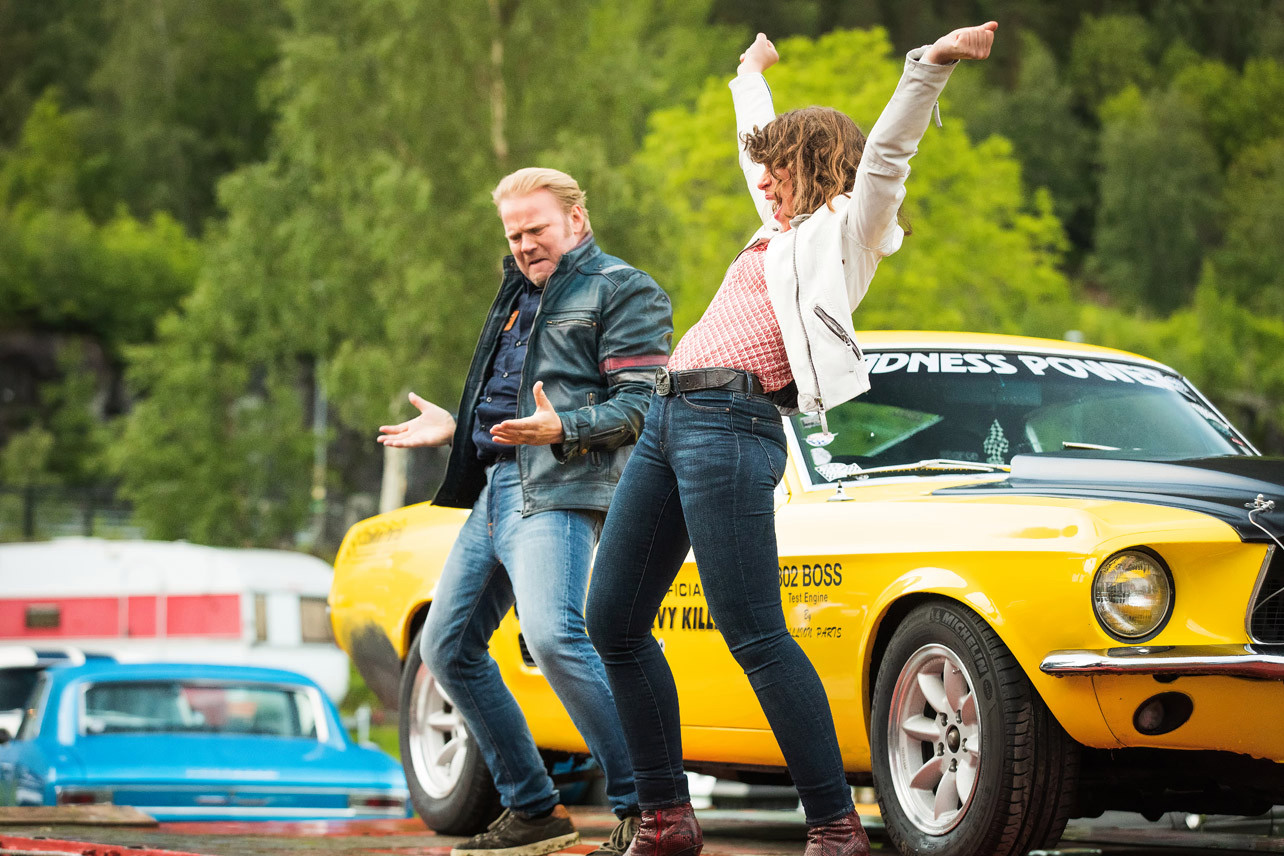
Roy (Anders Baasmo Christansen) is a Norwegian car junkie and proud Mustang owner who, while celebrating his upcoming wedding, kisses his fiancée’s ex-girlfriend Robyn (Alexandra Maria Lara). Despite Roy’s best attempts, for some reason his fiancée Sylvia (Kathrine Thorborg Johansen) does not agree that the kiss shouldn’t count because Roy could not have known the two knew each other. Roy’s only chance to win Sylvia back is to travel from Norway to Germany’s Nürburgring and beat Robyn’s Porsche on its home track, in a race for Sylvia’s hand. Sylvia is surprisingly satisfied with this arrangement despite every single minute of in this movie proving that marrying Roy is a terrible idea.

Having raced on a virtual Nürburgring in both Gran Turismo and Forza Motorsport I can confirm that Roy’s Mustang would have no chance at all there against Robyn’s Porsche, but of course the race is going to play out very differently in Asphalt Burning than in virtual reality, let alone real reality. Still, despite being totally unrealistic, the final race is actually one of the more believable parts of this film, even factoring in a bizarre tour bus subplot which I cannot even begin to explain.

Clearly, Asphalt Burning had aspirations of being Europe’s answer to Fast & Furious, or at least Cannonball Run, but it comes at least a quarter mile short of that not-so-lofty goal. There is a valuable lesson to be found here for any filmmakers with similar aspirations, though: do not use CGI to stand in for practical vehicle effects. If you can’t make a trick happen with a combination of practical effects and editing, then don’t make that trick a part of your film. Not coincidentally, all of Asphalt Burning’s stunts seem to have been done entirely on a computer.

It’s not helping anyone to include totally unbelievable and unrealistic stunts in your movie. It’s distracting, it’s annoying, and it’s going to make me hate your movie even more than the bad dialogue, dislikeable protagonist, and inane plot points already did. As always, I should have listened to Jay.

Charming

So let me tell you about a movie that never should have been made. I might sometimes admit that certain bad movies have a right to exist, but this particular movie should be wiped off the face of the earth just to preserve human dignity.

Three decades elapsed between Disney’s Sleeping Beauty (1959) and The Little Mermaid (1989), three pivotal decades during which feminism swelled and laid the groundwork toward a sexual revolution and a women’s liberation movement. When Disney eventually went back to the princess well, it knew that passive, unconscious princesses were passé, and Ariel, the feisty, rebellious teenager was born. She is problematic in her own ways of course, but she was the first step on a path toward more progressive princesses like Anna and Elsa. Disney didn’t get there overnight. According to Charming (which I must stress, is NOT a Disney property), they needn’t have bothered. Though this 21st century film just got its North American release in 2021, it seems determined to set feminism back by about nineteen decades or so.

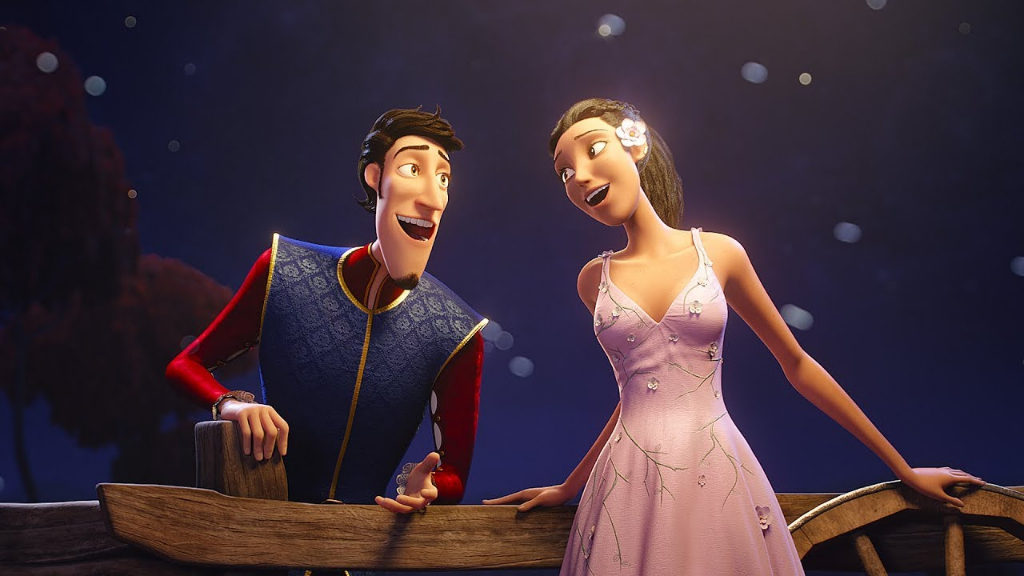
Need I say: written and directed by a man (Ross Venokur), this animated film has somehow decided to revisit those first three passive princesses, and stomp them further into the ground. According to the premise, Snow White (Avril Lavigne), Cinderella (Ashley Tisdale), and Aurora (G.E.M.) find themselves all simultaneously engaged to the same man, Prince Charming (Wilmer Valderrama). Although still very much leading them on, he plans to marry none of them. He’s not in love, he’s just cursed with being excessively charming. So gold-diggers like these princesses are actually planning their weddings and he can’t be bothered to let them know he’s just not that into them.

Note: though the princes in these first 3 Disney princess films don’t get elaborate back stories, they are three different and distinct princes. Only Cinderella’s prince is referred to as Charming; Aurora’s prince is named Phillip, though Snow’s is only ever called The Prince. And as for gold-digging, that’s not coming from me (Aurora and Snow are already princesses in their own right, and Cindy’s got some legit hustle), it’s actually the subject of an entire song called ‘Trophy Boy,’ inexplicably written by Fallout Boy’s Patrick Stump, with lyrics like “I want that ring on my finger like I want that crown” and “I don’t even care if he ever makes a sound just as long as when you see me, he’s around, and he’s bound to me.” Dear god.

Anyway, part of Charming’s charmed curse is that he has to find a true love before his 21st birthday or his kingdom will be doomed to live without love for all eternity. With his birthday just days away, King Charming sends him to run a gauntlet, a series of macho challenges designed to make him a man (raise your hand if you just vomited in your mouth a little) which somehow should help him find his true love. Don’t look at me, I didn’t write this stuff. Apparently neither Charming is confident in Junior’s ability, so they hire a guide, Lenny, to help him through. Only Lenny is actually – gasp! – a woman, Lenore (Demi Lovato), in disguise. And by disguise I of course mean a fake mustache. Lenore is a thief and is only interested in Charming’s money – that is, until she too falls victim to his inimitable charms.

This movie is an entire dumpster’s worth of sexist trash and my only hope is that this review symbolically lights it on fire. Watching it burn would be the only entertainment derived from this film, which is also incredibly miscast, extremely dull, and has mediocre animation at best. Nothing about this film works. It’s baffling that a movie can be this bad. If Venokur was gunning for ironic rather than moronic, he needed the help of a better writer and a more intentional director. Instead he puts his own curse on the film, and believe me, excessive charm is NOT its problem. I feel bad for the innocent victims caught up in its clutches: John Cleese, for example, who voices the Fairygodmother, and Sia and Steve Aoki, who also contribute songs.

Whatever you do, do not put scorch marks on your 2021 this early on in the year by accidentally watching a movie that will infuriate you. Protect your children from it. Hide the ashes of this review underneath the nearest rug. Let’s pretend it never happened. Ptooey (that’s the sound of me spitting on the embers). Peace out.

Love On Ice

Spencer (Andrew Walker) came to town to coach skating prodigy Nikki to gold at regionals and beyond, but it’s her former skating teacher Emily (Julie Berman) who catches his eye. Emily is cute, single, and age appropriate, but she’s also a former pro skater herself. She gave it up 8 years ago to care for her dying mother, but Spencer thinks there’s still greatness in her, and when Emily finally allows herself to look deep within, she finds she’s still got the heart of a competitor.

Of course, there are a few obstacles, not even counting her (relatively advanced) age, or the many years she’s spent off the competitive circuit and not in competitive shape. There’s her relationship with Nikki, for starters, a very nice young girl who didn’t really deserve to have her coaching time split though it would seem she was still paying full price. And Nikki’s super alpha competitive mom, Mia, who doesn’t appreciate the interference or a less than militaristic style of coaching . And Nikki’s new coach slash Emily’s old coach, Lindsay, who is ruthless and plays dirty. And a local reporter who puts skating rink gossip on live TV as if people would actually care. And money, always money. And there’s the fact that Emily’s maybe falling in love with Spencer, and Spencer’s maybe falling in love with her. Just a few obstacles to an ideal comeback, but who’s counting?

Between training montages, diner fundraisers, obligatory skate sharpening cuts, and a very odd “kids these days,” “old ladies don’t like rap” scene (wherein the old lady was a 27 year old), there was very little time for romance. Which was just as well because I don’t think Andrew Walker is particularly good at acting in love, an unfortunately flaw when Hallmark is your bread and butter. As much as I rolled my eyes at the title, Take A Shot At Love was a much better skating-themed Hallmark romance, if that’s your jam.

Herself

Sandra’s husband Gary apparently has such a history and pattern of abuse that she has an emergency protocol in place with her young daughters; the eldest (who is maybe 8), takes off for the nearest corner store with a tool box. Inside is a card instructing the shopkeeper to call the cops as her life is in danger. Meanwhile, the youngest daughter cowers in the backyard, watching her mother get stomped on.

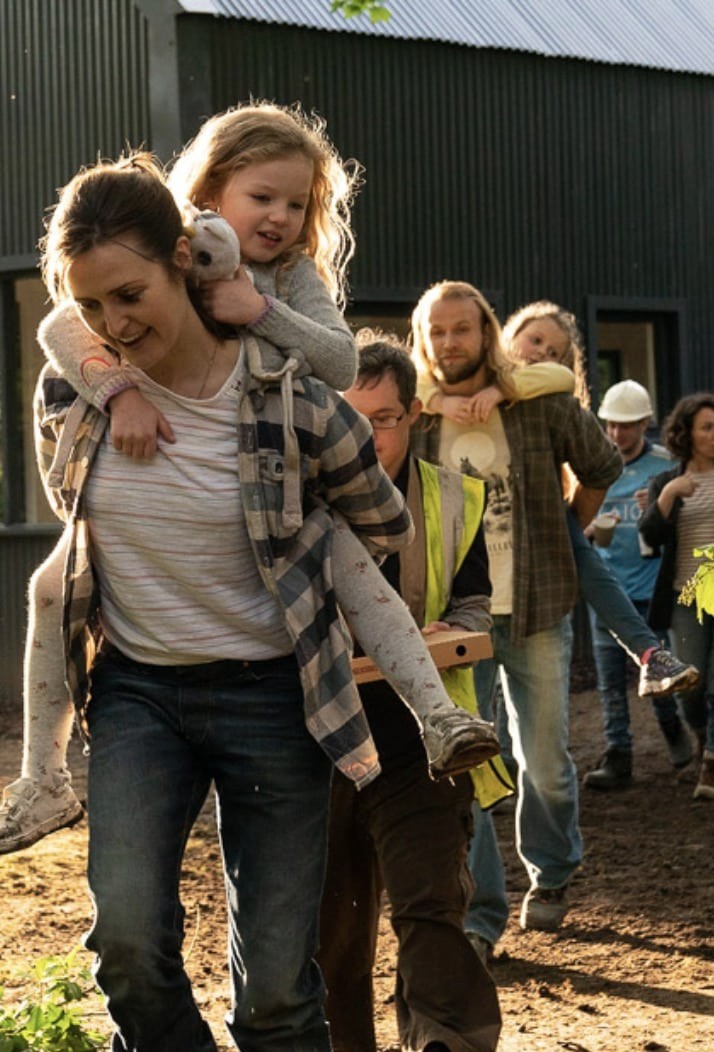
This, apparently, is the last straw. She leaves, but working several jobs still leaves her short at the end of the month, and the three of them are living in a hotel because Dublin is apparently short on public housing. Fed up with welfare’s shortcomings, and with Gary still lurking around, asking for another chance, Sandra (Clare Dunne) takes things into her own hands. With a generous land donation, she prints off DIY instructions from the internet and prepares to build a small home for herself. It’s an unsubtle metaphor for the kind of rebuilding her life needs and deserves generally, and the more she opens up and asks for help, the easier it becomes and the fuller her life is. Abused women are often isolated, which is part of what makes it so hard to leave. Building a life is about more than just pouring concrete and laying floors; it’s about trusting people again and creating your own safe space.

Unfortunately, the abuse doesn’t always stop just because the woman leaves, especially when there are kids involved. She has two adorable little souls tying her to a man she’d rather never see again, and even the court will keep forcing them together.

Phyllida Lloyd’s Herself is perhaps trite, but sensitively told, allowing the power of the performances to take centre stage, and Clare Dunne proves herself worthy of the confidence, never over-reaching the emotional beats. Herself may be a difficult watch at times, but it’s also gratifying; Sandra has a voice, and Lloyd gives her a beautiful cinematic platform from which to use it. She aims a few choice words at an uncaring bureaucracy that deserve cheers from a jaded audience. There are no easy breaks in Sandra’s life, but Dunne allows her empathy and grace, which are more important anyway.

Summerland

Alice (Gemma Arterton) is a reclusive, curmudgeonly writer, whom the locals refer to as “the witch.” Her writings often pointedly refer to the various ways women have been unfairly portrayed, but what are you going to do?

One day, a young boy named Frank (Lucas Bond) shows up at her door, an evacuee from London to be kept safe during the WW2 blitz. Alice doesn’t like kids. To be fair, it seems to be her general regard toward all humans, but Alice doesn’t want a kid in her house. It’s nothing personal against Frank, she just has work to do and no fucks to give. She reluctantly agrees to house him temporarily, until another family can be found. But pretty much everyone in her small village has already taken in children and she does have a big ole house all to herself.

As Frank begins to worm his way into her heart, we learn that Alice’s self-imposed isolation is the result of a broken heart, a forbidden romance with another woman, Vera (Gugu Mbatha-Raw), who is now just a figment of her past, though one that still haunts her. Clearly Alice has lived with only her memories for a long time, but with a real boy as her roommate, she’s brought down to the human realm where there is a war going on and people, such as Frank’s parents, are in real peril.

This film nearly lost me, being just a little too easy, a little too neatly contrived. However, it’s anchored by a performance from Arterton that just floored me. Alice’s naked longing and repressed self-expression are controlled with such precision by Arterton, it’s a remarkable role for her, but she’s actually got some very able costars from a surprising place – the kids. Both Bond and Dixie Egerickz, who plays Frank’s playmate, are wonderful, offering grounded and thoughtful performances considering these kids are growing up in a time where childhood is pretty much non-existent

I remember reading about young war evacuees when I was a kid myself, and I’ve always been fascinated by this ultimate act of mutual aid, adopting a stranger’s child, sheltering them during a difficult time, providing a safe home for kids at risk of dying in air raids in the city. Mothers had to place such trust in the kindness of strangers, and strangers had to step up with very little the way of thanks or even acknowledgment, and kids had to grow up without their parents. There would have been little communication and tonnes to worry about and it seems like such an act of grace in the middle of a literal war. So despite the film’s shortcomings, I still appreciated a window on this particular view, and what a lovely view it was, with lots of sights to behold.

Winter In Vail

Please for the love of retinol in my skincare and all that is holy, will you please let me know in the comments whether you’ve ever inherited something from a long-lost uncle? And I don’t mean the ones you hear from in your spam folder. Those uncles don’t count. I’m talking cold, hard inheritance, in your hands, at whatever rate of taxation your country pretends is fair.

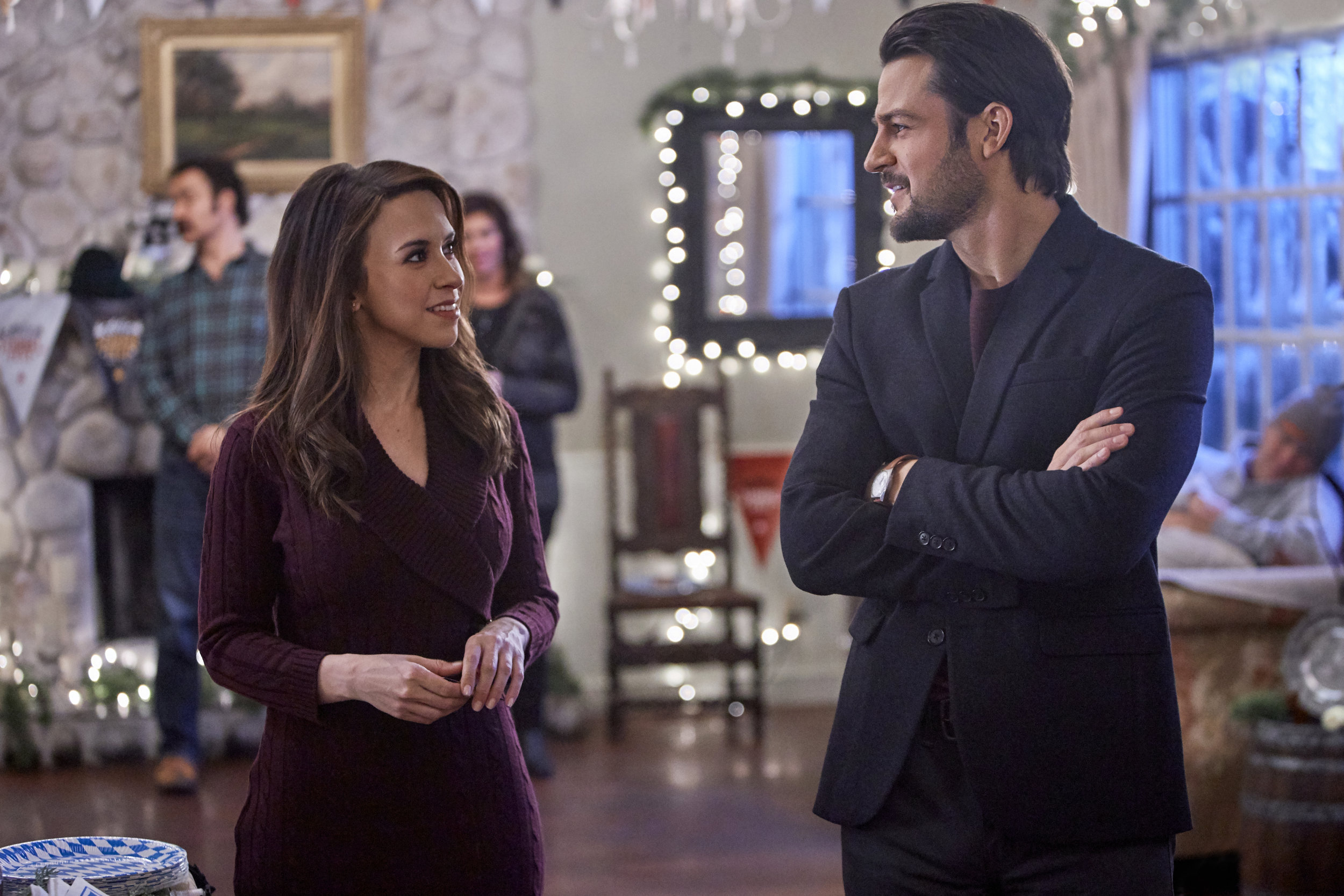
Clearly all of my uncles are duds. My which of course I mean poor. Or, you know, “middle class” (same difference). But in the movies, uncles are wonderful. They make zero demands on you. You may have even forgotten they exist. You let them die alone in their big old houses and then one day you get that jackpot call from a lawyer who’s almost as incredulous as you are. That’s how it happens Chelsea (Lacey Chabert), only her dead uncle’s lawyer spares her even the awkward phone call. One no-nonsense letter later, she’s the proud owner of a property in Vail. Up until this point she’s been a hard-working party planner in Los Angeles but she suffers – well, not exactly a set back, but a disappointment based on a rumour from Larry in the mailroom she only heard about 20 minutes ago. So I’m not sure how close to her heart this sudden hope could really have been, but between that and her new landfall, she quits her job and high-tails it to Vail, a picturesque ski resort town in Colorado.

In Vail she immediately makes friends with all sorts of Vail legends, who all knew her dead uncle of course, but makes an enemy out of the one man she’ll need to rely on, out of a parking dispute of all things. Owen (Tyler Hynes) is a former architect turned handyman, and he’s the only one who can help her restore her uncle’s house into a livable home (turns out he was mid-renovation, and that phone call might have come in handy after all). Though she no longer has an income, Chelsea somehow finds the money to restore plumbing, heating, flooring and more, all the while kitting herself out in more than one new ski ensemble.

Turns out, handyman Owen is actually in town to help his dad stabilize his struggling restaurant, which used to be co-owned by Chelsea’s uncle. Old Vail is being left behind by tourists for newer, fancier more high-end options, and many businesses are failing. Chelsea decides to put her event planning skills and her dead uncle’s recipe to use, co-founding StrudelFest along with Owen to highlight the charm Old Vail still has to offer.

Romantic strudel making ensues. Strudel wooing follows. But when Chelsea’s old boss comes begging for her to come back, what happens to Vail, to her uncle’s house, and to her new something-something with handyman Owen? Guess you’ll have to watch to find out 😉

Bridgerton

It’s hot, it’s steamy, you know you want to (and chances are, you already have: this series has been ULTRA popular on Netflix). It’s deliciously anachronistic, unapologetically salacious, and totally bingeable. The costumes are sumptuous, the dialogue sparkles, the sets are incredible, and the romance is as soapy as it is sexy. Plus, the ensemble cast has incredible depth and talent, led by a luminous Phoebe Dyvenor and the brooding sex-beast Regé-Jean Page as The Duke.

We don’t normally review series here, but we’re unconstrained and unstoppable on Youtube.

Drop in and leave us a Like and a Subscribe – this out of work movie critic would sure appreciate it.

Taking A Shot At Love

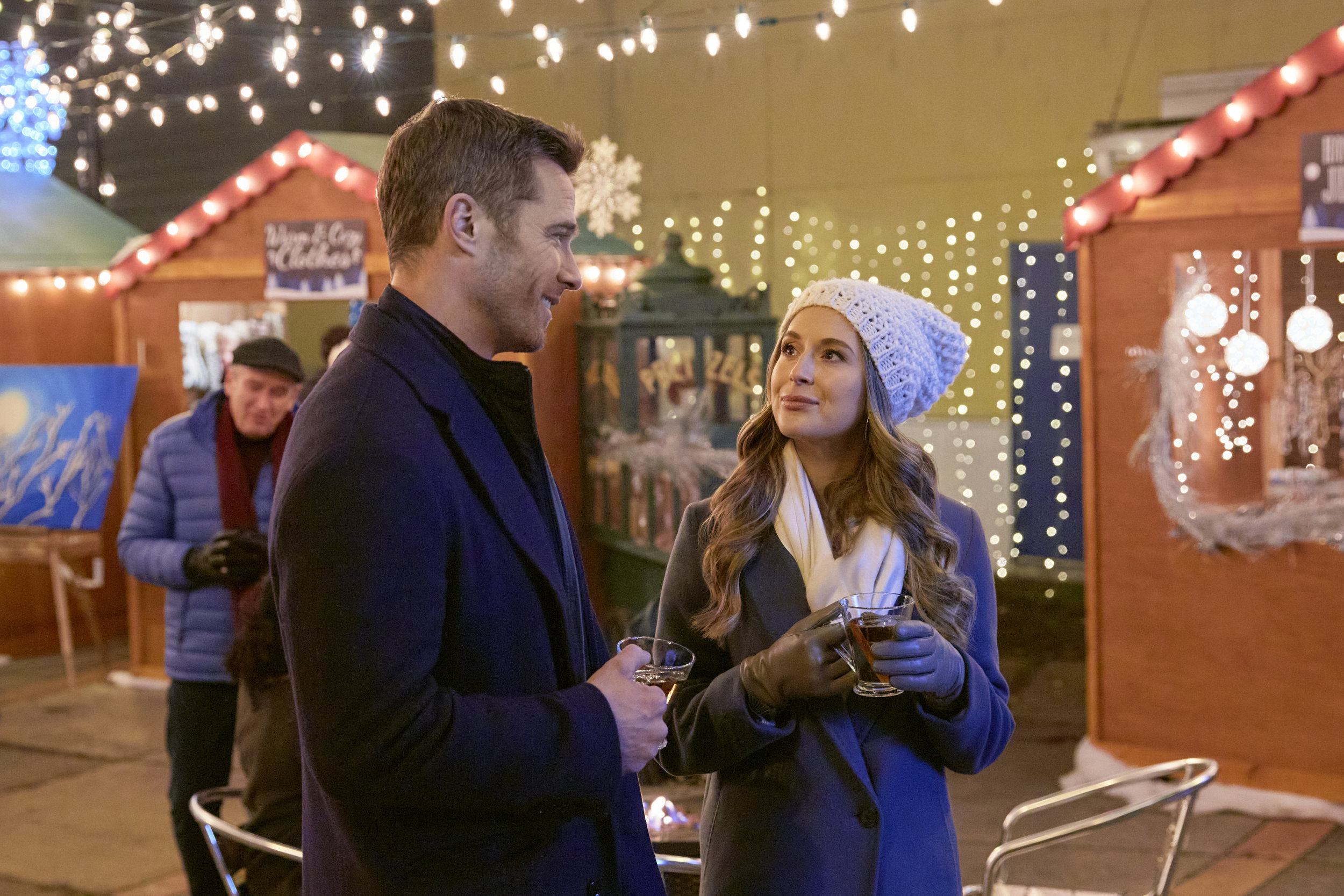
Ryan (Luke Macfarlane) is a professional hockey player who’s trying to come back after a complex ankle injury. None of the usual rehab protocols have gotten him to where he needs to be, so his agent proposes something radical: ballet. The agent’s cousin Jenna (Alexa PenaVega) is a former professional dancer who was able to make a comeback after the same injury, using some fundamental ballet exercises. Since her dance studio is struggling, she agrees to take on Ryan as a rehab patient (although, to be clear: she is completely unqualified to do so) and since he’s desperate to get back to the NHL and has no other options, he’s in too.

This Hallmark movie has a ring of The Cutting Edge to it, certainly enough for a toe pick loving girl such as myself to get a little excited just by the premise. Almost all of Hallmark’s winter-but-not-Christmas themed movies are about skiing, so hockey was a nice change of pace. Of course, it wasn’t really about hockey, it was about ballet and ankle injuries. And it wasn’t so much about ballet and ankle injuries as it was about falling in love on the dance floor.

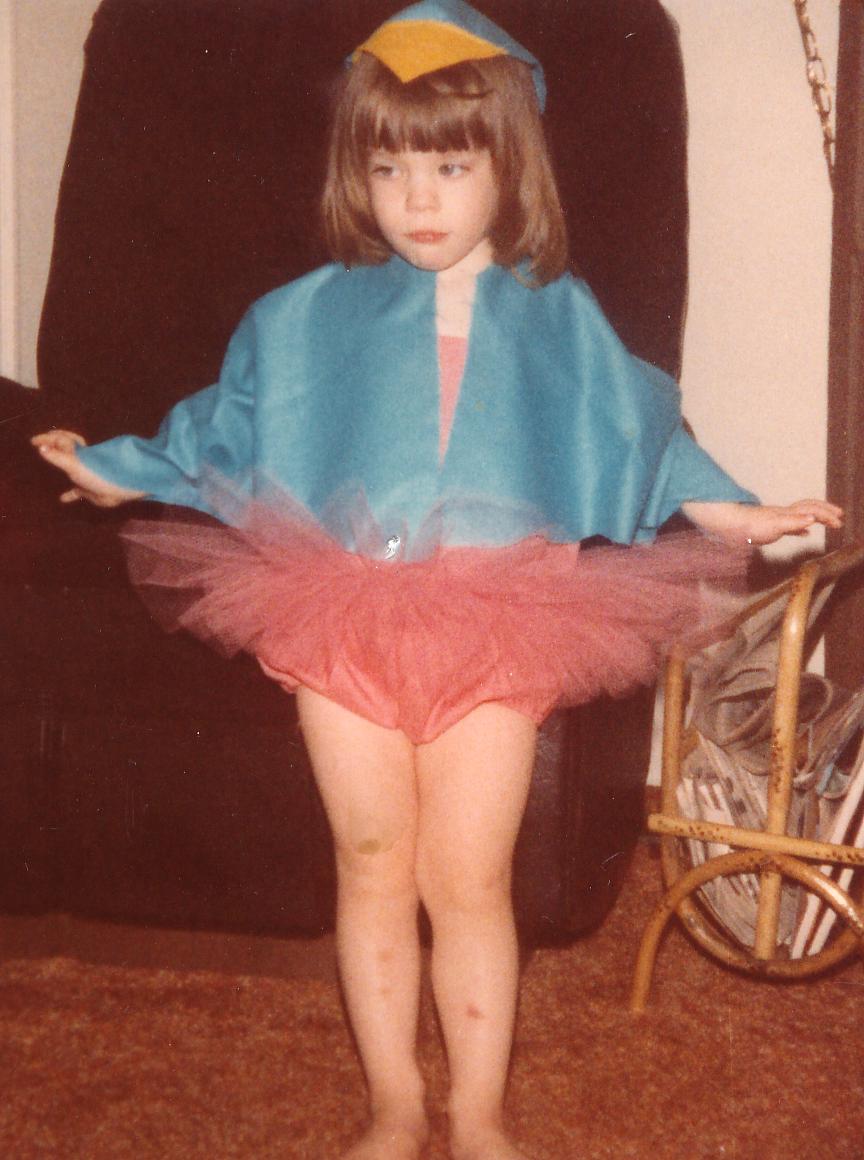
I am rehabbing from my own ankle injury and have been since…2012. Yeah. It’s a crapfest. I was in actual literal rehab for it right before the pandemic hit, and not so much since, unfortunately. I wore nitro patches on my wonky tendon for the past year and have had several cortisone injections in the joint which has now gone arthritic. I just heard back from my doctor after my second (ankle) MRI, which has now been sent off to an orthopedic surgeon who, mark my words, won’t be able to do anything either. I am doomed to limp in pain forever. Although, to be honest…I haven’t tried ballet. At least not since the ankle injury. I did do ballet as a little girl (and despite my expression in the photo, I was generally pretty thrilled about it) but I don’t remember it being very ankle-forward at the time.

To my surprise, Taking A Shot At Love, despite the horrible title, is an unhorrible Hallmark movie. Jenna’s all about that hygge life, Ryan’s not afraid to be unmanned by a woman, and when the power goes out, they keep each other warm. PenaVega and Macfarlane are in Hallmark’s top tier of talent and their charm and chemistry are not just watchable but delightful. If you’re looking for a cozy Hallmark romance to take the edge off, this new addition to their lineup is a straight up goal.

Pieces of a Woman

Just a reminder that the wonderful Pieces of a Woman hits Netflix today. We reviewed back in September as part of our TIFF coverage and it’s got a damn good performance from Vanessa Kirby but as good as she is, let’s be real: this is going to be a very tough movie for a lot of people. If you are pregnant, don’t watch it. If you’ve lost a baby, consider skipping it. It’s okay to protect yourself.