Uncut Gems

Two minutes into this movie, I was over it. Ten minutes later, I was completely done. I kept watching. I pushed through the pain, and it WAS painful. It was just a bunch of angry men shouting at, and over, each other. Scene after scene just yelly chaos, and it wasn’t really an energy I was expecting or felt I could handle. But I kept watching because I realized this was exactly what directors Benny and Josh Safdie wanted me to feel.

Howard Ratner (Adam Sandler) is a New York City jeweler – not at Tiffany’s or Harry Winston’s, but in one of those shady-looking mess of stores in the diamond district where the real shit goes down. He’s got Furby pendants in his case and watches of questionable origin in his safe. It’s the kind of place you have to know about, or be lured to, and get buzzed in, which contributes to the seediness rather than a sense of security. Anyway, Howard is a wheeler and dealer always looking to get rich quick, and he needs to get rich because he’s got a girlfriend stashed in an apartment, hidden from his wife and kids, so he’s supporting at least two households that we know about. But his big score just came in: a black opal that’s going to net him a cool million. Except Howard’s not the kind of guy who does well with cash in hand, or even with just the possibility of it. He’s going to parlay that potential (but as yet unrealized) money into yet another high-stakes bet. Yup, Howard is a gambler, big time, and he owes money all over town. Because of course he does. The walls are closing in, the tough guys are getting antsier, and he’s pretty much out of moves.

So yeah. Howard’s life is pure and constant chaos, and the damn Safdie brothers are determined to make us viscerally aware of it. His frantic juggling act makes for uncomfortable viewing.

Adam Sandler is very good as a slimy man living on the brink. Rationally, we know that he’s on the brink of ruin, but addict that he is, inside the Vegas-like interior of his brain, with constant lights and sounds fooling him into believing him the next hit is sure to be the big one, he can’t stop. He just KNOWS that he’s due. And it’s actually very sad to watch someone hustle so hard, so deeply in denial, so dangerously mired in so very many bad situations. And Sean wants me to tell you that Kevin Garnett is also quite good…as Kevin Garnett. The he tried to show me some dated basketball clips so I pretended I needed to go for a very long pee. I think he got the hint.

Anyway, Uncut Gems is rough viewing and the only quiet moments are when we’re literally up his poop hole – and yes, that’s problematic in itself and definitely a weird kind of reprieve. It’s polarizing at best. Challenging for sure. Anxiety-triggering. A masterfully manipulated roller coaster that ends, I suppose, the only way it really could.

Oscar-nominated shorts 2020

Hair Love: nominated for short film (animated), directed by Matthew Cherry, Everett Downing Jr. & Bruce Smith

A father does his daughter’s hair. Normally I’d be extremely dismissive – these types of videos go viral all the time, the world falls over itself to applaud dads for attempting the things mothers are expected to do on a daily basis. HOWEVER. Hair Love is not really about a father patting himself on the back, it’s about a little black girl named Zuri who wakes up wanting to look extra nice on this special day. She follows an online tutorial from her absent mother’s hair blog, but wrangling her hair is challenging and things don’t go well for Zuri or her dad. A black woman’s hair is a special thing indeed, tied up in her identity and her culture, a symbol of her status, perhaps fraught with difficulty. But Zuri just wants to honour her mother; she already knows that hair does not make the woman. Inspirational and sweetly animated.

Kitbull: nominated for short film (animated), directed by Rosana Sullivan

A scrappy young street cat (well, kitten) and a pit bull trained to be vicious form an unlikely bond and experience friendship together for the first time. It brought a tear to my eye. Though it’s by Pixar (SparkShorts), the 8 minute film is 2D, every frame hand-drawn and hand-painted. Available now on Disney+.

Brotherhood: nominated for short film (live action), directed by Meryam Joobeur

Mohamed, a shepherd, is deeply shaken and a little suspicious when his estranged eldest son Malek returns home from Syria to rural Tunisia with a mysterious young wife in tow. The black sheep of the family returns on the same day as an actual sheep is found slaughtered. Families are tough things to navigate and Mohamed’s is no different. He is mistrustful of this new woman, covered head to toe in a niqab, and even of his son, one of 3 red-headed brothers played by real-life red-headed brothers, a jarring sight out in this hard-scrabbled land. He doesn’t approve of Malek’s decision to fight in Syria but it’s clear their relationship has always been fraught. Brotherhood has stunning cinematography and a meaty script but neither will soften the blow when Mohamed learns how costly assumptions can be.

Walk Run Cha-Cha: nominated for documentary (short subject), directed by Laura Nix

Paul and Millie recall their youth in Vietnam, where ‘foreign music’ was so romantic and sexy, and dance parties at home were illegal. They fell in love but were separated when Paul’s family fled the communists. They lost their youth and their young love to the aftermath of the Vietnam war, but 40 years later they have reunited in California and are rekindling their romance on the dance floor. Through one couple’s love story, Laura Nix teaches us about the immigration process and what it takes to relearn the language of love and make up for lost time. In their golden years, Paul and Millie finally have the time, energy, safety and security to learn what it means to enjoy life.

Nefta Football Club: nominated for short film (live action), directed by Yves Piat

In the south of Tunisia (again with Tunisia!), two young brothers and ardent football fan brothers bump into a donkey just chilling out in the middle of the desert on the border of Algeria. Oddly, the donkey is wearing red headphones (and yes, listening to music). The donkey is carrying bags of white powder (flour, they wonder? laundry detergent?) – they ditch the donkey and bring the powder back to their village, where their friends are playing football.

The Neighbors’ Window: nominated for short film (live action), directed by Marshall Curry

Exhausted, frazzled, middle-aged parents Alli and Jacob are mesmerized by their curtainless neighbours in the next building. While they breastfeed and wipe up poop and serve up meals that don’t get eaten, the two pine for their youth by spying on their young, horny neighbours across the street. This film is about envy more than voyeurism, well-acted and slick as hell, two people who are so busy that they’ve forgotten the grass isn’t always greener on the other side. This is Curry’s third nomination so it seems unwise to discount him.

Life Overtakes Me: nominated for documentary (short subject), directed by John Haptas and Kristine Samuelson

Over the last 15 years, hundreds of traumatized refugee children in Sweden have become afflicted with Resignation Syndrome. Life is so hard they withdraw into a coma-like state, unresponsive, sometimes for years. It’s like their little bodies can only take so much. Children need security, not uncertainty, to recover after a trauma, but for refugees, security is a long time coming. Watching these kids waste away is tragic. What is happening here? And the scariest part is that their families are still facing deportation. Imagine caring for a comatose child as a refugee? Those kids are frankly not likely to survive. But with anti-immigration sentiment growing in Sweden, and asylum laws getting stricter, the outlook isn’t positive. This documentary had me asking questions I’d never even thought of before, and combing the internet for answers. Stirring and urgent, Life Overtakes Me is available on Netflix.

Some of these are available to watch on Youtube, legally and for free – check out my Oscar-nominated films playlist.

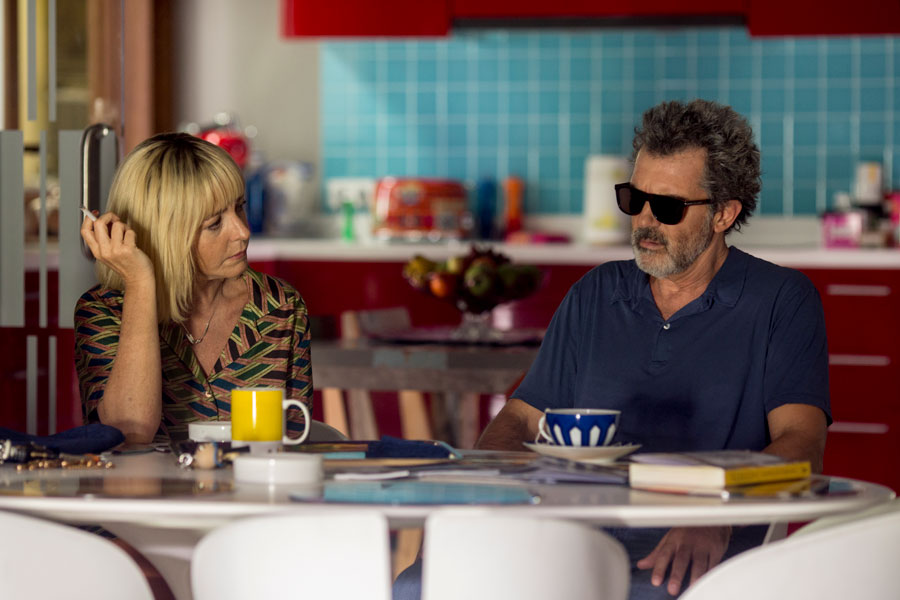
Pain and Glory

Thirty-two years after his film Sabor (Flavor) came out, writer-director Salvador Mallo (Antonio Banderas) is just coming to terms with it. He hasn’t seen Sabor’s lead actor Alberto (Asier Etxeandia) since it premiered 3 decades ago but the cinemateque has recently restored the film, labelled it a classic, and viewing it with fresh (well, older, wiser, more experienced) eyes, Salvador decides maybe it’s time to bury the hatchet.

It is clear that Salvador is taking stock of his life. He’s not well. But his recollections suggest that his life has rarely been without pain of some kind. As a talented choir soloist, he was educated by the priests and taught his book learning to others. But geography he learned by traveling the world as a successful director. And anatomy he learned through pain and illness. When he reconnects with Alberto we assume he’s making amends but resentments still run hot and what is actually exchanged is heroin.

Antonia Banderas is the picture of a tortured man. Riddled with pain he can no longer make movies. But without shooting, his life has no purpose. To hear those truths is to understand a man who is resigned to the end. His character has come full circle in a lot of ways, a lot of ways that are painfully obvious as a play about his youth is staged and brings out forgotten friends. We learn so much about his fears and motivations and how a man who has made his living telling stories is now grappling with his own. And in many ways, this role brings Banderas full circle from the role that first garnered him attention from American audiences as Tom Hanks’ lover in Philadelphia. This time Banderas is front and centre, earning himself his first Oscar nomination for his restraint, consideration, and tenderness.

Dolor Y Gloria is like a vise on my heart for every shred of his own humanity that master film-maker Pedro Almodóvar pulls from his experience and uses to paint the screen with sorrow and redemption. Using heroin is referred to as ‘chasing the dragon’ but this film chases after so much more: compassion, reflection, grief, making peace. Almodóvar still knows how to engage us, but in this he surprises us, and perhaps even himself, with the authenticity in his unflinching self-examination.

Breakthrough

Contrary to popular opinion, I do not see every single movie in the world, but usually I do at least know about them. Not much sneaks by me. So when this particular movie managed to snag an Oscar nomination (for original song), I was like: huh? Sean thought it might be “one of those religion ones” but it wasn’t until I saw the poster that I remembered it at all, indeed a religion one, starring Chrissy Metz from This Is Us (Randolph & Beth forever!). I’m glad to see her branching out but it wasn’t for that pesky Oscar nom, this one would 110% have passed me by,

Chrissy Metz stars as Joyce, a Christian mother who offers up the kind of teasing prayers during dinner that make husband Brian (Josh Lucas) smirk. But her son John (Marcel Ruiz) is a teenager, determined not to crack a smile. He’s in an eye-rolling phase. An avid basket ball player at school, John is also struggling with his origin story, having been adopted from Guatemala while Joyce and Brian were there on a church mission. Meanwhile, Joyce is at odds with the new “cool” young pastor at her church, Jason (Topher Grace). Jason has a spiky haircut and references The Bachelor during sermons and says things like “Dope!” He wears the same kind of headset microphone that Britney Spears wears and has rock bands with auto-tuned rappers sing “hymns.” Oh he’s shaking things up.

Meanwhile, the movie is determined to establish itself as not just a Christian movie, shelling out for pop songs by Bruno Mars and Macklemore; John is a kid like any other, saving a pristine pair of Jordans for an occasion so special that only he will know it when he sees it.

I happened to notice a Stephen Curry listed as a producer and wondered if it could be THAT Curry. I wondered even more when the all-star was mentioned by name – the Warriors would be in town to face Kevin Durant and the Thunder. This places the film for me immediately, in the season just before Durant joined Curry on Golden State, the very same season when Sean and I traveled to OKC to see Durant face Lebron, then playing for Cleveland, and then we drove down to Dallas to see them play the Warriors. We were traveling in December, for Sean’s birthday, and a snowstorm here in Ottawa meant we almost didn’t make it, touching down in Oklahoma with just minutes to spare. I remember the valet at our hotel apologizing for their unseasonably cool weather but of course it felt downright tropical to us. But in St Louis, MI, it was cold enough for a lake to have frozen, but warm enough that a trio of teenage boys were out playing on it when the ice gave way and John went down.

After an hour with no breath and no pulse, the doctors draw the logical conclusion; they’ve only worked this long to keep him decent for his mother to arrive and say goodbye. Her frantic prayer is heard, or else this movie wouldn’t be much of a movie, and a pulse reappears from nowhere. But his brain was starved of oxygen for far too long. In an induced-coma, his parents are prepped for his inevitable vegetative state. But you know that Joyce isn’t about to let that happen. She badgers his doctors just as much as she badgers the lord.

He recovers of course. That’s a foregone conclusion in a Christian film. Religion isn’t my thing and neither is an entirely predictable plot. But I will begrudgingly admit that Breakthrough has a whole mess of admirable performances. And interestingly for a movie that attributes John’s recover to god’s miracle, it dares to ask why god saves some and not others, which is one of religion’s great quandaries. Of course Breakthrough doesn’t have an answer, but I give it credit for even voicing the question.

And push come to shove, it’s now an Oscar-nominated film, for a song called I’m Standing With You, performed by the esteemed Chrissy Metz and written by Diane Warren. And Diane Warren is not to be messed with. She’s got 11 nominations under her belt, including for chart-busting songs like Because You Loved me, from Up Close and Personal, performed by Celine Dion, and How Do I Live from Con Air performed by Trisha Yearwood and I Don’t Want To Miss A Thing from Armageddon and performed of course by Aerosmith. The woman is a songwriting powerhouse. Will this be her year? Check it out:

Undeniably beautiful, but her competition is fierce:

Stand Up, written by Joshuah Brian Campbell & Cynthia Erivo, performed by Erivo for the movie Harriet

From Toy Story 4, I Can’t Let You Throw Yourself Away, written and performed Randy Newman, a man with 20 Oscar nominations and 2 wins under his belt (Toy Story 3‘s “We Belong Together” and “If I Didn’t Have You” from Monsters, Inc.)

Also from Disney, Into the Unknown, performed by Idina Menzel and AURORA, written by Kristen Anderson-Lopez and Robert Lopez who have two previous Oscar wins for “Let It Go” from Frozen and “Remember Me” from Coco.

And of course (I’m Gonna) Love Me Again from the Elton John biopic Rocketman. Written by John (who has a previous win for The Lion King’s Can You Feel the Love Tonight) and Bernie Taupin, performed by both Elton and Taron Egerton. It took the Globe – will it take the Oscar as well?

Who do you think will win??

The Edge of Democracy

Brazilian film-maker Petra Costa is in her 30s, and just a little older than democracy itself in her country. Her parents were activists and briefly jailed for their convictions when military regimes still governed the country. This film blends political documentary with personal memoir as she recounts her family’s political and social entanglements while studying the dramatic collision between two Brazilian presidencies.

Costa voted for Lula da Silva but watches in dismay as scandal and corruption engulf his presidency and he scrambles to compromise and resort to alliances with the oligarchy that he’d always railed against. And yet Brazil prospers: the economy thrives, the poor are lifted up. When he leaves office two terms later, his approval rate is at an all-time high. He anoints a predecessor, Dilma Rousseff, and she is elected thanks to an even stronger alliance with PMDB, who appoints her vice president. She starts her presidency strong but the socio-political climate of Brazil is changing, as it is in many of the world’s democracies. The people are waking up, and Rousseff scrambles to regain credibility by initiating a sweeping investigation into corruption.

As one president is impeached and another imprisoned, the country is further destabilized. It is clear as Costa narrates this film in the first-person that she is watching her country descend into turmoil and worries that democracy itself is crumbling. When you witness some of the illogical but fervent rhetoric being flung around in its media, it reminds us rather alarmingly of Trump’s disregard for the rules of democracy and the parameters of the presidency.

Brazil is on the edge of democracy, perhaps teetering back toward dictatorship. Costa narrates an angry and intimate portrait of this tumultuous time; it is one-sided to be sure, personal and impassioned. And yet the country’s split into two seemingly irreconcilable factions feels all-too familiar and if nothing else, The Edge of Democracy should be viewed by Americans as a warning shot against the increasing polarization of their own country. This documentary is a portrait of democracy’s demise, but Brazil isn’t the only country in danger of rolling down this hill.

The Edge of Democracy is nominated for an Oscar in the documentary (feature) category, alongside American Factory, The Cave, For Sama, and Honeyland. Which do you think will win?

The Rocketeer

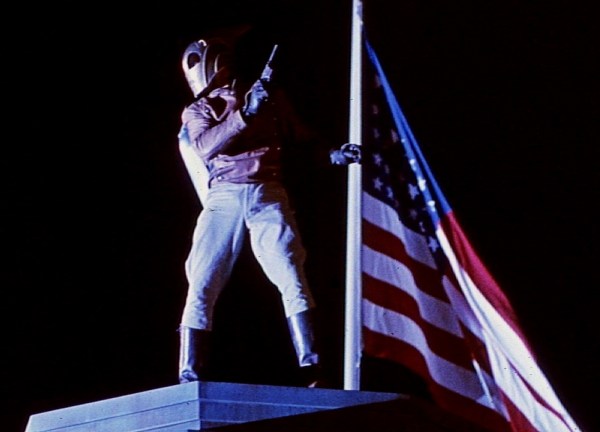
Cliff Secord (Billy Campbell) is a crack pilot training for the air racing nationals who has a bad case of the wrong place/wrong times. When testing out his plane, he flies over a shootout between mobsters and G-Men. In the end, his plane gets trashed, he is on the hook to pay for an exploded fuel truck, and he’ll have to put on a clown costume to earn enough money to settle his debts. But wait, what’s that underneath his plane’s seat? Why it’s Howard Hughes’s jetpack superweapon that the Nazis will do anything to get their hands on, and the FBI is racing to track it down first.

Naturally, Cliff takes to the skies and becomes a superhMV5BYzM3Mjk5MTktNzcyZC00MWVlLWEwNzEtOTkyNDYxNjRiNWNlXkEyXkFqcGdeQXVyMTEwODg2MDY@._V1_ero, with the help of his engineer Peevy (Alan Arkin). But in doing so, Cliff attracts the attention of the Nazis and mobsters, and before you know it Cliff’s girlfriend Jenny (Jennifer Connelly) needs rescuing. It’s up to Cliff to hold onto his jetpack long enough to save Jenny and, I guess, also save America.

I hadn’t seen this movie since the 90s and what stuck with me after this recent viewing is how badly the Rocketeer’s effects have aged. They probably weren’t great even at the time but now they just look sad.

But in a way, the bad effects are kind of fitting, because this film’s whole raison d’être is nostalgia, and the clumsy effects feel like a remnant of that same bygone era. The COMICS-NAZISRocketeer is a throwback to that fabled time in America’s history where men were men, women were eye candy, the good guys always won, and even criminals were too patriotic to work for Nazis. It’s the cinematic version of Captain America punching Hitler in the face. Cue the flag waving and tears of pride.

Richard Jewell

Richard Jewell seems somewhat problematic. He’s power hungry, he’s got no regard for jurisdictional limits, and he thinks he’s a cop when he’s really just campus security. So when he finds a suspicious package under a park bench during the 1996 Olympics in Atlanta, you can see why the FBI might consider him a suspect. But that only goes so far, and doesn’t explain why the FBI viewed him as the ONLY suspect, or why they leaked his name to the press, or why they tried to coerce a confession from him through a fake training video.  It’s malicious prosecution at its finest, aimed at a guy who was only guilty of being in the right place at the right time.

Richard Jewell also seems like he deserved to be a hero for a little bit longer. He saved lives by finding that suspicious package and getting the bomb squad involved. At first, he got the hero treatment, but within days, he was named as the prime suspect, and then his hero days were done. All he was after that point was the creepy guy who might have done it. The FBI wouldn’t be investigating him otherwise, would they? Turns out that yes, actually, they would, because they had no one else to pin this on.MV5BZmMzMTBiYzktNGIwOS00ZTQ5LWE0MjgtZWJhOGE1ZmU1NmEwXkEyXkFqcGdeQXVyMTkxNjUyNQ@@._V1_SY1000_SX1500_AL_

Richard Jewell is profiling gone wrong. Clearly, the American justice system is really shitty to anyone who fits a profile. This case was one where a white man was being profiled, so it became a movie. Just imagine how many minorities have been, and are currently being, similarly pursued because they fit a profile, or were “close enough” to the profile for the FBI to squeeze them into that box.

Clint Eastwood is still looking for American heroes, and Richard Jewell clearly fits Eastwood’s profile. It’s a less dangerous profile than any in use by the FBI as long Eastwood doesn’t ask the heroes to play themselves. Eastwood’s retelling of Jewell’s story ignores any shades of grey, preferring to cast the FBI agents (played by Jon Hamm and Ian Gomez) and the media (led by Olivia Wilde) as corrupt and callous, and Jewell (Paul Walter Hauser), his mom (Kathy Bates) and his lawyer (Sam Rockwell) as decent and caring.

As a film, Richard Jewell works well enough (Bates and Rockwell are great as always, and the rest of the cast is solid) but it feels like a missed opportunity. The story isn’t that one poor guy got targeted one time. It’s that the system encourages and rewards this type of police work and this type of media coverage, where getting it right doesn’t matter half as much as finding someone, anyone, to blame.

1917

Time is the enemy, the tag line reads. But also mud. And also Germans, but time first, and mud second. Oh the mud. They trudge through it, slipping and sliding, it squishes between their toes and claims the corpses of men. I worry one of the men will lose his footing in the slippery, unforgiving mud and accidentally bayonet himself, or someone else. The sludge is real. You feel the dirt viscerally just as you feel the time urgently.

Oh the time. Time is the enemy you see. Two young soldiers on the Western front are given an impossible task. Lance Corporal Blake (Dean-Charles Chapman) has a brother in another unit, an isolated regiment about to walk right into a trap. He and Lance Corporal Schofield (George MacKay) need to get to them before dawn to save the lives of 1600 men, but the journey to prevent their massacre is likely a suicide mission.

Director Sam Mendes executes this film with such mastery and technical prowess that it induces a state of anxiety, dread and hyper-vigilance in the viewer, immersing us quite brilliantly in the ethos of the battlefield. Most of the film feels like it’s done in a single take, and because we’re experiencing this nightmare in near real-time alongside the soldiers, the urgency and gravity of their mission infects us with constant tension and foreboding. Inevitably this sounds like a harrowing cinematic experience and it is, but one that’s deeply moving and conscientious and frankly impossible not to admire.

Cinematography by legendary Roger Deakins highlights the horror of war, the monotony of the mud, the pitted landscapes, and is particularly effective at night, when a village burns and is intermittently lit by flares. But his work with Mendes to seamlessly knit together shots to create a visual single take is surely worthy of the Oscar. And Thomas Newman’s score is similarly haunting, some of those trumpet swells literally responsible for a tightening in my chest.

My adrenaline was so successfully engaged that it wasn’t until the very end of the film that I finally indulged in a tear. My nerves were so keyed up that I probably didn’t take a full lung’s worth of breath until I was in the parking lot. 1917 is not easy to watch but boy is it easy to praise.

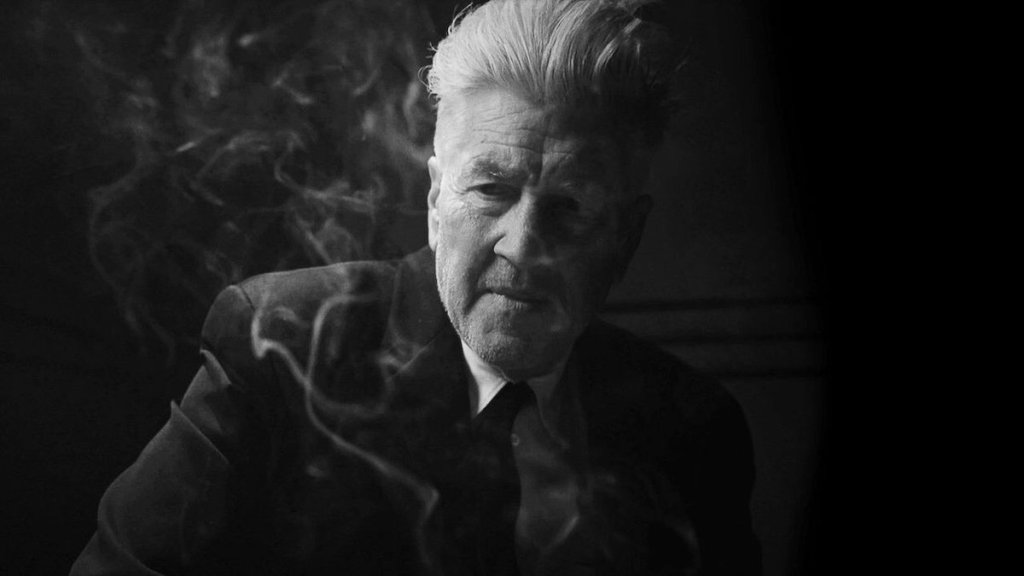
What Did Jack Do?

Is this the Lynchiest thing David Lynch has ever done?

A train station is on lock down. Inside a station cafe, a hard-boiled homicide detective (Lynch) interrogates Jack, a murder suspect.

And Jack just happens to be a capuchin monkey in a tailored suit.

That sentence is inherently funny and yet it is not played for laughs at all. This short film, shot in black and white, takes itself very seriously. In its universe, this sort of thing is unremarkable. But in mine, in ours, it’s actually not so much funny as unsettling. Jack is a monkey but visual effects grant him a human mouth. He sounds rather like a Speak N Spell. But his words are quite grave; Jack is a tormented little monkey.

What Did Jack Do? is the film equivalent of an edible – trippy as hell. And yet it’s so simple that it’s easily followed, even while you’re constantly nervous-giggling, wondering what the hell is going on.

All great directors are voyeurs. They watch things intently in order to convey life authentically. But Lynch is also an exhibitionist. He likes to expose things, always exploring life’s dirty pockets and turning them inside out for all the world to see.

In this, it feels like Lynch is unpacking one of cinema’s favourite cliches: the interrogation. He plays with the language, the pace, the intensity. In casting a monkey he is rather blatantly pointing out the absurdity of what we’ve come to expect in a police procedural. He’s blowing that shit up, and as a lover of all things unexpected and bizarre, these were 17 minutes that have engaged me in ways that most full-length films do not.

Troop Zero

A little girl named Christmas (Mckenna Grace) is fixated on the stars, in part because her mother died and now belongs up there, among the comets and the black holes. When she learns that the winners of the upcoming Jamboree will have the opportunity to record a special message to be sent into space, she’s determined to win. But first she has to assemble her very own Birdie Scout troop to compete.

Recruit #1 is her best friend Joseph, who will choreograph the winning dance. But with her short list of friends thus exhausted, she has to choose among the bullies to round out the numbers. Her father (Jim Gaffigan) is a mostly unpaid lawyer and busy dog owner and single father, so he appoints his long-suffering assistant Miss Rayleen (Viola Davis) as their den mother. She prefers criminals and murderers to little girls, but she’s getting paid, allegedly, so Troop Zero is born.

I could watch this for Davis alone. I’d watch a spin-off show of her character reacting to courtroom dramas all day long. Or her going head to head with Allison Janney playing rival troop mother, Miss Massey. But you know what was a nice surprise? Because Davis and Janney excelling is on-brand and totally expected. But the kids in this are actually interesting little characters. It’s an underdog-outsider story, as many tales about childhood are, but screenwriter Lucy Alibar has some tricks up her sleeve and directors Bert & Bertie know how to make a mark.

Christmas longs to break away from what’s expected of her, but the lessons learned here are more like pride and dignity. Owning who you are and realizing we all contain multitudes. And of course there’s always value in shelling out for a well-placed Bowie tune. Charmed the pants right off me. In fact, by the end of this little film, it gathers enough steam to laugh a sneak attack on my emotions. There’s a cosmic feel-goodness to it that’s hard to resist.