
Anders is mid-life-crisis-ing, hard. He left his wife, quit his job, sleeps with strangers he meets in Bed, Bath & Beyond while shopping for knick-knacks to fill his empty shelves. BUT HE’S STILL NOT HAPPY! Can you believe that abandoning everything you spent your lifetime building is not the path to true happiness? Can you imagine that the real problem was him all along?
I mean, those thoughts haven’t occurred to Anders (Ben Mendelsohn) yet. He’s a man. He’s not that quick. In fact, he’s slow and dumb enough to get high with someone else’s son. Charlie (Charlie Tehan) barely survives an overdose but shows up at Anders’ new bachelor pad looking for…friendship? Anders should know better; his own son Preston (Thomas Mann) has been to rehab and apparently still has a problem that isn’t quite addressed. But if his own son isn’t really his problem, why should someone else’s be?
So that doesn’t go well. Nothing does. The Land of Steady Habits is drenched in suburban angst, dripping with the failure of men, both young and old. Director Nicole Holofcener has a knack for eliciting career-best performances from her actors, and Ben Mendelsohn is no exception. His little idiosyncrasies, that devilish grin, they keep the character just shy of being unforgivable. Still, Anders is not meant to be liked. He gambled on the grass being greener and it isn’t. His discontent seems to poison those around him. Ah, the listlessness of the wealthy. It makes it so easy to sit back and judge, guilt-free.
Holofcener makes some interesting choices – notably, that Anders has already shed his previous life when we meet him. And he’s already finding the new one to be hollow. And we experience his search for meaning to be quite petty and superficial. Mendelsohn subverts his usual simmering anger to suggest an inner tension as he navigates relations with his son, ex-wife (Edie Falco), and new love (Connie Britton), with bitter, sometimes humourous results.
The Land of Steady Habits is a good character study that’s a bit uneven as a dramedy. Holofcener tends to be restrained. Sometimes that’s wonderful, and sometimes it’s a little frustrating. This movie seethes with ennui, shame, and regret, and nobody gets a free pass.
 What’s left is a story without a single breath of uniqueness. Drugs are bad, behaviour off the rails, shipped to rehab against his will, detox makes you sick, “I don’t need to be here,” resistance, rule-breaking, temptation, uncovering trauma, cautious optimism. Insert new names and this could literally describe at least a dozen movies about addictions, and those are just the ones I can name and I can’t name shit. Although Sam Taylor-Johnson makes things pretty (save her own husband, with cracked teeth and a broken nose), this feels like a very familiar, very formulaic iteration.
 crave it even more: a vicious cycle. It doesn’t always happen like this, but sometimes it’s a normal, happy, middle-class kid from a good and loving family who falls prey. Nic feels he’s disappointing his family. His parents feel they’ve somehow failed him. But now what? Do you support/enable him indefinitely, do you watch his teeth rot and his flesh waste and the life behind his eyes disappear? Do you allow his behaviour to tear your whole family apart, exposing younger siblings to it? Or do you cut him loose, not knowing where he is or if he’s safe, hoping every day that his rock bottom isn’t 6 feet deep?
 person. In my life, and probably in yours, addictions are the exception and not the rule. But for people who are in different circumstances, life is hard as fuck, and living sober can feel impossible. And that’s not even factoring in genetics. I felt so sad for this client of mine who has never known anything else.
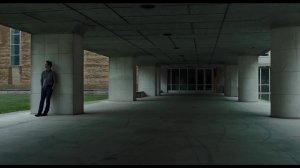 things about architecture. The photography is just as kind to its human characters, but the way it treats the artistry of the buildings turns them into characters as well, characters that reflect and mirror or juxtapose and contrast. It’s clear that writer-director Kogonada has put a lot of thought and time and research into his baby.
 damning comment on today’s hyper competitive culture in which young adults liken abusing prescribed drugs to drinking a cup of coffee. Like I said, amphetamines aren’t new: The Beatles took them, Andy Warhol took them, Vietnam soldiers took them in order to go, go, go. And then they became horribly addicted, and the drugs became controlled. Except now students are seeking them out as performance-enhancers, faking ADHD to gain an edge while taking the SATs, and getting their hands on drugs whether prescribed or not.
 symptoms of the caring sister who’s also sort of an enabler. Because instead of leaving him to get his shit together, she’s prepared to miss the party and spend the night driving around the dirtiest, sleaziest parts of L.A. to find her brother (Dave Franco) a detox facility, and barring that – well, something far worse.
 You may not know Nico by name, but I bet you have heard of some of her friends, people like Andy Warhol and Lou Reed. Nico, born Christa Päffgen, was part of the Velvet Underground for their first album (getting co-billing in fact) and, as a musician, that would seem to overshadow anything else one might do from then on. Nico, 1988 joins Christa in 1986 as she tours in support of her latest solo album. Understandably, Christa would prefer to keep the focus on her new music, but the press keeps asking about her past.
 ASSHOLES WATCHING MOVIES