Tag Archives: Disney

Black Is King

The Lion King live action remake got one thing right: it remembered that it is primarily an African story. To be fair, it was likely the Broadway show that did this for them, but Jon Favreau had the presence of mind to follow their lead and cast actual black actors in the important speaking parts. The Disney cartoon from 1994 wasn’t motivated by authenticity and we as a culture failed to keep them honest. So when Favreau chose only one returning voice actor to serve as a link between the two films, James Earl Jones was both the obvious and the best choice. His is the voice of wisdom that runs throughout both films, but the 2019 version backs that shit up with a stellar cast that is as talented as they are representative: Chiwetel Ejiofor, John Kani, Alfre Woodard, Keegan-Michael Key, JD McCrary, Chance the Rapper, Shahadi Wright Joseph, Florence Kasumba, Eric André. But none were chosen more carefully or more brilliantly than our Simba and Nala, Donald Glover and Beyoncé; they aren’t just black actors but recent symbols of owning one’s blackness. If the The Lion King remake justifies itself at all, it’s by putting those two front and centre, sending a powerful message of just who should be King and Queen.
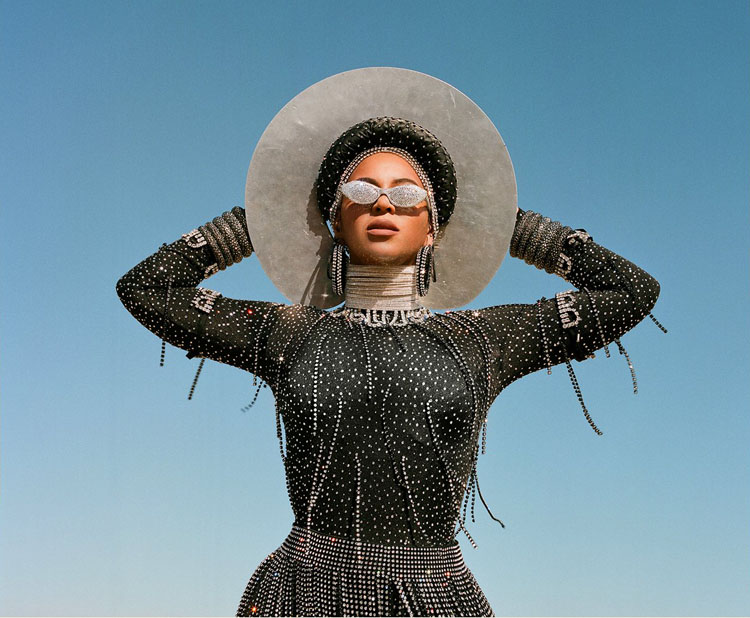
Black Is King is a visual album from genius multi-hyphenate Beyoncé. It reimagines the lessons of The Lion King for today’s young kings and queens in search of their own crowns. It is a love letter to her African roots while celebrating Black families.
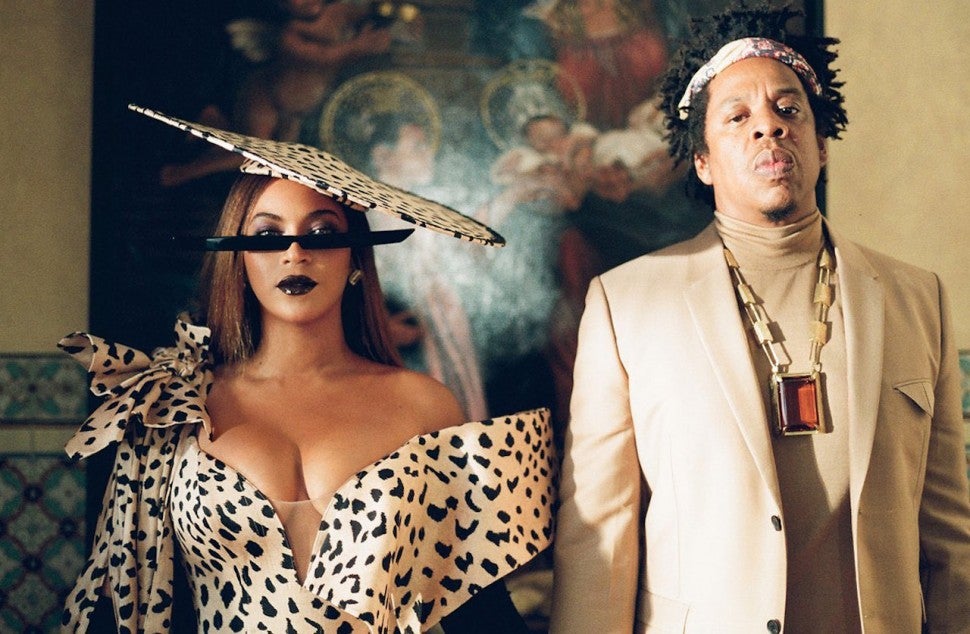
Beyoncé is the undisputed Queen of Pop. Her ascension must have come with a lot of racism, overt and covert, attached – she would have been accused of exploiting her culture while also being asked to suppress it – problems the likes of Pink and Madonna and Lady Gaga never considered let alone experienced. This system seems to have caused or at least contributed to the internalized hatred of his race in her counterpart, King of Pop, Michael Jackson. And yet Beyoncé has not just transcended the challenges to her skin tone and hair texture, she has come out on the other side a powerful and vocal advocate for anti-racism. For many of us, the change in her was undeniable at the 2016 Super Bowl, a performance dubbed “unapologetically black,” incorporating dancers in Black Panther berets performing black power salutes, arranging themselves into the letter “X” for Malcolm, a homemade sign demanding “Justice for Mario Woods”, and Beyoncé’s own costume, said to be a tribute to Michael Jackson. The performance reflected the modern civil rights movement Black Lives Matter and handed us her rallying cry in the song Formation, which references slogans such as “Stop shooting us”, riot police, the shamefully neglectful official response to Hurricane Katrina which demonstrated that poor, predominantly black lives were clearly deemed not to matter. “I like my baby hair and afros. I like my Negro nose with Jackson 5 nostrils, ” she sang, offering an education in the Black American experience.

Beyoncé has always been a proud African-American woman and artist. She pursued movie roles in Dream Girls and Cadillac Records. Her wondrously thick thighs became politicized in her Crazy In Love video. There were criticisms with racial undertones when she headlined Glastonbury in 2011. She sang At Last to the Obamas for their inauguration dance. She and fellow Destiny’s Child Kelly Rowland started a charity to help Katrina survivors. Husband Jay-Z has been critical of the injustice of the profitable bail bond industry, with over 400,000 people who have not been convicted of a crime incarcerated simply because they can’t afford bail, often set at less than 5K. Beyoncé didn’t suddenly discover her blackness in 2016. Whether the political climate pushed her over the edge, or becoming a mother to her own Black daughter did it, or she realized that her success and popularity gave her immunity, Beyoncé started using her voice and her platform quite blatantly, and quite brilliantly. There are few people in the world with her kind of power, and she’s been able to snatch back the Black narrative from the fringes and help spotlight it centre stage. But it was also a risk to have her name synonymously linked with black rights, but as she states rather directly in this film, “Let black be synonymous with glory.” If 2016’s Super Bowl half time show was her coming out party, her 2018 Coachella performance cemented her mythic, iconic status. As the first black woman to headline the festival, her show was explicitly black, triumphantly black. Look no further than her documentary Homecoming to see how deliberately, lovingly, boldly she created every element in her show to be marinated in cultural meaning. She didn’t just pay homage to those who came before her, she used her two hour set to unpack a lesson in black music history. She literally used her platform to honour and recognize black art; the performance was a revelation to the predominantly privileged white audience of Coachella, but it created a real moment in time that reached into the hearts and souls of those who could fully appreciated it. Having already achieved pop royalty status, Beyonce is free to make the strong personal and political statements that have defined her career ever since. Her success is no longer measured by mere radio plays; freed from having to abide by what makes her white audience comfortable, she and Jay-Z are reigning from a throne of their own making. She no longer has to shrink or contain her blackness and it’s clearly been a boon to her creativity and craft. Black Is King follows in the footsteps of Lemonade, defiantly blazing her own path, and returning to the African desert that clearly still calls her name.

This visual album is of course an occular and audible delight. It jumps off from The Lion King, swapping lions for Black men and women. It highlights the extremely varied beauty of the African landscape, and of its people. There are set pieces in here where you can readily imagine the ka-ching of literally millions of dollars spent per second of film.
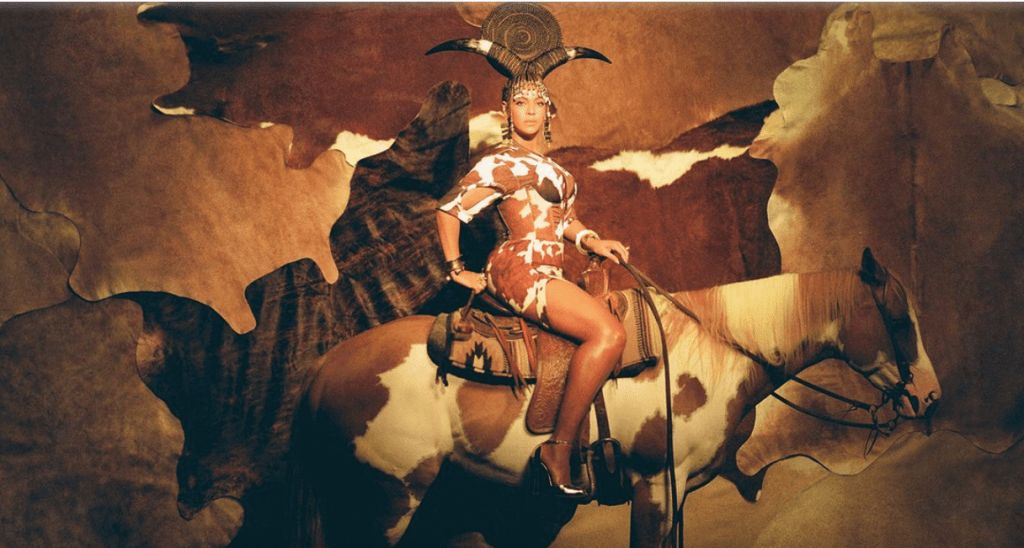
The Gift, Beyoncé’s Lion King-inspired album, takes us beyond Disney’s version of Hollywood’s Africa. Her original contribution to the film’s soundtrack, Spirit, is a gospel-charged anthem, but she didn’t stop there. She found up-and-coming African artists, songwriters, and producers to join her on the album, creating an international vibe with a strong and undeniable heartbeat.
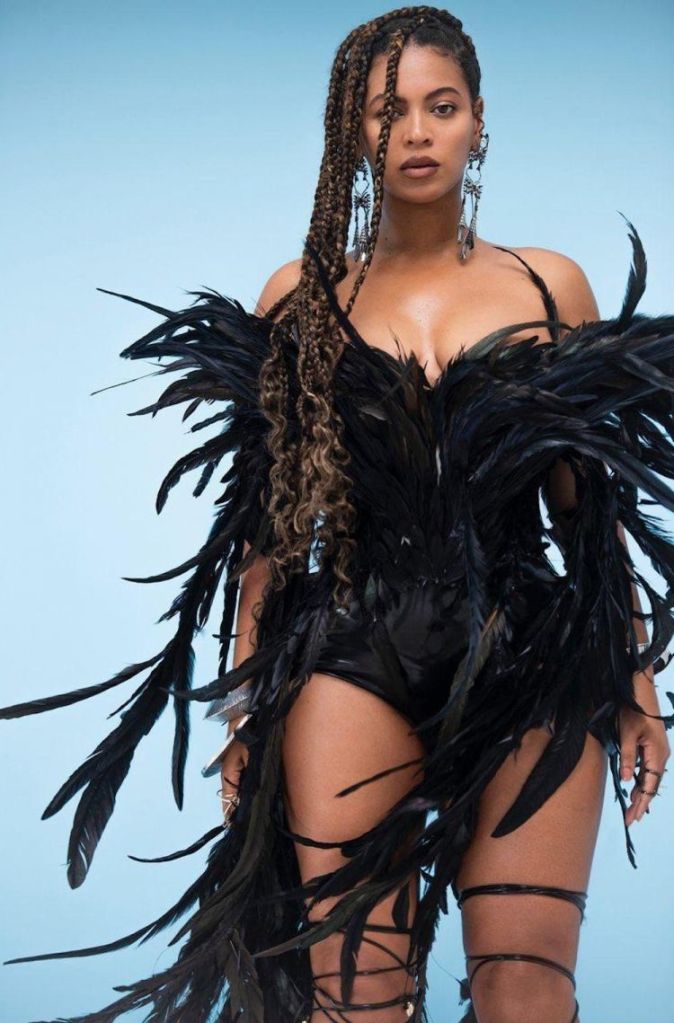
The accompanying film is stuffed with imagery, implication, poetry and practice that feels like such an intimate declaration of love and admiration that I watched on the verge of a constant blush. Even Kelly Rowland felt it, being the recipient of Beyoncé’s sincere serenade, breaking the beaming eye contact with an overwhelmed giggle.
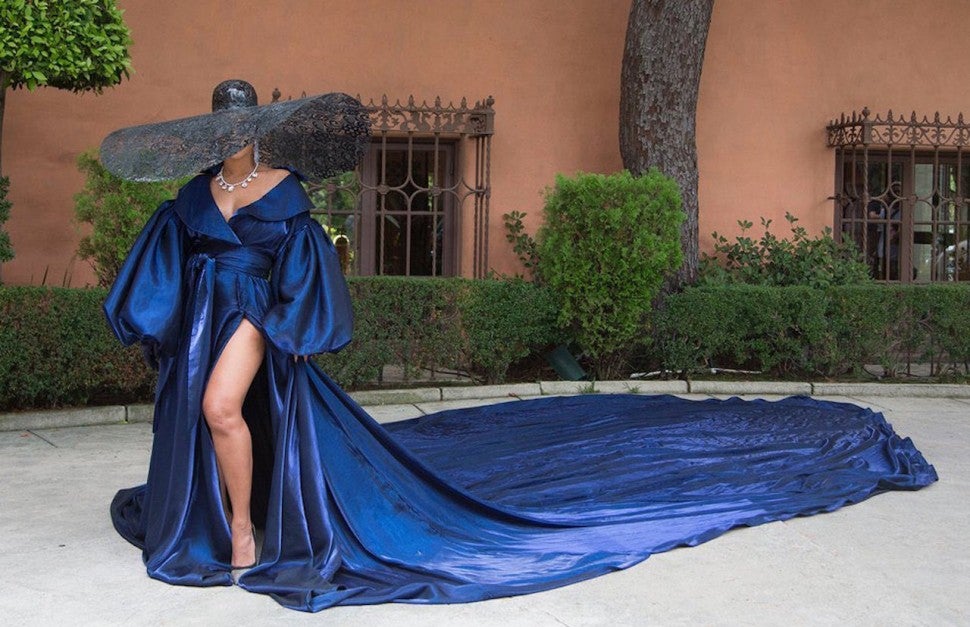
The visual album exists to toast beauty, observe beauty, create beauty, memorialize it. But a visual album from Beyoncé is to define and redefine it, to find beauty in new or forgotten spaces it, to celebrate a spectrum of beauty, to infuse it with ideas of culture and identity, to own it, to actually physically own it. And for that reason, I almost wish I could watch it at half speed. There are so many lavish tableaus set with precision and abundance but only glimpsed for a second or two; I want so badly to just live in that moment, to possess and savour it a minute longer.
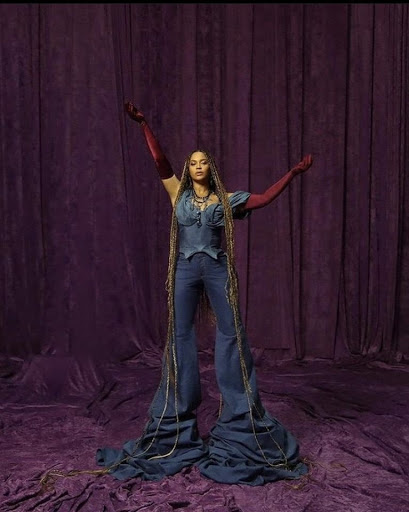
And like a true Queen, she steps aside and allows herself to be upstaged by African collaborators, like Busiswa from South Africa, Salatiel from Cameroon and Yemi Alade and Mr Eazi from Nigeria. This album is a show of solidarity, an act of unity. She places herself among them, among the ancient beats and contemporary sound.

A thousand words in, dare I only broach the subject of fashion now? The sheer quantity of couture from Queen B is nearly numbing, except each look is so bold and unique you do your best to keep up to the dazzling, nonstop parade: Valentino, Burberry, Thierry Mugler, Erdem. But also a barage of Black designers from around the world, curated diligently and I’d guess rather exhaustively by Beyonce’s longtime stylist, Zerina Akers: D.Bleu.Dazzled, Loza Maléombho, Lace by Tanaya, Déviant La Vie, Jerome Lamaar, Duckie Confetti, Melissa Simon-Hartman, Adama Amanda Ndiaye…you get the picture. It’s MAJOR, every one of them re-imagining a wardrobe fit for an African Queen, their number so plentiful that no one garment or gown overpowers the beauty of their canvas: brown skin.

Beyoncé surrounds herself with Black beauties, including Naomi Campbell, Adut Akech, and Lupita Nyong’o, but also her own mother, Tina Knowles Lawson, and daughter Blue Ivy. Her family is often presented as a symbol of her strength, young twins Rumi and Sir making appearances as well, equating “kingship” with engaged fatherhood.

There is so much to unpack in this film, from the frenzied and joyous dancing of black bodies, to their posing as sculpture on pedestals, to the recreation of moments from her own storied career, there is more here than I can enumerate let alone appreciate. Like the star herself, Beyoncé’s concept of blackness is a hybrid of her ancestral lands and the country of her birth. It’s an amalgamation of black art and black history and a vision of black power, of ethnic and cultural splendor. And what a time to have dropped it, in a world where white people are just now opening their eyes to the racial injustice and inequality that has yoked people of colour for centuries, where black bodies are being discriminated against at best, black minds suppressed, black art appropriated, black experiences denied. And here is a woman who could easily coast on her laurels but instead is serving her people by framing the Black experience not only in a positive light, but a powerful and empowering one. Black Is King is not a cure for racism, not even a vaccine, but it may just be the booster shot of pride we all need right now.
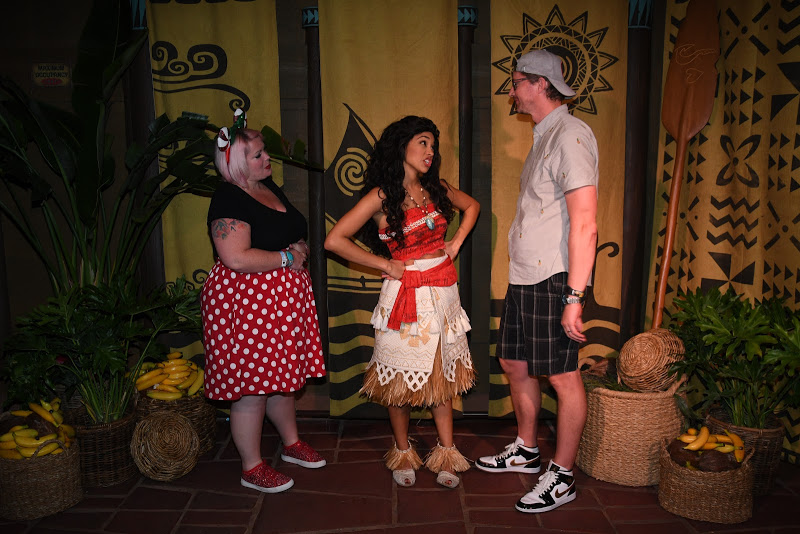
Disney Park Tag

We’ve had to cancel our 2020 Disney World trip due to COVID concerns; yesterday there were more deaths in Florida than there were cases in all of Ontario. Not to mention the Canada-U.S. border has remained closed to keep the virus at bay (Canadians worked hard collectively to shut things down and flatten the curve early on and we don’t want our efforts wasted by an errant American visitor, who’ve played so fast and loose with people’s health).

Disney World closed its gates for many weeks but is now reopened despite an alarming increase in new cases in Florida (and elsewhere of course; Florida is by no means the only American hotspot). For now, our only Disney travel will be in our dreams, and by trips on the nostalgia train with videos like this one.

We truly value each and every one of you who has discovered us on Youtube and lent their support with subscriptions and comments.

p.s. Apologies if I’ve been appearing and disappearing as a Follower on WordPress. I’ve had some recent interruptions and I’m still trying to gain back my list!

The Crimson Wing

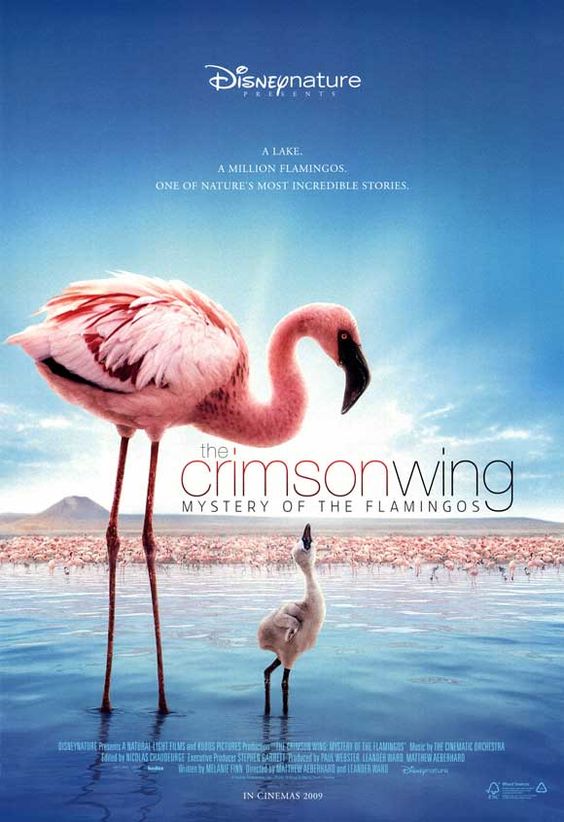
The Crimson Wing: Mystery of the Flamingos sounds like it might be a classy film noir detective story from the 1940s where everyone smokes and matchbooks are almost always a clue. It’s not. It’s an early (2008) Disneynature documentary, before they developed the simple titling system that created such gems as “Bears” and “Penguins.” Today’s Disneynature docs are slick affairs, incredible photography paired with an anthropomorphic narrative that makes it fun to follow, and the big-name celebrity lending their voice sure doesn’t hurt.

But while The Crimson Wing is still working out this recipe for success, it’s still a pretty good watch.

Lake Natron in northern Tanzania is quite unique. Its water can often reach the same alkaline levels of pure ammonia. Thanks to a nearby volcano, a sodium crust forms on its surface. This is where a million crimson-winged flamingos are born (or lesser flamingos, if you will), live, and die, and have done so for nearly 20 million years. It’s a dramatic and unforgiving landscape. The salt builds up around little baby ankles, like shackles, that perilously slow them down, or shuts them down altogether (yeah, dead baby birds, it’s rough).

But the drive to stay alive and thrive is innate in all of us, and these flamingos aren’t chicken. They’ve kept the species going this long, hardship is in their blood, and the presence of a few cameras isn’t going stop them from living life. This is a rarely-photographed slice of Africa, a vast area of little besides drying salt that often gets left off even maps. But Disney gives us a bird’s eye view (ew, pun), and if you’re willing to tolerate the agonizing stamping out of the fuzziest, downiest life you’ve ever seen, young, hopeful little creatures who keep persevering long after being left behind, defying the odds, the predators, the searing heat – all just to succumb to salt accumulation around their dainty little ankles. If nature is the mob, then salt is the cement shoes, and soon their fluffy little bodies become just another bump in the road.

All right, enough moaning. I understand that death is part of life (sound like bullshit to anyone else?) and blah blah blah, why be upset about this one headstrong, floofy little chick when heavy rains literally washed out every egg in the nesting grounds so that the crew had to sit around on their own butts waiting for the flamingos to breed again.

People who live out in these crazy conditions for years at a time just to get one perfect shot of an innocent baby’s last breath must be a special kind of nut. We call them documentary film makers, but that’s definitely a euphemism for nut. And it’s not just because they used both snowshoes and hovercrafts to get around (although: nutty), it’s more that when the nearby volcano erupted during filming, they described it as “fortunate” when literally everyone else on the planet would have gone the other way on that one.

Anyway, the flamingos remain dignified even while being scrutinized by nuts, proving that whoever called them lesser got it wrong.

Artemis Fowl

Artemis Fowl is a series of quite beloved fantasy novels written by Eoin Colfer. If you are a fan of the books, may I suggest you put that aside right now and meet Artemis Fowl the movie as a similarly titled but only loosely based third cousin twice removed type situation.

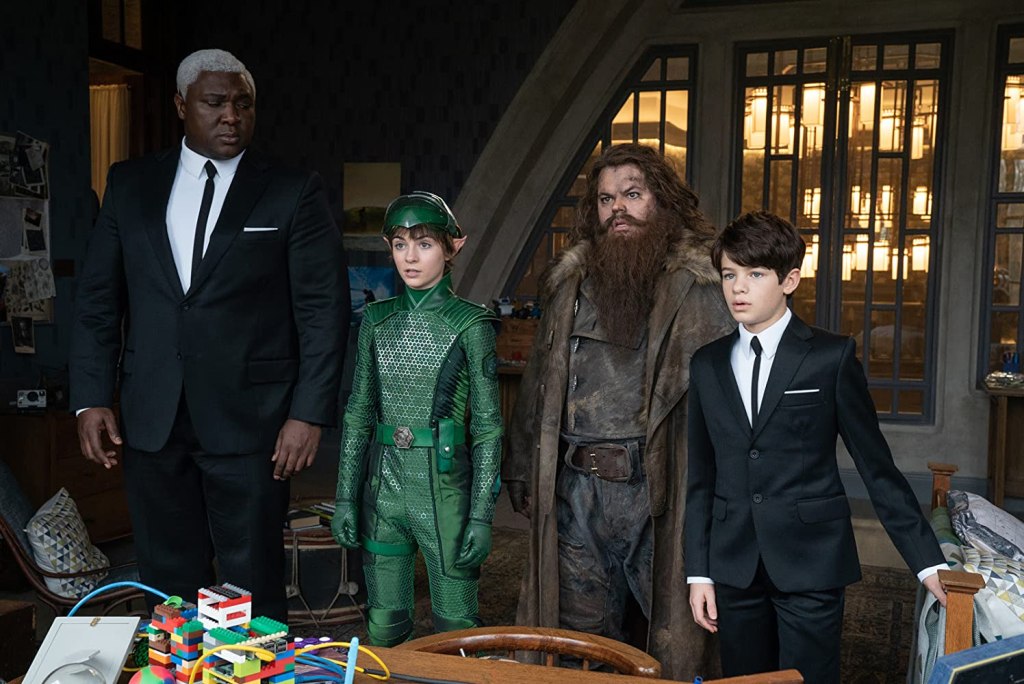
Artemis Fowl (Ferdia Shaw) is a 12 year old genius rambling about his big old house in Ireland with only his definitely-not-a-butler manservant/bodyguard Domovoi Butler (Nonso Anozie) for company. He learns from TV that his father (Colin Farrell) has gone mysteriously missing (is that redundant? i think yes) and also, I think, that he’s behind some major art-thievery. Which is when Alfred Mr. Butler gently guides young Bruce Artemis down to the batcave secret lair and lays some truth on him: he comes from a family of criminal masterminds. He’s meant to be some sort of prodigy villain, and so donning the batsuit and sunglasses, he receives the obligatory ransom call and gets down to saving the world or maybe just his dad, I’m really not sure, this part wasn’t entirely clear to me.

Meanwhile, keeping in mind that Ireland is apparently quite magical, we’re introduced to some non-human characters such as Mulch Diggums (Josh Gad), a felonious oversized dwarf who seems like he would have bad breath, Holly Short (Lara McDonnell), who I think is a fairy, and her boss Commander Root (Judi Dench), who’s in charge of making sure magical creatures don’t mix with humans, and Juliet (Tamara Smart) who is some much younger relation of Mr. Butler’s and whose presence I never quite understood. Also various goblins, elves, trolls, Italians, and even a centaur with a sexy little canter. Most of these…beings…are technically enemies. Well, enemy is a strong word for people who don’t even know each other. Maybe “non-belligerent” is a better term for it, a term I picked up mere moments before watching this film thanks to a Spike Lee movie about the race discrimination and the Vietnam war (who knew these two movies would have so much this one thing in common!). Anyway, it’s hard to keep track of who’s on who’s side and what that side wants and why. And then there’s you know, alliances made and broken, objectives intended and abandoned, just stuff. Presumably. I don’t really know. There’s magical force fields/space-time continuums (?), dislocating jaws, and a coup against an 800 year old stickler for rules.

The movie is kind of a mess. This is a kid’s movie and I’m struggling to relay any of the plot points, and I’m frankly not even 100% convinced there were any, it may have just 90 minutes of pure pixie chaos for all I know. It hurt my brain to try to keep up, but on the other hand it wasn’t really interesting enough to pause let alone rewind.

Those who have read the book(s) will of course bring important supplemental information to the film, which will either a) make it a more pleasant, sensical viewing experience or b) make it that much more frustrating, just a big old soak in a bath of disappointment. I’m guessing it’s b but let’s not marinate in negativity. Let’s optimistically assume that you subscribed to Disney+ hoping for a child’s version of Men In Black where the aliens are now fairies and the good parts are now the suck and the idea of a sequel both frightens and confuses you.

If you wanna hear more, and you know you do: Youtube!

Penguins

We have continued our binge of Disney nature documentaries streaming on Disney+. It’s a welcome break from all the junk. Disney docs are like the strawberry of movies; they’re technically healthy but sweet enough to be eaten for dessert. We recently raved about both Elephant and Dolphin Reef, and now we’ve watched 2019’s Penguins. And guess what? It’s great.

Now, we’ve insinuated before that Disney nature documentaries are perhaps not the greatest source of information. They’re not just shooting facts at you rapid-fire, they’re crafting a story, which makes the doc far more palatable and definitely kid-friendly. that’s why I don’t call Disneynature documentaries the kale, but they’re definitely in the same tier of the pyramid.

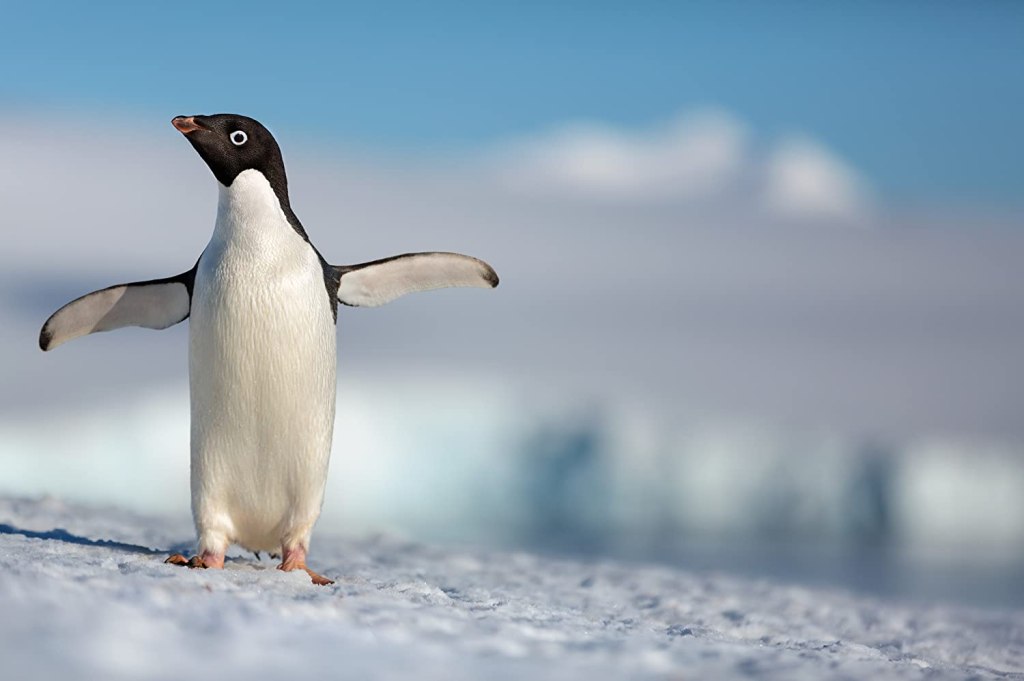
In Penguins, “Steve” is a 2 foot Adelie penguin in the Antarctic. It’s spring time, and this is Steve’s coming of age. He’s finally considered old enough to make his way to the breeding grounds with the other male penguins. I’m not gonna lie: Steve is a bit of a bumbler. He trips over his own feet, he gets lost and turned around. He’s the last to the breeding ground, so he’s got fewer materials to make a nest to impress the ladies. He’s going to face a lot of rejection. Will he find himself a honey and make a family? You’ll have to watch to find out.

But even if Steve fails to triumph, there are still plenty of reasons to check out this movie. First, writer David Fowler puts together an awesome story and makes Steve into a compelling and relatable character. And then narrator Ed Helms steps in to fully animate Fowler’s story, giving life to penguin Steve, and drawing us in to his triumphs and challenges.

Of course, it’s nothing without the amazing pictures. Cinematographer Rolf Steinmann and principal photographer Sophie Darlington share the credit with a team of very dedicated people who bring a frozen land and its inhabitants straight into our living rooms. The crew can spend years capturing enough footage for a single 70-minute film, but the immersive experience captivates us and endears us to our little protagonists. Penguins is a fantastic offering from Disney+.

Dolphin Reef

Last week we were discussing Elephant, a brand new nature documentary released on Disney+. Disneynature films are perhaps not the most scientific among documentaries but they are beautifully photographed and extremely family-friendly. During these difficult days of self-quarantine, parents struggling to home-school their children or even just provide for some less junky screen time may want to turn to Disney+ for this not inconsiderable benefit. In fact, Disney+ is also home to National Geographic programs as well, perhaps better suited to older students. In any case, you can get a free one month trial from the streaming service and it’s hard to imagine a better time than now to use in.

Dolphin Reef is another incredible offering from Disneynature. This one dives under the waves near the Polynesian Islands in the Pacific Ocean to explore a colourful and diverse environment on the ocean’s floor. Dolphins have long been fascinating to we bipedal, air-breathing, earth-walkers. They are smart and engaging. They communicate and express emotion. They are playful and have close family bonds.

Echo is a young bottlenose dolphin who, at the age of 3, is struggling with the notion of growing up. His mom is devotedly and determinedly trying to teach him the ways of the reef but Echo keeps giving in to his silly side. But despite his playfulness, dolphin society is tricky, and survival depends on skill and preparedness.

As if Echo isn’t enough, we’ll also meet a mother-daughter humpback whale duo and learn some of the parallel trials and tribulations of growing up whale. In fact, there’s an entire ocean filled with orcas, sea turtles, and cuttlefish, and we’ll get the most amazing front row seats to it all.

What distinguishes a Disney nature documentary from others is that they write a narrative to go along with the pictures so kids get to know the animals personally. Each one becomes a character we can not only learn about, but root for. A few liberties are taken but on the whole the story fits accurately within the animal kingdom and the result is an exciting and engaging watch.

For me, even besides the dolphin and whale families we’ll get to know intimately, I just love trolling along the sandy bottom and discovering the bright and beautiful life that lives there. Lots of people look to the stars and imagine what alien life might exist, but I’ve always preferred plunging below the sea and exploring those unfathomable depths. There are creatures living on our own planet that defy our understanding. This documentary explores fairly shallow waters and still encounters fascinating species to capture the imagination.

Narrated by a very excited Natalie Portman, Dolphin Reef is an adventure worth taking.

The Muppet Movie (1979)

Is it fair to say that the best use of the Muppet Movie (1979) may be as palate cleanser?  We found it on Disney+ while in need of something easy, after slogging through The Platform.  Instead of three Care Bears seasons, as recommended by Dr. Jay, we opted for one dose of classic Muppets silliness. The medicine worked well enough; it just tasted a little stale.2004_WC_TheMuppets

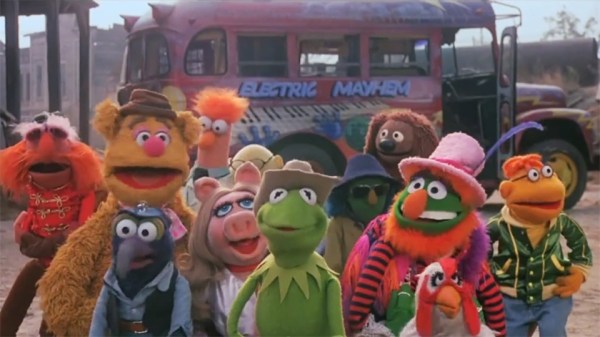
The Muppet Movie (1979) tells the origin story of the Muppets, though Kermit the Frog readily admits at the outset that some liberties have been taken. Kermit is discovered singing in a swamp (The Rainbow Connection, naturally) by a big Hollywood agent (Dom DeLuise) who has rowed the wrong way.  Turns out, Hollywood is in dire need of frog talent. After a few seconds of deep thought, Kermit decides to move right along to the West Coast to try his luck at stardom, but Doc Hopper (Charles Durning), a local purveyor of frog legs, is set on having Kermit be the face of his restaurant chain, dead or alive. As he tries to stay one step ahead of Hopper, Kermit happens upon all your favourite Muppets, who join up with Kermit on his journey, and ultimately make it big enough in Hollywood to star in the very biopic you’re watching.

I am sure the long list of celebrity cameos was top-notch in 1979, as the Muppets have always excelled at drawing other stars into their orbit, and any movie that includes Bob Hope, Richard Pryor and Steve Martin is doing something right. But most of the faces were not familiar to me, and I know they were expected to be (I certainly recognized most of the names once the credits rolled). Admittedly, I am only a few years older than this film, so your mileage may vary, but the Muppets Movie (1979) felt dated for me because so many of the cameos went over my head.

Still, the Muppets have lots to offer on their own, sight gags, silly banter, and especially a great soundtrack that literally propels them on their journey (I dare you to find me a more aptly titled song than Movin’ Right Along). The Muppets Movie (1979) remains an entertaining kids’ movie, but it has lost some of its lustre with age.

Onward

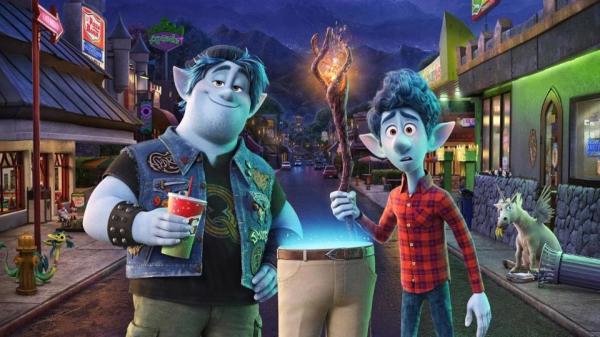
Every geek dreams of being able to apply their obscure knowledge to a real world situation.  It hasn’t happened for me yet, but Barley Lightfoot (Chris Pratt) is about to get his chance. See, Barley and his brother Ian (Tom Holland) live in a fantastic world where magic is real, or at least was real before technology took its place.

As a result, Barley’s favourite fantasy role playing game is not just fiction. Instead, it’s based on historical events, and Barley960x0‘s knowledge of those obscure facts really comes in handy as Ian and Barley embark on a quest to find a Phoenix Stone to power their father’s magic wand which will allow them to bring their dead dad back to life for 24 hours. If those stakes weren’t high enough, Ian and Barley have accidentally brought back their dad’s legs so the clock’s ticking!
What might have been a paint-by-numbers fetch quest in lesser hands is an epic adventure imbued with magic and wonder from Disney-Pixar. The extraordinary attention to detail makes Onward’s world feel authentic and exciting as we follow Barley, Ian and their half-a-dad on their epic adventure. Along the way, their efforts revitalize the world around them and bring back some of the magic that’s been forgotten. By the time we arrive at the final battle, everything has come together just as the prophecy foretold (truth be told, there is no explicit prophecy mentioned but this adventure is clearly the stuff of destiny). It’s a lot of fun to see it take shape.

Onward is more pure cinematic magic from Disney-Pixar. Even though Onward may not quite hit the heights of the studio’s very best, it’s a worthy addition to the catalogue and it will be especially enjoyable for anyone who has slayed dragons as an elf, troll or wizard in their basement (whether in modern digital form, the classic tabletop and 20-sided-die variety, or both).

Timmy Failure: Mistakes Were Made

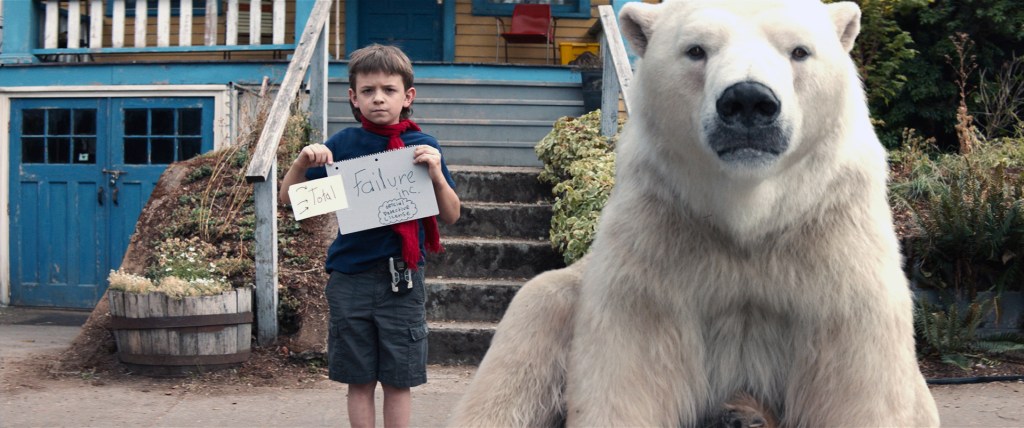
Timmy Failure has a misleading name, because he’s anything but. He may be young (11), but he’s the best detective in town (Portland). He and his partner, an imaginary 1500lb polar bear named Total, run the agency, called Total Failures, together. This may have been Timmy’s first mistake. Total is not the diligent and responsible polar bear he first appeared to be.

Timmy (Winslow Fegley), easily identified by his mullet and his red scarf (if not by his polar bear partner), roams the mean streets of Portland on the failure mobile, which looks suspiciously like a segway. But his case of the missing backpack is usurped by the case of the missing segway (eep!) which is in turn usurped by just trying to survive the 5th grade, his mom’s new boyfriend, his school’s rigid anti-bear policy, and the Russian spies overtaking his city. Gulp.

Winslow Fegley is a delightfully odd kid who pulls off charming and quirky in equal measure, exactly the kind of weirdo who’s a pleasure to watch. The whole cast, largely unknown, and largely children, are surprisingly talented and likable. It’s a good fit for a script that excels at being offbeat. Even the polar bear sidekick looks terrific, a visual witticism crashing about on screen. Timmy Failure: Mistakes Were Made is almost like a Wes Anderson starter movie, tonally odd but in a way I quickly became addicted to. I imagine this is the kind of movie the whole family can actually enjoy, its clever moments more than enough to keep adults entertained and the protagonist’s wacky antics enthralling for all ages.

Timmy Failure is a great piece of original programming for Disney+ and I wouldn’t mind a bit if there was more just like it (sequel?) on the way.

Oscar-nominated shorts 2020

Hair Love: nominated for short film (animated), directed by Matthew Cherry, Everett Downing Jr. & Bruce Smith

A father does his daughter’s hair. Normally I’d be extremely dismissive – these types of videos go viral all the time, the world falls over itself to applaud dads for attempting the things mothers are expected to do on a daily basis. HOWEVER. Hair Love is not really about a father patting himself on the back, it’s about a little black girl named Zuri who wakes up wanting to look extra nice on this special day. She follows an online tutorial from her absent mother’s hair blog, but wrangling her hair is challenging and things don’t go well for Zuri or her dad. A black woman’s hair is a special thing indeed, tied up in her identity and her culture, a symbol of her status, perhaps fraught with difficulty. But Zuri just wants to honour her mother; she already knows that hair does not make the woman. Inspirational and sweetly animated.

Kitbull: nominated for short film (animated), directed by Rosana Sullivan

A scrappy young street cat (well, kitten) and a pit bull trained to be vicious form an unlikely bond and experience friendship together for the first time. It brought a tear to my eye. Though it’s by Pixar (SparkShorts), the 8 minute film is 2D, every frame hand-drawn and hand-painted. Available now on Disney+.

Brotherhood: nominated for short film (live action), directed by Meryam Joobeur

Mohamed, a shepherd, is deeply shaken and a little suspicious when his estranged eldest son Malek returns home from Syria to rural Tunisia with a mysterious young wife in tow. The black sheep of the family returns on the same day as an actual sheep is found slaughtered. Families are tough things to navigate and Mohamed’s is no different. He is mistrustful of this new woman, covered head to toe in a niqab, and even of his son, one of 3 red-headed brothers played by real-life red-headed brothers, a jarring sight out in this hard-scrabbled land. He doesn’t approve of Malek’s decision to fight in Syria but it’s clear their relationship has always been fraught. Brotherhood has stunning cinematography and a meaty script but neither will soften the blow when Mohamed learns how costly assumptions can be.

Walk Run Cha-Cha: nominated for documentary (short subject), directed by Laura Nix

Paul and Millie recall their youth in Vietnam, where ‘foreign music’ was so romantic and sexy, and dance parties at home were illegal. They fell in love but were separated when Paul’s family fled the communists. They lost their youth and their young love to the aftermath of the Vietnam war, but 40 years later they have reunited in California and are rekindling their romance on the dance floor. Through one couple’s love story, Laura Nix teaches us about the immigration process and what it takes to relearn the language of love and make up for lost time. In their golden years, Paul and Millie finally have the time, energy, safety and security to learn what it means to enjoy life.

Nefta Football Club: nominated for short film (live action), directed by Yves Piat

In the south of Tunisia (again with Tunisia!), two young brothers and ardent football fan brothers bump into a donkey just chilling out in the middle of the desert on the border of Algeria. Oddly, the donkey is wearing red headphones (and yes, listening to music). The donkey is carrying bags of white powder (flour, they wonder? laundry detergent?) – they ditch the donkey and bring the powder back to their village, where their friends are playing football.

The Neighbors’ Window: nominated for short film (live action), directed by Marshall Curry

Exhausted, frazzled, middle-aged parents Alli and Jacob are mesmerized by their curtainless neighbours in the next building. While they breastfeed and wipe up poop and serve up meals that don’t get eaten, the two pine for their youth by spying on their young, horny neighbours across the street. This film is about envy more than voyeurism, well-acted and slick as hell, two people who are so busy that they’ve forgotten the grass isn’t always greener on the other side. This is Curry’s third nomination so it seems unwise to discount him.

Life Overtakes Me: nominated for documentary (short subject), directed by John Haptas and Kristine Samuelson

Over the last 15 years, hundreds of traumatized refugee children in Sweden have become afflicted with Resignation Syndrome. Life is so hard they withdraw into a coma-like state, unresponsive, sometimes for years. It’s like their little bodies can only take so much. Children need security, not uncertainty, to recover after a trauma, but for refugees, security is a long time coming. Watching these kids waste away is tragic. What is happening here? And the scariest part is that their families are still facing deportation. Imagine caring for a comatose child as a refugee? Those kids are frankly not likely to survive. But with anti-immigration sentiment growing in Sweden, and asylum laws getting stricter, the outlook isn’t positive. This documentary had me asking questions I’d never even thought of before, and combing the internet for answers. Stirring and urgent, Life Overtakes Me is available on Netflix.

Some of these are available to watch on Youtube, legally and for free – check out my Oscar-nominated films playlist.