Tag Archives: documentaries

The American Meme

Has there ever been a film so tailor-made to make me feel smug and superior?

Our culture has devolved into phone-obsessed automatons, but some of us are not content to simply post and share memes – some of us want to star in them.

Bert Marcus’ documentary focuses on 4 such persons, intent on their 15 minutes of internet fame:

Paris Hilton (@parishilton) of course blazed the blue print for internet stardom, for “reality” stardom of any kind, really. But she parlayed her hit TV show persona into an empire that she rules from social media. Her fans are her kingdom and she lives for them. She relates more to her followers than she does to her own friends. Perhaps the line between the two has been permanently blurred for her.

Brittany Furlan (@brittanyfurlan) moved to LA to be an actress but as for many others, her auditions went nowhere. But she was intent on becoming famous at any cost, and Vince was a platform where 6-second videos could net millions of views if they were funny enough. So Brittany embarrassed herself for the camera and the people came to laugh and point. And rack up views.

mv5bmzrmztzkmtgtzgq2yy00zge4ltg5mtgtytk3mmy4ngq3mdvjxkeyxkfqcgdeqxvymty1njuwmja@._v1_sy1000_cr0,0,687,1000_al_Josh Ostrovsky, better known as @thefatjewish, is the king of displaying himself for the enjoyment of others. Often naked, nearly always disgusting, he became famous for stealing other people’s funny memes and making loads of money off them.

Kirill Bichutsky  (@slutwhisperer) took that one step further. He was an almost-legitimate photographer who recognized that he got way more attention by posting pictures of nearly-naked women with his infamous “champagne facials.”

With interviews with other internet-enabled celebrities like DJ Khaled, Emily Ratajkowski, Hailey Baldwin-Bieber, and Dane Cook, Marcus explores the dark corners of internet fame, and how quickly it is changing. When social media was young, you could go viral by stuffing as many of your friends as possible in a phone booth. Now you have to risk your life by eating Tide Pods. Which really makes you wonder why internet fame is so damn alluring that these stupid kids will go to such lengths. And yet, go anywhere. Anywhere. And try your best to spend 10 seconds without getting bumped by someone who insists on being ambulatory while staring solely at their phone. And I don’t mean to single out the young folk, because older folks are just as guilty. I love a documentary that can reflect our culture and make us think about it critically. Marcus doesn’t ask a lot of questions, he mostly just leaves the evidence there on the table, and it’s up to you to take the picture and post it.


Root Cause

Back pain. Breast cancer. Panic attacks. Arthritis. Chronic fatigue. Bladder infections. Emphysema. Autoimmune disease. Herniated discs. Heart attacks.

Would you believe they’re all related to bad dentistry? In no other branch of medicine would a dead body part or tissue be left to fester. But dentists perform root canals all the time, and there’s just no way to keep a root canal completely sterile. Each tooth has 6-8 miles of tubules, tiny, tiny little tunnels that are basically only big enough to house gif-1-unicorn-1503393855bacteria and not much else. But a root canal keeps the tooth but cuts it off from the body’s natural immune system so if bacteria gets in, there’s no good way to get it out. And teeth are living things; they are connected in to the larger system of the body. According to the doctors in this documentary, every tooth is connected to particular organs and glands. And it’s weird to really understand the connection, but they’re telling me that, for example, 97% of breast cancer patients between the ages of 30-70 have had either a root canal or a toxic tooth. The worst part is the infected root canals are often asymptomatic. You’re not necessarily feeling tooth pain, so you never even think to have it checked.

A couple of things you should know about me:

  1. I’m a member of the No Cavity Club, which is an actual club at my dentist’s office. He posts my polaroid proudly.
  2. I married the son of a dentist, so my excellent teeth have often been remarked upon.

My dentist growing up, and his hygienist wife, were family friends of ours. I’ve had cleanings but no big drilling procedures so I never developed any of the dentist phobias that so many people seem harbour. That said, this film was occasionally difficult to watch, even for me. There is some actual footage of root canals, and that’s pretty gross.

The thing is, I think I have a healthy amount of skepticism and this all sounds pretty simple and easy for something that continues to cause so many problems. Most dentists are still performing root canals. Most patients are still asking for them: it “saves” the tooth (well, allows the dead tooth to remain). But the evidence presented is convincing: of 30 000 root canals studied, and every single one of them without exception was infected. These are not performed badly, it’s just that root canals are just inherently toxic.

I have no science or medicine credentials. I write movie reviews. As a documentary, this film is fairly well-made, with tonnes of qualified experts weighing in. The science is careful. It adds up. But as viewers, you and I need to exercise our judgement. I can’t tell you how much to panic about your root canals, but the truth is, right now I’m awfully glad I’ve never had one.

Fyre

I don’t know if you remember the fuckfest that was Fyre, but for some reason it caught my attention at the time, and Matt and I killed a lot of time at “work” gossiping about it. And the dirt was legendary.

Fyre was meant to be a music festival, the first of its kind, a high-end music festival on a private island in the Bahamas. The tickets were outlandishly priced in the thousands upon thousands of dollars, and they got you not just access to a concert, but luxury accommodations, fine dining, and the ability to cavort with bikini-clad super models. The festival was the brainchild of Fyre’s young, maverick CEO Billy McFarland. He had partnered with Ja-Rule to form a company that would make it easier to book musical acts, and what better way to brand a new company than to throw the world’s most IG-worthy, FOMO festival? They went after the young and stupid rich kids through Instagram’s influencers, and they sold out in days thanks to a single promotional video that featured the likes of Bella Hadid and Chanel Iman romping around on white sand beaches and yachts with just enough scraps of swim suit to keep things legal.

But other than knowing how to package things through the heavily filtered lenses of super models, McFarland’s secret was that he’d never been successful at anything before. And he was using finds collected for Fyre to pay off the debts of his last business venture. With just a month before the festival was to begin, not a single shred of work had been done on it. And remember we’re talking a Bahamian island that has no infrastructure or even electricity and plumbing.  With the clock ticking, Fyre: The Greatest Party That Never Happened shows McFarland’s despotic tendencies, firing anyone who voiced concerns, and insulating himself with anyone foolish enough to believe in his pipe dream.

Of course it all falls apart in the end. Or rather, it had failed to come together since the fyre-festival-documentary-netflix-tweets-1547562032beginning. They erected a few hurricane-issued FEMA tents as the “luxury” digs, enough for a only small fraction of attendees, and that’s if they weren’t rain-soaked and slicked with mudslide, which of course they were. There wasn’t enough food. There weren’t enough toilets. And then there wasn’t any music.
I remember seeing the statement when Blink 182 pulled out, just the day before the festival was meant to begin. They didn’t have faith that the festival could provide them with the necessities for their show. Understatement of the year. They were failing to provide the necessities of life. But they let hundreds of kids arrive anyway, and they were stranded without food or water.

For the rest of us watching from home, it was all kinds of fun to watch their increasingly desperate tweets about the crap food and the chaos. Keep in mind these were the painfully rich, spoiled beyond belief kids, a bunch of entitled millennials with such unfettered access to mommy and daddy’s accounts that they could wantonly spend hundreds of thousands of dollars on a weekend they knew little about. The best thing about it was that it was okay for the rest of us to have absolutely no sympathy for them. This was likely the worst thing that had ever happened to them, and they’re clearly still dining out on the story 2 years later.

Nor do you need any sympathy for McFarland, wanted on charges of fraud. Of course, McFarland hasn’t learned a lesson, the extent of which is revealed in the Netflix original documentary (Hulu has its own doc on the subject, but it’s more montage-driven than interview-driven, so a little less informative). But this documentary has taught me where to expend any welled-up sympathy that I may be hoarding: on the poor Bahamians who worked tirelessly to build a festival from the ground-up and never saw a penny. The scam artist known as McFarland has of course left unpaid bills all over the place, but the only ones you’ll care to see paid are the local Bahamian ones, innocent people taken down by a stupid white boy from New Jersey with an inflated ego and a golden touch. But it takes a village of idiots to go along with it and make it happen. McFarland didn’t act alone.

The Bill Murray Stories

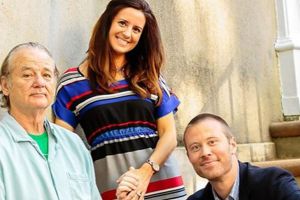
Bill Murray is a unicorn among movie stars. No other person in the history of fame gives such good celebrity encounters. But he’s also sort of a recluse and an intensely private person. He doesn’t have an agent. He’s notoriously hard to get a hold of. Major directors have failed to cast him because he’s elusive as hell.

But the thing about Bill Murray is, SO many people have a story about him. He’s photo-bombing their wedding pictures, or playing tambourine in their band, or bar-tending at the local watering hole. He just spontaneously joins in and leaves joy in his wake. Because what other celebrity in the whole entire world is as beloved as Bill Murray? His 615x330_bill-murray-1.0energy is just so open and guileless that you can’t help but admire him. But he receives all this love and instead of it bloating him, he reflects it back at the world. He’s literally just having fun. I guarantee nobody else handles fame half as well as he does.

Anyway, you only have to type half his name into the Google search bar before these crazy Bill Murray stories start to pop up. Hundreds or thousands of them. So documentarian Tommy Avallone decides to tackle them in The Bill Murray Stories: Life Lessons Learned From A Mythical Man. Bill Murray is our generation’s big foot. Sightings are legendary. Stringing together a bunch of Bill Murray encounters actually starts to feel really meaningful. It’s just a few moments from his life that makes one person’s day extra special. He lives a lot like some of our favourite characters of his: he just really throws himself at life, he lives in the moment. And shouldn’t we all? Is Bill Murray showing us how to live life?

Avallone is not a terribly good film-maker. He inserts himself into the story a little too much for my taste. But his subject is near and dear to my heart, so I watched, and I’m glad I did. Bill Murray is uniquely able to cut through this weird fame barrier, reach across it and just be a guy among guys. I particularly like a story about Bill at SXSW. In fact, Sean and I saw Bill at SXSW just last year, and heck yes, you bet it made our day.

Fahrenheit 11/9

According to Michael Moore, we have Gwen Stefani to blame. Donald Trump found out that she was being paid more to be a judge on The Voice than he was to host The Apprentice. To prove his popularity, he staged a fake presidential run announcement. His improvisations were so blatantly racist, NBC had no choice but to fire him outright, so in a sense his move backfired, but he looked around and saw people waving placards on his name, and even if he did pay them $50 a piece to do so, he liked it.

The film is immediately and unapologetically a Michael Moore movie, its voice over irreverent and predictable. For many minutes, footage of election night seems intent on proving how little rhythm Democrats have. But eventually we get to the meat of the problem.

mv5bmje4ndyxntk4mv5bml5banbnxkftztgwnte1mdmxnjm@._v1_Historically, Michael Moore is inflammatory, but he preaches to the choir. I don’t think he’s converted anyone. And this movie isn’t going to do it, either. Republicans have proved impervious to shame or guilt or responsibility. That’s fine. Instead, this movie does something almost smart: it talks to democrats. It can’t change the idiots in the republican party or the fools who vote for them, but maybe, maybe, it can fix some of the problems in the democratic one. Because let’s face it: to elect Donald Trump, you need more than republican idiots. You need blind democrats and a whole bunch of apathy.

Who are the faces of change? The democrats have relied on an old guard for too long – an old guard who inspires no one. So grassroots candidates, minorities and women, are getting involved to steal the seats back. After all, isn’t democracy supposed to be rule by the people? I didn’t feel nearly as engaged with the film until it met up with the Parkland kids. After the shooting at their school, a fire was lit, and they were able to organize protests around the world. These kids have a passion for change that is both admirable and infectious. Their involvement in politics can’t come soon enough. Their parents and grandparents have failed them, but it’s just possible that when they storm the white house, and I mean getting elected into it rather than protesting outside it, real change may come to a system that was born broken.

Far From The Tree

Early in the documentary Far From The Tree, Andrew Solomon says of the book he wrote by the same name “In telling these stories, I was investigating the very nature of family itself.” What he researched, and what the film explores, is children who are very different from their families, and the impact this has in their homes. Solomon grew up gay in a household that believed homosexuality was a sin. He was rejected by his mother.

The documentary, by Rachel Dretzin, visits with 5 families. Jason is a 41 year old man who loves Frozen and has Down Syndrome while his parents of course do not. He lives with a couple of roommates (the Three Musketeers, they call themselves) and a caregiver, but spends a lot of time with his mother. He grew up something of a celebrity, the poster child for “retarded” kids who could learn to read and write and socialize beyond what was normally credited to them. Jack is a 13 year old kid who has severe autism. He doesn’t speak but he’s clearly very intelligent. Though he has little control over his body, he has overcome numerous obstacles just to communicate with his parents. Loini is a bubbly 23 year old woman with dwarfism whose only wish is to be more independent. A convention where she’s finally able to meet other little people is like a welcome eye-opener; finally, someone understands. Leah and Joe are a married couple, both with dwarfism, who give birth to a baby with normal stature. What will parenting be like with a child who quickly outgrows you?

Though these “differences” in the children are nothing more than anomalies of nature, many parents originally blame themselves or feel some sort of guilt – was it a medication taken during pregnancy? a lack of sleep? the bed rest? The film, however, doesn’t give blame any space. Instead it shows parents going to great lengths just to connect with children they don’t necessarily relate to. The paths to love are in many ways the same (Jason’s mom recalls being told that her newborn was a “mongoloid” and that it was best to remove him to an institution immediately, “before a bond could occur” – while of course Jason’s mom had loved him since the moment she learned she was pregnant). In order to thrive as a family,these parents have become devoted to finding ways to connect with children they don’t necessarily relate to but love nonetheless. Love just as much. Leah and Joe talk about how they love each other for their “isms” (dwarfism) not despite them. I can see how this would be a balm to Solomon, who never got that from his own mother. That we can indeed have meaningful relationships with people who are not like us.

The last family (have you realized yet that I’ve only listed 4 of 5?) is a bit different. Their son, Trevor, murdered an 8 year old boy when he was just 16 himself. Can we still apply the lessons we’ve learned from the previous families to him? Can we accept that this is just how he was born, can we not blame his parents for who is he? Certainly, his situation is much different. Perhaps he was born with violent tendencies. Psychopathy may even be hereditary. But murder is still a choice, while Down Syndrome is not. The documentary takes up the same position though: that Trevor’s parents are not to blame. They’re still his mom and dad, they still love him, they still struggle to keep their family intact. But after falling in love with Jason, and having your heart melt over Jack, Trevor is a challenge. Can we, the audience, find the same empathy? Are we meant to?

I like a documentary that challenges me, and lining up Trevor besides these other individuals is indeed a test.  I don’t believe it’s pass or fail, but we’ve all got room for improvement, and if this kind of confrontation leads to more empathy, it can’t be a bad thing.

Avicii: True Stories

Tim Bergling, you may know, was a world-famous DJ known as Avicii who first became famous when he was just 21. He toured the world, and every night was a party. But wall-to-wall parties and drinks by the trough soon take their toll. Struck down by pancreatitis in part due to excessive drinking, Avicii was crippled with pain and constant health scares. But it wasn’t just his physical health that impaired him. Performing at shows created huge anxiety on a daily basis that just became intolerable. Even after a nice long break, Avicii isn’t any better prepared to keep up the grueling pace. So he makes a decision that takes the world by surprise: he retires from touring. He’s 26, and he’s retiring.

The documentary, by Levan Tsikurishvili, gets very intimate with Avicii. It follows him mv5bzmqwzwnkzjytmgu4zi00ogy5lwi5ztytm2yxyzrjnwvlmtzlxkeyxkfqcgdeqxvyntqznzyyoty@._v1_sx1777_cr0,0,1777,999_al_extensively. The camera knows him well, and Avicii is fairly open with this struggles, although he, and the documentary, like the world, tend to emphasize physical health over mental health. Watching this, it really strikes me how many of these documentaries we’ve seen lately – the overwhelming fame that leads to tragedy. Except this documentary, curiously, doesn’t hint at the tragedy. It ends on a positive, optimistic note – that having retired from touring, Avicii is free to continue making music, which clearly does make him happy, on his own time, at his own pace, without the crippling anxiety. We saw goodbye to him on a tropical island, enjoying a sun-filled vacation.

But Avicii doesn’t get this happy ending. He died 8 months ago, of wounds self-inflicted with a broken wine bottle. So it breaks my heart because he hoped and believed that retirement was the answer, and it turned out not to be. And now he’s just another illustration of depression having such far-reaching fingers that even the rich and famous are not immune. And though this documentary came out after his death and had every opportunity to speak towards mental health, it mostly chooses not to, not even acknowledging its subject’s death. It’s a weird, unsettling choice that casts a shadow over the documentary’s authenticity.


The Rebound

Like any good sports movie, The Rebound has an impressive training montage. The men push themselves to be stronger, go longer, play harder. They are fast, they are dedicated. They get up at ungodly hours to work out, and their grocery bills reflect their need to ‘feed the machine.’ But the stars of The Rebound aren’t your usual athletes.

In basketball, a rebound is when a player regains control of the ball after a shot is missed. It’s the second chance play. In the NWBA, the players contend with a different kind of rebound. It’s how a man picks himself up after a life-altering accident has left them paralyzed. The W stands for wheelchair.

This documentary follows a few key players on the Miami Heat Wheels as they push toward a national championship. But for the Wheels, it can never be as simple as playing well. Funding, for them, will always be an issue. The county gave them $2500 for the season when a trip to nationals alone will cost 11 grand. So between playing, traveling, and training, they’ll also be fund-raising.

Some of these men will discuss their accidents, and since many are a result of GSWs, they discuss, by extension, the need for gun control. Some of them are hoping to earn athletic scholarships for school. One is trying to break into the music industry. But they’re all really passionate about basketball, which is good, because when you’re strapped into a chair and careening at high-speeds on a court, the game looks brutal and dangerous. But they make it look easy. Physical, yes, but sometimes also surprisingly elegant.

Like lots of movies about sports, this documentary is about triumph over obstacles – it’s just that these athletes encounter challenges both on and off the courts.

Tough Guy

After a year of getting beat up, the Detroit Red Wings “drafted big”, big guys across the board, which landed Canadian novice Bobby Probert was on the team. Bob Probert wasn’t just big, he was tough, and he had a reputation as a fighter. You know, to “protect his teammates.” As you do. This was the 80s, so hockey was rougher and refs were scarce. On-ice brawls were a lot more common than they are today, and Probert was only too happy to oblige. But Probert’s lack of restraint wasn’t just on the rink; off-hours, he drank heavily and did drugs. When stories of DUIs and police altercations hit the papers, the NHL forced him into treatment, and a lot of good that did – he hooked up with one of the counselors and brought her home. He must have been a charming schmuck because not only is that a huge breach of professionalism, it’s also pretty hard to overlook his chronically missing teeth.

The documentary shows the Red Wings management selfishly slapping bandaid solutions on the troubled kid. Their franchise was having a couple of difficult seasons, and if there weren’t any goals to get the hometown crowd excited, a fist fight would do it, and “The Bruise Brothers” (with Joey Kocur) became marketing gold. The coach kept indiscreetly mouthing off to the press, and Probert was now skating high, a cocaine-fueled rage machine waiting for a target.

Back and forth between Detroit (USA) and Windsor (Canada), it was only a matter of time before border patrol found drugs in Probert’s possession. Sure jail was a possibility, but so was deportation, and that was a threat to his career. The NHL failed him in more than one way: he was constantly told that he played better (meaner) when he was drinking than sober, but a contract with serious money was the best incentive for sobriety, and for a time, it worked.

Tough Guy interviews former teammates, former rivals (Tie Domi!), family members, even Don Cherry. It’s a Canadian wet dream, except it tells a dark tale with a mean downward spiral.

Funny Tweets

So, Twitter.

This platform has changed the way we communicate. Originally you had only 140 characters to send out your thoughts, and today we’re up to 280, which is a boone to us long-winded folks. Something in the neighbourhood of 6000 tweets are sent every second. Nearly half of all Twitter users never send a single tweet, they’re just there to read. And man is there stuff to read. Read for days!

In Twitter’s early days, it was like the wild west: anything goes. And one of the things that really proliferated was comedy. There’s a special knack to writing jokes for Twitter, there’s a special pace, a special formula.

This documentary talks to a bunch of hella funny Twitter comedians, many of whom had their careers explode because of Twitter. Breaking into the writing world used to be hard, but now you can gain attention from your dead end job in Bumfuck, Nowhere. And it’s happened over and over! How cool is that?

Twitter also puts you in touch with tonnes of strangers who share the things you’re passionate about. Some of them hate you and what you’re saying, and they let you know, often more loudly than the people who love it.

And then there’s the celebrity content! You can follow whomever you please, including Ryan Reynolds, David Lynch, Patton Oswalt, and Conan O’Brien (all recommended).  And disturbingly, the current president of the United States is also a prolific tweeter. He likes creating evidence of his lack of intellect and filter, and posting it to the internet forever and ever. Because he’s an idiot. Danny Zuker, a writer for Family Guy, interacted with Trump frequently – his slams were popular and effective, but he likens it to “dunking on a toddler.”

This is an entertaining documentary and a great crash-course on the ins and outs of Twitter. Director Laurie McGuinness covers thinks like plagiarism on social media, how women are treated differently (meaning poorly), internet outrage, and the unintended consequences of thoughtlessly posting your basest instincts. Twitter can get you hired and it can get you fired. It’s a risk, it’s a connection, it’s a new way of thinking. It can open up your world, if you let it.

p.s. my super awesome Twitter can be found at @AssholeMovies – won’t you be my follower?