Tag Archives: documentaries

Hobbyhorse Revolution

I was excited to review this film for Hot Docs because I’d heard of and was mystified by ‘hobbyhorsing’ and needed to know more about it.

Hobbyhorsing is a lot like the horse competitions you’re used to seeing on TV, or in Olympic events.  Dressage, an equestrian sport, is the highest expression of horse training. In the events, you’ll watch horse and rider perform a sequence of events from memory, including piaffe (a special kind of trot), and pirouette (a 360 degree turn). In the obstacle event, the horses will jump over poles. Horse and rider are judged on how smoothly they go through the movements, and how willingly and with minimal cues the horse performs.

In hobbyhorsing, the competitions are similar, except – NO SHIT – performed with a fake horse. A hobbyhorse: those toys for small children which consist of a horse head on a broomstick.

Hobbyhorse Revolution is a documentary that sheds light on this burgeoning community, and on the people who compete (they’re older than you’d think).

Competitors “train” extensively, but don’t forget it’s their own two feet doing all the work. The ‘horses’ get off pretty lightly but are still given starring roles. Their ‘riders’ talk about them as though they are real: this one is ‘energetic’, this one ‘well-schooled.’ They are ridden with whips and put away with stable blankets. You know, in case they get fake cold.

The teen-aged girls interviewed for the film are almost all troubled in one way or another and I can’t believe that’s a coincidence. Playing make-believe with toy horses is a blatant extension of childhood. In this light, hobbyhorsing is perhaps not simply a curiosity but a disturbing trend – 10 000 “hobbyhorseists” in Finland and growing. Unfortunately, the film maker fails to answer that most obvious of questions: why? What is happening to these girls that they’ve left their peers and retreated to the safe but immature world of racing fake horses? Interesting but superficial, Hobbyhorse Revolution is a hollow look at a surprising new safety blanket.


[Between you and I, I can’t really watch a 17 year old young woman prancing around with a stick between her legs and not wonder if it’s somewhat sexual. Or entirely sexual. Either way, something here is messed up.]

 

Winding

A quick Internet search confirms that the Yarkon River is a river in central Israel, the largest coastal river in Israel at 27.5km in length. It’s mouth is in the Mediterranean Sea and when the Reading Power Station was built close by to supply electrical power to the Tel Aviv District, the Yarkon became heavily polluted.

Winding is a documentary about the Yarkon but it is not a regurgitation of already-available facts. It tells a history much more personal, the river’s journey from symbol of hope to curse bringing death. The documentary shares archival footage, personal recollections, and more recent interviews to establish the interplay between a people and its land, between nature and man. It’s actually a little bit sad to watch a beloved river decline and it feels natural to draw parallels between the Yarkon and much larger global issues.

This film by Avi Belkin plays at the Toronto Jewish Film Festival Tuesday 9 May, 3:30 PM at Cineplex Cinemas Empress Walk 9. If you are unable to attend this screening, never fear, there are lots of excellent movies to choose from. 30 Years of Garbage and Operation Wedding are personal favourites, but do check out the programming guide – there’s lots more to see.


Hot Docs: A Cambodian Spring

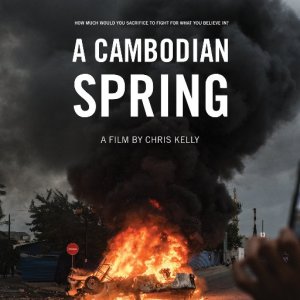
Land rights are a super contentious issue in Cambodia, where the communist Khmer Rouge regime banned private property in the 1970s, destroying tonnes of land documents in the process.

As a result, at least two thirds of Cambodians, most of them poor, of course, don’t have proper deeds for the land they live on. Over the last ten years or so, thousands have been evicted and forcibly removed from their homes in various land-grabbing schemes, mostly perpetrated by their own government, referred to in his film as a “fake democracy.”

1L6PdFeXFilm maker Chris Kelly follows three people over the course of 6 years to get a grip on their experiences. Toul Srey Pov and Tep Vanny are two young mothers who allowed their land on the Boeung Kak Lake to be measured by the government, supposedly to receive accurate land titles. Instead, the government leased their land to a private company, Shukaku, which “happens” to have ties to the Prime  Minister. Shukaku is dumping sand into the lake, flooding the streets of Boeung Kak, forcing people from their homes. These women are too poor to abandon their homes. The compensation offered by Shukaku is laughable, insufficient to start over elsewhere. But those who stay risk their lives – already 3 have died by electrocution alone.
A Cambodian Spring shows how corruption and oppression still rule in Cambodia, but more than that, it highlights our own role in this: the failure of the World Bank to enforce its own resettlement policy, and the international complicity in allowing this to happen to regular people who believe they should be able to live in the homes they have purchased.

Although a bit overlong, A Cambodian Spring is an eye-opening and intimate portrait of citizens-turned-activists, and the cost, both personally and politically, that comes with fighting back.


Operation Wedding

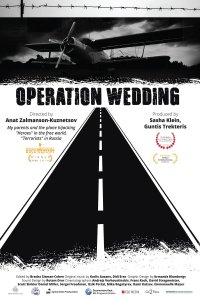
In 1970, Anat Zalmanson-Kuznetsov’s parents had tried to leave Leningrad several times, and several times they’d been refused. Out of legal options, they decided to flee. They and their friends dreamed up Operation Wedding, in which they’d fill a plane full of people ostensibly on their way to a wedding, and once in the air, they’d have the pilot change course. Lacking the 200 conspirators necessary for this plan, they set their sights on a smaller plane, and their group of 16 bought up all the tickets. They planned to leave the operation-wedding-2016-i-movie-posterpilots behind on the tarmac and would use their own pilot; the border was just 15 minutes away and the plane would be empty save for those wishing to escape. Anat’s parents never made it onto the plane, caught by the KGB mere steps from boarding. Her mother was sentenced to 10 years in the Gulag. Her father received a life sentence. This is their story.

The programmers at the Toronto Jewish Film Festival have done an excellent job of presenting some very interesting stories at this year’s festival, but this one may take the rugelach (I know-forgive me).

Even today, Russia remembers them as terrorists. But who were they terrorizing? They simply wanted to leave the USSR. that was their crime. They knew the risk they were taking and were prepared to pay the price if caught; most preferred death. In court, they openly declared their wish to leave, and refused to beg for mercy. Two of the sixteen were sentenced to be executed by shooting, the first time the death sentence has been invoked in a hijacking case, plot foiled or not.

Israel held protests: the entire state stood still for those who may be put to death for a crime they didn’t even commit in the end. Jewish organizations in other countries joined in. Hunger strikes were held. And behind the scenes, Golda Meir was secretly pulling strings so that Spain’s “Franco the Fascist” would commute the death sentences of 6 cop killers, thinking that Brezhnev the Communist would try to out-humane Franco the dictator.

The documentary uses archival footage and primary-source interviews, but it’s Anat’s family connection that really brings it alive. When she visits the gulag cell where her mother did time, the bleak reality overwhelms her, and it moved me to tears as well.

Operation Wedding screens as part of TJFF

Friday 5 May, 1:00 PM – Alliance Francaise

Sunday 7 May, 1:30 PM – Cineplex Cinemas Empress Walk 6

Director Anat Zalmanson-Kuznetsov will be in attendance.


Hot Docs: Tokyo Idols

What saved a 43 year old man from depression? What is he so devoted to he refers to it as a religion? What is so intoxicating he’s blown through his life’s savings? Sad-sack middle-aged men in Japan are flocking to ‘pop’ concerts performed by underage girls. They’re called Idols in Japan, they perform in ‘girl groups,’ and to date there about 10 000 of them.

They’re providing a coveted if creepy role in modern Japanese society: comfort to men MV5BOTk0OTQ1NjYzNV5BMl5BanBnXkFtZTgwODA4NzE5MDI@._V1_SX1777_CR0,0,1777,999_AL_who have very little else going on. In a tanking economy, middle aged men find themselves with poor jobs, little money, and even less confidence. It’s no wonder they’ve stopped dating real women and have shifted their fantasies toward little girls, who run no risk of rejection. The Idols host “meet and greets” where their fans will of course pay a lot of money to have a minute’s worth of childish conversation and a handshake – in a culture where the handshake still has a sexual component to it, having been completely taboo between the sexes until only a few decades ago.

Yes, watching these stunted middle aged men fawn over children is uncomfortable. They worship virginity, prefer girls who are “still developing,” and believe that 17 is past prime. Their worst fear is that these girls will grow up to be strong women. Sapped of self worth, many men in Japan have quit dating ‘real’ women altogether. The birth rate is falling. Idol culture is proliferating. The men who adore them beyond all reason are called ‘Otaku’. These super fans would put even the most fervent Justin Bieber fan to shame. Not long ago, Otaku were considered failures, some song lyrics even called them filthy pigs, but they are becoming more and more mainstream.

The Idols, meanwhile, are on constant parade, never far from a judging eye. Every year there are Idol elections, where the men pick their favourite girls to perform for the next calendar year. For the girls it becomes about winning male adoration, and they become conditioned to want it from an alarmingly young age. The men can spend thousands (monthly!) attending concerts, accumulating merchandise, and buying time with the girls. If this sounds like prostitution to you, you’re not wrong. It’s even creepier than prostitution, isn’t it? There’s no intercourse taking place, but money changes hands for its substitution.

Director Kyoko Miyake does an excellent job absorbing her audience into this obsession. I almost felt like a voyeur, that’s how intimate her access is. And as morbidly fascinating, as this phenomenon is, Miyake expertly nestles it within a social context that deepens our understanding of it. While I was discomforted watching these transactions take place, it’s clear that the lines are blurrier in Tokyo. Miyake carefully shows both sides, the good with the bad, finding what sympathy she can in the humanity of it. Tokyo Idols is a really interesting watch and my only complaint is that I wanted even more. I’m positive there are even darker themes here to explore (what happens to the past-prime girls, for example?) and I can only hope that we’ll see more from this director in the future.


Like a Lotus Flower

like a lotus flower

Like a Lotus Flower is both a memorial to a lost mother and an example of how death can decimate a family.  The story is told in a way that keeps the viewer guessing and even though that is frustrating at times, that choice definitely made me pay total attention to this film in order to figure out how each person fit into the narrative.

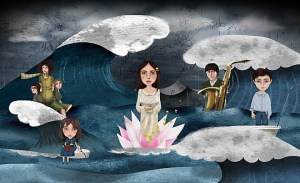
At base, this is Eliya Swarttz’s story.  She lost her mother, Hedy, to breast cancer at a very young age.  Eliya wrote and directed Like a Lotus Flower, and reflects on her past through a combination of home video footage, interviews with the other family members, excepts from her childhood journals, and animated sequences.

The artwork in the animated sequences is a highlight.  Tonally, the art is an extension of the title, the visual equivalent of a flower blooming from the mud.  It is beautiful, somehow bright and sad at the same time, and ties the interviews and video footage together nicely.

It’s quite a puzzle to figure this family out, particularly when Eliya’s first father figure is her dad’s brother, who not only introduced Eliya’s parents to each other but also professes a deep and complex love for Hedy.  He refers to their relationship as being one between two emotional cripples who were trying to save each other.  For reasons that are not really explained, Eliya’s biological father is noticeably absent from the film and Eliya’s life in general.

There are also other notable and unexplained absences that will leave the viewer guessing, but perhaps that is the point.  There is no rhyme or reason to life and death, and this film captures the ebb and flow of people entering and leaving our lives as we grow.  Asking why Eliya’s mother died or why her father is absent is as effective as shouting into the wind.  These events happened and Eliya dealt with them (and is clearly still dealing with them in making this movie), and she bloomed out of a difficult situation.

By the end, Eliya is able to admit to herself and her family members how difficult her adolescence truly was despite her brave face, and when she does it feels like a breakthrough.  Like a Lotus Flower allows the viewer to participate in that therapeutic process as Eliya reconciles with her past, and does so in a way that is interesting and relatable.

Like a Lotus Flower is part of the Toronto Jewish Film Festival, screening May 10 at 3:30 p.m.


Hot Docs: Ask The Sexpert

When Dr. Mahinder Watsa was starting out his career as a doctor, he wrote a medical column in the back of a ladies’ journal. At the time, young women were dying from back-alley abortions while others committed suicide, unwilling to let their prospective husbands know they were not virgins (due to sexual abuse). Dr. Watsa knew then that there was a problem in India. He wasn’t particularly specialized in human sexuality, but through research, hard work, and years of experience, he made himself so. He was a pioneer of human sexuality education in India, a position still necessary today when many provinces still ban sex education in schools, and a position that he still occupies at _76446807_panos00178357x624the age of 91. With teachers unable and parents unwilling to discuss sexuality, there’s a huge chasm of ignorance in India, and Dr. Watsa is still doing his best to fill it.

I find it utterly impossible not to be charmed by Dr. Watsa and by extension, by this documentary by Vaishali Sinha. A newspaper sex column, seen as a lark in the lifestyle section of our newspapers, a laugh on late night TV, is vitally important in a country like India. Dr. Watsa writes plainly, even conversationally, to his readers with honesty, openness, and precision – three things otherwise completely missing from the field, which is astounding considering they are confronted by the same internet porn and HBO programming that we are, and yet are completely in the dark about even the basics of reproduction let alone pleasure. What a 10 year old Canadian could answer here, a mother of 4 may be mystified with over there. Of course, it isn’t just ignorance but shame and fear that keep this subject deeply shrouded. It’s discouraging to see the mountain yet to  be climbed, but Sinha instead heartens us with the people at the forefront of this movement toward education.

Dr. Watsa is a humble figure, unassuming and prone to humour.  He knows his work is important but seems a little struck by his own inadequacy, likening his column to a “drop in the ocean.” In a country of over a billion in population, sex is definitely happening if not openly discussed – or admitted to. Dr. Watsa is a bright light. As a good director, Vaishali Sinha knows that every hero needs a good villain, and he has one: a woman hellbent on inflicting her own “moral” standards on everyone else, and not afraid to take the matter to the courts. Indeed, at the age of 91, both Dr. Watsa and the newspaper he writes for, the Mumbai Mirror, are charged with obscenity, with Dr. Watsa possibly facing jail time if convicted.

This is a fascinating documentary. Sinha has found a brilliant subject and has the good sense to stick with him. I’m positive that he will endear audiences near and far.

Hot Docs: Sunday Beauty Queen

Hong Kong, like many cities around the world, benefits from the help of underpaid Filipino workers. A local domestic worker would cost $8 an hour, but a Filipina in the same role works round the clock, 6 days a week, for just $500 a month. There are strict rules for these poor workers, who aren’t allowed to maintain their own residences (if they could even afford them). They often sleep in the kitchen, which is also where they eat, alone, after having served the family. These are the people who care for the elderly or nurture the very young. Away from their own families, often even leaving young children behind, they pour love and care into their duties while receiving very little in return.

sunday_beauty_queen-4Sunday Beauty Queen examines these workers, and the pastime they enjoy in their very limited time off: beauty pageants. Every Sunday they gather in events they organize themselves, strutting their stuff in costumes equal portions prom dress and cardboard accoutrements.

This well-intentioned documentary by Baby Ruth Villarama sheds light on important issues faced by migrant workers but lacks real depth, raising more questions than it answers. These women run themselves ragged serving others, sending all of their money back home to the families they left behind. They reclaim their dignity and their personhood on Sundays, competing in made-up beauty pageants. If the awarding of crowns and sashes runs late, they could lose their jobs on the spot for coming in past curfew. Instantly homeless in a foreign country, they have 14 days to find new employment or they are forced to leave. Many can’t even afford to leave, due to fees charged by both Hong Kong and the Philippines coming and going, on top of airfare and the shame of going home empty-handed.

I loved getting to know the women in this documentary, but I wish I knew them better, had a fuller sense of their stories. Sunday Beauty Queen is an excellent start, but these workers deserve a bigger piece of the pie, both in life and on film.


This review first appeared at Cinema Axis.

Monsieur Mayonnaise

Only a few minutes into Monsieur Mayonnaise, my brain’s got an itch. Something about this feels familiar but it can’t be the movie as it’s making its Canadian premiere at the Toronto Jewish Film Festival. Rather it’s the man himself, artist Philippe Mora, who I’ve lately seen in Three Days in Auschwitz, about how his mother narrowly escaped being MonsieurMayo2-750x506sent to Auschwitz. Philippe Mora is an artist of all mediums; while he did not direct this particular documentary, he did write and illustrate the graphic novel of the same name.

Monsieur Mayonnaise is about Mora’s father, a member of the French resistance. He earned the code name Monsieur Mayonnaise when he suggested the resistance smuggle important documents inside sloppy, mayonnaise-filled sandwiches, after he observed Nazis avoiding greasy foods in order to keep their pristine gloves clean. His father’s position allowed him to protect and shelter the family of the young woman with whom he was quickly falling in love. After the war, fearful of another, Mora’s parents fled to Australia, where they made their home, raised a family, and opened several restaurants which would feature hand-made mayonnaise prominently.

These are the reminiscences that inspired the colourful artwork that makes up Monsieur monsieur-mayonnaise-2Mayonnaise, both the comic and the film. Director Trevor Graham films the madcap artist as he careens around the world, meeting up with heroes, villains, and the ordinary people still alive today because of his father’s efforts – teamwork improbably involving Marcel Marceau – smuggling Jewish children across the border.

Mora is practically a subject unto himself, and if his flightiness is mirrored in the documentary, so too is his exuberance.

You can catch a screening of this film on the following dates:

Thursday 11 May, 3:30 PM – Alliance Francaise (Director Trevor Graham will Skype in for a Q&A)

Sunday 14 May, 1:00 PM – Cineplex Cinemas Empress Walk 9

30 Years of Garbage: The Garbage Pail Kids Story

I was probably too young for Garbage Pail Kids. I was possibly too young for Cabbage Patch Kids too, for that matter, but had one anyway, given to me when I was 2 years old and my dumb Mom replaced me with a brand new baby. My Cabbage Patch Kid was named Maud (they came pre-named, with a birth certificate) and she had red yarn hair. My babyGPK_8a_adambomb sister also got one, a brunette named Valerie, which I felt was unfair because she’d done nothing to deserve it besides poop and scream and steal my parents’ love.

Cabbage Patch Dolls were a huge phenomenon in the 1980s, and so too, eventually, were the little trading cards that parodied them. Topps bubblegum did Bazooka and other candy store staples. They’d paired baseball cards with bubblegum for years, and were expanding to “non-sport” cards as well. Failing to secure rights to do a legit Cabbage Patch line, they decided instead to do a “fuck you” line that would skewer these saccharine-sweet dolls.

30 Years of Garbage introduces us to the brilliant, twisted minds behind this idea that was obsessively collected by kids and doggedly censored by parents and principals. Jacques Cousteau, for some reason, cautioned parents that their Garbage Pail loving kids would inevitably end up on cocaine! I may have been too young to appreciate os4_132athis stuff at the time, but I have certainly been aware of them in retrospect. These bubblegum comic artists tapped into a vein of childhood rebellion and ended up making lasting work.

I was shocked to learn that a Garbage Pail co-creator was none other than Art Spiegelman, who wrote Maus, a deeply moving graphic novel about the Holocaust (he uses cats and mice effectively – if you haven’t read it, you simply must). I shouldn’t be surprised that I’d never known the connection – his publishers worked hard to keep it that way!

30 Years of Garbage provides equal doses nostalgia and insight. You don’t need to love the product to find this documentary compelling: who got screwed, who got sued, who won the war between the First Amendment, and Product Disparagement?

But it’s also interesting because I see this fad repeating itself. My little nephew Brady is into something called Shopkins, which as far as I can tell, is a really stupid “toy”. It’s a tiny rubber thing, shaped like some grocery store item, about the size of a pencil eraser. cards21n-2-webHe’s got a bag of rice, and a bag of flour that looks almost identical to the bag of rice. How these are fun toys I have no idea. We usually pile them on Lightning McQueen and race. But Brady’s own counter culture is already budding at 5 years old: Shopkins are parodied by the Grossery Gang, the same basic shitty toy, but disgusting (ie, mouldy cheese). I don’t get it, but adults aren’t meant to. It’s kind of cool that he’s got his own little act of rebellion, but if you’re in the mood for some throwback rebellion, here’s a hint: the Garbage Pail Kids are back.

30 Years of Garbage is playing at the Toronto Jewish Film Festival this Sunday, May 7th, 5:30pm at Innis Town Hall.