
Steve Gleason was an unlikely football star: too small to do what he did, he did it anyway, for the New Orleans Saints. It was the NFL that brought him to New Orleans but it was falling in love with a free-spirited local girl named Michel that kept him there beyond his retirement in 2008. They soon found themselves expecting a baby, which would be a happy occasion except that about 6 weeks prior Steve was diagnosed with ALS.
ALS, or amyotrophic lateral sclerosis, is a neurodegenerative disease where the nerve cells that control your muscles die. The brain can’t talk to muscles, leading to a loss of mobility, loss of speech and eventually the ability 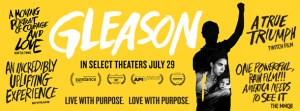 to breathe. Everything is still right in your head though, so you’re still smart and alert and you see everything happening to you, helpless to do anything about it. There is no cure. It is fatal, and will likely be so within 2-5 years of diagnosis.
Within months, Steve is walking and talking with noticeable problems. As Michel’s belly grows with their baby inside, he starts keeping a video diary so that one day his unborn child may know him.
The documentary is bittersweet; the Gleason family experiences highs and lows, and no matter what we hear the clock ticking. As hard as it is for us to watch him deteriorate so quickly on film, to see that hardship mirrored on his wife, Michel’s, face, is just agony. Steve seems determined to share his struggle honestly, even when that means admitting that he’s trying to live up to this banner of ‘inspiration’ and ‘hero’ that the media has ascribed to him and not always knowing that means.
He does, however, establish the Gleason Foundation, which focuses on service and equipment. He felt that much of what ALS takes away, like speech and mobility, technology can give back. And while that’s true to an extent, it can’t quite account for everything: not time, not life. But the foundation gives him purpose, and he’s certainly in the position to bring awareness and to raise money for this disease.
It’s sucky to watch this movie. It’s hard. But as Steve himself says, it’s sad but it’s not all sad. And maybe it’s those moments of not-sad that we need to attend to: the hope, the faith, the optimism, the acceptance, and certainly the closeness and love of this family. And as difficult as it is, it’s also an amazing piece of film. It’s raw and emotional and real. As a famous athlete and the face on a poster on many bedroom walls, many would have called him a hero. But giving a voice to those who have lost them? That’s heroic. His wife’s caregiving? That’s heroic. This film has the power to provoke the hero in all of us. I can’t recommend it enough.
 corrections work on Rikers Island. But then the music business started paying attention and audiences marveled at her powerful energy and her joyful performances. Touring with her band, the Dap-Kings, Jones’s career was taking off when she was suddenly diagnosed with pancreatic cancer in 2013. Director Barbara Kopple is with Jones during her treatment, and Miss Sharon Jones! is a testament not just to the music, but to the immense effort Jones goes through in order to make it.
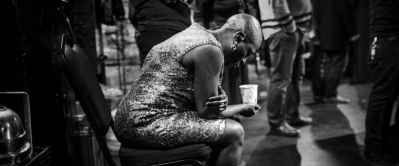 recounting, it’s more about facing down death with graciousness, gratitude, friends, and yes – music. Always music. It’s clearly Jones’ passion and her greatest motivator. But the people she plays it with and shares it with are just as important, perhaps even more so as her health fails and her recovery is rocky. There is a stark contrast between her life as a performer and that as a cancer patient, and the best parts of this film are found right in that crack, where Miss Jones is unafraid to be honest, and to share this journey with her fans just as she shares her music, and her best self on stage, where Jones is really, truly alive.
 Until Bill Koch noticed something peculiar in his wine cellar that has more square footage than my house. Among his 43 000 bottle collection (including 4 bottles reportedly owned by Thomas Jefferson for which he paid $100k per bottle) he started to notice some fakes. Those fakes were traced back to none other than Rudy Kurniawan.
 the 2016 American Election’s worst-case scenario. Misogyny and xenophobia seem to have its place in American political discourse after all- the Oval Office on weekdays and Trump Tower on the weekends. A lot of people have said a lot of things to try to make me feel better. “Geez, give him a chance. If he succeeds, we succeed,” they say. “He’s not going to do any of the things he said,” seems like a popular response, which even if true seems to miss the point. One person even made the bizarre claim “Don’t worry. Orange people never do anything”.
 “Sure, he’s unprepared and easily distracted but give him time,” would makes more sense if the world was a simple place where nothing all that important or complex were going on. Zero Days, the new documentary from Alex Gibney and the film I’m using as an excuse to talk about the feelings I can’t shake since the election, paints a scary picture of the complexity of the security threats that face the United States and the world. Specifically, Zero Days is focused on cyber security and the story of the Stuxnet virus.
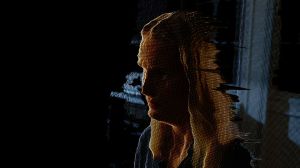 Gibney (Taxi to the Dark Side, The Armstrong Lie, Going Clear) takes his subject seriously, his documentary can’t help feeling like a Hollywood thriller and the twists can feel pretty exciting until you remember that this is real life. The director is wise to play up the suspense given that all this talk of worms and centrifuges can get a little technical and continually reminding us how high the stakes are is an excellent motivator to pay attention to all the tech talk. The interviews with the security company that discovered Stuxnet, the politicians who can neither confirm nor deny anything, and the NSA whistleblowers are all gripping.
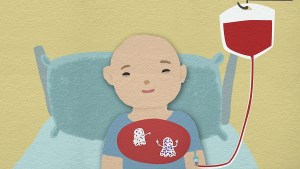 multiethnic descent. Before I watched this documentary, I didn’t understand that these matches tend to be found within one’s own race, and how limiting that can be for all kinds of people. Multi-ethnic backgrounds are the fastest-growing demographic, but the waiting lists aren’t keeping up, leaving multi-racial patients struggling to surmount complex genetics on top of everything else. It’s already tragically unlucky to be struck by a stupid disease, but to fail to find a match because you’re losing at a numbers game? That’s just unacceptable.
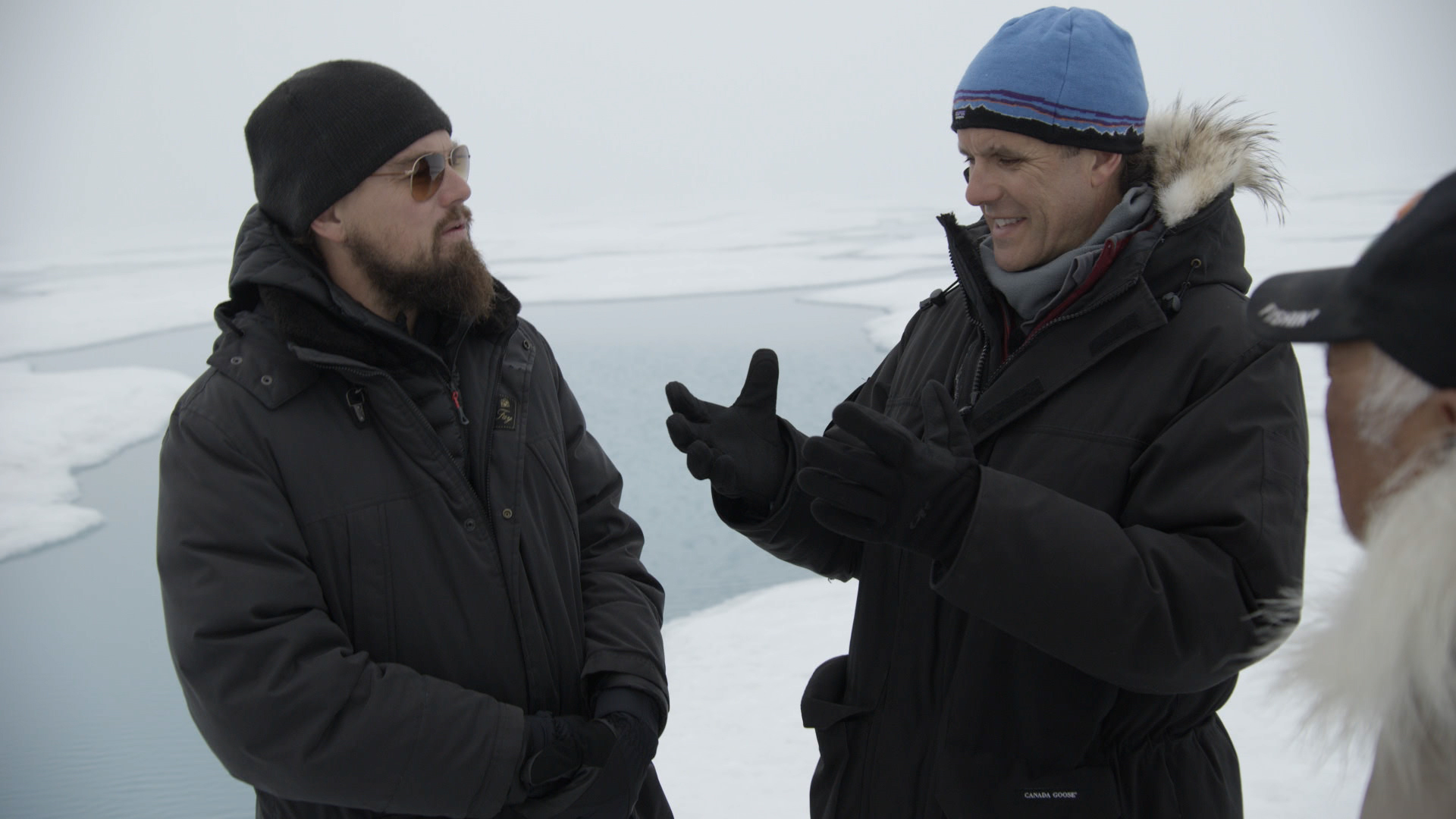
 Officially, Michael Moore is not exactly a Clinton supporter himself. He voted Bernie Sanders in the primary, and even voted against Bill in the 90s. But now it’s time to get real. Donald Trump was a good joke for a while, but now the threat is a little too real and he’s coming out swinging.
 they’re pushing back, which is a normal response.
 man extraordinaire, Canadian superstar Gord Downie had recently announced that he had a brain tumour and was terminally ill. Since making music has always been his passion, he and the Hip went on a farewell tour and despite the ravages of cancer, he performed full-throttle at each and every show, somehow finding the energy and the courage to power through. Their final
  date was in their hometown of Kingston Ontario, just a little ways down the road from Ottawa. Our Prime Minister, Justin Trudeau, was in the front row, and spoke for all of Canada when he thanked Gord and the whole band for their decades of artistic serviced to the country. It was a stirring night. The end is coming for Gord and he knew it, you could see it in his eyes, feel it every time he was overcome by emotion, but instead of making it about him, he chose to use this spotlight (and believe me, about 32 out of our 33 million strong
 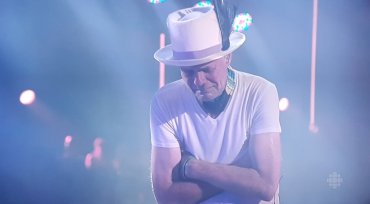 population were tuned in one way or another) to speak on behalf of Canada’s indigenous population.
 Prohibited from speaking their languages, practicing their spirituality, or honouring their cultures, teachers stripped them of their identity. Many children suffered terrible abuse, but all of these kids were deprived of their childhoods, and all of the families suffered terribly as I’m sure you would if your child was removed, perhaps never to be seen again, or if you were lucky enough to be reunited, we can only hope that you can find a common language in which to communicate. Communities were destroyed in what many Aboriginal people refer to as a genocide. It’s a dark part of Canadian history that wasn’t acknowledged until very recently. Today our First Nations peoples often live in poverty and other consequences of this intergenerational tragedy. Healing is not an Aboriginal problem, it’s something we need to address as an entire country. Gord Downie is doing his part.
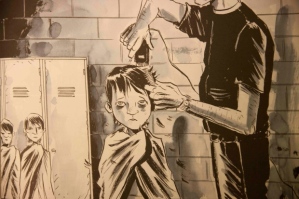 and hundreds and maybe even thousands of Chanies dotting our countryside. Lonely and miserable, many children made an escape an attempt only to lose digits or limbs to frostbite, arms and legs on traintracks, or lives to exposure, or to punishment when recaputured. How many tiny bodies are still unaccounted for? The fact that we don’t even know is proof of how little white Canada cared for Aboriginal people, and this is a guilty fact we struggle to reconcile even today.
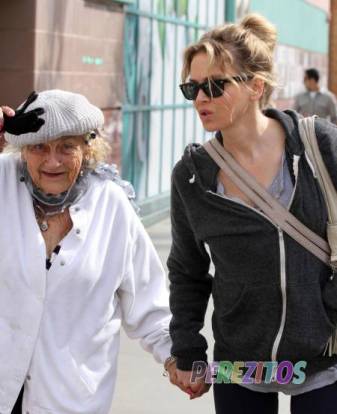 laundromat until one cold night a kind laundromat owner didn’t kick her out at closing time. She’s been living in Fox Laundry ever since – some 25 years now.
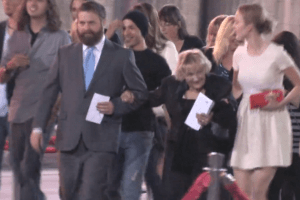 her hard-won wisdom, and an outlook that’s totally unique. She’s cantankerous and whimsical and totally intolerant of homeless people (she doesn’t see the irony). And she has a knack for making famous friends: Zach Galifianakis has taken her to movie premieres (he met her while doing his laundry some 18 years ago), Renee Zellweger takes her shopping, and if you promise to keep a secret, Zach’s about to put her up in an apartment all her own. She hasn’t had a home since 1976.
 ASSHOLES WATCHING MOVIES