Tag Archives: documentaries

Requiem for the American Dream

Requiem for the American Dream opens with Noam Chomsky reminiscing about the good ol’ days of the Great Depression.  As bad as it got during the Depression, he recalls a shared understanding among the people that this shall pass. Now things are bad again, he claims, and this time nobody seems as optimistic that things will get any better. Of course, it’s perfectly normal that the outlook of a young boy packing into the back of the family truck with Grandma, Grandpa, Ma, Pa, and Uncle Tom and heading to California looking for work (assuming of course that his childhood was exactly like The Grapes of Wrath, which is my only point of reference) is probably a little rosier than that of a cranky 85 year-old linguist but he has my attention. He claims that the disparity between the rich and poor in the US has never been higher, predicting the death of the American Middle Class. Which worries me a little, as a member of said Middle Class.

It all started with America’s beloved forefathers, who understood Democracy’s biggest problem. In a true democracy, with poor people having the right to vote, what’s to stop the underprivileged from voting to take the big fancy houses away from the rich? Hardly seems fair, doesn’t it, since the rich worked so hard for said property? So they were left with two choices: take steps to reduce inequality or to limit democracy. So, according to Chomsky, begins the process of building a system that limits the access of the underprivileged to the highest office in the land.

Honestly, I’m not a fan of documentaries like these. Requiem features four years worth of interviews with Chomsky. Visually,  we’re offered only tight close-ups of the renowned political activist’s face that even the most vain of starlets would never agree to along with the occasional stock footage of skyscrapers and highways. The filmmakers seek no other opinions, neither dissenting or complementary, and Chomsky’s lecture is accompanied only by an irritating score from Malcolm Francis.

So it’s not much of a documentary. That doesn’t mean its subject isn’t worth listening to. His observations are as alarming as they are timely. Even better, he has the decency to offer some hope for the future, reminding the American people that their system is set up so that regular people can bring about real change as long as they stop fighting amongst themselves and stand up and make themselves heard. Still, the documentary has nothing to offer but the words of Noam Chomsky. So you’re probably better off just reading some Chomsky.


Winter on Fire: Ukraine’s Fight for Freedom

When Ukraine’s president, Viktor Yanukovych, “elected” under a cloud of fraud, vote rigging, and voter intimidation, then passed on a deal to join the EU, the people of Ukraine took to the streets to protest. On paper, Ukraine had been independent since 1991, but it was clear to the people in 2013 that they were not really free.

The people protested peacefully from November 2013 through February 2014 in the face of escalating violence, threats, and scare tactics. Police threw stun grenades, beat them with iron sticks, and shot at them with rubber bullets, but the crowd that sometimes reached one million refused to bear arms and stood firm in their demands, even as their comrades bled. To watch these crowds surge with song rather than weapons is truly an amazing thing, and film maker Evgeny Afineevsky strikes a good balance that, while informative, is also quite depressing.

Don’t get me wrong – it’s inspiring to see so many young people getting political, fighting for a better future, caring about their fellow citizens. It will really make you reflect on the relative apathy of our culture. There’s some raw footage of the events, and lots of interviews from both leaders of the revolution and the ordinary people who showed up to be counted, and both speak with sad eyes about the toll taken.

After a bloody three months, the people got their desired outcome: the president resigned, and left the country. And if that’s where the story ended, then we could feel good about their achievement, we might even feel that the sacrifice had been worth it. But both our newspapers and the film’s end credits make clear that the president’s resignation wasn’t the end to this “winter on fire”, but only the beginning of an even bigger war. The futility is heartbreaking. This is a documentary: THERE IS NO HOLLYWOOD ENDING. But the film did open my eyes on important events I realize now I had only a hazy understanding of.

Oscar Spotlight: Documentaries

If you’re in an Oscar pool this year (and I am), the safe money is probably on Amy – the approachable, watchable documentary about the rise and downfall of pop star Amy Winehouse. Netflix has two documentaries on amythe voter’s ballot this year – Winter on Fire: Ukraine’s Fight For Freedom, and What Happened, Miss Simone? – both honourable mentions that likely won’t go much further than that. Amy’s biggest competition is Cartel Land. Its director, Matthew Heineman won the best director award and a special jury award for cinematography at Sundance. The film also garnered the outstanding directorial achievement in documentary from the Directors Guild of America, and the Courage Under Fire award from the International Documentary Association. Impressive credentials, but as you know, at the Oscars, the best film doesn’t always win.

I watched Cartel Land recently (it’s available on Netflix as well, though not produced by them – so is Amy) and it is a good film. Heineman seeks to illuminate a particular drug cartel in Mexico by showing us two vigilante groups on either side of the border. In Mexico, a doctor by the name of Jose Mireles leads the Autodefensas, simply a group of concerned citizenscartel-land_hor-poster who are protecting their town from the invading cartel. Mexican police are corrupt and\or ineffective and these regular folks are trying their best to keep their streets and their children safe. In Arizona, a group of worrisomely racist jerks called Border Recon are led by Tim Foley. They claim to also be protecting their city from drug cartels though in fact they seem to just enjoy taking up arms against Mexicans of all and any kind. Though the drug cartel is obviously the villain in this scenario, Border Recon don’t exactly come across as the good guys. Heineman does a good job of showing us the desperation of the Mexican people who have repeatedly been failed by their government and now feel they have no choice but to rely on themselves and their neighbours, nearly every one of whom has a story – this fight is personal, not just principled.

But can this film topple the momentum built by the powerhouse Amy?

Not likely.

And not because it isn’t the better film. Amy was fine – it hit all the notes you expect it to. It just didn’t feel like it had more depth than her Wikipedia page. Yes her story has built-in tragedy, but I didn’t learn anything new and didn’t come away feeling enlightened. But what is a documentary’s purpose anyway?

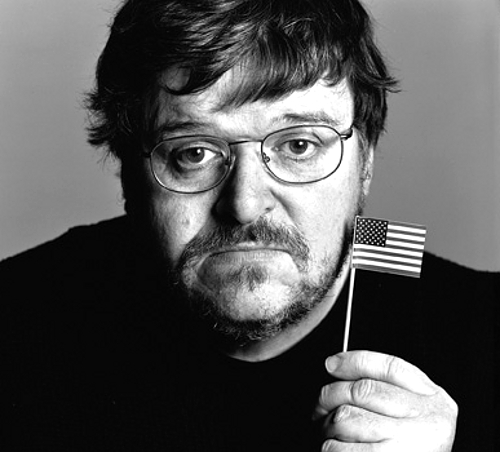
Are documentaries supposed to be impartial? Michael Moore’s career seems to have debunked that one. Do we hold documentarians to the MichaleMooreTinyFlag500same standards we do journalists? Citizenfour won last year simply for being in the right place at the right time – director Laura Poitras was recruited by Edward Snowden to record those heady days when he blew the whistle, but she never aspired to more than observer, and she certainly went ultra-light on her treatment of Snowden. But historically the Academy tends to reward subject matter over style or substance, which often leaves me scratching my head on Oscar night.

In fact, the whole voting process for best documentary ensures that things are skewed. In 1994, a film called Hoop Dreams failed to receive a nomination when many critics thought it might be the best film of the year, period. When films are in the preliminary nomination stage, actors vote for actors, editors vote for editors, and documentarians vote for documentarians. You get to nominate your top 5, and at the time, you had to sign an affidavit that said you had actually seen all 5, and since hoop-dreams-movie-poster-1994-1020186086_1412286519088_8649679_ver1_0documentaries don’t often get runs in theatres, they would put on special Oscar screening parties to get the films shown to a committee. But people would only attend the screenings they heard about, so the films needed good PR and ideally a whole studio behind them generating buzz and interest. The committees had a sneaky way of communicating during a movie – they carried flashlights. When someone grew bored of the movie, they shone their flashlight on the screen. If enough people did that, they turned it off. Hoop Dreams, a film still revered two decades later, was shut off after about 15 minutes. Voters never really saw it, and probably less than 5% of the Academy ever sees enough documentaries to honestly vote. Other documentary producers seized on this loophole. In 2000, Aruthur Cohn, producer of One Day in September boasted, “I won this without showing it in a single theater!” He showed it only in invitation-only screenings, which made it hard for voters to see all 5 nominations, thereby shrinking the voting pool and improving his odds.

It took until 2013 for the Academy to make some changes to the rules. Now documentarians can send screener DVDs to the homes of voting Academy members, but to even be eligible you have to have had your film screened in LA or NYC for at least a week, and reviewed by the NY or LA Times – a feat nearly impossible unless you have a lot of money backing you. The little guys have been all but shut out. But it means that anyone with money can toss their hat in the ring, which meant in 2013 there were 149 qualifying docs. People are only going to watch the ones they’ve already heard about, so you’d better have a good PR machine churning out your title. And now that these DVDs are arriving in their homes, the voters are favouring movies they can pop in and watch with the whole family. Every year since these new rules, it’s the most commercial film that wins (also true in the animation category – voters vote for whichever movie was a better babysitter for their kids; Pixar will take it home again this year when we all know Anomalisa was the better film). Show business documentaries are very popular. No surprise, but far from a meritocracy.

I’d like to say may the best documentary win, but I’m pretty sure it wasn’t even nominated. What was your favourite?


Don’t miss our other Oscar spotlights on cinematography, production design,  costumes and hair & make-up. And be sure to follow us on Twitter so you can keep score in our pool @assholemovies – the Oscars are live this Sunday night.


What Happened, Miss Simone?

There is a patina of sorrow over this documentary that I was aware of from the very first scene.

Nina Simone, one of the greatest jazz singers, entertainers, and concert pianists ever, felt isolated by and from both the black and the white community though she was admired and originalidolized by both. And how could they (we)  not?  She truly was a grand dame of jazz, with a depth and darkness to her voice that touched all who listened. The film is not short of people willing to praise her talents, but we get a true sense of her personality when she is profuse in her own praise of other artists as well. Ever humble, she is generous to other musicians and quiet about her own accomplishments though thankful to those who helped her along the way.
The greatest treat in this documentary is undoubtedly the vintage footage of Miss Simone performing. It gives you a real sense of how timeless her sound was, how her incredibly rich voice can still reach across the years and fill your heart like velvet. Oh man.

Simone was also a “patron saint of the rebellion”- a woman who reflected the times she lived in, proudly. She was tired of the establishment in more way than one and did her part to expose its hypocrisies, even if it was at the expense of her white audience. She wasn’t afraid to align herself with militants and defined herself as “not nonviolent” even though MLK was a friend of hers; thankfully she had music at her disposal and not guns. When she started playing exclusively political songs, it affected her career. But she believed it was part of the artist’s role to preach what they believed, to have their art contain a message, and hers certainly did, notably with Mississippi Goddamn, a song written in response to and expressing sorrow and anger over the murder of Medgar Evers in Mississippi and the Baptist church bombing in Birmingham that killed four little girls.

Simone lived in an era where society didn’t appreciate a woman’s genius, let alone a black woman’s. What did it do to her? She struggled with depression and appeared to already be in a downward spiral when Dr. King was assassinated. But when a battle with bipolar threatens – will she be willing to take medication that could rob her of her music?

Simone has been dead for a decade but never ever forgotten. This documentary helps to shed some light on a strong, interesting, multi-faceted woman. It’s nominated for an Oscar this year in a category that feels fairly locked up by Amy, an inferior offering. But the good news is, you can see them both on Netflix right now, and decide for yourself.

How to Change the World

From How to Change the World’s title, you may be expecting a self-help documentary or at least a few useful life tips. If that’s the case, look elsewhere. The subjects of this documentary do not in any way seem qualified to dispense that sort of wisdom, nor are they interested in doing so.

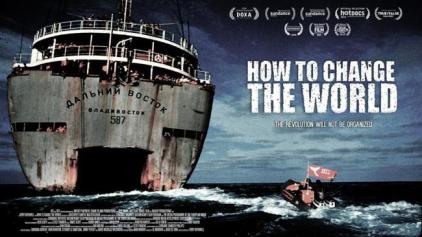
How to Change the World tells the story of Greenpeace’s founders. They were (/are) a bunch of hippies, 99% white males, and absolutely unqualified for the job. They couldn’t agree on much as a small group and then when film of their anti-whaling stunts gave them fame/notoriety, they how to change 1completely imploded. Protests are aborted, physical injuries are sustained, lawsuits are commenced (Greenpeace v. Greenpeace!), turncoats are identified, and shots are taken liberally at one another. Essentially, it’s an episode of Big Brother starring a bunch of 65-year-old grouches.
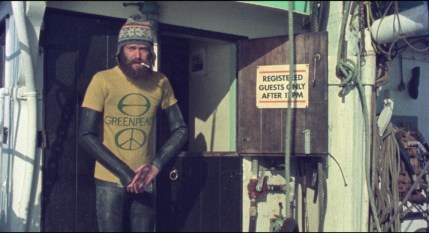
That sort of thing normally does not appeal to me. Still, I found How to Change the World very interesting for several reasons.

First, the amount of footage these hippies compiled in the 1970s is astounding and makes the film feel alive. We do not just hear interviews about their adventures, we see these escapades on screen, and that makes this movie extremely easy to watch (aside from the awkwardness of the in-fighting) as well as entertaining (possibly because of all the awkward in-fighting!).how-to-change-the-world-3

Second, the rise and fall of this branch of Greenpeace is a fascinating study of the effect of fame. Most of the conflict we see seems to arise out of the external attention and accompanying pressure this group faces after they hit it big. Not that they all get along at the start (they don’t, even then they fight regularly), but initially they can look past those disagreements because they are agreed on the bigger goal. But once there are no clear goals, or too many, the interpersonal issues take centre stage. It doesn’t help that none of these guys is remotely qualified to run a multinational organization, but it sure adds fuel to the fire!

Third, it is remarkable to see the different paths these characters take after their initial adventures. The conflict between the turncoat and the injured member in particular is given a whole new perspective by movie’s end.

Overall, I enjoyed How to Change the World even though I was frequently annoyed or exasperated by these characters, especially by the pseudo-philosophical musings of the journalist-turned-leader of this motley crew. The fact the movie overcame that annoyance says a lot about the content. How to Change the World is well put together and it feels very honest, which makes it feel real.

I give How to Change the World a score of seven bumbling hippies out of ten.

Whistler, Day 3

Amerika: A documentary about a Canadian grad student who goes over to the Czech Republic (where her parents immigrated from) to Amerika_Poster_A1_Final_ENGdiscover “tramping” and have an adventure. The film fails to introduce us to our two main characters. She, we come to know, is the Canadian, and he…well, he’s just there. No word on how they hooked up or how they came to be travelling together. Tramping is an alternative way of life for Czechs. It’s leaving everything behind and hitting the road, living on the land, sleeping in the open air. Some live like that permanently, off the grid and housed in a forest that feeds them. Others tramp on weekends and go back to their white-collar jobs during the week. It’s an idealized but dying culture, and interesting enough I suppose, but I felt pretty disconnected from the film, and not just because I really loathed the Canadian, applauding silently in my heart when she got dunked into a river. Of course the Canadian was on hand at the screening to answer all of our burning questions (I did not ask “Why couldn’t you have gotten eat by a bear?” or even “Does the Czech Republic even have man-eating animals in its eyoGykp0yNvBPvn587DGIXxXoAML9rVgvLqVvqjdtdkwilderness?”) and it was revealed that the random travelling partner was in fact the film’s director. We didn’t notice that ourselves because he uses a “character” name in the movie. He recruited her for this film and set up all of their itinerary, and arranged for the tramps to be met along the way, the “cast” and crew sleeping in hotels at night while pretending to hike during the day. The whole thing was contrived and while I struggle to call it a documentary, I have no qualms at all about calling it bad.

Angry Indian Goddesses: This one won runner-up for People’s 31190-Angry%20Indian%20Goddesses%20(2015)Choice at TIFF this year (Room nabbed the title) but we didn’t get to see it then and are happy to take it in now. Billed as India’s first female buddy movie, it’s a comedy-drama about the wild, bachelorette-style female bonding rituals enacted after one woman announces her engagement…and then it gets turned on its ear. Actually, that’s putting it too mildly. The shifts in tone in this movie are JARRING. On the whole I really liked this movie. It’s a lot more grown up than what Bollywood usually offers. The women are all compelling and we get to see a side of India not normally presented to us. But when the movie goes dark – and it goes DARK – there’s little warning. It’s pretty abrupt after the hijinks and singing and dancing. So steel yourself. But do see it. There’s not a lot out there like it.

Chasing Banksy: After Katrina, street artist Banksy arrives surreptitiously in New Orleans and leaves behind some mysterious pieces of art on the city’s abandoned, derelict buildings. Anthony, a starving artist in New York, knows that Banksy’s work goes for chasingbanksy_2501upwards of a million, so he plots to track down the artwork and retrieve it. He and a couple of buddies take the road trip of a lifetime to see if they can become rich stealing art. This movie appealed to me because its concept is really interesting. Is art that’s made for the public allowed to be taken by the public? Is it meant to be transitory? Should it be allowed to rot or be demolished? Or should it be preserved, even if preserving it means stealing it? Can you steal something that doesn’t belong to anyone? Does it belong to everyone? And should you monetize art that’s meant to be free? So many interesting questions and this movie just killed me because it failed to really wonder about any of them. It’s not a good movie no matter how you define the terms, and that’s a real wonder since the star and co-writer actually went to New Orleans to steal some Banksy art. Why, then, is he so bad at pretending to be himself?  I’m not sure, but this movie really let me down.

Seymour: An Introduction

Seymour Bernstein, master pianist and renowned music teacher, ponders the link between a person and his creative self. Director Ethan Hawke, himself a creative artist, first met Seymour at a dinner party just as he was looking for meaning in his own life and craft, and the spell was cast.

168654_origSeymour is the kind of old man you could sit and listen to all day: the reminiscences are legendary, and when they’re occasionally tinged with tiny thorns or barbs or resentment or hubris, we’re reminded of his vitality, of why we’re listening to him in the first place.

Hawke has past Bernstein protogees interviewing their formidable teacher, and the result is a thoughtful piece on craft, authenticity, artistic bravery, and the thing Bernstein seems to revile the most, commercial success (he retired from a successful career in order to dedicate his life to teaching). I’m not sure if Hawke ever gets the answer to his questions on how to achieve his life’s purpose through acting, but he does come up with a work of art in the process, and I guess that’s something.

Watching this, and wondering why Ethan Hawke would be drawn to 827402a0-83c9-47fe-b876-164ebbe83a18make it, has made me reflect on his career a bit. Who is Ethan Hawke? He attended Carnegie-Mellon University to study theatre for about ten minutes before landing his breakthrough role in Dead Poets Society.

aid this thing during the Q&A earlier that when you’re playing well – he’s talking about playing piano – you don’t feel like you’re playing; you feel like you’re being played. Somehow, it’s like you’re not breathing; you’re being breathed. And the first time I ever had that feeling was with Robin Williams. We had this scene, “I sound my barbaric yawp over the rooftops of the world.” And it’s etched in my brain as him standing in front of me, writing “yawp” on the chalkboard, and he said, “Todd doesn’t think he has anything of value inside him.” That scene is pretty much shot in one take. It’s cut a little bit, but Peter Weir shot it on a Steadicam spinning around us. I regal-dps-cast-jpgmember Robin hugging me after that scene was over. It’s a high I’ve been chasing the rest of my life.”

Hawke never finished his degree, but did wind up at NYU studying English before dropping out again for another part. He may not have diplomas but he did earn a Tony nomination for his work in theatre, and he published some novels, and wrote some screenplays along the way.

But mostly he’s been acting. Gattaca and Training Day are among his most-viewed, most-loved parts, but Hawke has struggled to find a place for himself outside the mainstream. “To be a contemporary movie actor, you have to kill people – that’s basically it. If you don’t cock’n’load’n’fire a Smith & Wesson at some point in your film career, you’re not going to have a film career.”

“It’s eye candy, just violence and sex. Definitely lots of sex, people making out or showing their tits, which is always fun, but it wasn’t what I wanted to do with my life. I tried it – I tried doing this Angelina Jolie movie, a popcorn movie, the first movie I did that’s about nothing. And I didn’t like it, because I do ultimately feel there’s enough crap like this. It’s so much more fun and harder and more challenging to try to make something that’s entertaining but isn’t wasting your time.”

I wouldn’t necessarily call myself an Ethan Hawke fan, but I am a fan of the Before trilogy – Before Sunset, Before Sunrise, Before Midnight. Those are frequent collaborator Richard Ethan Hawke Julie DelpyLinklater’s babies, but Hawke (along with co-star Julie Delpy) has received writing credits on the last two, and Oscar nominations for best adapted screenplay both times. I think those movies really reflect his sensibility. They’re satisfying because they’re nuanced, because the characters are fully-formed, because the dialogue feels authentic even as it’s breaking your heart.

Hawke’s IMDB list is studded with indie efforts (we saw him in Maggie’s Plan at TIFF and will see him in Born to Be Blue at Whistler Film Festival) but there’s not much in the way of directing. “Directing? You know, I don’t know that I have the necessary skill set to be a good genre director. The movies that I want to direct are too weird. We’d just turn it into an art film somehow.” So we may not see him behind the camera too often, but we’ll always have this little 90s ditty by Lisa Loeb to console ourselves with, directed by none other than Mr. Ethan Hawke.

(That’s Ethan’s cat, by the way)

Dear Jack

Andrew McMahon was the front man of one of my favourite bands, Andrew McMahon Dear JackSomething Corporate, so I was a little miffed when he left to pursue a (solo) passion project called Jack’s Mannequin. Of course, that was before I heard the album and totally fell in love. McMahon is a crack song writer and his feverish piano playing is really exciting to watch live. His songs are energetic and poppy and if they didn’t quite reach the mainstream, they should have.

The successful release of Jack’s Mannequin’s first album, Everything In Transit, came when he was just 22 years old, and in the hospital battling leukemia. This movie is his cancer diary. It’s cheaply shot with home video cameras – truly nothing fancy. But it is very honest, and very grounding to watch a kid who is so full of life hear his new songs on the radio for the first time while also losing his hair and maybe even his hope. It’s sobering. At 22, his doctors are delaying chemo just long enough for him to freeze some sperm because although he’s never even considered whether he wants a family, now he has to prepare for the worst.

Spoiler alert: he survives, by the skin of his teeth, with love from his fans and support from his family and bone marrow from his brave sister. He survived to write a second Jack’s Mannequin album, the lyrics heavy with his hospital philosophy. That album, Glass Passenger, featured heavily on my mp3 player when I was in the hospital going through my own treatment. I think the music got into my veins through the IV drip and I’ve never really been able to shake it. So imagine  how miffed I was to learn that McMahon had ants in his pants once again and was disbanding my treasured Jack’s Mannequin.

But now he’s back, not just in documentary form, but with a new album that finally bears his name front and centre, just in time for6ef3aa1d6d8743d51e6f5c6161780fb8 another round of treatment for me. My favourite song off the album is about his darling daughter, a miracle baby after all her father had been through, a testament to his survival. And if you, or she, want to know a little more about how he made it through the dark days, Dear Jack offers some barrier-free insight.

This Changes Everything

I have a confession to make. Lately, I’ve been sick of the Earth. Or at least sick of hearing about how we’re ruining it.

Before you judge, you should know that I make a monthly donation to a Save the Planet charity that shall remain nameless (because I’m about to talk shit about them). In fact, some guy from the organization called me last year and told me that my annual donation was in the 95th percentile of their donors, which now that I think about it can’t possibly be true. But they still want more. Not more money, believe it or not. They want my time. They want me to read their emails about whales, tar sands, and our old Prime Minister and how hell-bent he was on destroying the planet. They don’t even ask for more money. They just want to say hi and tell me how bad things are getting.

So I’m burnt out on the topic, I’ll admit it. And, apparently, so is Naomi this-changes-everythingKlein. Klein, narrator of This Changes Everything and author of the book on which it’s based, opens her climate change documentary with a confession much like mine. She doesn’t usually like documentaries about climate change. She can’t bring herself to care much about polar bears and she feels she’s heard it all before. “Is it possible to be bored with the end of the world?” she asks.

It’s the perfect setup for yet another climate change documentary. I literally AM bored with the end of the world and, if this is going to be the climate change documentary for people that are, then I’m keeping an open mind. Although skeptical at first, I was surprised to find myself thinking, “Okay, I’m with you so far”.

So, for 89 minutes, I decided to set aside my boredom with the end of the world and just let myself relax and be bored by this movie instead. Klein’s thesis, that global warming isn’t about polar bears or statistics but a story that we’ve been telling ourselves for four centuries, makes sense to me. For the last four hundred years (although, in fairness, I’m only willing to accept any personal responsibility for the last thirty), we have stopped seeing nature as something to be respected and revered and started seeing it as something to be conquered and manipulated for our own ends.

this changes everything 2While I admire her for reframing the problem of climate change as a story that we keep telling ourselves, Klein and director Avi Lewis lose some points for telling us the same story over and over. This Changes Everything is structured in five short segments that take us to Canada, the United States, Greece, India, and China, documenting the consequences of corporations’ attemtps to conquer nature and the concerned citizens who are actively trying to make a change. Because Klein seems to be making the same point with each segment, the impact of these stories diminishes with each new chapter.

All kidding aside about how I’m kind of bored with the end of the world, we are without question killing this beautiful planet that we are so lucky to have found ourselves on. I finally got to see The Martian last night and it only reconfirmed my feeling that of all the planets in our solar system, we got the best one. Climate change IS very sad, even if I too often feel numb to it. If corporations are allowed to keep doing what they’re doing, disaster is inevitable and, if you doubt it, I’d recommend this movie or Klein’s book or, better yet, I’ve got lots of informational emails from charities that I’d be all too happy to get off my hands. But if you’re already part of the choir, maybe it’s okay sometimes to get tired of listening to the preacher.

Iris

Coco Chanel said “Before you leave the house, look in the mirror and remove one accessory.” Nobody needs to hear this more than I do, except I look in the mirror and go “Nah, it’s fabulous!” and maybe throw on a hat or a scarf before I leave.

My mother says I was always a fussy dresser. She abandoned the task to me when I was 2 because I complained about her lack of style. I knew which barrettes went with which dress, and when ruffled socks were appropriate, and when the tights with embroidered hearts would serve better. It was 1984: I was a material girl living in a material world.

Today I have a jewelry collection that’s taking over my house. I refer to it as “my sparkle wall” but only tradition keeps me from rightfully pluralizing it. Sean buys me diamonds and sapphires on birthdays and anniversaries and sometimes just on Tuesdays, but when I treat myself, it’s costume jewelry all the way, the bigger the better. I think Superbowl rings are modest. I think wrestling championship belts are understated. The dress doesn’t matter half as much as the height of the heels and the rhinestones on my cocktail ring. You know you have a problem when you’re at the store and the cashier asks “Are you a stylist?” It’s probably easier just nod yes and pretend these are for 20 models to wear in a magazine spread – maybe I’d even get a discount – but no, honey, these are all for me.

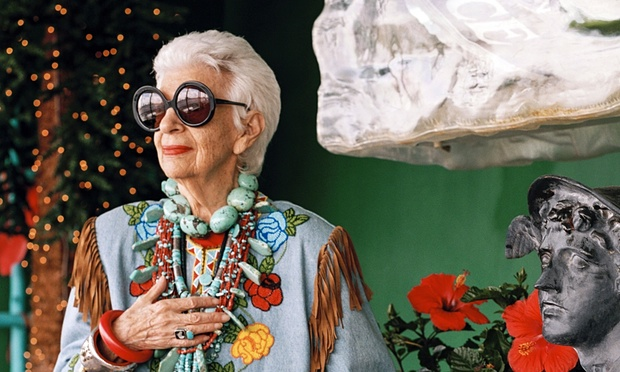
4e37cfaa-3606-11e5-_949112bI met my match – no, my better – recently when I watched a documentary entitled Iris. Iris Apfel is an American businesswoman, interior designer, and fashion icon. She and her husband Carl travelled the world to discover unique items and get inspiration for their textile business, and they did restoration work at the White House for 9 presidents, from Truman to Clinton (Jackie O. preferred the “Frenchie” stuff, disappointingly).

Iris is known on the streets of New York for her distinctive style. Always with a pair of 1068406oversized owlish eyeglasses, she layers on jewelry in a way I can only admire but never emulate. It’s amazing to me that her 90-something year old arms can support the weight of so many chunky bracelets.  The Costume Institute at the Metropolitan Museum of Art is so enamoured with her style, they put together an exhibition entitled Rare Bird: The Irreverent Iris Apfel. It was curated it with selections from her wardrobe and her accessories, and styled, of course, by Iris herself. Because Iris knows best. When the rest of the world is thinking “too much!” Iris is only getting started – and she’s right.

Iris isn’t just a fashion inspiration (or a  “geriatric starlet” as she would say) – she’s an boainspiration inspiration. The woman is 94 and still going strong. The documentary was done by Albert Maysles, who passed away earlier this year, just a month shy of the film’s release. And Carl sadly passed away in August, just three days shy of what would have been his 101st birthday. But these are all people living fully into their golden years, still being fabulous in whatever capacity they’re capable of. That really emboldens me. And I just like that she’s an outside the box thinker. And that her style reflects her upbeat personality. She looks different from everyone around her, and that takes courage.

She reminds me somewhat of Sean’s Granny, who is a fun and salty lady with her own unique style. Granny dresses exclusively in purple. I’m not even sure what store you go to for the purple pants, but she’s got em. How old do you have to be before you can just start doing that, I iriswonder? Granny is nearly 92 and as I’m new to the family, I’ve never known her any other way. She’s a great accessorizer to boot, and I know she sees a kindred spirit in me. Sean’s family is otherwise very traditional, they all look like they’ve stopped out of a Sears catalogue, and I’m just a very square peg to their very round holes. But both of his nonagenerian grandmothers have embraced me in ways no one else could. Granny has asked that I leave my jewelry collection to her in my will. Grandma likes to report back to her caregiver what outrageous hair colour I’m sporting on any given visit. Both will search me top to bottom for fresh ink. They were overjoyed when I sauntered down the aisle in black and fuchsia where there should only have been white. So maybe as you age, you become more yourself. More accepting of yourself, and less influenced by the opinions or judgements of others. And it’s that attitude that I like the best, in my adopted grandmothers, and in Iris Apfel, the star of a fascinating documentary you should look up on Netflix if you haven’t already, because they haven’t made one about Granny (yet).


Who’s the fashion plate in your family?