Tag Archives: female directors

Marie Antoinette

Sean and I are still in France and in fact should be touring around the beautiful grounds and palace at Versailles right now, so what movie is more fitting that Marie Antoinette?

marieantoinettegif

She was a bright and beautiful girl, married at the age of 14 to a political ally she’d never seen tumblr_lbhpd2jWia1qecnumo1_500before. She is traded from one kingdom to another. She is surrounded by servants and comforts of every kind; she has jewelry and clothes and feasts like no other. She also has no grip on reality. And this movie doesn’t criticize her for it. Sofia Coppola may have strayed from historical accuracy in the writing and directing of this film, but she does give us a more human character to relate to. Marie-Antoinette is above all just a teenage girl, used to a lavish lifestyle, uncomprehending of any other.

shoesThe production had special permission from the government of France to film on location at Versailles. Even more impressive (to my mind), Coppola even induced famed designer Manolo Blahnik to create hundreds of shoes for this film. Fittingly, there is a shoe montage, which will make you squeal with delight, and if you watch carefully, you might catch a 1.5 second shot of a pair of Chuck Taylor Converse, not exactly time-period correct, but a staple of any teenage girl’s closet.

Did you know Jason Schwartzman is Sofia Coppola’s cousin? I didn’t. I get my Hollywood royalty  kirstendmixed up just as assuredly as I get my regular royalty confused I guess. At any rate, he plays the king to Kirsten Dunst’s queen, and I have to admire the casting. Who but him could play such a socially inept little weirdo, and who is more inherently hated than Dunst?

I saw this originally back in 2006 when it came out (I’m kind of surprised it’s not older than that) but in the 8 or 9 years since, I’ve become more familiar with some of the other names of the cast: Rose Byrne (broke out in Bridesmaids), Tom Hardy (aka, Bane, and almost Mad Max), and Jamie Dornan (soon to be the pervy guy in Fifty Shades of Grey). Coppola otherwise cast a lot of progeny of movie stars, most of whom I don’t know (although I did see a Nighy and wondered, and was correct in wondering). Plus she threw a bone to her boyfriend, Thomas Mars, from the band Phoenix – he and a bandmate play guitars in one scene, although they can’t have been happy about the tights.

marieantoinette

Belle

First off, thank you to all my fellow film-lovers who brought this movie to my attention. It seems to have slipped under the radar over here but I’m infinitely glad I had the chance to watch it.

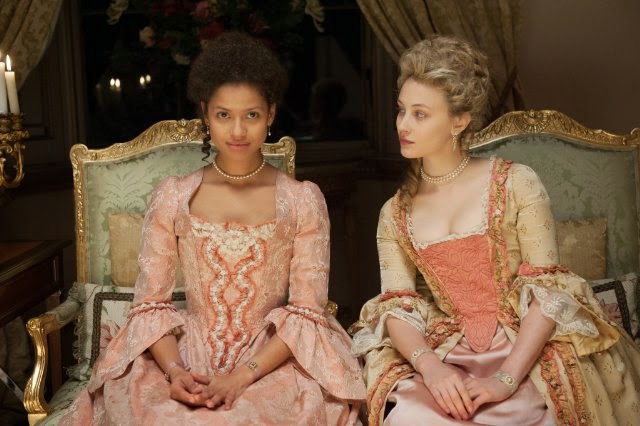
Belle recounts the true story (in broad strokes – little is known of her life) of Dido Elizabeth Belle, the half-black, bastard child of a Royal Navy Captain in 18th century (slave-trading) England. Her gugubellefather loves her deeply (as he did her deceased mother) and when he ships out to India, he appeals to his uncle to care for her in his absence. A Lord and Chief Justice, the uncle tries to raise her, along with another (white) niece, with the privileges she is due while teaching her the important barriers of her skin colour. “Too high in rank to dine with the servants, too low in rank” to dine with her family. She has enough to feel a sense of belonging, and just enough to feel left out. At court, her uncle must decide an important case about slaves as he resists acknowledging their similarity to his beloved niece.

I just watched Gugu Mbatha-Raw in Beyond The Lights and thought she was a stand-out, but this film makes clear that her career will be one to be reckoned with. She’s very subtle and belledeliberate and saves Belle from being merely a curiosity. Instead she is painted as a woman conflicted, a woman carrying the weight of her race for everyone to see. And this movie is also about class, and (perhaps even foremost) about gender. It would seem that her skin colour can be compensated for with enough money, but her gender leaves her with few options. She must either find a good husband or be invisible like her aunt (Penelope Wilton, tragic and invisible). In the film, Belle’s uncle (Tom Wilkinson, formidable) is challenged to draw a parallel between his niece (who is constantly referred to by the ugly word “mulatto”), and slaves insured as human cargo. Are they not worth the same? Is Belle Movieshe not worth the same as any other debutante? The film asks the same question of us but poses it too lightly. I can only imagine the controversy her presence in the family home must have caused, and yet I must imagine it because the script glosses right over the indecencies that certainly occurred. The story focuses on romance, or lack thereof, as befits their station and the time, and covers social implications inadequately. Belle lacks the self-starting spark that would make her the pioneer the script so badly wants her to be.

The script has been controversially attributed to Misan Sagay, despite director Amma Asante

The artwork that inspired the movie

The artwork that inspired the movie

having written 18 drafts over 3 long years. Sagay is an American member of the writer’s guild and took it to her union, which decided in her favour against non-member Asante (who is based in Great Britain). Wilkinson and Wilton have expressed ‘incredulity’ at the decision, because they had “only seen and worked from a script written by Amma”, With or without accreditation, this is an imperfect but impressive first full-length feature and Asante is sure to give voice to more great stories over time.

Beyond The Lights

I confess I hadn’t heard of this movie, nor would I have likely given it a chance had it not been nominated for an Oscar this year. It’s been nominated for Best Original Song for “Grateful” (music and lyrics by the estimable Diane Warren, who has 7 other deserved nominations under her belt).

It’s not always a delight sitting through a whole movie just to hear a song, and for judging purposes, it’s not usually even necessary since tonnes of the songs only appear over the credits and thus don’t have the benefit of a lot of context. But for once, I’m not even feeling resentful.

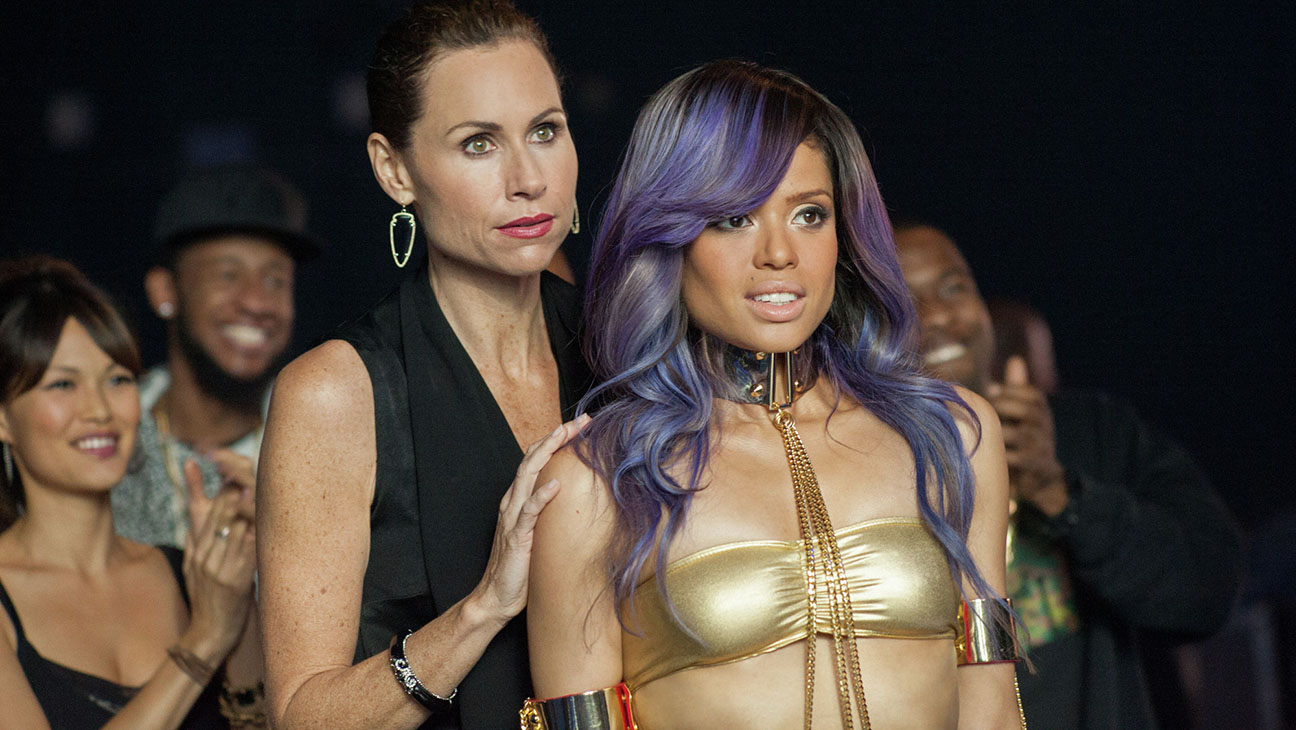
Beyond_the_lights_StillThe movie opens as Minnie Driver brings her little daughter Noni into a hair salon, hoping the woman can help her do her (black) daughter’s hair before a big talent show. The little girl sings beautifully but mother is furious when she only takes second place. Cut to: present day. Noni (Gugu Mbatha-Raw) is on the verge of pop star success with a purple weave and a crotch-grabbing music video. But everything she’s always wanted is not quite what it’s cracked up to be. Why else does she feel like throwing herself off her glamorous hotel balcony? Along comes knight in shining armour (also known as celebrity bodyguard) Kaz (Nate Parker) with a dose of reality and some ambitions of his own.

Is this supposed to be The Bodyguard of 2015? Or just a guard with a damn fine body? It’s not gugu-and-nate-parkerexactly an original story. I bet you can guess right now how it goes! But that didn’t make it unwatchable. I mean, Nate Parker taking his shift off makes it watchable. Gina Prince-Bythewood, the writer-director (Love and Basketball), has all the elements of a classic backstage story, but is just shy of having it feel genuine. Minnie Driver, who easily could have turned out to be a one-dimensional “momager” villain, is credibly handled into a multi-dimensional one. Mbatha-Raw is a shining star, and this movie is just a twinkle in her rising star; I’ve heard she’s just divine in Belle, which I haven’t seen yet but has been is securely at the top of my list.

celeb_beyondthelights_stars_tvspotThis is not exactly a great movie, and it does rely on at least one corny montage on the beach that the world could have have done without. But there’s also a gentle exploration of race and gender, so it’s cheesy, but it’s a nice cheese rather than generic.

Obvious Child

I hated the first 3 minutes of this film, and then loved the next 81.

Donna (Jenny Slate) is a confessional comic; she spills the dirty details of her life to a small obviouschild__jennyslateaudience in the back room of a dingy place. Not everyone in her life can handle being the subject of her standup, and the truth is, I could barely tolerate it myself. It was the usual stuff: I have a vagina, I’m Jewish, etc etc. But. But when she leaves the stage, she’s enormously funny. You get the sense that her stand-up will in fact take off one day, maybe even one day soon.

But not today.  Because today she’s been “dumped up with” and she’s drinking and she’s oversharing, which is the only kind of sharing she knows how to do. With a microphone and a whine. And like, 17 shots. Cut to: drunken one-night stand, which leads to pregnancy, which leads to an abortion.

obviouschildBut a funny abortion! Okay, it’s not so funny. It’s actually dealt with pretty realistically, but with the kind of wit and truth that bathes the subject in a new light. Refreshingly unapologetic. And oddly becomes something of a romantic comedy, because who doesn’t take a date to the abortion clinic on Valentine’s Day? And P.S. – if you do, do you bring flowers?

I really like Slate on the Kroll Show, and director Gillian Robespierre knew she had the chops to handle a title role. Donna is a sometimes exasperating character but Slate pulls it off and is magnetic in every scene, whether petulant, snarky, or earnest.

I jotted down so many brilliant lines, all worth quoting, but I’m refraining for your sake, so that you may enjoy them from the right voice. But there are also fart jokes, which have no business even existing. So this is not a perfect film, but I was really won over by it. I’ll take the lows with the highs. I was charmed by Obvious Child, even if there was very little obvious about it. And I expect big and bigger things from both Robespierre and Slate in the future.


Women in Hollywood

Russell Crowe is an ass. Everyone knows this. So when he recently went on a rant about how there are plenty of parts for women in movies so they should just shut their yaps and “act their age” no one was surprised by the medium or the message. As long as there’s been movies, there’s been sexism  and by god, where sexism goes so does ageism.

Looking at this year’s Oscar nominations it was pretty clear to me that meatier roles go to men, but I’m not going to sit here and lament the missed opportunities when instead I could be celebrating the success.ghostbusters

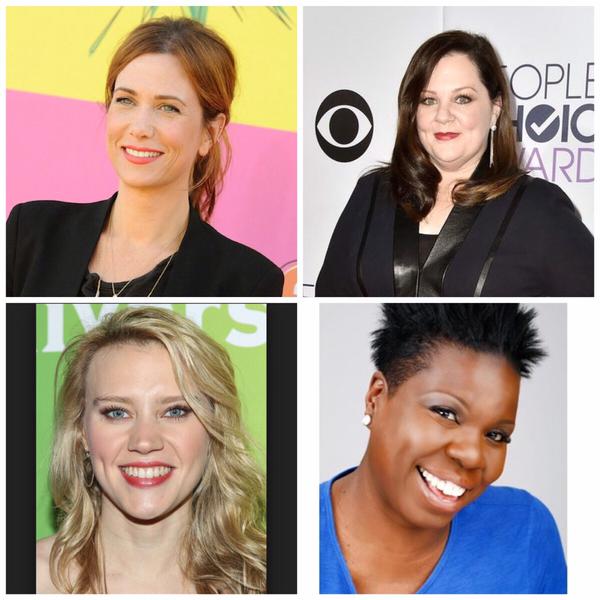
Earlier today, Paul Feig posted an untitled photo to Twitter featuring Kristen Wiig, Melissa McCarthy, Kate McKinnon, and Leslie Jones. Feig provided absolutely  no comment but fans were quick to speculate that this was the cast of his much-discussed reboot of The Ghostbusters franchise. McKinnon and Jones are both current members of SNL while Wiig and McCarthy are already Feig collaborators, having co-starred in Bridesmaids, the highest grossing domestic R-rated female comedy of all time, edging out Sex and the City (2008).

Meanwhile, at Sundance,  Emily Nussbaum, award-winning critic for the New Yorker, moderated a panel of “Serious Ladies” featuring the uber-talented Wiig, Jenji Kohan (who wrote for Sex and mindy-kaling-cover-ftrthe City and Gilmore Girls before creating Orange Is the New Black and Weeds), Lena Dunham (creator and star of Girls) and Mindy Kaling (writer\producer\star of The Mindy Project). Although they’re all at the top of their game, they all shared stories about how tough it was to break in. Kohan recalled male-dominated writers’ rooms where one cave-dweller told her  “If God had meant women to be in a writer’s room he wouldn’t have made breasts so distracting.” Kaling discussed the pressure to be a role-model versus the artist’s craving to push the envelope and maybe even offend. Sometimes feminism means creating a female character that isn’t necessarily “likeable.”

Dunham, who recently released a memoir, spoke about the difficulty women face in being dunham-lena-podcast-sl-hollywoodmistaken for the characters they play (and wondered why Woody Allen and Larry David don’t get pigeonholed in quite the same way). She hopes to one day see women outnumber men in their profession – “That would be my favourite, if guys some day were to say, ‘It’s impossible to get into Hollywood! It’s a women’s club!’ ”

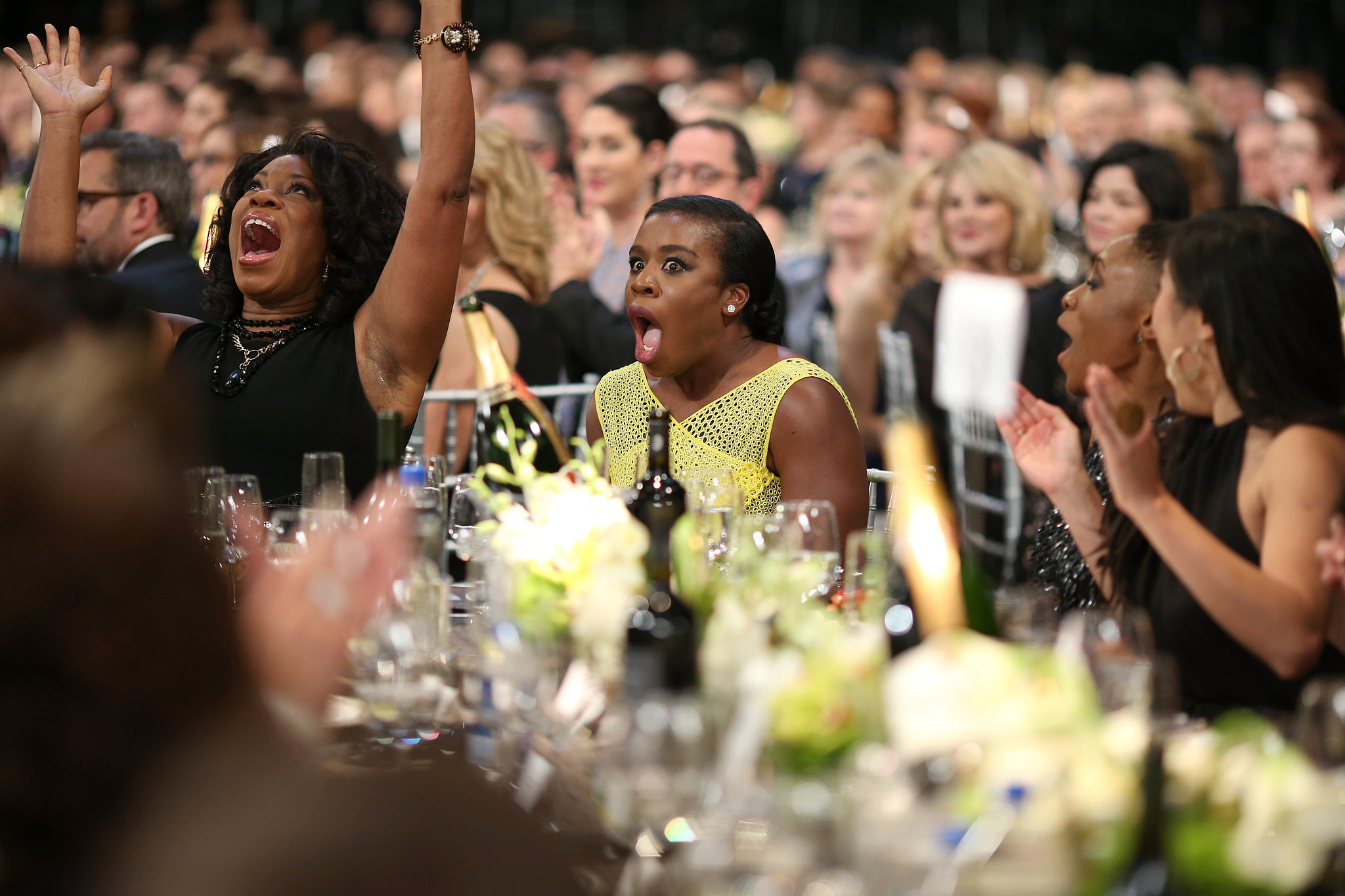
Jenji Kohan pointed out that she was still expected to write material about weddings and uzomotherhood, a notion she challenges with the huge success of her show, Orange Is The New Black. That series, a Netflix original, won big at the Screen Actors Guild awards on Sunday. Uzo Aduba took home Outstanding Performance by a Female Actor in a Comedy Series that night (she plays “Crazy Eyes), and gave a heartfelt speech. But the best part was the love and support coming from the OITNBUZO ADUBA OF THE NETFLIX SERIES "ORANGE IS THE NEW BLACK" ACCEPTS THE AWARD FOR OUTSTANDING PERFORMANCE BY AN ENSEMBLE IN A COMEDY SERIES ALONG WITH HER FELLOW CAST MEMBERS AT THE 21ST ANNUAL SCREEN ACTORS GUILD AWARDS IN LOS ANGELES table – it’s always heartening to see women cheering each other on. Aduba was back on stage before long – the show also won Outstanding Performance by an Ensemble in a Comedy Series, wrestling away the honour from Modern Family. What a great sight to see so many strong and talented ladies on the stage at once.

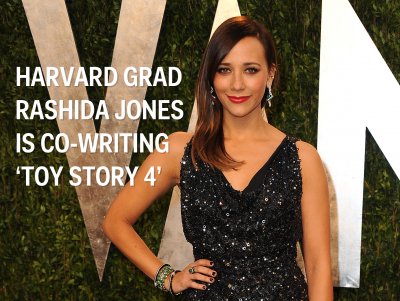
There are still mountains to climb for women in Hollywood, but if you look around (or follow our Twitter feed – @assholemovies ) you’ll find rashidajonestoystorybrave mountaineers everywhere. Just today it was announced that Toy Story 4 would be making its way to theatres in 2017 and that Rashida Jones and her writing partner Will McCormack would be tapped for the screenplay. Although they only have one previous credit to their names (Celeste and Jesse Forever), John Lasseter insists he “wanted to get a strong female voice in the writing of this.” This is a nice change from Pixar’s usually male-dominated animated lineup (Buzz, Woody, Nemo, Mike, Sully, Wall-E, etc) and a step in the right direction for us all.

Unbroken

I was cynical about this movie because critics told me to be. “It’s bad”, they wrote, “don’t bother.” But I watched it and thought: it’s not so bad. Good, even, in some parts. Basically redundant I suppose, but not bad. So why then was it panned? And why then did I feel much the same way upon viewing The Monuments Men, also derided by critics – maybe it wasn’t great, but it also wasn’t the disaster I’d been lead to believe.unbroken-movie-angelina-jolie

So now I’m worried that critics are taking pot-shots at “celebrity” directors. There’s almost nothing conventionally roastable about George Clooney, yet Tina Fey and Amy Pohler still found a way to mock him for making what I thought was a decent movie. He pretended to be a good sport about it, but they hit him where it hurts. If Kim Kardashian was standing behind the camera, fine, open season. But Angelina Jolie has paid her dues and proves it with a movie that is technically sound, and both made movies this year that contribute to a proud historical record for their country. Clint Eastwood, another actor-turned-director did the same with American Sniper, and though I’d say it’s the weakest of the three, it’s being hailed (although not uniformly) as the best.

UNBROKENUnbroken tells the story of Louis Zamperini, a true tale that’s been simmering in different Hollywood pots for the past 70 years. He was an Olympic runner who competed in the Berlin Games and then joined the army just a few years later after the Pearl Harbour attack. As a bombardier in world war two, he and his fellow crewmates were sent out on a search and rescue mission on a plane that couldn’t hack it, and went down due to mechanical failure. One of only three survivors, he then spent more than 6 weeks at sea, barely surviving only to be washed onto Japanese soil where he brutally treated as a POW for the remainder of the war.

You can see why people thought this would make a good movie; it moves episodically from one unbrokenmoviehuge hurdle to the next, a great showcase for the human spirit (and for American spirit in particular). In fact, it’s a relic, the kind of war movie that casts the Japanese as “the enemy” pure and simple, and its indomitable American protagonist as the uncomplicated hero. But what should have been great turns out merely to be good. It’s beautifully shot but generic – we’ve seen the castaway thing a million times, and the POW thing a million more. Jolie adds nothing of her own to these events.

Jack O’Connell impresses again in a physically demanding role (he’s even better in Starred Up) and the cast is strong, but no one is given much more than the standard paces to work with, the unbrokenscript being surprisingly traditional after a Cohen brothers treatment. The movie opens with some nerve-wracking battle scenes in the sky, but from the moment the plane splashes down, we’re drowning in misery and degradation.

While Zamperini’s story is one of redemption and forgiveness, Unbroken shows only despair. Zamperini’s character is lost, a sense of triumph unearned, and the movie stirs emotion only by default.


Citizenfour

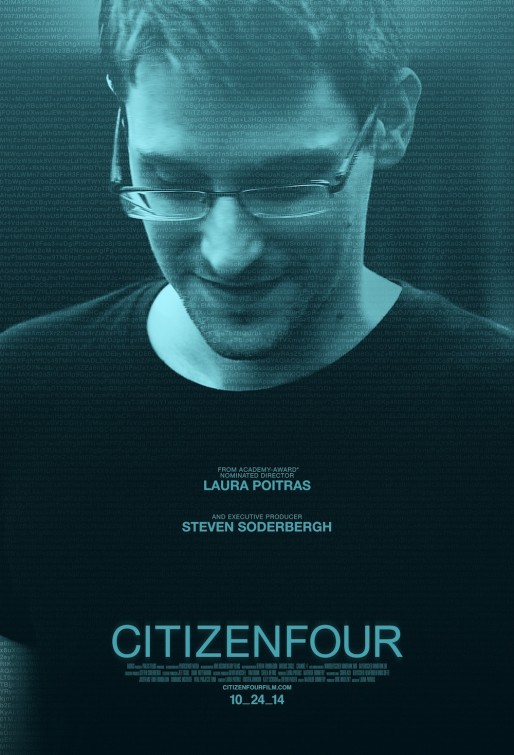
Filmmaker Laura Poitras’ documentary on the scope of NSA wiretapping and surveillance worldwide is the first of the Oscar-nominated documentaries that I’ve had the chance to see. (Thanks Bytowne for making it available). Poitras was already working on the film when she lucked out and got an encrypted e-mail from the mysterious Citizen Four, who we all know by his real name Edward Snowden. Snowden met with Poitras and journalists Glenn Greenwald citizenfourand Ewen MacAskill secretly in a hotel room in Hong Kong where he provided them with proof of the extent to which the NSA had been spying on its own citizens. Poitras’ footage of thiese meetings take up a large part of the film’s running time.

If you’re unfamiliar with Snowden or his revelations, this is definately a movie worth seeing. And if you have taken the time to follow this story as it happened, you probably care enough to wan to see this movie given that it gives you the rare opportunity to watch history as it happens. So, in short, it’s a movie I’d recommend for anyone.

“I’m not the story!” Snowden repeatedly insists. It’s hard to tell if Snowden’s desire to focus on the message instead of the messenger is admirable or self-serving (I’m leaning towards admirable). Either way, Poitras often ignores this and wisely puts the focus on Snowden and the parts where she does are the best parts of Citizenfour. These scenes offer a rare chance to get to see a little bit of who he is. We’re with him when he gets e-mails from his girlfriend about agents showing up at her door. We’re even with him as he prepares to come forward, watching him as he fixes his hair and kills time in his hotel room. He keeps saying that he’ knows and accepts that there will be consequences but his body language can’t lie. We can see that he’s scared.

Being at the right place at the right time is a big part of what makes a documentary and, by that standard, Citizenfour is a great documentary. Poitras was fortunate enough to have Snowden citizenfourcome to her and let her film him as he broke one of the biggest and most important news stories of 2013. It’s worth mentioning also that she was taking on some level of risk herself just by being involved.

I’m not so sure that Citizenfour is a great movie though. There’s not enough footage of Snowden to fill a full-length documentary and Poitras spends a lot of time scrambling to fill the rest. There are a lot of establishing shots, lots of text on the screen, and a few too many shots of Snowden sitting in his room watching tv. It feels like a missed opportunity, especially given that Americans are divided on whether Edward Snowden is a hero or a traitor. Poitras is leaning towards hero, maybe a little too heavily. She’s not wrong and documentaries certainly aren’t obligated to tell every side of the story. All I’m saying is, since Poitras had so much time to fill, maybe she could have filled some of it by asking him some questions.

For more on Citizenfour, read Jay’s discussion here.

Selma

Ooof. I confess, I don’t really know how to review this movie. Why does it feel different from any other movie? Because it’s a piece of art? A piece of history? No, it’s because this is a piece of heart, of our collective hearts. This story is an act of remembrance, an act of grace.

Matt, Sean and I attended the screening of this film at Silver City last night and I’ve been sitting with it ever since, wondering how I can add my voice to what’s being said about this movie. This is not just a history lesson. The images of protest, of indignation, of police brutality, of black people being gunned down for no reason, these could just as easily be ripped from today’s headlines as from 50 years ago. That’s the part that will scrape raw at your conscience, as it did mine.

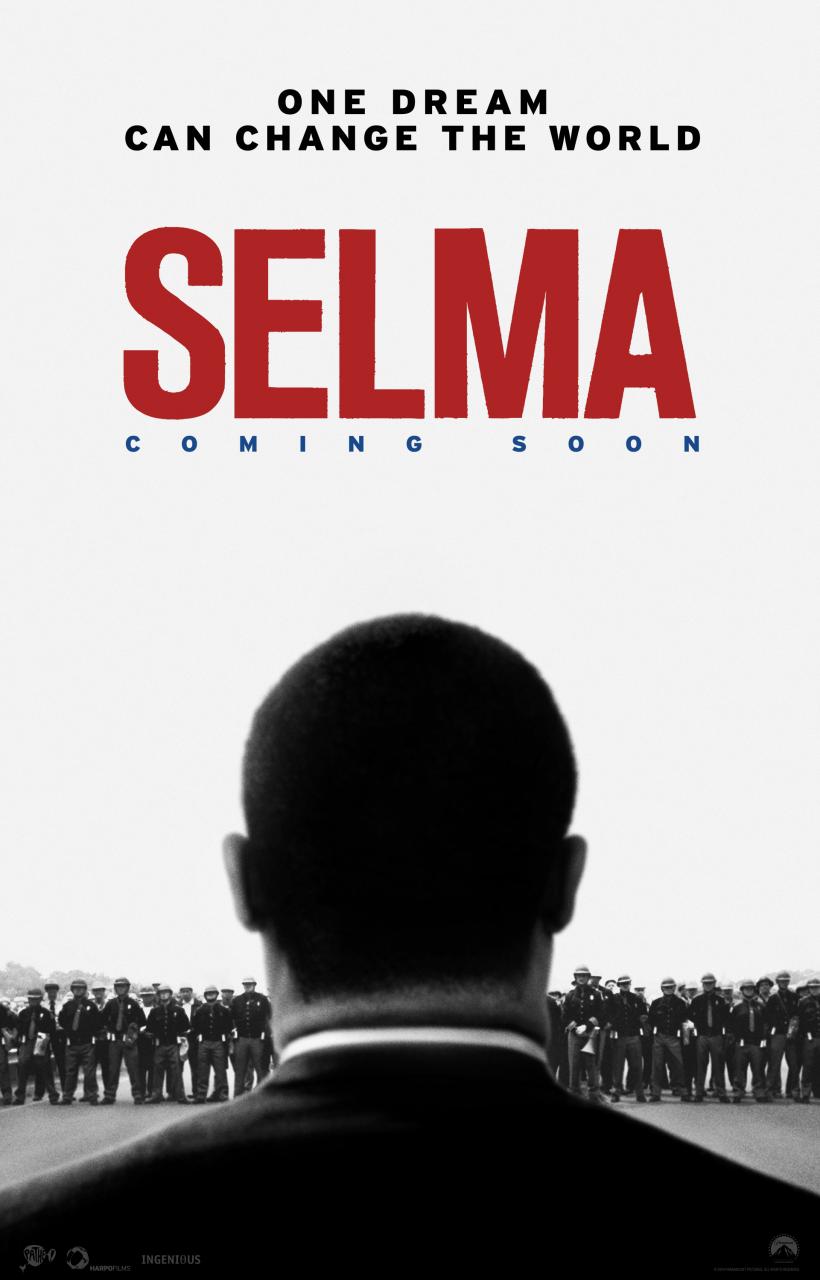
selma-movie-posterAnnie Lee Cooper is an older black woman registering to vote, as is her right as a supposed American citizen living in Selma, Alabama. The registrar is white, and resorts to dirty tricks in order to deny her once again. She leaves, slump-shouldered and dejected. Annie Cooper is played by Oprah Winfrey in the movie. I’m not normally a fan of stunt-casting, but in this case, using America’s sweetheart, a respected, powerful and highly successful personality who is also a black woman, to remind us just how far we’ve come in just 50 years, is pretty much the most perfect casting in the history of the world. Winfrey plays it winningly, with all the dignity the role deserves.

Insert Dr. Martin Luther King, Jr (David Oyelowo). He and his crew arrive in Selma to unite the people, to stir up activism, to attract the attention of the president (LBJ, played ably by Tom Wilkinson) and force him to do something about this supposed right to vote. Of course the president is reluctant, has his own agenda, and so King and company use their non-violent protest to force action in a genius and tragically necessary way.

The cinematography is a subtle tip of the hat toward realism. The costuming, particularly the suits worn by LBJ (those shoulders!), is pitch-perfect. The casting is strong. On paper it seems a bit weird to employ so much British talent to portray American icons, but it works. Oyelowo does a great job of shouldering the man and the spirit, the hero and the human being, without impersonating him.

It is hard to sit and watch this film. Director Ava DuVernay knows this and even uses it, with a stirring montage of Americans of all kinds watching horrified as the events unfold across their evening news, mirroring our own choking dismay.

DuVernay succeeds in stringing together a lot of different plot points in the course of the Selma events – the internal struggles of the organization, King’s problems at home, his grief and self-doubt, and government apathy or outright hostility on all levels. The film works so brilliantly because, while it stays humble in its scope, it becomes a representation for the movement as a whole, and for all the smaller victories along the way that led to real change. This flexibility in her story-telling is skillful and impressive and I can’t wait to hear her name announced as an Oscar nominee  (I won’t even say if), the first black female director ever to make the list.

Please see this movie. I can’t say that enough.


In a World…

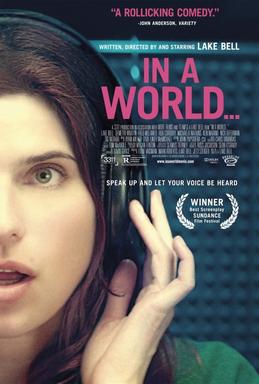
Carol Solomon (Lake Bell) makes a living (more or less) doing voice work and teaching celebrities to perfect their accents. She’d like to break into her father’s business doing voice-over work for movie trailers, but the industry doesn’t want a female voice. But a huge gap has been left by the death of Don LaFontaine (the real-life king of voice-overs) so she finds herself competing against her childish and jealous father, an industry giant, who champions his smug protegé, up-and-comer Gustav, to revive the “In a world…” work.

This film does a lot of things well, but I really enjoyed watching a woman try to break into a male-dominated industry, and witnessing the different things that need to fall into place in order for it to happen.  Unfortunately, there’s also a lot of back-stabbing and sabotage that goes on as well, some of it by Carol’s own father, a man who believes that there is no place for women in his workplace (and that things were better off when there weren’t women in any workplace, period). world

But this is not some heavy drama about sexism. I mean, first of all, there’s Eva Longoria, as herself, learning how not to sound like “a retarded pirate” (this is her attempt at a Cockney accent). Longoria seems pleasantly game and wins some major not-taking-herself-too-seriously points. Then there’s this: (are you sitting down? you may want to sit down.) DEMITRI MARTIN and NICK OFFERMAN in the same movie. In the same scene! In the same several scenes! I nearly fainted from the awesomeness. They play the good dudes who actually believe in Carol and want to help her succeed.

This movie is Lake Bell’s baby – she wrote it and directed it. She casts this movie like it is her baby, like she knows she has to get everything perfect, and does. She surrounds herself with talent and milks it for every ounce, but she’s no slouch: listen carefully and you’ll hear her own voice-over work sprinkled throughout the film. Girl’s got chops. The script is a lot of fun, there’s a lot of great lines, and great opportunities to showcase herself from every angle.

Watch out for Lake Bell – she’s been popping up in random places over the past few years, but with this effort, she’s truly made herself known.

Lucky Them

Toni Collette plays Ellie, a music critic who’s assigned to track down her musician ex-boyfriend. He disappeared over a decade ago, just as his career was taking off, and hasn’t been heard of since. She’s clearly still nursing old wounds: she’s a mess, personally and professionally. She has lucky_them_xlgone-night-stands instead of relationships. But now suddenly she has to go ripping off band-aids with the help of an old flame and total creepster (Thomas Haden Church). Church is a cringe-inducing rich prick who’s decided to take up documentary film-making. Collette is an imposter with a veneer so thin even a complete stranger calls her on it between bites of wedding cake.

This movie is what would happen if last year’s mournful, Oscar-nominated Inside Llewyn Davis and Oscar-winning treasure Searching for Sugar Man got together and had a mediocre baby. Well, maybe mediocre’s a bit harsh. I love me some Toni Collette and she does a bang-up job turning this somewhat predictable coming-of-age-l into a relevant, layered coming-of-middle-age tale.  Church allows her to bounce off his deadpan delivery, although she often seems reduced to grimacing when the script fails her.

The movie is purposefully slow. We really get a sense of Ellie’s stagnation as she is given a goal and then proceeds to ignore it for huge chunks of the movie. Instead of road-tripping out to find the ex-boyfriend, we explore relationships and maybe do a little growing up. All in all, this is a nice little indie flick that didn’t do much in theatres but will have a nice second life on Netflix. This baby doesn’t live up to its parents’ standards but when you run out of A material, here’s a nice solid B.