Tag Archives: Oscar contender

Virunga

I cried.

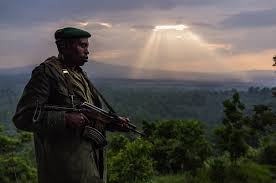
virunga3Virunga is a national conservation park in the Democratic Republic of Congo, which houses the world’s last mountain gorillas. The rangers who work there risk their lives to protect the park and its primates from poachers, war, and Big Oil.

Director Orlando von Einsiedel first travelled to the Congo in order to document the park’s positive impact on development and tourism, but within 3 weeks of arriving, M23 rebels were pushing into the area.

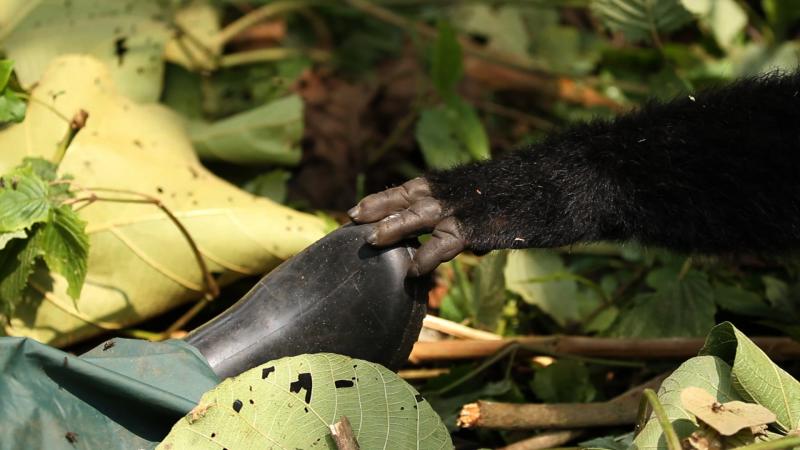
Within the park is a “gorilla orphanage”, two words I’d never put together before in my life, and 04_kabokowhich struck a really emotional core in me. One of the orphaned gorillas has only one hand; his stump is a reminder of the conflict in the region of which he has been victim. Am I so inured by images of war-wounded children that it now takes a maimed gorilla to give me pause?
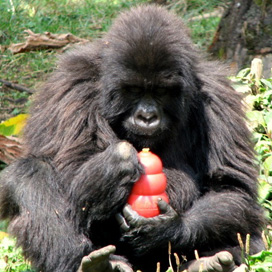
One of the rangers talks about “une grand tristesse” – a great tragedy – of finding a pack of gorillas slaughtered in the jungle. It was thought that if there were no more gorillas, there’d be no more need for the park. But with so many threats to the park, who was the culprit? Soco International, a British oil company, certainly seems like a guilty party. But the rangers and villagers put aside the investigation to mourn the majestic creatures. If you’ve ever wondered how many pallbearers it takes to carry the corpse of a slain gorilla, this film has the answer.
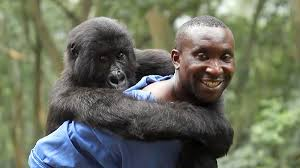
virungaMeanwhile, it’s not just gorillas who are dying. 130 rangers have given their lives in the service of this park. To many, Virunga is a symbol of hope, a way to heal their “pays cassé”, their broken country, a positive contribution to a country’s questionable legacy. The four gorillas who live in the orphanage are given love, and a surrogate family. But when the rebel army moves closer and bombing can be heard, a gorilla curled up in the fetal position is such a pathetic sight, one that stands in for so many other images of tragedy, that you can’t help but be moved.

The film plays out urgently – the rebellion taking human lives as the Congolese army flees; Socovirunga1 bribing rangers to exploit a protected World Heritage Site, stealing yet more resources from an area that has nothing to spare. There is drama and tenderness in equal measure. I guess what got to me is that it shows quite starkly the best and worst of human nature, and it leaves it in our hands as to which side will ultimately win.


virunga4You can stream this Oscar-nominated documentary on Netflix. If you’d like to learn more about what you can do to help the park, please visit www.virungamovie.com.
Finding Vivian Maier

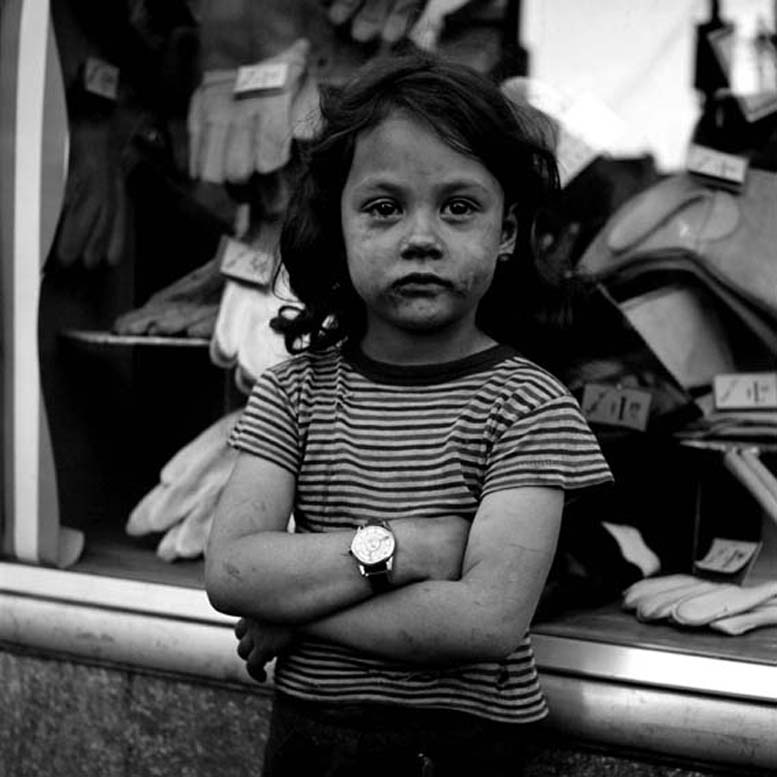
In 2007, real estate agent John Maloof acquired some negatives through the auction of an FindingVivianMaier1abandoned storage-locker. He was putting together a book on his Chicago neighbourhood and quickly realized these photos were irrelevant to his project, but he kept coming back to them because they were simply beautiful.

He has since bought up all of her work that he could, and attributed the photos to Vivian Maier, a woman almost impossible to nail down because that’s the way she wanted it. Intensely private, she spent her life working as a Nanny, faking a french accent, occasionally posing as a spy, and always, always, taking pictures. These pictures, over 100 000 went largely undeveloped and her work unknown. It wasn’t until after her death in 2009 that Maloof started soliciting attention for her photographs, and now she’s a street photography or significant interest.

vivian_maier_twinkle-twinkl_little-starThis documentary seeks out the personality behind the photos but finds that Vivian Maier may have prefered to remain anonymous. We get conflicting reports from the children she helped bring up, the parents she worked for, the neighbours she shunned, and the only thing that everyone agrees on is that she didn’t want to be known, and probably would have hated the very idea of this documentary.

Her pictures are indeed worth all the fuss. Youvivianmaier get the sense that Maloof is profiting quite handsomely from them, and that makes you sad for the woman who apparently died in destitution. You wonder who would go to the trouble of taking so very many photos if she never intended to show them to anyone, but we never know the answer. Vivian Maier remains unfound.

Oscar Nominations 2015

Best actor in a supporting role Robert Duvall, The Judge \ Ethan Hawke, Boyhood \ Edward Norton, Birdman \ Mark Ruffalo, Foxcatcher \ JK Simmons, Whiplash

Original Screenplay Alejandro G. Inarritu, Nicolas Giacobone, Alexander Dinelaris, Jr. & Armando Bo (Birdman) \ Richard Linklater (Boyhood) \ E. Max Frye and Dan Futterman (Foxcatcher) \ Wes Anderson & Hugo Guinness (The Grand Budapest Hotel) \ Dan Gilroy (Nightcrawler)

Adapted Screenplay Jason Hall (American Sniper) \ Graham Moore (The Imitation Game) \ Paul Thomas Anderson (Inherent Vice) \ Anthony McCarten (The Theory of Everything) \ Damien Chazelle (Whiplash)

Makeup and Hairstyling  Bill Corso and Dennis Liddiard (Foxcatcher) \ Frances Hannon and Mark Coulier (The Grand Budapest Hotel) \ Elizabeth Yianni-Georgiou and David White (Guardians of the Galaxy)

Costume Design Milena Canonero, The Grand Budapest Hotel \ Mark Bridges, Inherent Vice \ Colleen Atwood, Into The Woods \ Anna B. Sheppard and Jane Clive, Maleficent \ Jacqueline Durran, Mr Turner

Original Score: Alexandre Desplat, The Grand Budapest Hotel \ Alexandre Desplat, The Imitation Game \ Hans Zimmer, Interstellar \ Gary Yershon, Mr. Turner \ Johann Johannson, The Theory of Everything

Foreign Language: Ida (Poland)  \ Leviathan (Russia) \ Tangerines (Estonia) \ Timbuktu (Mauritania) \ Wild Tales (Argentina)

Cinematography  Emmanuel Lubezki, Birdman \ Robert Yeoman, The Grand Budapest Hotel \ Lukasz Zal and Ryszard Lenczewski, Ida \ Dick Pope, Mr Turner \ Roger Deakins, Unbroken

Best Supporting Actress Patricia Arquette (Boyhood) \ Keira Knightley (The Imitation Game) \ Emma Stone (Birdman) \ Meryl Streep (Into The Woods) \ Laura Dern (Wild)

Best Actress Felicity Jones (The Theory Of Everything) \ Julianne Moore (Still Alice) \ Rosamund Pike (Gone Girl) \ Reese Witherspoon (Wild) \ Marion Cotillard (Two Days, One Night)

Best Actor Steve Carell (Foxcatcher) \ Bradley Cooper (American Sniper) \ Benedict Cumberbatch (The Imitation Game) \ Michael Keaton (Birdman) \ Eddie Redmayne (The Theory of Everything)

Director: Alejandro G. Inarritu (Birdman) \ Richard Linklater (Boyhood) \ Bennett Miller (Foxcatcher) \ Wes Anderson (The Grand Budapest Hotel) \ Morten Tyldum (The Imitation Game)

Best Picture American Sniper \ Birdman \ Boyhood \ The Grand Budapest Hotel \ The Imitation Game \ Selma \ The Theory of Everything \ Whiplash

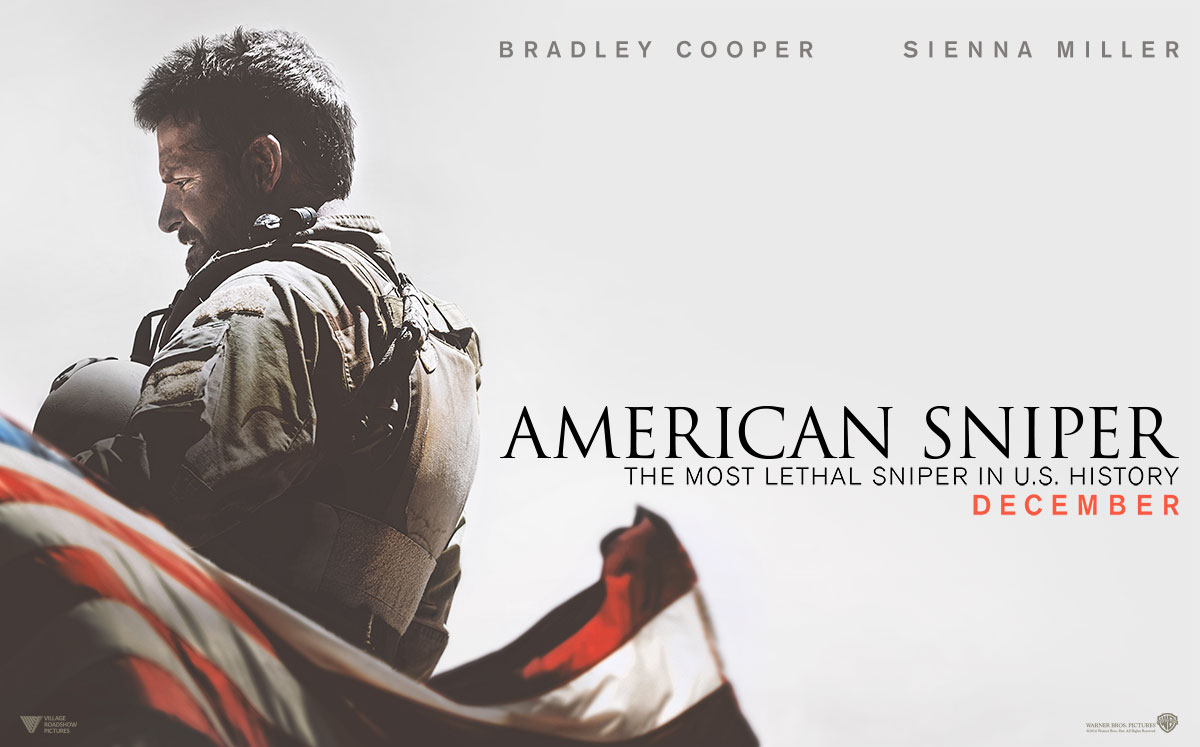
American Sniper

The trailer tricked me. The trailer made me want to see this. The trailer made me think, as much as I’m over Clint Eastwood, maybe this one will win me over. Maybe this one will be different.

americansniperThe first two minutes of the movie is the trailer, only worse. The trailer pares that scene down: sniper Chris Kyle sees a little boy and his mother enter a war zone and is responsible for either killing them, or letting them live, possibly to take out his fellow soldiers. He has only moments to decide. We hear his heart beat and feel the weight of the decision. In the movie? Not so much. It’s noisier, there’s more distracting us, it just doesn’t feel as clean or as pure. And if a movie makes you long for the trailer, it doesn’t exactly bode well for the remaining 2 hours and 11 minutes.

Plus there’s Bradley Cooper and his stupid fat face and his faltering Texan accent. I liked when the movie touched on the moral question, on how this guy, based on a real man (with four tours to Iraq under his belt and 160 confirmed kills), deals with taking lives, sometimes that of women and children. Even if it’s the “right” call, how do you make it feel right? I don’t think Cooper was up to the task of grappling with those emotions, and I really felt their absence. I didn’t feel like the script was up to the emotional depth that I was wanting either. Both felt lacking.

I wasn’t comfortable, am not comfortable, with the strict good guys vs bad guys presented in this movie. A sniper on the other side, doing the exact same job with the exact same weapon, with his own wife and kids at home, is a terrorist, plain and simple, while Chris gets to be the war hero. He’s the guy who’s most homesick when he’s back in America with his wife (Sienna Miller) and his eventual two kids. He’s chomping at the bit to be back in Iraq with his “flock.” His home and his family are overseas. He’s restless unless he’s among men, playing saviour. So it’s hard to believe in the film’s premise, in “Kyle’s sacrifice” because you see pretty clearly that he’s not making much of one. When he’s in the shit, he’s exactly where he wants to be and the only place he really knows how to be. Maybe his family back home is paying the price, but he doesn’t seem to care much about them and neither does the movie; they only exist as emotional fodder.

Cooper’s performance is not without its high points. I’m thinking of a particular scene in the last third of the movie when he’s again confronted with a should I or shouldn’t I scenario. His coughing relief, understated but palpable, is 2 seconds of film that every actor aims for and few ever reach. But a few shining moments strung together by Cooper between a couple of well-shot war scenes just weren’t enough. Too much hero-worship. Too much patriotism-as-religion. Eastwood gives us a pretty meaty tribute but ultimately is too respectful to dig into the reality.

Ida

Poland’s submission for best foreign film does feel foreign, and not just because of the subtitles.

Ida (Agata Trzebuchowska) is a young girl who’s lived in an orphanage since the war.  Just as she is about to take vows to become a Catholic nun, she discovers she is Jewish, and sets out with her only known living relative, aunt Wanda (Agata Kulesza), to find out what happened to her parents.ida

This film is starkly shot in black and white, with the weirdest framing I’ve ever seen. Shots are obscured by door frames. Long, static shots feature two talking heads at the very bottom of the screen while a vast emptiness dominates the rest, reminding me of a certain austerity that I guess is fitting for the 1960s Polish setting, but is jarring nonetheless.A burden on their shoulders?

There is stillness to this movie, and quite a bit of quiet. It’s stark. It’s bleak. And it may also be read as the world’s weirdest road trip movie. I didn’t really pick up on this until a minor character in the film calls them an “odd couple” and I suppose they are. It’s just that their mourning and anger sap any of the fun usually found on the open road.

The Agata who played Wanda was very good. The role itself is very good, meaty, interesting, frustrating. She is Poland, with all the guilt, the betrayal, the hurt, and the redemption that comes with it. She says more with a well-timed puff of her cigarette than with the sparse dialogue. The other Agata is less revealing. Her face is blank, often staring, often empty. It’s hard to know where this character is going, and it’s hard to attach to her. I’m trying not to fault the movie for having made me work so hard just to watch it, but it is a difficult one and I did struggle.

I suppose director Pawel Pawlikowski is asking us what to do with this history, once (re)discovered. I’m just not sure I came away with the answer.

Selma

I know who Martin Luther King was. But this movie made me realize how little I know about what he went through as a leader in the civil rights movement, and it was just a tiny sample of what must have gone on throughout the 1960s (and beyond). It made me want to learn more and I think that is an important accomplishment. It has now been 50 years since the events in the movie actually took place, and I think the horrors that went on need to be remembered so we can try to learn from them (because we do still have a lot to learn). All of this is in the background. This movie would be notable for that alone, and it is hard to separate out the fact that what we are seeing actually happened, which I have been trying to do so I can then judge Selma as a movie and not just as something that needs to be seen as a record of important events.

The events in this movie are horrific. It is difficult to imagine that any of them could ever have happened, but then you remember that things like this still DO happen, that for some reason the USA still can’t or won’t indict cops who kill black people (and it is not just a US problem, the recent incidents just happened to take place there). And still that is only a small part of the big picture, because it is not just “white, black and other”. There are lots of concurrent struggles for equality going on, still, with no resolution in sight. We have made some progress but not nearly enough (and as a straight white male what I would consider enough may not even actually be enough, which makes it even clearer that 50 years later we still aren’t close to achieving real equality).

I would not likely have thought about any of this today if I hadn’t watched Selma, and it goes to show again that regardless of how well this movie was made, I am glad I saw it.  But here’s the thing: this movie is incredibly good. David Oyelowo IS Martin Luther King. He is phenomenal. He would have carried this by himself but he does not need to. Everyone involved is intent on making this movie the best picture of the year. Their love and respect for the subject matter drew me in from the very start. I do not think this movie could be any better. Because of the subject matter I cannot promise that you will be entertained but I can promise that you will be moved.

Ten out of ten. See it.

Selma

Ooof. I confess, I don’t really know how to review this movie. Why does it feel different from any other movie? Because it’s a piece of art? A piece of history? No, it’s because this is a piece of heart, of our collective hearts. This story is an act of remembrance, an act of grace.

Matt, Sean and I attended the screening of this film at Silver City last night and I’ve been sitting with it ever since, wondering how I can add my voice to what’s being said about this movie. This is not just a history lesson. The images of protest, of indignation, of police brutality, of black people being gunned down for no reason, these could just as easily be ripped from today’s headlines as from 50 years ago. That’s the part that will scrape raw at your conscience, as it did mine.

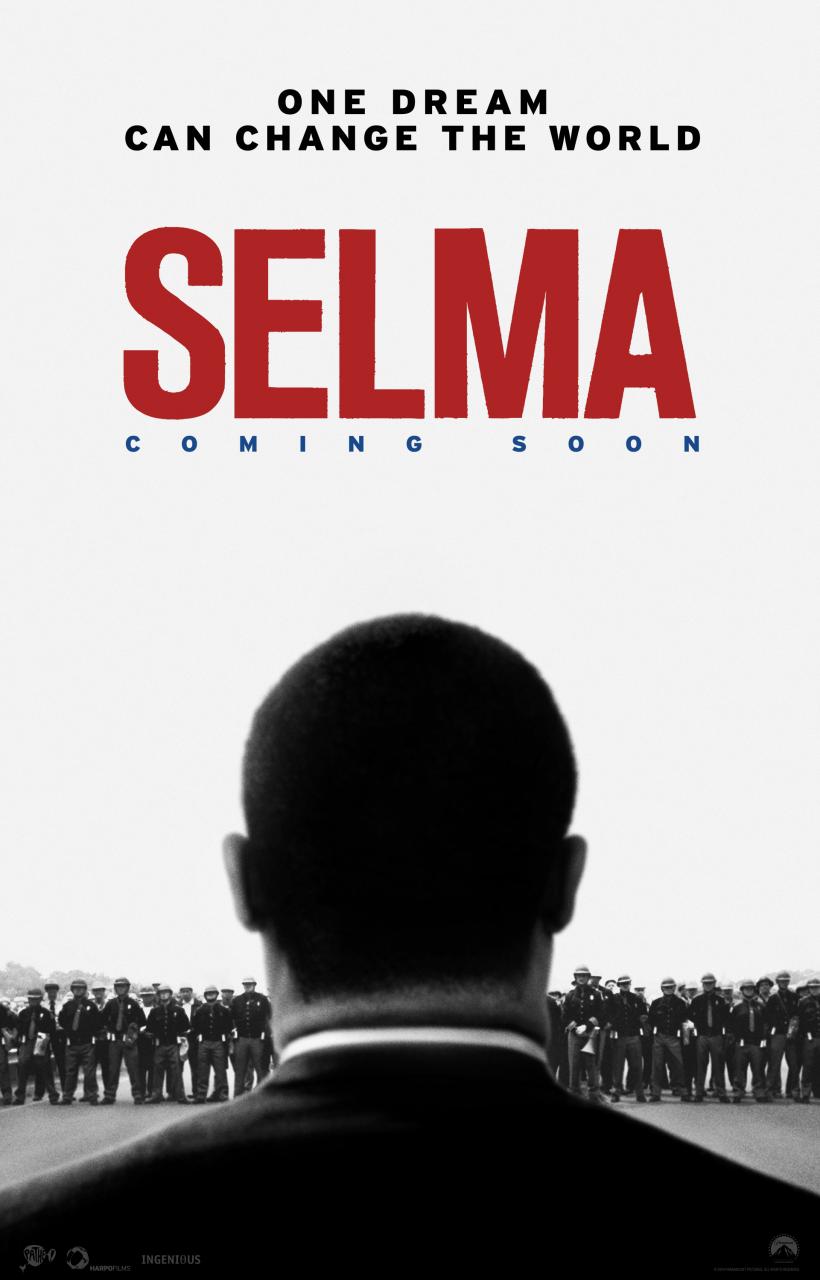
selma-movie-posterAnnie Lee Cooper is an older black woman registering to vote, as is her right as a supposed American citizen living in Selma, Alabama. The registrar is white, and resorts to dirty tricks in order to deny her once again. She leaves, slump-shouldered and dejected. Annie Cooper is played by Oprah Winfrey in the movie. I’m not normally a fan of stunt-casting, but in this case, using America’s sweetheart, a respected, powerful and highly successful personality who is also a black woman, to remind us just how far we’ve come in just 50 years, is pretty much the most perfect casting in the history of the world. Winfrey plays it winningly, with all the dignity the role deserves.

Insert Dr. Martin Luther King, Jr (David Oyelowo). He and his crew arrive in Selma to unite the people, to stir up activism, to attract the attention of the president (LBJ, played ably by Tom Wilkinson) and force him to do something about this supposed right to vote. Of course the president is reluctant, has his own agenda, and so King and company use their non-violent protest to force action in a genius and tragically necessary way.

The cinematography is a subtle tip of the hat toward realism. The costuming, particularly the suits worn by LBJ (those shoulders!), is pitch-perfect. The casting is strong. On paper it seems a bit weird to employ so much British talent to portray American icons, but it works. Oyelowo does a great job of shouldering the man and the spirit, the hero and the human being, without impersonating him.

It is hard to sit and watch this film. Director Ava DuVernay knows this and even uses it, with a stirring montage of Americans of all kinds watching horrified as the events unfold across their evening news, mirroring our own choking dismay.

DuVernay succeeds in stringing together a lot of different plot points in the course of the Selma events – the internal struggles of the organization, King’s problems at home, his grief and self-doubt, and government apathy or outright hostility on all levels. The film works so brilliantly because, while it stays humble in its scope, it becomes a representation for the movement as a whole, and for all the smaller victories along the way that led to real change. This flexibility in her story-telling is skillful and impressive and I can’t wait to hear her name announced as an Oscar nominee  (I won’t even say if), the first black female director ever to make the list.

Please see this movie. I can’t say that enough.


Big Eyes

This movie failed me on many levels. I want to tell you that it’s still a movie worth watching, it’s not horrendous, and it’s a fascinating story. I want to tell you that, and I suppose I have, but I also can’t help but tell you the rest.big_eyes_movie_poster_2

First: Christoph Waltz. So miscast. He runs through the movie like a bull in a china shop. It’s like he decided to approach this role as a Jim-Carrey-in-The-Mask impersonation, with a peekaboo German accent, and maybe whiffs of Jack Nicholson in The Shining, just for kicks. When he was on screen, and he almost always was, I could barely suppress my urge to yell “Cut!” Where was director Tim Burton in all of this? Has Burton spent too long in kooky, make believe worlds that he can’t even tell what’s real anymore? It certainly felt to me like he was out of his depth. Waltz’s portrayal of Walter Keane was artless and unrestrained. Yes, he plays a schmoozy con man who takes credit for his wife’s art for years, but this was also a real man and Waltz does not convey for one second that he has a single genuine, authentic bone in his entire body.

Amy Adams as the quashed artist Margaret Keane didn’t quite satisfy either. I kept hearing in the script Margaret fighting back a little with bitterness and sarcasm, but Adams couldn’t carry them off. She’s too mousey and breathy.

My biggest problem, though, is this. The movie is about a woman who is passively (and then maybe not so passively) abused for years. Her husband steals from her, takes away the thing of which she is most proud, and intimidates her into silence, forcing her to live in secret, isolation, and near-sweatshop conditions. And the era in which she lives doesn’t provide a whole lot of viable alternatives. But the movie itself is another act of subjugation. She’s not really the star of her own story. It’s Christoph Waltz who dominates the screen. He’s allowed to steal the scenes. Amy Adams can never inject her character with enough backbone to compete. He walks all over her. This turns out to not be the story of her stolen art, but about his swindle.  You  need only look at the movie poster for proof.

So that’s how you ruin a mediocre movie. You take a powerful story and you tell it from the entirely wrong perspective. It’s as if the movie itself hasn’t learned its own lesson, and in 2015, that’s a heartbreak.

NightCrawler

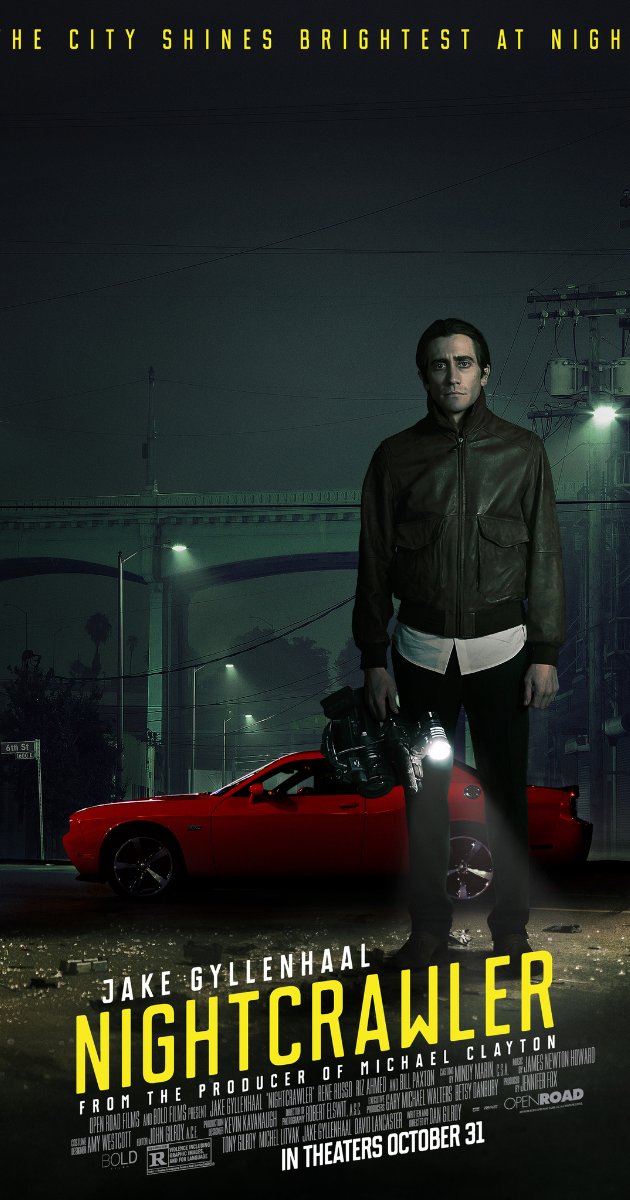
Jake Gyllenhaal’s Lou Bloom shows that you don’t have to be a journalist or a photographer to make it in the news business, you just have to have a nose for blood and a really strong stomach. In fact, tracking down the goriest, most gruesome deaths and crimes (especially those committed in rich neighbourhoods and against white people) seems a perfect fit for an enterprising but morally vacant soul such as Bloom, and thanks to a partnership with ratings-whore Nina (Rene Russo), he’s encouraged not only to continue, but to blur the line between finding and creating mayhem to “report.”nightcrawler

Gyllenhaal is gaunt, like a hungry animal prowling the night, his unblinking stare reminding me of Donnie Darko’s. He gives an increasingly chilling performance, cold but needy. You can never quite get a handle on just how intelligent this guy is. He studies the internet voraciously and comes off sounding like a wikipedia page, but the one thing you can’t learn online is feelings, and those are in short supply. Watching footage of a brutally murdered family, Lou has a self-satisfied smirk on his face, and Nina is practically salivating. These are not good people. There isn’t even a question of privacy, or of going too far. There is no too far.

Lou is pretty much irredeemable, as far as I can tell, unlike any other character I’ve seen on screen this year. It will give you the willies. First-time director Dan Gilroy will have you watching this movie with dread; with no ethics or scruples, anything can and may happen. Lou’s a dirty scavenger at best, and an unapologetic predator at what he would consider his best. Morality doesn’t factor in, which makes for a fascinating if disturbing character study of a man, who as near as I can tell, is void of any character to study.


The Boxtrolls

The Boxtrolls really seizes the opportunity to create a universe unlike any we’ve either seen. It’s a bit more macabre than we’re used to in a children’s movie, dark and gritty, but immersive and satisfying in its stop-motion animation.boxtrolls

In the town of Cheesebridge, an evil exterminator vows to kill off every boxtroll, spreading lies and ugly myths about them to win public approval (“Hide your delicious babies!”). The boxtrolls live underground, basically in hiding, clothed (or disguised?) in cardboard boxes, where they use pilfered materials to build all sorts of magical things. They only come out at night to snatch unused, unwanted things, but to do so is to put themselves in peril of being caught. Their number dwindles steadily until a young boxtroll named Eggs discovers you can go out into the light, and he must try to rally the timid boxtrolls into standing up for themselves.

The boxtrolls don’t speak, but that doesn’t stop them from each having a unique character (not unlike the Minions, come to think of it), or from communicating what they feel. The humans in the story are a sorry lot – sure Mr. Snatcher, the dastardly exterminator, is evil, but the others aren’t much better.  The troll “monsters” are eminently easier to root for in their sweetness and earnestness. There is also real sorrow here, and stabs at profundity. One human wonders if the boxtrolls “understand the duality of good and evil” while murking up the concept himself.

We have come to expect big things from the animators at Laika (think Coraline) and this film looks just as cool, and even more textured. And I love seeing an animated film where the little girl is not sexed up, and isn’t even crazy skinny. She has little girl proportions! Disney, you’re totally busted: turns out it IS possible to make a girl who looks like a girl. And if you stick around after the credits, you’re in for a treat: there’s a bit of existential animation that’s enlightening and entertaining.

A little slow to start, it’s still a solid movie that will capture children, especially those inclined to gross-out jokes (so, pretty much all). But this was a competitive year in terms of animation, which is great. Everyone’s bringing their A game. It’s just that movies like Big Hero 6 and The Lego Movie earned an A+.