Tag Archives: queer cinema

Killer Unicorn

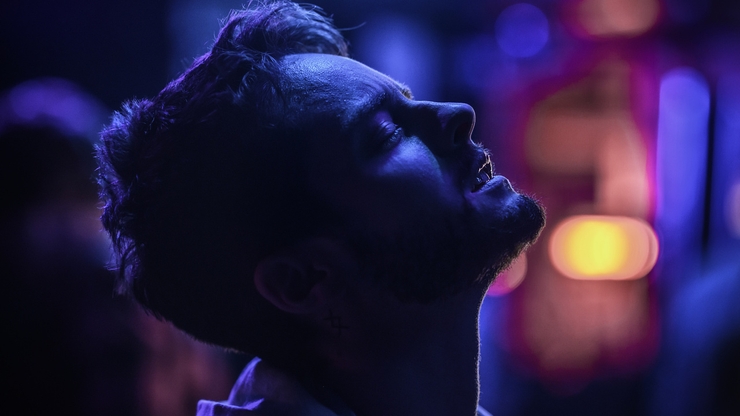
Danny (Alejandro La Rosa) is a bartender and used to be a bit of a party boy. His friends are queer, his best friends are drag queens, and they always stop by to invite him out. For the last year or so, Danny has passed. He’s had some trauma and no longer feels safe going out. However, the community’s epic Brooklyn Annual Enema Party (it’s exactly how it sounds) is just around the corner, and everyone’s trying to pump Danny up for the big day. A new love interest named PuppyPup (José D. Álvarez) makes him want to give the nightlife a second chance. Unfortunately, it becomes an even harder sell when it seems a serial killer is stalking the Brooklyn queer community and making drag queens disappear.

The Killer Unicorn gets his nickname in the least original way ever – he wears a unicorn mask. And not much else besides a pair of sequined booty shorts. The queens must like what’s in those shorts an awful lot because even though there’s a known Killer Unicorn on the loose and murdering their friends, a good many of them still agree to meet in dark, isolated places for a hookup – even when texts contain both unicorn and knife emojis. That’s practically a confession!

Writer José D. Álvarez can’t write. He can’t write dialogue, and none of director Drew Bolton’s cast can deliver it, so at least there’s some equanimity. It makes for a pretty garbage movie, and that’s even before you consider the vicious slander foisted upon the unicorn community. Who would want to desecrate these magical, beauteous creatures? They burp glitter and toot rainbows and yet some cretin has besmirched the good unicorn name. How dare you cast aspersions? HOW DARE YOU?

Apparently the script was written with specific queens in mind; it’s a shame Álvarez has such talentless friends. I don’t want to talk out of turn, but it would seem that RuPaul has turned the NYC drag family upside down and given it a good shake – even Drag Race’s losers go on to have stellar careers, but the leftovers in Brooklyn are clearly the dregs. Still, I don’t wish death upon them, and certainly not the particularly gruesome deaths this sick fuck in a unicorn mask inflicts. But aside from a few inventive kill scenes, there’s not much to recommend this film and plenty to warn you away.

But there a couple of you, just a couple, who are curious enough about the booty shorts and maybe even the enemas, who are going to watch it anyway. I see you. And what the heck, go ahead, enjoy it, you weirdo.
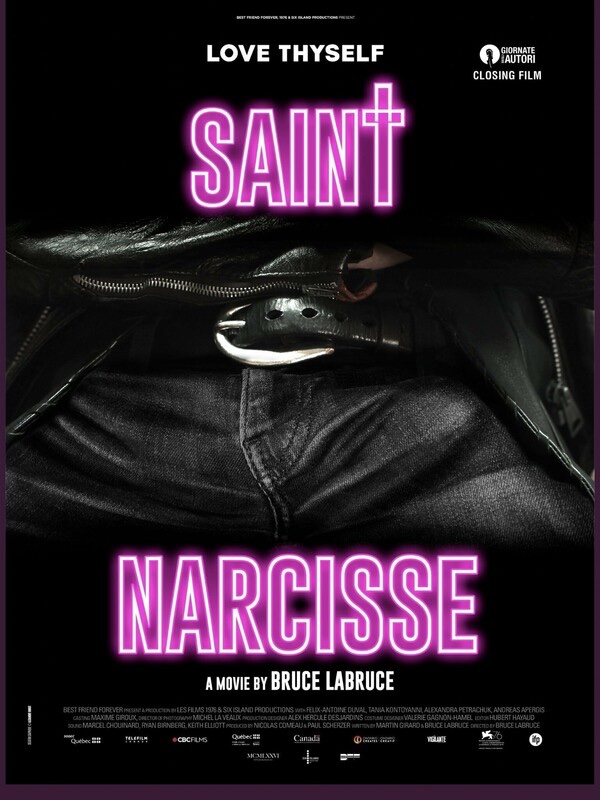
Saint-Narcisse

Well, if film festivals didn’t challenge you, it would just be going to the movies. Bruce LaBruce was never going to let that happen though. He’s Canada’s queercore king, the avant-garde and unapologetic gay answer to the punk movement. He famously blends an indie sensibility with gay porn imagery, exploring taboos and limits and putting his audience through an unforgettable adventure, one way or the other.

Dominic (Félix-Antoine Duval) is a young man with an unexpected fetish – himself. His own face and flesh are the only things that turn him on. He masturbates to Polaroids of himself and has never met a reflection he didn’t like. This is one of LaBruce’s signature transgressions against cultural norms, but he pushes that button quick, and moves on to the next. Dominic was raised by his grandmother believing his mother to be dead but new information sets him on a road trip to find her. Turns out she’s a witch, or at least that’s what the locals of Saint-Narcisse call the old woman living in an isolated cabin in the woods, living with a young woman who may or may not ever age.

His arrival finds Beatrice away from her cabin in the woods, but young Irene (Alexandra Petrachuk) is there, brandishing a gun rather than a welcome wagon. Naturally he waits for his mother in the garden, where he gets naked and takes a shower. As you do. But either when the maybe-mother son reunion happens, Dominic’s story still feels incomplete. Beatrice’s (Tania Kontoyanni) story has some pretty big holes in it, but luckily Dominic’s already fixated on someone else – Daniel, a monk in the monastery next door, who Dominic believes is a dead ringer for himself.

Daniel the monk enjoys homoerotic romps in the river with his order of brothers, and to masturbate to flyers of underwear ads while self-flagellating.

If you thought LaBruce was going to let you off easy, you don’t know your LaBruce. He’s going to continue to shock and subvert. But he also rather consciously pushes us to recognize our own role in the voyeurism (It is Not the Pornographer That is Perverse).

The story is a vehicle for naughty and immoral things, for pushing up against explicit boundaries and seeing how far they’ll give. It is not a movie with mass appeal. LaBruce and writing partner Martin Girard have much less interest in story than in shock value. It’s as if they’re daring their audience to look away, and by god they’re going to do everything in their power to win.

The Boys In The Band

Michael (Jim Parsons) is throwing a birthday for his friend Harold. He’s decorated the terrace of his New York City apartment, bought ice for the voluminous quantities of cocktails about to be consumed, and thrown together a guest list he flippantly describes as “all the same tired old queens.” Michael is a screenwriter who spends and drinks more than he should, and both are catching up to him. Michael’s former flame Donald (Matt Bomer) is unexpectedly in town for the event, filled with all the gems he’s been collecting in psychotherapy. Bernard (Michael Benjamin Washington) arrives with knee pads he’s bedazzled and monogrammed himself as a gift, and Emory (Robin de Jesús), a flamboyant decorator serves up what I believe is a lasagna laced with a little something special. Emory’s shared a tense cab ride over with lovers Hank (Tuc Watkins), who’s recently left his wife for Larry (Andrew Rannells), who doesn’t believe in monogamy.

If you’re thinking this birthday party, set in 1968, sounds a little ripe for conflict, you’re not wrong, but you don’t know the half of it. It’s about to be crashed by two unexpected guests: the first is a hooker named Cowboy (Charlie Carver), a big beautiful dummy meant to be Harold’s gift for the night, the second is Alan (Brian Hutchison), Michael’s straight college roommate to whom Michael is not out and asks the others to be discreet as well. Alan isn’t technically invited but shows up anyway, emotional, and well on his way to drunk. And only then does birthday boy Harold (Zachary Quinto) finally show up, chronically late, razor-tongued, cripplingly insecure.

Repressed sexuality and alcohol: a powder keg that’s absolutely, definitely going to blow up, the only question is whether it’ll be before the cake or after.

Joe Mantello directs a rather faithful adaptation of Mart Crowley’s play, allowing it to sit in a period when homosexuality meant so many different things: dangerous curiosity, underground relationships, chosen families, and more. Navigating this landscape is difficult, and each of these characters represents a different perspective, but they’re all just desperate to live life on their own terms. It’s the original cast from the 2018 Broadway revival, so not only is the cast extremely comfortable in the skins they’re temporarily inhabiting, but production can proudly claim that all 9 leads are themselves openly gay men. The ensemble isn’t just talented, but believable as a group with many permutations and entanglements, yet who continue to choose each other and probably always will.

This film is not just a fossil of its source material but a living, breathing thing where pain and expectation are lying in shallow graves, waiting to wound again.

A Good Man

Ben and Aude have been together six years. They’ve been through a lot, a LOT, and come out stronger together. But when Aude learns she can’t have kids, it’s a devastating blow. She tells Ben to leave her. He deserves to have a family, to be happy, to be with someone who can give him what he wants. Ben doesn’t even consider that an option. In fact, he’s’ willing to try something quite drastic in order to make their dreams of a family come true. He’s willing to carry the baby himself.

It’s not an option that most men have but Ben is trans, pre-op. It is technically possible but it’s going to be emotionally and psychologically punishing. First, he’ll have to delay the surgery that’s going to make him feel whole and right in his skin. Then he’ll have to stop the testosterone, risking the masculine characteristics he’s gained and inviting the return of some feminine ones. He’s battled depression before, and Aude is so worry that his mental health won’t stand up to this test. Not to mention the fact that they’ve just moved to this small town where they hope they are blending in more anonymously. Still, they live in fear. Something as simple as having to show ID could out Ben to the entire town. Having a pregnant belly is going to be a pretty big tell. So you can imagine how committed he is to his relationship and their parenthood that he still goes through with it.

Will Ben’s mind transform at the same rate that his body does? Will his secret be safe? Will he receive adequate and appropriate medical care? This movie bites off an awful lot and really spends its time chewing. These are very complicated and sensitive issues and as carefully as they’ve considered everything, they haven’t possibly considered everything. And as most parents will tell you, pregnancies don’t just transform bodies and spare bedrooms, they change the couple as well.

As Aude, Soko navigates the highs and the lows very well. She allows the character’s arc to inform her performance and manages a delicate balance including longing and fear, hope and rejection, awe and anger. As Ben, Noémie Merlant  has an even taller order and few sources to draw on for inspiration. But you can tell she discovers the character at his core. She has respect for his unique experience, his fervour and his courage. But as good as she is, it still feels a little wrong that this part didn’t go to a trans actor. This is a very specific experience and not only would it be better explored by someone who can authentically relate, it feels especially important to get more trans men in front of the camera and in the media generally. Like every industry, the movie industry commodifies women – the younger and the more beautiful the better – Laverne Cox, Trace Lysette, Jen Richards. Trans men are much less visible and their stories less often told.

A Good Man is both a beautiful movie and a missed opportunity.

Good Kisser

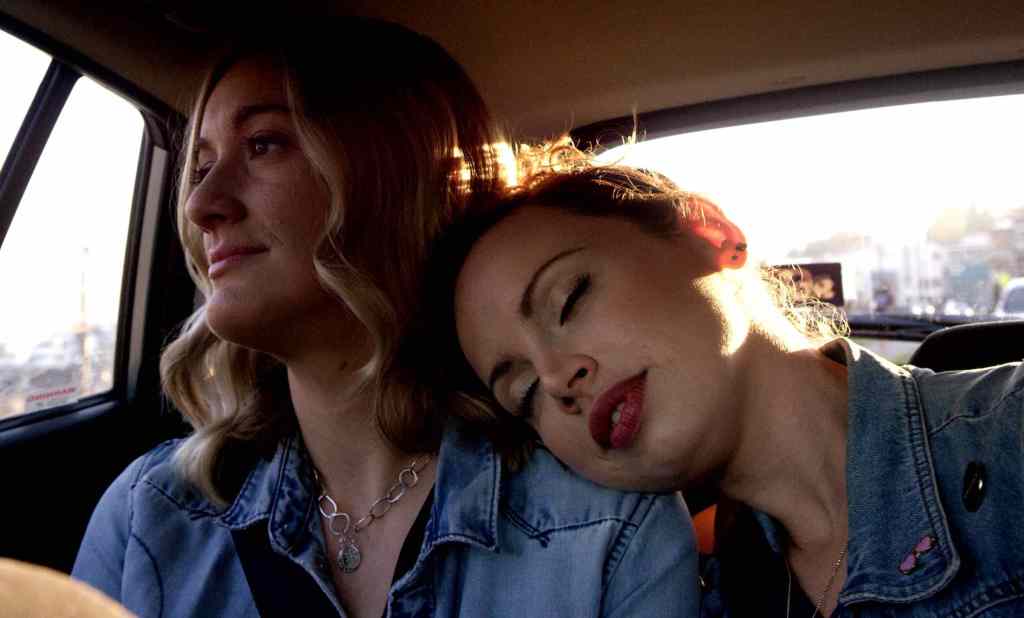
Jenna (Kari Alison Hodge) and Kate (Rachel Paulson) are ubering to their first threesome as a couple. Jenna is nervous, blabbering to their driver. Kate is excited, anxious to appease Jenna’s insecurities. They discuss code words and safe words and rules and limits but all that good stuff goes right out the door in the heat of the moment.

To Jenna, Mia (Julia Eringer) is a mysterious but seductive stranger. Kate and Mia, however, have some sort of history, one that Kate seems pretty intent on rekindling, pressuring Jenna to get those fires lit quick. But while Kate wants it more, it’s Jenna and Mia who seem to really connect, at least on an intellectual level. They have great chemistry outside the bedroom, but inside is another story, Jenna’s anxieties prevent her from really enjoying an intimate encounter with a random person, an issue that should have been clear to both Jenna and Kate, her partner of nearly two years, well before they got into bed with a third party. But it seems this was an effort to “spice up” their relationship, and is clearly a mostly one-sided endeavour. You’ll never see this coming but – spoiler! – turns out, a threesome isn’t a quick fix for a rocky relationship. In fact, it seems to be extra good at exposing the flaws in the foundation.

This is an indie movie with a pure, pure heart. Talented writer-director Wendy Jo Carlton has put her soul all over the page and the screen. None of the actors are completely natural on camera yet, but their professionalism and eagerness go a long way. And so does the spirit of the project itself, an LGBT movie that speaks to its own people. Far too often, movies about lesbian couples especially get made for the male gaze, the male hetero gaze, it probably goes without saying. That’s how you make a lesbian movie marketable. But Good Kisser isn’t afraid to deviate from the kissing. It’s talky, it’s neurotic, it’s questioning without being judgmental. What started out as a night billed as pleasure turns into one of pivotal evaluation and reassessment. If Good Kisser isn’t quite a Good Movie, it is at least obviously from a Good Director who deserves to have her next project have a Good Budget.

Over on Youtube…

We’re celebrating Queer, Black, Female voices in Hollywood. It’s still Pride Month, people, drop us a Thumbs Up and show you care!

The Handmaiden

During the 1930s Japanese occupation of Korea, Lady Hideko (Min-hee Kim) lives on a large countryside estate with her abusive uncle. A new handmaid, Sook-Hee (Tae-ri Kim) arrives in the house to assist her, only the two bond in unexpected ways.

But what Hideko doesn’t know is that Sook-Hee was raised in a den of thieves – and pickpockets, forgers, human traffickers, and so on. A fellow criminal, playing the long con and posing as Japanese gentleman Count Fujiwara (Jung-woo Ha), came to her with a proposal. Lady Hideko stands to inherit a vast fortune. If Sook-Hee agrees to help Hideko fall in love with him, they’ll rob her of her money and have her locked up in a madhouse. Sook-Hee accepts. But as she encourages Hideko’s seduction, she herself is falling for the lady, but her poverty and pride won’t let feelings get in the way of fortune.

The Handmaiden is an exceedingly beautifully-shot film with a score that sounds an awful lot like Downton Abbey. It’s loosely based on Sarah Waters’ crime novel, Fingersmith, but director Chan-wook Park (yes, the very same who gave us Oldboy) has his fingerprints all over this adaptation. His interpretation is visually luscious, of course, and the story more complex than it seems. This one too cleverly hints at the various power dynamics at play – between sexes, classes, and even colonized and colonizer.

While the erotic scenes are somewhat familiar and cliched, one bathtub scene involving a thimble will go down in the history books as a delightfully powerful lesbian maneuver. The Handmaiden is lush and decadent and often disturbing.

Straight Up

Netflix just dropped a bizarre comedy this weekend starring Will Ferrell and Rachel McAdams. Netflix will green-light just about everything, which was music to Ferrell’s ears – literally. Finally, his semi-chub for Eurovision would pay off! If it’s not already the #1 viewed film on the streaming platform, I’m sure it will be soon. And it does have its funny moments, even I can admit that.

But Straight Up is also a new release on Netflix, and this one’s a movie you actually should see.

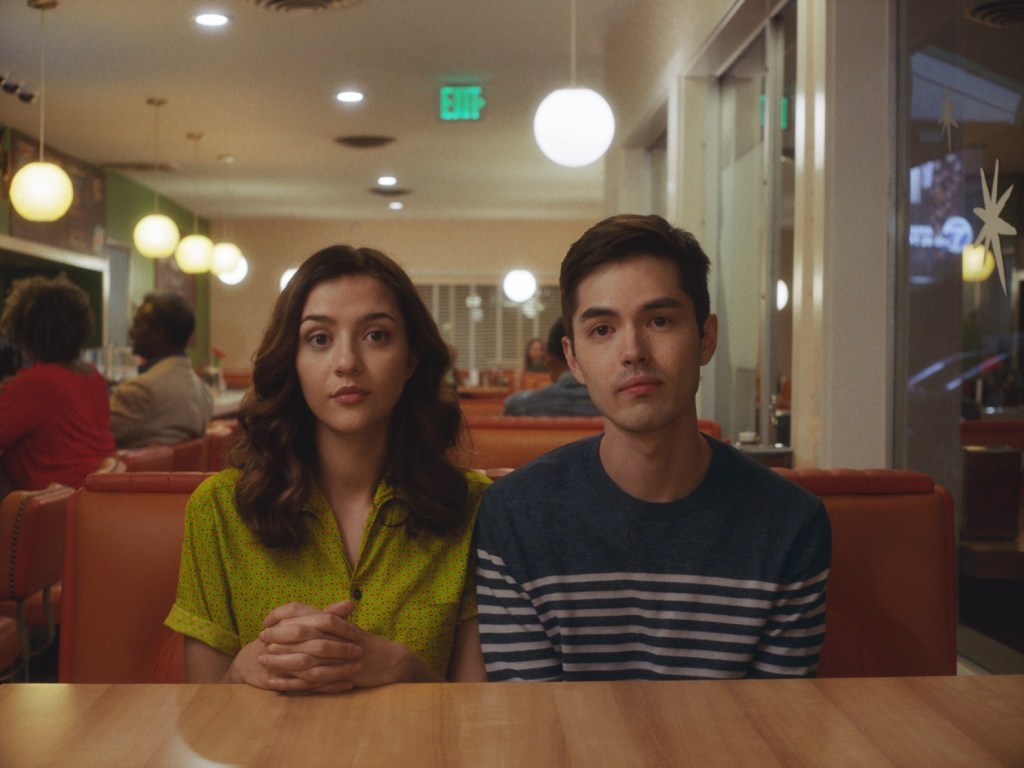
Todd (James Sweeney) is a confused young man. He’s neurotic, he’s OCD, he’s phobic, he’s addicted to therapy, which tends to stir up more questions than answers. One recent question is: am I actually gay?

Sexuality may be quite obvious to most, but Todd is wondering if maybe he just internalized the label from having been bullied as a child. He hasn’t really had any relationships, nor has he had sex thanks to an aversion to bodily fluids. He tests out this new theory on two long-time (/only) friends, who are less than enthusiastic for this line of thinking. Of course he’s gay, they assure him. Of course. But Todd is petrified of dying alone, and since adding females to the mix more than doubles the dating pool, the math is on his side. More or less. It may be a tad difficult to attract women with his distinct “I’m gay” vibe.

But not, it turns out, impossible. He meets Rory (Katie Findlay) and they immediately bond of Gilmore Girls, which is apt because they too are hyper-verbal. The dialogue zings between them rapid-fire and yet feels natural. Sweeney and Findlay have an incredible chemistry that belies an instant connection and intimacy. They are intellectual soulmates. But can they sustain a romance?

This film is all kinds of incredible. First, we get to explore a young and fluid concept of sexual identity. These kids are not afraid to redefine society’s so-called institutions to suit their own needs. They don’t ask whether they can be romantic partners but not sexual ones – they just get to it. Nothing’s off the table and everything can be negotiated.

It’s still pride month, and you may have noticed that among all of the letters of the rainbow (LGBTQia2+), the Q stands for both queer, and for questioning, which doesn’t necessarily mean that someone’s sexuality is in limbo. It can simply be an admission that sexuality is a spectrum, and one’s place on it may be in flux (a sort of agnosticism for sexual orientation, if you will). Generation Z much more readily embraces these gradations. And I don’t mean that it’s easy or it’s perfect, just that our understanding continues to expand, and there’s a lot more nuance than just the binary female/male, hetero/homosexual.

Five years ago, James Sweeney was a lowly assistant to Duke Johnson, who himself is not a household name, but he was co-director on that wonderful stop-motion animated film by Charlie Kaufman, Anomalisa. Flash forward only a few years, and he’s already writing and directing his own films, and even more incredibly, they’re actually first rate. He’s not just putting sexuality on trial, he’s questioning our basic definition of romantic love. As he should. The truth is, no relationship strictly conforms to a dictionary’s ideal. Maybe love can only be defined by the people who are feeling it. And maybe we should just chuck out these meaningless labels anyway.

I feel energized by these challenges to the status quo, but most of all I was just falling a little in love with Rory and Todd myself. Their wit and effervescence perfectly captures that consuming and in fact addicting aspect of new love. Recognition of this higher connection is intoxicating and exhilarating and you just want more, more, more. While I would categorize Sean as “distressingly straight” and myself as “pansexual,” still we recognize a bit of ourselves in this young couple, because those first heady days of romance are unmistakable. Sweeney and Findlay give generous performances and make easy work of what I can only imagine was a pretty hefty script. And an impressive one at that.

Look for Straight Up on Netflix.

The Show Must Go On: The Queen + Adam Lambert Story

By the early 1980s, Queen was one of the biggest stadium rock bands in the world. Their set at the 1985 Live Aid concert is basically the most significant live performance of all time. Queen meaning Roger Taylor on drums, Brian May on guitar, John Deacon on bass, and Freddie Mercury on piano and vocals. Mercury was a flamboyant showman on the stage, an inimitable presence with an incredible voice. When he died in 1991, the band more or less died with him; his bandmates were his friends, and they needed to mourn him away from the music.

I can’t remember when I was first aware of Queen because I was born into a world already obsessed with them. I remember being in my mom’s van and hearing the telltale bassline of Under Pressure and being mad, SO mad, when it turned out to be “that old song” by Queen, and not Ice Ice Baby by Vanilla Ice, a flash in the pan hip-hop monstrosity that sampled from Queen/David Bowie without crediting them. Imagine being disappointed by Under Pressure. Imagine. I have been atoning for that musical folly ever since.

I have probably never been to a hockey game that didn’t play We Will Rock You at least 5 times. As a kid I probably thought it was specifically written for hockey. But in 1992 the band got an even bigger boost from a different Canadian export, Mike Myers. Wayne’s World was released just a few months after Mercury’s (AIDS-related) death, and the studio begged Myers to go with a Guns N Roses instead, but Myers was insistent. The film propelled Bohemian Rhapsody to #2 on the charts 17 years after its first release. Mercury saw the head banging scene before his death, found it hilarious, and approved the song for the film’s use. It was a nice way for new fans and old fans to appreciate Queen once again. Just two months later, in April 1992, the remaining Queen members put on a benefit, The Freddie Mercury Tribute Concert, to which 1.2 billion viewers tuned in (they made the Guinness Book of Records!). Performers including Robert Plant, Elton John, Annie Lennox, George Michael, and David Bowie performed alongside the original members, and they raised over £20M for AIDS charities.

This would prove a wise and prophetic move: Queen never tried to replace the irreplaceable Freddie Mercury. When they were ready to perform again, they performed as Queen + ________. John Deacon retired in 1997, but a new Greatest Hits (III) album was released in 1999, Queen + Wyclef Jean on Another One Bites the Dust, George Michael on Somebody to Love, and Elton John on The Show Must Go On (among others). And beginning in 2005, they toured + Paul Rodgers. Fans could enjoy the music they loved without feeling their Mercury had been replaced. May and Taylor could play again, in tribute to their friend of course, but also because this was their music too, their passion.

In 2011, Queen began playing with American Idol loser, Adam Lambert (that year’s winner, Kris Allen, has long since been forgotten – the show has a pretty crummy record: out of 17 seasons, only 2 early winners ever had any lasting success, Kelly Clarkson and Carrie Underwood). But Queen knew a winner when it saw one.

This documentary covers a lot of ground. A LOT. But it’s Queen, so let’s gobble it up. And it’s kind of cool that this iconic band, now consisting of two aging rock stars, can see in Lambert a little bit of their old friend. Adam Lambert is himself a flamboyant showman, but he doesn’t invite comparison to Mercury, which is what makes this union work. He is a confident performer in his own right, and May and Taylor seem re-energized in rediscovering their old hits with him, old hits that, like me, Lambert has grown up just knowing. And though he’s also passionate about his solo work, Lambert knows what a huge opportunity this is, how lucky he is to perform to arenas filled with people. But most of all, it’s just cool to see how things have changed, from Freddie Mercury’s deathbed confession of AIDS, to Lambert being able to perform as an openly gay man. Many great bands continue to tour long past their prime, eventually becoming a sort of cover band of themselves. Queen, however, has lasted because it’s been open to change, it has evolved. They never wallpapered over their past. They knew they had a once in a lifetime thing with Freddie, but they also admit they’ve somehow found it again with Lambert.

Can’t get enough? Join the conversation on Youtube!


Disclosure: Trans Lives On Screen

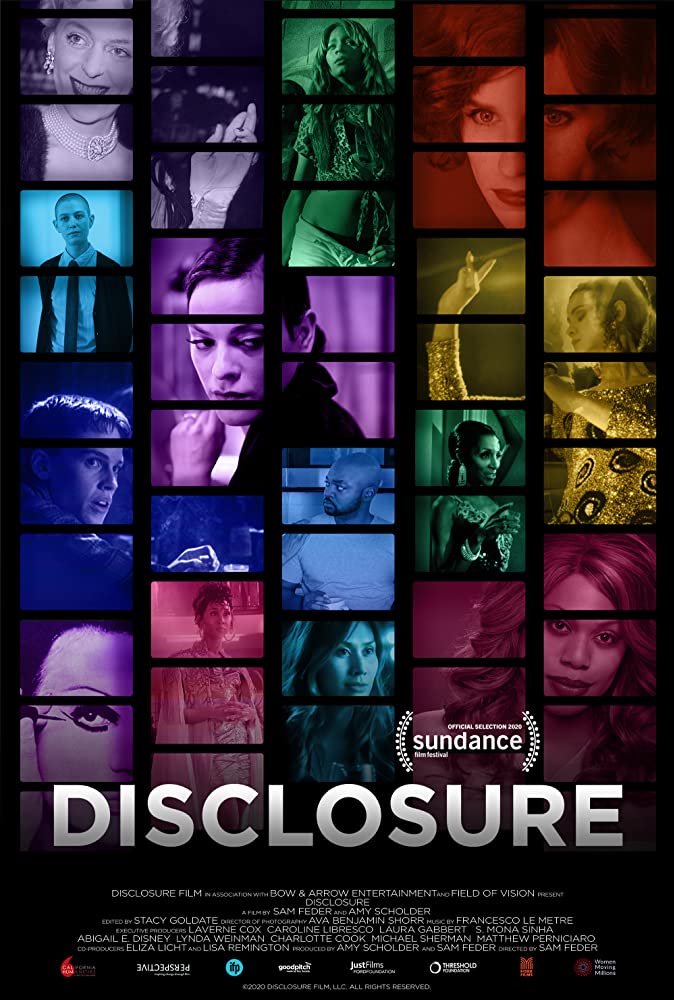
Disclosure gives us an in-depth look at Hollywood’s depiction of transgender people and the impact those stories have had not just on a transgender lives but on American culture as a whole.

Director Sam Feder puts together a documentary of enormous value, not just because of the breadth and depth of its interview subjects (actors certainly, but also historians, researchers, activists and more) but because this film acts as a valuable resource for cis-gendered people to learn and reflect more on the topic without burdening the trans community. Often we lean on minority communities to teach us how to value and respect them when we should be doing the work ourselves. Feder has generously accounted for our laziness and apathy and has made this easily-digested anthology on trans representation widely available through Netflix. No excuses: just watch it.

Let trans people tell you how it’s felt to grow up watching what few transgendered roles there are be of trans people being trafficked, raped, beaten, and murdered. And yet still they were grateful just to know that somewhere out there, someone else felt like them. Or what it’s like to see cis-gendered people playing trans-gendered characters, perpetuating the notion that some sort of trick is being played, or that gender is a kind of performance. And how important it is just to have any kind of representation at all, since the vast majority of us either don’t know someone who is transgendered, or don’t know that we do – and this includes most young people growing up who are trans themselves. Movie and television characters, however, come into our homes and our consciousness, so we need to get them right.

This documentary could easily shame me for not asking the right questions, not saying the right things, not knowing the right people. Instead, it just allows us to be a part of the conversation, to start thinking in the right direction, to start noticing the gaps, and to meet some people outside of our normal circles. They have every right to be angry and yet Feder and company flood us with hope and optimism. They show us the path forward with respect and dignity, and the very least we can do is take that first step.

Join us on Youtube for further discussion.