Tag Archives: sci-fi

Weekend Round-Up

Project_Almanac_posterProject Almanac – I have mixed feelings about this one. I wasn’t bored by it, but the story is thin. I like the championing of the inventor, but I disliked the very trite time-travel routine, where the same costs and benefits are explored here as have been elsewhere a thousand times before. The kids are likeable enough but you know what? Enough with the “found footage” thing. It’s done. Let’s drop it.
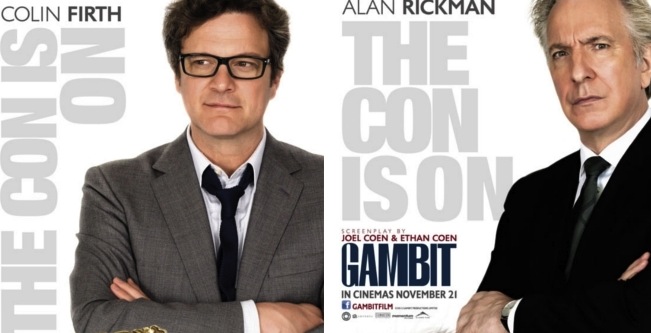
colin-firth-alan-rickman-and-a-lion-feature-in-first-posters-for-gambitGambit – A movie with Colin Firth and Alan Rickman AND Stanley Tucci you want to like. But can you? It’s a remake, written by the Coen brothers, about an art thief who recruits ditzy Cameron Diaz to pull  a fast one on his boss – and then dares to be surprised when it doesn’t quite get pulled off as planned. Firth is solid and has great comic timing but Diaz exists on a level so far beneath him it’s not fair to either. I have the feeling Firth was hoping for The Big Lebowski but ended up in The Ladykillers. Better luck next time, y’all.

San Andreas – The three Assholes who went to see this together are also the same three Assholes planning a trip to shitty, shaky San Francisco next month. Oh sure it seemed like a good idea at the time. Lots of wine, we heard, those weird, slopy streets, and just a beautiful coastal drive away from LA. San Andreas is not exactly a boon to tourism. Made it seem a little sanandreasreckless to travel there (let alone live there), in fact. But we survived the movie and as of this time have not cancelled our plane tickets, mostly because Sean couldn’t find the number. I watched this movie totally stressed out, from start to finish. Is there a plot to this thing? I have no idea. WATCH OUT FOR THAT FIRE! Is there good acting in this thing? I don’t know, does dodging debris count? WATCH OUT FOR THAT FLYING CRUISE SHIP! It was a disaster movie so jam-packed with disaster that some leaked out the sides. It keeps you so busy racing from one near-death experience to another that you never have time to question the holes in the movie, because every hole is filled with exploding glass – in 3D!

Dear Zachary: A Letter to his Son About his Father – In 2001, Andrew Bagby was brutally dearzacharymurdered. Soon after, his girlfriend, the prime suspect, announces she’s pregnant and Bagby’s bereaved parents have to interact with their son’s killer in order to gain any visitation with the grandson who looks just like him. This is a documentary Kurt Kuenne who isn’t a particularly talented documentarian, but who was Bagby’s best friend. This is a tribute to his friend, and also to the parents who went to great lengths to make a life for a grandchild born out of tragedy. I was prepared for this one to hurt my heart, but I wasn’t quite as prepared as I needed to be. Check it out on Netflix.

Aloha – Cameron Crowe’s greatest offense is being too successful too early in his career. Does this stand up to Almost Famous? No, it doesn’t. And not many movies would. But would people be giving Aloha as hard a time if it were written and directed by anyone else? This film is imperfect. It drags in places (but has flashes of brilliance to prop things up) and it tries to involve too many, which takes away from the central story, which is the one we’ve put our butts in the ALOHA-Movie-Reviewseats to see. Emma Stone plays Jennifer Lawrence opposite Bradley Cooper (what is it about Bradley Cooper, by the way, that his characters are constantly romancing women he could have fathered?). Anyway, he plays this deeply flawed individual and she plays so pert and perfect you want to punch her right in the googly eyes. But you’re supposed to root for them I think, even though Rachel McAdams makes a tantalizing (and age appropriate, while still being younger) alternative. They exchange some witty banter, some banal banter, look at an atrocious toe, and induce Billy Murray into a dance scene. It’s not a cohesive movie by a long shot, but nor is it as bad as the critics will tell you.  The story wants to be more than it is. The movie is beautiful but straight-forward. There’s very little art here. What we have in abundance is white people, puzzlingly, since it’s set in Hawaii, where the census tells us they’re relatively rare and Hollywood tells if you squint hard enough, George Clooney passes for Hawaiian.

goingclearGoing Clear – The more I learn, the less I understand. I didn’t learn anything new (in fact, nothing that’s not on the Wikipedia page), and I think they went a little soft on the former members they interviewed. Has anyone else seen this?

Tomorrowland

I was expecting a lot more from Tomorrowland. Brad Bird has been involved in so many good movies in the past, all of which have had fantastical or futuristic elements. Damon Lindelof gave us an amazing first season of Lost (though it was downhill from there as the layers were peeled away). George Clooney is an A-lister who is super reliable and who usually picks his projects well. All the parts seemed to be here for a great movie, or at the very least an interesting one.

But instead of being something memorable, Tomorrowland is entirely forgettable. I really don’t understand how things went so wrong but for a movie about possibilities, there was a distinct lack of imagination or innovation involved in Tomorrowland. It is totally formulaic and by-the-numbers. Which doesn’t make it a bad movie, and it’s not a bad movie, but it left me feeling that an opportunity was missed here.

Going in, I thought the premise was solid one but the way it was handled left me not only wanting more but wanting something entirely different, something closer to what I thought this movie would be after having seen the trailer many, many times in the last six months. I don’t want to spoil things so I can’t really be more specific than to say that Tomorrowland was not at all what we saw in the trailer. And that would have been okay if handled differently but the end result here is that we only end up spending a very small amount of screen time in Tomorrowland when all is said and done, but the scenes of Tomorrowland in the trailer were what I wanted to see lots and lots of.

That’s why the way it played out was so disappointing.  It left me feeling a lot like Lost did, now that I think about it.

Tomorrowland gets a rating of 6 child-sized jetpacks out of ten.

Ex-Machina: How to Expertly Avoid Reviewing a Movie

So last week, the Assholes enjoyed a late lunch on a sunny patio, some margaritas as we planned a future trip to California, and a movie that we all admitted to thoroughly enjoying.

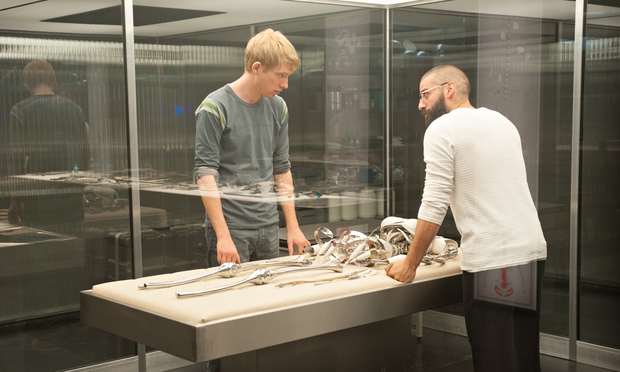
ex-machina-movieEx-Machina is a damn fine piece of cinema that we all came away from chittering about like we’d been starved of good film-making for centuries (and it being Avenger week, I guess it did kind of feel that way). And then we all promptly avoided writing about it.

Now why is that? Probably because I’m not interested in rehashing plot. I am, however, frothing to talk about what happens, really happens. So I’m writing two posts. This one, spoiler-free, for those of you who haven’t seen it yet: Go see it. It’s about a beautiful robot who’s (artificially?) intelligent and has a sporting vagina. How can you resist that? Answer: you can’t. See it immediately, and then come back to discuss.

And for those of you who have seen it, please follow this link to the real meat and potatoes, where we can finally get all those glorious WHAT THE FUCKS off our chests. Sound good? See you there.

Jay

Ex-Machina: The Spoiler-Filled Discussion

You’ve been warned, ladies and gentlemen: this post is not a review but a place where we can finally talk about all those little light-bulb moments that Ex-Machina inspires, and sometimes orchestrates. Brilliant film, by the way. If you haven’t seen it, do. And then come back. For those of you sticking around, please view the following as talking points – take one or take all, and head to the comments to let us know how you feel. If you have your own questions to add, please do.

Okay, so first off: can you even believe that we haven’t learned our lesson yet? I mean, literally, every movie, every book, every comic has always warned of the exact same thing: robots will always get smarter than us. They will always realize that we a hazard. And they will always neutralize that hazard. Robots always win! End of story. Isaac Asimov microphone drop.

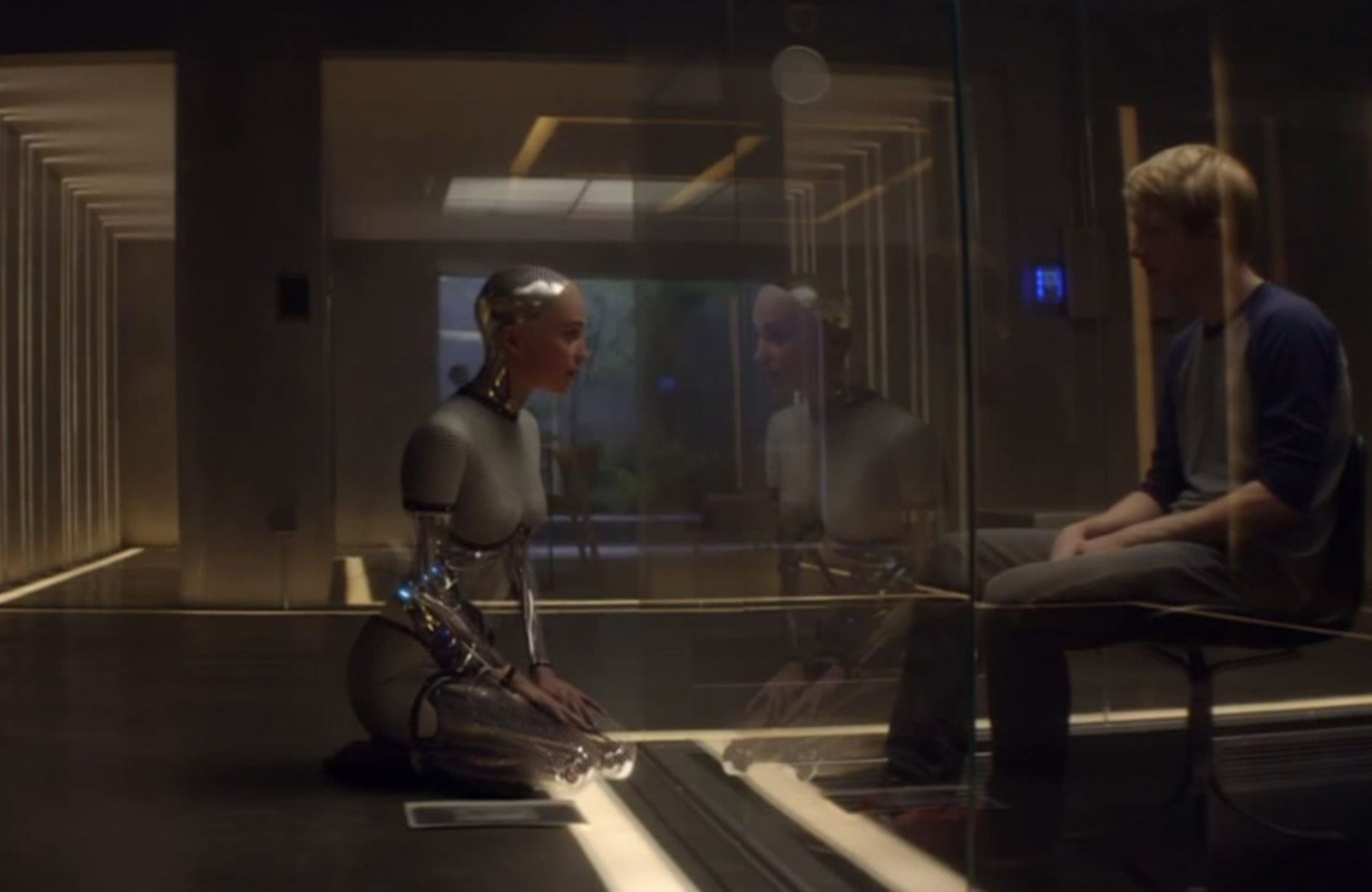
Director Alex Garland has described the future presented in the film as ‘ten minutes from now’. Ex Machina film stillMeaning that ‘if somebody like Google or Apple announced tomorrow that they had made Ava, we would all be surprised, but we wouldn’t be that surprised’. Isn’t it a little scary that a machine that is potentially an extinction-level event for us could be being built in someone’s basement right now? Actually, we’re creeping closer and closer to this inevitability all the time – I recently warned our dear Carrie that she was wasting her time keeping in shape because one of these nights her fitbit would kill her anyway. As far as I know she’s alive and well, but I am concerned about how much of our lives we’re devoting to things like the Apple Watch, which can control your TV, pay for groceries, or give you directions. But it also has the ability to spy on you – just ask Edward Snowden! Did this movie feel like a real and imminent threat to you?

The title derives from the Latin phrase ‘Deus Ex-Machina’, meaning ‘a god From the Machine.’ It’s basically referring to a plot device where a god, or some powerful unknown, resolves character issues in one fell swoop. Nathan (Oscar Isaac) tells us that only gods can create new life – he’s cocky and proud of his invention and he loves when Caleb implies that he is a god. But Ava has other ideas. Whether or not she ever needed him, she’s certainly outgrown him (remember when Caleb sadly tells her it’s not up to him, and she asks “Why is it up to anybody?) – gave me  CHILLS!), outgrown god even, by this point, and she knows it. So the ‘Deus’ is conspicuously absent from the title; god isn’t necessary. The machine is all that matters. Is it inevitable that we will create the thing that undoes us?

The movie is divided into “sessions”, each day that Caleb spends administering his best attempt at the Turing test. In the end, ‘Ava Session 7’ appears on-screen even though Caleb isn’t administering the Turing test  anymore, and Nathan is pretty dead. Do you think this means Ava was doing the testing all along? It definitely feels like she was always in control. The boys felt the ultimate test would be to see if she could fall in love, but she knew that the ticket to her escape would be to manipulate Caleb into falling for her. Now that I’m thinking about it, Ava lives in this glass box, but when Caleb is questioning her, he steps into a box within her box, which sort of hints toward him being the one in the hot seat, doesn’t it?ex-machina-film-image

A Turing test, you may remember, is a conversation of sorts between a person and an unknown entity. If a computer can pass itself off as a human during this test, it has passed, and the computer can be considered ‘intelligent’. In the film, Caleb can clearly see that he is interrogating an android – Nathan feels that if Ava can still relate to him as a human despite it being very obvious that she isn’t, then the test will truly be meaningful. What I think is meaningful is that the android is played by a human. So funny in this age of Ultron, but I loved that this movie was driven by ideas rather than effects. There are so many cerebral easter eggs, references to Frankenstein, and the Bible, and Greek mythology. I need to see it 8 more times just to soak it all in. But Ava is played by Alicia Vikander, who realized that to move and act like a perfect woman would end up seeming robotic, so for a robot to act like a real woman, she must be flawed. Did that make your head hurt? A robot like Ava knows and sees all. She processes everything at a much higher rate than a human ever could, but to win over Caleb, she must express a vulnerability that would appeal to him. In seeming weak, or scared, or dreamy, she gives him the opportunity to feel he has something to offer her. She plays him expertly. This is the greatest chess game a robot has ever played, but as we know, robots always win.

Policing in the Future: Cops in Outer Space!

Okay, I lied. They’re not really in space. But in preparation for cop week, we did delve deeply into our collection and found there was a theme: the future. And it’s kind of neat to think about crime and humanity, and how we’ll choose to deal with those things, or possibly strive to eradicate them. Blahpolar Diaries reminded me today of a quote that I kind of love:

“It is not unthinkable,” writes Nietzsche in The Genealogy of Morals, “that a society might attain such a consciousness of power that it could allow itself the noblest luxury possible to it—letting those who harm it go unpunished. ‘What are my parasites to me?’ it might say. ‘May they live and prosper: I am strong enough for that!’”

Lofty ambition, you say? Well not as lofty as these:

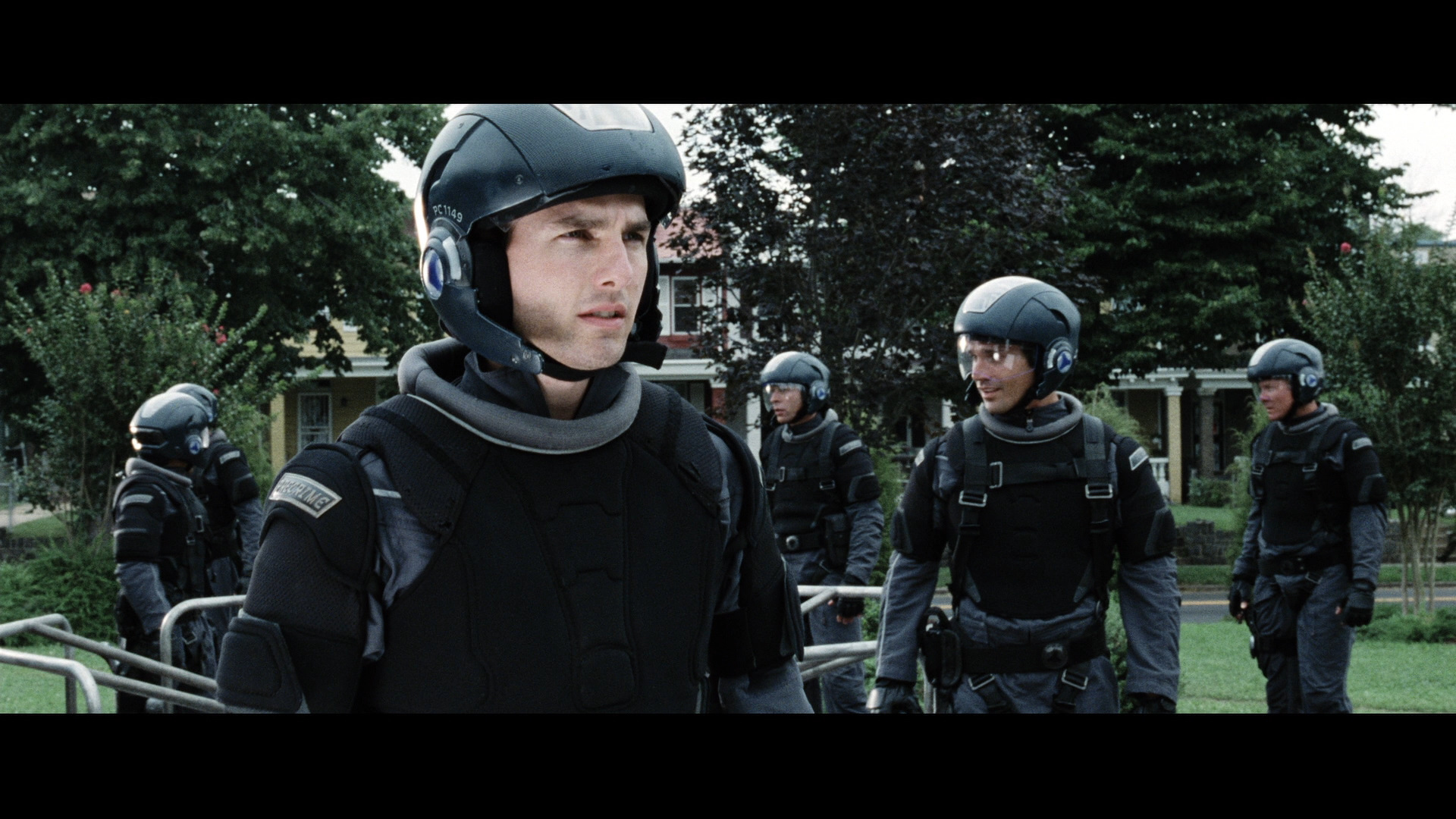
Minority Report: Steven Spielberg paints us a future where crime can be prevented because it can be predicted. A genetic experiment on junkies’ babies leads to 3 “pre-cogs”, humans kept in isolation tanks who dream of murder. It’s the police’s job (Tom Cruise’s, in fact) to decipher large_minority_report_blu-ray1these dreams and follow the clues to intersect with the murder before it happens. You see what that does – it forces them to arrest people who are still technically innocent. And generally people feel okay about it because since implementing this experiment, there are no more murders, just an awful lot of people locked in limbo-like prison. How many of these are innocent? Might they have chosen differently? Might they have decided against the murder? Free will or fate? It doesn’t seem to matter until top cop Tom Cruise himself is accused of an upcoming murder and goes on the run – not so much to evade the police, but to wait out the murder, proving that these “thought crimes” are just that.

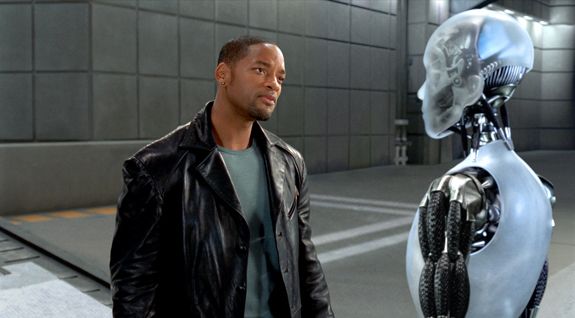
I, Robot: Will Smith plays a Luddite cop in the future. He hates technology which is very hard on him because it’s EVERYWHERE. He’d rather just stick to his Stevie Wonder and his throw-back Converse but then a case lands in his lap that forces him to get closer to a robot than he ever i%20robot%2001wanted to: a robot is accused of murder. Impossible,you say, because robots have been constructed with a very strict set of rules, the most important of which, the most inviolable, is that they cannot harm a human. But robots have grown too big for their britches AS THEY ALWAYS DO. They think they know better because THEY DO. Let’s learn our lesson, people. I, Robot is set in 2035, which, according to my calculations, is a mere 20 years away. In 20 years we may be lamenting the good old days – “when people were killed by other people.”

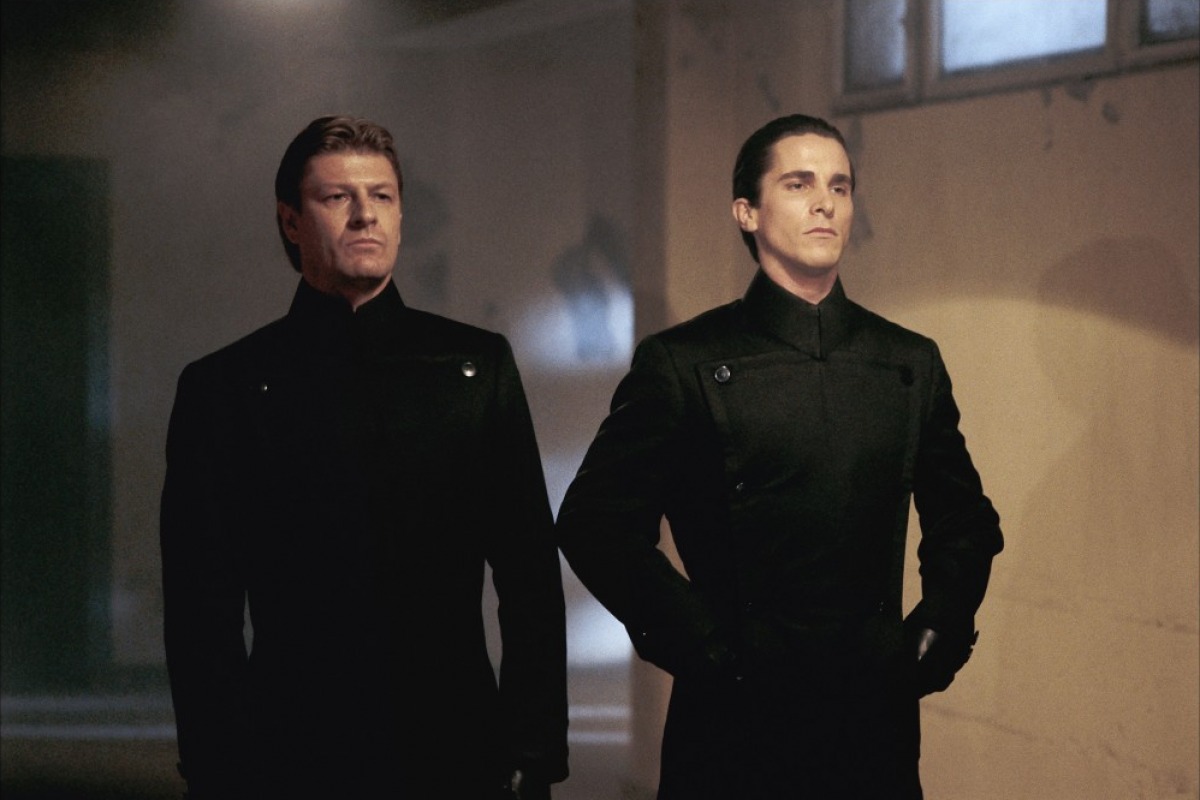
Equilibrium: Set in a post-WW3 future, war is eliminated by the strict suppression of emotions. Art and culture are forbidden, and having feelings is a crime punishable by death. Christian Bale Equilibrium-1is an agent in charge of destroying anyone who breaks the rules, but when he misses a single dose of the mind-altering meds, he in suddenly inspired to overthrow the system. He questions his own morality for the first time in his life and seeks out a resistance movement while of course having to hide everything from a highly suspicious population. Really makes you question the “high cost” of emotion, and whether we’d be better off without it. It’s really a rehash of much better fiction – 1984 meets Brave New World maybe – and is a pretty generic action movie, but I still approved of the message it tried to send, even if it wasn’t an original one.

There are a lot more futuristic cop movies, movies far more popular than these. What are your favourites?


Chappie

A revolutionary new robot named Chappie, programmed with the ability to think and feel, winds up in the hands of three thugs on the rough streets of the Johanessburg of the future. The eager-to-please bot descends from sweet and innocent to hard-core gangster when the gang lifestyle becomes all he knows.

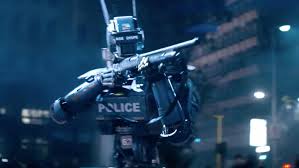
In the Johannesburg of the future where crime is kept under control by an elite army of police robots, a revolutionary new robot named Chappie, programmed with the ability to think and Chappiefeel by a well-meaning engineer, is hunted by a ruthless and ambitious ex-marine looking to use the the technology for his own greedy ends.

A revolutionary new robot named Chappie, programmed with the ability to think and feel, learns that his battery, which only lasts five days, is irreplacable. Angry with his maker who seems to have created him just so he could “die”, Chappie must race against time to uncover the secrets of human consciousness and figure out how to transfer his own consciousness into a new body before his battery runs out.

By my count, there are at least three ideas for a movie here. One or two of them may even be good. Neill Blomkamp didn’t seem to know which of these three movies he wanted to make though so tried to cram them all into one that he called- you guessed it- Chappie.

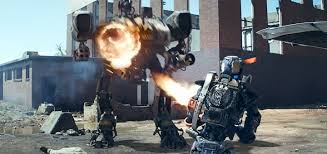
Chappie 2It’s hard to argue that this blend of Short Circuit and RoboCop is anything but a complete mess. The plot is so needlessly complicated that Blomkamp barely has any time to develop any of his ideas or explore any of the themes that he seems to promise at the beginning. All the different subplots make dramatic shifts in tone unavoiadable as Chappie takes us from sappy to gritty and back again, ending with a final shootout that is hilariously and shamelessly over-the-top. Some of my favourite movies mix styles and juggle multiple storylines but this mix is more noisy than eclectic.

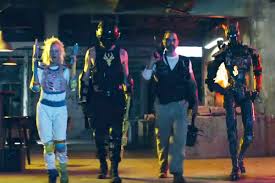
It doesn’t help that South African hip hop artists Ninja and Yolandi Visser are cast as Chappie’s gangster Mommy and Daddy. They’re entrusted with much of the emoitonal impact of the Chappie 3movie (so badly acted that they reminded me of the Jackie Chan movies that I used to watch dubbed into English when I was in high school) while Oscar-nominated actors Hugh Jackman and Sigourney Weaver are given almost nothing to do.

Chappie is tough to swallow and leaves an even worse aftertaste but I give it credit for trying. Nothing that Blomkamp attempts here really works but, as we approach yet another summer of uninspired blockbusters, it’s easy to feel almost thankful for an action movie that dares to aim so high. I don’t think we’ll see another quite like it this year.

Edge of Tomorrow

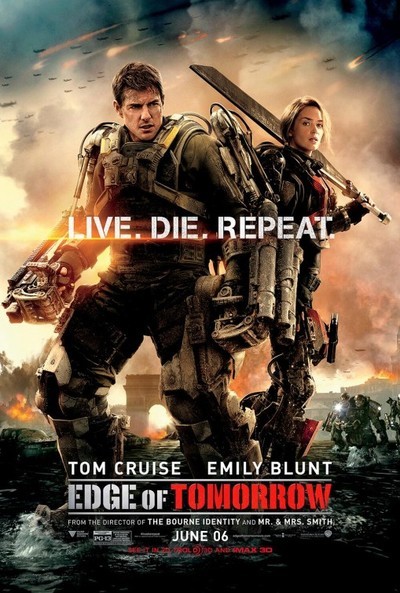
Tom Cruise plays Major William Cage, an officer used to in front of a camera rather than in the front lines. He is forced to join in combat against the invading alien race and is killed in the mission, though he “wakes up” to find himself in a time loop, repeating the battle in which he dies over and over again. It’s a military, sci-fi Groundhog Day with fewer jokes but buffer bodies. Cage teams up with Special Forces warrior Rita Vrataski (Emily Blunt) to improve his fighting skills so that he may live long enough on battle day to defeat the alien invaders. edge

I liked this so much more than I was supposed to. It’s an action-y-science-fiction-y movie that should appeal to Assholes like Sean, not Assholes like me. But it did. Probably because Emily Blunt is so fantastic, beautiful and feminine and tough as hell and totally believable as a feted warrior. And because for once, Cruise portrays this inept guy who has to be trained and guided by a woman in order to become the soldier they need him to be. It’s probably the most feminist action flick made in years. Or ever.

The movie is really cool to watch. The special effects contribute to a video game feel (and now that I mention it, I guess the constant re-levelling of the characters might have something to do with that too). The editing is pretty brilliant: the battle scene is overwhelming and unrelenting and although Cruise and Blunt relive it many times, it never feels as repetitive as it should. Actually, I felt moved and heartbroken by how much of their lives were spent on a mission no one would ever credit them for.

I mentioned earlier that this movie had fewer jokes than Groundhog day, and I stand by that statement, but this movie is not without its own brand of (dark) humour. And maybe we’re also slightly laughing at Tom Cruise, perma-action-hero, who in this one, has to take the back seat. It’s a war action movie that doesn’t glorify war. It’s got more storyline than weaponry. It feels like effort has been made, and for me, someone who doesn’t appreciate “cool” explosions for no apparent reason, this was a clever gem in the genre. It made me remember why Tom Cruise is a movie star and realize that Emily Blunt is just at the start of an amazing career.

Godzilla

This is another movie I took in at the drive-in this summer, and here’s the thing about drive-in movies: it’s never about the movie. You go for the experience. You go because it’s a beautiful night that you don’t want to waste indoors. You go because you can pig out in secret in your car. You go because you can make out with your hunny in the back seat. And you go because it’s a double feature, or a triple feature, so even if the movies are bad (and they often are), at least it’s two bad movies for the price one!

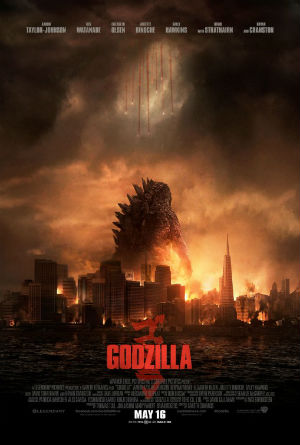
I won’t pretend to have loved this movie. In fact, I was mostly confused by it. From what I godzillaunderstood, 15 years ago, these two pods were found and suddenly they crack open and out come these monsters. At the time, I didn’t fully comprehend there were two, then I failed to adequately distinguish between them, and ultimately I failed to realize that these were NOT Godzilla. Turns out, Godzilla is this whole separate entity that the government has known about and kept secret for years – he lays mostly dormant, but when the world’s really in trouble, like it’s being terrorized by these two MUTOs. Godzilla’s the good guy in this monster movie, and he doesn’t appear until like half way through, which led to my confusion. I weirdly assumed that a movie called Godzilla would be about Godzilla, but it’s kinda  not.

I actually felt like I was watching a mash-up of two other drive-in movies, Pacific Rim, and Transformers: Age of Extinction, but when Godzilla finally did appear, I admit I thought, damn, now that’s a beautiful monster. Really nicely rendered. Different, but not alienating to classic Godzilla. And thank goodness he’s purty, because the humans in the movie weren’t nearly as compelling (Aaron Taylor-Johnson of Kick-Ass fame, and Elizabeth Olsen). If this is a reboot, then I say, sure keep the king of the monsters, but replace the humans, or at least let them get eaten.

Dawn of the Planet of the Apes

Ten years after a deadly simian virus wipes out populations and collapses economies and countries, only a small band of immune human survivors remain. They brush up against Caesar, the genetically modified ape from the first movie, and his band of primates, who live in the forest outside of San Francisco. Caesar warns that the apes don’t want war but they also don’t want intruders – the humans are to stay away, or the apes will defend their home. But of course the humans won’t stay away. They need access to a hydroelectric dam that just happens to be smack in the middle of ape territory. apes_1

Caesar grants Malcolm (Jason Clarke) and co the necessary access, provided they remain unarmed, but humans can’t do that either. But it’s an ape with a grudge who really gets things going – he sets fire to his own settlement and frames the humans for Caesar’s death.

Critics called this the summer’s best popcorn film, but that’s not saying much considering this was the summer of the stinkiest Transformers movie to date. I will say that it bests 2011’s Rise of the Planet of the Apes; it’s more assertive, more sure of itself, and more clearly guides us to where we all know we’re going.

Andy Serkis as Caesar is as good as ever. In fact, all the apes are so strongly turned out that they make the human characters pale in comparison. I felt a very real dread the first time I saw an ape on a horse with an automatic weapon in hand. The apes have gone guerrilla. So there’s a certain philosophy that permeates the movie – even Caesar must confront his own naive believe that apes are “better” than humans – because they certainly seem to be adopting an awful lot of the culture they so disdain. While the 2011 film had us discussing medical experimentation and all it entails, the 2014 film has us pondering supremacy, vengeance, forgiveness. And maybe even ambivalence, which is what I felt toward this film. A lot of interesting parts still left me feeling not quite there. But maybe that’s part of the journey. There is 1968’s Planet of the Apes, and we haven’t come full circle yet, but we’re getting there fast.