Tag Archives: stop motion animation

My Life As A Zucchini

Zucchini goes to live in an orphanage after his alcoholic mother dies. The orphanage is not a bad place. This is not a bad-orphanage movie. It’s about the broken children who live inside. The kids are there for many reasons (deportation, mental health, abuse, poverty, etc); some can dream of one day returning home, while others know they never will. For the most part the children band together and support one another as they cope with loss.
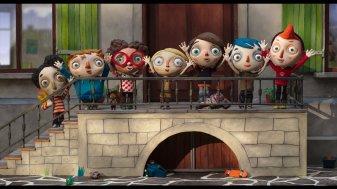
MV5BMGU1ZDI5Y2ItOTY2OS00ZjBiLThkYzEtZDIxOTA4NmVmMjE3XkEyXkFqcGdeQXVyMjUyOTI5MQ@@._V1_SX1777_CR0,0,1777,999_AL_My Life As A Zucchini is stop-motion animated in a very compelling way. It’s a simple story with colourful characters and a strange title but make no mistake, there’s little silliness awaiting you. It’s a pretty bleak story.

I watched the version dubbed in English, which features voice work by Nick Offerman, Will Forte, Ellen Page, and Amy Sedaris. But even with all this wonderful adult interference, director Claude Barras keeps the story firmly within Zucchini’s corner. The story is told through the eyes of children, almost without taint from the adult world. It is heartbreaking but also tender and compassionate. By focusing on the resilience of children and the difference even one caring person can make, hope shines its rays even on this dark little tale.

I enjoyed this very much. It’s not as heavy on the heart as it sounds, and Barras manages to wrap things up in under 70 minutes. I’m always a fan of the loving work that goes into stop-motion and this one is no exception – perhaps it is exceptional. The expressive characters and honest story give My Life As A Zucchini a sensitivity, like a spoonful of sugar to help the medicine go down. I’m very taken by this and am heartened to see animation tackling such complex characters so deftly. Definitely worth a watch, tissues at the ready.
Kubo And The Two Strings

A little dark, and a little melancholy for kids, but for me, near perfection.

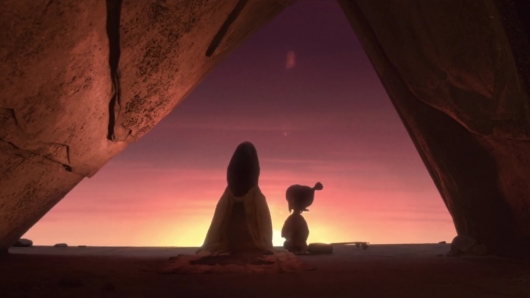
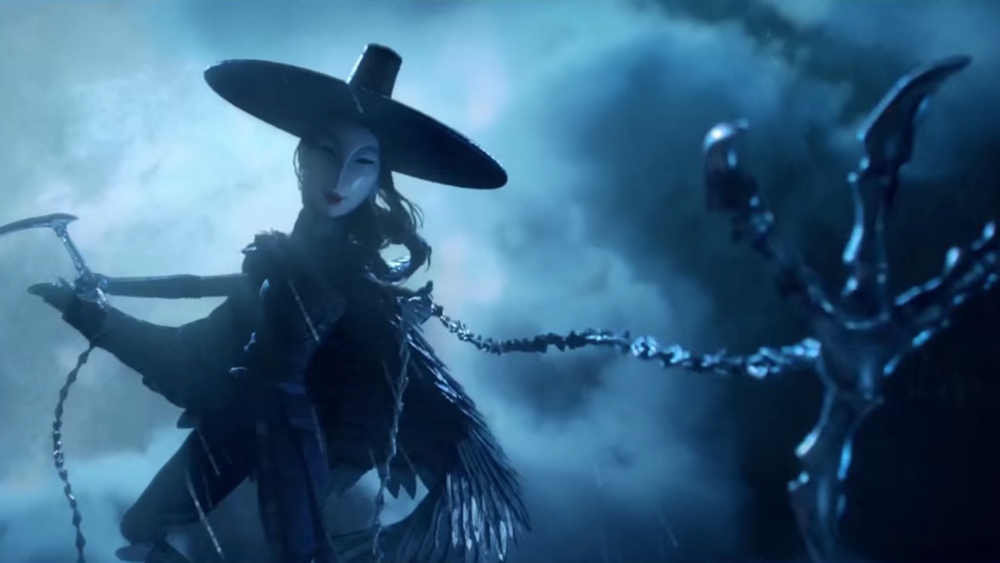
Kubo is a little boy with a magical, ancient Japanese banjo. Well, technically the banjo wasn’t ancient at the time – he lives in ancient Japan. And the banjo isn’t actually a banjo, it’s a shamisen. When he plays his magical shamisen, his origami comes to life and helps him tell awesome stories about warriors and samurai. He’s busking, essentially, and the captivated crowd rewards him with a few coins – a good thing because he provides for his sick mother, who lives outside the village in a cave.  When she’s not in a trance, she’s adamant that Kubo always return before sundown. It was surprisingly sound advice from the mentally ill because THE ONE TIME he doesn’t, hell breaks loose. Ancient Japanese hell.

kubo-and-the-two-strings-530x298Turns out, Kubo’s grandfather is some sort of Moon God. Grandfather has already “stolen” one of Kubo’s eyes and wants to get his hands on the other – in blindness, his grandson can join him in immortality, ruling the sky. He sends his 2 creepy daughters to do the dirty work while his 3rd daughter, Kubo’s mom, struggles to protect him with what little magic she has left.

The movie is a grand adventure with more beauty in any random 30 seconds than The Secret Life of Pets has in its entire running time. As usual with Laika productions (they brought you Coraline), there are darker feelings at play, a sometimes ominous and foreboding tone unusual in a children’s movie, and yet the kids in the audience seemed to tolerate it better than they did Pete’s Dragon. It’s a glorious act of story-telling that feels like something genuinely passed down for generations. Every time Kubo picks up his shamisen, be prepared for some of the loveliest music you’ll hear at the movies. It sweeps you up into the magic of his origami, and the whole thing feels alive and vibrant, steeped in a culture filled with divine tradition.

Kubo And The Two Strings is surprisingly well-balanced tonally, able to incorporate gags meant Kubo-and-the-Two-Strings-just for kids between bouts of horror, humour, and yes, tragedy. It’s quite brave, when you think of it. Suicide Squad pulled back on the Joker’s villainy, and Ben-Hur rewrote some of its savagery. This, a meticulously animated piece of art, has the backbone to trust children with some rather heavy themes. And it does it while also being the most visually arresting thing I’ve seen at the movies this year. It’s a spectacle, and a technical triumph. Having no wordly idea how they pulled some scenes off just adds to the magic. Laika is no stranger to Oscar nominations for animation, and is sure to earn another, but this movie demolishes even their own high bar. Laika doesn’t have the cachet of Pixar so politically, beating Finding Dory will be difficult. But the proof is on the big screen: it is undoubtedly the better film.

The Little Prince

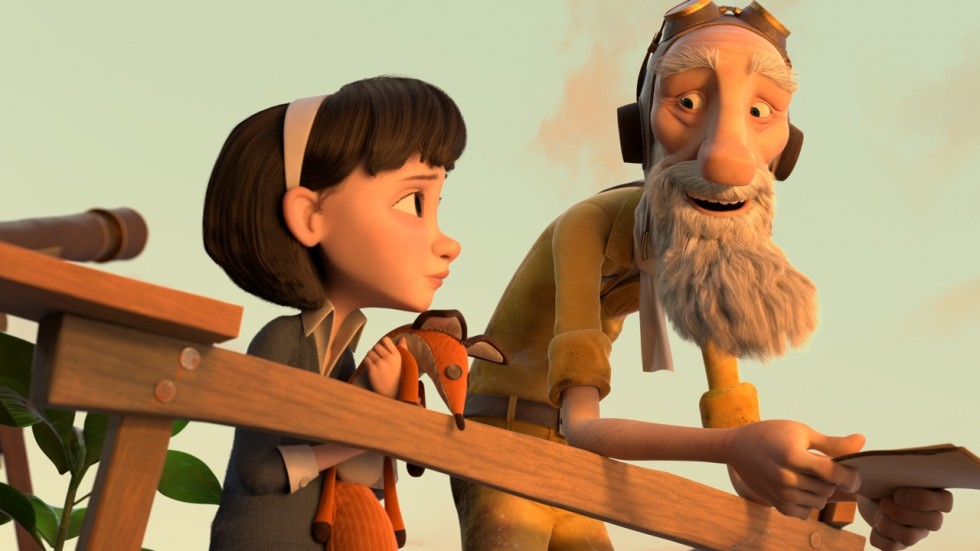
A little girl has a bright future ahead of her. How do I know? She and her mother (Rachel McAdams) have her whole life planned out. A life plan so intense she’s more like her mother’s Senior VP than her daughter. Her mother’s best compliment: “You are going to make a wonderful grownup.”

But the crazy old man (Jeff Bridges) next door draws her out of her mature little shell with his fanciful inventions and his beautiful story-telling. His stories and drawings come to life in animation within the animation: the story of The Little Prince.

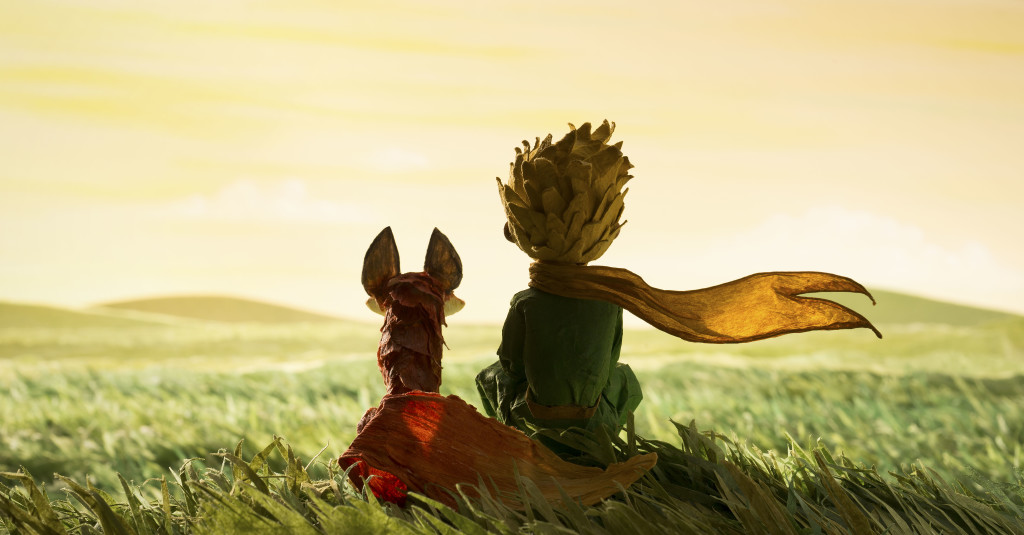
Growing up it was always Le Petit Prince to me, but even en anglais, the timeless story warms the heart. The main story, starring the little girl, and the crazy man’s story, starring the little prince, are distinguished with different styles of animation. The little girl is done in familiar CG style; the little prince is stop-motion, done not in clay but in paper. Both are lovely, 210b0b20-a7ab-11e5-88e2-828a3e695a05_1280x720but I confess a fondness for the nostalgia and simple loveliness of the latter.

The voice cast is incredible: Jeff Bridges, Paul Rudd, Albert Brooks, Marion Cotillard, Benicio Del Toro, and more. It’s a real testament to just how cherished the book is, around the world. The Little Prince is a sweet children’s book but it can be read and enjoyed by adults, with many layers of themes to interpret. The same goes for the movie, faithfully and lovingly adapted from its source.

The little girl, too grown up for her own good, rediscovers childhood lp-garden-rgb-5kthrough friendship with the batty old guy next door. But anyone who knows the story knows that along with sweetness, there is also sorrow. The first half of the movie is all poetry and imagination. The second half falters a bit when it gets further away from Saint-Exupéry’s ideas and ideals. The movie is a little less fanciful than the novella, a little more down to earth. But The Little Prince has always been the stuff of dreams, too good, too ethereal for Earth. It’s still lovely though. It’s still one of the loveliest things I’ve seen all summer.


Frankenweenie

frank3There once was a dog named Sparky. He was smart, athletic, and a talented film star, at least in his best pal Victor’s homemade creations. Victor is a little boy with no friends other than his beloved dog Sparky, so when Sparky meets his untimely demise, the waterworks commence. And Victor’s not too happy about it either.

We already know that I should never watch movies the feature dead dogs, but did you know that policy should even apply to movies where the dead dog is reanimated?

Yup, still pulls on the old heartstrings. Sparky, meanwhile, has all kinds of strings holding him together, but no amount of stitches prevent his ears and tail from occasionally falling off, which seems rather macabre for a children’s movie.

Frankenweenie leaps from the mind of mad genius Tim Burton – and it’s based on a short film

FRANKENWEENIE - (Pictured) Tim Burton holding Sparky. ©2012 Disney Enterprises, Inc. All Rights Reserved. Photo by: Leah Gallo

FRANKENWEENIE – (Pictured) Tim Burton holding Sparky. ©2012 Disney Enterprises, Inc. All Rights Reserved. Photo by: Leah Gallo

he made back in the 80s. Victor, like everyone else in his world, is a sort of monster, but in his heart he’s just a boy inspired by his science teacher to put the screws to the laws of nature. As soon as he successfully jolts the carcass of his deceased friend to mostly-positive, mostly-alive results, his classmates are blackmailing to do them same for theirs. And not all pets are created equal. If the story sounds a little familiar, it should. It’s a tongue-in cheek homage to the classic 1931 film Frankenstein, based on Mary Shelley’s book of the same name.

This is a beautiful stop-motion feature that used over 200 separate puppets, with roughly 18 different versions of Victor alone. The puppets have human hair and 40–45 joints. Sparky was constructed as rather “dog-sized” and is comprised of about 300 parts, some of them made by watch makers, to bring his mechanical skeleton to life.

It was the first black-and-white feature film and the first stop-motion film to be released in IMAX 3D, and went on to be nominated for an Academy Award for best animated film (it lost to Brave, frank1though it should have lost to Wreck-It-Ralph). It’s got loads of great voice talent from Tim Burton favourites like Winona Ryder (Edward Scissorhands), Catherine O’Hara (Beetlejuice), Martin Short (Mars Attacks!), and Martin Landau (Ed Wood).

For those of us who like our Halloween fun with a little less blood and a little more guts, I’d say this one is a definite holiday staple. What’s your favourite  Halloween thing to watch? Do you have a pet you wish you could bring back? Check out the comments for my own Frankenweenie!

Genuine Kate Spade cell phone cover s6 edge.

Super cheap  gold glitter galaxy s6 edge phone case.

Shiny mirror golden samsung galaxy s6 edge case.

Capital Pop Up Cinema Presents…

We are very fortunate to live in the beautiful capital city of our country, and to have constant opportunity to do fun and exciting things. The good folks at Capital Pop Up Cinema have brought us a whole season of random, outdoor movie screenings, but this summer being packed full of travel and adventure, we only caught the last couple of offerings.

Last week, in the heart of the bustling Byward Market, hundreds of people brought lawn chairs, cozy blankets and hot chocolate to brave the cool temps for a viewing of The Nightmare Before Christmas. There were more than a few Jack Skellingtons in attendance, and the audience was in a festive and excitable mood as the sun set and the Capital Pop Up’s inflatable screen came to life. The market is the heart of our fair city, choc-full of restaurants, retailers, art galleries, night clubs, and stands selling beaver tails. Not to mention the extra-wide, pedestrian-friendly streets to accomodate the fabulous, year-round outdoor farmer’s markets that sell seasonal produce, everything from cranberries and parsnips to eggs and goat’s milk ice cream – not forgetting our world-maple syrup, of course! So imagine, if you will, this vivacious part of town, the constant stream of happy and satiated people, the occasional tour bus, the frenquent brides posing for photos, the sidewalk chalk artists, the parents pushing ginormous strollers, vendors with their gerbera daisies, and in the middle of it all, an impromptu outdoor cinema! I thought it might be distracting but actually it was good fun, and there were plenty of passerby (and maybe a homeless guy or two) who stopped to appreciate the movie and the intoxicating scent of popcorn in the air.

The Nightmare Before Christmas: a visually arresting work of stop-motion animation that blew everyone’s socks off in 1993, and legions of fans still know every musical number by heart (I can attest to that, having unintentionally sat beside some die-hards). Henry Selick directed but the film is popularly known to be Tim Burton’s, who wrote and produced the film but was simply too busy to direct. The film is about Jack Skellington, a denizen of Halloweentown who accidentally follows a portal to Christmastown, and decides that others back home should be able to celebrate this new and wonderful holiday as well – to darkly comic results. Danny Elfman, Catherine O’Hara, and PeeWee Herman all contribute voice work.

The week before, Capital Pop Up Cinema screened The Cabinet of Dr. Caligari, a 1920 German silent horror film that was brought to life with live musicians. It played to a smaller but enthusiastic crowd in the parking lot of Das Lokal, a kitchen and bar at 190 Dalhousie where chef Robert Fuchs serves up delicious European fare with a German twist. The charcuterie and das schnitzel are particularly recommended, and the cocktailed called Zugspitze (vodka, elderflower liqueur, cranberry juice) is an inspired choice from the bar.

The Cabinet of Dr. Caligari: directed by Robert Wiene and written by Hans Janotwitz and Carl Mayer, it’s considered to be not only the quintessential work of German expressionist film, but also among the first true horror films. It tells the tale of an insane hypnotist (wide-eyed Werner Krauss) who uses a sleepwalker (Conrad Viedt) to commit murder. The screen writers, both pacificts, wrote the story in the wake of WW1, showing a people’s need for brutal and irrational authority; Dr. Caligari represents the German war government, and Cesare is symbolic of the common man conditioned, like soldiers, to kill. Some say the movie reflects Germany’s particular need of a tyrant, but that seems facile in the shadow of Hitler. The film’s visual style is graphic and jarring, with deliberate distortion to give the impression of insanity and instability. Honestly, the art work is to die for and you could honestly treat this film as a trip to a museum and that alone will ensure your rapt entertainment. This film has a huge legacy that I am ill-equipped to discuss at length, but lucky for me I’ve come across a really great post by fellow blogger David at Movie Morlocks that will do the dirty work for me.


Shaun the Sheep

If you like stop-motion animation, Shaun the Sheep is worth checking out.  If you happen to like stop-motion animation and fart jokes, well, this movie’s going to make you feel like a pig in mud.  And if you don’t like stop-motion animation, ask yourself why, and see if Shaun the Sheep makes you squeal with delight.   Because this movie is simply beautiful to watch.

Having tried to make a stop-motion re-enactment of the war of 1812 for history class one year, using GI Joes, I have an appreciation for how difficult it is to pull off something passable.  Getting to a flawless finished product like Shaun the Sheep must be insanely difficult.  The effort is all on the screen and it’s marvelous.  This clearly was a labour of love for all involved at Aardman Animations.

As for the story, it’s strictly for kids, but the target audience is going to be as happy as a dog with two tails (as they were at our packed Saturday morning screening).  The interesting thing is there are no actual words being used by any of these characters, it’s all just noise.  Minions did a similar thing and did it well, and I’d say Shaun the Sheep one ups Minions because not even the humans speak English (which is ironic for a movie coming out of the UK) yet the story still seemed clear and easy to follow even for the younger audience members.
There are lots of laughs for kids here but fewer for adults.  A few gags are universal (counting sheep in particular) but it seemed that the writers were just throwing the occasional bone to the expected parental crowd rather than trying to make this movie appeal directly to all ages.  As Jay has mentioned in the past, that across-the-board accessibility expectation for animation is a product of Pixar’s excellence that didn’t traditionally exist.  I won’t hold the lack of adult focus against Shaun the Sheep, because it’s a throwback by nature and as a kids movie it hits the bullseye.

I give Shaun the Sheep nine farm animal references out of ten.

Mary and Max

I hardly have words for how much this movie charmed and delighted me.

It premiered on the opening night of the Sundance festival in 2009, the very first animated film to do so, but it’s taken me all this time to learn of it and watch it.

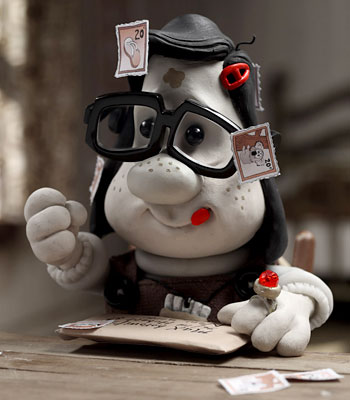
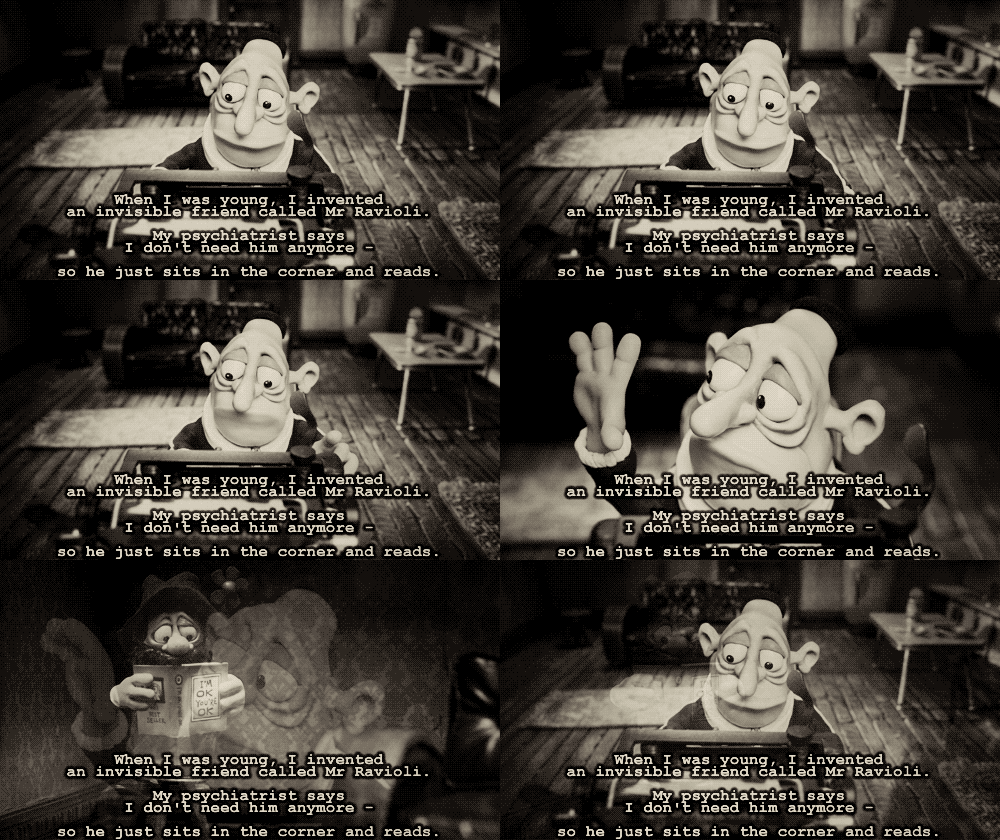
mary-and-max_154214It’s beautifully animated in very nearly black and white stop-motion, rich in details. Truly, I could have watched this movie in slow motion just to appreciate all of the work that went into each and every piece. You can see the love and attention that went into this; artists laboured for over a year, building 133 separate sets, 212 puppets, and 475 miniature props, including a tiny but fully-functional Underwood typewriter that took 9 weeks to design and build.

Mary (Toni Colette) and Max (Philip Seymour Hoffman) are unlikely pen pals – one, a young and ostracized young girl from Australia who believes babies come from beer steins, and the other, a morbidly obese New Yorker who is autistic in a time before that diagnosis is really made or understood. They are each in desperate need of a friend, and somehow manage to find one in each other.

This movie very deftly and sensitively tackles all kinds of issues, from Max’s fragile mental maxhealth, to atheism, childhood neglect, even to Mary’s war vet neighbour who is agoraphobic (“He’s scared of going outside which is a disease called homophobia.”)

The film is tragic at times, but has this pervasive sweetness to it that makes everything bearable. The story is often told via letters exchanged between the two, which some may find a little quiet, but I’m a sucker for animated films made for adults, and this one I’m all over. The characters have this bold honesty that I couldn’t get enough of (In her first letter, Mary encloses a drawing of herself  with the caveat “I can’t draw ears properly but I’m great at teeth”; in one of his responses, Max asks, in typical random fashion, “Have you ever been a communist? Have you ever been attacked by a crow or a similar large bird?”) Honestly, I watched this movie like it was my favourite book, or the greatest dessert – savouring it, delighting in it, racing toward the culmination but dreading the end.

Lots of the visuals are their own little jokes, but blink and you’ll miss them (keep your eyes peeled for clever epitaphs on the graves). One of my personal favourites was that some of the mary and maxstamps used by Mary featured Dame Edna, whom I love, have loved since childhood, while it was Barry Humphries himself who narrates the film. So delicious.

Director Adam Elliot is also behind the Oscar-winning short Harvie Krumpet – worth a viewing all on its own, but also a good barometer for the tone of Mary and Max. It never got a theatrical release in North America but it’s available on Netflix right this minute, and if you check it out now, I guarantee it’s not a minute too soon.

The Boxtrolls

The Boxtrolls really seizes the opportunity to create a universe unlike any we’ve either seen. It’s a bit more macabre than we’re used to in a children’s movie, dark and gritty, but immersive and satisfying in its stop-motion animation.boxtrolls

In the town of Cheesebridge, an evil exterminator vows to kill off every boxtroll, spreading lies and ugly myths about them to win public approval (“Hide your delicious babies!”). The boxtrolls live underground, basically in hiding, clothed (or disguised?) in cardboard boxes, where they use pilfered materials to build all sorts of magical things. They only come out at night to snatch unused, unwanted things, but to do so is to put themselves in peril of being caught. Their number dwindles steadily until a young boxtroll named Eggs discovers you can go out into the light, and he must try to rally the timid boxtrolls into standing up for themselves.

The boxtrolls don’t speak, but that doesn’t stop them from each having a unique character (not unlike the Minions, come to think of it), or from communicating what they feel. The humans in the story are a sorry lot – sure Mr. Snatcher, the dastardly exterminator, is evil, but the others aren’t much better.  The troll “monsters” are eminently easier to root for in their sweetness and earnestness. There is also real sorrow here, and stabs at profundity. One human wonders if the boxtrolls “understand the duality of good and evil” while murking up the concept himself.

We have come to expect big things from the animators at Laika (think Coraline) and this film looks just as cool, and even more textured. And I love seeing an animated film where the little girl is not sexed up, and isn’t even crazy skinny. She has little girl proportions! Disney, you’re totally busted: turns out it IS possible to make a girl who looks like a girl. And if you stick around after the credits, you’re in for a treat: there’s a bit of existential animation that’s enlightening and entertaining.

A little slow to start, it’s still a solid movie that will capture children, especially those inclined to gross-out jokes (so, pretty much all). But this was a competitive year in terms of animation, which is great. Everyone’s bringing their A game. It’s just that movies like Big Hero 6 and The Lego Movie earned an A+.

ParaNorman

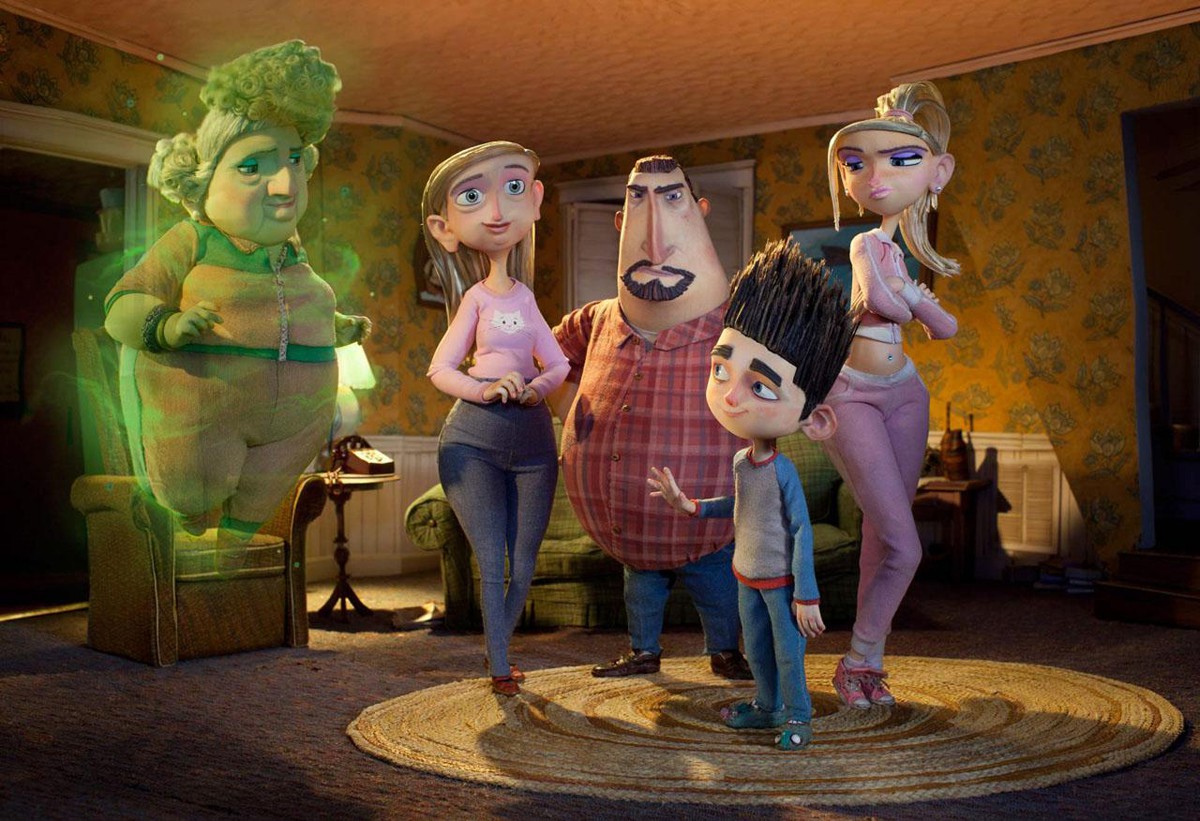
Norman is a seemingly normal 11-year-old boy living in small town ParaNorman_1Massachusetts, isolated from his parents and peers because of one small detail: he sees and talks to the dead. No one believes him of course, except for a deranged uncle (John Goodman) who saddles him with a hefty spiritual responsibility to appease a witch who’s been haunting the town for decades.

Prevented by doing so by the same bullies who torment him by day, the witch raises zombies from the dead to chase the townspeople, who fight back viciously.

This movie turns out to be a parable about fearing what is different, and about not judging others. This lesson has to be harshly delivered, because nothing ever comes easily in the movies, and is all the more powerful when the message is delivered from the kids to the adults. But in its heart, it’s still a ghost story, a horror suitable for children, and it benefits a lot from its New Englankidd roots.

ParaNorman is stop-motion from the same animation team who brought us Coraline, capitalizing on the pioneering techniques from that film, and reaching new heights with full-colour 3D printing. It also happens to be the first mainstream animated film to feature a gay character, and was the first-ever PG-rated movie nominated for a GLAAD Media Award.

I have an enduring love for stop-motion because the building of real puppets and sets, and using actual cameras to film them gives the modeling_mitchanimation a detailed glossiness that I never get enough of. In one scene, I noticed that the sunlight was almost making Norman’s ears translucent, they glowed with the light behind them, and I was struck by how real it looked.

I also love smart scripts, and this one’s endlessly quotable. It’s a family movie, but you don’t have to be a kid, or have kids, to enjoy it. The visual jokes and wit add another layer of appreciation onto what’s already a solid movie with not a small amount of magic to it.

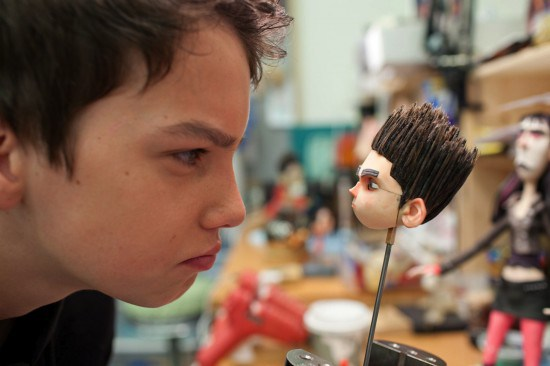
The filming, however, can be quite technical. First the animators record videos of themselves giving the performances, in order to puppetuse as reference. The directors give them notes on these tapes. The animators then animate a “rehearsal”, which is a very rough version of the scene shot with only half the frames. The directors then look at the rehearsal and give notes before the scene is shot for real. Animators usually turn in 5-8 seconds per week, depending on how many characters are in their scene. That’s gruelling work! To create the ghost effects, they did twice the work, filming each frame once with the ghost puppet and once without, layering them on top of each other to give it an ethereal look.

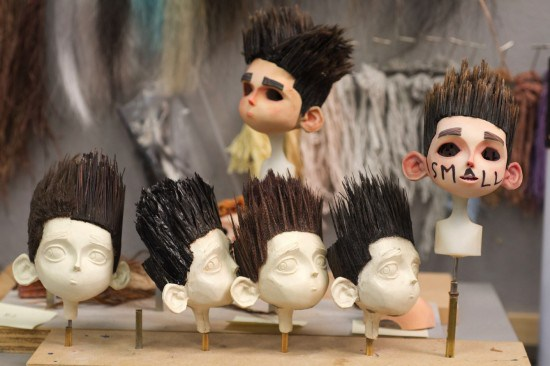
ParaNorman used 178 puppets in total, and over 31,000 individual face parts were printed for the production. Thanks to the face replacement technology created by the 3D Color Printer, Norman has over 8,800 faces with a range of individual pieces of brows and mouths allowing him to have approximately 1.5 million possible facial expressions. That’s already a huge leap over their work on Coraline, and the Laika studio has taken it even further with their more recent work, The Boxtrolls. Sean, Matt and I saw several of these sets and puppets when we visited Universal studparaheadsios this summer. I love seeing all the craftsmanship that goes into these movies!

I definitely like the spirit of ParaNorman. It has respect for its young audience – but I have the feeling it might also be a gateway drug of sorts to lots more horror down the road.


Corpse Bride

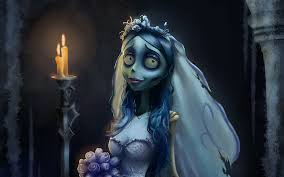
Victor (Johnny Depp) is the son of nouveau-riche fish merchants and Victoria (Emily Watson) is the daughter of aristocrats who are down corpseto their last dollar. Their upcoming marriage will give legitimacy to Victor’s parents while savings Victoria’s from the indignity of poverty. But Victor and Victoria have yet to meet – and neither are keen on marrying a stranger. All that changes when they finally do clap eyes on each other, instantly falling head over heels.

True love doesn’t make Victor any more facile with words, so when he fumbles his way through the rehearsal, he’s admonished to the woods to practise until perfect. Unfortuimagesnately, he unknowingly recites his vows to the corpse of a woman murdered on the night she was to elope, and Emily (Helena Bonham Carter) rises from the dead to claim him as her husband, and drag him down to the Land of the Dead.

Victor is mortified, as he should be – will he ever make it back up to the Land of the Living to reclaim the woman who holds his heart?

Tim Burton breathed his magic into this 19th century Russian folk tale, co-directing on the tails of Big Fish, and simultaneously with Charlie and the Chocolate Factory. He held the vision, and co-director Mike Johnson followed up with the crew, making sure the tone and emotion were realized.

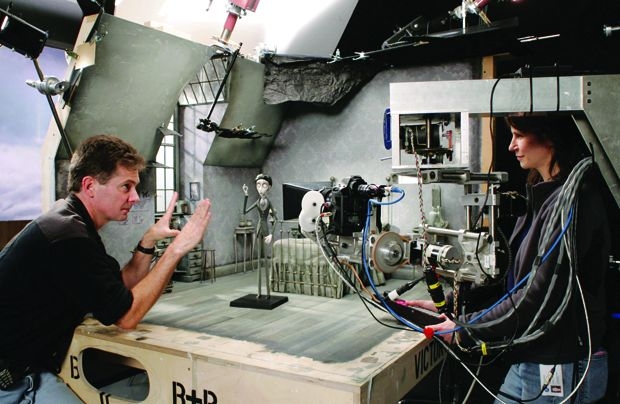
A beautiful example of stop-motion, the puppets themselves, built by Mackinnon and Saunders, were about 17 inches tall and 46532-stop-motion-ch5-1-fig0503animated on sets built three to four feet off the ground with trap doors allowing animators access to the sets’ surfaces to manipulate the puppets. Victor, Victoria and Emily were outfitted with heads the size of golf balls that contained special gearing to allow the animators to manipulate individual parts of the puppets’ faces.

Burton, on casting Johnny Depp in both movies he was working on at once: “It was weird because we were doing both at the same time. He was Willy Wonka by day and Victor by night so it might have been a little schizophrenic for him. But he’s great. It’s the first animated movie he’s done and he’s always into a challenge. We just treat it like fun and a creative proceEmily_upset_with_Victorss. Again, that’s the joy of working with him. He’s kind of up for anything. He just always adds something to it. The amazing thing is all the actors never worked [together]. They were never in a room together, so they were all doing their voices, except for Albert [Finney] and Joanna [Lumley] did a few scenes together, everybody else was separate. They were all kind of working in a vacuum, which was interesting. That’s the thing that I felt ended up so beautifully, that their performances really meshed together. So he was very canny, as they all were, about trying to find the right tone and making it work while not being in the same room with each other.”

Like the best of Burton, this is macabre yet whimsical, and the visuals here are still arresting today. It’s definitely worth digging out for Halloween, and for whenever.