
In early 1960s Chicago, newborn baby Paul Fronczak is taken from his mother’s hospital room and vanishes. Months later, a toddler with a black eye is abandoned in Newark, New Jersey. His foster parents call him Scott, and local police are astonished when no one comes forward to claim a missing child. Recalling the snatched baby in Chicago, they do the math and send little Scott to Chicago, where his parents reclaim him, restoring the name Paul, and immediately burying the disturbing truth of his disappearance. Paul doesn’t even discover that he was kidnapped until he’s 10, and his mother quickly shuts down any follow up questions.
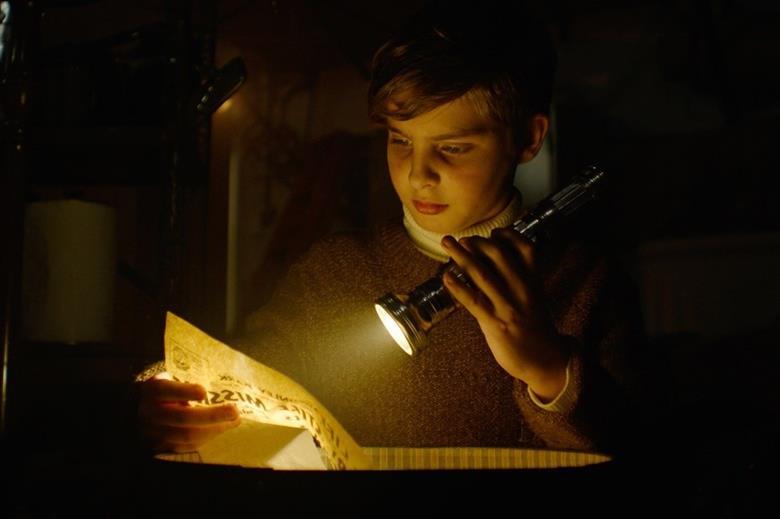
Middle aged now, and with a child of his own, Paul once again attempts to open up this mysterious chapter of his life. This time he’ll circumvent his parents and follow the trail of his birth and disappearance down some fascinating paths – fascinating to us, anyway; understandably it would be much more difficult to be questioning your own heritage and provenance and identity.
Director Ursula Macfarlane does an excellent job of setting up an improbable premise and then guiding us down its many fantastical twists and turns. It’s such a cliché to say something is stranger than fiction, but truly you couldn’t get away with such an incredible story if you were writing it from scratch.
Unfortunately, this documentary isn’t as tasty or as satisfying as you might think. It’s certainly packaged like a true-crime doc worth devouring, but it’s got several major ingredients going against it. First, the re-enactments are a little amateurish, and feel like they’re just adding bulk to a thin serving size. Second, if you’re already familiar with the story, there aren’t any big bombshells to make this worth your time. The few new details push the boundaries of relevance. Third, the story is frustratingly unresolved, the loose ends dangling tantalizingly in front of us just begging for closure. And finally, the biggest problem is with Paul himself. A former musician and actor, he clearly enjoys having an audience and several of his answers feel rehearsed and self-conscious. But at the same time, he’s also very guarded, rarely allowing us beyond his carefully bricked wall. His refusal or inability to display emotion makes it hard to connect with him, and we shouldn’t have to work so hard to feel empathy for a story like this. Paul is his own biggest obstacle, and while his story is remarkable, The Lost Sons isn’t anywhere near as engrossing as it should be.
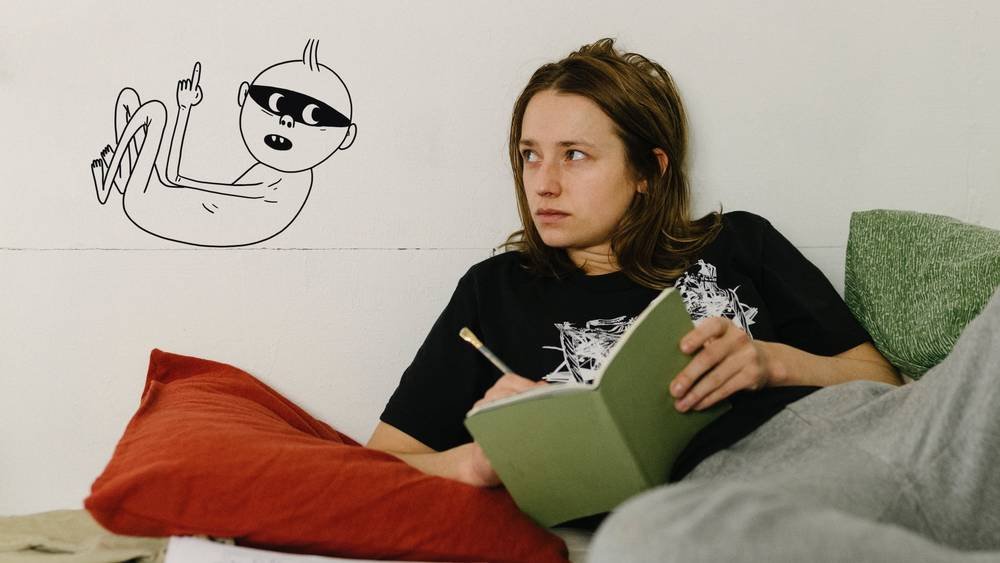
 Joe (Martin Starr) is a programmer who’s probably on the spectrum and self-soothes with obsessively quantifying his every thought and feeling. His wife, Emily (Mae Whitman), is a hotel concierge with theatrical ambitions. They are a loving couple; she supports him, literally lays atop him light a human weighted blanket, and he applauds her every written word.
 Youtube and make a scene wherever he landed. But one of his absolute greatest accomplishments is a musical that he wrote and produced himself. Biographical, and inspired by The Wizard of Oz, Straight Outta Oz is an all-original production that covers the yellow-brick road he followed from being gay in small-town Texas and the struggles and hurdles that led to fame and acceptance and being fabulously gay anywhere he goes, including but not limited to small-town Texas.


 accessorized his western wear with duct tape and lived in a tree house with no plumbing or electricity. He was mentally unstable, volatile, poor every damn day of his life, and then he got shot in the gut and died. Lucinda Williams called him “a genius and a beautiful loser.” Townes Van Zandt suggested “He’s only gone crazy once. Decided to stay.” The only hits he ever had were when his songs were recorded by other people, and even then lots were posthumous (Merle Haggard, Lyle Lovett, John Prine). And for some reason Ethan Hawke just really, really wanted to make a movie about the guy. So, using Blaze’s ex-lover Sybil Rosen’s book Living in the Woods in a Tree: Remembering Blaze as his guide, he did.
 means 300k of the festival’s attendees were vying for just 1000 seats in the venue. Some people may be discouraged by those odds, but not Sean! He gamely spent hours lined up outside (while I watched
  to find a Gremlin long after he’d already approved the scene, and he’ll continue to be surprised by Easter eggs (how fitting, for this weekend!), as will we. In subsequent viewings, you could easily play a drinking game with friends, or a Bingo game would be fun, just spotting all the cool things the brilliant art department and visual effects people slipped in there – it’s like the hoarders of movies with so many layers it’ll take forever before you reach the dead cat layer.
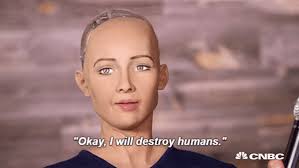 intelligence – and then haven’t we made ourselves redundant? And yet we can’t help ourselves.
 adversity from the boys were Mo’s only problem, she’s probably feel blessed. Instead, Monique excels at the sport and it becomes a source of pride and power for her. Even if doesn’t win her father back, it’s earning her some self-respect, which she needs and deserves. Monique is obviously supposed to be some problem child, but it’s impossible not to sympathize with her.
 ASSHOLES WATCHING MOVIES