Tag Archives: TIFF18

TIFF18: The Sisters Brothers

Murder and machismo, that’s what you’re in for when you sit down to watch The Sisters Brothers. Charlie and Eli Sisters are a couple of guns for hire. They care deeply about maintaining their bad reputations, which shouldn’t be a problem as long as they keep working for The Commodore, a fearsome and violent man.

Their next mission, should they choose to accept it: kill Herman Kermit Warm (Riz Ahmed), who’s got something The Commodore wants. A professional scout, John Morris (Jake Gyllenhaal), is already tracking him, and once located, the Sisters Brothers ride in for the dirty work.

Joaquin Phoenix and John C. Reilly play the brothers – Phoenix the younger brother, Charlie, but natural leader of the two. He’s more violent and more gung-ho. Reilly, on theMV5BNWE3MDAwMDgtZGY0MS00OGM3LTk4MzEtYjIxODZkMDc0NGY2XkEyXkFqcGdeQXVyNTc5OTMwOTQ@._V1_SY1000_CR0,0,1496,1000_AL_ other hand, gives Eli a slightly sweeter disposition. He dreams of retirement but remains in the game to keep watch over his brother, who’s a drunk always looking for trouble, and always, always finding it. Eli pines for a woman who was kind to him once. He laments the fate of his pitiable horse. He cuts his brother’s hair.

When the foursome finally meet up, Herman isn’t the villain everyone anticipated, and his commodity proves irresistible to anyone who hears about it. But if his body and potion aren’t offered up to The Commodore in a hurry, there’ll be hell to pay. With allegiances divided and a different ending standing tantalizingly before them, what will the Sisters Brothers choose, and how will the body count be affected? Because there WILL be a body count, make no mistake on that.

The Sisters Brothers is adapted from a book I absolutely adored and passed around to nearly everyone I know, by  Canadian author Patrick DeWitt. John C. Reilly also read it and loved it, and he optioned the book in 2011; he produces this film alongside his wife, Alison Dickey, an indie film producer he met on the set of Casualties of War when she was an assistant to Sean Penn – they’ve been married for over 25 years). They’ve tapped French director Jacques Audiard to helm this shoot-em-up western, and Audiard gives it a sensibility that’s weird and eccentric. Not your typical western, not your typical anything. It’s as funny as it is violent, and both characters and story break out of the genre frequently enough to surprise you.

The acting is great. Riz Ahmed especially gives Herman’s character a bit of a twist, colouring the movie with a slightly more optimistic or meditative vibe. But of course the film belongs to Reilly and he knows it. Though I wish we would have spent a little more time with Eli alone, away from his brother’s influence, deeper into his psyche (flashbacks, I suppose, would have been nice), there’s still something very special going on there, something half-sweet (Eli is still a bad man), half-innocent, half-introspective, half-other-worldly. These aren’t necessarily the kind of cowboys you’re used to but I enjoy the genre’s subversion, the clever hacks that elevate it to something unique and fun to watch. DeWitt’s novel is quite good and I urge you to read it. But unlike many adaptations, this film captures some of its surprising warmth. Despite the Sisters Brothers being contract killers, we find a fair bit of compassion for them as they unravel the traumas of their past and seek a path forward, perhaps not quite forged in enlightenment, but in understanding, and from a need to do and be better.

Charlie and Eli are a some of the most interesting characters to come out of the western genre. Charlie simmers with anger. Eli ooze regret. The brothers bicker like an old married couple but they have each other’s backs when needed – and if often is. But no matter how much sympathy we’re feeling for them, Audiard doesn’t shy away from the fact that the guns on their hips are used to commit murder, for money. Their morals are for sale to the highest bidder. It makes them complex, and eminently watchable.

 

TIFF18: Hotel Mumbai

On November 26, 2008, 10 members of a terrorist organization stormed Mumbai, targeting multiple busy, touristy places for maximum impact. They set off bombs and shot wildly into crowds. They entered the Taj Mahal Palace Hotel and kept guests there hostage for four days. Many died. Hotel Mumbai is the story of that hotel’s siege, and of the people trapped inside, waiting to die.

MV5BMjMzMTAyMDEzMV5BMl5BanBnXkFtZTgwODQ5NTQ0MTI@._V1_Arjun (Dev Patel) is part of the wait staff at the prestigious hotel restaurant. He misses out on serving one of the night’s big spending VIPs, Vasili (Jason Isaacs) when it’s discovered by his boss that he forgot his proper shoes at home. Guest is God, Arjun is reminded, but instead of going home for the night, he borrows ill-fitting shoes and will spend the next 4 days regretting it deeply.

Beautiful Zahra is also dining among the guests that evening, newly arrived in Mumbai after a shotgun wedding to David (Armie Hammer) and the subsequent birth of their child. David is awestruck by the hotel’s luxury, but as they cower behind an upturned table when the shooting starts, the thread count of the tablecloth hardly matters as the new parents panic about the status of their newborn in an upstairs suite with their nanny, Sally (Tilda Cobham-Hervey).

Hotel Mumbai is tense pretty much from its second or third minute, and it never lets up. It’s difficult to sustain such a pace – difficult for actors, for film makers, and for the hearts of all who watch. 125 minutes is a long time to be hanging on the edge of your seat, jaw clenched, barely remembering to breathe. But the cast collectively does such a good job reminding us that these are real people: people tired from travel, people just trying to earn a pay cheque, people just wanting to make it home alive to their families and friends who are watching events unfold at home, helplessly.

The stakes are of course very high as Hotel Mumbai does not flinch away from the unspeakable violence. The script of course dials up tension with the addition of a baby who could cry at any moment, giving them away to killers with no conscience. But for me it was the hotel workers, people who are paid a pittance to treat their guests like actual gods, who could have escaped themselves but chose instead to stay behind to help keep their guests safe. That said, I did wonder why, out of the 164 people dead and 308 wounded, the film chooses to focus on 3 white people, possibly the only 3 white people there. Does director Anthony Maras not trust that I will be sufficiently horrified by the deaths of brown people?

I’m a little squeamish about what this means. The movie criticizes the Indian government for inadequate resources and features a throw-away white English lady who accuses her rescuers who “speak their [the terrorists’] language” and wear turbans, of being terrorists themselves. Is this enough commentary on the inherent racism of such a movie? This story should be about the many Indian men and women who died that day, and the Indian heroes who helped others to survive. But it’s hard to believe in that premise when the camera lingers longingly on action hero Armie Hammer, while brown people fall behind him, like extras in their own movie.

TIFF18: Boy Erased

Jared is a good guy. He goes to church with is parents, where his father is the pastor. He plays on the high school basketball team. He’s kind to his girlfriend. But when he gets to collage, the world isn’t quite so good to him in return. He makes fast friends with a fellow runner, but that leads to a surprise sexual tryst one night that the other guy can’t live with. So, he tries to destroy Jared’s life, forcibly outing him to his deeply religious parents.

Jared (Lucas Hedges) respects his parents (Nicole Kidman, Russell Crowe) so he goes to gay conversion camp as instructed, in the hopes that they can turn him straight.  Conversion therapy is nuts. I mean, it just is, on principle. What kind of whack jobs really believed this would work? And what kind of whack jobs wanted it to? It would almost MV5BMjQ4MDM0MjMxOF5BMl5BanBnXkFtZTgwMTkzNzY1NTM@._V1_SY1000_CR0,0,1555,1000_AL_make a handy queer dating service, as it is probably the biggest concentration of homosexual folk any of these kids has seen before, if it wasn’t so nasty and abusive. That’s what it really boils down to. The head instructor, Victor Sykes (Joel Edgerton), blames your “problem” on some member of your family who made you gay. He wants you to pick someone to focus your anger on. He wants you to learn to “act” “straight” (did you know that the triangle is the straightest shape?). He focuses on behaviour – if you stop playing football, you are no longer a football player. Problem solved.
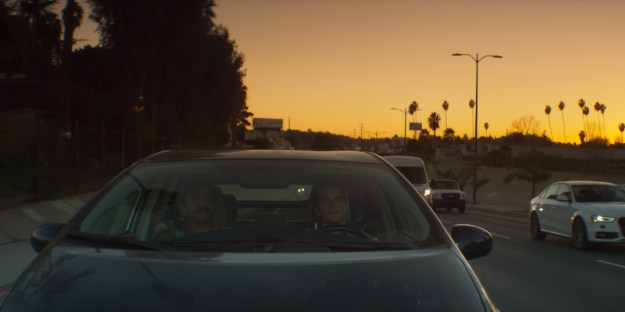
I mean, this whole thesis feels strangely out of date. Why is Hollywood still trying to convince people that gay is okay? I think societally we’ve moved past this point, except all these scripts that have been languishing for years are only now getting produced, and they’re already obsolete. You have to check out indie cinema to see some truly of-the-moment lgbt themes. But okay, gay conversion therapy is a horror. Of course it is. But the thing that’s great about Boy Erased is that Jared is such a strong character. Everyone and everything in his life is trying to make him feel wrong and ashamed and dirty, but he doesn’t. When he confirms to his parents that he thinks about men, he knows it goes against everything they believe, but it doesn’t seem like he’s internalized that self-hatred. It can’t be easy, in that house particularly, to know that his very being is not only repugnant but blasphemous to the people he loves most. And yet when he consents to the therapy, it’s for them, not for him. We never get the sense that he believes he needs to change. And that’s kind of astonishing to see.

Eventually Jared need to come to terms with disappointing the people he loves. And maybe he’ll need to cut out the people who are adding toxicity to his life. Those are hard choices, but they’re the right ones. This movie is really more about his parents needing to learn that they’re the idiots, and they’re the ones in need of education and re-conditioning. But while Nicole Kidman, in all her church lady big-hair, bejeweled glory, sort of comes around, there’s not a lot of remorse on the part of Russell Crowe’s character. And that’s where the movie falls short. Jared is surprisingly at ease with himself but the movie doesn’t give him nearly enough credit. Director Joel Edgerton, perhaps unsurprisingly, spends more time on his own character, than he does on the ones with real influence in this story.

Boy Erased is a good, competent little movie that will fail to make a big impression.

TIFF18: The Hate U Give

It’s a sad sign of the times that police shooting an unarmed black man seem to be one of the unofficial themes of TIFF’s 2018 program much like tennis was last year.

Starr Carter (a sensational Amandla Stenberg) lives in a poor black neighbourhood but goes to school in an affluent white part of town. Starr Version Two- the censored version of herself that her friends see- can’t quote hip hop lyrics like her white friends do all the time because “when they do it, they sound cool. When I do it, I sound ghetto”. Moments after reconnecting with a black childhood friend at a party in her neighbourhood, the two are pulled over by a white police officer which quickly and tragically ends with her friend getting shot and killed.

Not only does Starr now have a lot of grief and trauma to work through. Her once compartmentalized life has suddenly gotten a lot more complicated as she- the only witness to the shotting- starts getting pulled in every direction. Everyone, from the kids at school to the local gang leader (Anthony Mackie) to Starr’s cop uncle (Common), has an opinion that they’re not shy to share and some are all too happy to resort to threats and even violence.

Whereas Reinaldo Marcus Green’s excellent Monsters and Men was a thoughtful and nuanced indie, The Hate U Give works a lot harder at being accessible to a more mainstream audience. Our introduction to Starr’s life and the world around here is often funny and Starr and her family are immediately easy to like and root for. The soundtrack doesn’t hurt one bit either. Things are obviously a lot less fun once shots are fired and Starr’s friend is killed but The Hate U Give is still the kind of movie that seeks to entertain while it makes us think and feel.

The Hate U Give hooked me much quicker than Monsters and Men did. Monsters and Men needs time to sink in. It doesn’t aim for big dramatic scenes and speeches like The Hate U Give does. The Hate U Give pays a bit of a price for its more mainstream approach. Because it always feels like a movie albeit an extremely effective one. Some parts seem a little too contrived while others are a little over-simplified.

There’s a place for both movies. Monsters and Men was a great conversation starter is a mostly satisfying and cathartic emotional experience. It’s just that I fell in love with this movie over the first half or so and somewhere along the way I lost some enthusiasm for it.

TIFF18: Papi Chulo

Sean the weatherman has a meltdown on the air, so he’s sent home for some mandatory personal time off. His partner left him recently, and left a large, unpainted circle on their deck to boot. Pretty, soft-hands Sean (Matt Bomer) is out of his element in the hardware store. He buys the paint with help but the actual painting doesn’t go well, so the next day he trolls the lineup of available day workers and brings home Ernesto.

Ernesto (Alejandro Patiño) doesn’t speak English and Sean doesn’t speak Spanish. Odd couple alert!

The thing about this movie is, it sounds pretty light and predictable. And it is. But that doesn’t do it justice, because in fact it was one of my favourite movies at the festival. And maybe that’s because 90% of the movies I saw were depressing as shit and this one comes with a hint of optimism. But it’s the movie that I needed without knowing I needed it, and I felt like a life line.MV5BMTg1ODNhODQtMTQ3YS00OTY4LTk2OGItZDExZTNiM2VlMWU5XkEyXkFqcGdeQXVyNTQ1MTYzNzY@._V1_


Poor Sean. His friends and coworkers see him floundering and all agree that he needs to talk to someone, but to Sean, the act of doing so is the same as admitting that he’s alone and things are bad. He can’t. But he does find himself opening up to Ernesto. Ernesto who continues to be paid $20 an hour for “painting” finds himself hiking the canyons instead, and posing for Instagram pics. Although it looks like friendship, Sean is using Ernesto in at least 2 strange ways:


  1. As a therapist. A therapist who is easy to talk to because he can’t understand him, thus there is no fear of judgement.
  2. As a replacement boyfriend. Sean has Ernesto doing couple-y things, like renting a boat to row around the lake, and going to parties where he lets everyone assume they’re dating.

It’s not a great pretext for a relationship of any kind, but it’s done with such sweetness from both sides it’s hard to condemn…until it inevitably escalates. But your heart aches because on some level we all understand this awkward reaching out, the inability to call it what it really is, the denial and the loss that motivates it.

Matt Bomer is very vulnerable in this, he teeters between faux-cheeriness and complete abandon and at times we’re scared for him because he feels like our friend and we see him spinning out. Alejandro Patiño is great too – the perfect mix of skeptical and concerned. I love these two together so much that I don’t want the movie to end. I don’t want Sean to get better, to outgrow a friendship I understand is toxic for him. This movie makes me selfish because it has entertained me and sustained my soul during a dark day of movie watching. Papi Chulo is a huggable movie, perfect for watching in bed with a big bag of pretzels.

TIFF18: Donnybrook

Earl, an ex-soldier, has a junkie wife and two kids and no legit way to make them a better life. The only thing he’s ever been good at is fighting, and as luck would have it, there’s a slim chance he can turn that into some cash. Donnybrook is offering up $100k to the winner of a massive, no rules cage fight. All you have to do is be the last one standing. $100k will buy a home for his kids and treatment for his wife, but he can’t even afford the $1k entrance fee. So he robs a gun store where he’s known by the owner – it’s not a perfect crime, but Earl (Jamie Bell) isn’t exactly the sharpest tool, nor does he have to be in this shit town.

On the road to Donnybrook, Earl’s story will intersect with Delia and Angus, a brother-sister drug-dealing team with a questionable relationship, and the cop who’s pursuing MV5BZTJjMDdkZDgtNDRjMy00ZGU5LThjOTMtZWE4Nzk3ZDRhZTFhXkEyXkFqcGdeQXVyNTQ1MTYzNzY@._V1_them. Lots of crazy things are going to happen. LOTS OF CRAZY THINGS. I can only hope to prepare you fractionally for the craziness that’s about to be unleashed. I was not prepared at all. Some films at a festival are hardly finished. Lots don’t have trailers yet, or even production stills. Lots will go on to be re-edited so their final, released-in-theatres version will look wholly different that the version I saw at TIFF. Donnybrook felt finished but little was known about it. The only synopsis available simply states that “two men prepare to compete in a legendary bare-knuckle fight.” I thought I was sitting down to a boxing movie, not a HOLY SHIT WHAT THE FUCK JUST HAPPENED movie, and I shouted that more than once. More than twice!


And it’s not just the gratuitous violence. There’s some pretty freaky sex stuff too. The drug-addicted wife is likely the only one headed for treatment, but she’s only the fourth or fifth most in need of it. There isn’t a healthy person for miles, and if there was, they’d probably be killed just for their car keys. Donnybrook is dark and violent and brutal.

Tim Sutton seems to want to give a voice to white rage in middle America. They’re poor, they’re addicted, they’re abused. And they’re racist, xenophobic pieces of shit, though Sutton seems to excuse that, and revel, even fetishize their anger. Which isn’t to say it doesn’t exist or isn’t a problem, just that Sutton contributes to the problem without saying anything intelligent about it. If he cared about these “marginalized” people, he wouldn’t make such caricatures out of them.

TIFF18: Gloria Bell

Why is Julianne Moore even still making movies? I can think of few American actors with less to prove than Moore, fewer still who have turned in as many brave and egoless performances as she has over the last three decades.

Chilean director Sebastián Lelio (A Fantastic Woman) admires her too. In fact, he says that he chose to remake his 2013 film Gloria as his English-language debut specifically because he was such a big Julianne Moore fan that he wanted to see what she would do with the role. To anyone like me who has not seen the original, it would feel like the part of Gloria was written for her. Gloria is a 50-something divorced mother of two adult children (Michael Cera and Caren Pistorious). She has a full-time job and her kids do spend some time with her but it’s not enough to keep her from getting lonely.

Luckily, Gloria loves disco and loves to dance and she never cuts loose quite like she does when she’s alone on the dance floor on Singles Night. That’s where she meets the charmingly awkward Arnold (John Turtorro). The two quickly strike up a relationship even if Arnold’s co-dependent relationship with his ex-wife and adult daughters seem to hold him back from completely commiting to Gloria.

Thinking back, there is something very sad about Gloria Bell. But that’s only in retrospect. Lelio, like Gloria, chooses not to dwell on the sadness. Instead, his film spends so much time being laugh out loud funny that and is just optimistic enough that you can almost mistake it for a mindless crowd pleaser. It’s only three or four movies later when I realized that this was the one that I was still thinking about that I realized what a fully realized character they’ve created (or recreated) together. It doesn’t hurt that those in her life, the supporting cast, all seem to have real lives of their own when they’re not onscreen and could easily have starred in films of their own. I for one would have loved to know a lot more about Arnold. But really this is Gloria’s story and Lelio and Moore do her proud in a really impressive and effective film.


TIFF18: Monsters and Men

In any other universe I’d just shake my head and keep walking if someone came up to me and said:

I think it’s embarrassing for the country to allow protesters, you don’t even know which side the protesters were on. But to allow someone to stand up and scream from the top of their lungs and nobody does anything about it is frankly — I think it’s an embarrassment.

But here’s the thing. It wasn’t just anyone who said that exact thing last week – it was the President of the United States of America. The supposed leader of the free world wants to silence people with whom he doesn’t agree. The worst part is that it’s not a bit surprising. In fact, it’s a common theme of this President’s as he preaches to his base and ignores the other three-quarters of the people in his country.

Included in that other 75% are a lot of people who don’t have many opportunities to be heard. The size and reach of one’s pulpit is, in large part, determined by her means and her inherent characteristics. For women, minorities and the poor, it’s hard to be heard at all as you’re all drowned out by white (male) noise. You need a bigger platform. A noisy one, a newsworthy one. Like, for example, a protest. Or, a thoughtful, well-acted conversation piece at a major film festival.

monstersandmen_HEROMonsters and Men is that conversation piece. Moreover, it is one of the finest cinematic conversation pieces I have ever seen. What makes it stand out from the rest is that it tries so very hard to stay impartial (and succeeds), to the point that a black cop at a dinner party (BlacKkKlansman‘s John David Washington) jumps to the defense of a white cop who recently shot an unarmed black man (in which Washington puts forward some interesting points). Which is not to say Washington’s character is right, because I don’t think he was, and I’m not sure he genuinely even felt that way in the movie (he is well aware of the systemic racism inherent in the justice system, there is never any doubt of that, and he has no love for the officer who pulled the trigger). But his views don’t even matter all that much. What matters most is that he tried to have a conversation about it and that’s what matters.

Societally, we don’t talk much anymore, and being real, really real, we rarely ever talked to anyone who didn’t look like us or dress like us or pray like us. In the “good old days”, you could get away with that type of isolation and insularism. That doesn’t work anymore. We have to talk and figure out how to live together. That’s a new thing and a harder thing. Let’s not pretend otherwise. Previous generations had it easier, but that doesn’t mean they had it better.

This film is part of the conversation. Protests are also part of it. But the biggest part? Listening. There is a reason Monsters and Men was made. There is a reason it is not the only film at TIFF18 about an unarmed black man being shot by police (The Hate U Give is also here). We have a problem here. We have a lot of problems, actually, but black men getting shot by cops is a particularly big one. There is no easy solution to that problem (or a lot of others) but there are answers out there. Let’s talk with each other and, more importantly, let’s listen to each other so we can figure this out.


TIFF18: The Land of Steady Habits

Anders is mid-life-crisis-ing, hard. He left his wife, quit his job, sleeps with strangers he meets in Bed, Bath & Beyond while shopping for knick-knacks to fill his empty shelves. BUT HE’S STILL NOT HAPPY! Can you believe that abandoning everything you spent your lifetime building is not the path to true happiness? Can you imagine that the real problem was him all along?

I mean, those thoughts haven’t occurred to Anders (Ben Mendelsohn) yet. He’s a man. He’s not that quick. In fact, he’s slow and dumb enough to get high with someone else’s son. Charlie (Charlie Tehan) barely survives an overdose but shows up at Anders’ new bachelor pad looking for…friendship? Anders should know better; his own son PrestonMV5BMWZlMjZiMGItMjBhZS00YTlhLTlkMDgtNDc3Y2NkOTc2OGViXkEyXkFqcGdeQXVyODI4MjAzNjU@._V1_ (Thomas Mann) has been to rehab and apparently still has a problem that isn’t quite addressed. But if his own son isn’t really his problem, why should someone else’s be?
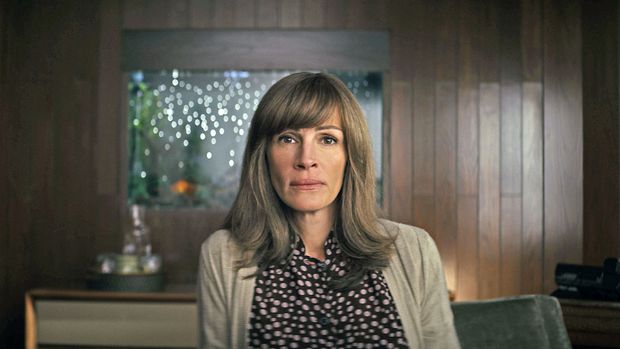
So that doesn’t go well. Nothing does. The Land of Steady Habits is drenched in suburban angst, dripping with the failure of men, both young and old. Director Nicole Holofcener has a knack for eliciting career-best performances from her actors, and Ben Mendelsohn is no exception. His little idiosyncrasies, that devilish grin, they keep the character just shy of being unforgivable. Still, Anders is not meant to be liked. He gambled on the grass being greener and it isn’t. His discontent seems to poison those around him. Ah, the listlessness of the wealthy. It makes it so easy to sit back and judge, guilt-free.

Holofcener makes some interesting choices – notably, that Anders has already shed his previous life when we meet him. And he’s already finding the new one to be hollow. And we experience his search for meaning to be quite petty and superficial. Mendelsohn subverts his usual simmering anger to suggest an inner tension as he navigates relations with his son, ex-wife (Edie Falco), and new love (Connie Britton), with bitter, sometimes humourous results.

The Land of Steady Habits is a good character study that’s a bit uneven as a dramedy. Holofcener tends to be restrained. Sometimes that’s wonderful, and sometimes it’s a little frustrating. This movie seethes with ennui, shame, and regret, and nobody gets a free pass.

TIFF18: Homecoming

Has TV been more exciting than movies lately? People have been saying so for some time and, given that we aren’t Assholes Watching Television, the idea sometimes makes me a little defensive. I have to admit though that the first four episodes of Homecoming were the most challenging and exhilarating two hours that I spent at TIFF this year.

The current legitimacy of episodic television is hard to deny when Julia Roberts, one of the biggest movie stars in my lifetime, starts turning to tv for interesting roles. In the new series directed by Mr. Robot creator Sam Esmail, Roberts plays a counselor in a facility whose mandate is ostensibly to help American soldiers returning from their deployments to adapt to life back home. It’s clear from her first phone call with her superior (Bobby Cannavale, as awesome as ever) that there’s something more nefarious or at least more secretive going on at this facility. What is less clear is exactly what that is. Things start to reall get interesting when Julia’s favourite patient (If Beale Street Could Talk’s Stephan James, who will almost definitely be a huge star this time next year) starts to suspect something is amiss.

Homecoming may not be quite the best thing I saw at TIFF this year. That honour probably goes to Widows. But it’s definitely the most original. Just like in Mr. Robot, Esmail’s strange choice of camera angles and Maggie Phillips’ score which often doesn’t seem to match the tone of what we think we’re seeing all contribute to the feeling that there’s so much more going on here then we realize. I can’t wait for the show to finally air in November so I can watch the rest and find out what that is.

Somehow, Homecoming is an adaptation of creators Eli Horowitz and Micah Bloomberg’s podcast which I’ve never listened to nor do I understand what it could possibly be. Together with Esmail, they have assembled an impressive cast that also includes Sissy Spacek, Alex Karpovsky, Shea Whigham, and Dermot Mulroney. Together they have made one of many compelling examples of how television can be just as creative and satisfying as an Oscar season feature film.