
Any director lucky enough or prescient enough to be working on a movie about global pandemics just as one spread in the real world is probably going to have an automatic in this year, as we are greedy to see our own lives reflected in film, for both the drama and fear instilled by a rapidly spreading virus, and the stillness and isolation as the world shut down in response. These are strange times.
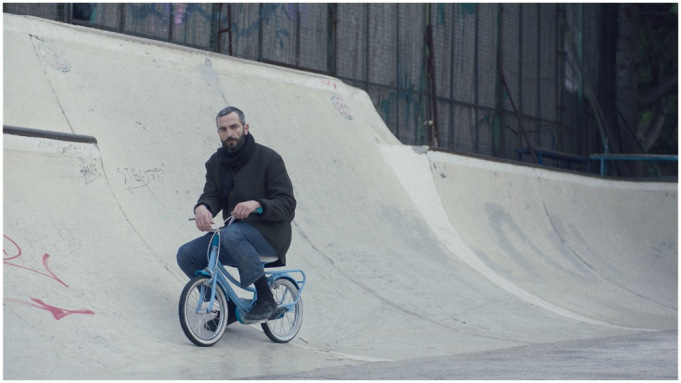
But not all pandemics are created equal. The one writer- (along with Stavros Raptis) director Christos Nikou imagines causes sudden amnesia. After a blinding pain in the head, the victim finds him- or herself void of memory. When Aris, a middle-aged man, wakes to the bus driver shaking him, his wallet is as empty as his head. Transported to hospital by ambulance, he can’t answer any questions, and after a few days on the ward, he is still unclaimed by friend or family. He’s not the only one. In response, a rehab program attempts to fill the void, a recovery method designed to help unclaimed patients build new identities and lives. Living in a sparse apartment and armed with a polaroid camera, he is given daily tasks on a cassette, meant to be performed and captured on film. It’s a strange life, and a lonely one, until he meets a woman on the same path (Sofia Georgovasili).
The treatment is unexpected, jarring, and increasingly bizarre. Just like Nikou’s film. As a feature film debut, it’s bold, and immediately establishes itself as a smoldering new entry among the Greek New Wave of weird cinema. And isn’t it glorious.
More than just memory, Apples is a meditation on nostalgia, reality, grief, and existential reminiscence. But between Nikou and the Disturbed Memory Department of the Neurological Hospital, what Apples really touches deep within its worldwide audience is our collective identity crisis. Sure it’s surreal and inevitably absurdist, but through its analog attempt at rediscovering personality, it’s a subtle condemnation of the hollowness and inauthenticity of the digital age, and it gives us all the space and permission to grieve.
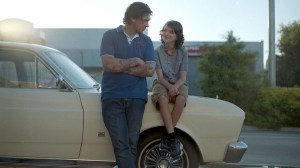 Alex while also evading violent criminals. Instead of getting his son to safety, he drags him into all kinds of terrible scenarios which they often escape by the skin of their teeth. The thing about crazy loan sharks is that they don’t really allow for excuses. They don’t make special allowances for a child. It’s pretty clear that Jim doesn’t really rearrange his life for his son either. So that’s awesome.
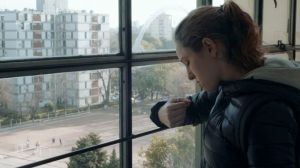 way, why do movies always make this seem so peaceful? If you’ve ever rested your forehead on a bus window in real life, you’ll know it feels more like going through the wash with a bunch of rocks, but whatever, don’t mind my grumbling, that’s neither here nor there]. The point is: looooooooong shots with little to no action, little to no dialogue, little to no plot. The whole movie can be summed up as: She’s pregnant. Oh jeez. How to get an abortion in a country where abortion is illegal? It’s only 87 minutes long but it feels more like 87 hours. Case in point: Sean fell dead asleep.
 beloved RV, and this road trip is designed to trigger memories of happier times – their young family at play, their former selves in love. It’s obvious that the ‘in love’ part has never really faded for Ella and John, and maybe this is why it’s so hard for her to cope when he can’t remember who she is.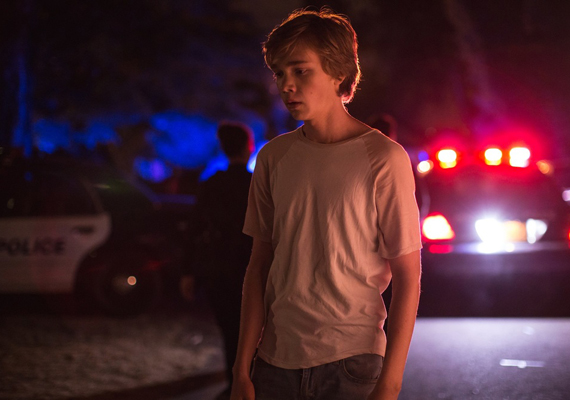
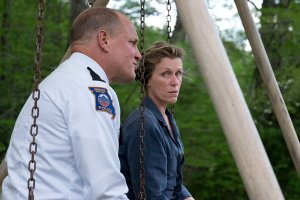 McDonagh uses lyrical language peppered with inspired cursewords; his heavy-weight cast punches it up with a surprising mixture of gravitas and black comedy.
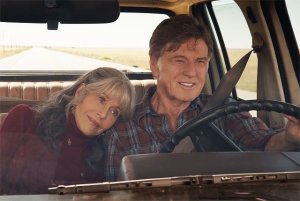 solitary existences up until Addie gets up the courage to ring Louis’s doorbell and invites herself in for a chat and a little proposal. Why not sleep together, she suggests. No, not sex. Sex doesn’t interest her. But the nights are long. Very long. Couldn’t they come to some arrangement? After thinking on it, he agrees, so off he goes in his best blue plaid shirt, to have a platonic sleepover with a neighbour he’s lived alongside for decades but never really known.
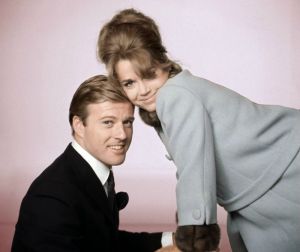 Venice Film Festival, in a ceremony preceding the screening of their new film. They’ve co-starred in movies before: The Chase (1966), Barefoot in the Park (1967), and The Electric Horseman (1979); this is their first in 38 years. To mark the occasion, Fonda said “It was fun to kiss him in my 20s and then to kiss him again in my almost-80s.” I have to say, it was fun for the audience, too. Yes, it’s great to see mature faces getting meaty roles, but you’re also getting a masterclass in acting. These two make it look easy. Their chemistry feels effortless.
 Of course, if you’re looking for classic, cheesy romance, this isn’t it. Louis and Addie are too wise for that. They have responsibilities, baggage, obligations. Kent Haruf, who wrote the novel upon which this film is based, knew a little about that. He wrote his book under a death sentence: he was 71, and he finished it just months before he died of lung cancer. The novel was published posthumously, so Louis and Addie are his legacy. Fonda and Redford would have made him proud.
 was curious about Darren Aronofsky’s latest project. Afterward, I was just tired and dreading this review.
 Is there anything more awkward than finding out the guy you recruited as a token Hindu is actually Muslim? There is, actually – it’s far more awkward when the guy you literally shipped from India as a parlour trick starts getting special attention from the Queen, more attention than you and all your fellow white sycophants combined. The worst part? He doesn’t even seem to be trying to play your game, yet he’s still beating all of you at it.
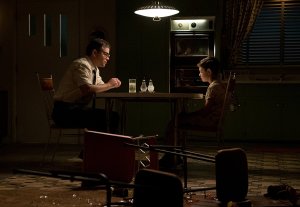 are safe, the schools are good, it’s a great place to raise a family. Except if you’re the Meyerses, who just moved in. They’re not welcome (being black and all). They’re apparently the very people all these “nice” white folk have moved away from the cities to avoid. The Meyers don’t do a darn thing to incur the slightest ill will, except have a darker skin tone, but still the wrath of the townspeople is rained down upon them. Determined to force them out, their white neighbours harass them and abuse them and generally make such a ruckus that no one notices the neighbours directly behind them.
 ASSHOLES WATCHING MOVIES