 Time for more Thursday Movie Picks! All the Assholes have assembled Avengers-style to talk about their favourite black and white films made post-1970
Luc
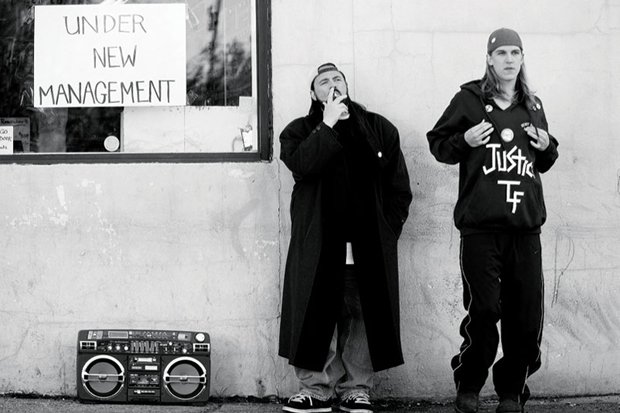
Full disclosure. I hate black and white movies, especially if they were shot past 1917 when Technicolor was invented. Why would anyone want to even go that route? I find it distracting and somewhat pretentious (The Artist comes to mind), I recognize that this is my own personal bias and you may completely disagree with me. That’s fine. That being said, if I was forced to pick some of my favorites, I would have to start with Kevin Smith’s Clerks.
A true cult classic that any obsessive movie goer has surely seen more than once. There’s so  many things to like about this movie! It was shot in black in white in order to save money. This might be the only acceptable reason to shoot in black & white. It’s much cheaper to make a movie this way since lighting issues are non-existent. Post production colour temperature problems? None. Lighting problems? Nope. There’s many advantages to shooting in black & white, but aesthetics is not one of them, in my opinion.
I also admire Kevin Smith’s ambition as a filmmaker. The story goes like this, Kevin smith, who wanted nothing more than to shoot his first feature length, decided to max out his 30,000$ credit card and gave himself 21 days to accomplish this incredibly inspiring goal. How can you not support and admire this feat?
In regards to the movie itself, I find the writing absolutely brilliant, not much actually happens throughout the 122 minutes of conversations about movies, hockey, women, and blowjobs. Now that I think about it, it’s quite amazing that with a cast of friends and family members (hired to save money), this movie did so well.. It grossed over 3 million dollars, was critically acclaimed and really launched Jay & Silent Bob’s career.
This film is about the mundane, daily struggles of an apathetic convenience store clerk (Dante), who seems to have no real direction in life, and his best friend, Randal, a video store clerk, who’s in a similar predicament. Did I mention that Dante and Randall love hockey? Well, they love it so much that their sole purpose throughout the movie is to figure out how they can ditch work in order to play a quick game of pick up hockey on the rooftop of the convenience store and yes, I am talking about two grown men. We also get to meet two great characters, Jay and Silent Bob. Two pot smoking friends who sell marijuana, shoplift and give golden advice on women and relationships.
If you haven’t seen this movie yet, you might want to get out from under your rock and get on it! Seriously. Sean seconds this nomination and adds that it’s a movie he could really relate to at the age of 18 (and maybe still). “I remember always having similar conversations with my friends to those in the movie, just ridiculous things we threw at each other that led to hours of stupid discussions.”
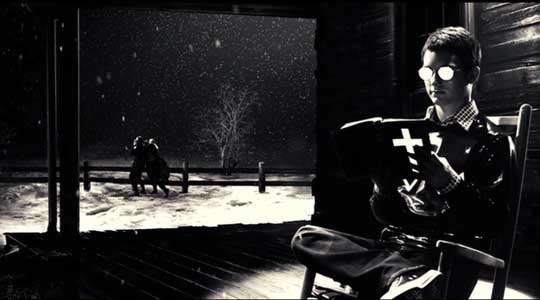
Back to Luc. My second pick is no other than Abbott and Costello Meet Frankenstein (might 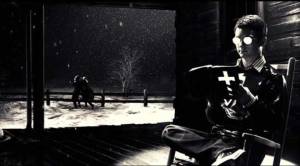 actually be my #1) but the movie was shot in 1948 and all the assholes agreed to choose movies post 1970, I’ll have to go with Frank Miller’s Sin City. I’m not sure this counts as a typical black and white film, considering that some scenes have bright red, yellow and green, but as I said before, I find it somewhat difficult to choose my “favorite” black and white movie since I generally don’t appreciate them. I love the themes that are explored in this movie: crime, corruption, loyalty. The graphics are also pretty stellar. I’ve never actually seen anything quite like it and if you’re familiar with Frank Miller’s graphic novels, you will surely recognize the artistry from beginning to end.
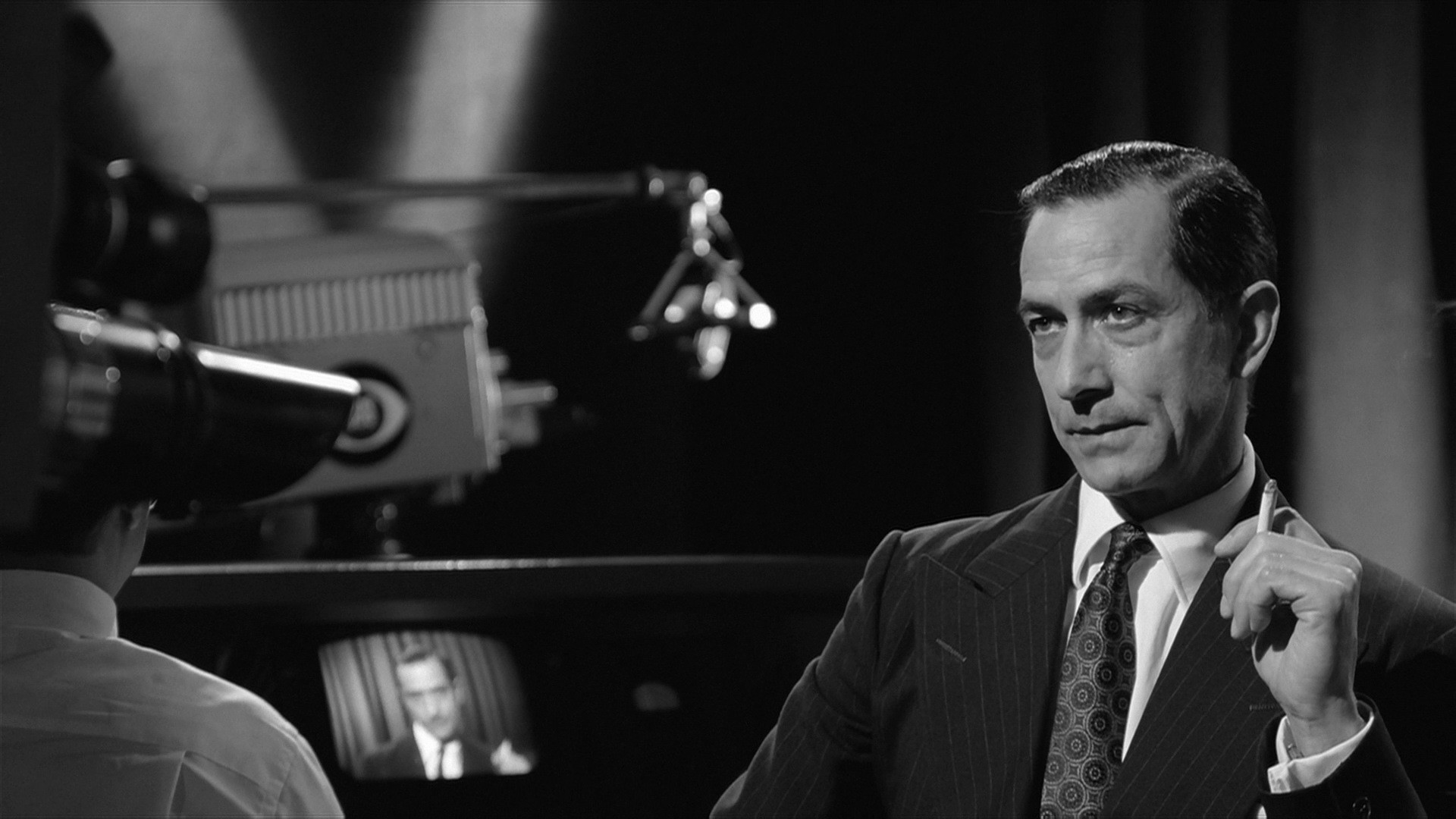
My third favourite black & white movie would have to be Good Night, and Good Luck, directed by no other than George Clooney. Frankly, I can’t remember all that much about the movie other than it being politically driven. You might say “dude, you write for a movie review site, can’t you at least take a couple of hours to watch the damn movie?” And the simplest answer is no. No, I can’t, it’s in black and white.
Matt
The pickings of great black and white movies aren’t as slim as Luc would have you believe. I don’t love black and white movies, I just don’t give a shit. If the filmmakers are telling a good story in an interesting way, I don’t care if it’s in black or white.
In fact, there’s lots of good reasons besides saving money to shoot in black and white. Actually, I would be tempted to argue that saving money is the worst reason. The Artist was a silent film about silent films so Michel Hazanavicius shot in the style of the classics he loved. Martin Scorsese wanted to avoid making a gratuitously bloody boxing movie so he shot Raging Bull in black and white to soften the blow.
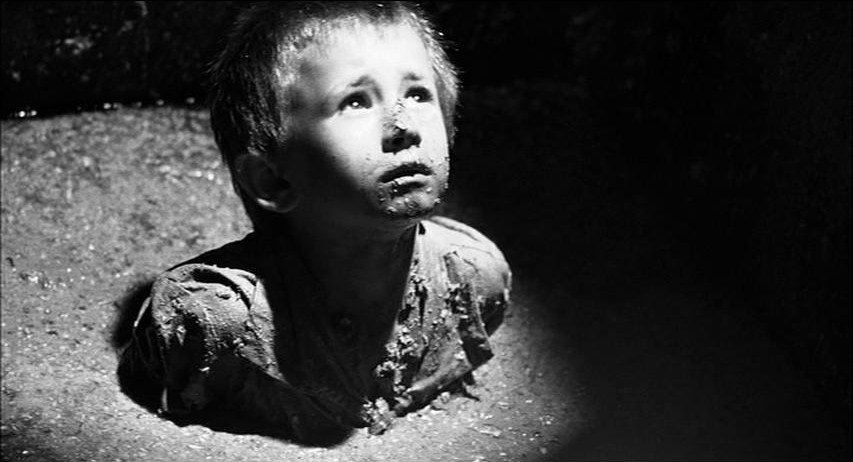
Black and white films can feel timeless. Last year’s Ida didn’t feel like a new movie to me. It felt like a classic that had been around for years that I am only now just getting to see. Conversely, Schindler’s List doesn’t look nearly as dated as other films released in 1993.
Good Night, and Good Luck- I hate to say anything against George Clooney but, as a director,  he’s never really come close to living up to the promise he showed in one of the best movies of 2005. To refresh Luc’s memory, it tells the story of news anchor Edward R. Morrow and his fearless coverage of Sen. Joseph McCarthy’s anti-Communist witch-hunt. I don’t know if it needed to be in black and white but, because it recreates live television featuring real footage of McCarthy that would have originally been presented that way, it seems appropriate. It takes a smarter and less dramatic approach than most films that are based on real events and definitely a must-see.
 Schindler’s List- Steven Spielberg’s 1993 passion project hasn’t seemed to age a day. I rewatched it for the fifth or sixth time yesterday and couldn’t help feeling that everyone involved from cast to crew to extras shared his passion. It’s a beautiful film from start to finish, with even the controversially sentimentality working for me. I feel a heart-wrenching sadness every time I watch it unlike anything else I’ve experienced at the movies and, when it’s over, I feel almost cleaned out.
Sin City- Robert Rodriguez’s 2005 film is almost a panel-for-panel adaptation of Frank Miller’s graphic novels. The comics were black and white (mostly) so the film had to be too. It works mostly thanks to Miller, whose writing ranges from as pulpy as it gets to almost poetic. “When it comes to reassuring a traumatized 19 year-old, I’m about as expert as a palsy victim doing brain surgery with a pipe wrench” is my personal favourite. Moments like that are almost enough to make me forgive last year’s disappointing sequel.
Jay
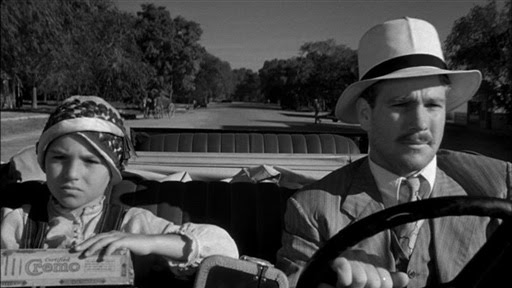
I like wondering why directors choose to shoot in black or white – what are they trying to tell me  by presenting their movie in this way? One of Sean’s picks, Paper Moon (Sean says: it’s fun to see Tatum O’Neal as a little grifter, with her real life father helping out while thinking he’s in charge) is a great example of a careful choice. Set in the depression era, the black and white adds an evocative nostalgia factor. As Matt might point out, it’s a movie that refuses to age because it was purposely dated when released. It means to take you back to a “simpler” time, and then make you question what exactly was so simple about people trying so hard not to starve. Cinematographer Lazlo Kovacs uses black and white to great advantage, with a deep focus that keeps everything razor-sharp.
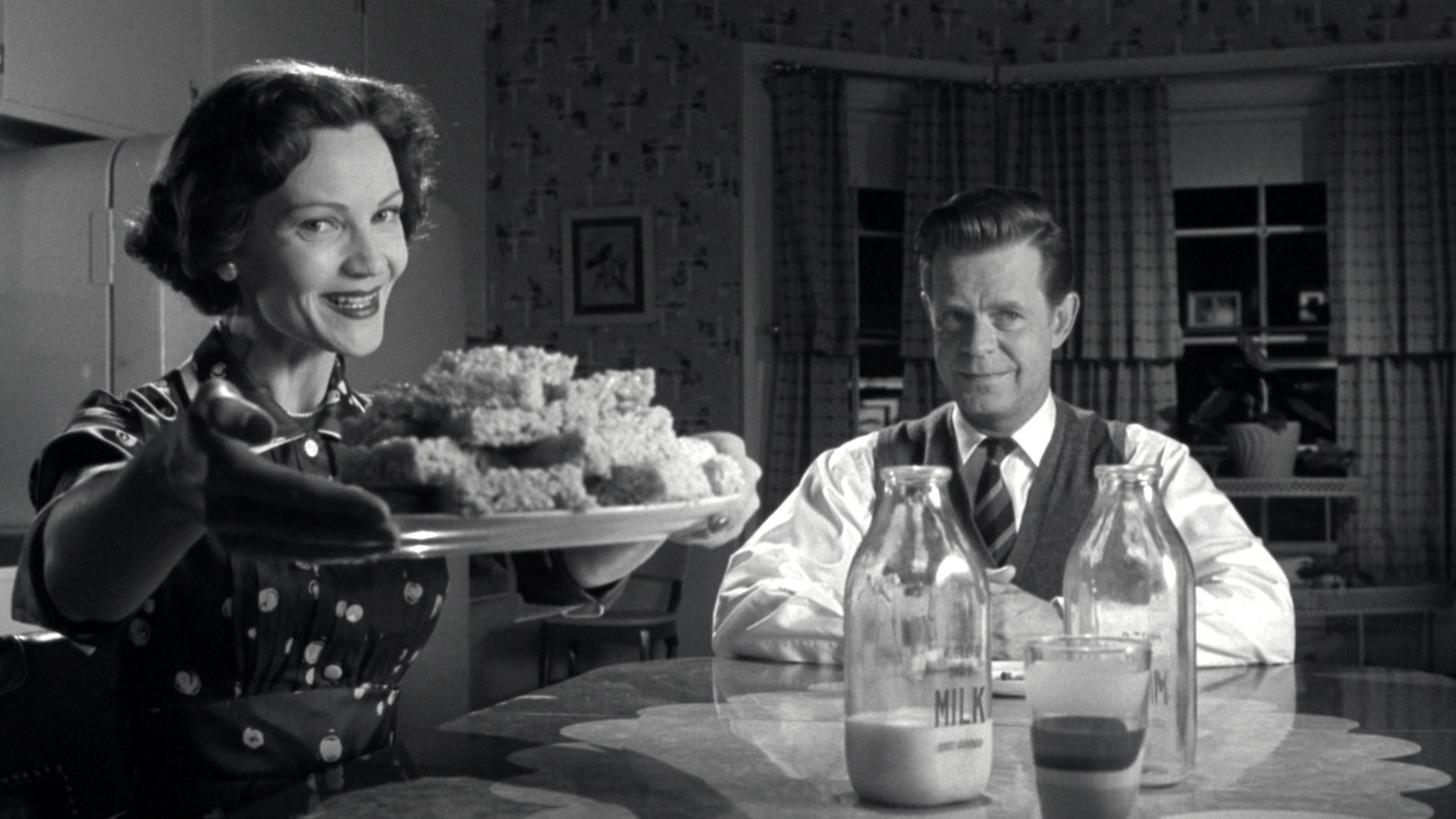
Pleasantville, in my opinion, uses black and white very wisely. It doesn’t just demarcate “old” 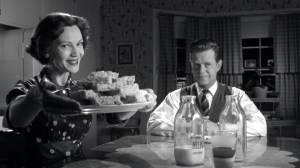 and “new” but comes to symbolize enlightenment. Tobey Maguire and Reese Witherspoon play teenaged siblings who get thrown into a 1950s sitcom, again, the “simpler” times that turn out to be not-so-simple. Although everything is superficially pleasant in grayscale, the two rapidly come to miss the highs and lows of life back home. As they influence the sitcom’s residents to challenge their notions and beliefs, the characters are engulfed in colour. They are set ablaze with their newfound edification but some are ashamed of their obvious (colourful) sophistication and seek to cover it up. Now the black and white is a symbol of repression and shame.
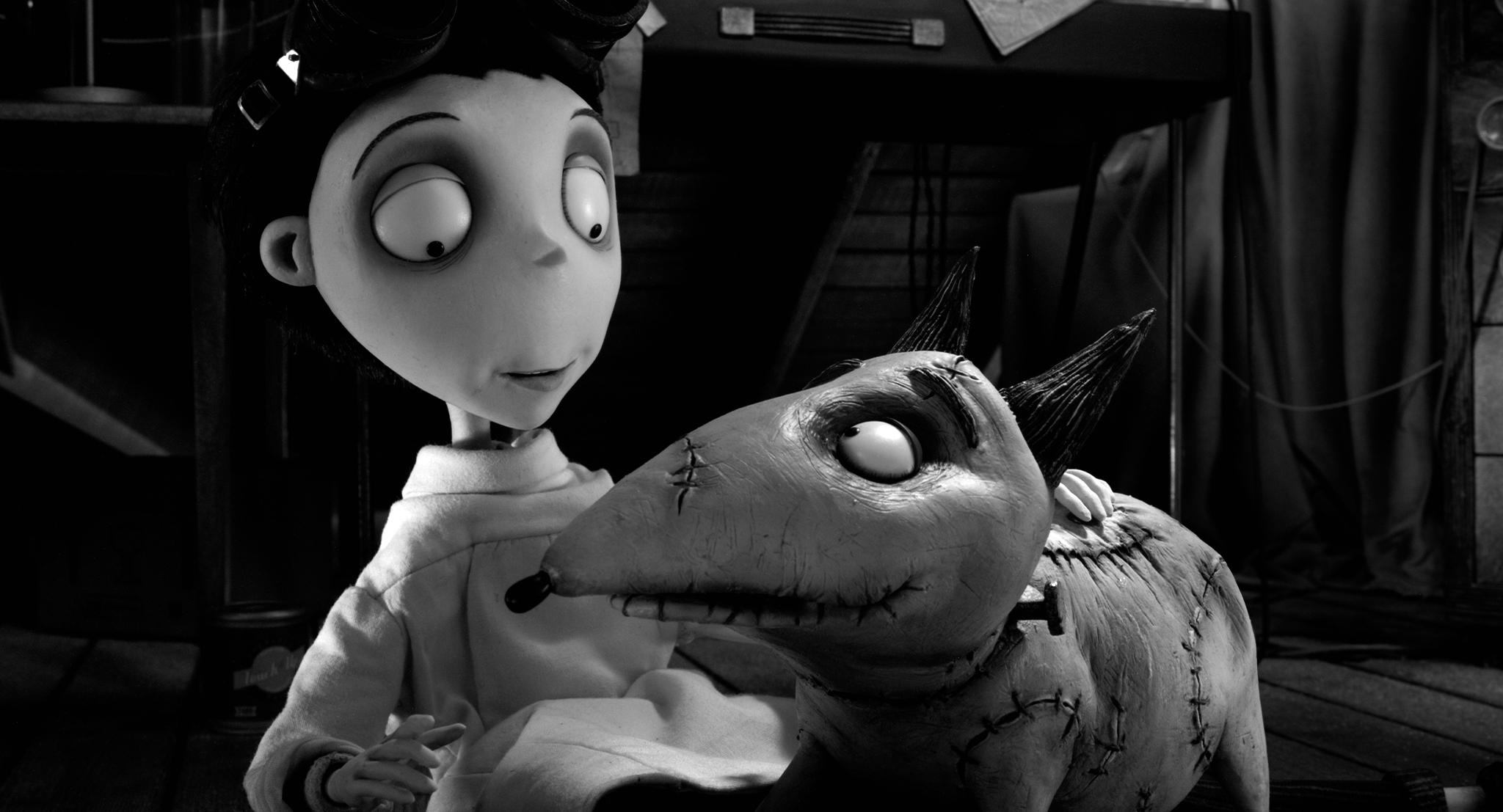
Sean chose Frankenweenie as his third and final film. It’s an animated and touching story of a boy scientist and his resurrected dog that’s sweeter than it has any right to be. Director Tim Burton has said “I find black and white very beautiful. It gives a real sense of emotion. I was  really excited about seeing this in black and white because there’s a depth to it that I love. It’s not right for every project but when you take the colour out of something, sometimes you start looking at other things, such as textures and characters. I was very happy that the studio [Disney] went along with the idea. If they’d wanted it in colour, I wouldn’t have done it.”
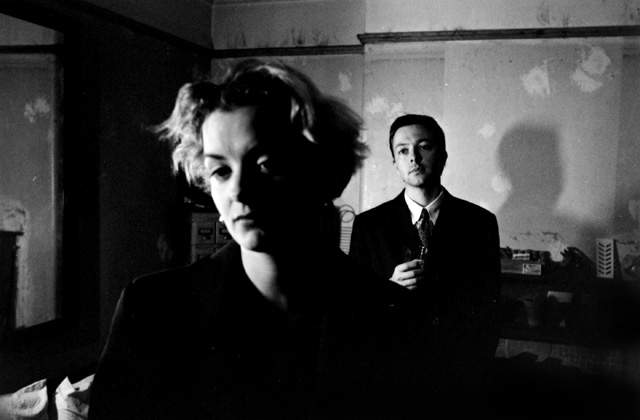
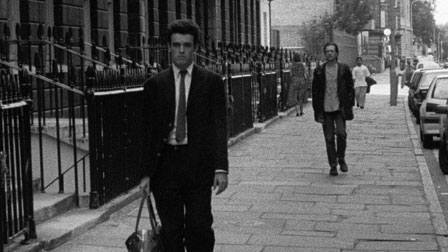
I’m happy to report that this week’s theme made me seek out movies I hadn’t seen before. I 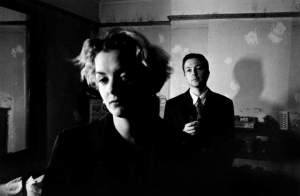 watched Chris Nolan’s first feature-length film, Following, and enjoyed trying to pick out early hints of his trademarks. Why did he shoot in black and white? Perhaps to enhance the stylistic look of a film noir, but also, I suspect, like Kevin Smith, because he was shooting on a tight budget. Clerks was big-budget compared to Nolan’s six grand and he made the choice to get the biggest bang for his buck.
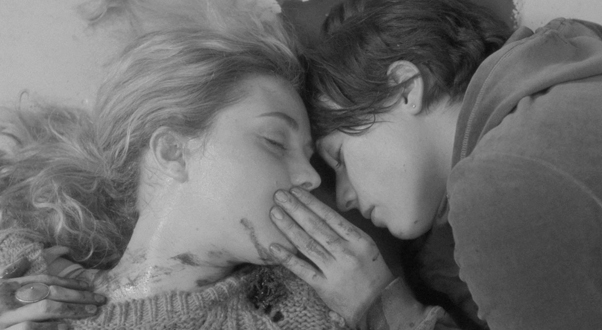
Denis Villeneuve, on the other hand, seemed to be more in camp Scorsese. He directed a Canadian film called Polytechnique that’s about the Montreal Massacre – the day a gunman  decided to target women and killed 14 of them while they were in school, dismissing their male classmates while voicing his hatred of feminism. It’s a bloody day in Canadian history but Villeneuve seemed to want to minimize the impact of the blood, allowing the audience to think about the killing spree in perhaps a slightly more abstract way. The film rises above the tragedy and is quite cool in its presentation, some might even call it dispassionate.
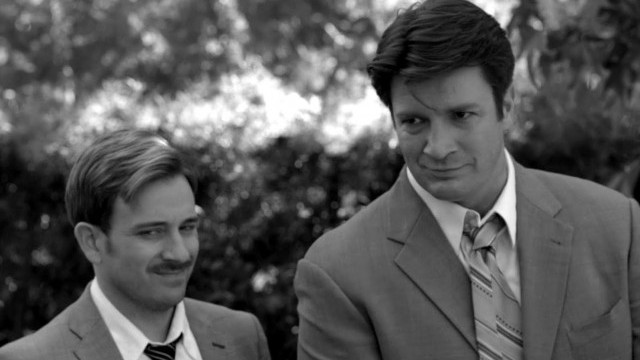
Joss Whedon made a Shakespeare adaptation of Much Ado About Nothing shot in black and white – maybe to highlight the sexiness that’s supposed to be in the movie, or to make the comedy’s dark side come alive, maybe to help mask and mistake California for Italy, and maybe it’s because it’s as far as he could possibly get from his simultaneous project, The Avengers.
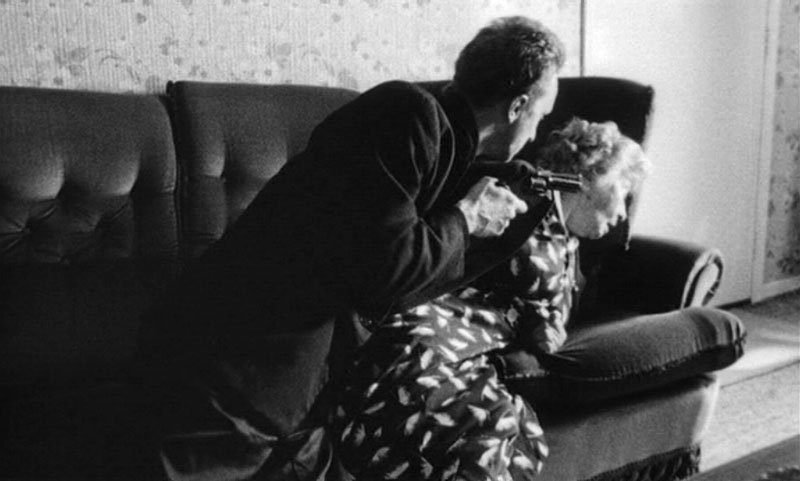
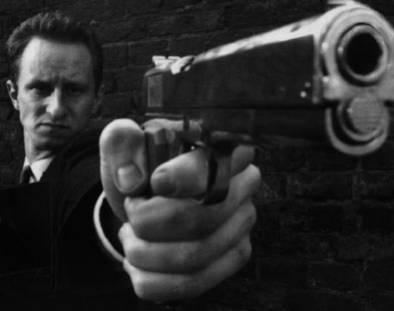
The hardest movie you’ll ever watch is almost certainly Man Bites Dog. A mockumentary that  shadows a serial killer who engages in increasingly graphic crime, you can’t look away but you’ll want to. It’s hard to swallow but carries an important message. It was shot in gritty black and white, a tip of the hat to cinema verite style, which is falsely considered more objective. In this case, the medium is just as stark as the message.
We look forward to hearing all of your picks – be sure to let us know your favourite black and white in the comments!
p.s. You might want to check out last week’s theme, father-son movies.

 It’s not a particularly inspired movie, quite formulaic in fact for something developed from a “true story.” Ejiofor sparkles, of course, in a big wig and even bigger heels. One of his five Golden Globe nominations comes from this film, and it’s worth seeing just to watch this handsome Oscar-nominated man dance about in a skirt like he means it. The movie’s best line, delivered by none other: Please, God, tell me I have not inspired something burgundy.











 ASSHOLES WATCHING MOVIES