
Hong Kong, like many cities around the world, benefits from the help of underpaid Filipino workers. A local domestic worker would cost $8 an hour, but a Filipina in the same role works round the clock, 6 days a week, for just $500 a month. There are strict rules for these poor workers, who aren’t allowed to maintain their own residences (if they could even afford them). They often sleep in the kitchen, which is also where they eat, alone, after having served the family. These are the people who care for the elderly or nurture the very young. Away from their own families, often even leaving young children behind, they pour love and care into their duties while receiving very little in return.
 Sunday Beauty Queen examines these workers, and the pastime they enjoy in their very limited time off: beauty pageants. Every Sunday they gather in events they organize themselves, strutting their stuff in costumes equal portions prom dress and cardboard accoutrements.
This well-intentioned documentary by Baby Ruth Villarama sheds light on important issues faced by migrant workers but lacks real depth, raising more questions than it answers. These women run themselves ragged serving others, sending all of their money back home to the families they left behind. They reclaim their dignity and their personhood on Sundays, competing in made-up beauty pageants. If the awarding of crowns and sashes runs late, they could lose their jobs on the spot for coming in past curfew. Instantly homeless in a foreign country, they have 14 days to find new employment or they are forced to leave. Many can’t even afford to leave, due to fees charged by both Hong Kong and the Philippines coming and going, on top of airfare and the shame of going home empty-handed.
I loved getting to know the women in this documentary, but I wish I knew them better, had a fuller sense of their stories. Sunday Beauty Queen is an excellent start, but these workers deserve a bigger piece of the pie, both in life and on film.
This review first appeared at Cinema Axis.
 sent to Auschwitz. Philippe Mora is an artist of all mediums; while he did not direct this particular documentary, he did write and illustrate the graphic novel of the same name.
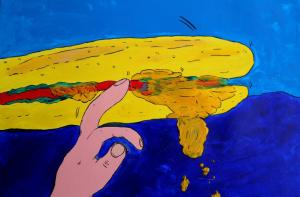 Mayonnaise, both the comic and the film. Director Trevor Graham films the madcap artist as he careens around the world, meeting up with heroes, villains, and the ordinary people still alive today because of his father’s efforts – teamwork improbably involving Marcel Marceau – smuggling Jewish children across the border.
 sister also got one, a brunette named Valerie, which I felt was unfair because she’d done nothing to deserve it besides poop and scream and steal my parents’ love.
 this stuff at the time, but I have certainly been aware of them in retrospect. These bubblegum comic artists tapped into a vein of childhood rebellion and ended up making lasting work.
 He’s got a bag of rice, and a bag of flour that looks almost identical to the bag of rice. How these are fun toys I have no idea. We usually pile them on Lightning McQueen and race. But Brady’s own counter culture is already budding at 5 years old: Shopkins are parodied by the Grossery Gang, the same basic shitty toy, but disgusting (ie, mouldy cheese). I don’t get it, but adults aren’t meant to. It’s kind of cool that he’s got his own little act of rebellion, but if you’re in the mood for some throwback rebellion, here’s a hint: the Garbage Pail Kids are back.
 up some hangers-on (Jenny Slate among them) and proceed to have a very weird weekend.
 She plays the mother of sons, a hard thing to be in 1942; Marcus, who is off to war (played by Jack Quaid, Ryan’s actual son), Homer (Alex Neustaedter) who struggles with being the 14 year old man of the house now that his father (Tom Hanks) is gone, and little Ulysses (Spencer Howell) who doesn’t remember anything different.
 there, she finds that he’s also helping the Palmach to smuggle Holocaust survivors into Palestine. This only makes her love him harder, but his reality is very different from hers, a drama student and theatre lover who is reluctant to give up a life of creativity. Her love is strong enough to make the necessary sacrifices, but the turbulent state of things in Israel means that love will not be enough to overcome all.
 Shiners gives a good sense of the universality of pride in one’s work. However, it is also clear that the profession is not viewed the same from one country to the next. In America it is being reclaimed by hipsters who deride the neglect of older crafts. In Japan we see a lot of honour in the skill, in making something old new again. But in other places, it’s seen as degrading work, and the shiners work on the street, earning little money and even less respect.
 If you’ve seen more than 5 movies, then you already know what’s going to happen: she’s going to hate the hell out of Jeffrey Dean Morgan right up to the moment when she falls madly in love with him. She will ditch her fiance, who is not a bad guy, whose only flaw seems to be believing his girlfriend isn’t a complete whack job.
 How do donkeys cry? Do they tremble inside? Do they dream? These are the types of insights and reflexive cues provided by poetic narration provided by Willem Dafoe. We might spend several minutes just gazing upon a bunch of donkeys eating communally from a trough. We may consider the different utterances we hear and attempt to interpret each one. The donkeys are communicating – are you listening?
 He had an unconventional childhood and perhaps not a happy one, travelling extensively with his parents who exposed him to culture and glamour while largely forgetting he existed. Food became his friend and companion, and he’d gluttonously study the menus of all the great restaurants he visited, making friends with the kitchen staff in all the best dining establishments in the very best of hotels.
 ASSHOLES WATCHING MOVIES