Monthly Archives: January 2019

Juliet, Naked

Annie and Duncan are in a weird holding pattern. They’re not exactly unhappy as a couple, just sort of bored and boring. Stuck? She’s beginning to realize that he’s in love with someone else, sort of. Duncan (Chris O’Dowd) is obsessed with Tucker Crowe, a musician who hasn’t made music in decades. But Duncan is passionate about Tucker Crowe like nobody’s business; he runs a blog that talks about nothing but. Annie (Rose Byrne) feels like the third wheel in her marriage and it only gets worse when some new stuff (well, unheard early versions of an album) surfaces. She can’t compare to the mythic singer who blew the world away with his soulful music and then disappeared. And Annie starts to feel just resentful enough to leave a nasty comment on the blog, which breaks poor Duncan’s heart.

But her comment garners feedback from at least one sympathizer: the man himself, mv5bn2i5zgq1mjqtoduwyi00mdmyltgzodgtowqynwq3mzzjnjdhxkeyxkfqcgdeqxvynti2oda2ntc@._v1_sy1000_sx1500_al_Tucker Crowe (Ethan Hawke). Tucker is living a quiet life in seclusion, sleeping in his ex-wife’s garage and caring for their son (while neglecting his other children, including the one about to make him a grandfather). They strike up quite a correspondence, an “email affair” she calls it, but don’t worry, Duncan surprises us by having an actual “penis in the vagina” affair first, and so they split up. Which leaves Annie free to meet Tucker – and let’s face it, is there any better revenge than hooking up with your ex’s idol? Although, for Tucker, this has got to be next level groupie shit. She’s the first lady of his fan club.

This movie felt immediately, and I mean IMMEDIATELY familiar to me. There was no review for it on our site, and it would be unusual though not unheard of for me to watch a movie and not have a thought or two. Finally I decided it was just a very faithful adaptation of a book I’d read (I read everything) (by Nick Hornsby, by the way), and left it at that. But the deeper truth is that the plot is also just a little worn. We pretty much know where it’s going before it’s left the station. But in this case, it really is about the journey. Rose Byrne and Ethan Hawke have this easy chemistry – satin and sandpaper that just sort of work. And you know how I feel about Chris O’Dowd. Or maybe/probably you don’t. I luuurb him. He’s the chicken AND the waffles. So maybe this movie isn’t super meaningful, but it’s easy watching with a side of gravy.

Fahrenheit 11/9

According to Michael Moore, we have Gwen Stefani to blame. Donald Trump found out that she was being paid more to be a judge on The Voice than he was to host The Apprentice. To prove his popularity, he staged a fake presidential run announcement. His improvisations were so blatantly racist, NBC had no choice but to fire him outright, so in a sense his move backfired, but he looked around and saw people waving placards on his name, and even if he did pay them $50 a piece to do so, he liked it.

The film is immediately and unapologetically a Michael Moore movie, its voice over irreverent and predictable. For many minutes, footage of election night seems intent on proving how little rhythm Democrats have. But eventually we get to the meat of the problem.

mv5bmje4ndyxntk4mv5bml5banbnxkftztgwnte1mdmxnjm@._v1_Historically, Michael Moore is inflammatory, but he preaches to the choir. I don’t think he’s converted anyone. And this movie isn’t going to do it, either. Republicans have proved impervious to shame or guilt or responsibility. That’s fine. Instead, this movie does something almost smart: it talks to democrats. It can’t change the idiots in the republican party or the fools who vote for them, but maybe, maybe, it can fix some of the problems in the democratic one. Because let’s face it: to elect Donald Trump, you need more than republican idiots. You need blind democrats and a whole bunch of apathy.
Who are the faces of change? The democrats have relied on an old guard for too long – an old guard who inspires no one. So grassroots candidates, minorities and women, are getting involved to steal the seats back. After all, isn’t democracy supposed to be rule by the people? I didn’t feel nearly as engaged with the film until it met up with the Parkland kids. After the shooting at their school, a fire was lit, and they were able to organize protests around the world. These kids have a passion for change that is both admirable and infectious. Their involvement in politics can’t come soon enough. Their parents and grandparents have failed them, but it’s just possible that when they storm the white house, and I mean getting elected into it rather than protesting outside it, real change may come to a system that was born broken.

The House With A Clock In Its Walls

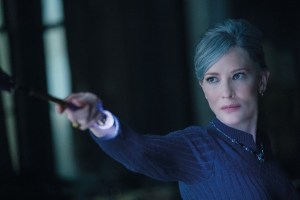
Lewis’s parents are recently deceased, so his uncle Jonathan, previously unknown to him, takes him it. It seems the peculiar apple (Owen Vaccaro) does not fall far from the odd tree (Jack Black). At first glance, it seems that Jonathan’s house merely has clocks on its walls, but there is some sort of magic afoot. The next door neighbour, Mrs. Florence Zimmerman (Cate Blanchett) is always around, and she and Jonathan seem to be in cahoots…but what are they hiding? The ghost of Lewis’s mother seems to corroborate his feeling that something’s not quite right, and a kid at his school lets it slip that his uncle’s house is known to neighbourhood kids as The Slaughter House. When Lewis finally mv5bmzq2mtlkmgmtodrmni00ztq2lwiwnwetzmmyowjkmduyy2qwxkeyxkfqcgdeqxvyndqxnjcxnq@@._v1_resolves to flee in the middle of the night, he finds the house to be very uncooperative. Turns out uncle Jonathan and Mrs. Zimmerman are a couple of witches, and the house is indeed haunted by the previous owner, himself a warlock, or at least haunted by the clock that he left in its walls. Every night, Jonathan searches the walls for the clock that’s driving him nuts, but so far no luck.

The House With A Clock In Its Walls may manage a PG rating, but it packs more fright per square inch than most kids’ movies. Credit director Eli Roth for that; a master of the horror genre, this might be his first movie that’s not an automatic R. Luckily Jack Black is on board, and his silly antics temper the scary stuff. He’s quite good, actually, and Cate Blanchett is mesmerizing, a vision in purple. But I think the plot is a little overdone, so we lose some of their effectiveness in its convolutions.

The House With a Clock In Its Walls has the potential to be a beautiful tribute to weirdos, even if it loses its own thread about half way through. For me, there was no way I wasn’t going to watch Cate Blanchett and her flawless hair, and I’m not sorry I watched this, not at all, but I am sorry it didn’t quite translate. Eli Roth has some fun transferring his skills to a family-friendly film, but it’s not quite enough, he doesn’t quite strike the right tone, and this movie ends up being just okay – this despite Blanchett’s mighty spell.


Far From The Tree

Early in the documentary Far From The Tree, Andrew Solomon says of the book he wrote by the same name “In telling these stories, I was investigating the very nature of family itself.” What he researched, and what the film explores, is children who are very different from their families, and the impact this has in their homes. Solomon grew up gay in a household that believed homosexuality was a sin. He was rejected by his mother.

The documentary, by Rachel Dretzin, visits with 5 families. Jason is a 41 year old man who loves Frozen and has Down Syndrome while his parents of course do not. He lives with a couple of roommates (the Three Musketeers, they call themselves) and a caregiver, but spends a lot of time with his mother. He grew up something of a celebrity, the poster child for “retarded” kids who could learn to read and write and socialize beyond what was normally credited to them. Jack is a 13 year old kid who has severe autism. He doesn’t speak but he’s clearly very intelligent. Though he has little control over his body, he has overcome numerous obstacles just to communicate with his parents. Loini is a bubbly 23 year old woman with dwarfism whose only wish is to be more independent. A convention where she’s finally able to meet other little people is like a welcome eye-opener; finally, someone understands. Leah and Joe are a married couple, both with dwarfism, who give birth to a baby with normal stature. What will parenting be like with a child who quickly outgrows you?

Though these “differences” in the children are nothing more than anomalies of nature, many parents originally blame themselves or feel some sort of guilt – was it a medication taken during pregnancy? a lack of sleep? the bed rest? The film, however, doesn’t give blame any space. Instead it shows parents going to great lengths just to connect with children they don’t necessarily relate to. The paths to love are in many ways the same (Jason’s mom recalls being told that her newborn was a “mongoloid” and that it was best to remove him to an institution immediately, “before a bond could occur” – while of course Jason’s mom had loved him since the moment she learned she was pregnant). In order to thrive as a family,these parents have become devoted to finding ways to connect with children they don’t necessarily relate to but love nonetheless. Love just as much. Leah and Joe talk about how they love each other for their “isms” (dwarfism) not despite them. I can see how this would be a balm to Solomon, who never got that from his own mother. That we can indeed have meaningful relationships with people who are not like us.

The last family (have you realized yet that I’ve only listed 4 of 5?) is a bit different. Their son, Trevor, murdered an 8 year old boy when he was just 16 himself. Can we still apply the lessons we’ve learned from the previous families to him? Can we accept that this is just how he was born, can we not blame his parents for who is he? Certainly, his situation is much different. Perhaps he was born with violent tendencies. Psychopathy may even be hereditary. But murder is still a choice, while Down Syndrome is not. The documentary takes up the same position though: that Trevor’s parents are not to blame. They’re still his mom and dad, they still love him, they still struggle to keep their family intact. But after falling in love with Jason, and having your heart melt over Jack, Trevor is a challenge. Can we, the audience, find the same empathy? Are we meant to?

I like a documentary that challenges me, and lining up Trevor besides these other individuals is indeed a test.  I don’t believe it’s pass or fail, but we’ve all got room for improvement, and if this kind of confrontation leads to more empathy, it can’t be a bad thing.

Avicii: True Stories

Tim Bergling, you may know, was a world-famous DJ known as Avicii who first became famous when he was just 21. He toured the world, and every night was a party. But wall-to-wall parties and drinks by the trough soon take their toll. Struck down by pancreatitis in part due to excessive drinking, Avicii was crippled with pain and constant health scares. But it wasn’t just his physical health that impaired him. Performing at shows created huge anxiety on a daily basis that just became intolerable. Even after a nice long break, Avicii isn’t any better prepared to keep up the grueling pace. So he makes a decision that takes the world by surprise: he retires from touring. He’s 26, and he’s retiring.

The documentary, by Levan Tsikurishvili, gets very intimate with Avicii. It follows him mv5bzmqwzwnkzjytmgu4zi00ogy5lwi5ztytm2yxyzrjnwvlmtzlxkeyxkfqcgdeqxvyntqznzyyoty@._v1_sx1777_cr0,0,1777,999_al_extensively. The camera knows him well, and Avicii is fairly open with this struggles, although he, and the documentary, like the world, tend to emphasize physical health over mental health. Watching this, it really strikes me how many of these documentaries we’ve seen lately – the overwhelming fame that leads to tragedy. Except this documentary, curiously, doesn’t hint at the tragedy. It ends on a positive, optimistic note – that having retired from touring, Avicii is free to continue making music, which clearly does make him happy, on his own time, at his own pace, without the crippling anxiety. We saw goodbye to him on a tropical island, enjoying a sun-filled vacation.
But Avicii doesn’t get this happy ending. He died 8 months ago, of wounds self-inflicted with a broken wine bottle. So it breaks my heart because he hoped and believed that retirement was the answer, and it turned out not to be. And now he’s just another illustration of depression having such far-reaching fingers that even the rich and famous are not immune. And though this documentary came out after his death and had every opportunity to speak towards mental health, it mostly chooses not to, not even acknowledging its subject’s death. It’s a weird, unsettling choice that casts a shadow over the documentary’s authenticity.


Burlesque

Some bad movies you watch because some self-sabotaging part of your brain wonders, how bad could it really be? Some bad movies you watch because you’re too damn lazy to seek out a better one. Some bad movies you watch out of curiosity, or you’re in the mood to hate-watch something, or you don’t think the night deserves anything better. And sometimes, not often, but sometimes you’re just smart enough to avoid it. I’ve been actively choosing to not watch Burlesque since 2010, so much so that I never even realized how many of my favourite performers – Kristen Bell, Stanley Tucci, Alan Cumming – are in it. How did I come to finally watch this stinker?

This is going to sound like a stretch, but it basically comes down to our traveling to Mexico over Christmas. If you’ve ever been to an all-inclusive resort, then you know there’s a prescribed set of nightly entertainment. Five years ago, every resort had some crappy version of Broadway’s The Lion King, but I think Disney put the kibosh on that. We had a Jersey Boys night, a Pirates show, and the obligatory Michael Jackson tribute. And the resort also offered a burlesque show. We’ve seen some of the best burlesque in Las Vegas (and some of the worst). We’ve seen burlesque at Crazy Horse and the Moulin Rouge in Paris. We’ve seen some good shit, but having seen what passes for “Jersey” and “Boys” in Mexico, our expectations were appropriately tempered. We thought. What we weren’t expecting was a poor imitation of a reviled movie, but with Santa hats, and even Santa Claus. Merry Christmas eve to us!

In the movie, Ali (Christina Aguilera) is a small-town waitress who moves to L.A. to become a performer. Not a big dreamer, she seems content when she settles at Tess’s (Cher’s) burlesque bar, first as a waitress who has to prove her mettle, then as a performer that everyone else (Kristen Bell in particular) is jealous of.

The script is beyond bad. Like, there’s bad, and then if you keep going beyond bad, past terrible, past horrible even, orbiting somewhere around dreadful, you’ll find the script to Burlesque. Also, in my experience, burlesque involves some form of artsy striptease. In Burlesque, it means lip-syncing in your underwear. Possibly Xtina just can’t do two things at once. And good lord, we wouldn’t want her to.

So we’ve confirmed what we always suspected but never cared enough to validate. Burlesque is bad. Not even campy bad, not even so bad it’s good. It’s surprisingly boring for a movie that features so many beautiful women in lingerie. But you could watch a Victoria’s Secret commercial with the sound off and feel more satisfied than you will at the end of this movie. So thanks, Mexico, for piquing our interest and giving us a reason to seek out a stinker. Couldn’t have (wouldn’t have) done it without you!

Chappaquiddick

This is the greatest story of white privilege ever told.

Just days before man landed on the moon, Senator Ted Kennedy was drinking too much when he flipped his car off a bridge and into a shallow pond. He was fine. He got out. But he left behind his passenger, Mary Jo Kopechne, who died slowly, in agony, as her pocket of air expired. Which is not to say Ted Kennedy was completely unmoved. He was very sad to realize this meant he would never become president. Thinking only of himself, he walked by several houses and many phones in order to let his lawyers know, who encouraged him to report the accident while standing beside a payphone not one of them ever picked up. Instead he snuck back to his hotel, and on the advice of his father, established an alibi. Ten hours later, he made his way to the police station, minutes after her body was discovered. Had he summoned help, she would have lived. Instead she died, not of the impact, not of drowning, but of suffocation over the course of several hours.

mv5bodnlngjjnjutyzgyzs00mmjjlwi3yzmty2fmzthiogvkndk5xkeyxkfqcgdeqxvyndg2mjuxnjm@._v1_sy1000_sx1500_al_The film follows the despicable events that follow: Kennedy’s obsession with minimizing the consequences to himself while painting himself as the victim. He assembles a whole team of men willing to lie and spin the story in his favour. Not a single one of them sheds a tear for the woman who died alone in the dark backseat of Kennedy’s submerged car.
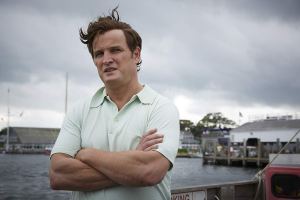
In many ways, I hate this movie. It made my blood boil. But that’s exactly what it’s supposed to do. Jason Clarke gives a pretty able and nuanced performance as the unconscionable Senator. Ed Helms also does a good job trying to be his conscience, and that’s not an enviable position. But despite these winning performances, the truth is still obscured. Director John Curran makes some choices I don’t understand, but he’s very capable at leaving space where Kennedy has the opportunity to do the right thing and doesn’t. And though his brother John is of course already gone, the moon looms over Teddy in many a scene, as if his older brother is looking down upon him, reminding us of their very different legacies. It’s a heartbreaking story that perhaps doesn’t fully play that way on screen, in part because the movie is as absorbed with Ted and Ted alone as Kennedy himself is. Opportunity vs. integrity – that’s what Helms says as Kennedy cousin Joey Gargan. And Ted Kennedy certainly chose one over the other.


Greenfingers

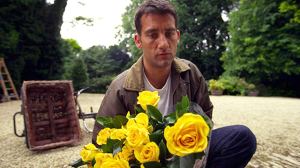
Colin Briggs catches a rare break in prison: he gets transfered to one of those mythical low-security, cushy prisons where there are no bars and the food is edible. Colin (Clive Owen) is too cool for it though. He refuses to bond with his elderly roommate Fergus, or to request interesting work. He pulls toilet duty of course, but it’s not long before the warden saves him from himself and assigns him to gardening.

Colin doesn’t know manure from jackshit about gardening, but it’s better than toilets, so he takes lots of books out of the library and eventually works himself up into quite a passionate froth about flowers. The warden is so impressed by the gardening crew’s efforts and so is Georgina Woodhouse (Helen Mirren), who just happens to be the author of several of those books about gardening. Between them, they arrange for some work release – for the prisoners to leave the grounds and work on a9u47-ab73tb7ktr3-full-image_gallerybackground-en-us-1535774499460._ri_sx940_designing and planting gardens for wealthy clients. Their work is so renowned that they’re invited to participate in the Great British Gardening Show, which is not at all what it’s really called, but I forget the name and don’t care to look it up. Of course, they’re prisoners, and not everyone is open-minded about that.

It’s sort of nice to see a prison warden who believes in rehabilitation, and who treats his prisoners like human beings. This movie is apparently based on a true story; the inmates of Her Majesty’s Prison Leyhill actually did excel at gardening. And finding something that they’re good at, that they can be recognized and praised for, is clearly strengthening and healing for men who have otherwise such bleak futures. It wouldn’t have to be gardening of course, but it’s nice that it is because of course the contrast between delicate flowers and big burly murderers is pretty damn satisfying.

So much of British cinema is devoted to this formula: the underdog triumphing over adversity. You root for the prisoners of course, but you won’t get overly invested because the characters aren’t that knowable, and everyone besides Colin is pretty much just petunias (haha, that’s a gardening joke for “filler”). It’s meant, of course, to be charming and up-lifting, but it’s actually quite bland and manages only mild mediocrity. Worth checking out if you miss Clive Owen’s mug, or if you have a thing for Helen Mirren in oversized floral hats, but otherwise fit for the pruning pile.

Mid90s

Stevie (Sunny Suljic) is a 13 year old kid living with his single mother Dabney (Katherine Waterston) and his older brother Ian (Lucas Hedges). It’s the 90s, so we don’t have helicopter parents yet, no crazy attachment hyper-parenting bullshit. Just kids roaming the streets until it’s dark, which they more or less survived.

Stevie has good reason to want to flee his home. His mother has apparently curb-tailed her wildest instincts, but still unburdens her romantic woes on her tween son. Ian poses the more straight-forward threat, frequently beating up his little brother for little or no reason. But Stevie may be his own worst enemy, self-harming in mv5boti5mjvjmjqtmzlkni00mdu1lwiwy2mtyje2mje1ymu5nzy2xkeyxkfqcgdeqxvymta2odmzmdu@._v1_alarming ways. It’s not until he begins to ingratiate himself with a skate group that he comes out of his shell. Ray is the undisputed leader of the group. He’s effortlessly cool, and everyone looks up to him. Fuckshit skateboards equally well, but seems more interested in partying and getting fucked up. Reuben and Fourth Grade fill obligatory minion roles within the group, and Stevie, henceforth known as Sunburn, is the newest, youngest, and greenest of the bunch. And he’s just so happy to be there.

Mid90s does a very good job making a time capsule out of 90s-era L.A.  It gives us a gritty, accurate, insider look at skater culture, though it also feels quite sweet and quite intimate at times. We get a rare glimpse of masculine vulnerability, and the age-old attempt to swallow it up.

This is Jonah Hill’s directorial debut, and he’s quite a confident director right out of the gates. He’s got a very laid-back, observational style that almost mimics skate movies that kids were putting together at the time, just footage of their buddies daring to do new tricks. Hill’s favourite trick, and perhaps his greatest asset, is the minimalism with which he shoots. I just wish the script didn’t follow the same route. The skateboard metaphor, along with the unsubtle tag line ‘Fall. Get back up.’ are pretty heavy-handed, but the rest is a little…not superficial exactly, but undercooked, in that we don’t really get underneath the feelings. Hill picks at some scabs but allows very little bloodshed. Mid90s feels a bit more like a character sketch than a whole movie, with subplots thin enough to necessitate questions of existence, but the parts that are on screen look cool and feel authentic, and it’s a promising new direction for Jonah Hill.

Night School

Teddy is a high school dropout and a moderately successful barbecue salesman who is living paycheque to paycheque in order to fund a lifestyle worthy of his out-of-his-league girlfriend, Lisa. Lisa makes loads of her own cash so Teddy feels a little inadequate, and worries that his inability to keep up would cause her to leave. When he finds out that he stands to inherit the barbecue business, he finally feels secure enough to propose. Of course, Teddy’s (Kevin Hart) over-the-top proposal gets explosively out of hand, and his romantic prospects burn up just as assuredly as his economic future.

Out of a job with no high school diploma to his name, Teddy has little choice but to MV5BMTVjMmFmYmUtNGIzNi00OGY4LWI3ZGQtMWI5MjA2ODRiZGEyXkEyXkFqcGdeQXVyNTc5OTMwOTQ@._V1_SY1000_SX1500_AL_obtain his GED if he doesn’t want to work at Christian Chicken for the rest of his life (WHY is the chicken christian? how do we know to whom the chicken prays?). Two things stand in his way: first, the night school teacher Carrie (Tiffany Haddish), with whom he clashes, and also the school’s principal Stewart (Taran Killam), who was Teddy’s high school bully, more or less.

Night School is written by Kevin Hart and 5 others, and it feels like a movie written by committee. There are some laughs to be sure; Hart and Haddish are not exactly devoid of chemistry but the rest of the cast (Rob Riggle, Romany Malco, Mary Lynn Rajskub) are just a bunch of weirdos that turn a not unpromising premise into a bag of very mixed nuts. Between chuckles, there is often a dauntingly vast laughter desert where not one iota of mirth exists. Sure, sometimes a joke may shimmer in the distance like it’s the real deal, but up close you’ll soon discover that though it may have a joke-like structure, it’s missing that essential element: comedy. Comedy is the thing that turns words into jokes. Apathy into laughter. 111 minutes into a movie. Night School does not have enough comedy to fill out the typical run-time of a commercial, so I’ll let you do the math as to whether or not this one’s worth your time. Mine? Not so much.