
Although ostensibly about a specific bodybuilder’s incredible true story, Ramblin’ Freak is also about the randomness of life. Parker Smith wants to make a film but he’s not sure of what. He buys a used camera off Ebay thinking maybe he’ll set it up on his dashboard as he drives cross country, but the camera has a different idea. Lightly used, it comes pre-loaded with an old tape of some bodybuilder, and it turns out that body builder is “the man whose arms exploded” so Smith naturally feels that the universe has told him to document this man’s story, and off he goes.
Ramblin’ Freak captures the aimlessness of youth. Smith, 24 years old, seems untethered, his plan for the documentary really no plan at all, and the finished film turns  out to be largely unstructured: 50 minutes into the film we still haven’t seen any exploding arms, but we’ve seen plenty of Smith’s unironic mini van, his cat, and his Hipster facial hair. The film is dotted with seemingly random Youtube videos that slowly reveal the personal tragedy behind some of Smith’s listlessness.
Smith’s camera work leaves a lot to be desired. Don’t set your heart on perfectly composed shots. Don’t be surprised when the camera accidentally tilts up and you experience a scene via a shot of the ceiling, that may or may not have sound. And the story telling isn’t much better; unraveling Smith’s intentions feels like an opaque job that we’re not fairly equipped for. But as we made our way through hapless encounters, I began to feel that this disjointed film making was an accurate, authentic reflection on the film maker’s state of mind. If Smith lacks the vocabulary to express his pain, he’s letting his documentary do the talking for him, and it’s a mess.
All told, this is not the story of a body builder with exploding arms, or even about the journey towards that end. It’s really about a young man’s pain, his tentative exploration of it, his bravery and willingness to show it for what it is. Grief is never any one thing, and perhaps coping looks and feels different to this new Millennial generation. Parker Smith engages in this extended, 90-minute selfie and shows us a new kind of navel-gazing as he picks the scabs of his wounds and tries to heal himself.
Ramblin’ Freak screens at SXSW:
March 13: Alamo Ritz
March 16 & 18: Alamo Lamar
 us with deliberately soothing music and excellently edited nature sounds. The film makes participants of us, the pace a thing of beauty, very measured, very calm, each image carefully and mindfully chosen. And it doesn’t hurt one ounce that Benedict Cumberbatch narrates.
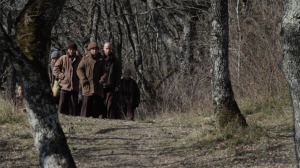 captured, the snippets of life, the tranquility: these all guide us down a path of – and forgive the use of this word – enlightenment.
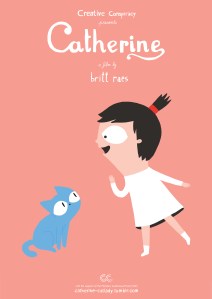 them to suicide) and that seems about right to me. Even though Catherine’s a bit of a hazard, you can’t help but root for her, root for her happiness. I am completely drawn in by the animation by Creative Conspiracy studios – it looks very picture-book friendly, yet the humour within is surprisingly dark. The colours are like candy and used thoughtfully throughout. I always admire short films because to tell a story well they must be economical and equally strong visually and narratively. Catherine (the film) is all of these things wrapped up in a cutesy little package. Catherine (the character) is not so perfect, nor, it turns out, so cute: Catherine grows up. Into a woman who means well but can’t connect with humans. Wonder why? See the film!
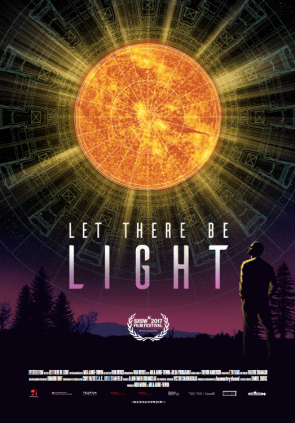 energy from its proponents. Directors Mila Aung-Thwin and Van Royko interview some very charismatic and enthusiastic supporter and collaborators of the project, called ITER (International Thermonuclear Experimental Reactor). It’s pretty much the most complex machine ever designed and the commitment of these people cannot be overstated.
 They want something temporary, first of all, so as not to permanently alter the land. Think of sutures: something that dissolves after the healing is done. To that end, they come to a beautiful and striking solution of tethering helium-filled balloons. However, the fence is not just symbolic of connectedness, but represents an awful lot of actual collaboration between peoples and communities to make this art happen.

 Journalist Bitsey Bloom (Kate Winslet) is brought in to do one last interview with him before he’s put to death, but what he tells her isn’t a straight forward of guilt or innocence, but rather challenges her notions of justice and the legal system. But can she trust what she’s being told, or is David Gale just a smarter-than-average killer?
 unintentionally, somewhere in the convoluted mess, it might actually manage to do the complete opposite. The Life of David Gale certainly traps some very worthy actors in a mess they can’t act their way out of. Kate Winslet is pretty Winsletty, although she does a fair bit of running just to show how urgent, how life-and-deathy this whole thing is, but Spacey: man. That guy did not get the good end of the salami here. He’s particularly bad acting opposite the kid playing his young son. It’s just uncomfortable to watch.
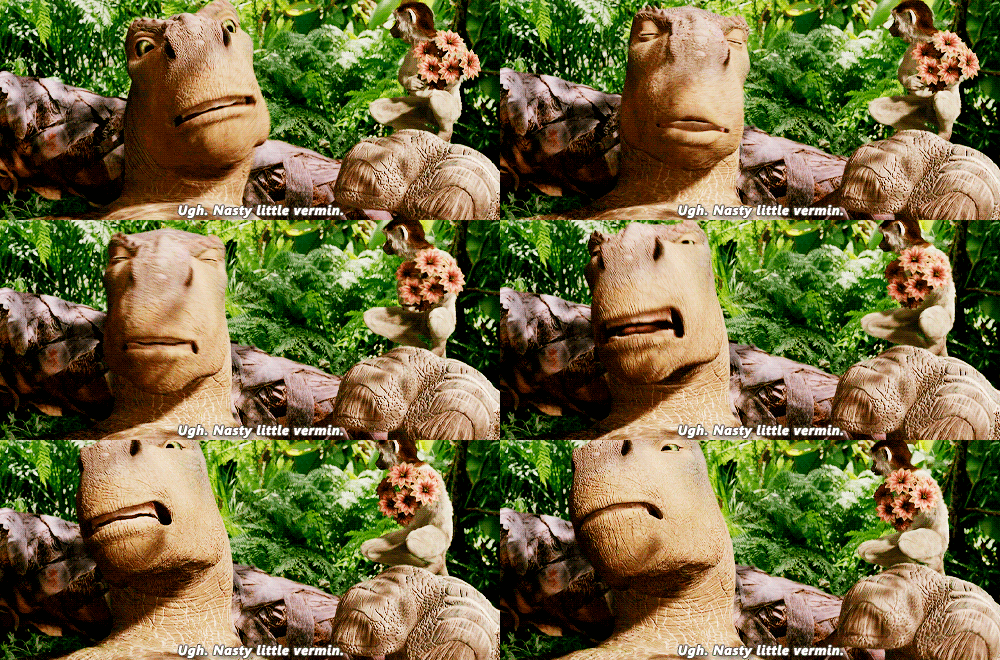 Not to be confused with The Good Dinosaur, Dinosaur came out in 2000 and is about a dinosaur named Aladar who gets adopted by a tribe of lemurs. The film depicts dinosaur end times – we see those nasty meteors hit, and the lemurs’ home is destroyed. They go on an epic trek toward more livable land (does this sound familiar? The Land Before Time anyone?) and encounter a big group of dinosaurs that actually make living a lot less peaceable.
