Author Archives: Jay

Beauty & The Beast

One word: underwhelming.

This movie is production-designed within an inch of its life. Like, literally it’s clogged with lustre and decadence. I find no fault with how it looks; a good faith effort was made to pay tribute to the original, to remind us of the classic animated movie from 1991, while still forging its own little identity, diverging enough from the already-trodden path to inject it with a life of its own.

Unfortunately, none of the new material really lands. Is this just me, loyal to the film of my childhood? Sadly not. But it does pale in comparison. No matter what Bill Condon does, this film inevitably fails to capture the magic of the first.  This is hardly surprising since it beautyandthebeast-beast-windoweschews the magic of animation. Well, traditional animation. The truth is, “live action” or not, Belle is the only human being in that castle. Yes, Ewan McGregor danced around in a motion capture suit to play Lumiere, and Dan Stevens waltzed in steel-toed 10-inch stilts for the ballroom scene, but they’re both playing CGI characters. Why hire greats like Emma Thompson, Ian McKellan, and Audra McDonald, only to hide them behind computer graphics, appearing “live” only in the last 20 seconds of the film? It seems a waste. I rather liked the live action remake of Cinderella, but then, that was always a story about humans, wasn’t it? Jungle Book  (which already has been) and Lion King (which is about to be) turned into “live action” films have little to no humans in them, so what’s the point? They were MADE for animation. Let’s leave them be.

Emma Watson, as Belle, is brilliant casting. She was originally cast in La La Land but left the project to do this instead. I think it was the right choice for her. Her voice is lovely and pure, and she reminds us that Belle isn’t just beautiful, but also smart and brave. Ryan Gosling was originally cast as the Beast and left this movie to do La La Land, and I think that was the right choice for him. Dan Stevens took over the role of the beast, and he’s okay. Director Bill Condon had hoped to create a beast look out of prosthetics, and he did film it that way, but in the end he was overruled and a CGI beast face was superimposed. Kevin Kline as Belle’s father, Maurice, is a wise choice. He’s older and less of a buffoon than in the animated film, but they don’t quite make sense of the character despite adding some back story. Luke Evans has the pleasure of playing everyone’s favourite cartoon narcissist, Gaston. No longer roughly the size of a barn, he’s still the cocky, selfsure Gaston we remember. It’s his sidekick who’s less recognizable.

The animated Le Fou is nothing more than a clown. In the 2017 version, Disney is proud to proclaim him their first openly-gay character, to which I say: hmm? This was maybe the movie’s biggest let down. Le Fou does not strike me as gay. He’s the kind of closeted gay that you only know about because it was issued in a Disney press release. What little humanity he shows already makes him too good for Gaston, but no real motivation is ever ascribed to him. It’s a Disney movie, so of course there is no real sexual tension, but nor is there even the slightest hint of romance or passion. There are more lingering glances between a young girl and a horned beast than there are between these two men. Nice try, Disney, but I’m not buying it. And it’s probably not the greatest idea to tout your first and only “gay character” as this bumbling idiot who languishes with an unrequited crush on a real prick, whom he helps to hook up with women. That’s pretty condescending.

But I take it back: Le Fou is not the most disappointing thing about the movie. In my little batb-02422r-2-a7172c76-a61b-423e-a41b-5965b3fef116girl heart, the biggest disappointment was The Dress. To me it looked cheap. And I’m sure it wasn’t: I’m sure that a dozen people toiled over its construction. I’ve heard it used 3,000 feet of thread, 2160 Swarovski crystals, and took over 12,000 designer hours to complete. Not worth it. The dress is disenchanting. In the original version, the dress is luminous, we believe it is not merely yellow, but spun gold. The one Emma Watson wears seems like a poor knock-off. It feels flat. And what’s with her shitty jewelry? In the cartoon, Belle’s ht_belle_beauty_beast_kb_150126_4x3_992neck is unadorned; why ruin a perfect neckline with even the most impressive of baubles? But Emma Watson’s Belle accessorizes her ballgown with a shitty pendant on a string. I can only assume this is blatant product placement and this cheap trinket will be sold en masse in a shopping mall near you, but it’s so incongruous it’s a distraction. For shame.


And for all the little changes this movie makes, tweaks to the back stories and the plausibility, one glaring detail remains pretty much the same. In the 1991 movie, the wicked witch condemns the prince to live as a beast until he can love and be loved in return; if he fails to do so before the last petal falls from the enchanted rose, he will remain a beast forever, and his household staff will remain household objects. In the animated classic, we know that the beast has until his 21st birthday to make this happen, and that this has been a period of 10 years. Therefore, the curse bestowed upon him befalls him at age 11, and for what? Because he didn’t let a stranger inside the house while his parents were away? He’s ELEVEN! And his servants are blameless. It always struck me as an extremely cruel not to mention unfair punishment. In this recent film, the role of the witch is expanded, but this only makes her motivations murkier. We see how harshly she has condemned a young prince, but she seems to overlook much worse transgressions. If this is hard for me to swallow, I imagine it must be even more unsettling for children who need to know that rules and punishments are meted out fairly, at least.

I could not have skipped this movie, the pull was too great. But there was no childhood here to be relived, just a fraudulent imitation that had lost its sparkle.

SXSW: Signature Move

Zaynab is a Pakistani-American immigration lawyer who is a) learning wrestling moves from a former pro wrestler who went by the name Jolt and b) keeping a new relationship with Alma secret from her conservative Muslim mother who doesn’t know she’s gay.

“Mothers and daughters aren’t friends in our culture,” Zaynab tells Alma. “That’s a very American concept.” Zaynab’s father is dead and her mother lives with her, almost claustrophobically, obsessed with SIG-MOVE-2-1024x683TV and spying on the neighbours but unwilling to leave the house. She’s particularly keen on spotting eligible men with her not-inconspicuous binoculars.
Zaynab, meanwhile, is just trying to find herself, in “life, love, and lady wrestling,” as the subtitle suggests. Signature Move, directed by Jennifer Reeder, is a mixture of culture and possibility, with Zaynab (Fawzia Mirza) wishing she could could live her life confidently “out” but juggling the reality of her mother’s disapproval and the pain the secrecy causes her new girlfriend. I particularly love seeing the generational difference between Zaynab and her mother (Shabana Azmi), how the mother will speak in her native tongue, and the daughter will respond in English as if this is the most natural thing in the world. Alma (Sari Sanchez), meanwhile, is perhaps her opposite, but she draws her out of the darkness while also having her own notions of identity and sexuality challenged. It’s an interesting little slice of life indie film that brings a refreshing twist on the tired romcom format to the screen.

SXSW: Bill Frisell, A Portrait

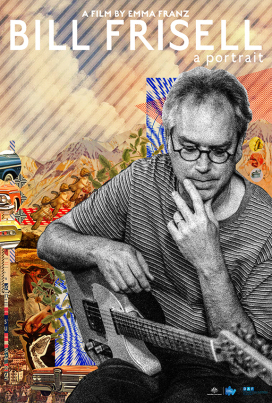
Bill Frisell’s discography is incomparable. He’s worked with the best of the best, all of whom consider HIM to be The Best. He’s an actual guitar hero, his influence widespread, his sound envied and copies and admired. But Bill remains an unsung guitar hero, his name not well-known to those outside the business, and he’s pretty content to keep it that way. This documentary, however, is a character portrait of this very interesting man, and very influential musician.

MV5BM2Y1N2I1OTktMGIxYy00N2I1LTljOTMtZjBjM2IzNDRiNjg4XkEyXkFqcGdeQXVyNzMwNzMyMjk@._V1_The good thing about this documentary is that so many people line up to talk about Frisell: director Emma Franz assembles the likes of Bonnie Raitt, Paul Simon, and more, and the amazing thing is that all of the people have nothing but glowing things to say about the man. The GREAT thing about this documentary, though, is that it contains plenty of live music to love and appreciate, and gosh he’s got a lot.
Bill Frisell seems reluctant to talk about himself (he is however, inclined to sing the praises of other artists), so every nugget teased out feels like a treasure. This documentary will look at the very things that shaped his sound, with particular time spent peering into his brilliant mind and trying to understand music the way he does. There’s lots of great insight here, an intimacy I hardly dared hope for.

His guitar collection is impressive, but not as impressive as his genuine love for each one. It’s so endearing. What a great documentary to have stumbled upon, and I sincerely hope that it’ll be available for your perusal also.


SXSW: Lake Bodom

True story: in June 1960, four kids (two 15-year-old girls and their 18-year-old boyfriends) went camping. Three of them were found dead, stabbed and bludgeoned to death; the fourth was bloodied and blank, with no recollection of the violent attack. This case has remain unsolved in Finland for nearly 6 decades, but theories have turned into legends, and this film is born of those campfire ashes.

In Lake Bodom, Atte (Santeri Helinheimo Mantyla) is obsessed with lake-bodom-2016-movie-featuredthe murders. He talks his friend Elias (Mikael Gabriel) into helping him recreate them, hoping to solve them once and for all, but Elias is in it for the sex, not so much the solving. They coax along two best friends who think they’re going on a very different trip – Ida (Nelly Hirst-Gee) is happy to escape her oppressively-religious home life, and Nora (Mimosa Willamo) is just happy to spend time with Ida.
Since this is a horror movie, you know what’s coming next: this isn’t just a recreation. Shit goes down! But Lake Bodom isn’t quite as predictable or straight-up as that. There’s a series of twists that defy expectation, melding several horror tropes into a single film, keeping you guessing and interested and creeped the fuck out. This film looks better than any horror film has to. Some of the shots are full-stop beautiful, which only adds to the ambiance. Atmospheric and well-paced, Lake Bodom provides thrills and anxiety in equal measure, earning every drop of blood splashed across the screen.

Lake Bodom has a relatively low body count, but if you’re in it for the gore, no worries: it makes each one count. In detail. Graphic, brutal detail. Fans of horror who are tired of the same old thing are going to love this. Well, love and hate this. It really is quite scary and maybe not as “fun” as a traditional slasher flick – there’s real meat here, if you can stomach it.

Lake Bodom will be released exclusively on Shudder May 2017.


Free Fire

Free Fire is basically a movie about an HR issue. Justine and Ord are two “point guys” in an arms deal. She’s bringing Chris (Cillian Murphy), an IRA guy who needs some M-16s to the table, along with his rag-tag crew, and he’s bringing Vernon (Sharlto Copley), the money-obsessed guy with a van full of guns (although, notably, NOT M-16s) and his own motley crew. From the minute these two rival gangs meet, the two sides are twitchy. All they have free-fire1to do is exchange the briefcase full of cash for the crates full of guns, and the deal is done. But they just rub each other the wrong way. Everyone’s got an unchecked ego, everyone wants to be the boss, and nobody’s going to make this easy. If arms dealers had HR ladies stashed away in some ficus-strewn office, all of this could have been resolved with a stress ball and some trust exercises. But arms dealers tend to offer very few benefits as employers, so instead it goes to hell.
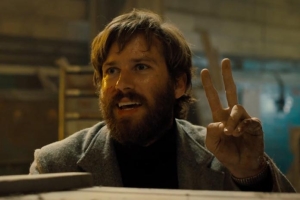
It goes gloriously to hell. It turns out that the driver of the first gang had an issue with the driver of the other gang the night before, and seeing each other turns a bad situation worse. Suddenly everyone’s whipping out their little pistols and bullets are flying. How many bullets? About 7000 rounds, said director Ben Wheatley. That’s a LOT of bullets. So the whole of the movie takes place in this abandoned warehouse where this arms deal has been all but forgotten, everyone shooting at each other, everyone forgetting which side they’re supposed to be on, the sides in fact disintegrating as it quickly becomes every man for himself.

I knew going in that Free Fire is a 70s shoot-em-up genre film, but I had failed to fathom how funny it is. Sharlto Copley is an absolute scene-stealer, his over-the-top character MV5BZjk1NjRiNzctZWFiOS00MGJkLWE0YWEtYTI5ODBmYzQwNjg4XkEyXkFqcGdeQXVyNjUwNzk3NDc@._V1_really embodies the pure fun and wackiness of this film. It’s madcap madness and I totally loved every minute of it. I didn’t know I could have so much fun at a Ben Wheatley film. A terrific script by Wheatley and Amy Jump is quotable, the cheeky dialogue rolling off the tongues of a delightful ensemble cast. The frenetic, non-stop energy sometimes makes it difficult to keep track of who is shooting who, and where, but once you realize that even the principal players are confused, it really takes the pressure off. The anarchy is entertaining and you can tell it was as gleefully acted and directed as it is consumed. No true hero ever distinguishes him or herself , which doesn’t mean you won’t find your own favourite to root for, only that’ it’s an even playing field where anything is possible.

Free Fire was meticulously choreographed by Wheatley but still required logistic heroics of cinematographer Laurie Rose and precision editing by Wheatley and Jump. The movie charmed me with its audacious humour but it also pulls off an hour-long assault that sounds one-note on paper but honestly, I could have had more. I love the recklessness, the wickedness, the irreverence; I was greedy for it the whole way through and Ben Wheatley served it up as only he could.

Check out the comments section for a Q&A with Wheatley and some of the cast!

SXSW: Mission Control

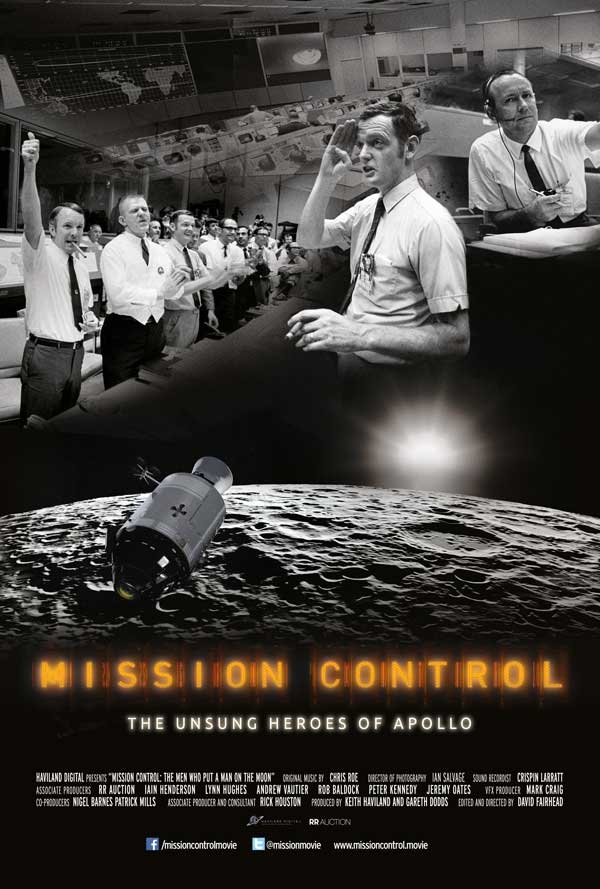
Mission Control: The Unsung Heroes of Apollo tells the story of the people who inspired the whole world with the accomplishments of their space program. The first men were young, the average age about 30, most didn’t even know what computers were but they were tasked with sending a man to the moon. They basically had to invent NASA and space travel from the ground up, on the thrillingly generous salary of $6770 a year.

This was such an important time in human history that you can’t help but be drawn in to this drama. In fact, it’s a real credit to the director, David Fairhead, that this documentary feels thrilling even though we all know extremely well how the story turns out. But it’s also contemplative and insightful, the men recounting the hard times that led to the successes, the loss of life that inspired them to do better, to do great things. And they certainly did.

This documentary focuses on the people manning the stations in mission control – the men in contact with astronauts during their space flight. Any problems encountered by the space craft is on their shoulders, with practically no time at all to fix unfathomable challenges and absolutely no room for error. Failing is not an option.

Mission Control is interesting not just for interviewing the people behind the history, but for painting them as real people, country boys and working class kids from smokestack towns. The position of astronaut or NASA engineer or rocket scientist were complete unknowns when they were growing up. And yet they became this remarkable team who defeated the odds and accomplished such great heights.

Fairhead’s documentary has got some really cool archival footage of those first journeys toward the moon – Apollo 8, 11, and even 13, which is as tense as you’d think. These guys remember this time like it was yesterday, right down to details you’ve never considered, like what the room smelled like when people were working for 5 days, nonstop, under stressful conditions, smoking like chimneys, no time to reapply deodorant. But these interesting details are also enhanced by beautiful VFX work and a really nice orchestral score. It’s exactly the kind of tribute that these men deserve.


SXSW: Atomic Blonde

I was sitting on the floor of the Austin Convention Center, waiting to get into the SXSW conversation between Nick Offerman and Nick Kroll when I got the news: Stella was gone. Out for a walk in the mountains near her Zurich home with her husband and her beloved Boxer, Odin, she slipped in some snow and fell 40m to her death. Just like that, one of the most vibrant women I’ve ever known, gone forever. Unfortunately I’ve had some experience with losing people unexpectedly, but that doesn’t make it easier. It’s unreal, incomprehensible. Sean held me tight as I fell apart in the middle of hundreds or thousands of happy festival-goers. I think Sean’s first thought was to get my soppy self back to the hotel room where I could grieve less publicly, but instead I found myself being filtered into the Nick Offerman thing, and then following my rigorous SXSW schedule, one thing after another: Bob Odenkirk and Fred Armisen, followed by Lemon, followed by Atomic Blonde. But it just so happens that the screening for Atomic Blonde ran late, and as I sat in an increasingly crowded theatre listening to a DJ spin some danceable 80s music, I had too much time to think, and my thoughts were filled with Stella, my own Atomic Blonde. This review is inadequately dedicated to her memory.

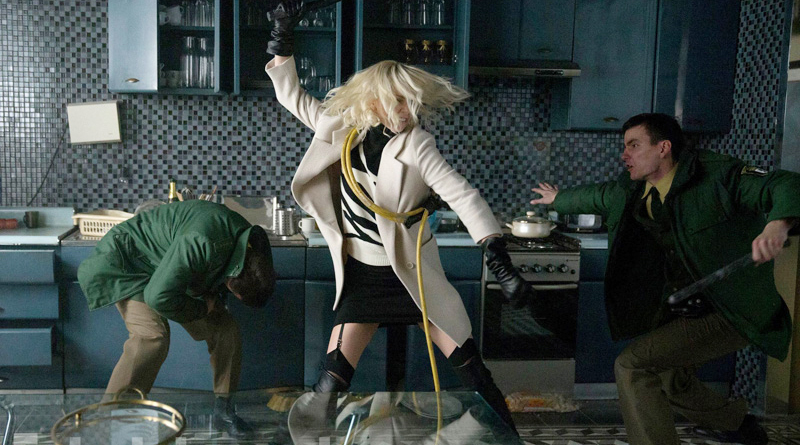
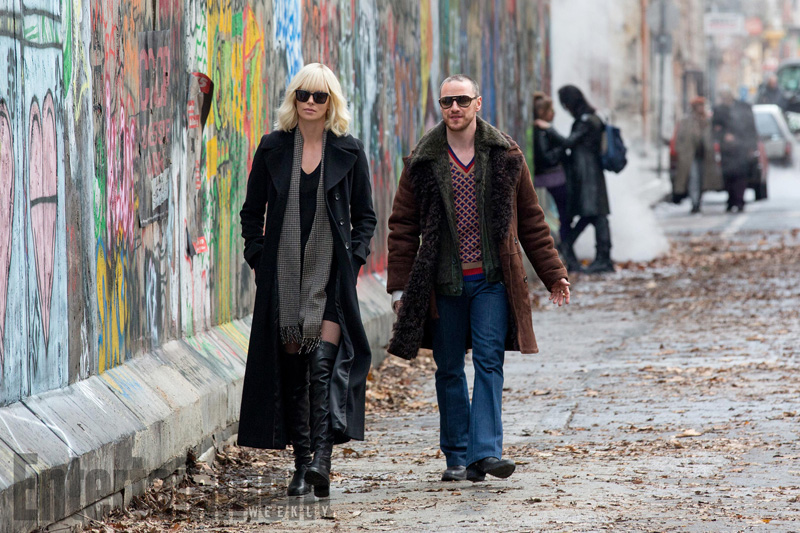
Atomic Blonde is a cross between James Bond and John Wick, except its protagonist, Lorraine (Charlize Theron), could kick both their asses without smudging her lipstick. Charlize made a splash as a kick-ass hero in Mad Max: Fury Road but this movie is pure Id, all sex and violence, with some 80s fashion and music thrown in for your hedonistic pleasure. Lorraine is an undercover MI6 agent sent to Berlin in the days before the Wall comes down to investigate the murder of a fellow agent and recover a important list containing the names of double agents.

James McAvoy plays David, a fellow agent who’s been in Berlin a little too long. Berlin is, of course, in a state of chaos. Everything is changing, everything is moving fast. Lorraine has basically been sent into an impossible situation, and she’s going to have to fight like hell just to survive, let alone fulfill her mission.

The fight choreography on this film is amazing. Full stop incredible. Director David Leitch co-directed the first John Wick (uncredited) and will direct the second Deadpool, but he got his start in stunt work in films like Blade, Fight Club, Daredevil, and The Matrix films. His action sequences, which are perhaps 80% of Atomic Blonde, are faultless but relentless. The actors are BRUTALIZED.  Charlize Theron had 8 trainers to prepare her for the role, and she trained alongside Keanu Reeves as he got ready for John Wick 2. Theron is fearless and dauntless. The violence is graphic and unending. The story, however, isn’t quite equal to it.

The story is retold during an investigation conducted by an MI6 officer (Toby Jones) and a CIA executive (John Goodman). They’re an odd couple good for a couple well-needed laughs, but it drags you out of the action and out of Lorraine’s flashy world where her slick 80s ensembles (big props to Cindy Evans for creating so many memorable looks) are an interesting juxtaposition to Berlin’s crumbling dumpster fire of a city. And the thing is, with a premise that’s almost silly in its duplicity, the action is really the justification for this movie’s existence. With long cuts and mind-numbing body counts, the fight design won’t disappoint action purists. But anyone requiring a satisfying story should maybe look elsewhere.

SXSW: Sylvio

Sylvio works for a collection agency call centre and makes films with puppets and miniature props in his spare time. He’s a pretty lonely guy, at least partially because he’s a gorilla who doesn’t speak human. He hides his pain behind cool sunglasses.

But then Sylvio finds his niche: he’s always been unintentionally great at breaking things, and now he’s found a platform that appreciates this special talent of his – local television.

This film may be about an ape but there’s a lot of humanity to it. Sylvio is the most literal of outsiders, and he just wants to belong, to be himself, to be accepted, to do what he’s best at. It’s tinged with sadness because Sylvio soon finds that success and commercialization aren’t the same as acceptance.

According to IMDB, Sylvio is played by Sylvio himself. Apparently Sylvio’s had a very popular act on Vine for years, and this film is due to people’s demand for more. Written by Kentucker Audley, Albert Birney, and Meghan Doherty (and directed by the former two), Sylvio is surprisingly soulful for an ape who doesn’t speak. I know it sounds a little wonky and I wasn’t sure myself if this was worth the time, but Audley and Birney have found a way to take 6-second meditations and actually make something of them. Sylvio turns out to be a thoughtful, well-realized film. It feels strange even saying that because Sylvio’s silence makes him pretty inscrutable. Am I projecting? Anthropomorphizing? Or is Sylvio truly a critique of the internet culture, the same one that gave birth to its origins?

The one thing it isn’t is pointless. This is what independent cinema is for, and SXSW is the perfect venue for it. It’s playing today, March 15th, at Alamo Lamar.

SXSW: Pornocracy

In 2006-2008, the porn industry suffered a great crash; as the economy tanked, internet piracy soared. The DVD market for porn virtually disappeared and the traditional porn studios became obsolete. Porn consumption, however, has never been higher – 100 BILLION porn videos are viewed every year, 90-95%  from free streaming sites. This has meant very bad things for the women making porn – less money (like, 10 times less), and less safety.

Director Ovidie was herself  the star of pornographic films for 17 years. Today her videos are being streamed for free without her consent, meaning they are much more easily accessed by everyone and anyone – including colleagues and relatives. Porn stars like Ovidie don’t really exist anymore. You may remember a time not so long ago when porn stars were worshiped. Today a woman’s name is rarely attached to her videos. Instead, she’s reduced to a series of tags and keywords, usually related to how many cocks are stuffed into her various holes – and yes, that number is going up and up.

Ovidie’s film Pornocracy explores the consequences of this:

  1. If everything is available for free, who is making any money?
  2. When everything is so easily accessible on the internet, children are seeing it from younger and younger ages (the average is 11). This is actually changing what boys expect from girls when they’re dating and starting to have sex.
  3. The porn industry’s reliance on drugs is rampant. Guys inject their penises to stay hard for 5 hours straight. Women are given child birth drugs to dilate muscles so their assholes can accommodate the 3 cocks expected of them. Then they’re flooded with lidocaine so she can’t feel herself being torn to shreds by the act – she will later though, and she will never completely heal.

This is not appetizing food for thought, but this is the world we live in, regardless of whether you yourself are watching porn or not. Everyone else is, apparently. Ovidie, known as the “porn star intellectual,” manages to investigate this phenomenon very thoroughly, uncovering the kingpin behind all these seemingly independent streaming sites. They’re nearly all owned by the same multinational corporation which is so seedy and shadowy with offshore accounts and empty offices. Fabian Thylmann is the guy behind the monopoly, exploiting performers while also boldly, shamelessly stealing from them. Ovidie makes sure he doesn’t get to hide behind his anonymity. This is an important, revealing documentary about the porn industry – but also about how it affects us all.


SXSW: Unrest

Myalgic encephalomyelitis (ME), commonly referred to as chronic fatigue syndrome (CFS). It’s a debilitating chronic disease as often misunderstood as it is misdiagnosed. People like to call it “the lazy disease” or “the I don’t want to go to work” disease. Doctors often diagnose a mental disorder rather than the autoimmune disease it actually is, telling patients “it’s all in their heads.” But to the 1-2.4 million people who suffer with it in the United States alone, it’s a disease that leaves you drained, sensitive to light and noise and possibly much else, perhaps unable to stand and walk. Permanently housebound and bedridden, they feel they’ve gone missing from their lives – it passes them by while they lie in bed, sometimes with cognitive impairments that make them feel like they’re not truly living.

Director Jennifer Brea is one such person. She was a happy newlywed when suddenly she just got hit with a disease she didn’t even know about. Robbed of the things she once loved doing, this film documents her daily struggles, the constant tug of war that must be waged against her body. She also reaches out to people around the world suffering the same thing, and together they try every supposed miracle cure on the market. When none work exactly as they hope, they stage a protest most are unable to attend. It’s really sad to see such vibrant people struck down by such sweeping disability. It is no wonder that despite serious medical symptoms, one of the most common causes of death for ME sufferers is suicide.

I am moved personally by this film because as you may know, I too have an autoimmune disorder. There are tonnes of autoimmune disorders and all but a handful are practically unknown, even to doctors. I admit to a small bit of jealousy when Brea complains about ME being the least-funded of the major diseases because my disease doesn’t even rate – we call it an “orphan disease”  – nobody’s even trying to cure it. There is no funding. There is no ribbon. There is no textbook. I’ve visited approximately 100 doctors and I’ve had to educate all but 2. The lives this disease ruins are too few for anyone to care. So in that way I understand perfectly what she’s going through; you have a terrible disease and you have no hope of cure. You have no hope, period. And on top of having no hope for yourself, you also have this huge burden of guilt because like her, I’ve dragged someone else into the equation. And while Sean is not sick, his life is also disabled by my disease. If I’m too riddled with pain to leave the house, he stays home with me. He cares with me. He deals with my terrible moods when I’m in pain, and my pushing him away when I’m in despair. He has brought me around the world to different doctors, and he feels the same low when I leave another appointment hopeless. In order to live our lives, I push myself out of bed and out of the house too often, and we both know I’ll pay the price. I’ve cried in anguish in Paris, outside the Centre Pompidou. I’ve bled across the Miami boardwalk. Even right now, in Austin, Texas for the South By SouthWest Conference and Festival, my suitcase is bursting with pills, gauze, and needles (that Sean has had to learn to inject me with) just to get me through, and I’ve limped along in secret pain, unable to even bring one of my most depended-upon medications with me because it’s illegal in this country.

So you’ll understand why I think a film like Unrest is so important. It sheds light in a dark corner of the medical community. It’s important to remember the real people who live their lives in this dark corner. They have voices. They have families who love them. They have friends who miss them. And if we cannot contribute to the cure, we can become allies. We can be witnesses and sympathizers and believers, so that nobody needs to hear from a doctor that “it’s all in your head.”

It’s screening at SXSW March 14 at the Vimeo Theatre and March 16 at Alamo Lamar, which serves great pretzels.