What a fucking movie, eh?
Chris Nielsen (Robin Williams) dies in a car accident and wakes up in an afterlife of his own making. The world he constructs is based on his wife Annie’s painting; everything is made of gobs of paint that squish beneath his feet as he walks and explode with colour when he grabs them. An old friend, Albert (Cuba Gooding Jr.), appears as his spirit guide, though he looks much younger than Chris remembers. It takes a little getting used to, but it starts to feel like home, especially when he reconnects with his children, who died years previously. The only thing missing is his precious Annie, but Chris finds out that the two will never be reunited. Annie committed suicide – she’s in hell, and there’s no coming back from hell. But Chris tries anyway, because heaven isn’t heaven without her.
What Dreams May Come is preachy even if you believe in this stuff, and if you don’t, well, it’s a hard message to swallow. We never get a glimpse of God yet we’re left wondering what kind of deity would kill all of Annie’s loved ones – her husband and both her children, in two separate accidents – and then judge her when the pain is just too much. It seems monstrous and unfair and is even harder to watch in light of Robin Williams’ own suicide.
 But visually – well, even now, 20 years on, it’s unlike anything you’ve seen. While the heaven-scapes are vivid and sometimes downright magical, it may be the visions of hell that haunt you. Robin Williams tiptoes through a carpet of faces – anguished people buried up to their necks, barely more than the holes necessary for breathing left exposed. The faces are pale and full of yearning. It’s awful – and it’s really awful when there’s nowhere for him to walk but over them.
Colours can be quite dominant – a blue tree a sad link to Chris’s past, the bright yellow of an eternal sunset, the red flames of hell. What Dreams May Come was one of only a few films shot on Fuji Velvia (RVM) film stock. Velvia is a type of film used most frequently for still photography of landscapes and other subjects because of its very high color saturation. It is only rarely employed for cinematography, usually when special effects are required – and boy were they! But these shocks of colour always mean something, whether in the afterlife, of simply through a flashback.
The “painted world” sequence is glorious. By building upon computer software developed by technical advisor Pierre Jasmin, a team devised a method of applying paint strokes to moving images captured on film so portions of the movie look like a three-dimensional moving painting. There are brush strokes that looks like you could reach out and touch them – and your hands would come away wet if you did. Live-action scenes were turned into living paintings with the optical flow technique, by which you track every single pixel in a moving image – in the end, it amounts to a layering of perhaps 10 different depths onto one image. See below for a comparison, before and after the effect is added to a scene:


This film was both breath-taking and ground-breaking; many of the programs used had to be written specifically for the film. One of the most moving images is of a particular tree that almost serves as a connection between the soul mates, though one is living and the other dead.

Rendered using L-System software, a program for defining the algorithmic development of plants and branching structures, the tree was designed with thousands of branches and 500,000 leaves, all of which are blown off and scattered in the wind. It is spectacular and heart breaking to see.
What Dreams May Come won the 1999 Oscar for Best Visual Effects.
 starting up yet another business (landscape design) and Nic is barely tolerating the effort. But Paul’s arrival is completely destabilizing. Not only is their daughter moving away, they also feel like they’re losing their kids to a new, cool parent who has never had to discipline them or hurt their feelings. When Jules goes to work for Paul, it’s kind of the last straw. No wait: when Jules sleeps with Paul, that’s the very last straw.
 them – the 642nd annual Witches’ Ball, on Halloween night. She’ll graduate alongside her mother, who, being a non-witch, has just converted, and the bitchy witch who’s been bullying her at school for not being “pure blooded” enough or some such bullshit. Anyway, as class valedictorian, Beatrix receives her crystal ball ahead of the ceremony, for inspiration. And she immediately breaks it. Well, bitchy, witchy Jasmine does, but it amounts to Beatrix being in big trouble – possibly barred from witchery forever. So she enlists the help of a talking pumpkin (voiced by Weird Al) and her enchanted pet rat (voiced by NSYNC’s Joey Fatone) to solve an excessively lame set of riddles that will somehow mend her broken ball.
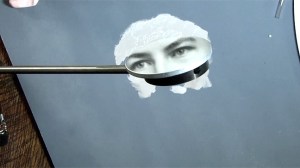 available to him at the time. What’s that, you ask? And I’m glad you did. It’s astonishingly simple: a mirror. A fucking mirror. It becomes possible to project a living image directly onto a canvas and to match colour and light exactly. Exactly! It’s astonishing to see Jenison whip up an oil painting using this technique. So Jenison, who has a whole lot of money, decides to reconstruct one of Vermeer’s most-used rooms to see if you can reproduce one of his paintings. And Penn Jillette (of Penn & Teller), a personal friend of his, becomes his documentarian.
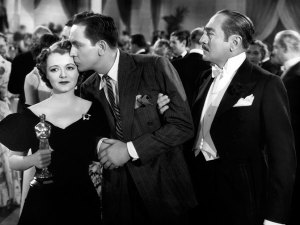 to be financing thousands of ingenues, and Hollywood is crawling with unemployed actresses. Esther is nearly down to her last dollar when she meets Norman Maine, a famous film star who eyes her both romantically and professionally. But as they fall in love and he helps her with her career, his own takes hit after hit. An unreliable alcoholic, Norman seems to have used up all the public’s good will.
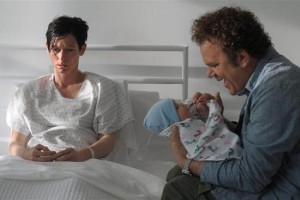 Tilda Swinton plays Kevin’s mom, Eva. Eva always struggled to bond with Kevin, who cried incessantly around her but was rather sweet with others. Can a baby deliberately antagonize his own mother? As a child, Kevin finds ways to blackmail his mother into getting his way. When Eva and husband Franklin (John C. Reilly) have a second child, accidents escalate and Eva becomes fearful of Kevin while his father can always excuse his behaviour. This fundamental disagreement puts a strain on their marriage. As a teenager, Kevin (Ezra Miller) commits a massacre at his high school, murdering many students. Eva transforms her life to support him in prison.