Author Archives: Jay

The Broken Hearts Gallery

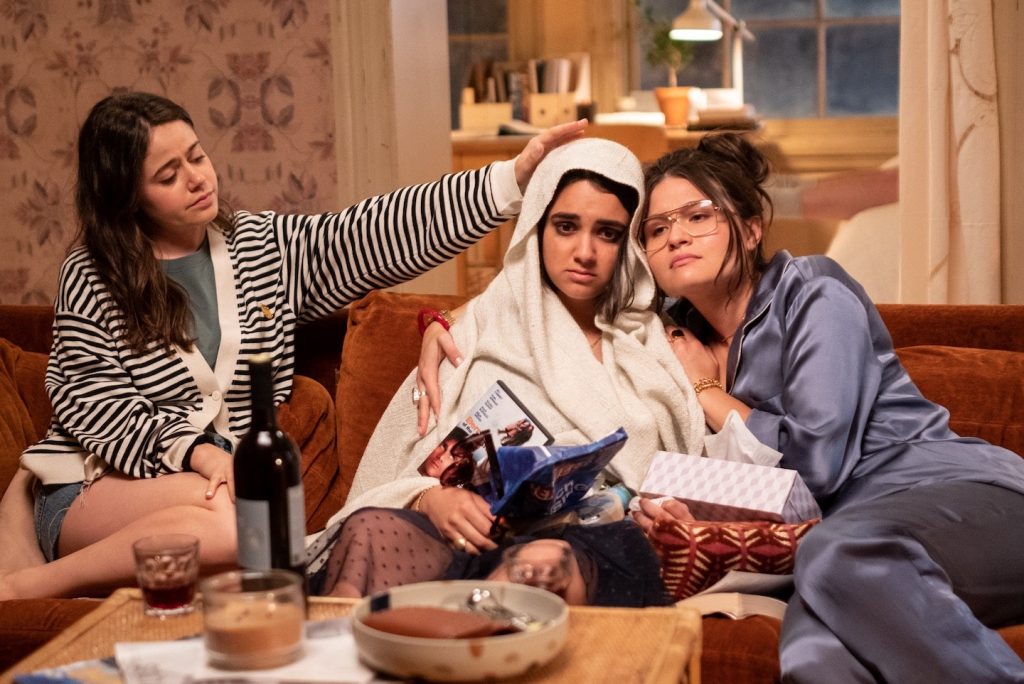
Lucy (Geraldine Viswanathan) moved to NYC to own a gallery. Has it worked out that way? Not so much. On the same night that she realizes her colleague/boyfriend Max (Utkarsh Ambudkar) is leaving her for an ex, she makes a drunken fool of herself at a work event and gets fired from her dream job working as an assistant to famed curator Eva (Bernadette Peters). Cue: black mascara tears and her best friends/room mates Amanda (Molly Gordon) and Nadine (Phillipa Soo) coming to the rescue, as best friends always do. Oh, and another entry into Lucy’s mausoleum of broken romances. She’s a memento keeper, you know, those little proofs of the love you once had, a love letter, a movie stub, a dried flower. Except Lucy is a memento hoarder. Her room is 90% shrine to love that didn’t last, and the piles are so high she’s lucky they don’t topple over and crush her. While her peers may be out documenting each day on the gram, she’s too busy memorializing the past to live in the now. Yeah, this is a pattern that’s repeated itself a few times.

Combining her breakup with her unemployment, she’s inspired to open a museum of heart break. After all, she’s hardly the only one who’s had her heart broken. Everyone’s got a story, and everyone’s got some little piece of evidence. Right? I, myself, am a bit of an emotional hoarder. I have every single letter anyone has ever sent me except from exes because this cold bitch leaves that shit fully behind.

Of course Lucy gets a little help and of course it’s from a cute boy, Nick (Dacre Montgomery), who is working on his own dream, turning an old YMCA into a boutique hotel, though at this point it’s still 96% disgusting old gym. And it smells like one too.

I have been looking forward to this movie for quite some time and I’m so, so grateful that it didn’t disappoint. Writer-director Natalie Krinsky knows what she has to deliver in terms of a rom-com that wary 2020 audiences won’t hate, but the main weapon in her arsenal is definitely Geraldine Viswanathan, who steals every scene she’s in and lights up every screen she graces. There’s an old fashioned charm to this film, and a very watchable ensemble cast. The movie’s roots may be in broken hearts but its emphasis is on healing them. This is easy, hopeful fare that goes down easy, like comfort food that’s good for you too. I wouldn’t mind a second helping.

Good Kisser

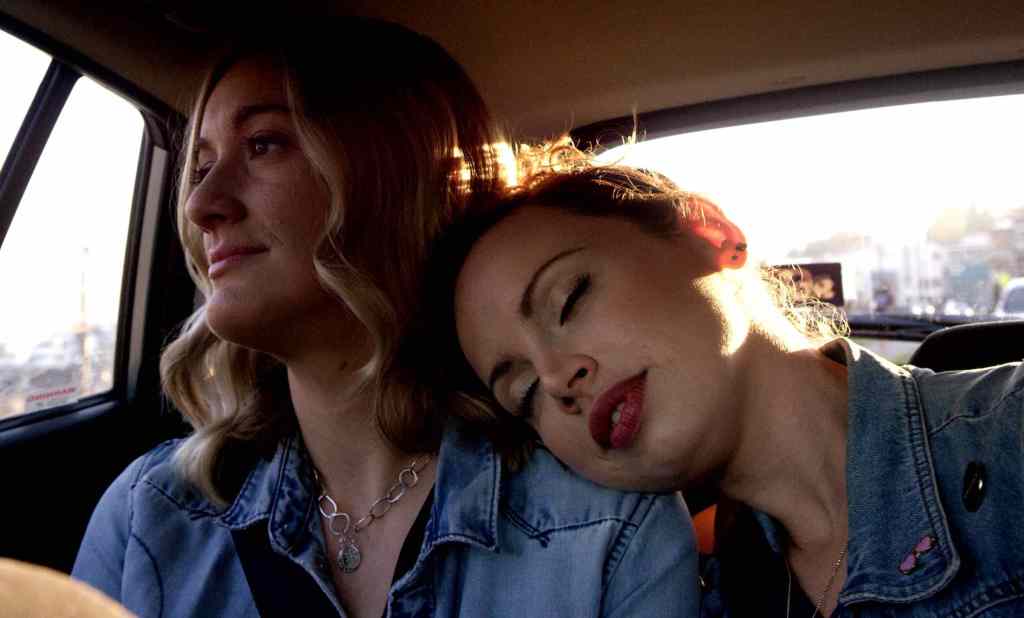
Jenna (Kari Alison Hodge) and Kate (Rachel Paulson) are ubering to their first threesome as a couple. Jenna is nervous, blabbering to their driver. Kate is excited, anxious to appease Jenna’s insecurities. They discuss code words and safe words and rules and limits but all that good stuff goes right out the door in the heat of the moment.

To Jenna, Mia (Julia Eringer) is a mysterious but seductive stranger. Kate and Mia, however, have some sort of history, one that Kate seems pretty intent on rekindling, pressuring Jenna to get those fires lit quick. But while Kate wants it more, it’s Jenna and Mia who seem to really connect, at least on an intellectual level. They have great chemistry outside the bedroom, but inside is another story, Jenna’s anxieties prevent her from really enjoying an intimate encounter with a random person, an issue that should have been clear to both Jenna and Kate, her partner of nearly two years, well before they got into bed with a third party. But it seems this was an effort to “spice up” their relationship, and is clearly a mostly one-sided endeavour. You’ll never see this coming but – spoiler! – turns out, a threesome isn’t a quick fix for a rocky relationship. In fact, it seems to be extra good at exposing the flaws in the foundation.

This is an indie movie with a pure, pure heart. Talented writer-director Wendy Jo Carlton has put her soul all over the page and the screen. None of the actors are completely natural on camera yet, but their professionalism and eagerness go a long way. And so does the spirit of the project itself, an LGBT movie that speaks to its own people. Far too often, movies about lesbian couples especially get made for the male gaze, the male hetero gaze, it probably goes without saying. That’s how you make a lesbian movie marketable. But Good Kisser isn’t afraid to deviate from the kissing. It’s talky, it’s neurotic, it’s questioning without being judgmental. What started out as a night billed as pleasure turns into one of pivotal evaluation and reassessment. If Good Kisser isn’t quite a Good Movie, it is at least obviously from a Good Director who deserves to have her next project have a Good Budget.

#Alive

Just a week or two ago, Sean and I were doing the Fantasia Film Festival thing and were about to watch a movie called Alive, for which I’d read the following synopsis: The rapid spread of an unknown infection has left an entire city in ungovernable chaos, but one survivor remains alive in isolation. It’s funny how we watch movies differently now that we’ve been living in pandemic-related isolation ourselves. Now I can’t even watch people in movies without face masks without feeling a bit of a fever coming on. But it turns out we were watching a different movie, also called Alive, no hashtag, and only now are we getting around to the more social media ready one, which is in fact the one with the raging infection.

Oh Joon-woo (Ah-In Yoo) wakes up alone in his apartment. His parents and sisters have gotten an early start, and Joon-woo isn’t exactly an early bird. Although he appears to be more or less a grown man, they’ve left him grocery money to restock the fridge, and his mother’s last plea is that he not spend the whole time playing video games while they’re away. Commence: video games! Except this turns out not to be just another ordinary day in Joon-woo’s life, as attested by the running and screaming of seemingly everyone else in his high-rise apartment building. Bits of news filter in from various media: some sort of infection transferred through blood is making victims extra violent and quite cannibalistic. You and I might call them zombies, or at least we did before we started battling super-bugs in real life. What will our zombie movies look like now? I bet they’ll cough.

A garbled final message from his parents implores him to survive, so he vows to stay in his apartment, but a) you’ll remember he never went for groceries and b) his apartment isn’t exactly invulnerable. Many days later, on the brink of starvation and in the throes of understandable depression, Joon-woo is all but resigned to his death when a laser pointer indicates another human presence. Out his window he sees that someone else has survived in the building across from his – a young woman named Kim Yoo-bin (Shin-Hye Park). Too far apart for real communication, and with flesh-craving zombies crawling around both their buildings and the parking lot between them, they remain alone but just a little less lonely.

I’m fond of movies that are about how life goes on even during the worst of circumstances, like how little boys still need to live their childhoods, even in Nazi Germany (Jojo Rabbit). And how romance can bloom even while a blood thirsty army is banging down your door. Ideal circumstances? Definitely not. But since when has that stopped anyone?

Director Il Cho navigates the complexities of a zombie-horror-romance in the smart phone age with blood, guts, and selfie sticks. Plus vlogs and drones for good measure. South Korea often does horror very well, and while I might not put this in Train to Busan territory, it’s a pretty decent watch, and since we are, for the most part, still social distancing as much as possible, it’s a good reason to stay home and stay safe, and let others take the stupid risks and internalize those consequences.

Stay #home, stay #Alive.

Get Duked!

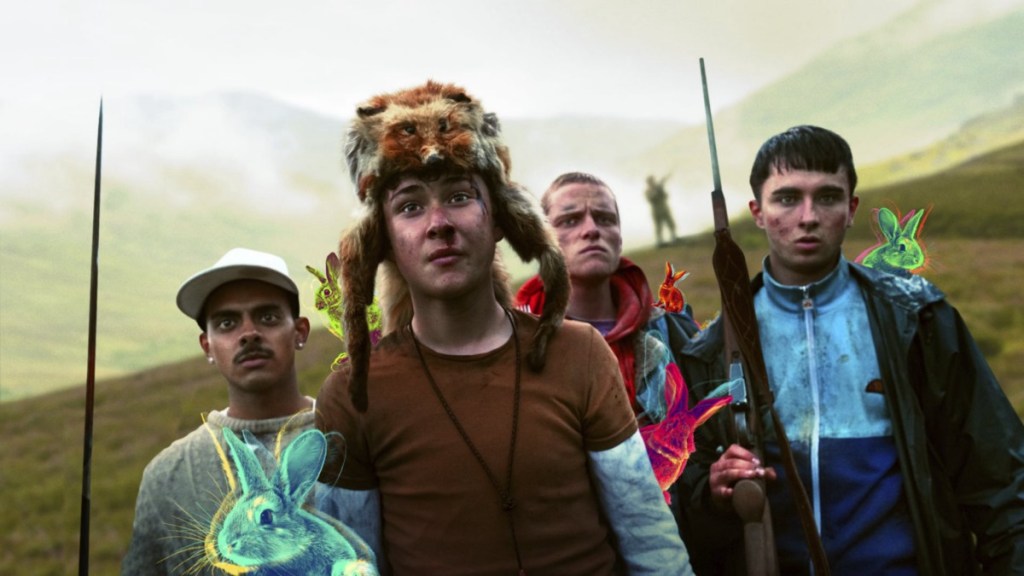
Duncan (Lewis Gribben), Dean (Rian Gordon) and DJ Beatroot (Viraj Juneja) know they have failed pretty spectacularly in their high school careers to have earned this punishment: the Duke of Edinburgh Award. They would have rather been expelled but instead they’ve been “volunteered” for the expedition portion of the award, which is apparently a real thing. Their teacher, Mr. Carlyle (Jonathan Aris), is dropping them off in the Scottish Highlands with only a map and…well, only a map, really. I take it they were supposed to have come prepared in some way but the only one who is marginally prepared is the fourth fellow who I haven’t mentioned yet, a home-schooled chap named Ian (Samuel Bottomley) who’s looking to pad out his resume. To be honest, though, not one of them notices the quantity of MISSING posters behind them as they pose for a farewell photo.

I saw this on Amazon Prime and knew that I’d seen some reviews of it lately, so I pointed it out to Sean, with some trepidation. I thought it was a horror movie. You know me and horror movies! But in a nice surprise, Amazon Prime politely told me it was a comedy adventure. Click!

Then the movie went on to rather rudely clear that up right quick: I was right the first time. I’m always right. But luckily it’s a horror movie the way Shaun of the Dead is a horror movie. Yeah, there’s some crazy killing going on, but it’s actually comedy, which goes a long way in diluting the heebie jeebies.

Turns out, them there hills are haunted with…The Duke of Edinburgh himself??? Well, he’s armed with a rifle and he’s pretty intent on hunting and killing his prey. Meanwhile, the chaos this little expedition is causing has completely confused the podunk little police force, and their inept little officers are now out to find a terrorist pedo urban gang of zombies.

This movie turned out to be the best kind of surprise. Even though it is indeed a horror movie, it’s a comedy-horror, and the rarest breed of those: an actually funny comedy horror. It doesn’t have lofty goals, it seeks only to entertain us, and thanks to a wonderful ensemble cast and a cute script that keeps finding fresh directions to veer off into, it doesn’t matter that the film has no compass. We’re off grid here, and it’s a total utter delight.

Rising Phoenix

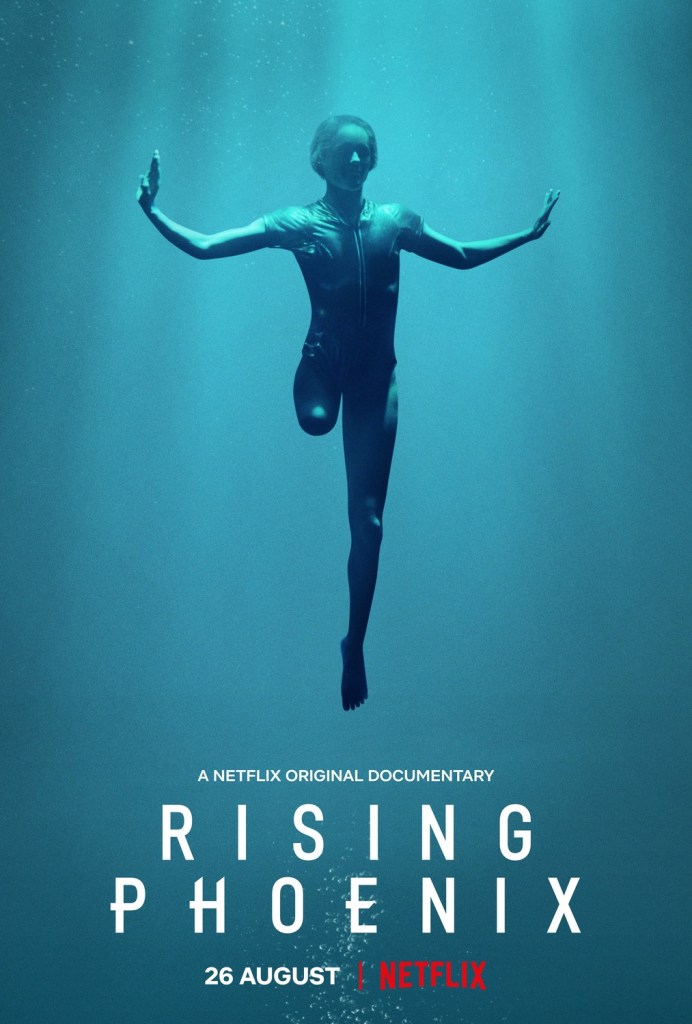
Dr. Ludwig Guttmann worked in a hospital with British WW2 veterans with spinal chord injuries. He quickly realized that some of the best physical therapy for their healing, both physically and mentally, was sport. In 1948 he organized the International Wheelchair Games. By 1960, no longer open solely to war veterans, the games were dubbed the Paralympics, held in Rome, with 400 athletes competing from 23 countries. Though the games were held for wheelchair-bound athletes, the “para” in Paralympics is not a references to paralysis, though that’s a common misconception. It was compound word formed to indicate that these games would run parallel to the Olympic games, and every year since 1960 they have taken place in the same year. In 1976, athletes with different disabilities were included for the first time. Able bodies all look the same, but disabled bodies can be disabled in so many different ways. The Paralympics can be broken down into 10 eligible impairment types: impaired muscle power (such as paraplegia), impaired passive range of movement (impairment of a joint), limb deficiency (amputation), leg length difference, short stature, hypertonia (reduced ability for a muscle to stretch), ataxia (lack of coordination), athetosis (involuntary movement), vision impairment, and intellectual impairment (the Special Olympics are also for children and adults with intellectual impairments, but it’s for building community and enriching people’s lives through sport no matter their skill level; the Paralympics are for world-class athletes). For many years now, the Paralympics have taken place in the same host city as the Olympics, almost immediately following them, and using the same facilities.

This documentary covers two major wings of the Paralympic experience:

  1. We hear from members of the International Paralympic Committee – Xavier Gonzalez, Philip Craven, Andrew Parsons talk about issues that have threatened the games such as subpar conditions in Atlanta, poor attendance and coverage in Athens, Russia’s refusal to host them at all in 1980 because they “had no disabled people” in Russia, and most recently, Rio’s Olympic committee running out of money before the games and stealing from the Paralympic pot to cover the Olympic expenses.
  2. We hear from the athletes themselves: Jonnie Peacock, the 100m runner who beat Oscar Pistorius; Bebe Vio, a beautiful young woman with no limbs whatsoever who still managed to win gold in wheelchair fencing; Jean-Baptiste Alaize, who survived a genocide to compete in the long jump despite losing a limb to a machete; Ryley Batt, who must be at least a little crazy to ram himself around the brutal court of wheel chair rugby; and many more besides. Everyone has an incredible story, but the athletes seem to appreciate that when they are competing, the sport becomes the story rather than the origins of their disability. The games are not about disability, but about people who have super abilities despite any impairments their bodies may have.

I was fascinated to hear more about the incredible people who work so hard to make these games happen and to learn not just how much they mean to the people who train so hard to compete into them, but to the rest of us, who have our notions of disability challenged when we see people competing at the top of their game. At the top of anyone’s game, frankly speaking.

Prince Harry, or the Duke of Sussex rather, at least at the time of filming, chimes in as the founder of the Invictus Games, which ironically have gone back to Dr. Guttmann’s original concept, giving wounded and sick veterans the opportunity to rehabilitate with the power of sport. We will likely be seeing more of him and wife Meghan since they’ve decamped from the palace to become Hollywood producers, signing an exclusive multi-year deal with Netflix to produce whatever kind of inspirational content they deem fit, be it documentaries, docu-series, feature films, scripted shows or children’s programming – and quite possibly all.

While Harry adds a little something, he’s probably the least compelling subject, despite his title or notoriety. These athletes are more than enough reason to tune into Rising Phoenix, which is inspiring without even trying to be.

I’m Thinking Of Ending Things

A woman, our unnamed protagonist, gets into boyfriend Jake’s car. After just 7 weeks of dating, they are driving to meet his parents for dinner at their secluded farm. The woman (Jessie Buckley) doesn’t particularly want to go, she’s got stuff to do, and she’s been concerned about some bizarre phone calls, but more importantly, she’s thinking of ending things. We are privy to these unvoiced thoughts as she and Jake make their snowy drive, but she keeps them from him. Or at least she thinks she does. Does she? They discuss life and philosophy in strange and circular ways, they quote poetry to each other, and we see flashes of someone else’s life, a school janitor. Whose memories are these? We don’t know.

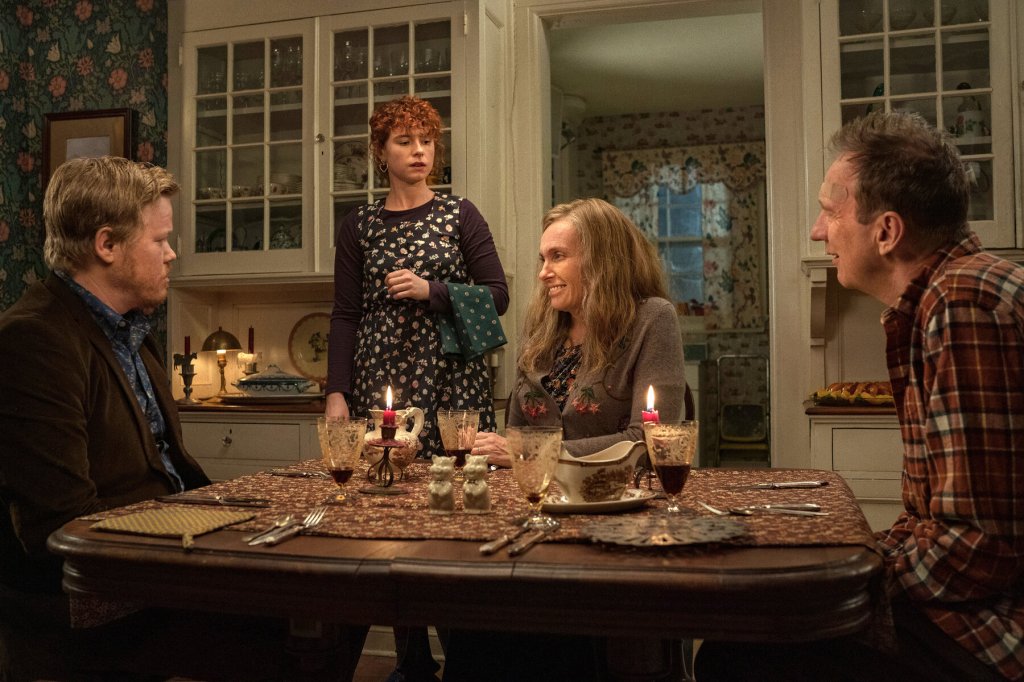
Pulling up to the farm, Jake (Jesse Plemmons) tempers his girlfriend’s expectations with some warnings about his parents, who may come off as odd. The girlfriend starts to wonder if they’re even expected or indeed welcome, but such thoughts are quickly swept away when his mom (Toni Collette) pelts her with prying and invasive questions all dinner long and his dad (David Thewlis) seems more and more angry. Right around dessert time, what has up until now been merely creepy starts to turn toward the surreal. Time, identity, and memory start to dissolve, and as the girlfriend begins to doubt herself, so do we. Meanwhile, that mysterious janitor only seen in flashbacks (flash forwards? flash sideways?) is now watching a film directed by Robert Zemeckis, and our own director Charlie Fucking Kaufman, seems really intent that we watch along with him. But why, Kauf? Why?

Back on the road, with a blizzard coming down around them, wrapping the car in a bubble of white, we’re feeling off-kilter, disoriented, disturbed, claustrophobic. And the Jake leaves the dark and deserted road to take an even darker, more deserted road. Turn back, you want to scream, you know they should, but they don’t.

If you were a fan of the book by Iain Reid, you’ll have some idea of what awaits them ahead, but you won’t be totally right. It’s Charlie Kaufman who’s adapted this, and the dude has some IDEAS. All told, I think the movie ends up less scary than the book, but weirder, if you can believe it. And it’s Kaufman we’re talking about, so you best believe it. If you’re a fan of his, you knew you were in for a strange and unique experience, and that’s exactly what you’ll get.

There are strings pulled in the very beginning that see you through to the end if you were alert enough to follow them, and not distracted by the red herrings, or the terrific and layered performances by the cast. Luckily Netflix is the perfect home for such a movie. If you’re into this kind of thing, you can immediately give it a rewatch, searching for those breadcrumbs, reinterpreting with the benefit of a view or two under your belt. And it’s still not enough, but it’ll give you a fighting chance. Kaufman’s movies reward your due diligence. They’re meant for cinema snobs who will invest their time and energy into a story, who are willing to work for it, and work at it. Deciphering the ending is its own adventure, and in some ways I suppose you get to choose your own – it’s ambiguous, unexpected, and a little bit haunting considering Kaufman’s leaving us with his own spin on longing, regret, and the frailty of the human condition.

Best of luck.

Mulan

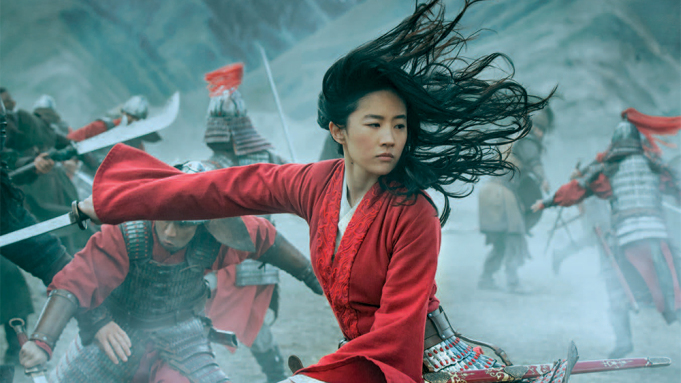
The reason why this Mulan live-action movie is better than its Disney predecessors is that it unyokes itself from the animated film and doesn’t attempt a scene-by-scene remake. The story is similar, but is more faithful to the Ballad of Mulan myth, with fewer Disney-fications. While Cinderella and Beauty & the Beast were meant to appeal to the little girls who watched and loved the originals, now grown up and ready to be dazzled all over again, they inevitably disappointed because you can’t recapture that magic in a bottle. Mulan doesn’t try. It’s not made for the little girls we used to be, but for modern audiences used to stunning cinematography and well-choreographed action. The movie doesn’t seek to appease our inner princesses but to waken our inner warriors. Don’t compare this to the animated Mulan, compare it to Wonder Woman, Atomic Blonde, Tomb Raider, Captain Marvel, Rogue One.

Mulan (Yifei Liu) is a spirited young woman whose childhood antics were somewhat indulged by her family but now that she’s of marrying age, she needs to dampen that fire in order to make an auspicious match and bring honour to her family. That is a woman’s place, a daughter’s place: honour through a good marriage and by being a quiet, elegant, composed, invisible wife. Her chi needs to be hidden away; it is meant for warriors, not women. But you know how this story goes. When the enemy Rouran threaten the Chinese empire, each family must send a man to fight, and since Mulan’s father has no sons, he himself is the only option, even though he’s disabled from the last war. To save him, Mulan steals away in the night, and poses as a man to take her family’s place in the Chinese army.

Niki Caro’s Mulan looks slick as hell. The colours are fantastic, the reds so vivid they’re nearly engorged, Mandy Walker’s cinematography bringing lush, diverse landscapes into sharp focus.

I love how grounded in history this movie felt; the animated film tread rather lightly on the reality of Mulan’s every day life, but here her mother reminds her (and us) of the dire consequences should her spunk be taken the wrong way, that such a woman would swiftly be labelled a witch and put to death.

At boot camp, sheltered Mulan is bunking among rough young soldiers. They do not sing their way through a snappy montage of training, they push their bodies to the limit trying to get battle-ready in time to save their country and their emperor. Friendships are made but they are also tested. This is not some summer camp – these young men know that their lives will soon be on the line, and they will need to count on each other in order to survive not to mention succeed.

The action sequences are stunning. Clearly Yifei Liu and company are the real deal, expertly trained and extremely convincing. Any movie that has the guts to bench Jet Li as the emperor and let others perform the martial arts had better bring the goods, and Mulan does. It’s not breaking new ground, but it’s well-executed and exciting to watch.

My one complaint is that the movie’s so intent on delivering incredible visuals and epic battle scenes, it devotes precious little time to developing its characters. We know that Mulan is fiesty and brave, but little else. We know even less of the others. Commander Tung (Donnie Yen) is a fierce leader and knows raw talent when he sees it but if he has any life or thoughts outside of war we aren’t privy. If Honghui (Yoson An) is surprised by the intimate nature of his friendship with the new, very handsome, very soft-featured soldier, he doesn’t show it, or shy away from it. He doesn’t mention it at all. And the other soldiers are just caricatures, filling up the ranks. But I think the real loss is in our villains, a duo didn’t inspire as much panic as their potential first teased. The one is just your run of the mill bad guy – his want and his greed are in opposition to China’s, and he’s pretty ruthless in his pursuit, but it’s nothing we haven’t seen before, in movies and in life. The other is by far the more interesting and I wish we could have known more of her, particularly because the final showdown between herself and Mulan is low-key amazing and I think understanding her a little better would only have strengthened that moment. Still, 1998’s Mulan had a villain, a Hun named Shan Yu, with eyes as black as his soul, who inspired not mere fear but terror, and we didn’t know anything about him. True, I was a child then, but I’ve rewatched it recently, and his menace is chilling, even without much context.

I enjoyed the 2020 Mulan. The cast was great. The film was incredibly shot and almost ridiculously beautiful. It evokes just enough of the first film through detail and musical cues. It was a treat, a rarity among Disney remakes, one that actually justifies its existence by incorporating the best of the first but improves upon it too, gives it a more mature and serious tone, one befitting a warrior, and that’s exactly what she is.

Love, Guaranteed

In need of a good old fashioned romantic comedy?

Like the vast majority of human beings this century, Nick joins a dating site after a failed relationship, looking for love. And looking and looking and looking. Since the site literally guarantees love, the next place he eventually looks is the fine print: guaranteed, it reads, as long as you’ve gone on 1000 dates. So he does.

Does that seem like a lot? Yes it does. How does he do it? Breakfast, lunch, and dinner dates. But no one ever works out. There’s the one who brings her parents, the one who’s allergic to everything, the one who jumps the gun…no one is quite right. So while he’s a perfect gentleman on the dates, Nick (Damon Wayans Jr.) keeps a file on each and every one of them because he’s building a case. When he’s got date #986 in the bank, he looks up lawyer Susan Whitaker (Rachel Leigh Cook), a hard working litigator with a reputation for crusading for just causes. She’s not overly keen on this case but she is rather keen on keeping the lights on in her fledgling little office, so she takes it, and the rest is history.

You know the kind of movie this is and so you know the path is must take to get to where it’s obviously going. It is not a long and winding road; it’s pretty darn straight forward. There are, however, some nice ornamental benches along the way, a few surprisingly tasteful streetlamps, and even some lovely flower beds lining the path.

I’m usually the last person to say this about a traditional rom-com, but it didn’t suck. Late 90s it-girl Cook pops up from out of nowhere and has some pretty believable chemistry with Wayans. Heather Graham plays a Gwyneth Paltrow type with a Goop-like empire. Even Susan’s ugly little car, haunted by the ghost of Tiffany, is so ugly it’s cute. Plus, the script by  Elizabeth Hackett and Hilary Galanoy is just a little smarter than the usual Hallmark-y stuff we’re stuck with lately (thanks to a chasm left by Nora Ephron in the genre). The two leads have cute, sparky banter, the supporting roles have identifiable personality traits, and there are fun little side-bars lampooning namaste bullshit and the fad diet trend of intermittent fasting. What’s not to love?

Wait: did I just say love? Love is a many-splendored thing but let me be clear that this review is NOT guaranteeing that you will love this movie. Only that should you tolerate rom-coms fairly well, this one is a nice addition to the lineup, and is now available to stream on Netflix.

Unknown Origins

Detective Cosme (Antonio Resines) is being put out to pasture, but he’s showing his young replacement, Detective Valentine (Javier Rey), the ropes before he goes. They inspect a gruesome crime scene together, a possible homicide of course, a maniac bodybuilder so intent on building muscle mass he winds up with a windpipe crushed by his own weights. Cosme is meticulous and organized in his habits, in direct opposition to his son Jorge (Brays Efe), your classic lazy slob, a good for nothing grown son who works at a comic book store when and if he gets out of bed and still lives at home. But luckily for Cosme and Valentin, Jorge spots something neither of them ever could: the crime scene looks suspiciously like a panel from issue #1 of The Incredible Hulk. And the next murder scene they’re called to seems to be another comic book recreation. Madrid has a serial killer on its hands, and Valentin will have to tolerate Jorge’s help to stop the man bent on using seemingly random victims to imitate various superheroes’ origin stories. Oh, and did I mention Valentin’s beautiful new boss Norma (Verónica Echegui) is a bit of a cosplaying geek herself? Yeah.

This cop movie is spiced heavily with super hero flavour. If you know and love comics, you’ll likely predict the outcome a lot faster than the rest of us, and pick up on clues and cues planted specifically for your discerning eye. The film is a little uneven, sometimes cheesy heroic catch phrases, sometimes gritty police procedural, sometimes real horror and gore, other times goofy costumes. And yet it’s obvious that director David Galán Galindo is not only offering a send up to the super hero genre, he’s inspired by it, influenced by it, and given it a more real-world setting than others have been able to. It’s less slick than M. Night Shyamalan’s Unbreakable, less glossy, less ambitious, but it’s obvious too. The script is occasionally awkward and juvenile, and the sole female character could use a fuller and more subtle approach, but mostly Unknown Origins is a story we know very well, and it works because we love the genre and we can never get enough.

Jumbo

I’ve been trying all day to figure out how to break this to you, and I’m no further ahead now that I was this morning, and you’ll see from the time stamp that it very very late in the evening now. Assuming I get something put on the page and hit publish tonight, which is assuming a lot since I still have bupkis. Well, that’s an exaggeration. Not the bupkis, the bupkis is spot-on. It’s just that by “all day” what I really mean is “intermittently, for the past 13 hours, for a total of probably not more than 90 minutes.” Which is still quite a lot as I can usually bang these out with great efficacy.

But this is what you get when you attend the Fantasia Film Festival, a festival dedicated to the weirdest and most wonderful corners of the wide world of cinema. It’s not for blockbusters, and not generally for Oscar bait, although it has hosted its share of contenders, including South Korea’s A Taxi Driver, Japan’s The Great Passage, and our own Tom of Finland. It’s been visited by the finest film nerds, including Ben & Josh Safdie, Guillermo del Toro, Mark Hamill, John Carptenter, James Gunn, Nicolas Winding Refn, Eli Roth, Takashi Miike, Ben Wheatley, and me. It’s funny because it’s true.

I have seen lots of strange stuff at this festival: people pooping out their living, breathing, emotional baggage; humanoid cockroaches; sex cam horror; an impregnated bathtub; a frog-man serial killer; a hunt for bigfoot; cannibal grandparents… and I could go on but won’t, for both our sakes.

But Jumbo…is in a category all its own. It’s about a woman, Jeanne, bit of a weird duck that one. Still lives with her mother. Kind of a loner. Works at an amusement park. Falls in love with a carnival ride. Typical French woman, eh?

So yeah. She calls him Jumbo because his real name (slave name?) is vulgar (and let’s face it, it’s more of a descriptor than a name). It’s one of those tilty-whirly rides that make kids squeal and/or turn green. And it’s dead sexy. Well to Jeanne (Noémie Merlant) he is. He’s very attractive, smart, funny…well, okay, it’s hard to see what exactly she sees in him, other than he’s just about the only one who hasn’t called her a weirdo. At least not to her face. And he does seem responsive: he flashes his lights, he takes her for a spin, he blows smoke and leaks oil…oil that is sometimes good and sometimes bad. It’s a bodily fluid I suppose, which at times makes Jeanne orgasmic and elsewise makes her anxious.

You know who else is anxious? Everyone who knows about Jeanne’s little crush. Suddenly being “a little odd” is seeming a bit more pathological. Her mother (Emmanuelle Bercot) is not exactly lucky in love herself, yet she still feels empowered to criticize Jeanne’s choice of beau. And the human male coworker (Bastien Bouillon) who up until quite recently had a crush on our Jeanne feels a little stupid for coming in second to a garish attraction that plays 80s songs while stirring up puke.

Writer-director Zoé Wittock deserves an award for the pure audacity to take such a story to the screen, to present it to an audience and say “Yes, I made this. On purpose.” But we can’t help who we love. Unless it’s an inanimate object, in which case we should really, really try. I can’t help but admire a movie that subverts even the modern romance, I can’t help but love Jeanne for her genuineness, her sincerity, but I can’t quite get on board with Jumbo. It’s an experiment, a bold one, yet still reminds me of things I’ve seen before (Under The Skin!). Jumbo and I are not a perfect match, which is find and dandy with us both – after all, Jumbo’s already got a girl, and despite what I felt was a marked lack of chemistry, they seem to be quite serious about each other. Quite.