Category Archives: Jay

Chef

I liked this movie. I can forgive the saccharine subtext of the father-son roadtrip to reconnection because this movie is visceral and delicious and real. chef-movie

Brace yourself, Sean, because I’m about to pay Jon Favreau a compliment: he’s perfect as this chef. Really perfect. He’s fast-paced in the kitchen, ambling in the market, bumbling with his son.

This movie’s already available to rent or stream. It was passed to me by a friend who thought I’d like it, and I aimed to pass the recommendation along to another friend, only he beat me to it, which hasn’t happened since Snow Piercer (watch it). We watch A LOT of movies. About a metric tonne in the course of a normal week, and we talk about nearly all of them, but recommend very few.

Why did so many of us connect with this movie? The passion, maybe. You really believe in the love of food, the drive in your marrow to just cook food that will taste awesome. And you get a real sense of the struggle between the guy with the money, and the guy with the talent. Of course they clash. And there’s another struggle, between the chef, a man who dedicates his life to his kitchen but doesn’t know too much about life outside it, and the social media-enabled foodie culture that can prop him up or tear him down.

This movie definitely pays tribute to a certain amount of food porn, some of which already feels a bit dated (and I admit, I flinched, flinched, over the lava cake bit, having just served it to guests myself about a month ago). Scarlett Johansson is unnecessary in the movie and I can only imagine that Favreau was just looking for any excuse to kiss her (and who can blame him).

I loved the energy and pacing once we took to road in the food truck (another very on-point moment in food), even if it occasionally felt like a commercial for Twitter. John Leguizamo turns out to be a fun side kick. Robert Downey Junior appears out of nowhere. Or, you know, out of Favreau’s back pocket. But the whole mess just starts to feel fresh and real and relatable, no matter what you do for a living. You can’t help but feel his humiliation and then root for his redemption, and be tempted by his sandwiches.

The villain, a food blogger played by Oliver Platt, is kind of a great counterpoint to our protagonist chef. He becomes our scape goat for all the internet bullies, and there’s a not-so-subtle plea for a return to humanity, or civility, or fucking politesse. Even a big tattooed chef has feelings, and you can’t eat all of them away no matter how good the food.

So yes. The ending’s trite, but the passion’s back in his life, he’s rejuvenated, we’re rejuvenated just watching him spark. It’s great. It’s fun. It’s making me bloody hungry.

The Theory of Everything

Finally a movie that answers the age-old question: Does Stephen Hawking watch Dancing with the Stars?

Okay, no, it doesn’t answer that. But go ahead and assume yes.

More like, is Stephen Hawking kind of a dick?

You go into this movie knowing that, whatever else, there will be a sure thing on your ballet for this year’s Oscar pool: Eddie Redmayne has already won. You may be less prepared for the fact that at times this movie feels like a companion piece to Interstellar (and I mean that in a good way) and that when the lights come on during the end credits, you’ll be caught in a packed theatre with tears still wet on your face.

This movie is strikingly well-lit. I loved the lighting, the glow, it felt romantic, and helped you remember that in fact this is not so much a biopic as a love story between Dr Hawking and his first wife, Jane. Eddie Redmayne was fairly forgettable in Les Miserables but absolutely claims the screen in this role, capturing expressiveness even in stillness, and showcasing joy and wit not easily conveyed. Felicity Jones, as Jane, may take a back seat on paper, but her performance stands up every bit to his. It’s a subtle portrayal, but strong and sure. Stephen Hawking, the concept, the icon, belongs to us all, but Felicity Jones reminds us that he is a man, and once, he belonged just to her. And there’s so much vulnerability and heartbreak, as a couple once deeply in love are forced into the caretaker and reluctant patient role that chafes for both of them.

I haven’t read Jane Hawking’s book upon which this movie is based. She wrote an earlier one that was much less forgiving, painting Hawking as controlling and almost dictatorish, and you can kind of pick up hints of that even in this second, gentler version, his manipulation of events, his reluctance to express gratitude.

When Stephen and Jane are still a very young couple, Hawking’s father tries to warn her away, saying that this will not be a battle but rather a defeat. He’s wrong and he’s right. Because there is a battle. Stephen outlives the projection by 50 years (and counting). But love is simply not enough. We see love grow, and then wither. And so this movie works much better as a study of love’s ability to withstand challenges than as a traditional biopic. Because I have read A Brief History of Time, and though there are touches, this movie is really “science lite”. It glosses over some pretty major milestones if the measure is the man, and not his marriage. But this is not a story about the failure of marriage because even as it crumbles, it seems a triumph that it lasted at all, and certainly as long as it did.

I wondered what Marsh would make of this movie – he won an Oscar some time ago for his documentary, Man On Wire – but would his work translate? If this was anything other than a story of real, living people, of a living legend in fact, it would be less dazzling. Certainly we’ve got a couple of knock-out performances and some very pretty things to look at, period wise, and even a few well-timed chuckles and some gorgeous gothic backdrops, but pulled together, does it make a Best Picture? It’s hard to say, because of course this isn’t just another period romance, this is the Stephen Hawking story, or at least a piece of it, and it feels incomplete for having just skirted around the outside of his genius. The thing that makes him most remarkable is remarked upon the least, and that feels a bit hollow. I still liked this movie tremendously, and was moved by it, but I suppose I also mourn for the many missing pieces.

Gone Girl

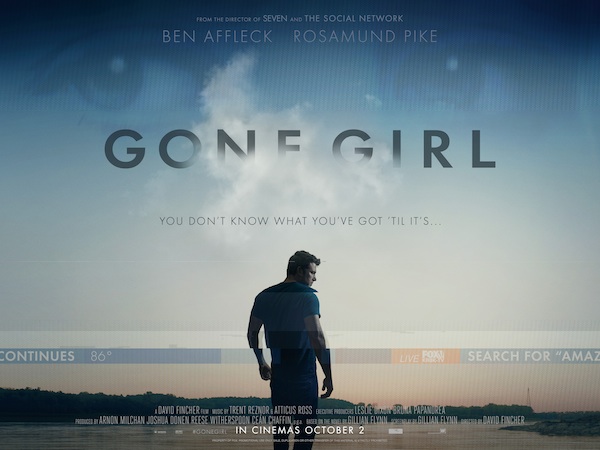
I didn’t like the book. It was too slick. You see it coming a mile away. It felt like an airport book done up in a fancy dust jacket so we’d mistake it as “lit”. It wasn’t.gonegirl

The movie? Trash. But exquisite,moody, sexy, noir trash that you can almost picture in a fast-talking, black and white, Hitchcockian way. Which is maybe what it should have been. Or maybe what it aspired to be.

It’s juicy and entertaining. The who-dunnit aspect is over surprisingly quickly, which is probably for the best since the book relied on the reader being really really dense and the movie gives us a bit more credit.

The movie succeeds with its portrayal of the media coverage of the disappearance of a beautiful blonde woman. Of course they’re going to jump allll down Ben Affleck’s throat, and of course Ben Affleck is a pretty good choice to play someone being hounded viciously by press (not to mention the brilliant casting of his chin!). The woman who does the Nancy Grace impression is spot-on. Rosamund Pike is also well-cast, and both she and Affleck handle their ever-evolving characters with subtety and competence. As an audience, we are constantly asked to re-assess what we feel about them as we learn more and like them less. Affleck excels at smug; Pike does chilling with panache. You can believe in the polarity of the characters, and that’s the hinge of the movie.

There’s a creepiness lurking about in this movie, even during the flashbacks to better times. They’re flirty, but they’re also just playing a game, and then that game gets serious, and then it gets out of control. Enter NPH, a slimy character if ever there was one. As much as I love me some NPH, I could have done with less of him in this movie, and more of Tyler Perry, playing a suave and yummy lawyer who takes the reins  and steers Affleck confidently into manipulating the media.

The questions in this movie will make you squirm (although, the sheer length of the movie may already have had you squirming anyway). Do we ever really know our spouses? Can we? And what is “true self” anyway – if we present ourselve very carefully and consistently one way, isn’t that what we mean by “identity?” And if nothing else, the movie’s ending will leave you in agony. Sweet, sweet agony.

Interstellar

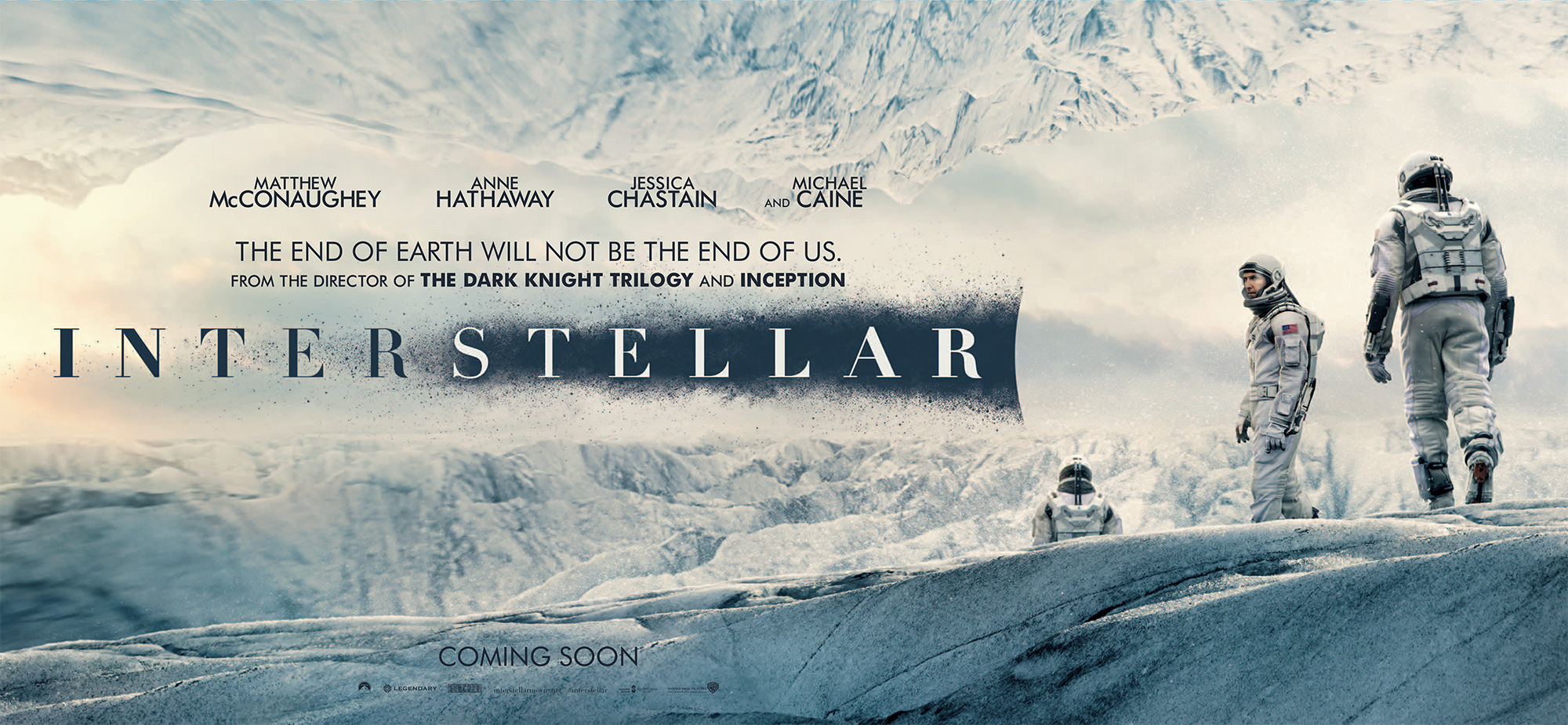
Chris Nolan is a closet softie, and a not-so-secret fan of the happy ending, and has now twice been given the opportunity to kill of Anne Hathaway and not taken it. Spoiler Alert! Catwoman lives!

I recently sat in the very packed IMAX theatre at SilverCity for three hours that didn’t quite feel as long as they were because Nolan packs a lot in his punch and there wasn’t much I would cut. Even from the vague trailers, you knew going in this was going to be an epic story.

Confession: I came out of the movie very frustrated with a certain paradox that the audience is just supposed to accept because some space cowboy told us so. It felt like lazy story-telling to me.

And also: this is a cold movie. You’re going to want to bring a sweater.

Back to the story. We are presented with a very dusty, dirty future where the only viable crop left is corn (sidebar: as someone who grew up among the rows of corn in a small town named after it, this feels to me less like the future and more like hell). McConaughey is a not-too-happy-about-it farmer when he stumbles upon an underground bunker containing not only NASA, but mankind’s only hope for survival, aka, a secret mission to outerspace! And even though just moments ago this mission was going full steam ahead without him because he didn’t even know it existed, his help becomes so necessary that, with the burden of extinction on his shoulders, he leaves his motherless children behind (in the grouchy old hands of John Lithgow) and takes off for the stars in a search for a suitable planet to call home.

Then this film becomes about difficult choices. They’ve got to be made. And so characters constantly wonder aloud – to whom do we owe the most, our children, our species, ourselves? Oh man. So hard. And as my lovely sister pointed out, in case you missed an important decision being pondered, the music swells in all the right places, and very probably, someone will begin dramatically reciting a Dylan Thomas poem though they will miss its point and use it in all the wrong contexts. But they’re scientists, goddammit, not artists. Scientists who miss glaringly obvious data for convenient plot twists, but still.

interstellar

And the film is also about time. Not just time-is-running-out, though it is that too – the people on earth will not survive beyond existing generations. They are starving and suffocating. It’s about this “relativity” concept, how time runs differently out there, and just one ditzy-damsel-Anne Hathaway moment can cost McConaughey a decade with his kids. Those are maybe the most real moments of the film, when he’s just a father grappling with time’s passage, the agony of a sacrifice bigger than he ever knew or understood.

So yes. I had problems with how Nolan explains away the essential question of the film. He sets up something vague yet plausible but then ruins it with ego and pathos. I hated the basic premise of let’s throw away this earth and find another to rape and pillage. At times the film is downright bad (the “love transcends all” theme seems forced and childish and simplistic, and the ending is a little too Hollywood for my taste – Nolan, I expected better), but it’s also quite quite good in others. Visually stunning for sure. Haunting. Beautiful. Lonely in the right ways. And contains many nuggets of interest that are sure to be water-cooler talk for the rest of the month at least. Warts and all, it’s worth the watch.


St. Vincent

Reviewed by Jay

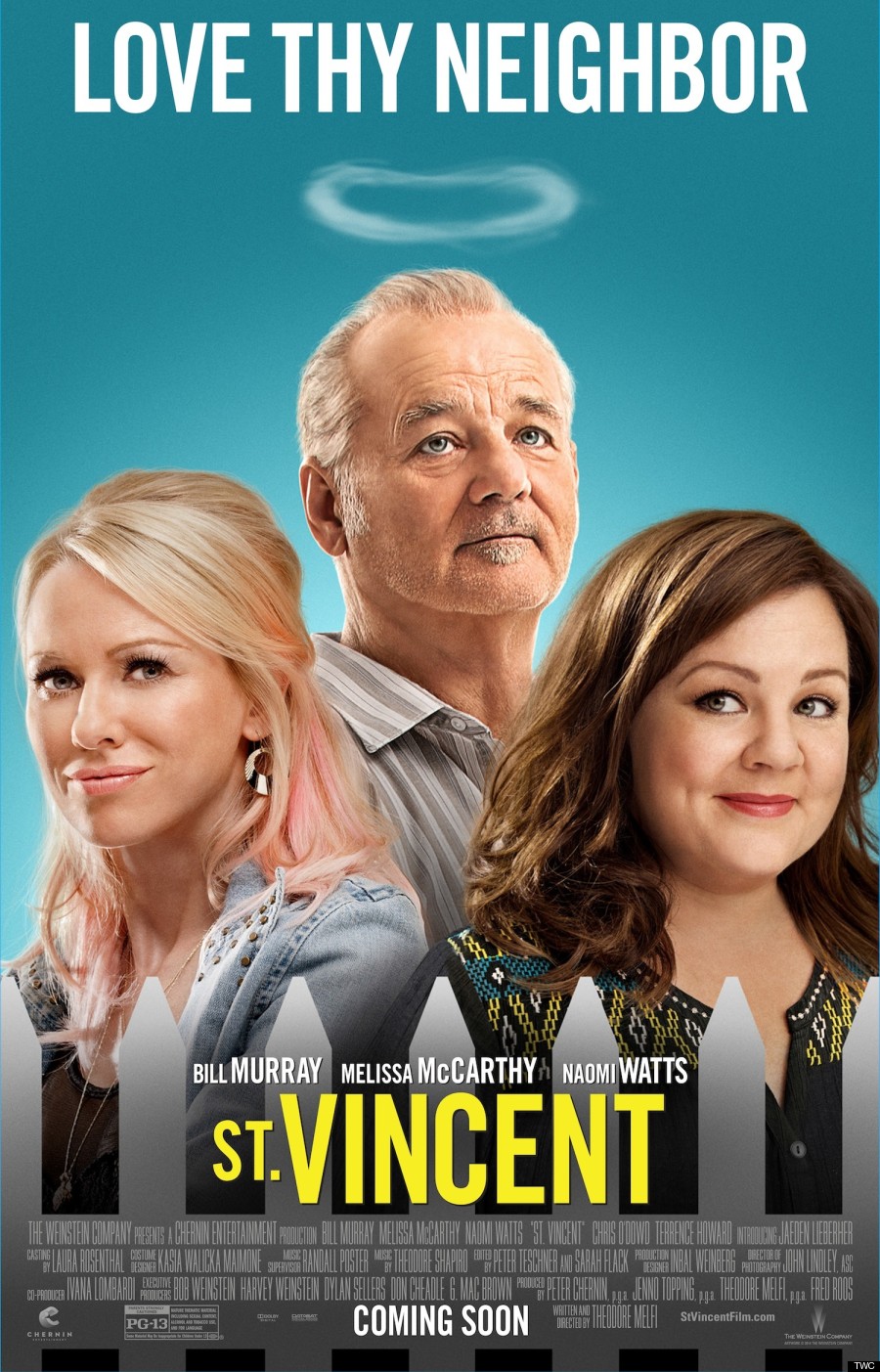
The plot here has the potential to be revolting – sweet lonely kid next door befriends curmudgeon; the world becomes a slightly better place. Luckily, in the hands of Bill Murray, the script mostly escapes cliche and is often sublime. This is Bill Murray at his Bill Murrayest. Nominate him for an Oscar right now. He won’t win, but it’s honour, blah blah blah.

Murray has great chemistry with the kid. But then again, if you stayed through the credits, you know he’s got great chemistry with a house plant. His character’s a mess, often literally (“Where’s all my dirt?), often bleeding and badly bandaged. Naomi Watts was a bit of a head-scratcher, playing a pregnant Russian hooker (with a heart of silver? bronze? aluminum?) with an accent verging on cartoonish. Melissa McCarthy is great in her role of newly-single mother. She feels a bit wasted on the role, playing it very straight, although it does bring welcome relief from her recent flood of obnoxious characters. Chris O’Dowd, playing man of cloth\teacher, is criminally underused. The audience eats him up every time he’s on screen. The kid is a delight, and not too obviously acting, so I’d like to shake his hand for that.

Bill Murray makes this movie. Kudos to the director for knowing he’s got a star vehicle and for finding the exact right star – the only star – for the role. Bill Murray does eccentric grumpy old man quite well. It’s a hoot to watch, every time. But it’s the tiny moments of gruff tenderness that blow you away.

It’s a little long for a comedy, but if a little long means Bill Murray bumbling his way through Bob Dylan, then so be it.St. Vincent

The Angriest Man in Brooklyn

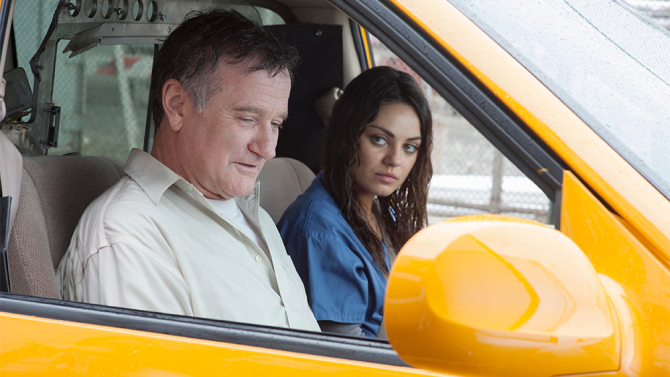
Henry (Robin Williams) is angry. Crazy angry. Sitting in his car he can think of no better way to pass the time than ranting. Henry hates a lot of things. Henry rants away his commute until something he can REALLY get angry about happens – he hits a cab. Then he really unleashes.

hero_AngriestManinBrooklyn-2014-1A precautionary trip to the hospital reveals a problem that his doctor hadn’t told him about yet: brain aneurysm. Yikes. But his usual doctor’s out on vacation so Dr. Sharon (Mila Kunis) fills in, but she’s not exactly having a great day either. How bad is this brain aneurysm? It’s pretty bad. Like, 90 minutes to live bad.

What would you do if you had 90 minutes left to live? For most of us, it would be squeezing the last drops out of joy out of life, phoning loved ones, making sure people know how we feel. For Henry, who has destroyed his marriage and is estranged from his son, this is about to be a difficult 90 minutes.

It’s an interesting concept that fails in execution. I never believed Henry. Henry’s anger was out of control and over the top. Robin Williams does a untitledterrific stand-up rant so I know he’s capable of playing a deeply disturbed individual. However, ever time Henry got going, I was always expecting it to end up somewhere funny. It was just too much to be taken straight. The writing is really weak – Henry’s anger just doesn’t seem genuine. Tonally, The Angriest Man in Brooklyn flops around like a fish out of water, gasping for a last breath.

It turns out that Henry has some good reasons for being angry, and these 90 minutes would have been better spent redemptively.  The closest he comes is in remarking that his tombstone will read 1951-2014, and that the dash is where it’s at: a true but oft-repeated sentiment. Sadly, this would be Robin Williams’ last movie. I hate to see his brilliant career end on this note. I’m also sad to report that his own tombstone reads 1951-2014. I hope he lived his dash to its fullest. As for this movie which lacks the language to efficiently say “don’t waste the time you have”, I can only caution you to include this movie in the waste of time column. Life is too precious for bad movies.


Postcards From the Edge

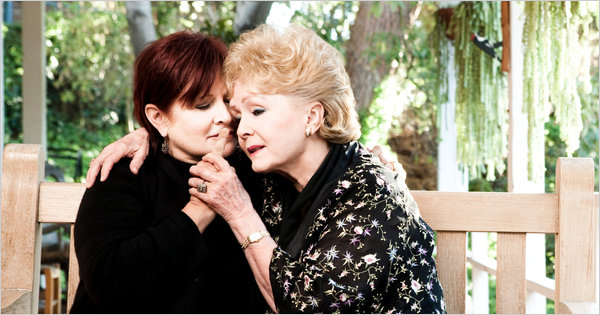
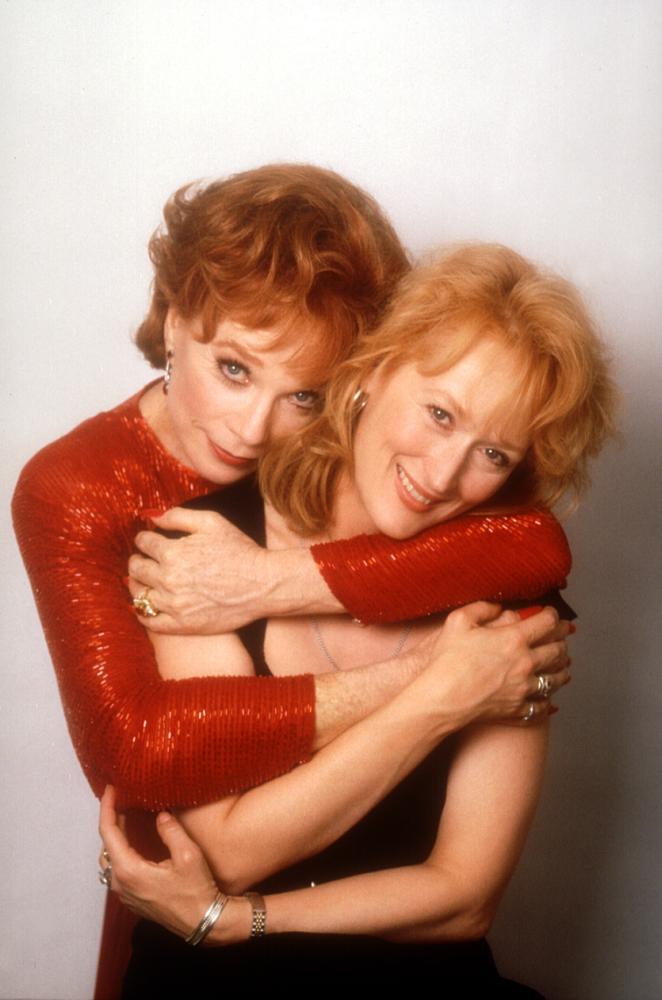
FISHER-1-articleLargeDirector Mike Nichols helps Carrie Fisher brings her best-selling confessional novel to the big screen. Based on her own life (her mother is the fabulous Debbie Reynolds), Carrie writes about a middle-aged troubled movie star (another Oscar-nominated performance by Meryl Streep) who survives rehab only to be relegated to house-arrest with her overbearing, scene-stealing Hollywood-icon mother (Shirley MacLaine).

The thinly veiled rivalry between mother and daughter makes for some pretty unsettling tumblr_nimcjrvp631qzheh0o1_500confrontations. Fisher and Nichols are both Hollywood elite themselves, which means there’s plenty of in-jokes and winks to paper over the lack of depth in the plot. There are no real insights into addictions or family drama here, but there’s an emotional wallop that just may get you, if the sight of MacLaine’s shapely legs in a slitted red dress don’t get you first.

Melodrama has never looked so good: cinematographer Michael Ballhous does career-defining work here, while Nichols does his usual smug, detached thing over in the corner. Do either of these things save it from the inevitable clichés? Not really, but you’re more disposed to forgiving them.

If you can look past the scandal-free safety of the film, there’s a secondary cast to make up the difference: Dennis Quaid as the sleazy boyfriend, Gene Hackman as her demanding director, Richard Dreyfus as her sensitive doctor, and was that Annette Bening I saw? IMDB says you bet your balls it was! She’s whoring it up with cynicism and wit.

If you were a fan of the book, you’ll notice the film has lost its acerbic edge. It’s all about the comedy here, and even an almost-lethal trip to the ER for a good old-fashioned stomach-pumping can’t quell the chuckles. MacLaine and Streep shine through showbiz and show tunes, and if it’s a little shallow, it’s also a good dose of fun.


Rise

Based on a true story, Rise is the story of Will, a young nurse falsely convicted of rape and sentenced to maximum-security prison. The story focuses on his unlikely friendship with a hardened fellow inmate, and the lawyer making sacrifices on the outside to get him out.

Writer-director Mack Lindon is that nurse, and Rise is his story. It’s personal to him. It means something. I hope the process of creation was cathartic for him because he understandably has some demons to exorcise.

The movie paints a pretty fair portrayal of both guards and prisoners, a rarity among prison movies. The movie doesn’t seek to make devils out of anyone, not even the woman whose lies have condemned him. It’s more a story of struggle and survival. However, I still would have liked to have at least heard from his accuser. Her voice is absent from the movie and that only raises red flags.

Prison is a degrading experience for anyone – but what does it do to an innocent man?


Ed

1996 – in retrospect, an insanely innocent time. Charles and Diana officially divorced. Nintendo 64 was flying off the shelves. Dolly the sheep was cloned. Deep Blue defeated chess champ Gary Kasparov. The Internet was growing in leaps and bounds (from 1 to 10 million host computers in a single year) but in the time before Snapchat and Google, we had ICQ and Ask Jeeves. Spice Girls has their first #1 hit with Wannabe and TV stars were jumping off the small screen and onto the big one: Helen Hunt did it in Twister, and the Fresh Prince in Independence Day, and Joey Tribbiani from Friends got to make a shit little movie called Ed.

Matt LeBlanc does not play the title character. That honour goes to an honest to god monkey. LeBlanc plays Coop, a farm boy turned minor league ball player who’s got a rocket arm but no experience – turns out, he’s a bit of a choker. So that’s why when the owner buys Ed the chimpanzee as team mascot, the chimp rooms with Coop.

ed-1996-00Turns out the chimp’s a bit of a ball player, and pretty soon he’s fielding third base and actually setting glove ablaze with his fast ball. The story is embarrassing, probably particularly for second-tier bit part Jim Caviezel, who maybe styled himself a more serious actor than, say, TV’s Matt LeBlanc, or, frankly, the monkey in a baseball cap.
In the film, Ed has a meta moment in which the chimpanzee Ed watches an episode of Friends, the very sitcom that made his co-star Matt LeBlanc a star. Ed’s watching clips of a discarded Friends cast member, Ross’s short-lived monkey, Marcel. Marcel was played by a real monkey on the show, but Ed is most assuredly not. He’s a poor combination of animatronic head and person in a monkey suit.

The role of “Ed” is attributed to both Jay Caputo and Denise Cheshire. Jay Caputo is a former gymnast turned stunt coordinator. He played apes in both Tim Burton’s Planet of the Apes (2001) and Rise of the Planet of the Apes ten years later. His movie credits include  Forrest Gump, Space Jam, Batman & Robin, and Thor, and Taurus World Stunt Award performances in Monkeybone, The Animal, and Swordfish. Denise Cheshire’s post-Ed credits include Jack Frost, Mighty Joe Young, and Men in Black II.

Ed is an unequivocally bad movie, with an unyielding 0% on Rotten Tomatoes and 4 Razzie nominations to its name (it “lost” worst screenplay, worst screen couple and worst picture to Striptease; Matt LeBlanc losing worst new star to another TV crossover, Pamela Anderson in Barb Wire).

And that’s all I have to say about that.


Ordinary People

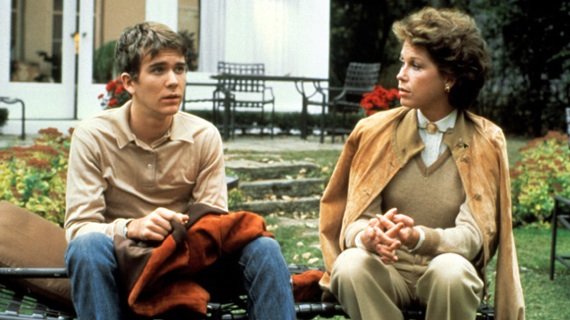
20140201_040737Calvin (Donald Sutherland) and Beth (Mary Tyler Moore) are two ordinary people who meet with extraordinary circumstances when their oldest son dies in a tragic accident and leaves them grief-stricken and unable to cop with their suicidal surviving son, Conrad (Timothy Hutton).

They seem like an ordinary family, but grief has a way of throwing things off-balance, of demanding things of people they are perhaps unable to give. And this family is one of those stiff upper-lip types, with no foundation for talking about feelings, unused to having things go wrong.

Conrad is drowning in survivor’s guilt. His parents are reeling. They are coping alone, poorly, Ordinary-People-23-11-09-kcicily, until director Robert Redford skillfully peels back the layers and exposes their beating hearts.

It’s a bit uncomfortable to watch, a bit grim. This is the dirty laundry that everyone’s trying hard to conceal. Judd Hirsch plays a therapist who helps to ruthlessly dissect the great WASP psyche. Even when pointing fingers, the film still strives for sensitivity. For just a little while, the mask of self-control slips, and we’re the recipients of raw pain between searing walls of silence.

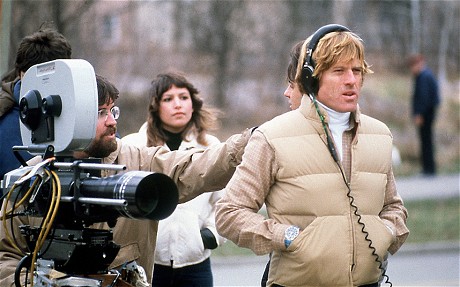
Ordinary_People_2750391cThis was Robert Redford’s first directorial effort and it won him the Oscar for best director. It was also the screen debut of Timothy Hutton, and he walked away with an Academy Award for best supporting actor (Mary Tyler Moore was nominated for best actress despite having less screen time than Hutton; she lost to Sissy Spacek for Coal Miner’s Daughter).

Oscar controversy: Ordinary People won the Best Picture Oscar in 1981, some people say “stealing it” from Martin Scorsese’s Raging Bull. Ordinary People is by no means a bad movie, but Raging Bull is a pretty seminal film, maybe the greatest sports movie of all time, De Niro’s a tour de force, and the Academy has a history of snubbing Scorsese. In hindsight, Raging Bull is the one that’s held up the best, and appears on lots of 50 best ever lists, but you can watch and decide for yourself.