Category Archives: Movie Reviews

Our reviews and thoughts on the latest releases, classics, and nostalgic favourites. Things we loved, things we hated, and worst of all, things we were ambivalent about.

The Archer

Lauren is a nice kid, a good student, a champion archer whose post-medal celebrations turn sour and result in her arrest. The judge has all the reasons in the world to go easy on this first-time offender, not to mention the extenuating circumstances that all but exonerate her, but instead he throws the book at her. Off she goes to an open-ended sentence at a “reform school” that looks and feels a lot more like a sadistic prison.

There she finds dozens of girls just like herself, imprisoned for very minor offenses. But it’s their jailers that cause the most concern: there are no checks on their behaviour. They can get anyway with anything, and do. But the cruelty, humiliation, MV5BNDU1ZWYyN2UtNGY5MS00NjE2LTk1N2ItNGE5MDcxZmEzMTY3XkEyXkFqcGdeQXVyNDM4NTU5Njc@._V1_SX1776_CR0,0,1776,778_AL_and sexual perversion isn’t just for kicks, it’s also serving a purpose. Because every time a girl fights back, her sentence is extended. And that’s very good news when you’re running a corrupt, for-profit scheme.
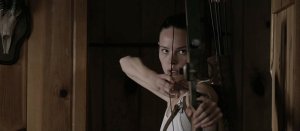
So one day Lauren (Bailey Noble) and her new friend Rebecca (Jeanine Mason) decide to make a break for it. No one has ever escaped successfully, but desperation drives their attempt. But to protect the prison’s ugly secrets, its warden will literally hunt them like animals to make sure he doesn’t get exposed.

This film has an incredibly strong female in its lead, and Noble was the perfect choice to play her. She’s got grit and determination but we still believe her as a somewhat naive high school student. Their flight into hills is tense and taut film making, and though the prisoner on the run thing’s been done before, this one is a fresh enough take to grab and hold your attention.

The Archer is inspired by the 2011 conviction of two judges in Pennsylvania when a federal investigation uncovered millions of dollars in kickbacks for their sentencing teenagers to a for-profit youth detention centre.

Twilight Dancers (2017)

Far too often, an indigenous community makes the news because it’s dealing with a suicide epidemic. Cross Lake, Manitoba is one such community. In 2016 there were 140 suicide attempts in Cross Lake within a two week period. Six people were successful. Those staggering numbers are even more devastating when you consider that the population of Cross Lake is about 5,000 people total. Afterwards, the community was left to try to pick up the pieces.

One way through the pain was dance. The Twilight Dancers are a dance troupe from Cross Lake, and this documentary short follows its members as they compete in the 2017 Cross Lake Trappers Festival. The closeness of the community is obvious from the start. Every one of these young people has been affected by last year’s suicides, in one way or another. Bullying and social media are frequently cited as the causes, to which I am sure we can all relate.

Dancing is not an obvious solution to this type of crisis on reserve, particularly square dancing (which, as several of the kids point out, came from white people). But it clearly works. These dancers are survivors, they are talented, they are dedicated, and they are spreading joy to their audience as they chase a championship. Their positivity through tragedy is inspiring.

The Twilight Dancers show us what it means to never give up, and I am glad to have heard their story.

24 Snow

We encountered all kinds of interesting documentaries at the Planet in Focus film festival, but I’m admitting a soft spot for 24 Snow.

I have a passion for documentaries anyway. A camera can actually be a transportation device, carrying us away to a world that looks and feels entirely different from our own. Sometimes the lens looks upon a piece of fiction that’s been created to jar your senses (like Blade Runner 2049), other times it encourages you to take a second look at something that’s quite familiar (like The Florida Project), but documentaries can do both while actually reflecting real life back at you.

24 Snow isn’t fiction but it definitely felt foreign to me, and its foreignness informed me on a world I knew little about. With this documentary, we travel to the Siberian Russian territory of Yakutia. I didn’t know there were Russian Inuits, yet there they MV5BOGRkMDk5NjctMmMwZC00YjUxLWExM2QtZDdlY2Y5MzcyZjIzXkEyXkFqcGdeQXVyNTA3MzMxMTg@._V1_SX1777_CR0,0,1777,999_AL_were, surviving in that beautiful but frigid (-70C) land. We are introduced to one main in particular: Sergei is a horse breeder, and even his horses will look strange to you. The Yakutian horse has of course evolved to weather the icy temperatures. They are small but sturdy animals, with shaggy coats that hopefully keep them warm. Their thick hair and manes are not unlike those of Shetland ponies but when you see one completely coated in ice, you know you’re in unfamiliar territory. The breeders de-ice the horses the way I de-ice my windshield. It’s a way of life I can’t really comprehend: solitary, isolated. No telephone, no electricity. No cash. No cars (none that can run you through ice and snow anyway – sleds get the job done).

These harsh conditions are a real test of one’s limits and it’s interesting to get to know the kind of person this job attracts. I live in Canada and am not unfamiliar with snowy, even permafrosted terrain, but the Yakutia is something else entirely. It’s stunning if you can separate it from its harshness, and the lush cinematography here certainly helps. The people and beasts of 24 Snow completely captivated me; it’s a fascinating documentary by Mikhail Barynin that’s as informative as it is beautiful.

Breathe

Breathe is the directorial debut of motion-capture artist Andy Serkis, and if there was any justice in this world, it would be his last. [there isn’t: he’s already got a live-action Jungle Book slated next – but at least he seems uniquely qualified for that]

It’s the based-on-a-true-story of Robin and Diana Cavendish, an adventurous, fun-loving couple who are brought low when Robin (Andrew Garfield) is suddenly and irrevocably paralyzed by polio. He wants to die, but she wants their unborn son to know him, so they compromise: she springs him from the hospital, and he does his best to stop being so gosh darn glum. He’s the first of his kind to live away from a hospital setting, and it’s thanks to the devotion of his wife (Claire Foy) and the ingenuity of a friend (Hugh Bonneville) that he’s able to do more than just survive.

So yes, there’s an inspiring story in there somewhere. This is Andrew Garfield’s most hero_Breathe-TIFF-2017Eddie Redmayne role yet, but he can’t quite live up to those man-in-chair heights. As his character is paralyzed from the neck down, all he has to use is his face, and of course he overuses it. I liked Foy’s performance a lot better than Garfield’s. He came off as grating; Sean called it nearly unbearable. But he’s far from the only problem with the movie. First, the script is cloying, predictable, and overly sentimental. It’s an emotional predator, designed to wring tears from your face. I refused to comply. It hits the all-too familiar beats of a biopic and doesn’t stray once from conventional story-telling. But Andy Serkis’s direction does stray from the norm, and from the tolerable. It’s shot in an ultrawide aspect ratio that I hated. I felt like I was watching a skinny rectangle at best, but often felt as though I was viewing the movie through a fishbowl. Serkis’ angles are often weird, and not quirky weird, but uncomfortable and off-putting. But I suppose the worst crimes against this little against-all-odds love story is that Serkis rushes through the prologue, the courtship, the thing that should make us understand why this guy deserves so much devotion, why their love is so strong that she’s willing to wipe his shitty bum and go without sex for the rest of her life in order to keep a suicidal man alive. It’s a crap life for her. I’m not saying it’s not worth it, just that it’s always going to be difficult. And I realized that though there are seemingly lots of movies about men being tended by loyal wives, the same is not true in reverse. Husbands cut and run. So really the movie’s most interesting character is Diana, and we know little about her. We don’t see any of her struggles or her inner life. In fact, for Breathe’s 117 minute runtime, I’m not sure we got to know anyone particularly well in this movie. And that’s really too bad.

Kayak to Klemtu

Teenagers. They think they know it all, don’t they? They have this unbearable self-righteousness. They can take a motorboat to testify about the dangers posed by oil tankers and not feel a little hypocritical, not even a bit.  The big picture is missed. Kayak to Klemtu, Zoe Hopkins’ first feature, finds itself in the same quandary.  Various problems arise, the characters deal with them as they come, and then the scene shifts to the next problem, without ever engaging with anything of significance.

I wished throughout that I got to know the characters. Too often, characters would appear solely to serve the plot or provide a moral question of some sort, and then disappear once they had set up that segment of the film.  Discussions that would seem to be important often didn’t end up happening, whether it was the reason why the teenagers’ parents left Klemtu in favour of Vancouver, or why a mother and son never asked each other how they felt during their husband/father’s battle with cancer.

Those missing details pile quite high by the end of the film. By focusing so heavily on a crusade for environmental protection, Kayak to Klemtu misses the bigger picture. Paradoxically, the “bigger picture” here was one small family in mourning, looking for ways to cope with the loss of a loved one. Their journey takes a back seat to the film’s anti-pipeline, pro-conservation message, and it should have been the other way around.

With so many beautiful shots of the northern British Columbia coastline to be found in Kayak to Klemtu, the conservation message would not have been lost if the characters had been driving the film instead.   If anything, the message would have been more impactful, as the onscreen journey through B.C.’s coastal waters argues more effectively in favour of conservation than a monologue ever could.

Laundry

Kids ruin everything. They especially ruin sex. Carly is a happily married woman who just wants 10 minutes alone with her husband for some quality time.  He’s definitely on board for the same. But try as they might – and they do try – the kids are always interrupting. Eventually Carly finds pleasure rather by surprise, making a sharp point of what exactly a mother might find…orgasmic.

Director Becs Arahanga is a mother herself so the inspiration behind this short film is quite personal – and what parent could possibly fail to relate? Although only 9 minutes start to finish, New Zealand’s Arahanga images her film as a rom-com, and there’s a definitely will-they-or-won’t-they appeal. Her direction is jaunty and to the point. She manages to give us a sense of Carly’s family even as she makes the greater point of the universal yearning for intimacy, and the finding of pleasure in unexpected places. Carly is instantly relatable and her struggle looks and feels authentic. Without a second’s lull, Laundry is never less than fun. It’s an ode to marital horniness and the little fuckers who make it all impossible.


Food Coop

There’s a grocery store in Brooklyn that’s 5 times busier than other markets in the area; it’s a food co-op, where members trade labour for access to the best and freshest food sources.

The Park Slope food co-op is kind of great in an old-fashioned way, with so many people MV5BZjA2OTQ0NmQtOWE1Yy00OGU5LWI4ZDUtYWZjNjkzZmYwMzFhXkEyXkFqcGdeQXVyMjIxMTk4Nzg@._V1_from all walks of life willing to put in work (2h45m monthly) in order to keep labour costs down for the greater good of this beloved co-op. And it clearly is very much loved. It offers locally sourced, often organic products for 40% cheaper than you’d find in luxury grocery stores, and the food on offer here is much, much better.
The documentary Food Coop, by directors Thomas Boothe and Maellanne Bonnicel, explores this strange beast that exists in the shadows of Wall Street but thrives on a different kind of economy, one that is community-minded and fair. For the people who work and shop there, it fosters a neighbourly spirit where people are making connections with each other, and with the food grown within just a few miles of them. The film also serves as a guide book of sorts for others who might be interested in starting up a co-op. It’s a viable alternative system that seems to have few drawbacks. It’s democracy in action, good food in the belly, and a more planet-friendly approach to food and consumer culture. There’s a lot to be learned, but one of those lessons is just that the personalities that keep a food co-op running successfully over decades are quirky and varied. The people watching is almost as good as the system is tempting.


Lucky

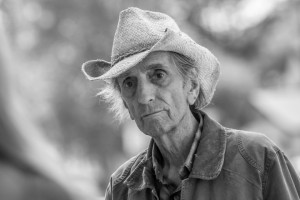
Lucky is an old man, a washed up cowboy who’s living out his remaining years in a small town where his routine means everything to him: a daily glass of milk, some exercise, coffee and crosswords at the local diner, devotion to his game shows. Just because he’s alone doesn’t mean he’s lonely. But then a brush with his mortality reminds him that death comes for all of us, and he starts reevaluating a thing or two.

We missed seeing Lucky at SXSW this year; our schedule was packed and we had to hds_photocredit_stefaniarosinichoose between several old-guy movies (we ended up seeing The Hero and The Ballad of Lefty Brown). We can’t regret seeing either of those movies, both are good, but there is one mitigating factor. Harry Dean Stanton, star of Lucky, died last month at the age of 91. And there is, I believe, a difference between watching an old man come to grips with his age and death’s proximity, and watching a man who we know was actually met his maker be confronted with his expiration date on screen and admit to us all that he is scared. Oof.

How does a 90 year old atheist feel about death’s encroachment? You’ll see it all on Stanton’s face. The years have visibly burdened him, he walks with a heavy but purposeful gait, his shoulders sloping under the effects of time and the weight of the unknown. And though he makes various connections, a surprisingly diverse variety of connections for a man of his generation, we’re very much aware that in the end, everyone dies alone. This film has moments of genuine warmth and delight, but it’ll also make you feel his emptiness, his isolation, his fear. And if that’s not enough to completely gut you, director John Carroll Lynch wrenches the very last drops of our humanity from us with the help of my favouritest favourite Johnny Cash song. So you just can’t help be hollowed out. But Lucky also fills you up. The script accounts for more than a few quirky characters, but it’s Lucky’s persistence and courage that fill us up with hope.

There aren’t enough words to say what a great performance we have here from Stanton. It’s superb. Lucky isn’t the talkiest of fellows but Stanton delivers a meditation on mortality that is the perfect legacy to his lengthy career. He’s magnetic. And we’re all a little luckier having seen this film.


Can You Dig This?

Inspired by the OG gangster gardener, Ron Finley, film maker Delila Vallot gets to know the people taking up gardening in South Central Los Angeles and follows them for a year to see if the simple act of growing things can in fact transform someone’s life.

Can You Dig This? is Planet In Focus Film Festival’s closing night film and it’s one you’ll enjoy watching as much as you enjoy learning from it.

Compton is a food desert – the neighbourhoods are packed with fast food joints and liquor stores, but the sale of healthful food is rare. Ron Finley thought it reasonable that he should therefore get to growing some right in his very own yard, but doing soslide-1 attracted the ire of a neighbour who reported him. A cease and desist letter from the city made him think twice – not about the rightness of gardening his own land, but about the rightness of this world. Never before motivated to activism, Finley took up the cause, providing free soil so that others could plant too. Now you’ll find the neighbourhoods dotted with planters, and if you think that’s interesting, just wait until you meet the people who are cultivating them.

The film follows a high school dropout cum drug dealer, a woman who is gang-affiliated, a little girl who wants to grow greens for her diabetic dad (and wouldn’t mind making some cash on the side!), and a few elderly men living in a halfway house after extensive prison sentences. These are terrific subjects, each one revealing a little bit about their neighbourhood. You might not expect something as innocuous as gardening to stir up a lot of emotions, but when the film starts unpacking issues like the legacy of slavery contributing to the black community’s loss of contact with the soil, you start to realize how impactful this seemingly small act can be. Gardening as subversion? Yes, actually.

Not only is this documentary well done, it’s a fun and funny watch too. And inspiring, I don’t mind saying.
CAN YOU DIG THIS? plays at the Planet In Focus film festival in Toronto
Sunday 22 October, 7:45pm ­ Hot Docs Ted Rogers Cinema
Ron Finlay will be in attendance

Mankiller

Wilma Mankiller: you may not know her name, but you should.  She was the first woman elected Chief of the Cherokee nation but her story is more complex than any list of her achievements would imply.

Born to a Cherokee father and European mother, she was raised with  sense of her culture but was influenced by a lot of things. She married young but continued her studies, and upon leaving her husband (with 2 small children in tow), Mankiller underwent a cultural and political awakening that led her down the path that would cast her as a role model and inspiration to her people, and to women. But she started out in an entry level position, only wanting to “help her people.”

Mankiller-DocumentaryThis documentary is not particularly imaginative when it comes to film making; it is straight forward, with few tricks up its sleeves. But Mankiller is a compelling subject, and a documentary shedding light on her story is important when it is omitted from so many history books. When Mankiller was first elected chief in 1985, it was to a male-dominant political structure that she broke into with patience and tact. She persevered, secure in the knowledge that the traditional Cherokee way was a more gender-balanced approach. She overcame a lot of obstacles in order to improve the lives of her people, and many believed her work with the federal government might have led to a national political career had her own health not stood in the way.

Mankiller has a legacy worth notice. If the story-telling by director Valerie Red-Horse Mohl is a little bland, Mankiller’s message of empowerment and equality still resonates.

A film like this can be difficult to get off the ground, and a Kickstarter campaign was necessary to secure the least bit of funding. Luckily, the “First Lady of Sci-Fi” Gale Anne Hurd was on board as a producer. Her career was launched when she produced and co-wrote The Terminator but followed up with Aliens, The Abyss, Armageddon, The Incredible Hulk, Dick, and more. Today she’s the executive producer of The Walking Dead, which means she had lots of famous friends to call upon for lucrative Kickstarter rewards. Creator Robert Kirkman signed comic books; composer Bear McCreary contributed copies of the score; the costumer Eulyn Womble designed special tshirts; Norman Reedus volunteered a custom voicemail message; Hershel himself, Scott Wilson, offered up a spaghetti dinner; showrunner Scott Gimple signed scripts. I think it’s really special when people come together to back a project like this. And I think it’s a credit to Mankiller’s memory that this documentary came together under the supervision of two strong and capable women. You can see this film when it screens at the ImagiNative film festival, Saturday October 21st at TIFF Bell Lightbox.