Our reviews and thoughts on the latest releases, classics, and nostalgic favourites. Things we loved, things we hated, and worst of all, things we were ambivalent about.
A few days ago, I wrote about my experience with the movie Mustang, Turkey’s submission for the Oscar for Best Foreign Language Film. I was a little disconcerted by the hearty laughter from the audience at our local Bytowne cinema at the battle of wits between a little girl and her mean (and probably violent) uncle. Even though the film’s director takes a hopeful and sometimes humorous approach to some tough material, I was way too nervous for this girl to laugh. I was reminded that night how differently two people can experience the same film.
Competing with Mustang for the Oscar is a film that even the Bytowne crowd can’t (and didn’t) find funny. Son of Saul is set in a Concentration Camp but is unlike any Holocaust movie I’ve ever seen.
There’s so much going on around Saul as he navigates his way through the camp in search of a rabbi who can help him give his son a proper Jewish burial. But we rarely see any of it. First-time feature director Laszlo Nemes used the Academy aspect ratio of 1.375:1, which I’d be lying if I claimed to understand exactly what it means but I gather that it produces an unusually narrow field of vision. The camera is usually either right in his face or right over his shoulder so we can see the camp only from his point of view. We have only the off-camera cries of anguish to remind us of the atrocities in the background. Through the eyes of Saul, there are no Oskar Schindlers, no Roberto Benignis to pretend for us that this is all a game.
This is some bleak material that is expertly shot by Nemes. With a technical prowess that occasionally reminded me of Alfonso Cuarón, I would have expected Son of Saul to move me more than it did. Mustang, for example, may not have the same flawless attention to detail but still managed to elicit an emotional response from me that I just couldn’t seem to manage with son of Saul. I was more impressed with the filmmaking than I was captivated by the story.
I saw Mustang, as I see most foreign language films, surrounded by baby boomers. In Ottawa, the Bytowne is really the only place to go for foreign, documentary, and most independent films. The other thing about the Bytowne: Old people love it, partly because it’s reasonably priced but also because they can ask each other “Who’s she again?” without fear of getting shushed because their neighbours were most likely wondering the same thing. So I wondered at some points whether the hearty laughter coming from the audience during this tale of female oppression was the reaction that the director was hoping for.
To be fair, I’m not at all confident that I know exactly what reaction Deniz Gamze Ergüven was going for with her debut feature. Mustang can shift tones pretty quickly and, for once, I don’t mean that as a criticism. We first meet Lale (Güneş Şensoy, who’s just wonderful) and her four sisters on their way home on the last day of school in their small Turkish village. When they run into a group of boys, it’s off to the beach to sit on their shoulders and splash each other. In a Hollywood movie, this would just be a throw-away scene for a Best Summer Ever montage but, in this time and place, it’s enough to set in motion a chain of events that are just plain infuriating. Word spreads fast about the sisters’ scandalous behavior and their livid uncle immediately pulls them out of school and keeps them home to learn to cook, clean, and be good future wives. Worried that their reputation as corrupted girls would get worse, he rushes to marry them off as soon as possible.
They’re just good kids who like to have good silly fun. To see them oppressed in the name of sexist religious fundamentalism is an outrage. Ergüven’s trick is that she has made a film that effectively captures the cruelty of the situation but is always watchable -sometimes even entertaining- and almost never unpleasant. She is as committed to portraying the girls’ resilience in the face of oppression as to the oppression itself.
There are occasional scenes of very broad comedy in which I’m sure the Bytowne crowd’s laughter was exactly what Ergüven was hoping for. In the ever-escalating battle of wits between Lale and her mean uncle, I can’t be sure. I couldn’t laugh at Lale’s increasingly clever plots to sneak out of the house. The cost to her freedom and, eventually, her safety once she’s inevitably caught made me way too nervous.
It’s a credit to Ergüven that she’s made a film that could affect audience members so differently. Mustang calls attention to gender inequality and injustice that is as hopeful as it is frustrating. Through her faith in one young girl’s fighting spirit. her feature debut is a worthy nominee for the Best Foreign Language Film Oscar.
Rewatching the original Star Wars trilogy seems to have made me nostalgic for the 80s. And when the latest Star Wars instalment recently sailed past Avatar and Titanic to become the highest grossing movie ever in North America, I couldn’t help but think of James Cameron’s other work, the stuff that he made before appointing himself the king of the world.
Aliens, Terminator and Terminator 2 are all wonderful and all high on my list of movies to make Jay watch (a list that has shrunk considerably in the last few weeks), but the first James Cameron movie that comes to my mind is The Abyss. To me, that’s the true precursor to Avatar and Titanic, the movie that hinted at what James Cameron was capable of (both good and bad).
The Abyss is near and dear to me, mainly because it provided one of the first signs that I was destined to become an Asshole Watching Movies. In the early 90s I became really obsessed with letterboxed movies even though we had a 30 inch (at best) tube television. This was before DVDs so my options
LaserDisc on the left, DVD on the right. I have enough trouble finding shelf space for my DVDs, thank you very much.
were either letterboxed
VHS (few-and-far-between) or LaserDisc (too-expensive-for-an-unemployed-teenager). But my parents, seeing my interest, indulged me by renting a LaserDisc player on a few occasions, and The Abyss was the first movie I ever watched on that strange format (on two 12″ discs!).
As for the movie itself, The Abyss is an underwater odyssey that is a bit of a mess, both on screen and behind the scenes. Again, it seems obvious in hindsight given James Cameron’s later works, but at the time it seems to have been a surprise that The Abyss’s production went way over time and way over budget. Filming consisted of 15-18 hour days and lasted 140 days total. Total cost: a reported $70 million, which if accurate would make it the most expensive movie ever at the time (surpassed by Terminator 2, which was surpassed by True Lies, which was surpassed by Waterworld, which was surpassed by Titanic). It is not a coincidence that all but one of those movies was made by James Cameron. He clearly has a talent for spending money.
When you watch the Abyss, though, you can see where the money went. All the diving scenes are practical effects and the movie looks amazing for it. The underwater scenes were shot 30 feet deep for up to five hours at a time in 40 pound helmets. There were
other costs than money that resulted from this underwater mayhem. Complaints from cast and crew were rampant. Ed Harris refuses to ever talk about the film to this day. James Cameron almost died when he lost track of time and ran out of air at the bottom of the 7,000,000 gallon water tank, and then on his way to the surface was given a broken emergency regulator, so when he thought he would finally get a much needed breath of air, he got a lungful of water instead. Knowing all that makes me wonder whether the end product, as beautiful as it is, was worth the trouble. Watch it and tell me what you think. In my view, the climactic visit to the “aliens” is a bit of a letdown and the ending seems rushed (which is particularly problematic for a movie that’s this long).
The original theatrical cut (which I have never seen) was released in 1989 and was 145 minutes long. The Abyss is one of the first forays into CG but the technology was not quite there yet so a climactic scene had to be cut because Industrial Light & Magic just couldn’t get the world-destroying waves to look right. Technology had advanced significantly by 1993, and so a special edition was released with 25 minutes more footage, including the ending as it was originally conceived. The CG effects hint at what is to come from Cameron and ILM (or, by the time the special edition was released, what had already come). The tentacle water effects in particular are very close relatives of the T-1000’s liquid metal goodness in T2 and they seem to hold up a lot better than most early CG (maybe because CG is used so sparsely in The Abyss).
Interestingly, we’ve kind of come full circle, moving away from CG in favour of practical effects (Mad Max: Fury Road being a prime example). Kwame Opum of The Verge calls practical effects, “vinyl for cinema”, and as someone with a large record collection, that comparison feels right. It makes me wonder where James Cameron, formerly a practical effects adherent, stands on the issue today since Avatar was so CG-heavy. Perhaps we’ll get a sense of that if Avatar 2 ever gets made, but that’s a long way off as it’s been delayed again and will not come out until 2018 at the earliest.
In the meantime, dust off your LaserDisc copy of The Abyss and enjoy!
Strange things are happening lately. Sylvester Stallone won a Golden Globe and is nominated for an Oscar. I’ve made Jay return to George Lucas’ glory days and watch the original Star Wars trilogy for the first time, which is something she swore would never happen. And since these sorts of things come in threes, I like my chances of convincing Jay to watch Over the Top, which I just found out is on Netflix. Especially because Jay is still on oxycontin recovering from her back surgery.
Over the Top is a hidden gem in the same way as a lump of coal. It was a very 80s attempt to reboot Rocky: take Stallone, put him in another salt-of-the-earth role where his muscles do the talking, give him a wholesome never-quit attitude, and add in Robert Loggia as the villain for good measure. The ingredients are all here but this movie is absolutely awful. So awful I can’t help but love it.
First, Robert Loggia. This is exactly how I feel when I see him in anything.
He was the best (RIP, Mr. Loggia) and he really chews the scenery here. Which is fortunate because in Over the Top, Stallone shows absolutely no charisma, the arm-wrestling bad guy is the most boring villain you could think of, and the kid Stallone is fighting for is so annoying, spoiled and entitled that you think all the way through that Stallone would gladly take $500,000 to never have to see him again.
Second, trying to get us to cheer for Stallone’s down-on-his-luck arm wrestler is so misguided it hurts. Is there even such a thing as an up-on-his-luck arm wrestler? Are any of these guys in good financial standing? I don’t know how legitimate the World Armwrestling League is, but the champion only gets $20,000. So that was probably like $10,000 in 1987 dollars. If you’re driving a semi across the country like Stallone does in Over the Top, I guess you can save money by sleeping in the cab, but how much are you left with at the end of the day even if you are good/lucky enough to win? Just one more reason you wonder why Stallone wouldn’t take the $500,000 [SPOILER ALERT] rather than selling his truck (HIS ONLY SOURCE OF INCOME) so he can pull a Pete Rose and bet on himself to win the contest [END SPOILERS]. See how much you are going to love this movie?
Third, the music is the worst thing imaginable. Any song that was cheesy to make the cut for Rocky IV can probably be found on Over the Top’s soundtrack. No Easy Way Out is literally too good a song to be in this movie. I didn’t think that was even possible but it’s true. The featured ballad is a Kenny Loggins wuss rock gem, and the soundtrack also features songs from Sammy Hagar, Eddie Money and Asia. It is probably the perfect music to arm wrestle to, if you have the urge. And after watching Stallone [SPOILER ALERT] rock his way to victory [END SPOILERS], I predict that you are going to have that urge.
I give Over the Top a score of one man against the world out of the world. But since the one man is 2016 Golden Globe winner and 2016 Academy Award nominee Sylvester Stallone, that’s actually a very good score.
Robert De Niro clearly relishes his role in Dirty Grandpa as, you guessed it, the dirty grandpa. He cusses lots and spikes drinks with Zanex and flirts with Aubrey Plaza and takes his shirt off a lot and clearly is having a ton of fun all the way through. Zac Efron also takes his shirt off a lot but throughout this movie he looks as uncomfortable as the middle aged, flip-phone owning couple sitting directly in front of us at last night’s screening. Maybe, as Jay observed, Efron is coming to the sobering realization that being shirtless is his thing and the best he can hope for is to be brought back as the shirtless grandpa if this movie is the start of a Rocky-like franchise.
My money’s on there being no sequel. Dirty Grandpa has a lot of laughs and an abundance of dick jokes, but it also seemed unnecessarily long and unnecessarily concerned with plot. I didn’t need to see everyone learn a lesson. I certainly did not need three generations of lessons being taught to De Niro, Efron, and Dermot Mulroney. And we see stereotypes of hippies, lacrosse jocks, and gang members learn something too. The only ones exempt from this rule seem to be the very funny Jason Mantzoukas (a.k.a. Rafi from the League!) as a Daytona Beach drug dealer, and Adam Pally as Efron’s cousin. At least the writers had the good sense to allow those two to do their crazy guy routines the whole way through Dirty Grandpa. I wish they had given everyone such free reign. I was just there to laugh and didn’t need everything to be wrapped up perfectly, or at all.
I thought all the lessons really took away from Dirty Grandpa’s momentum, mainly by taking the focus off dirty De Niro. That hurt this movie a lot because De Niro as the dirty old guy is by far the best part. He’s really, really funny, but all too often he’s jolted out of that role when sad Efron calls him the worst grandpa ever (which happens every ten minutes or so). Take out all the grandpa-grandson make-up sessions and Dirty Grandpa would have been far more enjoyable.
Dirty Grandpa is a decent comedy, much better than I expected, but since the story seriously impedes these characters’ escapades, it seems like an opportunity missed. I give it a score of seven horny octogenarians out of ten.
From How to Change the World’s title, you may be expecting a self-help documentary or at least a few useful life tips. If that’s the case, look elsewhere. The subjects of this documentary do not in any way seem qualified to dispense that sort of wisdom, nor are they interested in doing so.
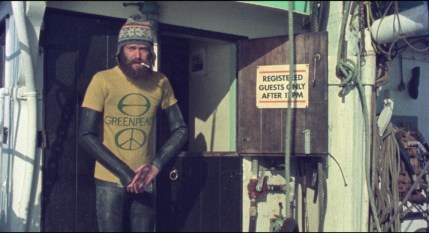
How to Change the World tells the story of Greenpeace’s founders. They were (/are) a bunch of hippies, 99% white males, and absolutely unqualified for the job. They couldn’t agree on much as a small group and then when film of their anti-whaling stunts gave them fame/notoriety, they completely imploded. Protests are aborted, physical injuries are sustained, lawsuits are commenced (Greenpeace v. Greenpeace!), turncoats are identified, and shots are taken liberally at one another. Essentially, it’s an episode of Big Brother starring a bunch of 65-year-old grouches.
That sort of thing normally does not appeal to me. Still, I found How to Change the World very interesting for several reasons.
First, the amount of footage these hippies compiled in the 1970s is astounding and makes the film feel alive. We do not just hear interviews about their adventures, we see these escapades on screen, and that makes this movie extremely easy to watch (aside from the awkwardness of the in-fighting) as well as entertaining (possibly because of all the awkward in-fighting!).
Second, the rise and fall of this branch of Greenpeace is a fascinating study of the effect of fame. Most of the conflict we see seems to arise out of the external attention and accompanying pressure this group faces after they hit it big. Not that they all get along at the start (they don’t, even then they fight regularly), but initially they can look past those disagreements because they are agreed on the bigger goal. But once there are no clear goals, or too many, the interpersonal issues take centre stage. It doesn’t help that none of these guys is remotely qualified to run a multinational organization, but it sure adds fuel to the fire!
Third, it is remarkable to see the different paths these characters take after their initial adventures. The conflict between the turncoat and the injured member in particular is given a whole new perspective by movie’s end.
Overall, I enjoyed How to Change the World even though I was frequently annoyed or exasperated by these characters, especially by the pseudo-philosophical musings of the journalist-turned-leader of this motley crew. The fact the movie overcame that annoyance says a lot about the content. How to Change the World is well put together and it feels very honest, which makes it feel real.
I give How to Change the World a score of seven bumbling hippies out of ten.
Slow West tells the story of a young Scot named Jay (Kodi Smit-McPhee doing his best Jay Baruchel impression) travelling across Colorado in search of his lost love Rose (Caren Pistorius). Almost immediately, Jay is saved from bandits by Silas (Michael Fassbender) and from then on, it’s a western version of The Odd Couple, except writer/director John Maclean replaces much of the comedy with despair. The wild west depicted in Slow West (which incidentally is New Zealand standing in for the midwestern plains) is the saddest, loneliest place imaginable. Still, in spite of its melancholy, Slow West manages to be a very enjoyable movie, and even a surprisingly funny one at times.
Going into Slow West, I had one expectation: that the title would have some deep meaning to be revealed during the course of the movie. I was let down in that regard but that was really the only disappointment I had coming out – I still don’t understand the title and feel like there’s something there to get.
Anyway, as far as the movie itself, Fassbender and Smit-McPhee make a very good pair, and that’s fortunate because we spend a lot of time with them as they make their way to Rose. Fassbender gives us a convincing tough guy with a heart of goldsilver tin. Smit-McPhee is well cast as the naive, good-hearted foreigner. Ben Mendelsohn, who really impressed me in Mississippi Grind, makes a quick appearance as a scummy outlaw and looks the part. And yes, everything in this paragraph reads like a back-handed compliment, but it’s coming from a good place, I swear.
Slow West climaxes in a shootout. I don’t
think I have to tag that as a spoiler, do I? You knew it was going to happen. The way the shootout plays out, though, is well done and is much different than I expected. It even includes a few surreal moments that worked really well (especially one involving a jar of salt).
Overall, Slow West is a solid, though sad, tale from the wild west. Much like the story told by an old gang member, it entertained me throughout its 85 minute run time with its unusual mix of sadness and death with a hint of offbeat comedy. It’s definitely worth tracking down, and I give it a score of eight wanted posters out of ten.
Before Christmas, I questioned Gaspar Noe’s choice to film Love in 3D. While the gimmick of real sex in 3D managed to satisfy my moribid curiousity in a couple of scenes, the feeling that we could reach out and touch them couldn’t change the fact that the characters didn’t act or talk like real people. Love was a dull, lifeless, depressing, and badly translated drama. But it had lots of sex.
Director Wim Wenders (whom I tend to like), also hit the 2015 festival circuit with an inexplicably 3D drama. Like Love, Every Thing Will Be Fine is dull, lifeless, depressing, and badly translated but doesn’t even have the decency to throw a little 3D ejaculate our way. What we DO get- and any Canadians out there might enjoy this- is Rachel McAdams doing a Quebec French accent. Despite the film being set in Montreal, why she would go out of her way to play Quebecoise, I have no idea. There are, after all, lots of English people living in the Canadian city. (I used to be one of them). Whatever her reasons, I’m willing to bet that the Screen Actors Guild did not see this movie or they would have never made the already questionable decision to nominate her for Best Supporting Actress in Spotlight.
Struggling writer Tomas’ (James Franco) relationship with Sara (McAdams) is already not going so great even before his life is changed forever by accidentally running over and killing a small boy with his car. The boy’s mother (Charlotte Gainsbourg) immediately makes it clear to Tomas that she doesn’t blame him but forgiving himself isn’t so easy for Tomas, even after he begins to profit from becoming a much more inspired and successful writer after the trauma.
My favourite Wim Wenders films (Wings of Desire and Paris, Texas) are understated and haunting but Every Thing Will Be Fine slows the pace down to a whole new level. Unsure of exactly, what the director’s looking for, Franco plays it safe by avoiding emoting at all costs. Probably aiming for restraint and subtlety (two qualities I admire most in an actor), he succeeds only at being wooden. He’s not burdened with an ill-advised accent but his performance is almost as embarrassing as McAdams’.
Gainsbourg and real-life Montrealer Marie-Josee Croze (The Barbarian Invasions, The Diving Bell and the Butterfly) don’t come out looking so bad but even they don’t have anything interesting to do. Wenders seems especially committed to losing our interest by constantly disrupting the narrative to jump ahead a year or two, or sometimes even more, whenever there’s even the smallest risk that someone in the theater may find themselves caring even a tiny bit. And the dialogue from Norwegian screenwriter Bjorn Olaf Johanessen feels badly translated into English and is already being compared to Tommy Wiseau’s The Room.
I was not able to catch a screening of Every Thing Will Be Fine in 3D so I have no idea exactly what Wenders was going for by shooting in 3D. I do know that I’ve seen 3D summer blockbusters that had more heart than Wenders’ painfully dull drama.
If you’re recovering from surgery like Jay is, it’s nice to have Netflix available to pass some of the time. The trick is finding something worthwhile among all those options.
Last night we tried twice to find a hidden gem, with mixed results.
The first movie we tried was Slow Learners. Starring Adam Pally and Sarah Burns, Slow Learners tells the story of two geeky teachers who make a pact to change themselves over their summer vacation in order to improve their dating lives. Naturally, it gets super awkward, super fast, to the point where Jay couldn’t bear to watch Burns attempt a southern accent to make herself more interesting. We eventually fast-forwarded through that part, after initially stopping the movie.
The fact we came back to this movie after stopping it is something positive, but that’s really the best that I can say about Slow Learners. It’s not terrible and there are a few good bits, but overall it’s really shallow, really predictable, and only moderately watchable. I give Slow Learners a score of four random literary quotes out of ten.
While we were on a break from Slow Learners, we took a look for something less awkward and settled on People Places Things, starring Jemaine Clement (Netflix recommended the movie because we watched Slow Learners, oddly enough). Jemaine does his usual quirky Kiwi thing in People Places Things, and I for one find him hilarious almost no matter what else is going on.
In People Places Things, Jemaine plays a semi-starving artist who understandably has a hard time coping after discovering his spouse is cheating on him (which happens in the middle of their twin girls’ fifth birthday party, no less). We catch up with him one year after that party as he tries to move on or make up or…really, he’s not at all sure what he wants and I liked that. People Places Things is clearly more about Jemaine’s journey than his ultimate destination.
I’m happy to report that the journey is entertaining, fairly cliche-free, and full of interesting characters. I really liked watching the discovery process play out for Jemaine’s character, and I enjoyed this movie all the way through. I give People Places Things a score of seven trips to Astoria out of ten.
Last month, we got a Facebook message from a very brave filmmaker. Jaschar L Marktanner invited us to watch and review his short film, voluntarily facing the wrath of not one but three admitted Assholes. How fun it would be to pan AUFDRUCK (LABEL in English), from a writer-director so boldly putting themself in the hot seat.
Imagine my disappointment when I actually enjoyed it. LABEL is only four minutes long so a spoiler-free description is a unique challenge for me as a reviewer. I think (and hope) that Jaschar won’t mind me telling you that it’s shot in black and white, which is an excellent choice, partly because it adds to the French New Wave feel. In their first IMDB credits, Kira Mathis and Mary Krasnoperova play two women in a coffee shop describing a mutual acquaintance as a “son of a bitch”. Labelling and complaining with a friend over coffee may seem like a pretty universal experience but it soon becomes clear that these women use the label pretty liberally, as the conversation becomes more and more absurd.
LABEL is funny, gradually upping the ridiculousness as it follows the structure of a really good comedy sketch. Marktanner’s film has more to offer than just laughs though with what I read as an effective critique of modern fatalism. I am happy to report, however, that he has generously given this Asshole one thing to grumble about. Speaking no German, I was forced to watch LABEL with English subtitles which were colour-coded depending on who was speaking. I found the dark red to be difficult to read against the black and white background. Once or twice, I had to pause it to avoid missing a single word. There, I said it.
Overall, LABEL is well worth your time and I am grateful to Jaschar for sharing it with us.



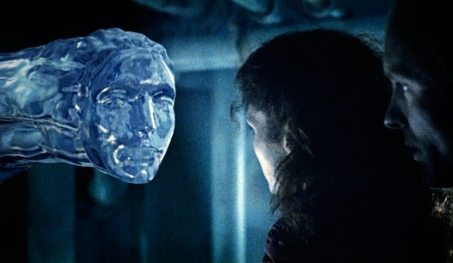 destroying waves to look right. Technology had advanced significantly by 1993, and so a special edition was released with 25 minutes more footage, including the ending as it was originally conceived. The CG effects hint at what is to come from Cameron and ILM (or, by the time the special edition was released, what had already come). The tentacle water effects in particular are very close relatives of the T-1000’s liquid metal goodness in T2 and they seem to hold up a lot better than most early CG (maybe because CG is used so sparsely in The Abyss).
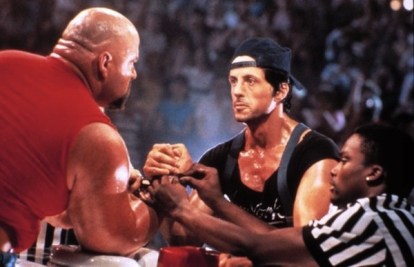 ch I just found out is on Netflix. Especially because Jay is still on oxycontin recovering from her back surgery.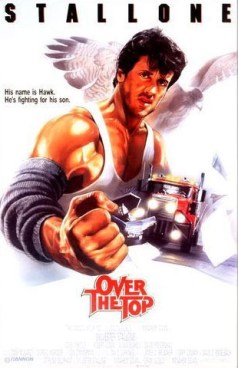
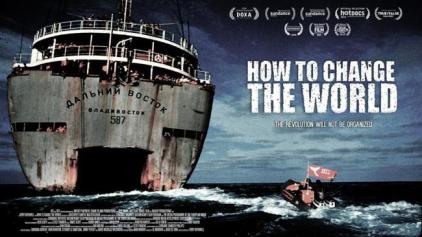 completely imploded. Protests are aborted, physical injuries are sustained, lawsuits are commenced (Greenpeace v. Greenpeace!), turncoats are identified, and shots are taken liberally at one another. Essentially, it’s an episode of Big Brother starring a bunch of 65-year-old grouches.