Category Archives: Movie Reviews

Our reviews and thoughts on the latest releases, classics, and nostalgic favourites. Things we loved, things we hated, and worst of all, things we were ambivalent about.

TIFF20: Enemies of the State

This was one of the best and most memorable films I saw at TIFF this year, an unexpected surprise that disarmed me and disoriented me, and since I want it to do the same for you, this is going to be a sparse and succinct review.

Sonia Kennebeck’s documentary is about Matt Dehart, who in 2009 was accused and charged by the FBI for possessing child pornography and soliciting minors for sex on the internet. Matt claims these accusations are fabricated to punish and distract from the truth. That Dehart, a former U.S. Air National Guard intelligence analyst, was involved with the Anonymous hacker group and WikiLeaks, and claimed to possess classified documents alleging serious misconduct by the CIA. Matt Dehart counters that his arrest was a ruse to discredit him and an easy way to seize and search his computers for the documents.
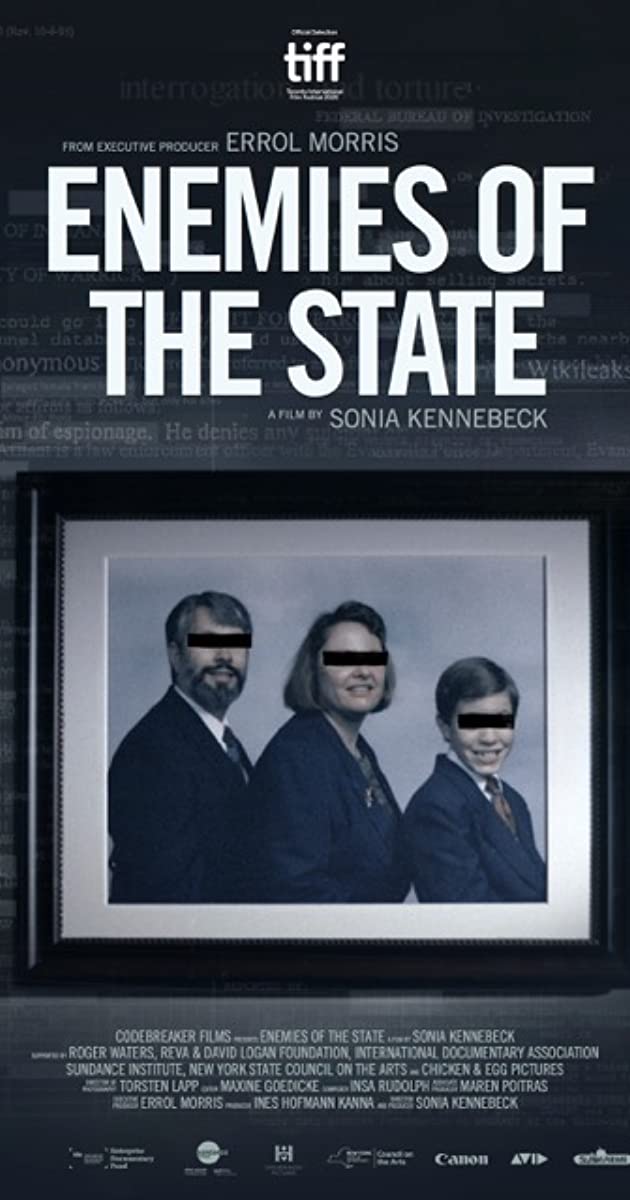
Matt’s parents, Paul and Leann, both former U.S. military themselves, come to believe their son, and the whole family becomes embroiled in this cat and mouse chase, from the border of Mexico to the border of Canada, where they sought refuge in Canada, claiming Matt had been tortured in prison upon his arrest.

This story is a delicious, irresistible true crime rabbit hole with so many twists and turns you’ll suffer whiplash from jerking your head in opposing directions so many times. Every new interview seems to contradict the last and the documentary thrives when it pits these two narratives against each other. Is Matt a pedophile or a martyr to espionage? Is this treason or whistleblowing or just a clever and convoluted defense strategy? You can try to be analytical about connecting Kennebeck’s dots, but there are red herrings all over the place, from anthrax to the mob, and that thing called ‘truth’ seems impossible to pin down.

We have a natural and insatiable appetite for conspiracy theories and Kennebeck knows what she has in this doc: an addicting, shocking, ambiguous array of breadcrumbs, and she’s very savvy about how she plants them. Enemies of the State is an excellent, absorbing reminder that we live in a time with access to so much information, but very few paths to the truth.

TIFF20: Ammonite

In 1840s England, acclaimed but overlooked (translation: female) fossil hunter Mary Anning (Kate Winslet) reluctantly agrees to act as a caregiver to Charlotte (Saoirse Ronan), the sickly wife of a wealthy man, prescribed a convalescence by the sea.

Every morning, Mary prowls the beach by her home in Lyme Regis, a town in West Dorset, searching for and carefully unearthing fossils. She dons rough clothes and men’s boots and has permanently roughened knuckles and a rime of clay under her torn fingernails. It is unusual work for a woman; Mary is an unusual woman. She is not exactly pleased when Charlotte joins her on the beach. Charlotte’s health is as dainty as the heels on her boots, her frills and lace a liability, her bonnet as prim as the purse of her lips. No one is more aware of the difference between their class and social status as Mary is, but Charlotte’s ill health and Mary’s careful caregiving put them on more equal footing. At one moment they’re peeling vegetables side by side, the next they’re having frantic sex.

It sounds as abrupt as it felt. Touted as a period lesbian romance, there isn’t actually a whole lot of romance to the affair. The two women are chronically lonely. Charlotte’s primary ailment is probably grief, and unhappiness, while Mary is burdened by a simmering anger. There isn’t a lot of chemistry between the two, nor any passion outside quick (and quiet -mom’s down the hall) trysts in the bedroom. There isn’t a flirtation or a sweeping exchange of intimate secrets. There is toil, there is the unyielding sound of crashing waves, there is a muddy crust at the hems of their skirts.

Of course, in the 1840s, there is no happily ever after for a couple of “opposites attract” lesbians. Charlotte has her grief to get back to, not to mention a husband. Mary has her work, her resentment, her private anguish. Their brief love affair will have certainly changed them, but at what cost?

Writer-director Francis Lee sets his movie against a backdrop as bleak and as muted as the fine performances by Winslet and Ronan, both at the very top of their game. Their brief connection has no bearing on the unrelenting sea, and no comparison to the 195 million year old bones buried in the cliffs. Theirs is the briefest of blips, inconsequential in the face of the endless ocean. Lee tends to introduce the landscape as the third character in his love stories. His style is sparse but tactile, the environment more alive than even the love between Mary and Charlotte.

And of course the ubiquitous ammonite, a particular fossil of extinct cephalopods found in marine rocks. They are so abundant Mary polishes them and sells them to tourists; the shelves of her modest curio shop overflow with them, Lee finding the metaphor quite irresistible. What is a fossil but an organism that has become petrified over time? Mary was perhaps once a vibrant and content organism but life has hardened her, leaving behind only the impression of someone who once lived – really lived. She is briefly reanimated with Charlotte, but a fossil is also something resistant to change, and Mary is nothing if not set in her ways.

Ammonite has much to admire but far less to actually like. With so little to hold on to, it was hard to be invested in such a thin relationship. With no burning passion to sweep us away, I felt oppressed by the heavy skirts, the lack of privacy, the ceaseless work and the grime. It is a long, slow slog with so little reward that even Winslet’s ferocious work doesn’t seem worth it.

True History of the Kelly Gang

The ‘true’ in the title is false of course, or debatable anyway, which I suppose means the ‘history’ part is too, although our story does take place in the past. Peter Carey’s vital and vigorous novel is a work of fiction, using many true aspects of the Kelly Gang story but inventing others as well. The film poses as Ned Kelly’s autobiography, mostly written and narrated by himself to an unborn child that Carey made up. But if Ned Kelly had had a pregnant wife, if she had half a brain she would have wondered if Ned would live to meet his daughter, and might have encouraged him to leave behind a written legacy, just in case.

The film is a departure not only in story but in tone and in telling, the violence crazed and stylized but the main concern more character than plot. You may already be familiar with the banks that were robbed and the cattle stolen, but this “true history” is more interested not in what they did but why they did it. The class struggle is palpable enough, the sense that there is no place for these young men, no future. There is real rage here, and a dangerous accumulation of testosterone with no constructive outlet.

Ned’s (George McKay) legacy has of course had a lasting impact on Australian culture; this film gives him a punk rock makeover for the 21st century and adds to the myth if not the man. With stunning cinematography, a gritty feel, and anarchic energy, there is much to be admired in Justin Kurzel’s film. Too bad I just didn’t like it. There was a lot of muck, a lot of exaggerated portrayals of machismo, and for me it was just too much crazy and not enough cohesiveness. But, if you’re looking for a western with a distinctly Aussie flavour, this one’s got that, plus lads in dresses, Russel Crowe, Charlie Hunnam, Thomasin McKenzie, and Nicholas Hoult, if you needed more convincing.

TIFF20: I Am Greta

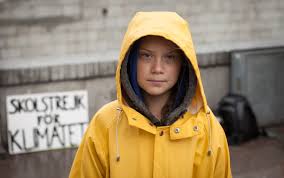
In August of 2018, Greta Thunberg, a 15-year-old student in Sweden starts a school strike for the environment. The more she learned about climate change, the more frustrated and fixated she became. What seemed to be the biggest challenge her generation would face, not to mention the certain extinction of further generations, went ignored by those who could and should be doing something – ignored, or worse, disputed. With global warming threatening the very planet she lived on, Greta saw no point in attending school, or in imagining any future at all. Instead she took to the street, the quiet girl on the autism spectrum, uncomfortable being the centre of attention, did the one thing she could because no one else would. Within months she was a world famous activist who’d started a global youth movement.

Director Nathan Grossman and his team have been there from almost the very start, capturing a small, shy girl answering questions, gaze averted, from passerby on the street. And then following her as she makes impassioned speeches to world leaders, her anger damning and shaming them.

I confess, I originally dismissed Greta Thunberg, assuming her cause was just a means to an end – and the end was probably Instagram fame or going viral or some such thing. I assumed she didn’t like the environment half as much as she liked the spotlight, or its money, and that her (stage) parents probably wrote the scripts. Now I am sad for my cynicism; by tolerating politicians who repeatedly break their promises, I am just as complicit. Perhaps I am, to Greta, the more unbelievable of the two.

Many news outlets, and some politicians, have zeroed in on Greta’s autism, and suggested that her “mental illness” causes her to obsess over topics. They’d like to dismiss her, and climate change, in the same breath. But if Greta’s focus is narrower than most, it doesn’t make climate change any less real, or any less of a threat. It makes her a brave whistleblower, the kind that makes people in power nervous because the truth tends to be inconvenient. Greta is the real deal.

By allowing us to observe truthfully, I Am Greta lets us get to know the girl and not just the crusader. This is not a documentary about climate change. It is a documentary about a young woman who becomes the reluctant voice of her generation. Grossman’s profile shows a young woman from an ordinary family, her parents struggling daily with doing the right thing, finding the right way to support her, balancing her needs with the rest of the family’s, and what’s good for her with what’s good for the world as a whole. Greta’s only motivation is the environment. The director’s motivation, however, is a little more complicated. Greta leads by example, and has inspired lots of young people to come forward and hold the adults in charge accountable. By showing us such ordinary domesticity, Grossman is reminding us that if Greta can do it, why not us?

I Am Greta debuts on Hulu November 13th.

Misbehaviour

Sally Alexander (Keira Knightley) and Jo Robinson (Jessie Buckley) have little in common, and they even fail to bond over their mutual cause when they meet at a women’s meeting. But though they usually take a different path toward their ideals, they unite over the upcoming 1970 Miss World beauty competition which will be held right in their backyard – London.

It’s extremely upsetting that women have been protesting the sexism inherent in such a pageant for 50 years now, and yet they continue to happen, judging women on the height of their hair and the curves in their bikinis.

Okay, technically the women were still competing in one-piece bathing suits in 1970, but their measurements were recorded and announced during the broadcast, which leaves even less to the imagination than even the skimpiest swimsuit. Sally, Jo, and their cohorts plan to attend the live broadcast, and to disrupt it.

Meanwhile, feminism isn’t the only movement on the rise. Racism is too, and this year, for the first time, South Africa is impelled to send a woman of colour in addition to the ubiquitous white one, and Grenada sends a Black woman to compete as well. Sally et. al believe that a “family” show judging a woman based on appearance alone shouldn’t exist, but Miss Grenada, Jennifer Hosten (Gugu Mbatha-Raw) knows what her presence will say to little girls of colour all over the world. They both have a point, and unfortunately, this is a good illustration of how feminism has routinely left its sisters of colour behind. Misbehaviour isn’t about to shy away from that unpleasant fact, and it isn’t afraid to tackle difficult or unpopular topics.

Case in fact: Bob Hope. Legendary, beloved Bob Hope, fondly remembered for his numerous USO trips, on which Miss Universe would sometimes join him, the mere sight of her deemed a boost to morale. Bob Hope had hosted the Miss Universe pageant back in 1961 and was tapped to host again in 1970, to the disapproval of his wife, since in ’61 he’d started a 30 year long affair with the winner. Bob Hope (portrayed in the film by Greg Kinnear, his wife Dolores by Lesley Manville) was a more legendary womanizer than he was a comedian; he carried on more affairs than he could probably count. Knowing that “women’s libbers” were protesting the pageant, he thought it wise to work some extra misogyny into the pageant with remarks like “It is quite a cattle market here tonight and I’ve been back there checking calves.” Har har.

These different story lines help tell a fuller truth and give the events a proper context. The lesson here is a little complicated, but it’s told in an entertaining way by an extremely talented cast and I’m quite pleased if a little surprised to confirm that Misbehaviour strikes the right balance and delivers a movie you’ll actually be glad you saw.

12 Gifts of Christmas

With only two weeks left until Christmas, struggling artist Anna Parisi (Katrina Law) decides to advertise as a holiday personal shopper. It is possible Anna does not have the sharpest business acumen but she also doesn’t have rent money, so she probably should have put a little hustle into her side hustle. Marc Rehnquist (Aaron O’Connell) is a busy ad exec who was supposed to have ordered corporate Christmas gifts for the 100 employees in his office, and apparently doesn’t realize that bulk orders this close to the holidays are practically impossible. Luckily they both patronize the same bakery where Anna’s recommendation of the secret menu cupcakes impresses Marc so much that he hires her to shop not only for his employees, but for his nearest and dearest as well – who apparently aren’t quite so near or so dear that he’s spared them a single thought before now. If it’s truly the thought that counts, Marc usually substitutes thought for expense, sending lavish gifts along with notes apologizing for his absence. But with thoughtful Anna crossing off his list, he’s going to learn a thing or two about priorities and the true value of his time.

12 Gifts of Christmas is about as complex and full-bodied as a bottle of Boone’s but the 2020 holiday season is fast approaching and concessions must be made. Some people are very serious about their Hallmark/LMN/Netflix romantic Christmas movie tradition/addiction, but in our house the annual viewing is a little more reluctant, and not without some grumbling, yet there are indeed some faithful traditions. Sean complaining about every movie set in New York starting off with trite stock footage: check. Then Jay rolls her eyes at the very light attempt at a will-they-or-won’t-they, and Sean’s belly growls at the third cookie baking montage, and Jay’s eyes glaze over at the sight of so many jewelry boxes, and Sean starts to sweat realizing that there are so far zero jewelry boxes under our tree, and we both agree that the only true Christmas miracle in this whole movie is finding street parking in “Manhattan” (Avid Hallmark fans will recognize Eva’s Bakery which has appeared in several Hallmark movies as a New York City location though it’s actually a real bakery in downtown Salt Lake City, Utah).

This movie earns no distinctions in acting or director or production or story. It follows the Hallmark formula loyally and steadfastly, so there are no surprises here, none whatsoever, but if you’re in the market for some banal, PG “romance,” Hallmark’s shelves are fully stocked and you can take your pick.

Secrets of the Saqqara Tomb

James Tovell’s documentary Secrets of the Saqqara Tomb takes us to Egypt where archeologists are carefully digging up the Saqqara necropolis, just 20km away from the more well-known Giza necropolis. Saqqara is the world’s first and oldest pyramid though, and it has many secrets yet to be unlocked.

Digging isn’t the only part of archeology, or indeed the bulk of it, but it is by far the most exciting, and Tovell wisely nestles us amongst a crew of Egyptian archeologists who have uncovered a tomb untouched for 4400 years and begin to pick it apart, revealing historical artifacts that will astonish their community, and a tribute to a family unit who celebrated each other in life and grieved each other in life.

News of this discovery has lit a flame around the world of archeology and is already heralded as one of the most significant finds in the past 50 years. The team hope to uncover coffins, mummies, and precious belongings buried with the family during the excavation, but what I find fascinating is what the tomb reveals about the family buried there, the family of Wahtye, a priest who served under King Neferirkare Kakai during the 5th Dynasty of Egypt, that is to say, around the 25th century BC or more than 4000 years ago.

The site team is composed of archaeologists, anthropologists, scientists, and diggers discovering unexplored passageways and shafts in a tomb that is remarkably well-preserved. Mummies are always exciting to find – their bones reveal so much about how the people lived, what they ate, what they did for work, and how old they were when they died. But this particular dig unearths more than just coffins and bodies; it contains possibly the world’s first ever case of malaria, a board game played by the elite millennia ago, and the mummified remains of a lion cub, the first ever of its kind.

I think archeology is immeasurably fascinating and this is the site with maximum bang for your buck. You won’t have to put up with the heat or the dust or the claustrophobia as you stream into Egypt via Netflix.

Rogue City (Bronx)

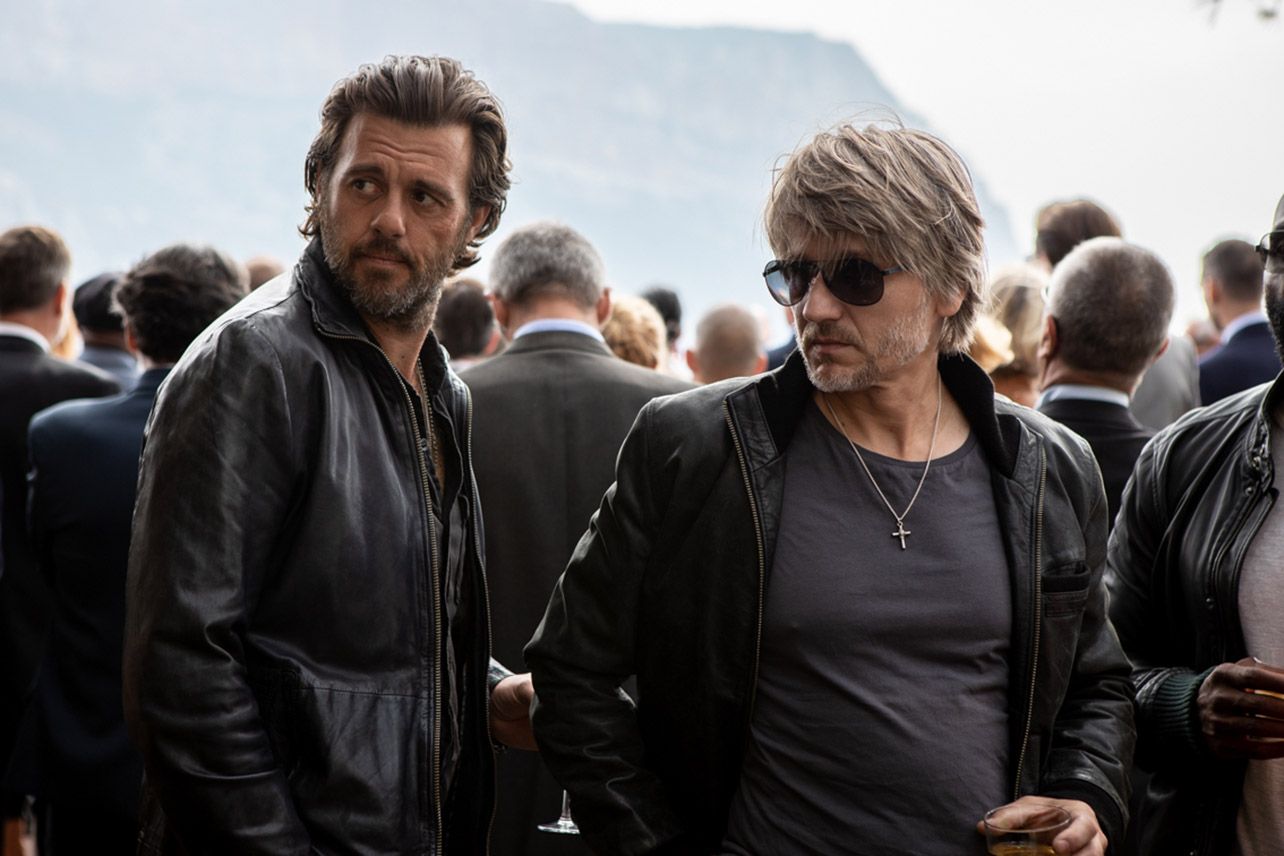
Once upon a time there was an almost romance to rogue cops who believed themselves to be above the law. But as the world rallies and protests against such offending officers in real life, the landscape has changed even if writer-director Olivier Marchal hasn’t yet adapted and his film still attempts to glamourize criminal cops.

Discounting Marchal’s tactless inability to read the room, his film is technically well made but deathly boring. It attempts to follow a thread of corruption between cops and criminals but he quickly loses track of characters and plot and if he can’t keep track, how the heck am I supposed to? He doesn’t give me a single reason to care, and I think his only concern is getting to another action sequence. In fact, I’d argue that his opening sequence is misleading, and not even deliberately so. It makes it difficult to determine who the protagonist is, and the heroes are already indistinguishable from the anti-heroes who are indistinguishable from the villains. To Marchal, they’re all just fodder for his next gun-fight, and while it’s clear he’s got a certain panache for shoot outs, anything and everything in between is basically garbage.

There isn’t a machete in the world to help you navigate this slog-fest or cut through all the bullshit. You need only ask yourself one question: do you value the gun violence enough to sit through the rest?

A New York Christmas Wedding

Jennifer loves David but her overbearing almost-mother-in-law is pushing them into a high-society Christmas Eve wedding in just a few months that Jennifer doesn’t really want. Having lost both her parents and her childhood best friend Gabby, the holidays have always been hard for Jennifer, and she’s worried her loneliness will be more pronounced. But never mind that: Jennifer (Nia Fairweather) is about to meet her fairy godfather (Cooper Koch) who sends her to an alternate universe to, you know, learn a lesson or whatever.

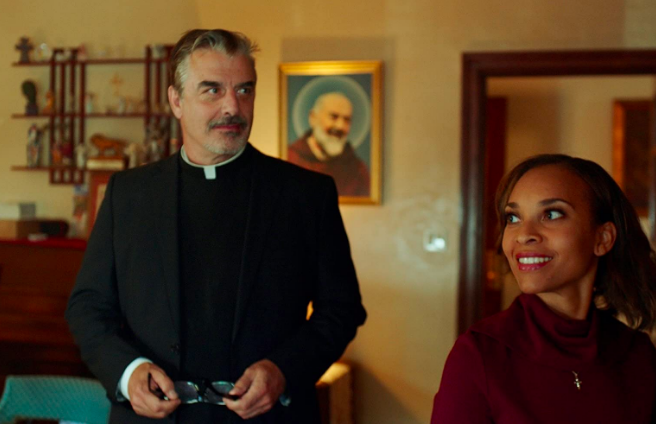
Alternate Jennifer is in a committed relationship with her dead childhood best friend Gabby (Adriana DeMeo), who is not dead in this version of reality, obviously. Neither is her father, which is nice. But instead of an overbearing mother-in-law ruining her impending wedding, they’re now dealing with a heartbreaking rejection from their catholic church. Father Kelly (Chris Noth) has been instrumental in their lives but his hands are tied – the church does not permit or approve of same sex marriage.

Full disclosure: there are no Christmas weddings in this movie. There is no Christmas, period. Writer-director Otoja Abit (he also plays David) seems to be trading on the romantic holiday theme to bring attention to his gay rights in the church movie. Which is a little dishonest, but I guess you gotta do what you gotta do.

It’s a timely film considering a documentary by Evgeny Afineevsky called Francesco that premiered at the Rome Film Festival a couple of weeks ago featured comments by Pope Francis that seemed to indicate his acceptance of same sex civil unions. Not of marriage in the church of course, and certainly not of “homosexual acts” which are of course still very very wrong and very sinful. But hey, if two dudes want to spend a committed life together, raise a family and share a marriage, that’s cool, they can put a ring on it and get the tax breaks as long as they promise to never have sex.

That Father Kelly even considers their request is a work of more fantasy and fiction than the godfather’s alternate universe in which it exists. I guess it’s nice to dream.

If it sounds interesting to you, A New York Christmas Wedding is a tolerable watch. It has that much in common with the romantic holiday movie it pretends to be: it’s low budget and medium quality but don’t mind the genre, then you won’t mind it’s production values. It’ll do.

Kajillionaire

Miranda July’s Kajillionaire is absurd, absurdly absurd, but the slightly off-kilter universe she concocts for her characters is eminently watchable and surprisingly endearing.

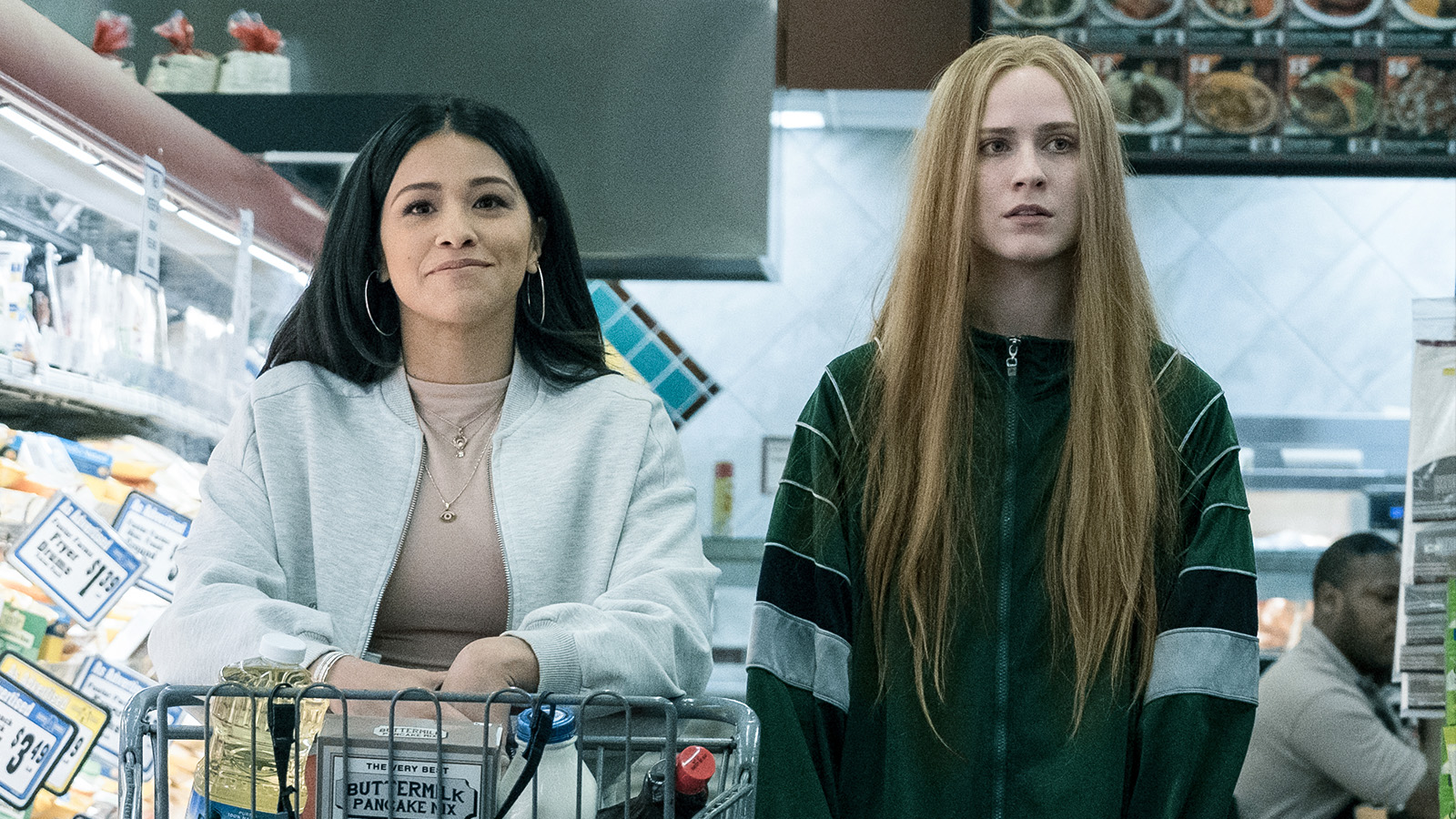
Old Dolio (Evan Rachel Wood) (yes that’s her name) (yes it’s horrible) was named after a homeless man who’d won the lottery. Her parents hoped this might get her into his will. It was the first scheme the family worked as a threesome, but not the last.

Living “off the grid” seems like it involves a reclusive shack, enough farm land for self-sufficiency, and possibly an underground bunker. Old Dolio and her family – mom Theresa (Debra Winger) and dad Robert (Richard Jenkins) – live in the city, but outside of society. Their home, if it can even be called such, is condemned office space that is flooded with bubbles on a daily basis. They are charged a nominal rent for these quarters but they can never seem to pay it. Many months are overdue. The family subsists on a series of scams, most of which feature Old Dolio on the front lines. Old Dolio, it goes without saying, is a strange young woman having had such an untraditional upbringing, and, it must be said, some pretty faulty parenting. Theresa and Robert aren’t exactly the loving, supporting types. Their family runs more like a business (an unsuccessful business) where expenses and profits are split 3 ways. Having never known anything else, Old Dolio doesn’t notice anything amiss in this arrangement before her parents meet and all but adopt another young woman, Melanie (Gina Rodriguez), who is quickly taken into the fold and absorbed into their schemes.

Miranda July has crafted some characters that are unique and interesting yet completely (hopefully) unrelatable. Still, she uses their unusual circumstances to speak toward larger themes of toxic relationships and learning to identify and fulfill one’s own needs, which are universal tenets of growing up. Old Dolio hasn’t had the opportunities, or even considered them, before now; only in comparing herself to Melanie does she begin to realize the iniquities she’s been suffering. We only know what we know.

With strong, engaging performances across the board, a knowing script, and a unique vision from writer-director Miranda July, Kajillionaire is must-see independent film and genuine oasis in the cinematic desert that is 2020.