Category Archives: Movie Reviews

Our reviews and thoughts on the latest releases, classics, and nostalgic favourites. Things we loved, things we hated, and worst of all, things we were ambivalent about.

Nocturne

Juliet and Vivian are twin sisters studying at an elite academy of the arts. They both study piano, they both hope to be classical musicians, and they both want to go to Julliard. It is widely thought that Vivian (Madison Iseman) is the more talented twin, and Juliet (Sydney Sweeney) the less successful. It is tough having such fierce competition and such a direct comparison; Vivian isn’t just the better musician, but the better student, the better daughter, the better friend, the better girlfriend. Oh, and she just got in to Julliard. Juliet did not.

It would seem Juliet it is in for a lifetime of second place, but a suicide at her school opens her up to the possibility of a Faustian bargain – is she desperate enough to sell out her own sister, or, just maybe, is getting to sell out her sister the whole point? Nocturne unravels sibling rivalry on a whole new level, and in a way that keeps you guessing as to how much this “deal with the devil” is a literal event, and how much is perhaps just the very idea of it empowering Juliet to come out of her sister’s shadown and challenge her for supremacy. Oh boy.

Director Zu Quirke sidesteps easy chills and obvious gore in favour of something that is more subtle, and far more unsettling. With teenage protagonists you expect something flashy and slashy, blow out parties and surrendered virginities, but this horror is of a more creeping variety, eerie and unknown.

The cast is uniformly solid, but Iseman and Sweeney deliver spell-binding performances that make the tragic relationship between sisters so difficult to crack but so interesting to watch and interpret. Your sympathies may switch teams several times before the last act, which is predictable, yes, but dizzying and vital. The horror bits are actually Quirke’s most conventional beats; her strength is in story-telling. The academic setting is both cutthroat and ripe for predation and exploitation. The interesting is figuring out who, or what, is behind it all.

Nocturne is one of four “Welcome to the Blumhouse” horror offered in a bundle on Amazon Prime. Stay tuned for more reviews, and be sure to let us know if you’ve taken the plunge.

Smog Town

If you think your job sucks, trying being an environmental protection official in China.

In some industrial centres, the smog is so thick you practically need a knife to cut through it. A spork at least. Serious harm is being done to the environment, not to mention to people’s health, but that’s not the main concern of an environmental protection officer. I mean, I’m sure that’s in the official job description, but unofficially, though very seriously, the officer’s job is to make sure their region’s numbers are not among the worst in the country. Beijing keeps a very careful watch on each city’s pollution levels, pitting each regional environmental protection office against the others, and the price of failure is shame. Which, in China at least, is a pretty steep price.

Director Meng Han hangs out with us in Langfang, one of China’s most polluted cities. The officials are fighting an uphill battle, an upmountain battle really, with both hands tied behind their backs, and no shoes, and walking pneumonia. Because the environmental protection office must somehow reduce their numbers significantly without being allowed to touch any of the biggest polluters. Instead, the officials play cat and mouse with small time operations run out of people’s driveways and carports. Their emissions are negligible compared to large industries pumping out noxious fumes and degrading the land and sulllying the water, but this is the only kind of change the regional offices are actually allowed to pursue.

Meng Han’s documentary is really a Trojan horse; on the outside it looks like it’s about environmental protection, but once you crack its shell, you’ll find it’s really a commentary on the futility of the job, the hypocrisy of bureaucracy, and the sham lip service our governments pay to our faces about concern for the environment while always valuing profit and efficiency over everything else.

Given these restrictions, these laughable micro targets, our fight against climate change is destined to be a losing one.

This and other titles are screening as part of the Planet In Focus Film Festival – check out their lineup and buy your tickets (and watch at home!) here.

A Babysitter’s Guide to Monster Hunting

Kelly (Tamara Smart) opts out of the class-wide Halloween party but isn’t exactly thrilled when her mother books her a babysitting gig instead. Five year old Jacob (Ian Ho) is a bit high maintenance, with his 3-hour bedtime routine, but Kelly would likely have preferred a 5 hour routine, even a 10 hour one, compared to what she got. Which was a visit from the Boogey Man himself, the actual Boogey Man, and his trollies, who’ve come to kidnap Jacob, who has the ability to make nightmares come true.

Thankfully Liz (Oona Laurence) shows up, chapter vice president of the Order of Babysitters, charged with protecting special dreamers like Jacob against the Boogey Man (aka Guignol, played by Tom Felton), and his little monsters. The Order of Babysitters is James Bond lite – all the cool tech, fun gadgets, and special ops, but none of the booze or women. In fact, now that I’m hearing myself say it, scratch that, the Order of Babysitters is like James Bond 2.0: all the spy stuff without the misogeny.

The film looks slick and is packed with action-adventure, although when a battle of sorts is taking place at a children’s indoor playground, the worst part is just imagining the gallons of COVID-19 that probably lurks in your average ball pit. Ew. What I’m saying is, the peril is never too overwhelming, and the monsters are, with a few exceptions, actually pretty cute, endearing enough you have to struggle to remember they’re bad guys. Kelly is a great protagonist and well portrayed by leading lady Tamara Smart. Liz is a little more mysterious, having just been dropped into the action from literally out of nowhere. The Order of Babysitters headquarters is production design eye candy, and introduces us to some fun supporting characters, as every secret service needs an M and a Q, and whatever other alphabet R&D people are necessary to keep their organization running smoothly.

The Grand Guignol’s lair is where the real work goes down. Guignol is trying to extract something from Jacob’s dreams, but I guess someone didn’t hear about that infamous 3 hour bedtime ritual. I don’t know much about Tom Felton, and I’d wager he’s all but unrecognizable in this, but he is clearly enjoying the eccentricities of the role, he’s playing and flexing and savouring being larger than life. He’s generous enough as an actor no to steal the scene from our teenage protagonists but he is a true source of animation and energy.

A Babysitter’s Guide to Monster Hunting is half Babysitter’s Club and half Artemis Fowl, the best of both, an entertaining watch fit for the whole family.

TIFF20: Concrete Cowboy

Fifteen year old Cole (Caleb McLaughlin) isn’t exactly happy to be suddenly living with his estranged father Harp (Idris Elba) in North Philadelphia. He’s even less pleased to be sleeping on the couch. Harp isn’t much of a traditional parent or even a provider of many necessities, but he does have one card in his back pocket, and it’s a pretty good one.

As a father-son drama, it leans pretty heavily on some overly familiar tropes. There is nothing about this relationship or its journey that will surprise you. It’s a tolerable watch because the acting is strong but it’s corny in all the expected places, with some sentimental stuff thrown in for good measure. But I’m still going to tell you to watch it; there’s that ace in the back pocket, and in this case, it’s called setting. The father-son stuff is just an excuse for writers Ricky Staub and Dan Walser to tell us about Philadelphia’s strange but true subculture: Black urban cowboys.

Inspired by the real-life Fletcher Street Stables, Harp is part of a century-long tradition of Black horsemanship. Poverty and violence may surround their neighbourhoods, but the stables are a safe haven for the community youth, where kids can learn to care for and ride horses, and no one has to leave the city to do it.

Cinema has the power to show you places and lifestyles and choices that are different from your own, but these Black-owned stables aren’t halfway around the world, they’re in a city much like my own, not too far from my own, a city I’ve actually visited, and yet I’ve never heard of or even dreamed of such a thing. In 2016, Antoine Fuqua showed me my first Black cowboy: Denzel Washington in The Magnificent Seven. It was the opening night film at TIFF that year and there was lots of talk about the casual color blind casting. Four years later, I’m back at TIFF and learning that Black cowboys really do exist, not just some starry-eyed invention of Fuqua’s, but a real, lived experience that proves the breadth of Black stories is as diverse as it is vast.

Concrete Cowboy is at its best when it’s saddled up and ready to ride, not because audiences love horses almost as much as they love puppies, though they do, but because this was always the real story here – the craft, the pride, the honour, the sense of community, the skills and wisdom passed down through generations. There is a deep vein of authenticity here, and a story that deserves to shine bright like a diamond.

The Magnitude of All Things

Grief is universal. We lose a close friend, a beloved pet, a family member, and we mourn. We don’t always do it well, or with dignity, or in the same way as someone else, but we allow ourselves to feel and to grieve the absence of that person in our lives. We might grieve the loss of objects as well: a child’s misplaced stuffed bunny, an album of photos lost in a fire, an old car that served us well, a memento lost to time, a memory that eludes us.

In The Magnitude of All Things, director Jennifer Abbott is granting us the space and the opportunity to grieve the loss of nature, of environment, of our healthy planet. We are watching her die; Abbott likens it to losing a loved one to cancer. There are many losses to grieve along the way: perhaps you’ve been moved by the bleaching of coral reefs, or the extinction of a species, or the destruction of the rain forest. But this disease is man-made, and it does have a cure. We’ve just been witholding it.

There is no lack of documentaries about climate change and the environment, but this one carves out a unique niche in exploring the emotional and personal aspects of climate change and what it means to us, not as a species, but individually, as animals that are part of an eco-system that is rapidly disappearing.

This title is available to stream as part of the Planet In Focus film festival – buy tickets here and watch at home.

BLACKPINK: Light Up The Sky

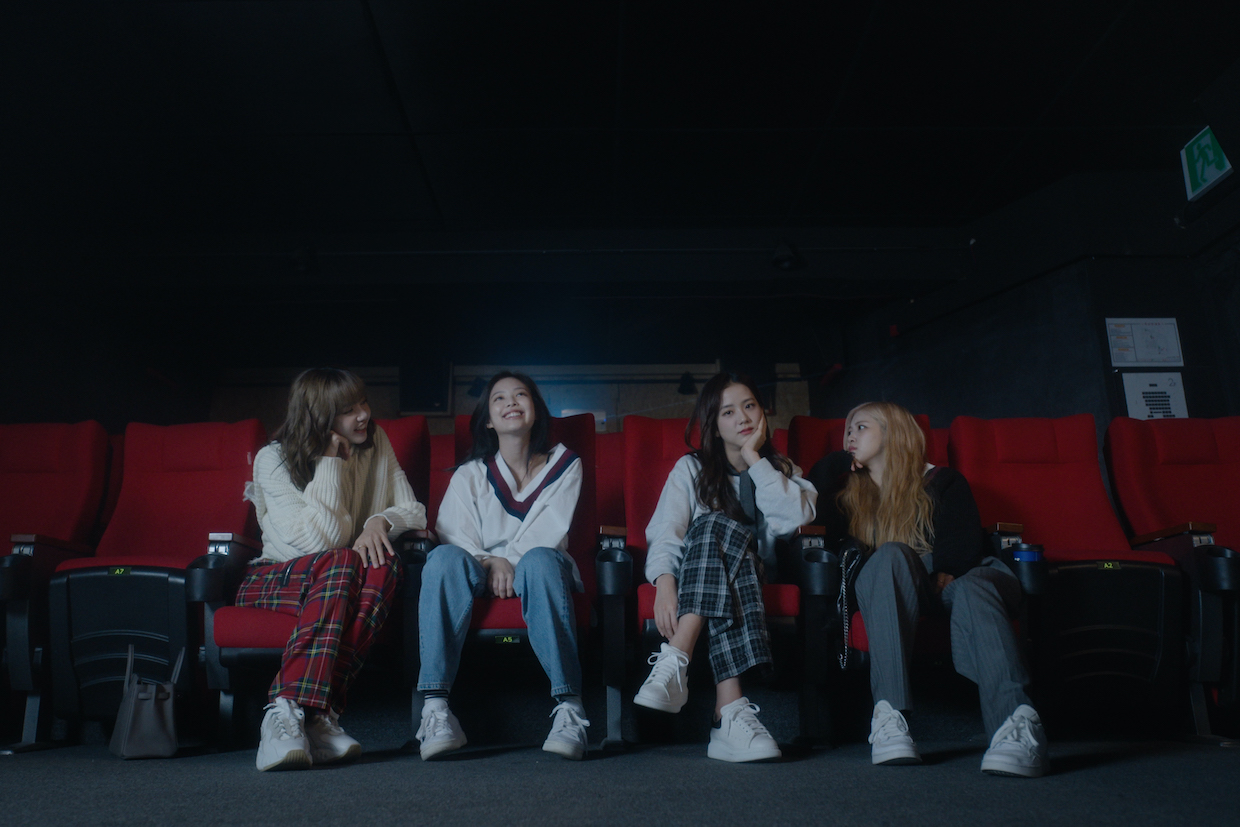
BLACKPINK doesn’t like to be thought of as “just K-pop” and while you can quibble about the “just” part, the “K-pop” is hard to argue.

South Korea’s government rather brilliantly decided to really invest in its arts some years ago, knowing that they could be the nation’s most important exports. With considerable funding and a business approach, today its video games, television series, and movies have global appeal and success; last year Parasite took home the top Oscar, the first time ever for a foreign-language film. However, one could argue that music, namely K-pop, is South Korea’s greatest triumph, and I’m not just talking Gagnam Style. BTS fever has replicated the same fervour as Beatlemania once did. BLACKPINK became the first K-pop group to play Coachella. South Korea has a well-oiled machine churning out pop acts, and Blackpink may be more than K-pop, but they’re certainly also representative of it.

Children as young as 11 may enter this special training academy of song and dance and while most will eventually be asked to leave for failing to make the grade, others may last as long as a decade in the system, honing the skills and the look for eventual distribution into a group. Nothing left to chance, nothing unorchestrated, individuals are evaluated on a weekly basis, and asked to perform as a group in a rotating roster until something gels and a foursome such as Blackpink is plucked from obscurity for pop superstardom.

This documentary weaves in home videos of each of the girls, audition reels, practice footage, and video from their massive world tour to recreate the massive few years they’ve just had. And of course, hearing from Jennie, Lisa, Jisoo, and Rosé, we get to know a little bit about the personalities behind the carefully curated personas. It’s nothing that YG Entertainment (the parent company that recruited, trained, and launched the group, among others) doesn’t want you to know, but if it’s not quite as “all-access” as billed, it’s still plenty informative and loaded with charm.

BLACKPINK: Light Up The Sky will give K-pop novices a look behind the scenes at the grueling selection process of putting together a group, and will please fans with previously unseen footage and personal interviews with each member. You can watch it now on Netflix.

Hungry for more? Check out BLACKPINK review and music on Youtube.

Conscience Point

Manhattan is famously unlivable in the summer, and the wealthy have used the Hamptons as their personal playground and easy summertime escape for generations. This cozy town had about 60 000 year-round residents, from diverse social and economic backgrounds. Many live below the poverty line, trying to eke out existence in a place that has skyrocketing cost of living. Their modest population quadruples in the summer months, making it very difficult to serve all people equally.

To the ultra-wealthy, the 1% of the 1%, the Hamptons is a rustic vacation spot offering rural charm and first-class amenities. The Shinnecock Indian Nation has been continually marginalized on their own ancestral land as newcomers change the landscape to suit their own needs, with an emphasis on opulence, consumption, and greed. Not much thought let alone respect is given to the Shinnecock land, its resources used up and artifacts neglected.

White people have edged Native peoples out of their land all over the world. Many years ago, local government “compromised” by leasing the Shinnecock 3000 acres of their own land to them for a contract period of 1000 years. In flagrant opposition to their own proposal, they then stole them back to build a commuter railroad between Manhattan and Montauk, the Shinnecock helpless to fight against the move since, as non-citizens, they weren’t even allowed to sue. That land now holds multi-million dollar homes and several world-renowned golf courses built on sacred burial ground, “borrowing” the Shinnecock name, and using a stereotypical “chief” as a logo.

Meanwhile, the regular citizens of the Hamptons can no longer afford to stay in their houses with monstrous property taxes. The working class who serve as care-takers for the massive estates and the service industry who wait on the ultra wealthy tourists commute in from increasing distances, priced out of living anywhere near where they work.

The Shinnecock Hills Golf Club is about to host of the U.S. Open and members of the Shinnecock Nation stage regular protests, hoping to bring their struggle to national attention. Filmmaker Treva Wurmfeld is in the thick of it, where profit and protest clash, values collide, and ugly inequality is exposed.

This and other terrific titles are available to stream through the Planet In Focus, an international environmental film festival.

TIFF: The Truffle Hunters

Truffles are a delicacy, one we are happy to indulge in when they’re being offered at a nice restaurant, and they’re only offered at a nice restaurant. At home they’re wildly out of our price range, or at least any responsible grocery budget, and we made do with truffle oil, for special occasions.

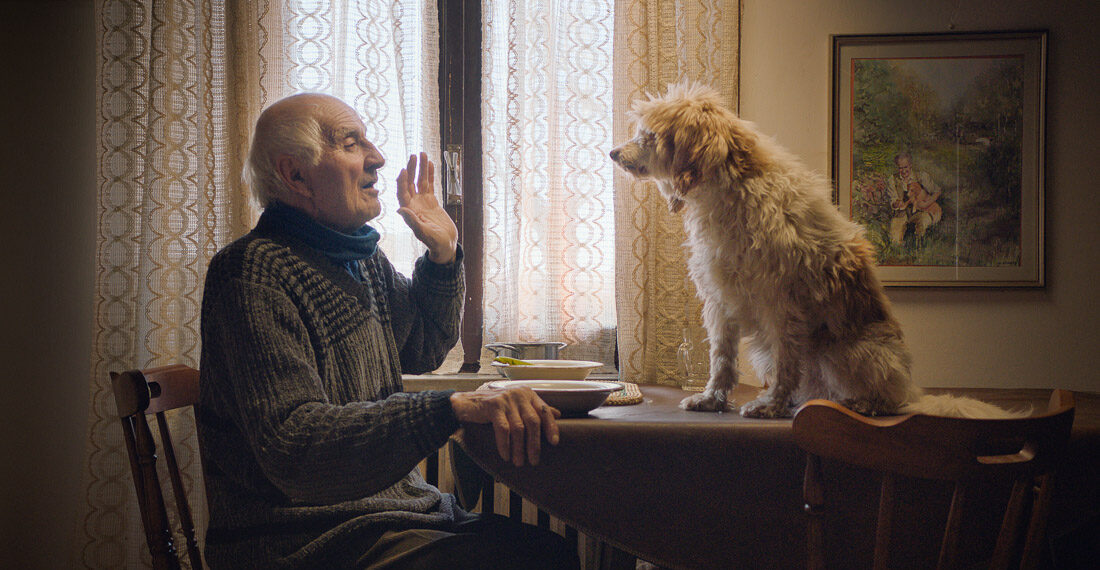
White truffles, trifola d’Alba Madonna (“Truffle of the White Madonna” in Italian) is found mainly in the Langhe and Montferrat areas of the Piedmont region in northern Italy, and most famously, in the countryside around the cities of Alba and Asti. They can go for $4000USD per pound in a good season; in one where truffles are more scarce, like they were a couple of years ago, a set weighing just under 2lbs went for $85,000. Why so expensive? Well, they’re nearly impossible to cultivate. You basically have to find them growing wild in nature, but they grow underground with no above ground marker, nearly impossible to find. Plus, once they’re out of the ground, they start losing mass, so they need to go from underground to on the table in less than 36 hours. Truffle hunters are a rare, and possibly a dying breed. It’s mostly a group of aging men, their particular skill set nearly as elusive as the truffles themselves. They comb the countryside woods with their trusty dogs, looking to find their pot of gold.

This documentary focuses on the eccentric octogenarians who have made this treasure hunt their trade. Directors Michael Dweck and Gregory Kershaw saturate us with romantic notions of nature while the old men charm us as they play for the camera. The camera is an impartial audience who listens to stories attentively and doesn’t roll its eyes like grandkids do.

These old men guard the secrets to their success like precious gems. Tradition is of the utmost importance, but modern challenges like climate change and deforestation are whittling away at the time-honoured art and science of truffle hunting. And as the truffles grow more scarce, and therefore more valuable, the competition stiffens. Competitors are even leaving poison out for the dogs.

And let’s face it: the dogs are the real stars here. Aurelio and his pal Birba steal the show; they are each other’s faithful companions, their relationship touching and sweet.
Carlo is a passionate and feisty forager but his wife doesn’t like him hunting at night any more. Titina is always by his side, ever loyal, even in church they both receive a blessing for a bountiful season ahead. Gabby Sergio is lucky enough to have two gifted canine friends, Pepe and Fiona, and crafty enough to go to great lengths to keep adversaries off his scent.

This unique and sometimes curiously comical documentary slyly draws a picture of a wildly diverging socioeconomic class between those who hunt the truffles and those who consume them. But despite the high demand and the vast business machinery driving the market, the real elites are the dwindling number of people who can actually supply those tasty little treasures. Some resources just aren’t renewable.

We saw this at TIFF, but it will also be the closing night film at the Devour! Food Film Fest.

Dick Johnson Is Dead

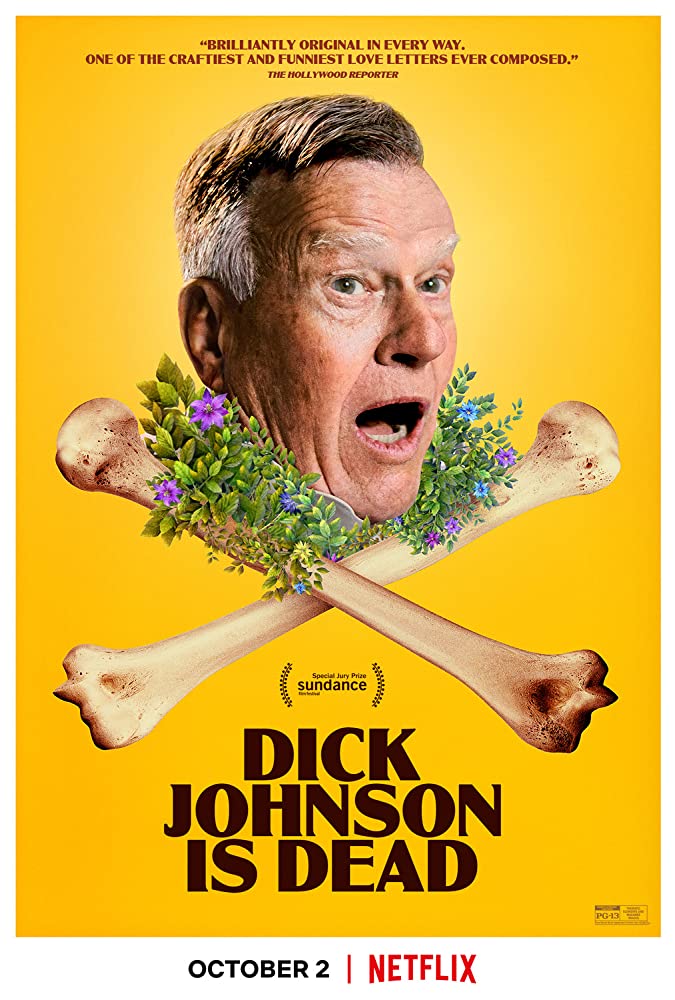
Kirsten Johnson is a documentary film maker who is grappling with her father’s dementia and his mortality. With her mother already gone and her father slipping away piece by piece, she decides to confront his death head-on by filming him in the various ways he might die (a fall down the stairs, an air conditioner falling on his head, etc). Dick, who is visibly declining in health but still relatively sound in body and mind, clearly shares his daughter’s dark sense of humour. Having given up his independence, he lives with her and her children in a New York City apartment where every day a new death is enacted.

Kirsten Johnson finds the thought of her father to be very painful and almost surreal. Perhaps she is training herself toward that eventuality, familiarizing herself with the concept of his death, shocking her system into, if not acceptance, then at least preparedness. Dick Johnson still has some vigour. He is game for this experiment, less for himself and more out of a parent’s attempt to soothe and prepare his child, even if she’s already in her middle age. It’s a balm he can offer even as the balance of their relationship has recently been recalibrated. But during an elaborate staging of his funeral where tearful friends make testimony and tribute to Johnson’s life, it’s clear that he is moved, appreciative if sheepish of all the attention which is not usually lavished upon a man whilst he is still alive.

It took me a while to appreciate this documentary, as it felt so personal and self-indulgent. However, our culture is so afraid of death that we seldom approach it in such an open and honest manner, and it was refreshing to reflect on what mortality, legacy, and memory really mean, and what they’re really worth. Unfortunately, daughter Kirsten will not likely get to direct Dick Johnson’s death when it really does come. If anything, I hope this film is a reminder that death is rarely controlled and goodbyes should never be put off.

Monday

Chloe (Denise Gough) and Mickey (Sebastian Stan) are a couple of American ex-pats living in Greece when they meet at a house party on Friday night where Mickey’s DJing and Chloe’s about to lose her purse. Well Mickey’s living in Greece anyway, and Chloe’s on her way out, back to America, back to real life. So one last fling wouldn’t hurt, right? She can pack in the morning.

Except the fling does kind of hurt, mostly because they get arrested for it, and she doesn’t end up packing because they somehow parlay their one night stand into an impromptu, living together, relationship. So fun!

On another Friday night they go dancing, and on another they plot to get visitation with his son, and on another they ruin a friend’s wedding, and on another they host a doomed dinner party. There are a lot of Friday nights in any given relationship, well, anywhere from quite a few to too fucking many. Eventually every couple has a Monday or two. How will Chloe and Mickey weather theirs?

Unfortunately the answer is: who cares? Also: they deserve each other, but I also am deeply invested in them both being cripplingly lonely and unbearably depressed. And maybe a little: maybe they could be impaled on a parade float memorializing all their bad haircuts while their third grade math teachers dressed in creepy clown costumes tossed beads laced with their allergens onto their twitching corpses? Something in that vein.

I mean, they’re not evil or anything – you don’t even see them spoil cookies with raisins. They just both wildly selfish and way too old for that to still be cute, or forgivable. Greece is their Never Never Land. I forget whether that’s the Peter Pan one or the Michael Jackson one, but either way I mean it as an insult.

Sorry, Argyris Papadimitropoulos. I can tell you thought you were making a sexy party film but you created such loathsome characters I wished this was more of a quiet mortuary film. You know, people fall off yachts and are never seen again ALL THE TIME. Well, relatively. In this particular case, not often enough, obviously.