Category Archives: Movie Reviews

Our reviews and thoughts on the latest releases, classics, and nostalgic favourites. Things we loved, things we hated, and worst of all, things we were ambivalent about.

End of Sentence

Frank (John Hawkes) is recently widowed when he picks up his estranged son Sean (Logan Lerman) from prison. Neither is exactly keen to spend time with the other, but Frank’s late wife’s last wish was for her son and her husband to travel to Ireland together to scatter her ashes in a special lake. Frank is determined to honour her wish, and Sean is determined to be in California in five days time. A deal is struck – Frank promises to deliver Sean to California by way of Ireland – and two reluctant travel companions, plus the ashes of their only common bond, are on their way east – very east.
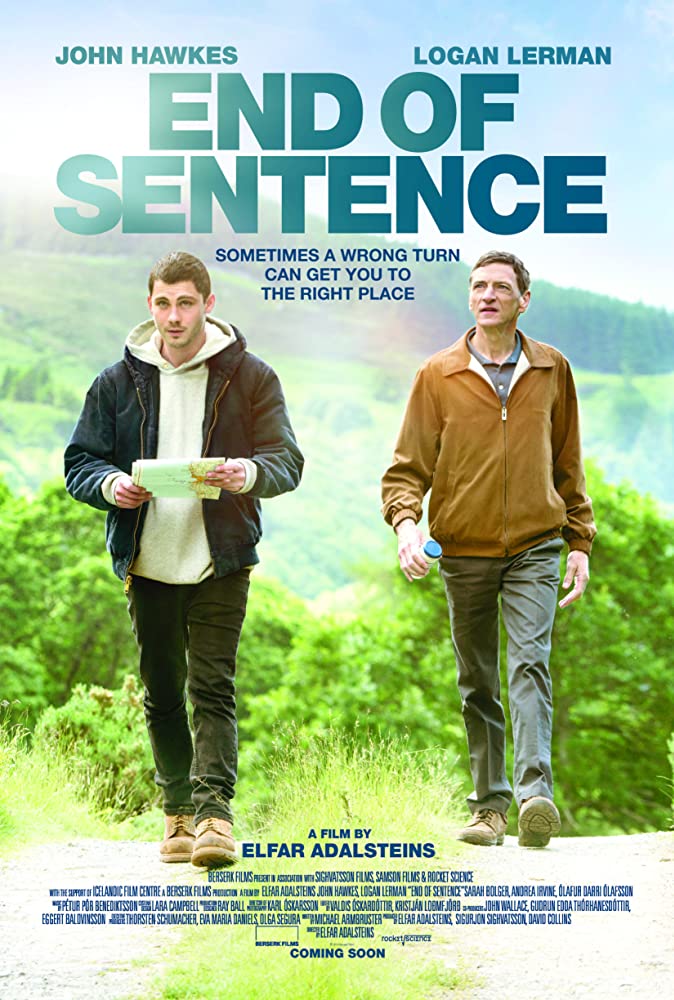
In Ireland, Frank will come to understand his dearly departed wife a little better, while Sean will come to understand his distant father. None of these will be easy lessons. In fact, long before the mission is either accomplished or abandoned, you and I will start to suspect that the dead wife orchestrated the trip not so much out of preference for her final resting place but perhaps as one last attempt to reunite the two men in her life from beyond the grave. Of course, as in life, so in death: Frank and Sean share a complicated and painful history, and the Irish countryside, beautiful as it may be, is not a magical cure.

Michael Armbruster writes a story that is sensitive but not sentimental about two men who share the same grief but process it side by side rather than together. The story is about men, and how they will relate to each other now that their moderator/interpreter/buffer is gone. It is quite possible that Frank and Sean have never been in a room just the two of them before, and quite clear that this is their preference. And yet – mother knows best? Certainly in her last days she must have worried about them, about her son already careening down the wrong path, unlikely to succeed upon release without the one person who always believed in him, and about her husband, so unable to connect, so solitary and cold in his default demeanor. The script here is brilliant because it allows us to read and explore these things through action and inaction rather than constantly looking back, and director Elfar Adalsteins reinforces this idea by showing rather than telling. This leaves room for the audience to see a bit of themselves in this dynamic: bits of their own grief, their own fraught relationships, their own pain, desire, comfort, and hope for the future, and the story becomes that much more relatable, that much more resonant.

I knew nothing of this movie when we came upon it for rent on VOD, but it turned out to be one of those unexpected cinematic gems just waiting to be mined.

The Vast of Night

Picture it: small town New Mexico, sometime in the late 1950s. On this particular evening, the whole town is crowded into the high school gym to watch a basketball game. It’s literally standing room only. The players’ shorts are very short; the cheerleaders’ skirts are very long. The town’s streets are all but deserted. The only two people who seem not to be at the game are a couple of intrepid teenagers – fast-talking Fay (Sierra McCormick) is the town’s telephone switchboard operator and charismatic Everett (Jake Horowitz) is hosting a live radio show. Fay is of course very faithfully tuned into the radio program and notices the broadcast is briefly interrupted by a strange audio frequency.

Few witness it of course, most people being at the game, but one man who does calls in with quite a story. He’s heard these tones before. And boy does he have some theories. From there, Fay and Everett get caught up in a night neither will ever forget.

The Vast of Night is a pretentious title for a film eager to live up to that insinuation. Stylistically it’s reminiscent of The Twilight Zone; a retro sci-fi throwback that strains the limits of its (low) budget but proves good ideas trump production value when it comes to building a watchable, suspenseful film. Most of all I enjoyed the dynamic between the two young actors. McCormick in particular has a massive job handling a demanding long take but handles it like a true professional. The two really convey a sense of immediacy that contributes richly to the film’s ominous atmosphere.

Despite some very strong elements, I never quite liked the film as much as I wanted to. I didn’t really enjoy the film’s conceits, or director Andrew Patterson’s self-conscious attempts to use all the tricks in his bag in one go. And some of his choices are just confounding: why the black screen, for example? During a long exchange with a caller during the live radio broadcast, we mostly focus on Everett’s face as he absorbs the story, but sometimes the camera cuts away to…nothing. A totally black, blank screen. And then back to Everett, who continues to listen intently, sitting perfectly still, hardly giving anything away on his face, and then back to black. I’ve thought a long time about this choice and though I’ve come up with a few plausible scenarios, I don’t like any of them. It feels more like a mistake than a choice. Later on in the film, when two people are running across a field, the camera spends multiple lengthy takes focusing on knees down. This is likely a budgetary concern, either the shot cost them enough that they had to use it a little too liberally in order to justify it, or they simply couldn’t afford to show anything that might have happening thighs and above. Either way, I don’t want the line item to be so glaringly apparent on the screen.

What I do want is another film from Patterson, who’s clearly got some potential if he hasn’t already burned all his bridges (one of the items in the film’s IMDB trivia section is a list of all the film festivals who rejected the movie – a particularly ungracious display of privilege from a first-time white, male director, and some pretty juvenile sour grapes), and some better material for McCormick, who deserves to showcase her talent.

Ne Zha

Bear with me: I am about to attempt to describe the plot of a cartoon, which is deceptively hard work.

A chaos pearl, birthed from primordial essences, manifests as a giant crystal monster, is sucking up energy to feed its seemingly infinite potential for destruction. The Primeval Lord of Heaven, Tianzun, sends two of his disciples, Taiyi and Shen, to subdue it, but it just keeps siphoning energy, growing bigger and stronger, so the Primeval Lord Tianzun has to separate the pearl into two opposite components: a spirit pearl and a demon orb. The spirit pearl is meant to be reincarnated as a son to Li Jing, while Tianzun curses the demon orb; it will be destroyed in 3 years’ time by a powerful lightning strike. Tianzun gives them to the care of Taiyi and promises him a seat at his heavenly table if he performs well. This makes Shen insanely jealous of course, so he steals the spirit pearl, which means that Li Jing’s pregnant wife Lady Yin is possessed by the demon orb instead. Poor Lady Yin has been pregnant for 3 years and now gives birth to a demon child, Ne Zha.

If you’re following even 25% of what I’m saying, you deserve a silver medal (sorry, I’m reserving the gold for Lady Yin’s marathon pregnancy).

Ne Zha is born with unique powers, as you might expect, and he’s known (and feared) in the village as being incredibly destructive, which makes him a lonely outcast. Taiyi brings him to a universe inside a painting to train him and his progress is astounding, even if his discipline is lacking (note: this is an extremely advanced toddler). Meanwhile, Shen takes the stolen spirit pearl down to the Dragon King. The dragons are angry because they’ve been banished underwater as hell’s gatekeepers. The Dragon King believes that a son of his born of the spirit pearl would mean dragons would finally be worthy and could ascend to heaven, so he gives birth to an egg OUT OF HIS MOUTH and names the kid Ao Bing.

Against the odds, Ne Zha and Ao Bing meet and make friends, but as we know, they’re actually enemies, and they’re going to have to meet in battle on their third birthdays.

Written and directed by Yu Yang, the movie starts out with some shaky story-telling, and as you can tell by my synopsis, there’s quite a bit of vital information to parse rather quickly (we had to pause the movie, compare notes, and restart). Once it gets going, the problems get largely ironed out by some pretty compelling animation. The action scenes are of course commendable but I was also rather dazzled by the universe contained within the painting. Yu Yang takes full advantage of the perks of animation, allowing bold action sequences to communicate character, engaging the audience and fueling the film’s momentum. Kids will delight in the low-brow humour (and by low-brow I of course mean disgusting) and everyone can appreciate the visual spectacle of it all.

In China it was released exclusively in IMAX 3-D and I can imagine this would have been an excellent use of the medium. We watched the English dub on Netflix (we also had the subtitles on, which made for a mind-bending exercise as the two NEVER matched); if you do the same, make sure to check out mid- and post-credit scenes which introduce a new character and set up a sequel. The sequel was actually due to be released January 2020 in China but was postponed indefinitely due to COVID-19.

The Photograph

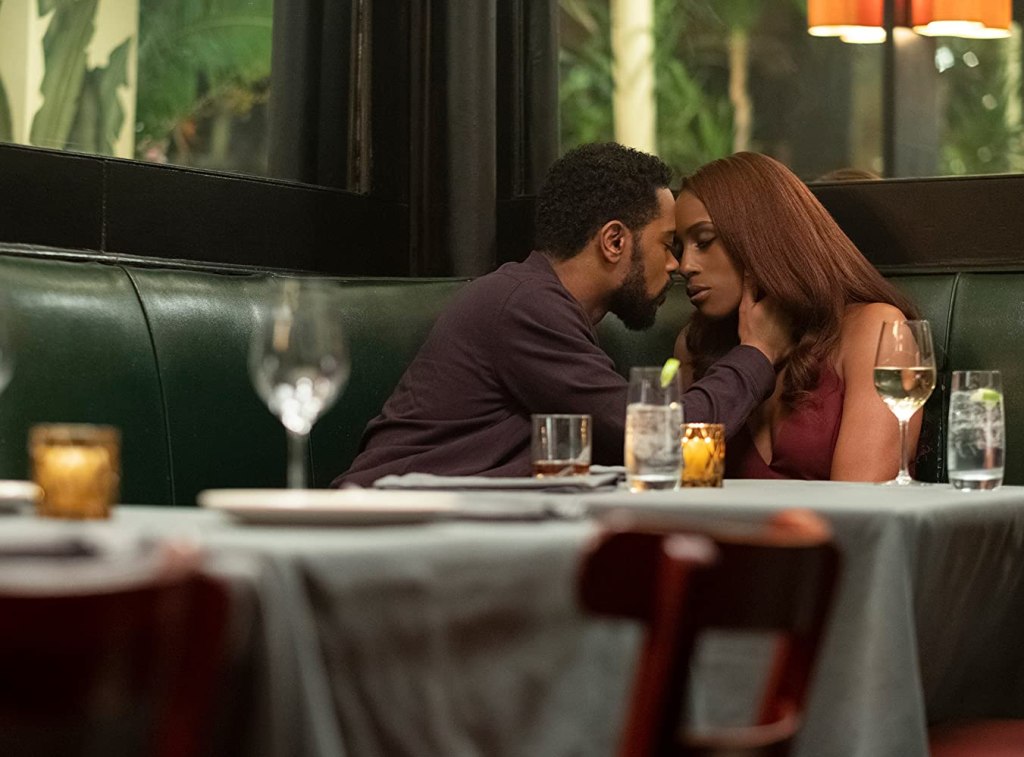
Reporter Michael Block (LaKeith Stanfield) flies to New Orleans to interview Isaac (Rob Morgan) about his first love, celebrated photographer Christina Eames (Chanté Adams), recently deceased. Back home in Manhattan, Michael follows up with an interview with her daughter, Mae (Issa Rae). Mae is a successful art curator, and doing a retrospective on her mother’s work is a way to get in touch with her grief; the only love that Christina could express was that for her work. Mae and Michael pool their resources to better understand the enigmatic artist, but after a while it’s pretty clear that this is just an excuse to spend more time together. Mae and Michael are falling for each other.

They don’t intend to, of course – she’s focused on her career, he’s about to move to London – but when has intention ever stopped cupid’s arrow? So we’re really getting two love stories for the price of one – young Christina and Isaac before she moved away to pursue her passion, and Mae and Michael, who are in the middle of pursuing theirs.

Writer-director Stella Meghie doesn’t quite figure out how to co-mingle the two stories satisfactorily, but the chemistry between Rae and Stanfield is so electric it almost doesn’t matter. Issa Rae was of course recently seen dazzling in The Lovebirds, and in The Photograph she proves that wasn’t a one-off; 2020 is the year of Issa Rae, and we can only hope that 2021 will be too.

Meghie’s love story is modern and grown-up: sensitive, vulnerable, unapologetically sexual. Rae and Stanfield have an easy and smart flirtation that draws us in too, rather intimately, as if we’re rooting for our own friends to finally find the love they deserve. Of course, adult love stories make one thing obvious: finding love is the easy part. Keeping love, maintaining love, nurturing love, sacrificing for love – those are the difficult, unglamourous things often left out, simply brushed under the rug with the mother of all euphemisms, “happily ever after.”

The High Note

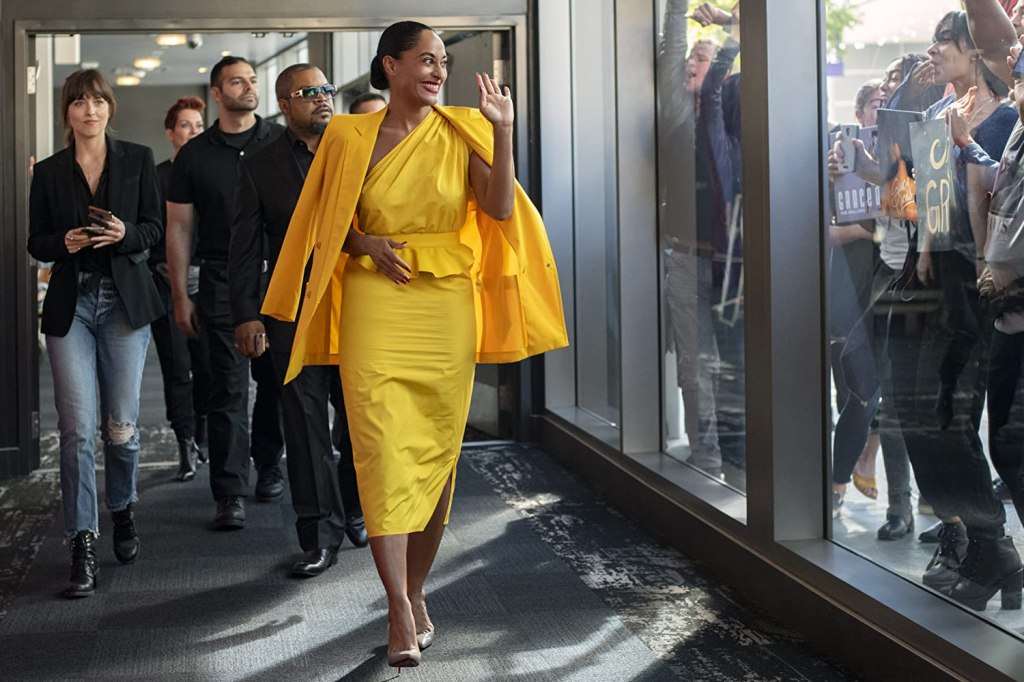
Grace Davis (Tracee Ellis Ross) is a mega music star. She’s touring the world, selling out stadiums, and she’s not slowing down. But she’s not recording new music, either – not in a decade. She’s a middle-aged woman of colour, not exactly the stuff of 2020’s Billboard #1 artists, as her manager (Ice Cube) and label guys keep not-so-gently reminding her. The safe bet is to keep playing those same beloved songs to her ever-fervent fans, maybe do a nice, safe Vegas residency, and every so often repackage those hits into a “new” greatest hits album. Grace Davis is a fictional star but I’m sure these credentials are reminding you of more than one of yesterday’s top recording artists. Maybe even of Tracee Ellis Ross’s own mama, Ms. Diana Ross.

Grace’s personal assistant Maggie (Dakota Johnson) has been fetching her green juice and dry cleaning thanklessly for the past 3 years. Maggie keeps hoping her role will be a stepping stone to where she’d actually want to be – a producer – but not only is Grace not recording music, she’s adamant that Maggie stay in her lane. So when Maggie bumps into David (Kelvin Harrison, Jr) on an errand for Grace, she’s pretty open to following her dream in another direction. David’s playing the grocery store’s parking lot, but his talent is legit so she fudges the details and convinces him to let her produce his album.

Does the moonlighting go well? It would be a crummy movie if everyone just lived happily ever after forevermore. There’s going to be some major bumps. Ellis Ross is terrific as Grace, but she’s definitely not just channeling her mother. She’s made Grace the hardest of things: a pop icon, and an actual woman. She’s worried about staying relevant, about aging, about work-life balance, about being the only woman in a room full of men trying to determine her future. Meanwhile, Maggie is trying to break into a male-dominated field that tries to discourage her by having her fetch coffee. Thematically, this film is the perfect follow-up for director Nisha Ganatra, who gave us Late Night last year.

The Dakota Johnson arc is a little pat, a little too rom-commy; The High Note actually shines when Ross is on screen stealing scenes. I almost wish we could have just stayed with her and lived in her skin, a true testament to Ross and the layered character she crafts. Still, the ensemble is talented, and if at times the script veers toward formulaic, the film is glossy, the songs are catchy, and Ross is indeed a star.

Murder To Mercy: The Cyntoia Brown Story

Netflix is crowded with documentaries just like this one: someone, often a person of colour, has been completely failed by the so-called justice system. And for every documentary made, there are hundreds? thousands? of unnamed prisoners going through the same thing. It’s hard not to burn out on these stories, and we feel so helpless to do anything about it.

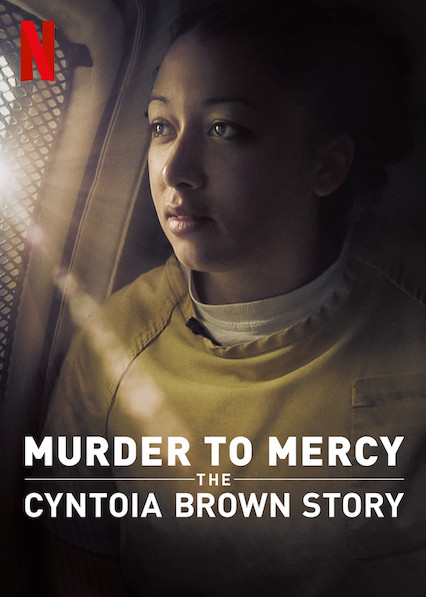
Cyntoia Brown was failed many times before the justice system ever had its chance. Her mother Gina was just 16 when Cyntoia was born, already addicted to alcohol and crack. She struggled to raise her for a couple of years, but Gina was herself the victim of childhood molestation and rape, as was her mother before her. When Cyntoia was 2, she was given up for adoption, but she struggled to fit in, and her undiagnosed fetal alcohol poisoning made it impossible for her to thrive in settings that were hostile to her. By the time Cyntoia was 16, she was being pimped frequently by her “boyfriend” and one night, during an encounter that had her feeling particularly vulnerable, she shot the man who had picked her up, fearing and believing that he was about to do the same to her.

The justice system spent very little time deciding her fate: first, to be treated as an adult in court, despite her young age, and second, to sentence her to life in prison for a crime she committed as a scared child in an impossible situation. In 2004, when she was arrested and charged, the court called her a prostitute. Today, it would call her a child sex slave, the victim of human trafficking. But that does her very little good when she’s already been behind bars for 14 years.

But you know what? Some of director Daniel H. Birman’s footage went viral, prompting social media users to retweet #FreeCyntoiaBrown until someone finally paid attention. Her cause went up for review, and Brown pled for a second chance though most of us can see that she never really got her first. Her sentence was commuted and after 15 years in prison, she finally walked free. Now she spends her time advocating for prisoners in similar circumstances, but I think her story is particularly powerful in that it proves that actually we can make a difference. Hearing these stories and sharing these stories is how we begin to mend a broken system.

The Trip To Greece

This is their fourth trip actually; it was Spain before this, and Italy before that, and just a plain old Trip way back in 2010, during which Steve Coogan toured Britain’s best restaurants with best friend (and prime needler) Rob Brydon in tow. These two squabble like an old married couple but they also egg each other on to the greatest heights of comedy, throwing rockets of caustic remarks back and forth, stinging each other with brilliant insults, one-upping each other with first rate impressions.

Since 2010’s The Trip, the subsequent trips have largely followed the restaurant template, but for no good reason. The first one’s aim may have been to savour and review, but what followed was really just an excuse to throw together the same basic ingredients hoping to recapture their recipe for success. And the thing is, with very little effort, they do manage to replicate success. The films may defy traditional categorization but the Brydon-Coogan team is a winning bet, with the added bonus that Coogan continues to churn out content you’re likely familiar with, and Brydon continues to churn out new and exciting to lambaste it. Brydon gleefully pokes at Coogan’s apparent inability to recall an extra from his movie Greed. And he mocks Coogan’s BAFTA nomination for his work in Stan & Ollie – no, not his work, not his acting, his “copying,” his “impersonation,” two meaty jobs right to Coogan’s rib cage all while cajoling him into an impromptu Stan Laurel so that Brydon may offer his Hardy. Tom Hardy.

There’s something eminently watchable about these two. They hardly need the pretense of travel or fine dining; it is a pleasure to watch them under any circumstance. The Trip to Greece is available to rent via VOD, and each of the previous films is just as worthy.

Ophelia

This one’s been sitting idle in my drafts folder for way too long. All I had was the title, Ophelia, which was a freebie.

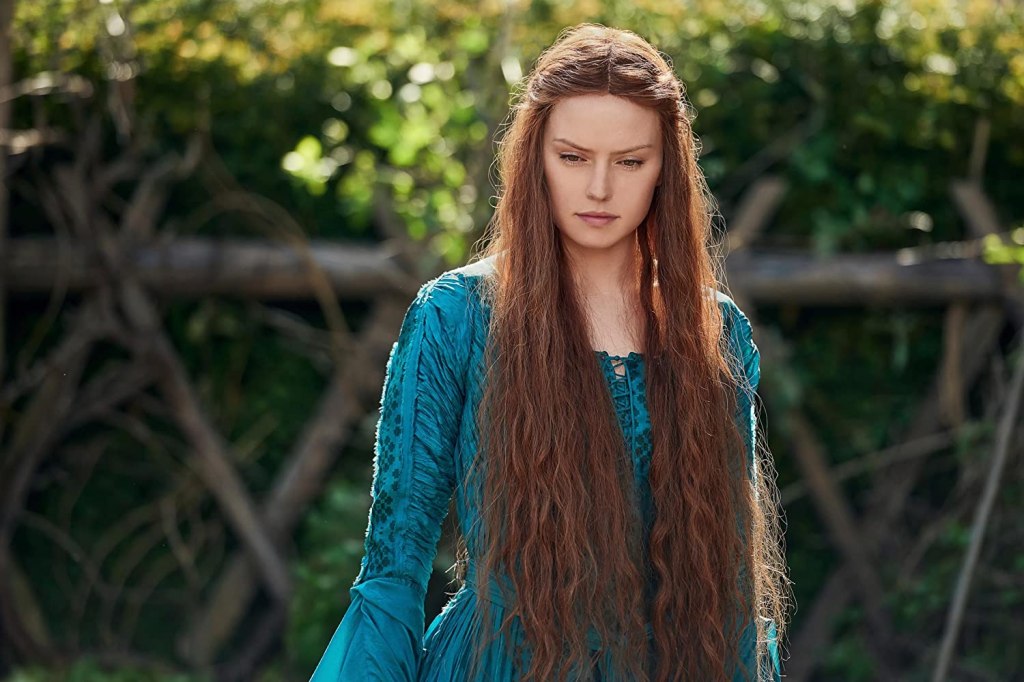
As you may have guessed (or perhaps you’ve seen the film, released as it was in 2018), this is a re-telling from Hamlet, from the fair Ophelia’s point of view. She doesn’t exactly get a fair shake from Shakespeare. Will director Claire McCarthy finally do her justice?

I’ve seen this described as a “feminist reinterpretation” so many times I want to throw a pewter goblet through a stained glass window. Stories with female protagonists don’t need special labels. It’s like saying the original Hamlet had an “idiotic interpretation” just like all stories with male protagonists. Oh, that seems unfair and perhaps a bit reductive? YEAH I FUCKING KNOW. I have so much rage. Of course I want to give this movie a pass just for having to deal with stupid male critics and stupid male bias and stupid male viewers but the truth is, this female was bored stiff.

Yes, it’s shot extremely well; there’s palpable value in its production. And Daisy Ridley and George MacKay are quite wonderful, really. But the thing is, very rarely are going to improve upon FUCKING SHAKESPEARE. Sure Ophelia got a shitty deal, and yes, it’s nice to see her flexing some agency. But this version just feels like we’re getting the bits of Hamlet that were left on the cutting room floor – and for good reason. There’s only so many jugs of water a girl can fetch. It’s enough to drive anyone crazy. But while Ophelia’s background may be fecund in theory, it was rather barren in execution. It fell so far short of the mark for me I rather wished we’d been in Queen Gertrude’s (Naomi Watts) shoes instead, uncomfortable as I’m sure they were.

A Belle For Christmas

I learned something new this week and it’s all thanks to a Hallmark holiday romance called Broadcasting Christmas. I am diligently watching crappy Christmas movies just as fast as Netflix can release them, and when I posted a quickie review of one starring Dean Cain, some of you were just as quick to point out that Dean Cain is apparently a republican fart box. Frankly, though I haven’t thought of him in 20 years or so, and I certainly don’t follow him on my socials, I was a little surprised I hadn’t heard of it myself. Guess his C-status just doesn’t rate with so many other numpties making the news. So this time I’ll apologize in advance that we’ve got another Cain starrer on our hands.

This time he’s a widowed (widowered?) lawyer raising his kids in the suburbs and just starting to get back into the dating pool. He’s been on a couple of dates with big-headed barista Dani (Kristy Swanson) and without a living ex-wife to tell him this is wildly inappropriate, he not only introduces her to the kids, he allows her to move in over the holidays so they can all bond. Dani is a Disney villain personified – Lady Tremaine mixed Cruella De Vil, with a zany, borderline crazy streak that’s pretty disturbing, especially since Glenn seems not to notice it. His kids sure do though – they may be small but they know gold digger energy when they see it. Despite the fact that she excludes and gets rid of them at every chance she gets, and that she’s stealing jewelry from their dead mother’s coffers, they MAY have given her a second chance, at least for their dad, had she not stooped so low. But Dani really crosses the line when she brings their new but already beloved puppy Belle to a shelter to get euthanized (pause for gasps). She insists she’s just run away, but the kids suspect the truth. Accusations without evidence don’t go over well with their completely oblivious father, so they take matters into their own hands and along with a couple of helpful neighbour kids, they have themselves a little heist adventure on Christmas Eve.

A Belle for Christmas is a family movie rather than a romantic one. Although you’ll still find it has way too much Dean Cain (and too much Swanson, who is so over-the-top evil she feels like a cartoon character), it’s really about the kids. Belle belongs to Elliot (Jet Jurgensmeyer) officially, but big sister Phoebe (Meyrick Murphy) is just as devoted, and the siblings are close, united in their distrust of Dani and their grief for a mother who, let’s not forget, passed away less than a year ago. Elliot’s cocoa-selling, dog-loving crush Riley (Avary Anderson) is along for the ride, as is next door neighbour/Elliot’s best friend Malcolm (Connor Berry). All of these kids are as cute as they are talented, but director Jason Dallas knows a star when he sees one, and he’s made extra room in the film for Berry to shine.

Otherwise, it’s a bland but safe choice for family viewing, with a sweet dog who’s never in any real danger, except maybe of being hugged to death.

Valley Girl (2020)

First: a word about Logan Paul. Logan Paul is a Youtube star. “Star.” I know his name but not his content; he’s the brand of entitled-obnoxious that my life doesn’t need so I’ve never seen a single thing he’s done. I do know he’s been controversial, though. The first I heard of him, he’d gone to the suicide forest in Japan in late 2017 and posted a video of the corpse of a recently deceased (hanged) man. Cue uproar, cue “apology.” Youtube gave him a slap on the wrist (with 25M subscribers, their partnership is extremely lucrative to both) but he was back at it just a few weeks later. He’s sexist, he’s homophobic, he’s racist. Basically, he’s a giant douche. Valley Girl director Rachel Lee Goldenberg had the misfortune of casting him in her movie to play…well, a giant douche as it happens. This was in the spring of 2017, before the big controversies started to add up. The film was scheduled for a 2018 release by they scrapped it due to his involvement. This poor movie has languished on some shelf in Hollywood, serving a sentence for crimes committed by a single cast member. So yes, I acknowledge that Logan Paul is a problematic douche nozzle and we all wish he wasn’t in this movie even though he’s actually perfectly cast. With that said, onto the movie.

Yes, this is a remake of the 1983 film of the same name, starring Nicolas Cage and Deborah Foreman. Foreman played Julie, a perfect, preppie valley girl who falls for a punk (Cage) from the wrong side of the hills. In the 2020 version, Julie is a proper grown up. She (Alicia Silverstone) is a mom now, and she recounts this teenage romance to her daughter.

Cue: the 1980s. Cue the leg warmers, the big hair, the jazzercize, the popped collars. A young Julie (Jessica Rothe) frolics on the beach with her gal pals and then hits up the mall. She’s dating arrogant jock Mickey (Logan Paul) but an edgier guy has grabbed her eye. Randy (Josh Whitehouse) is not a punk, because punk is dead, but if she’s a little bit country, he’s a little bit rock n roll. Her friends think she’s having a nervous breakdown but as far as rebellious streaks go it’s actually pretty tame – just dreaming of leaving the suburbs and maybe prioritizing a career instead of marriage and motherhood.

2020’s Valley Girl is somehow even more 80s than the original: it’s an homage, a love letter, a glossy, hair sprayed tribute, and in doing so, it’s rounded out the edges and presents a sanitized pop version for your nostalgia cravings. This Valley Girl is a jukebox musical which means every song sung will be one you know; the retro soundtrack includes We Got the Beat, Bad Reputation, Hey Mickey, Call Me, Girls Just Want to Have Fun, Kids in America, Just Can’t Get Enough, Material Girl, Safety Dance, Take On Me, Under Pressure, I Melt With You…well, you get the picture. The 80s vibes are strong in this one.

Is this a life-changing movie? No. Is this a great piece of cinema? Still no. But if you’re willing to embrace the cheese, it’s actually quite a bit of fun. And the great thing about the 80s is that you don’t actually have to have lived through them to be nostalgic for them. It feels like the nostalgia was baked right into the decade (and quite possibly Tang flavoured). Play I-Spy during the carefully curated costume party: can you spot Boy George – George Michael – Michael Jackson?

This movie is Grease meets Trolls World Tour meets Romeo and Juliet, but feels like it’s a 90 minute version of those Tiffany videos she used to shoot at the mall. Valley Girl knows what it is and isn’t afraid to lean right in. This is the 80s, turned up to 11.